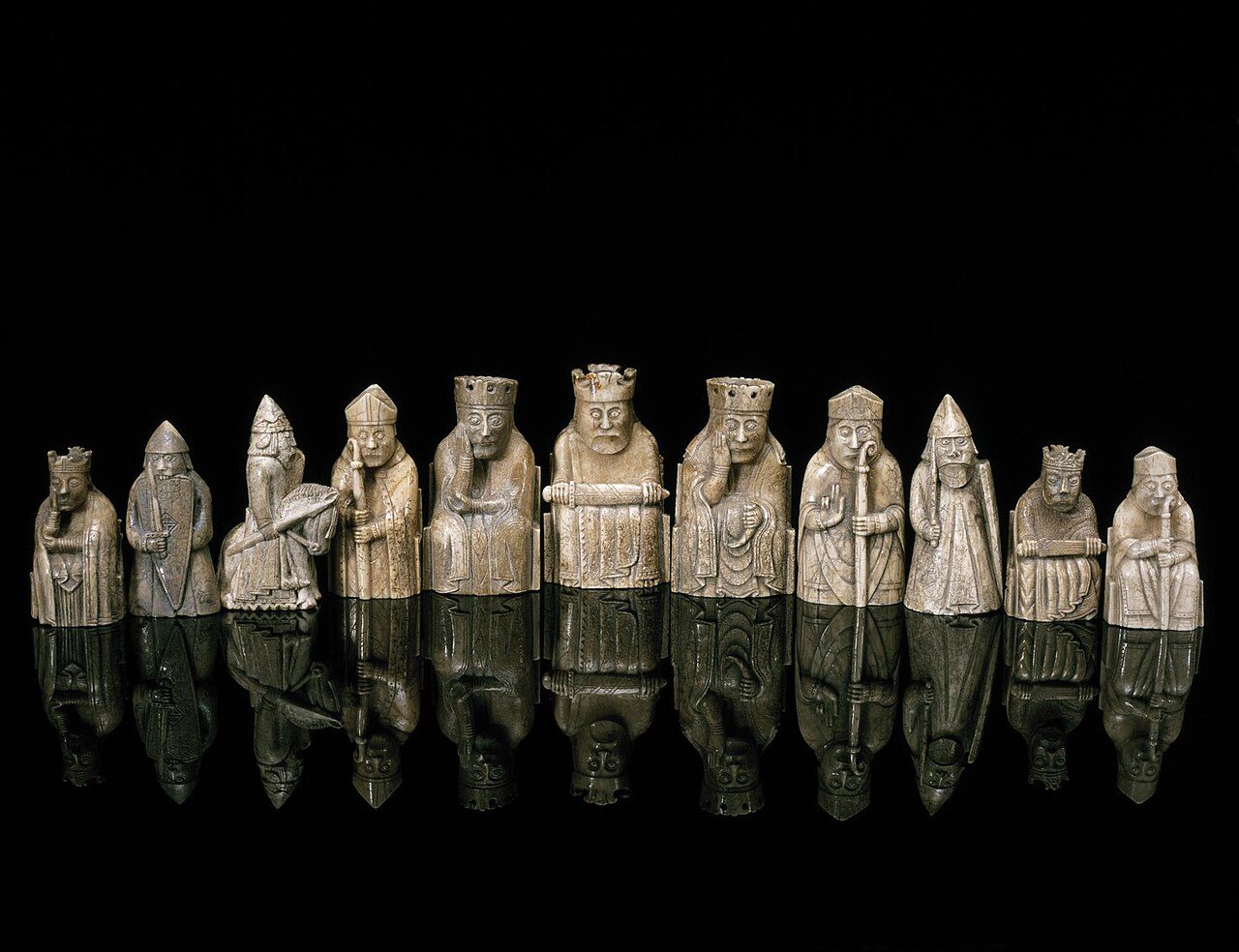
Early in 1831 a cache of small carved figures turned up on the west coast of Lewis, in the parish of Uig. How exactly it was found was never properly recorded. Early accounts spoke of an unnamed local man; only in 1863 was the finder named as Malcolm MacLeod of Pennydonald. Most writers have placed the find at Uig Bay, but researchers at National Museums Scotland have argued that a site a few miles down the coast at Mealista is more likely. What is certain is that on 11 April 1831 a Stornoway dealer, Roderick Ririe, exhibited the pieces at the Society of Antiquaries of Scotland in Edinburgh.
There were 93 objects: 78 chessmen, 14 plain discs used as tablemen in games like backgammon, and an ivory buckle. Almost all are of walrus ivory, a few of whale tooth. The chessmen include eight kings and eight queens, sixteen bishops, fifteen knights, twelve warders standing in for rooks, and nineteen pawns, enough for at least four sets. The major pieces are small figure sculptures between 7 and 10 centimetres tall: kings with swords across their knees, queens resting a cheek on one hand, bishops with croziers, knights on stocky ponies, and warders with shields, four of them biting the rims in berserk fury.
Their wide-eyed, glum expressions strike modern viewers as comic, and they have become some of the most loved objects in British museums. To their makers they probably conveyed dignity, ferocity or, in the queens' case, contemplation. Close study of the faces suggests the work of several carvers. Traces of red colour, and of mercury from the pigment cinnabar, hint that one side was originally red rather than black.
The pieces were probably made in the second half of the 12th century, perhaps into the early 13th. Most scholars point to Trondheim in Norway, though Iceland and even the Hebrides have been proposed. Lewis was then part of the Norse kingdom of the Isles, under the Norwegian crown, and the usual explanation is that the hoard was a merchant's stock in transit, hidden and never recovered. The unfinished-looking tablemen and the lack of wear on the chessmen fit that idea, though it cannot be proved.
The hoard was split almost at once. Ririe sold ten pieces, and later an eleventh, to the Edinburgh collector Charles Kirkpatrick Sharpe, and the remaining 82 to a dealer from whom the British Museum bought them, at the urging of Frederic Madden, a manuscripts curator and chess enthusiast. Sharpe's eleven passed to Lord Londesborough and were bought for the National Museum in Edinburgh in 1888. Where the pieces belong is still argued over, and the British Museum now lends groups to Scottish museums, including six on long-term loan to Lewis itself. The sets were never complete when found: a knight and four warders are missing. In 2019 one of those warders, unrecognised in an Edinburgh family's possession for decades, sold at auction for £735,000.
Highlights
Four of the rooks are warriors biting the tops of their shields in battle frenzy, the berserkers of Norse saga.
Seated queens each resting a cheek on the right hand, a gesture now read as thoughtful rather than gloomy.
Enthroned kings with swords across their laps, and bishops with croziers, seven seated and nine standing.
What is in it
Seventy-eight chess pieces from at least four sets, fourteen plain round tablemen for a backgammon-type game, and a belt buckle, nearly all carved from walrus ivory, a few from whale teeth.
Size: 93 objects.
| Item | Number | Notes |
|---|---|---|
| Kings | 8 | Seated, crowned, with swords across their knees |
| Queens | 8 | Seated, right hand raised to the cheek |
| Bishops | 16 | Seven seated and nine standing, with croziers |
| Knights | 15 | Mounted on small horses, with spears and shields |
| Warders (rooks) | 12 | Standing foot soldiers; four are berserkers biting their shields |
| Pawns | 19 | Plain geometric pieces |
| Tablemen | 14 | Plain discs, perhaps unfinished |
| Buckle | 1 | Ivory belt buckle |
Photographs
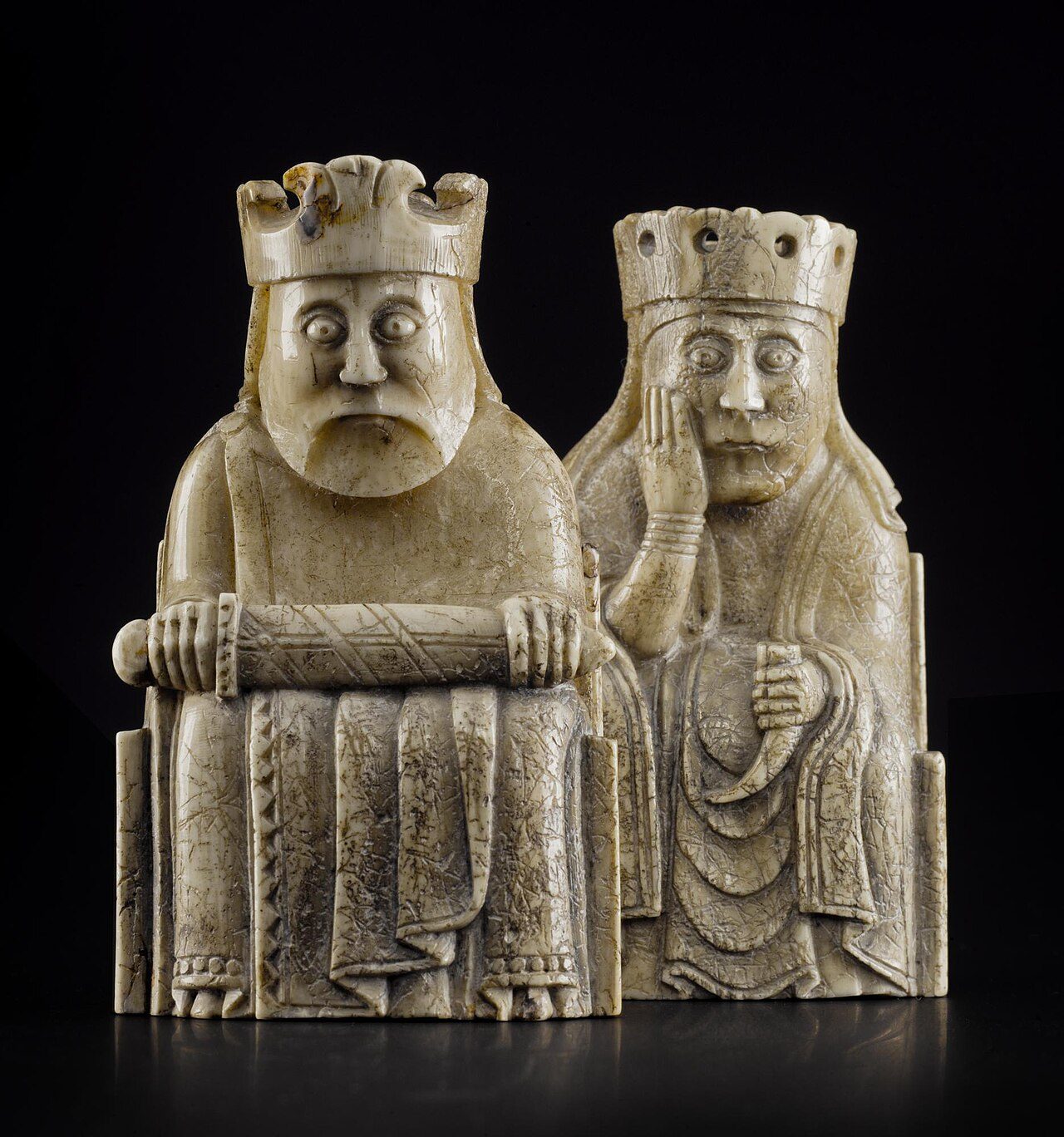
Photo: National Museums Scotland, CC BY-SA 4.0, via Wikimedia Commons
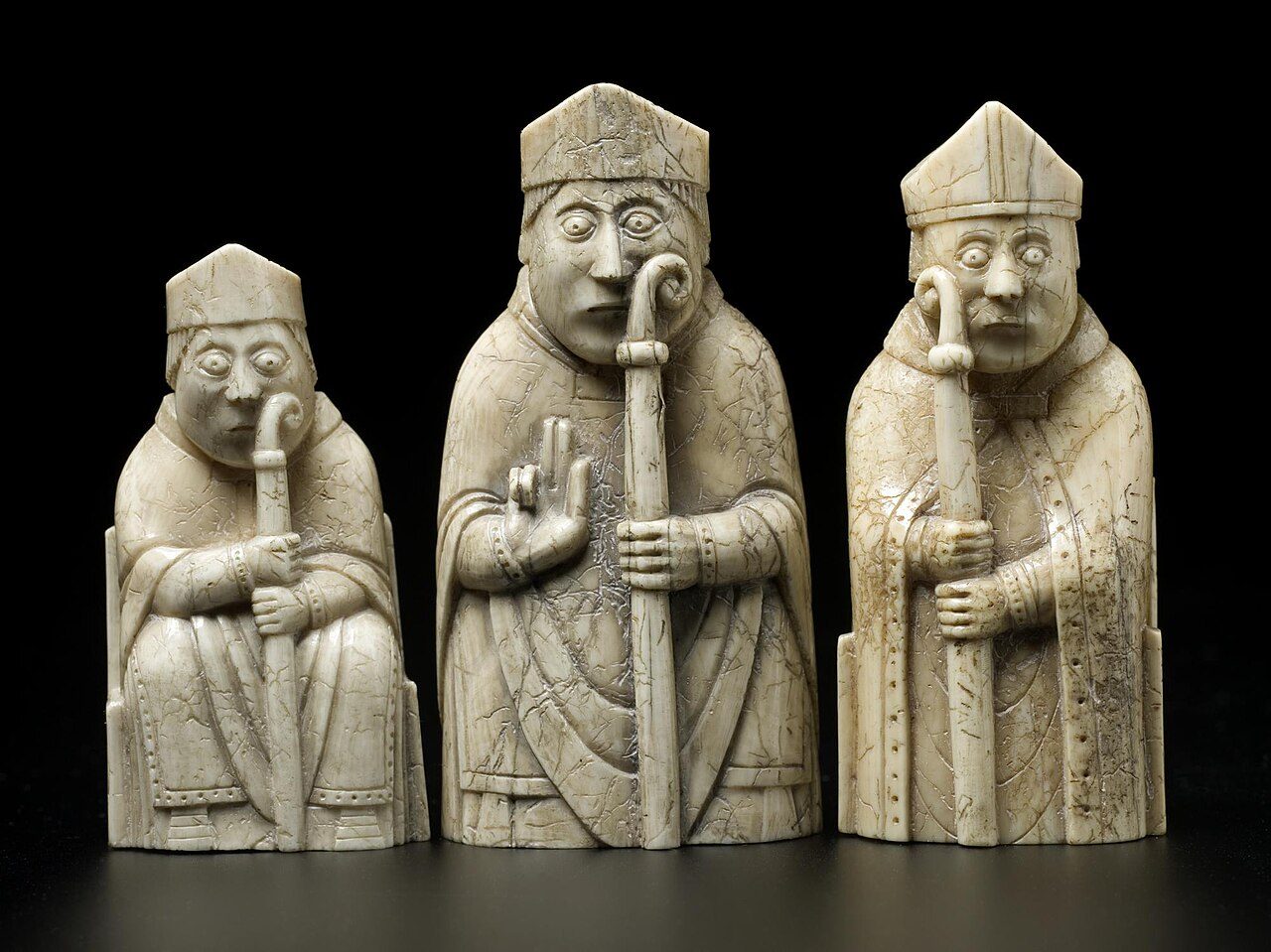
Photo: National Museums Scotland, CC BY-SA 4.0, via Wikimedia Commons
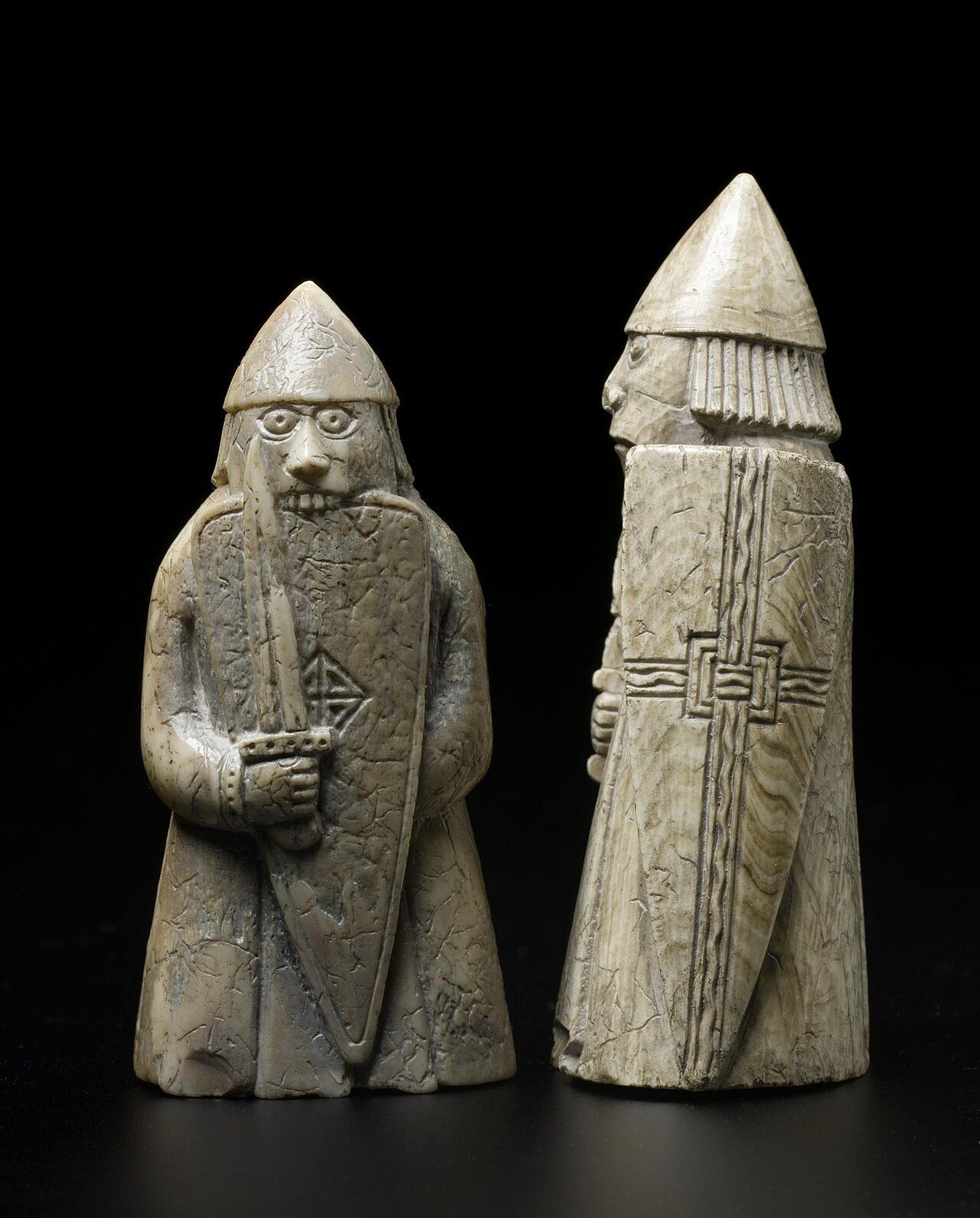
Photo: National Museums Scotland, CC BY-SA 4.0, via Wikimedia Commons
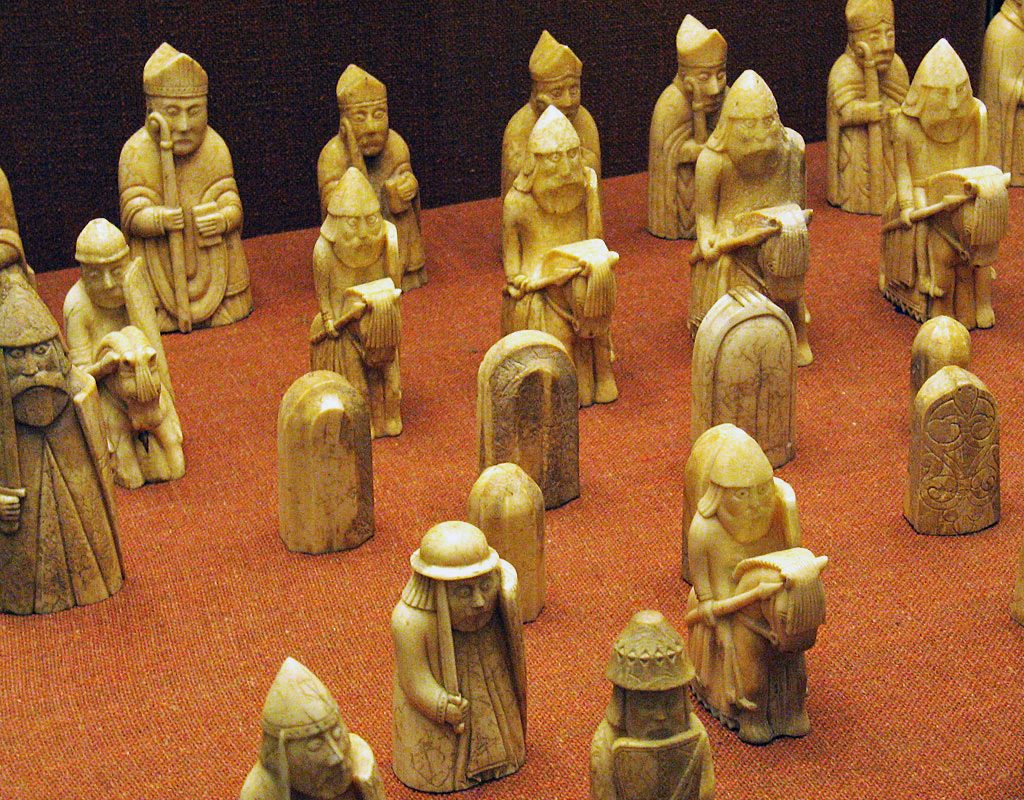
Photo: Unknown, CC BY-SA 2.0, via Wikimedia Commons
How it is dated
There are no coins or datable objects with the pieces, so they are dated by comparing the style of the carving and the figures' dress and equipment with other Romanesque art. Estimates run from about 1150 to the early 13th century. When the hoard was buried, and why, is unknown.
What happened after the find
No treasure trove claim is recorded: the pieces were sold privately in 1831, to the British Museum and to a collector whose pieces reached the National Museum of Scotland in 1888. A twelfth warder that surfaced in 2019 was sold at Sotheby's.
Where sources differ
- Total: Wikipedia says the hoard 'contained 94 objects' but its own breakdown (78 + 14 + 1) and the museum split (82 + 11) give 93; National Museums Scotland says 93.
- Date of manufacture: c. 1150-1200 (Wikipedia, citing Robinson 2004) versus late 12th or early 13th century (National Museums Scotland).
- Find spot: Uig Bay (Camas Uig) traditionally, Mealista according to Caldwell, Hall and Wilkinson; NMS's current page says 'likely found near Camas Uig'. NMS also says the discovery date is unknown, only that the hoard came to light in 1831.
- Price: the British Museum is said to have paid 80 guineas (Wikipedia); not given on the page.
- Whether the 2019 warder belongs to the same hoard is accepted by the auction house and most commentators but cannot be proved.
Questions
Where can I see the Lewis chessmen?
Most are in the British Museum in London (Room 40), eleven are in the National Museum of Scotland in Edinburgh, and six British Museum pieces are on long-term loan to Museum nan Eilean at Lews Castle in Stornoway.
How many Lewis chessmen are there?
The 1831 hoard had 93 objects: 78 chess pieces, 14 tablemen and a buckle. A further warder identified in 2019 brings the chess pieces to 79.
Where were the Lewis chessmen made?
Probably in Trondheim, Norway, in the later 12th or early 13th century, when the Hebrides were under Norwegian rule. Iceland and the Hebrides themselves have also been suggested.