This is not a hoard in the strict sense, and that is exactly why it belongs on this site. A hoard is buried to be hidden, usually with the hope of coming back for it. The treasure under Mound 1 was buried as a public act, in front of mourners, inside a ship hauled up from the River Deben, and nobody ever meant to dig it up. That difference mattered in law: in 1939 a treasure trove inquest decided that because the objects had been buried without any intention of recovery, they were not treasure trove and belonged to the landowner. Sutton Hoo is also the yardstick against which every other Anglo-Saxon treasure, the Staffordshire Hoard above all, is measured.
In 1938 Edith Pretty, owner of the Sutton Hoo estate above the Deben, engaged Basil Brown, a self-taught excavator working for Ipswich Museum, to open the burial mounds near her house. The smaller mounds he dug first had been robbed. In May 1939 he turned to the largest, Mound 1, and within days found iron ship rivets still in their rows. The timber had rotted completely, but the sand preserved its ghost: a clinker-built rowing ship about 27 metres long. Once the scale of the find was clear, a team led by Charles Phillips took over the burial chamber, recording and lifting its contents in a few tense weeks before the outbreak of war.
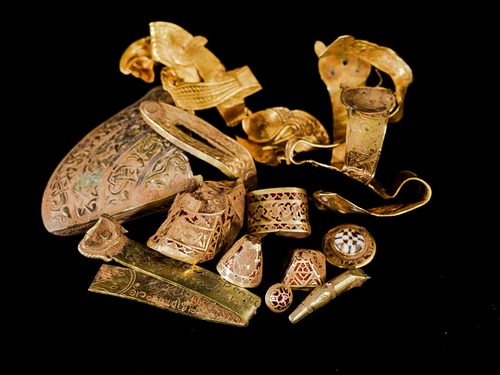
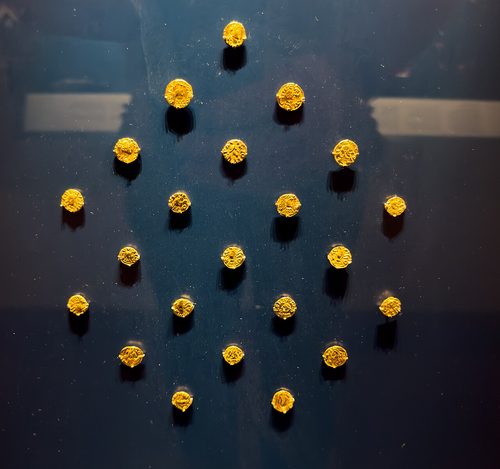
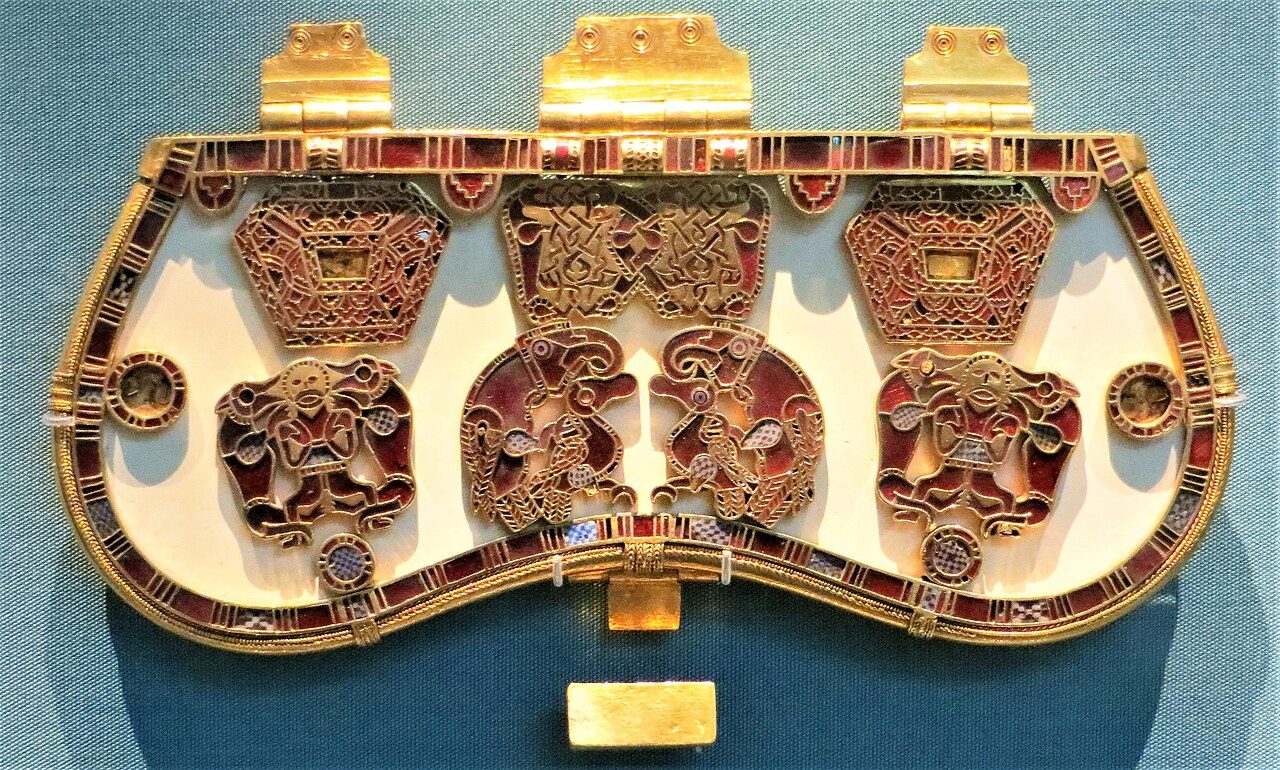
The chamber had been built amidships and later crushed when its roof collapsed under the mound. Even so, its contents were spectacular. At the west end lay a crested iron helmet with a face mask, a huge round shield, and a whetstone sceptre topped by a bronze stag. Where a body would have been lay a sword with gold and garnet fittings, and a suite of matching jewellery: a hollow great gold buckle, a pair of hinged shoulder-clasps for a leather cuirass, and a purse-lid of gold and garnet cellwork. The purse held 37 Frankish gold coins, three blanks and two small ingots. Around them were silver from the eastern Mediterranean, including a great dish stamped in the reign of Emperor Anastasius I and two spoons inscribed PAULOS and SAULOS, as well as drinking horns, cauldrons, buckets, a lyre, a mail coat and textiles.
No skeleton was found. Acid sand dissolves bone, and later soil analysis detected phosphate consistent with a decayed body, so most scholars accept that this was a grave rather than a memorial. The dead man is unnamed. Since 1940 the favourite candidate has been Rædwald, king of the East Angles and overlord of the southern English, who died around 624; the coin dating fits him, though his son Eorpwald and other candidates cannot be ruled out, and some historians think the case for Rædwald is weak.
The gold work is of a quality without parallel elsewhere in Europe at the time, and the burial shows how far an East Anglian court could reach: Swedish-style helmet and shield ornament, Frankish coins, Byzantine silver and British enamelled hanging bowls all went into one grave. The objects went into storage for the duration of the war, then were conserved and studied by the British Museum, where the helmet and sceptre were reconstructed. Excavations in the 1960s and 1980s, and more recent work, have filled in the wider cemetery.
Comparing Sutton Hoo with true hoards is instructive. Staffordshire contains far more gold but no complete object; Sutton Hoo preserves whole objects in their arrangement, letting archaeologists see how the war-gear stripped and buried in hoards was actually worn.
Highlights
An iron helmet with a full face mask, crest and cheek-pieces, decorated with tinned bronze panels of warriors and animals. It was found shattered into hundreds of fragments and has been reconstructed twice.
A three-part gold buckle covered with interlaced animals picked out in niello. The plate is hollow with a hinged back, perhaps to hold a relic.
A kidney-shaped frame of gold and garnet cellwork set with plaques of birds of prey and a man flanked by two beasts. Its pouch held the 37 coins that date the burial.
A pair of hinged gold clasps with stepped garnets, millefiori glass and interlocking boars, made to fasten a Roman-style leather cuirass. No other Anglo-Saxon examples are known.
A large silver dish made in the eastern empire and stamped under Emperor Anastasius I (491-518), already about a century old when it was buried.
What is in it
The furnishings of a royal burial chamber built amidships in a buried ship: a crested helmet, sword and shield, gold-and-garnet belt and shoulder fittings, a purse of coins, a ceremonial whetstone, imported Mediterranean silver, feasting gear, a lyre, textiles and much more.
Size: hundreds of objects and fragments; no single agreed count.
| Item | Number | Notes |
|---|---|---|
| Purse contents | 37 coins, 3 blanks, 2 ingots | Gold Frankish tremisses, each from a different mint, with three coin-shaped blanks and two small gold ingots |
| Regalia and war-gear | dozens of pieces | Helmet, pattern-welded sword with gold and garnet fittings, shield, mail coat, spears, great gold buckle, shoulder-clasps, purse-lid, whetstone sceptre |
| Mediterranean silver | about 16 pieces | Great dish stamped under Emperor Anastasius I (491-518), fluted bowl, a nest of ten silver bowls, two spoons, a ladle |
| Feasting and household gear | many | Drinking horns, maplewood cups, cauldrons, a suspension chain, buckets, hanging bowls, a lyre, textiles |
Photographs
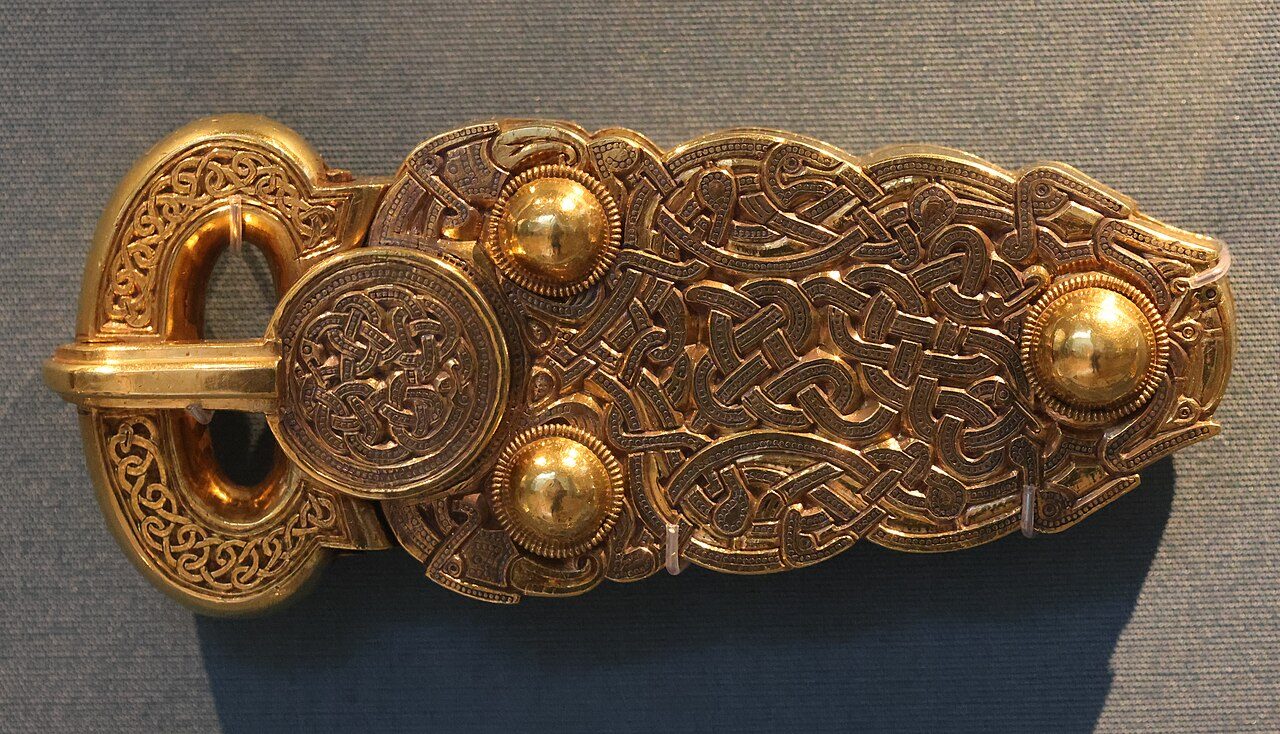
Photo: Geni, CC BY-SA 4.0, via Wikimedia Commons
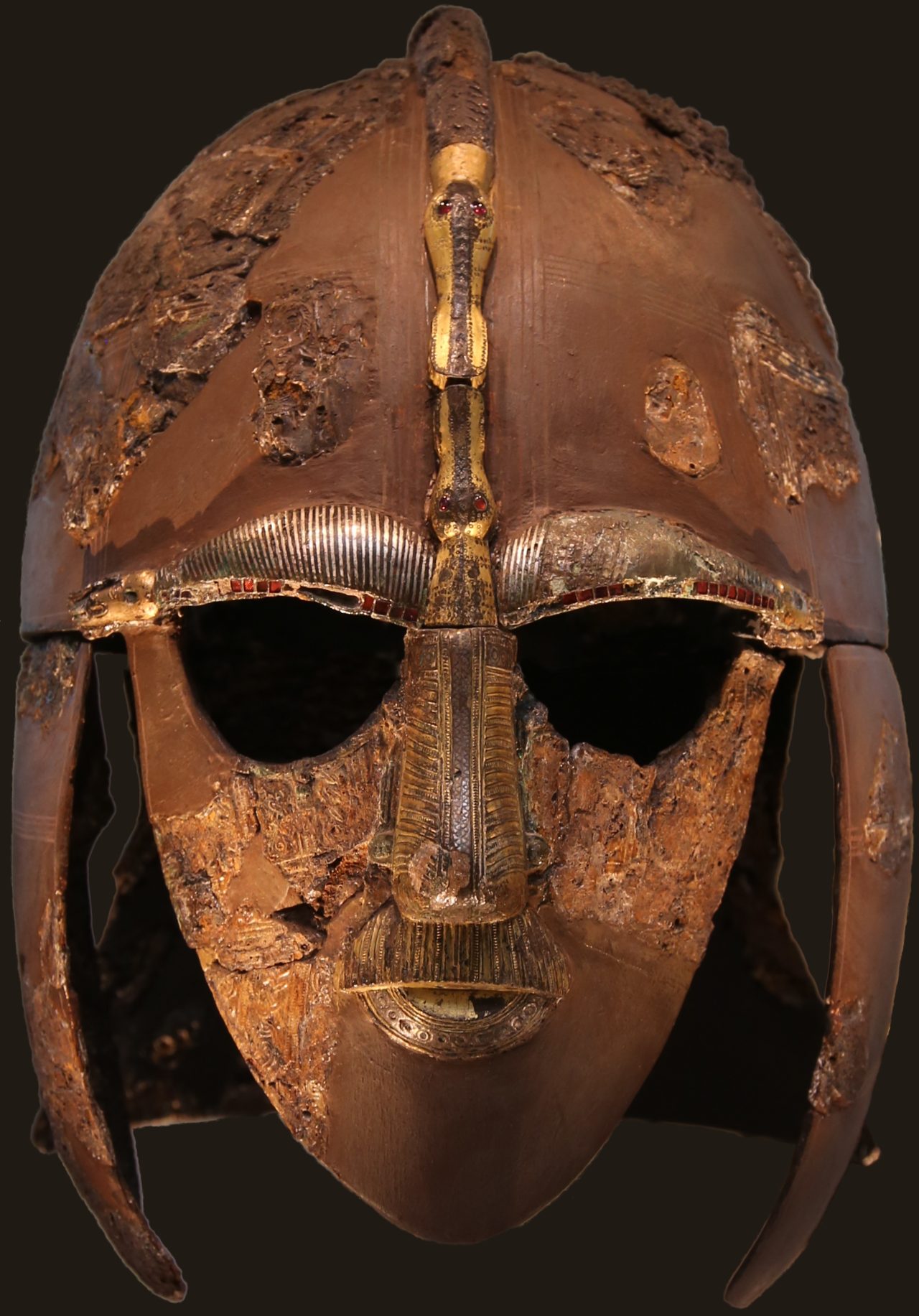
Photo: user:Geni, Public domain, via Wikimedia Commons
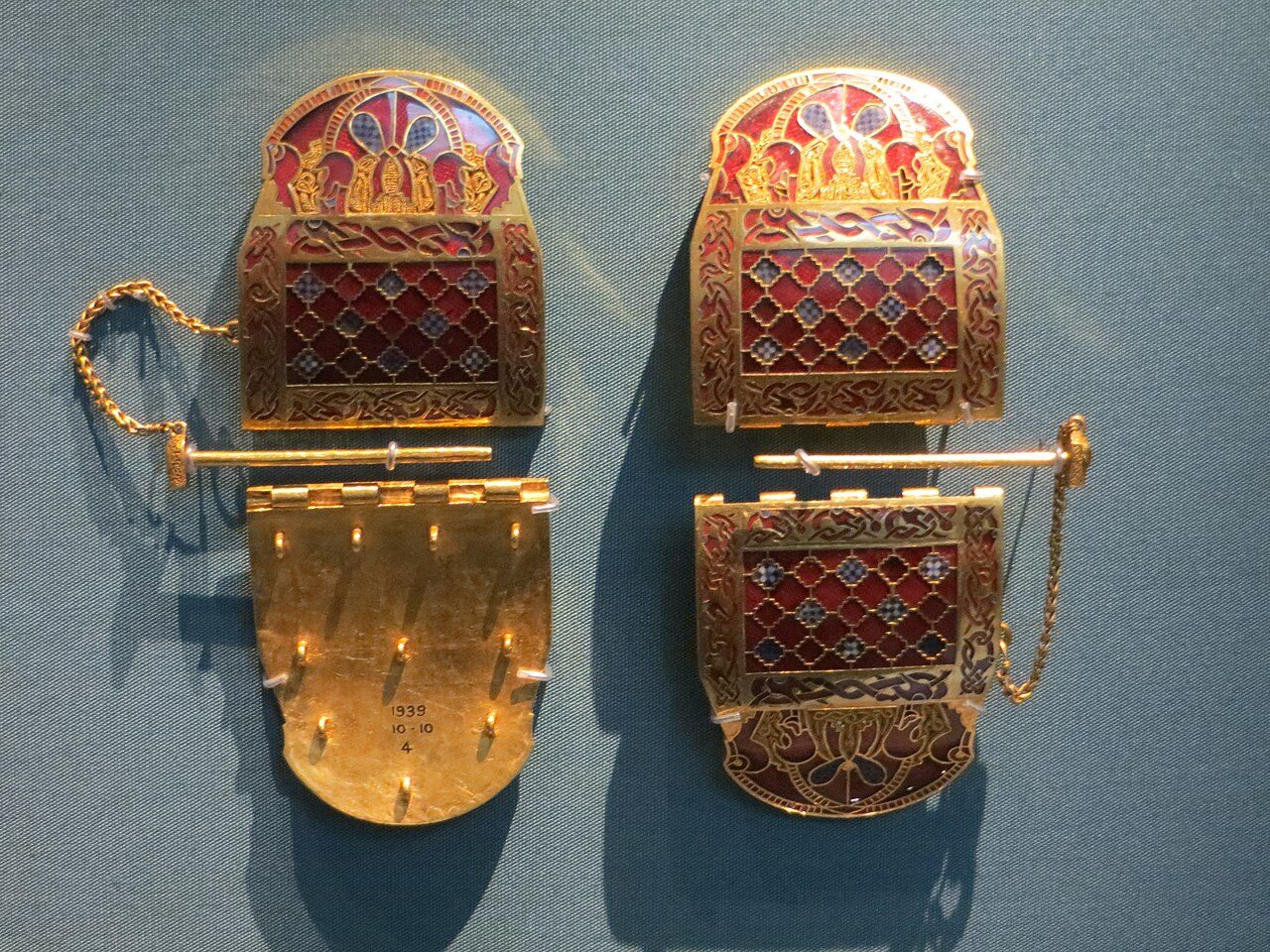
Photo: Jononmac46, CC BY-SA 3.0, via Wikimedia Commons
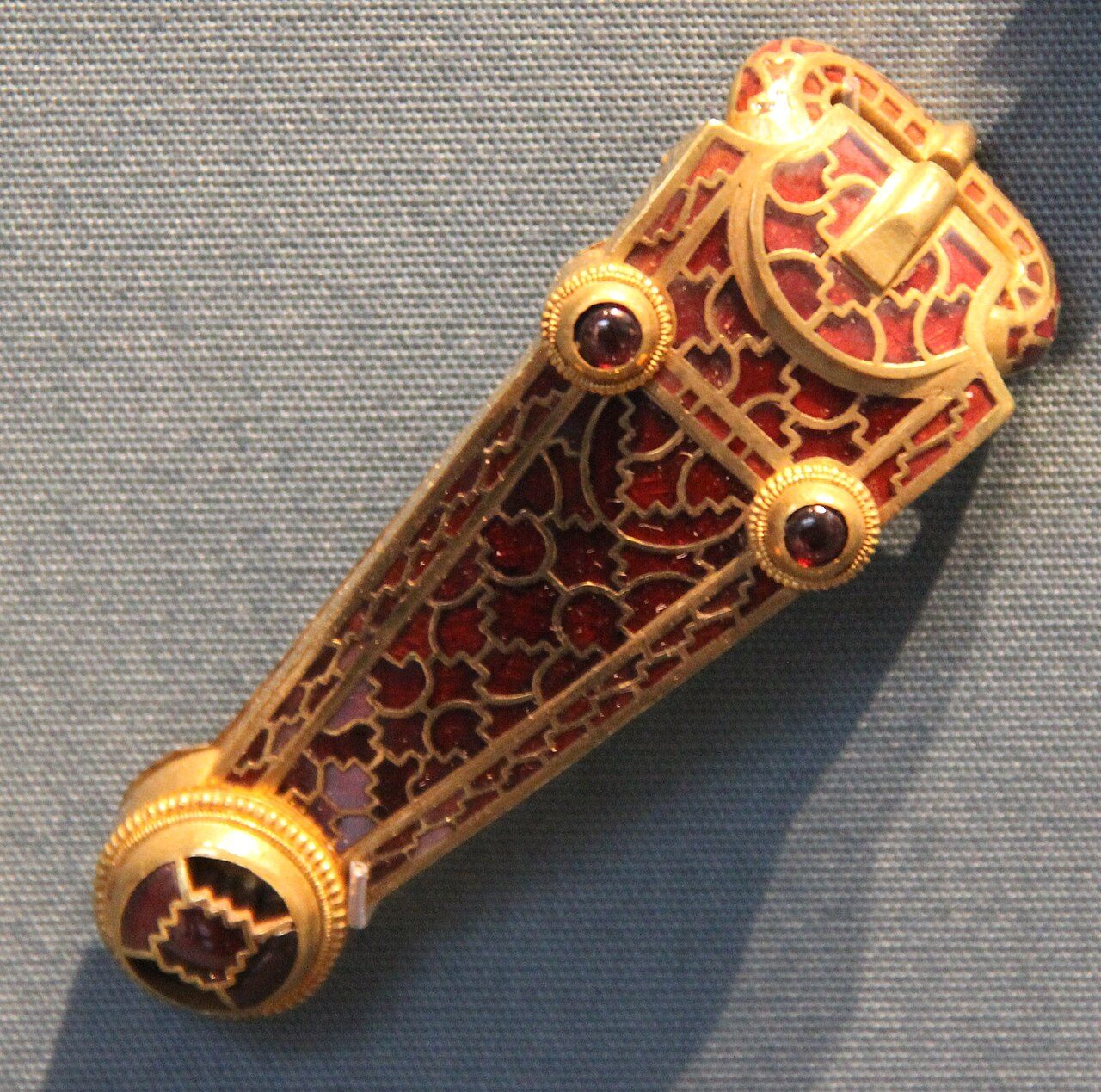
Photo: Gary Todd from Xinzheng, China, CC0, via Wikimedia Commons
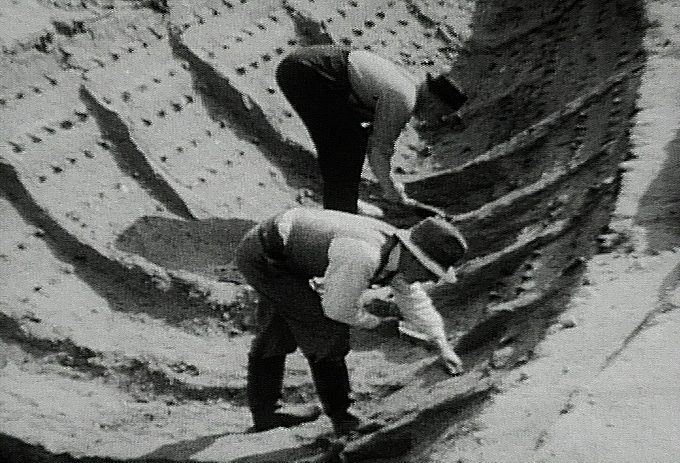
Photo: Harold John Phillips, Public domain, via Wikimedia Commons
How it is dated
The coins in the purse are the key: all 37 are Frankish gold tremisses, and specialist analysis places their assembly between about 610 and 635. Older work put the latest coin at about 625. That fits the recorded death of Rædwald around 624, but on the coins alone the burial could fall anywhere in the 610s, 620s or early 630s.
What happened after the find
At a treasure trove inquest held in Sutton village hall in 1939, the jury found that the objects had been buried without intention of recovery, so they were not treasure trove and belonged to the landowner, Edith Pretty. She gave the whole find to the British Museum, at the time the largest gift ever made to the museum by a living donor.
Where sources differ
- There is no single published object count for Mound 1; figures such as 263 objects circulate online but could not be tied to a primary source, so count is left null.
- Gold weight: the Staffordshire Hoard website (2009) gave 1.66 kg of gold for Sutton Hoo; Wikipedia's Staffordshire article says 1.5 kg. Not entered as a weight.
- Identity of the buried man: Rædwald is the usual candidate but remains unproven; a 2025 Oxford paper proposed an East Anglian who had served in the Byzantine army.
- Coin date: 610-635 (Gareth Williams, British Museum) versus a latest coin of about 625 in older work (Lafaurie).
Questions
Is Sutton Hoo a hoard?
Not strictly. It is a burial, furnished in public and never meant to be recovered, whereas a hoard is usually hidden for safekeeping. That is why the 1939 inquest ruled it was not treasure trove; it appears here as the essential point of comparison for Anglo-Saxon hoards.
Where is the Sutton Hoo treasure now?
The Mound 1 finds are in the British Museum in London, displayed in Room 41. The National Trust site at Sutton Hoo in Suffolk has the mounds, an exhibition hall and replicas.
Who was buried at Sutton Hoo?
The grave carries no name. Most scholars think it was a king of the East Angles, and Rædwald, who died around 624, is the favourite candidate, but the identification cannot be proved.