Money you could weigh
For two centuries, much of northern Europe ran on silver that nobody had to trust: it was weighed on folding scales, nicked to test it and cut to make change. These pages tell that story, and draw careful, clearly labelled parallels with how value is verified today.
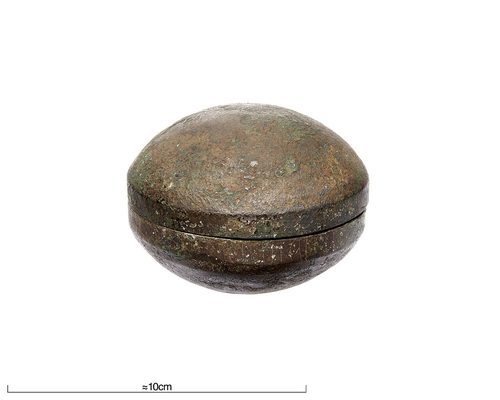
Trust and scarcity: from hacksilver to on-chain
Every money has to answer one question: who checks that it's real?
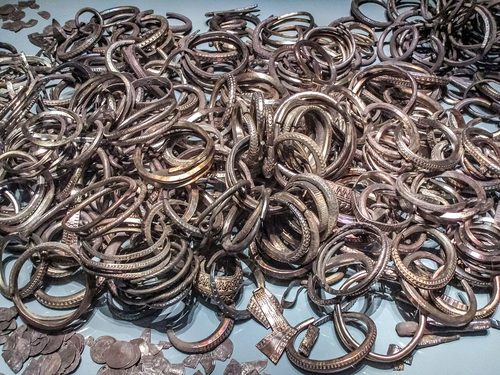
Silver by weight: the Viking bullion economy
In the Viking age a brooch was worth what it weighed, so people cut it up to pay.
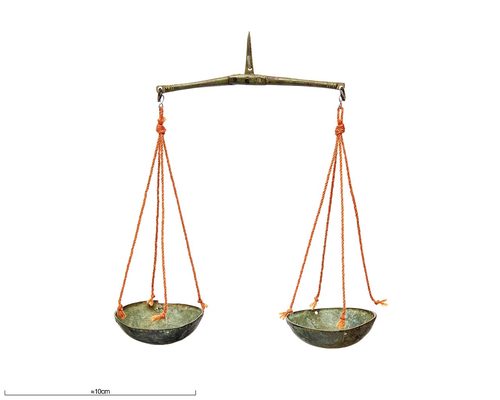
Folding balances and standard weights
A Viking trader's most important tool was a scale that folded into a box.
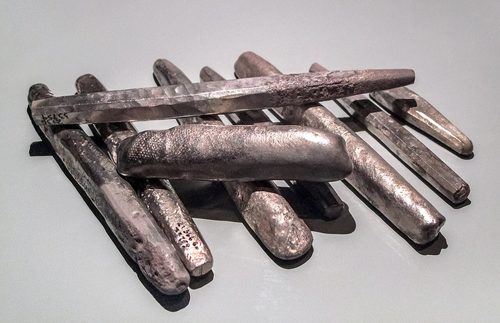
Nicks and pecks: testing silver without a mint
Every knife nick on a Viking ingot marks someone who refused to take silver on trust.
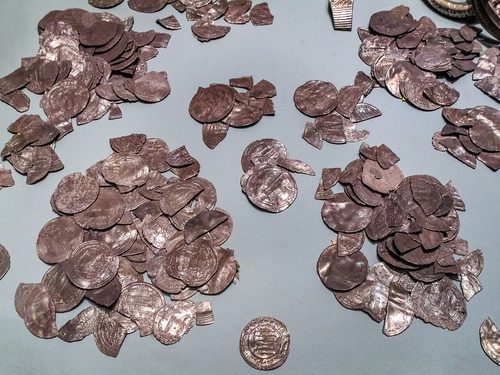
Dirhams north: Islamic silver on the Volga road
Much of the Viking age's silver was minted in Central Asia and dug up on Gotland.
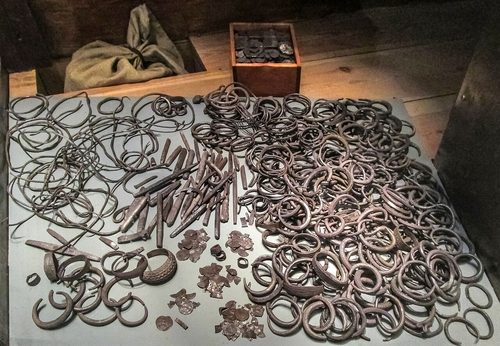
Hoards as ledgers: what a buried fortune records
A hoard is a balance sheet frozen on the day its owner put it in the ground.
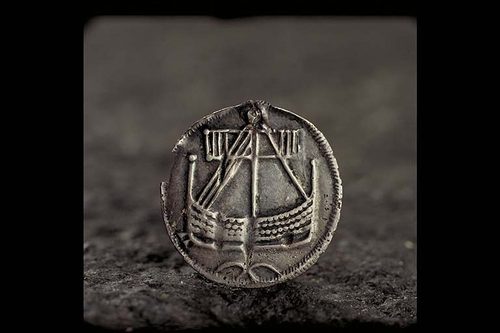
From weight to coin: when the king's stamp took over
Coins won when people trusted the king's stamp more than their own knife.
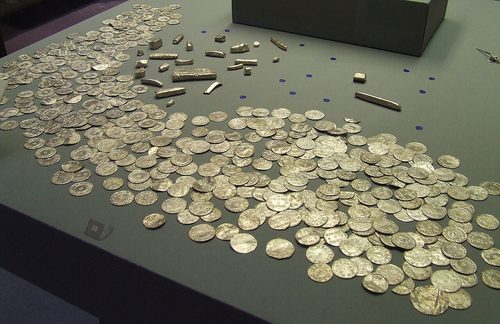
Tracing provenance: following the silver back
Lead isotopes traced a silver pot from a Scottish Viking-age hoard to Iranian ore.
Comparisons with modern technology on these pages are analogies, marked as such, with their limits stated. Nothing here is financial or investment advice, and this site promotes no token, coin or exchange. Why this site is on a .kred domain.