What is in a hoard
Hoards are made of a surprisingly small range of things: money in whatever form it took, precious-metal ornaments, tableware, war gear and church plate. These pages explain each, with the hoards where it matters most.
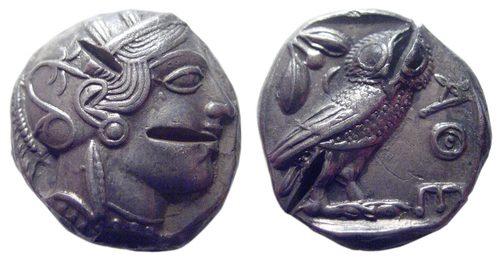
Ancient coins: Greek, Persian and Celtic
Athenian owls, Persian gold darics and Celtic staters copied from Philip of Macedon: the first coinages, how they were made and why so many were buried.
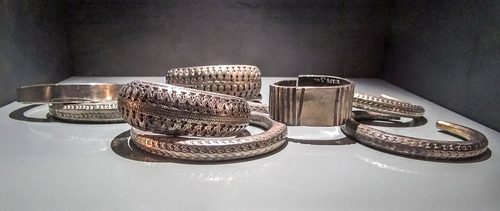
Arm-rings and ring-money
Worn on the arm, given by lords and cut up as bullion: broad-band arm-rings, Scottish ring-money and Permian rings, and the weights they were made to.
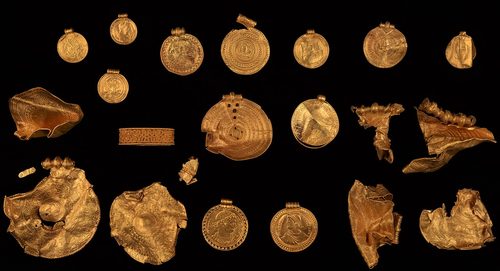
Bracteates
Thin one-sided gold pendants of 5th- and 6th-century Scandinavia, stamped with riders, gods and runes, and the medieval German coins that share their name.
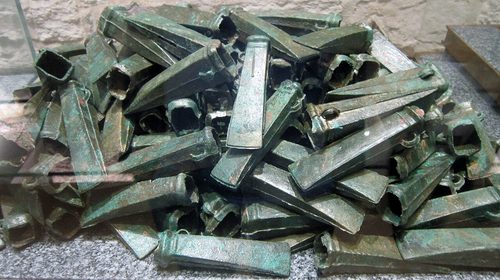
Bronze Age tools and weapons
Axes, swords, spearheads and scrap buried by the hundred in Bronze Age Europe: how to tell a flat axe from a palstave, and why so much went underground.
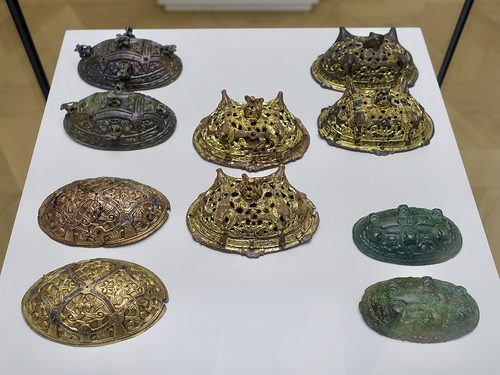
Brooches
Dress fasteners that changed with every fashion, so they date the hoards they lie in: Roman fibulae, Pictish and Irish penannulars, Viking oval brooches.
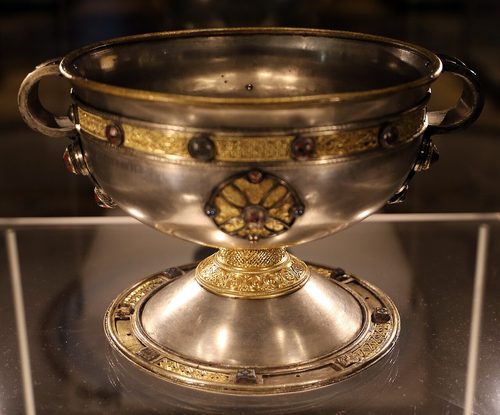
Church treasure
The silver of the early Church, from 4th-century Water Newton to the Ardagh and Derrynaflan chalices: what it was for, how it was made, why it was hidden.
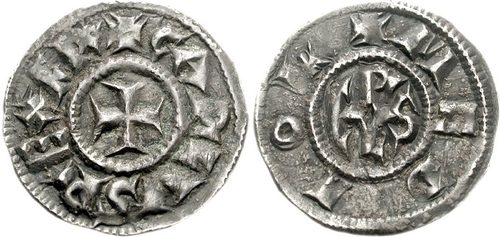
Early medieval coins
From small Anglo-Saxon sceattas to Carolingian deniers, Offa's pennies and the St Edmund and York coins struck by Viking rulers, c. 600-1100.
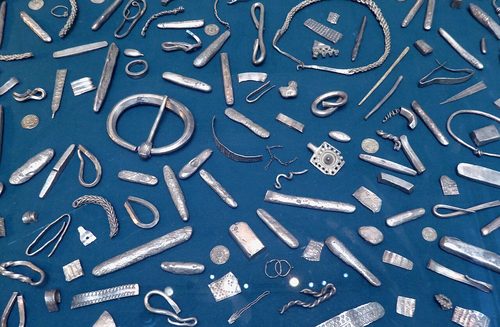
Hacksilver
Chopped arm-rings, ingots, coins and plate: how hacksilver worked as money, how it was tested and weighed, and which hoards are full of it.
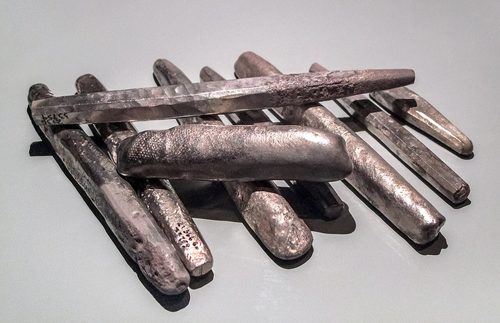
Ingots
From stamped late Roman silver bars to finger-sized Viking ingots: how ingots were cast, what they weighed and why so many were nicked and cut.
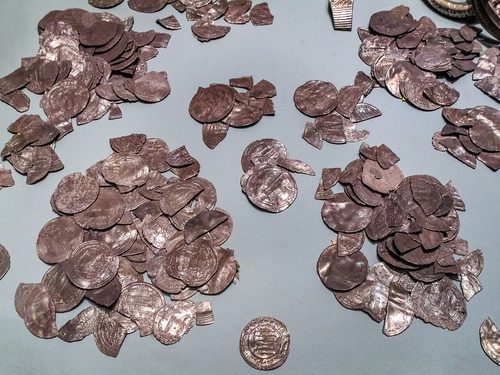
Islamic dirhams
Hundreds of thousands of silver dirhams, most from Samanid Central Asia, reached the Baltic by river and ended up whole, cut or melted in Viking hoards.
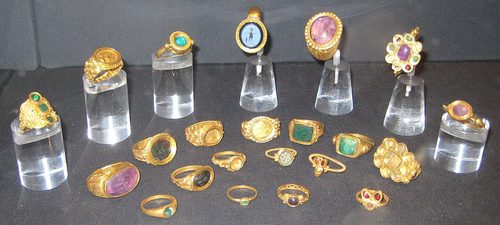
Jewellery
Finger-rings, necklaces, chains, bracelets and pendants from hoards, Roman to Jacobean: how they were made, how to read them, and what they reveal.
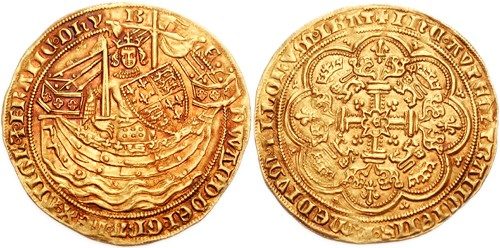
Medieval coins
Sterling pennies, groats and the gold florins, ducats and nobles that fill hoards from about 1100 to 1500, and how their weights date a find.
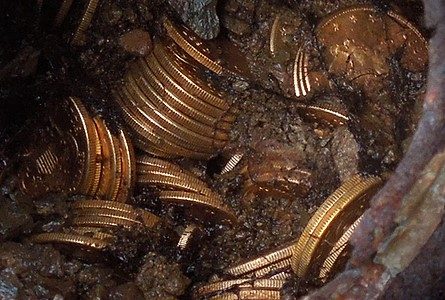
Modern coins
Big silver thalers, Spanish pieces of eight and gold double eagles: the coins people buried after 1500, from Civil War pots to Gold Rush cans.
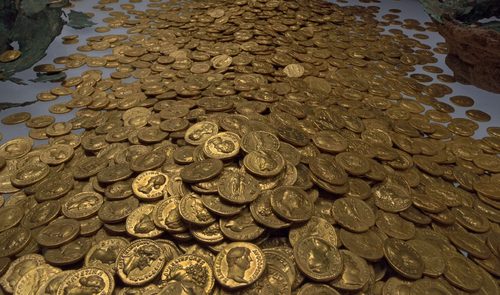
Roman coins
Aurei, denarii, radiates, solidi, siliquae and nummi: how Roman coins were made, how they lost their silver, and how to read a Roman coin hoard.
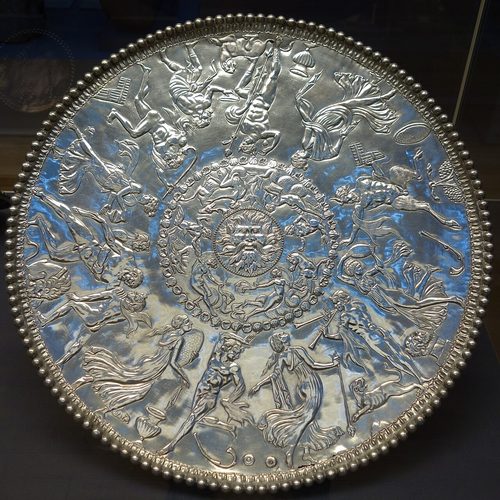
Roman silver tableware
Dishes, bowls, spoons and pepper-pots: how Roman silver plate was made, weighed and stamped, and why so much of it ended up buried or cut to pieces.
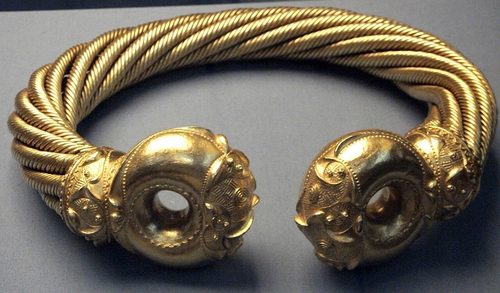
Torcs
Rigid neck-rings of gold, silver and bronze, worn by the Iron Age elite of Europe, buried in hoards from Norfolk to Galicia and cut up as bullion.
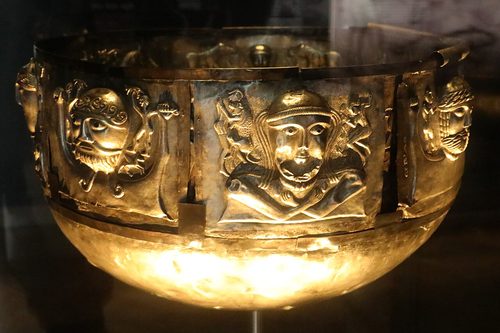
Vessels
Gold and silver vessels from Bronze Age bowls to Thracian rhyta and the Gundestrup cauldron: how they were made, used for feasting, and buried.
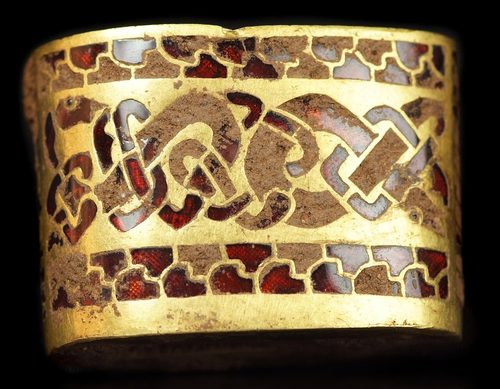
War-gear
Gold pommels, hilt collars and helmet plates stripped from weapons: how to recognise war-gear in a hoard, from Staffordshire to Sutton Hoo.