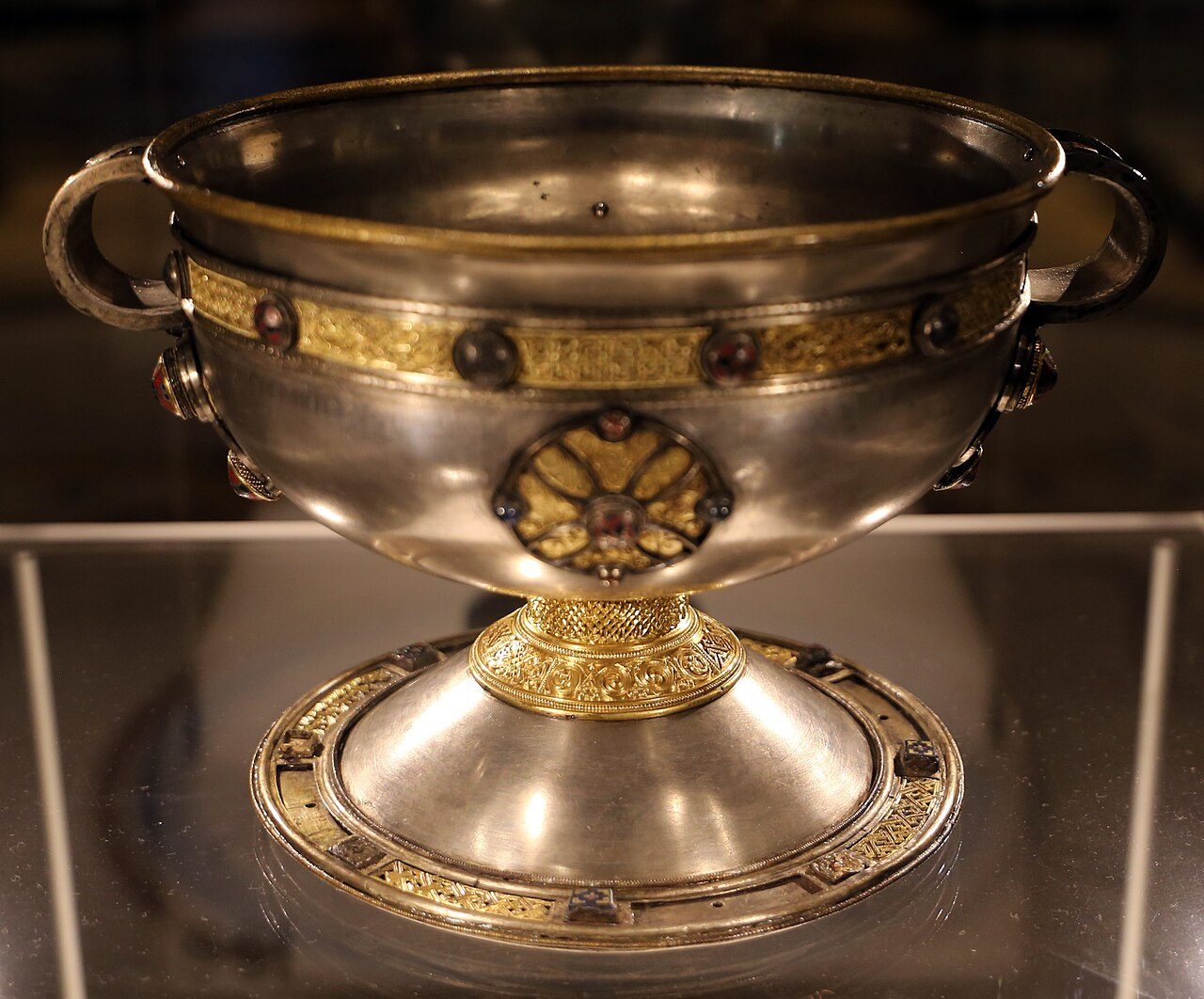
In September 1868 two boys, Jim Quin and Paddy Flanagan, were digging potatoes inside a ringfort called Reerasta, beside the village of Ardagh in west County Limerick. Under a stone slab they found a large silver cup with other objects tucked inside it. The cup was the Ardagh Chalice, one of the most celebrated pieces of medieval metalwork in Europe.
Quin's mother sold the find to the Catholic Bishop of Limerick, George Butler, who in turn sold it to the Royal Irish Academy; accounts differ on the prices. When the new National Museum opened in Dublin in 1890, the Academy's antiquities passed to it, and the chalice has been on show there ever since. Flanagan stayed in Limerick; Quin emigrated to Australia and died in Melbourne in 1934.
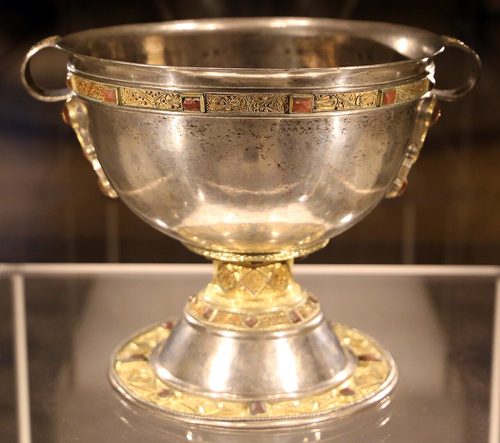
The chalice is a broad, two-handled bowl of beaten silver on a conical foot, assembled from some 350 separate components. A girdle below the rim holds panels of gold filigree, animals, birds and interlace worked in wire so fine that two layers are sometimes soldered one over the other, punctuated by studs of red and blue enamel and glass. The names of the apostles are lightly engraved around the bowl, and even the underside of the foot is decorated. What sets it apart, more than the detail, is the restraint: the ornament is concentrated in bands and roundels, leaving the smooth silver to carry the shape.
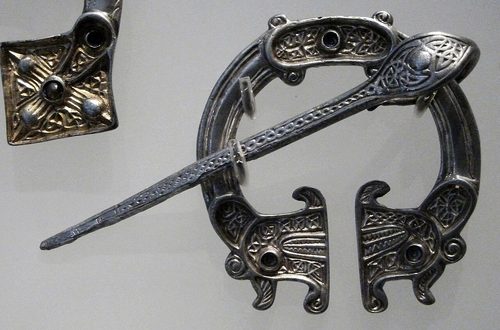
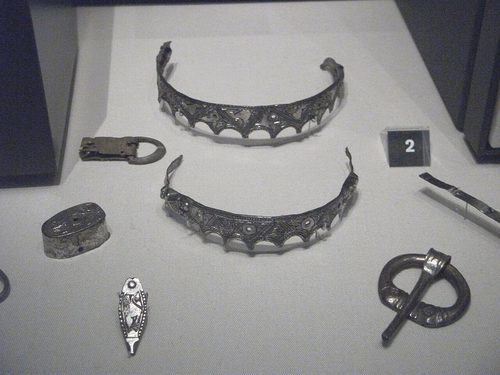
With it were a plain stemmed cup of copper alloy and four brooches. Three are pseudo-penannular brooches, large ornate dress fasteners of the kind worn by high-status lay people and, it seems, by clergy fastening their vestments. The fourth is a thistle brooch, a simpler true penannular type with globular, thistle-like terminals, and it is the youngest object in the group, made around 900.
So the hoard brings together pieces of different ages. The chalice dates from the 8th century; the thistle brooch is more than a century younger. The group was evidently buried in a hurry, under nothing more than a slab, in or around the Viking Age. An old story that the chalice was looted from the monastery of Clonmacnoise by a Limerick Viking cannot be proved. The discovery in 1980 of the closely related Derrynaflan Chalice in neighbouring Tipperary makes an origin in Munster, among the church foundations patronised by the region's kings, at least as likely.
The chalice became a national emblem. It appeared on an Irish definitive stamp in the early 1990s, and two of the Gaelic Athletic Association's trophies, the Sam Maguire Cup for Gaelic football and the O'Duffy Cup for camogie, are modelled on it.
Highlights
A two-handled silver chalice of the 8th century with gold filigree, enamel studs and the apostles' names engraved round the bowl. It is often ranked with the Book of Kells among the masterpieces of Insular art.
Three large silver-gilt brooches with panels of filigree and settings. Their form is close to that of the Tara Brooch.
A penannular brooch with thistle-shaped terminals, the latest object in the hoard and the key to its date of burial.
What is in it
A great two-handled silver chalice, a much plainer copper-alloy stemmed cup, and four silver brooches, three of them elaborate pseudo-penannular brooches and one a thistle brooch.
Size: 6 objects.
| Item | Number | Notes |
|---|---|---|
| The Ardagh Chalice | 1 | Silver with gold filigree, gilt bronze and enamel; 8th century |
| Stemmed cup | 1 | Plain copper alloy |
| Pseudo-penannular brooches | 3 | Large ornate silver-gilt brooches of the kind worn by high-status laity and clergy |
| Thistle brooch | 1 | A true penannular brooch with thistle-shaped terminals, the latest object |
Photographs
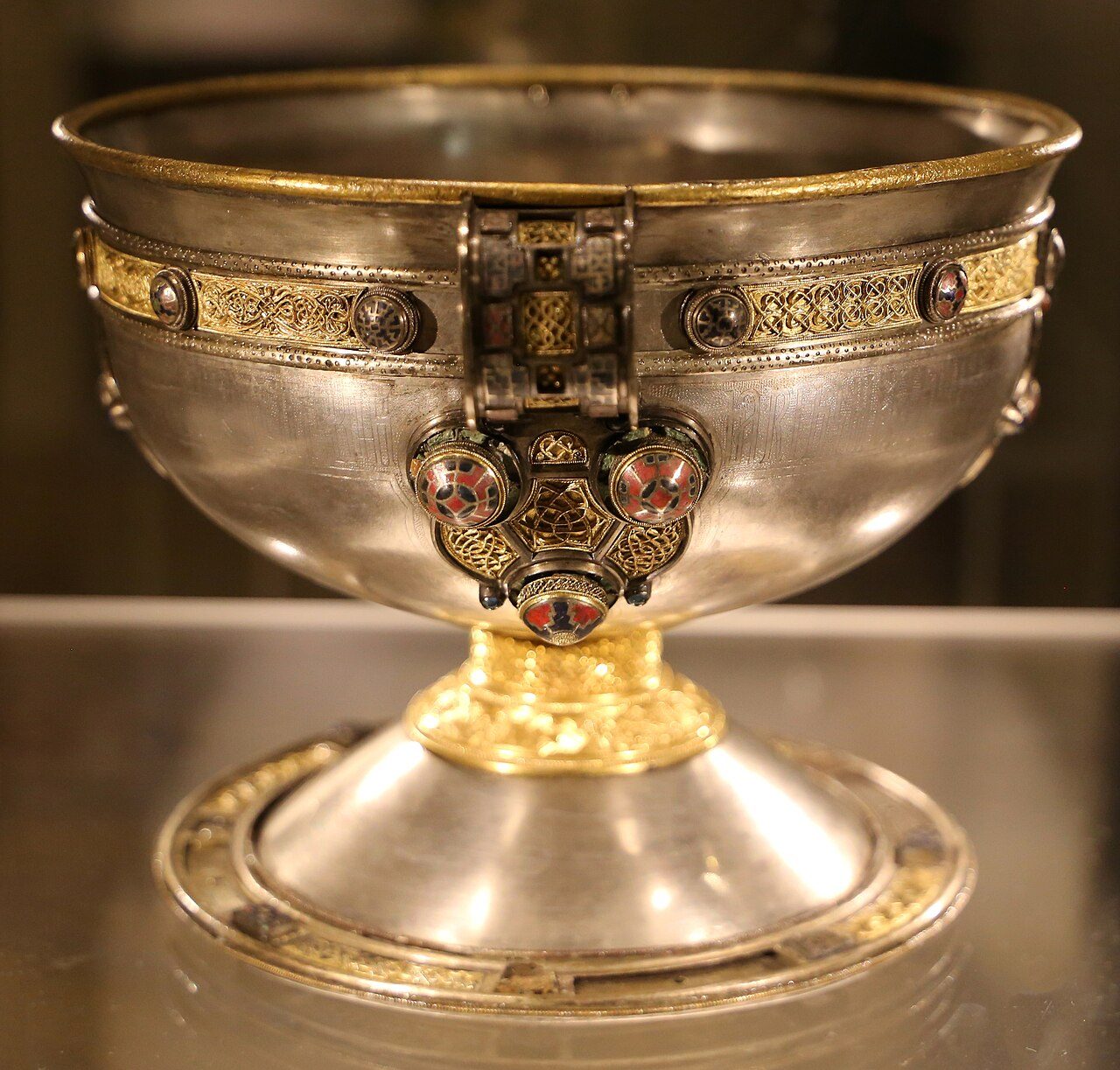
Photo: Sailko, CC BY 3.0, via Wikimedia Commons
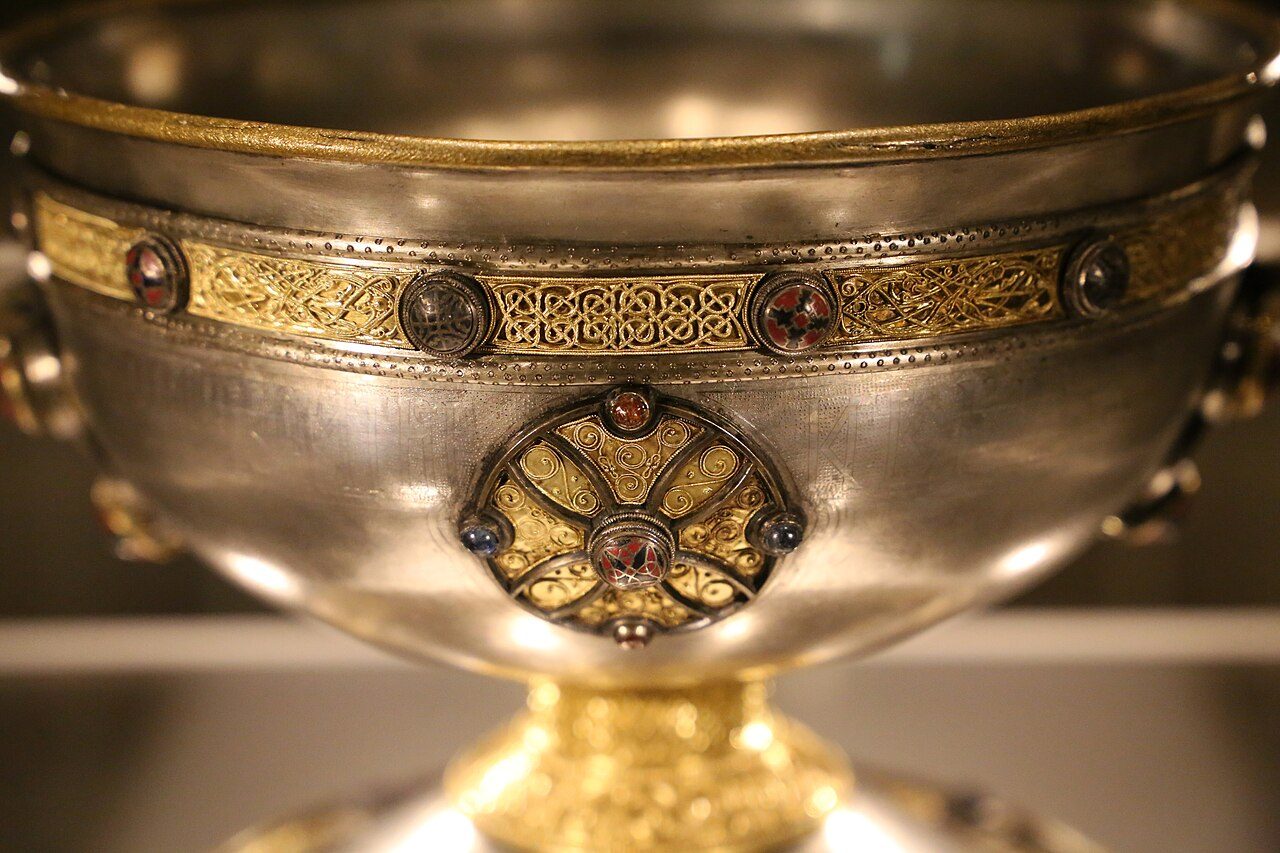
Photo: Sailko, CC BY 3.0, via Wikimedia Commons
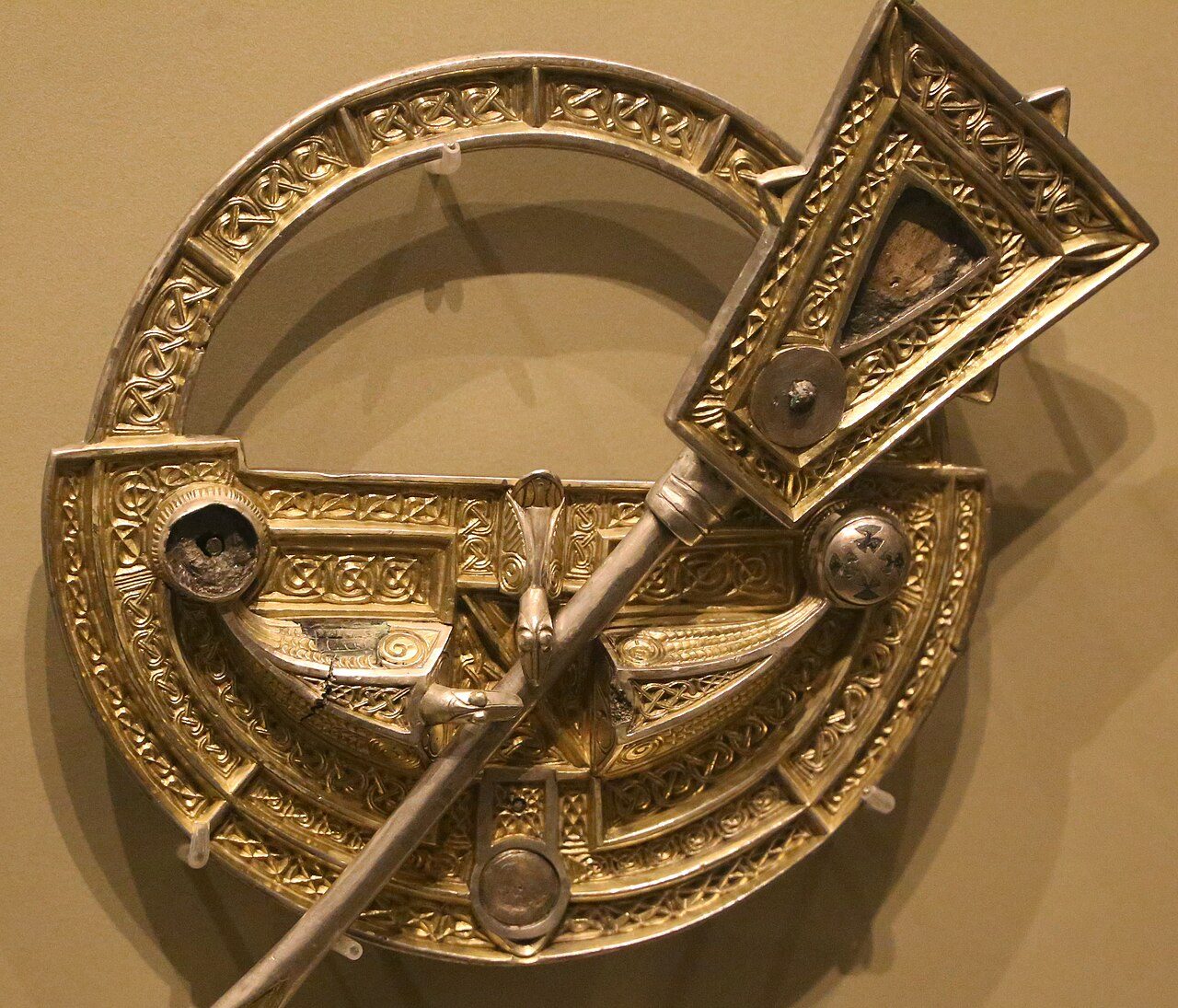
Photo: Sailko, CC BY 3.0, via Wikimedia Commons
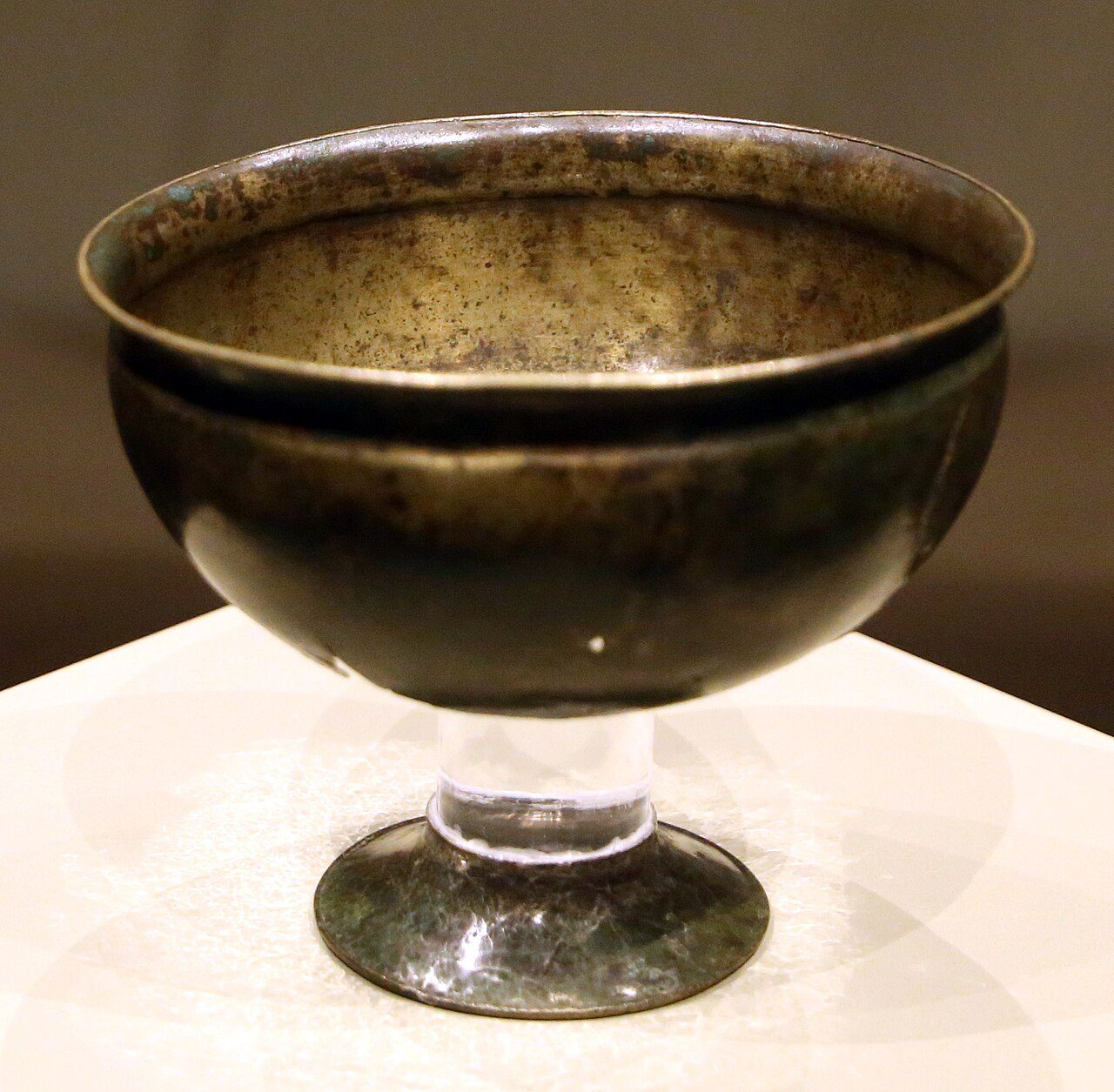
Photo: Sailko, CC BY 3.0, via Wikimedia Commons
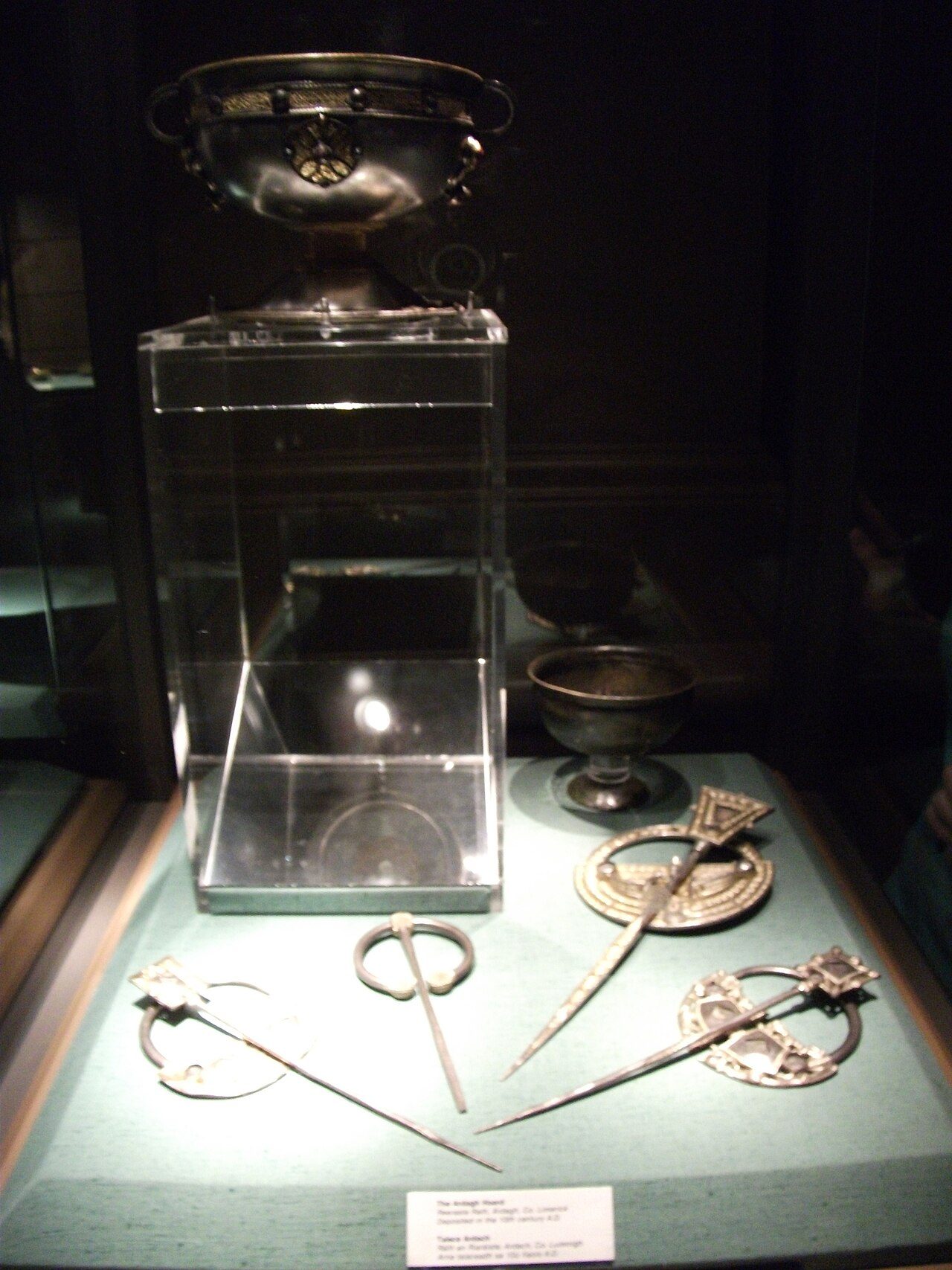
Photo: Johnbod, CC BY-SA 3.0, via Wikimedia Commons
How it is dated
The chalice is dated on style to the 8th century and the pseudo-penannular brooches to the 8th or 9th. The thistle brooch is the latest piece, made around 900 or early in the 10th century, so the hoard cannot have been buried much before then.
What happened after the find
Sold by the finder's mother to the Bishop of Limerick and then to the Royal Irish Academy; it passed to the National Museum of Ireland on its opening in 1890. No treasure trove proceedings are recorded in the sources consulted.
Where sources differ
- Sale prices: £50 from Mrs Quin to Bishop Butler (Limerick Diocese Heritage); the bishop's sale to the Royal Irish Academy is given as £500 by the diocese site and £100 by other accounts.
- Chalice height: about 7 in (Wikipedia) versus 'six inches high' (Limerick Diocese Heritage). Not stated on the page.
- 354 components is from Wikipedia (citing the NMI treasures catalogue); not confirmed in a second source.
- Finders' name spelled Quin (Wikipedia, diocese site) or Quinn (some popular accounts).
- Description of the stemmed cup varies between 'bronze chalice' and 'copper-alloy stemmed cup'.
Questions
Where is the Ardagh Chalice?
It is in the National Museum of Ireland - Archaeology on Kildare Street in Dublin, with the rest of the Ardagh Hoard. It has been on display there since the museum opened in 1890.
Who found the Ardagh Chalice?
Two local boys, Jim Quin and Paddy Flanagan, found it in September 1868 while digging potatoes in the Reerasta ringfort at Ardagh, County Limerick.
How old is the Ardagh Chalice?
It was made in the 8th century AD. It was buried with younger objects around AD 900.