Just before Christmas 2014 about a hundred members of a metal detecting club gathered for a rally on farmland at Lenborough, a hamlet outside Buckingham. One of them found a piece of lead some 60 cm down and almost threw it aside as junk; then he saw a single bright coin beneath it, lifted a larger piece of lead and found row upon row of silver pennies packed in neat stacks. He stopped and called for help. The county's Finds Liaison Officer was on site to record finds that day and excavated the hoard immediately, so that it reached the British Museum still in order.
The parcel held 5,251 whole silver pennies and one cut half, making it one of the largest hoards of Anglo-Saxon coins ever found in Britain, and the largest for over 150 years. Kept in heavy clay and wrapped in lead, the coins survived in near-mint condition; the club's founder said they looked as if only two people had ever handled them, the person who struck them and the person who buried them.
The coins belong to two kings whose reigns span a conquest: Æthelred II, nicknamed the Unready, and Cnut the Great, the Danish king who took the English crown in 1016 and reigned until 1035. Discover Bucks Museum calls it the story of a forgotten invasion, fifty years before William the Conqueror. The pennies were struck at about 40 different mints across England, a sign of how centralised and widespread the late Anglo-Saxon coinage was.
Who buried more than five thousand pennies in a Buckinghamshire field, and why, is not known. It was a large sum of money, and the careful packing suggests it was meant to be retrieved. The museum dates the burial to around 1035, the year Cnut's reign ended, but no event links the hoard to a particular moment.
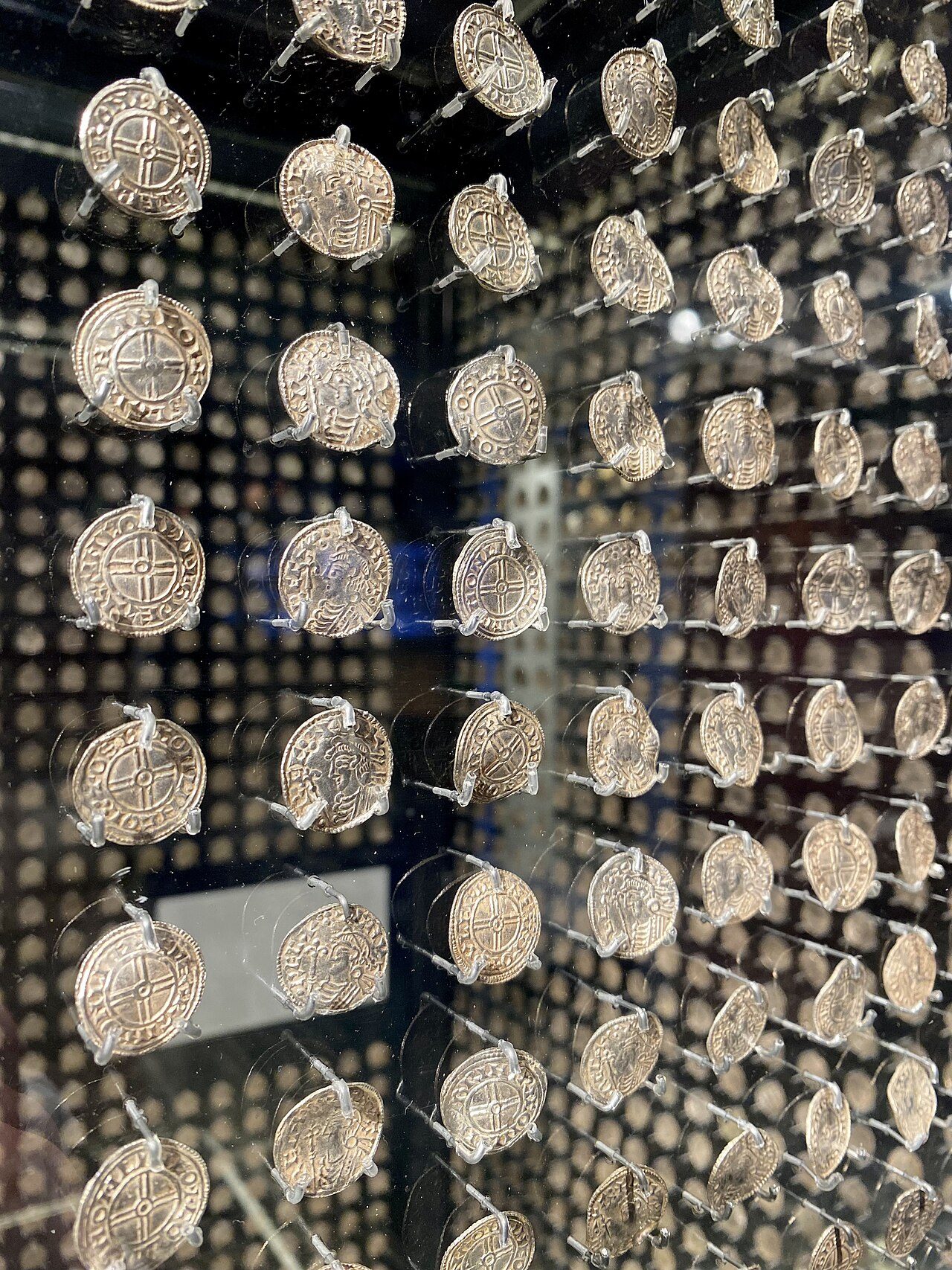
The hoard was declared Treasure. In June 2016 the Treasure Valuation Committee valued it at £1.35 million, to be shared between the finder and the landowner, and after a fundraising appeal the Buckinghamshire County Museum acquired it. It is now displayed in Aylesbury in a tall glass case of coins, with a map of the mints that struck them.
Highlights
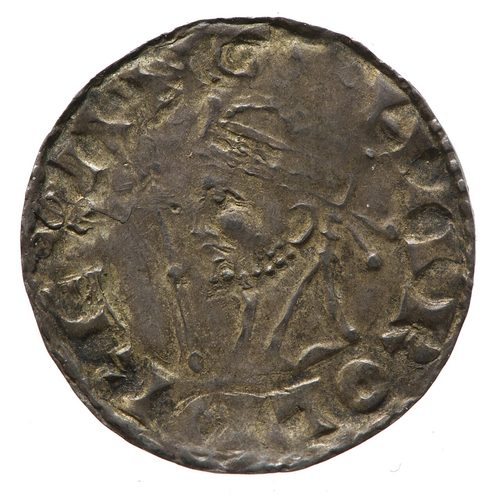
Coins of the Danish king who won the English throne in 1016, many in near-mint condition.
Coins of the English king whose long reign ended with Cnut's conquest in 1016.
Sheet lead folded around the stacked coins, which kept them bright for almost a thousand years.
A single penny cut in half, the medieval way of making small change.
What is in it
A single parcel of silver pennies of Æthelred the Unready and Cnut the Great, struck at about 40 English mints, stacked in a wrapping of sheet lead.
Size: 5,251 whole coins and one cut half.
| Item | Number | Notes |
|---|---|---|
| Pennies of Æthelred II and Cnut | 5,251 whole | from about 40 mints across England |
| Cut halfpenny | 1 | a coin cut in half for small change |
| Lead wrapping | 1 | sheet lead folded round the coins |
Photographs
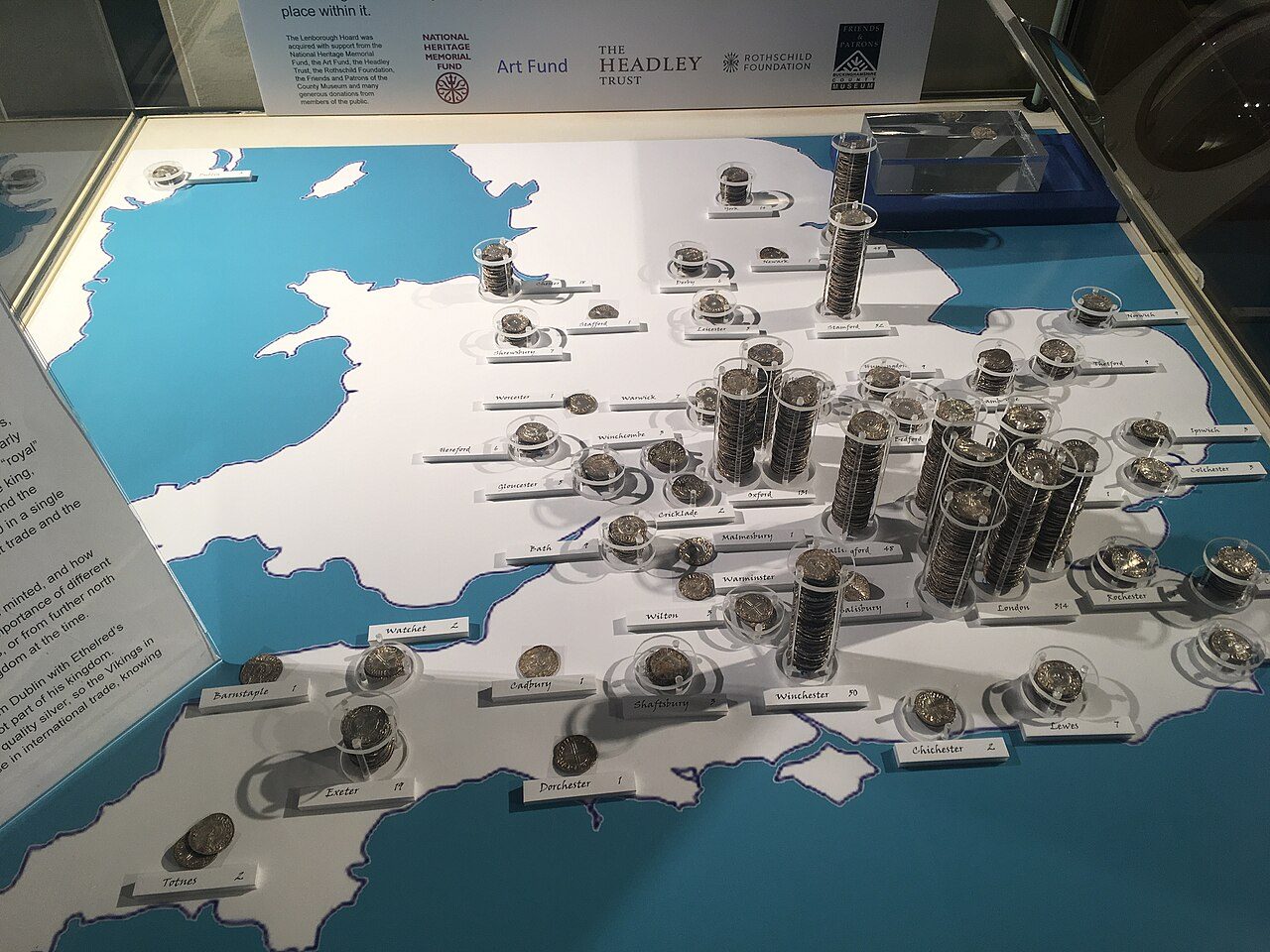
Photo: No Swan So Fine, CC BY-SA 4.0, via Wikimedia Commons
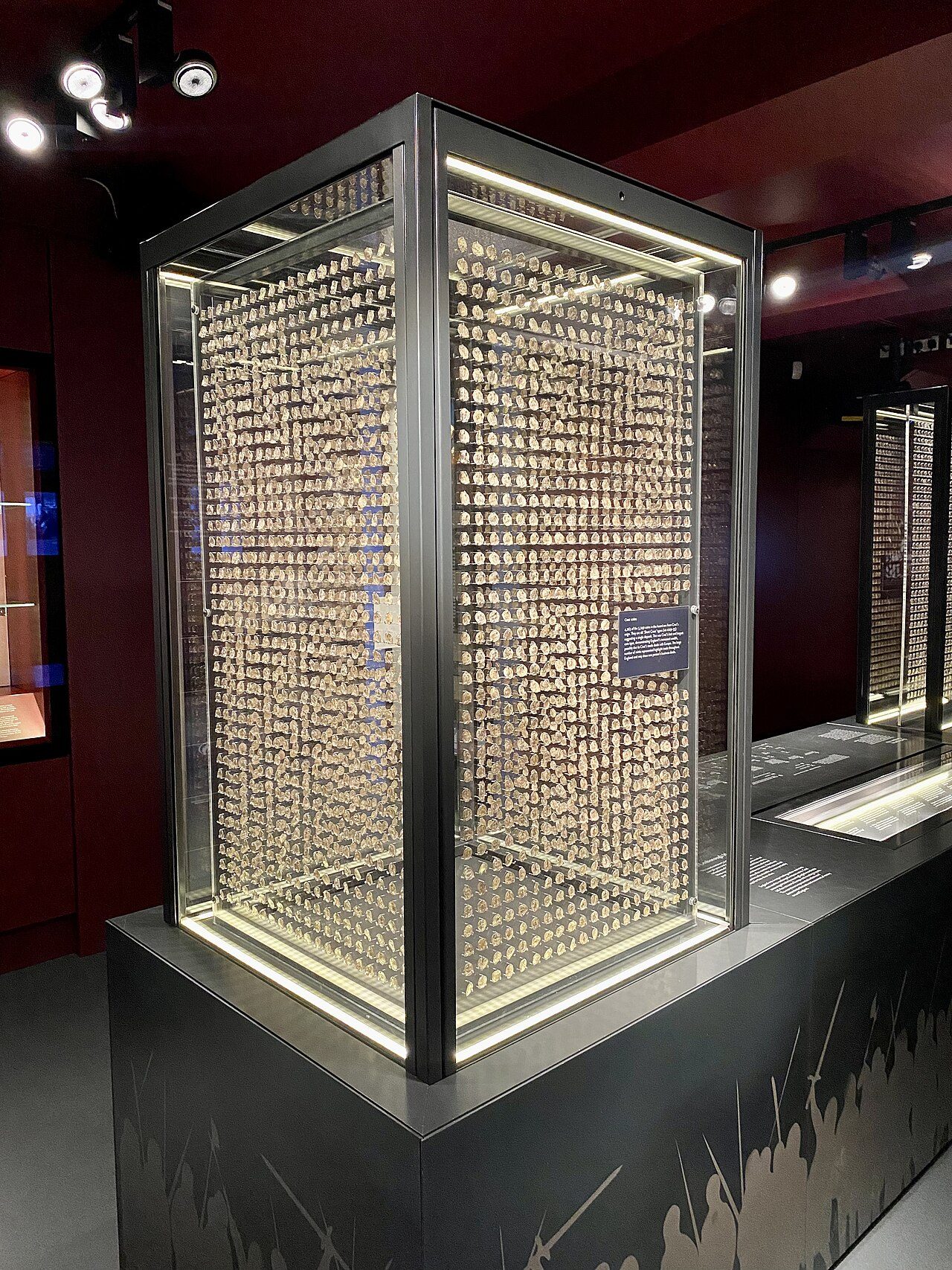
Photo: No Swan So Fine, CC BY-SA 4.0, via Wikimedia Commons
How it is dated
The latest coins are of Cnut, who died in 1035. Discover Bucks Museum dates the burial to about 1035; Wikipedia gives the first half of the 11th century.
What happened after the find
Reported and excavated at the rally by the Portable Antiquities Scheme's Finds Liaison Officer, then declared Treasure under the Treasure Act 1996. Valued at £1.35 million in June 2016, it was bought by the Buckinghamshire County Museum after a public appeal, the reward being shared by finder and landowner.
Where sources differ
- Coin count: the BBC gives 5,251; Wikipedia gives 5,252 (5,251 whole plus one half). Both agree on the whole coins.
- Deposit date: the museum says about 1035; no coin-type breakdown was available to check the latest issue.
- The 60 cm depth is the 'two feet' reported by Wikipedia and the BBC, converted.
Questions
Where is the Lenborough Hoard displayed?
At Discover Bucks Museum (formerly Buckinghamshire County Museum) in Aylesbury, with some coins on loan to the Old Gaol in Buckingham.
How much was the Lenborough Hoard worth?
The Treasure Valuation Committee valued it at £1.35 million in June 2016, shared between the finder and the landowner.
Which kings are on the Lenborough coins?
Æthelred the Unready (978-1016) and Cnut the Great (1016-1035), the Danish king who conquered England.