Viking-age hoards
c. 800-1100 · 28 hoards on this site
In May 1840 workmen repairing an embankment of the River Ribble near Preston broke open a lead box holding more than 8,600 pieces of silver: coins, ingots, arm-rings, chopped brooches and fragments. The Cuerdale Hoard weighs between about 32 and 40 kg, depending on whose account you follow, and was probably buried in the first decade of the 900s, around the time the Vikings were driven out of Dublin. Only one Viking hoard is bigger. In 1999 a field at Spillings on Gotland gave up two deposits under the floor of a building, about 67 kg of silver in all, with 14,295 coins, mostly Islamic, and nearly 500 arm-rings, buried some time after 870. Gotland alone has produced more than 700 hoards of the ninth to twelfth centuries, over a tonne of silver and about 168,000 coins from the Islamic world.
These hoards are the archive of a bullion economy. In most of the Viking world silver passed by weight, not by count, so a coin from Baghdad, a cut bar and a section of a Frankish brooch were all simply silver, and many pieces carry small nicks where someone tested the metal beneath the surface. Traders carried folding scales and sets of weights; a set from a burial on the island of Gigha suggests a system built on a unit of about 12.5 g. Plain arm-rings from Scotland and the Isle of Man cluster around 24 g, the weight of the Norwegian øre or ounce, and may have worked as portable savings. Where the Vikings met a coin-using state, as in England, the two systems met in the same hoard: Cuerdale mixes coins from the Viking kingdoms of eastern England with Wessex issues and foreign coins in proportions of about 5:1:1. The weight explorer compares hoards with Anglo-Saxon livestock prices of the 930s.
Why so much silver stayed in the ground is a live question. A thirteenth-century Icelandic text offers one answer: in Snorri Sturluson's Ynglinga saga, Odin decrees that the dead should be burned with their goods, so that each will come to Valhalla 'with the riches he had with him upon the pile; and he would also enjoy whatever he himself had buried in the earth' (Laing's 1844 translation). That is a late, literary source, written two centuries after the period it describes, and most specialists treat Viking hoards as savings, payments and loot, hidden in unsettled times and never reclaimed. The care taken over some deposits fits either reading: the Vale of York Hoard, buried around 927-928, packed 617 coins and 65 other objects into a gilt silver cup inside a lead container.
The heaviest concentrations lie on the Baltic islands, above all Gotland, and around the Irish Sea and the road between Dublin and York along which Cuerdale's owners travelled. Newer finds still change the picture, and the best of them were recorded properly: the two detectorists who found the Vale of York Hoard in 2007 kept the cup and its contents intact, noted the find-spot and reported it to the Portable Antiquities Scheme, which is why so much could be learned from it.
Viking age hoards
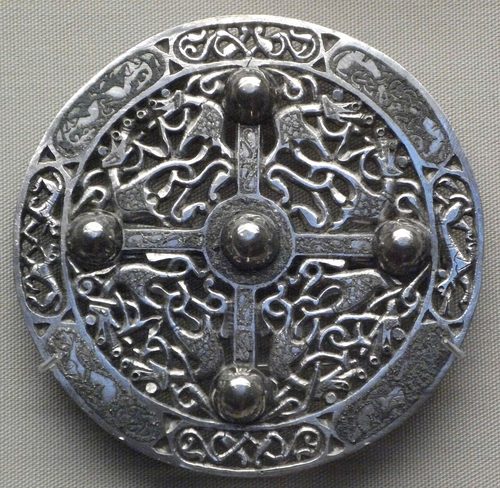
Pentney Hoard
Six silver openwork disc brooches of the early 9th century, dug up by a gravedigger in a Norfolk churchyard in the late 1970s.
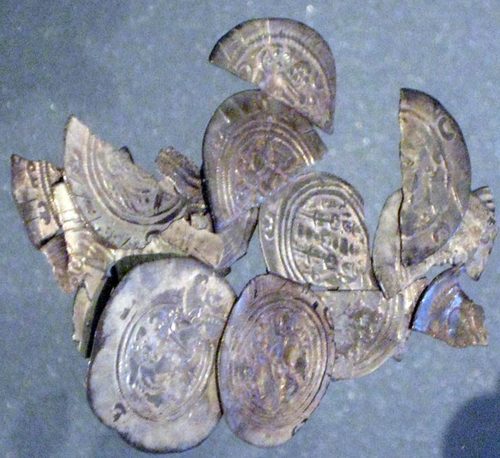
Sundveda Hoard
482 silver coins, mostly Islamic dirhams, found by archaeologists in an old grave near Sigtuna in 2008 and buried around 850-860.
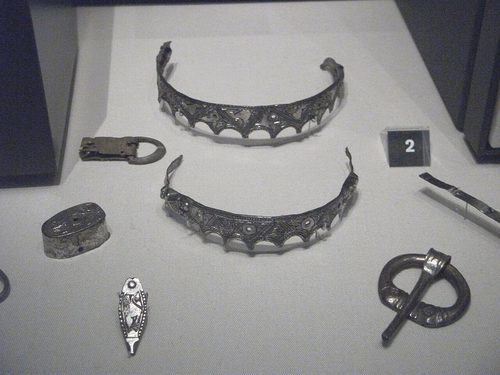
Trewhiddle Hoard
At least 114 silver pennies, a silver chalice and a unique silver scourge, found by Cornish tin-streamers in 1774 and buried in the 860s or 870s.
Beeston Tor Hoard
49 silver pennies, two Trewhiddle-style brooches and three rings, hidden in a Staffordshire cave around 875 and found by a clergyman caver in 1924.
Herefordshire Hoard
A Viking hoard of about 300 coins and gold jewellery buried c. 879 near Leominster, found in 2015 and sold illegally; only a tenth is recovered.
Watlington Hoard
About 200 silver coins, ingots and arm-rings buried c. 879 in Oxfordshire, with rare Two Emperors pennies showing Alfred and Ceolwulf II as partners.
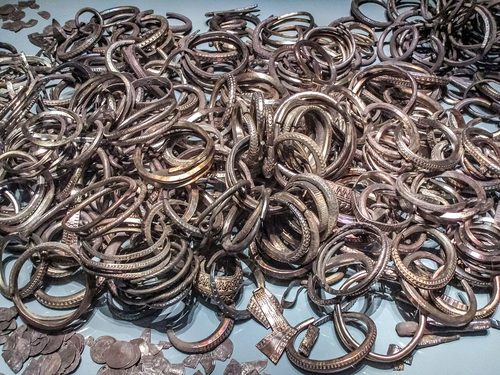
Spillings Hoard
The largest Viking silver hoard known: about 67 kg of silver, 14,295 coins and nearly 500 arm-rings, buried in a Gotland storehouse after AD 870.
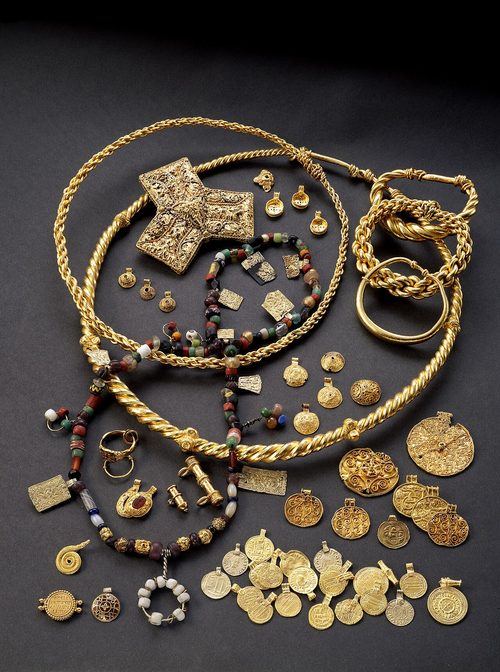
Hoen Hoard
Norway's largest Viking gold find: about 2.5 kg of neck-rings, arm-rings, coin pendants and beads, dug from a bog at Hokksund in 1834.
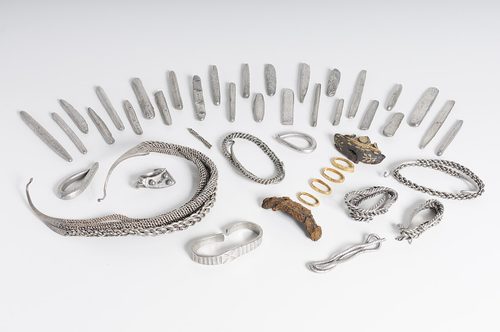
Bedale Hoard
A gold-inlaid sword pommel, silver neck-rings and 29 ingots, buried in North Yorkshire around 900 and found in 2012. Now in the Yorkshire Museum.
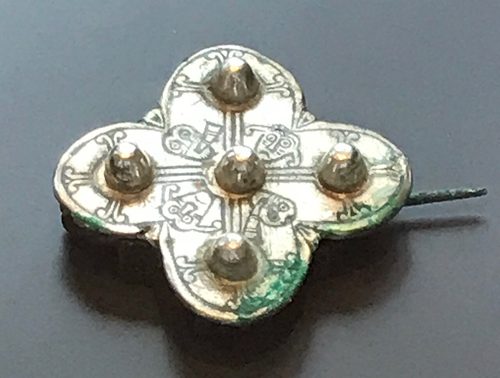
Galloway Hoard
Over 100 objects, more than 5 kg of silver, gold, silk and crystal, buried c. AD 900 in Kirkcudbrightshire and found in 2014. Now in Edinburgh.
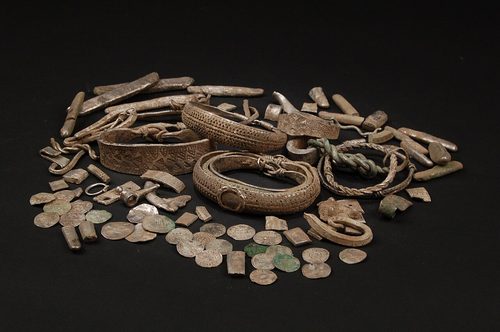
Silverdale Hoard
201 pieces of Viking silver in a lead box, buried c. 900 near Silverdale, Lancashire, including a coin naming an unknown king, Airdeconut.
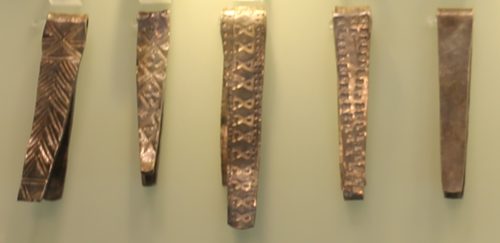
Huxley Hoard
21 flattened silver arm-rings and an ingot, about 1.5 kg of Hiberno-Norse silver buried c. 900-910 at Huxley, Cheshire, and found in 2004.
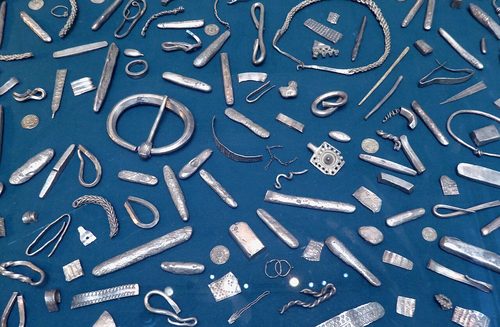
Cuerdale Hoard
About 8,600 pieces of Viking silver, some 40 kg of coins, ingots and chopped jewellery, buried c. 905-910 beside the River Ribble in Lancashire.
Harkirke Hoard
Viking-age silver pennies dug up in 1611 in a Catholic burial ground at Little Crosby, Lancashire, recorded in an engraving, then lost or melted.
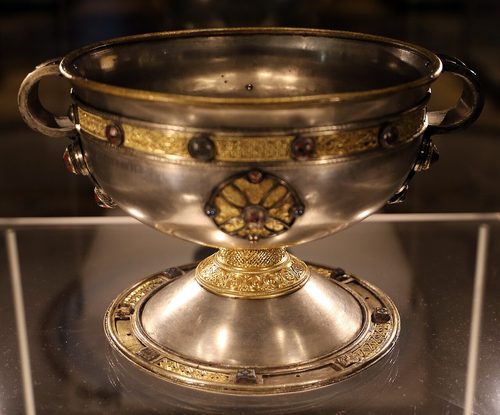
Ardagh Hoard
The Ardagh Chalice, a plain bronze cup and four brooches, dug up by two boys in a Limerick ringfort in 1868; buried around AD 900.
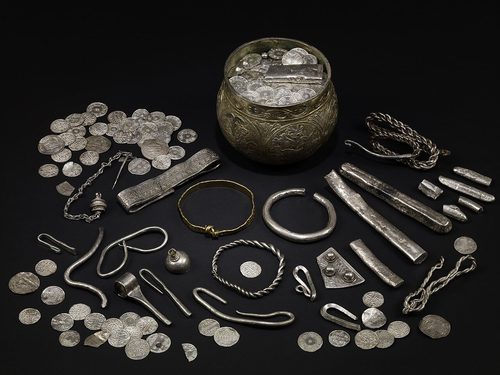
Vale of York Hoard
617 silver coins and dozens of ornaments packed into a Carolingian gilt cup, buried in North Yorkshire c. 928 and found by two detectorists in 2007.
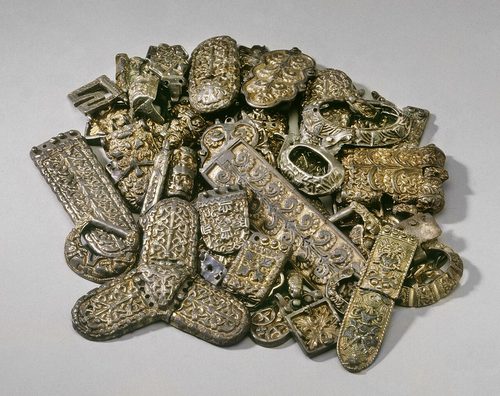
Duesminde Hoard
About 50 Frankish silver-gilt belt and sword-belt fittings, 1.3 kg in all, found with a detector on Lolland in 2002; buried in the mid-10th century.
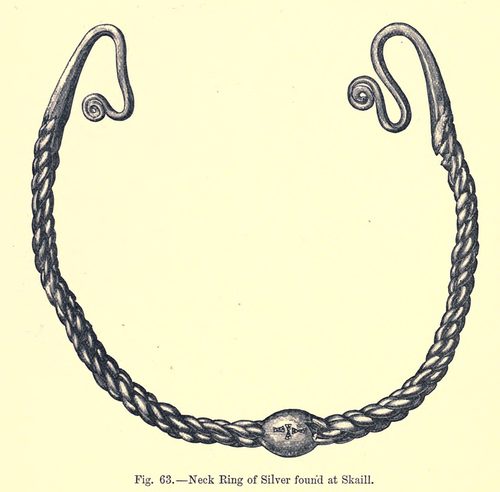
Skaill Hoard
Over 100 pieces of Viking silver, about 8 kg, buried c. 950 at Skaill in Orkney and found in a rabbit hole in 1858: Scotland's largest Viking silver hoard.
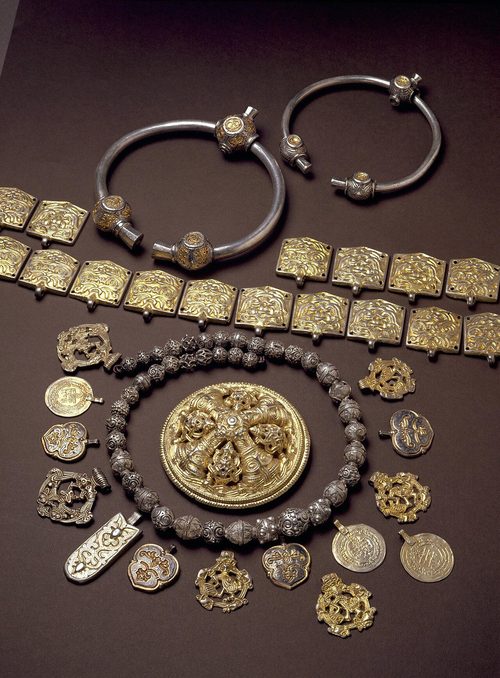
Vårby Hoard
A 10th-century silver-gilt jewellery hoard found by a boy gathering brushwood near Lake Mälaren in 1871, mixing Scandinavian, Rus' and Islamic ornaments.
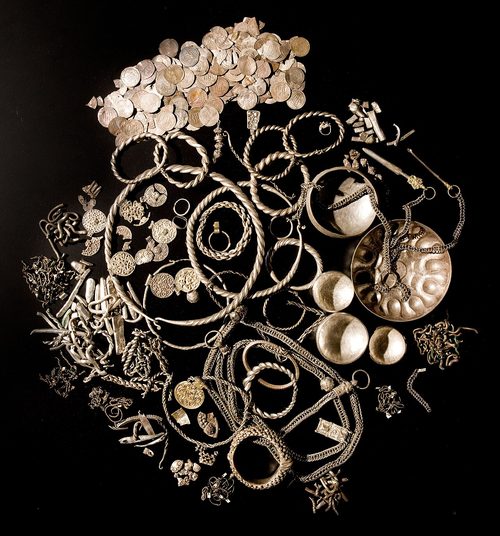
Terslev Hoard
6.6 kg of Viking silver dug up by two boys in a Zealand garden in 1911: 1,751 coins, silver cups and bowls, chains and fine filigree jewellery.
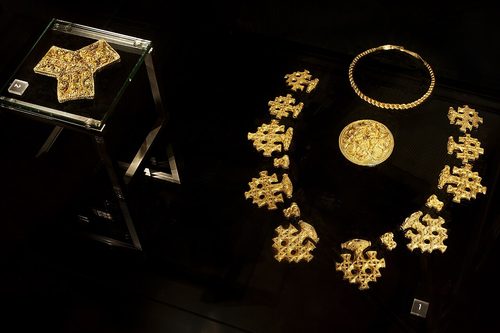
Hiddensee Treasure
Sixteen pieces of late 10th-century Viking gold jewellery, about 600 g, washed out of a Baltic beach on Hiddensee by storm floods in 1872-74.
Schaprode Hoard (Harald Bluetooth hoard)
About 1.5 kg of Viking-age silver found on Rügen in 2018, with some 100 cross coins of Harald Bluetooth, buried in the 980s as the king fled.
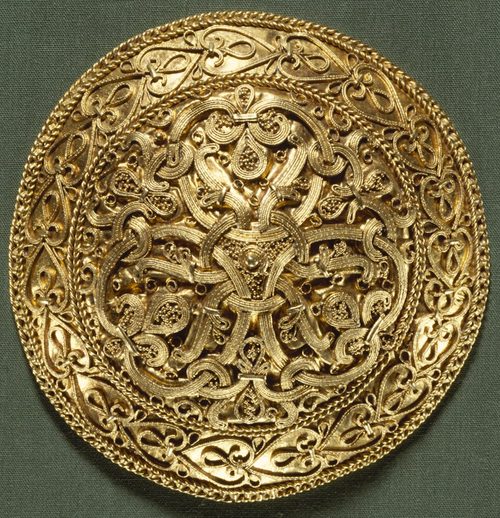
Hornelund Hoard
Two gold filigree brooches and a gold arm-ring found by a farmhand near Varde, Jutland, in 1892: the finest Viking goldsmith's work known from Denmark.
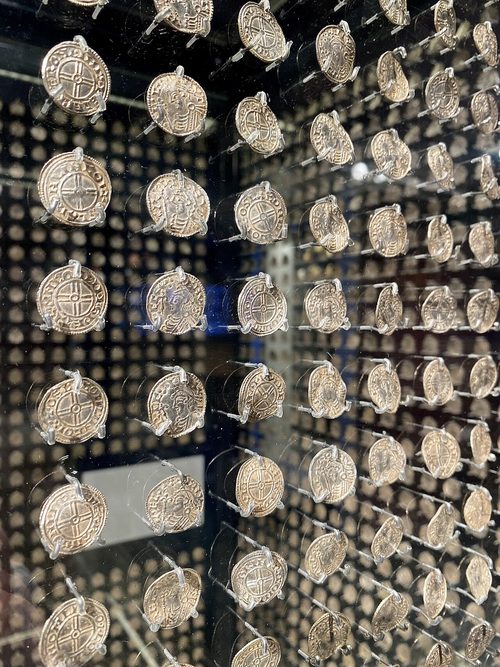
Lenborough Hoard
5,251 silver pennies of Æthelred the Unready and Cnut, wrapped in lead and buried around 1035 near Buckingham; found at a detecting rally in 2014.
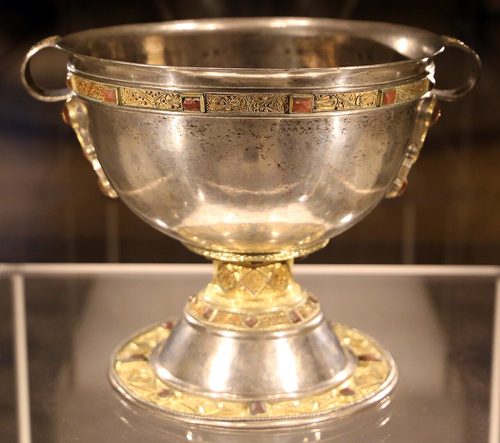
Derrynaflan Hoard
A silver chalice, paten, stand, strainer and bronze basin from an Irish monastic island, found by detectorists in 1980; the lawsuit changed Irish law.
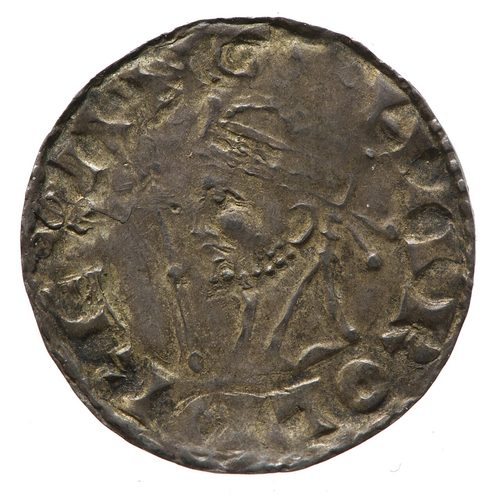
Chew Valley Hoard
About 2,500 silver pennies of Harold II and William I buried in Somerset in 1067-68 and found by detectorists in 2019; bought for the nation for £4.3m.
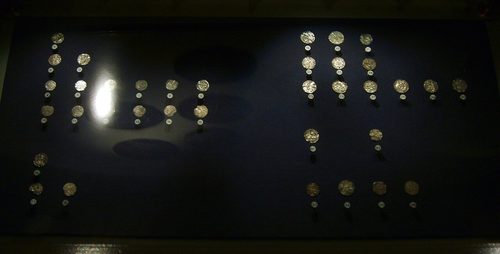
Sandur Hoard
The only coin hoard found in the Faroe Islands: 98 silver pennies from six countries, buried at Sandur around 1070-1090 and found in 1863.
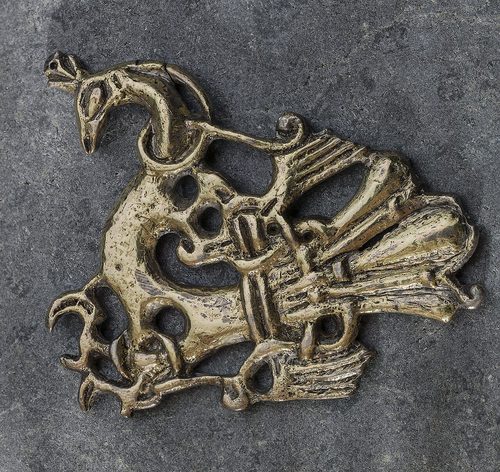
Græsli Hoard
2,253 silver coins, hacksilver and a gilt bird brooch found in a potato field in Tydal, Norway, in 1878: the key hoard for King Olav Kyrre's coinage.
Sources
- Cuerdale Hoard (Wikipedia)
- Spillings Hoard (Wikipedia)
- Vale of York Hoard (Wikipedia)
- Viking weights and measures (Hunterian Museum, archived)
- Scottish silver arm-rings: an analysis of weights, Warner and Graham-Campbell, PSAS 107 (1978)
- Heimskringla, Ynglinga saga ch. 8, trans. Samuel Laing 1844 (Wikisource)