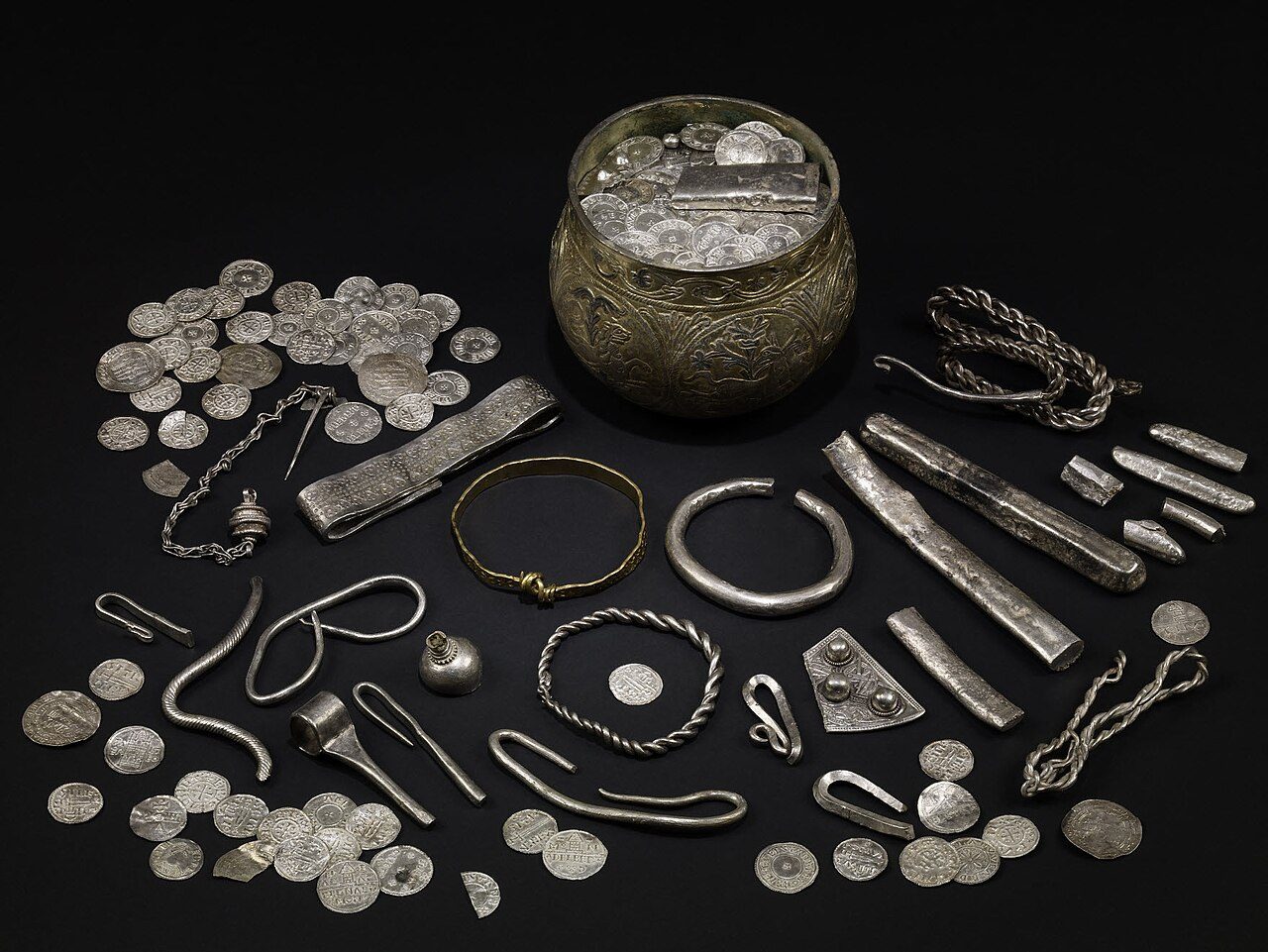
In January 2007 a father and son out metal detecting on a field near Harrogate got a strong signal, dug about 30 cm and hit lead. As they lifted it a small silver bowl rolled out of the side of the hole, stuffed with coins and pieces of silver. Instead of emptying it, they recorded the spot, kept the bowl's contents packed exactly as found and called the local Finds Liaison Officer of the Portable Antiquities Scheme. It was the right decision: within days rain had washed out the hole, and the cup was later excavated layer by layer in the British Museum's conservation workshop.
The cup itself is the star. It is silver-gilt, about 12 cm across, and chased with six roundels of running animals, big cats and deer among them, framed by vine scrolls hung with grapes. It is so close to a cup from Halton Moor in Lancashire that both must come from the same Carolingian workshop of the mid-9th century. Cups like it were probably made for church use, and this one most likely left a Frankish church or monastery as Viking loot or tribute.
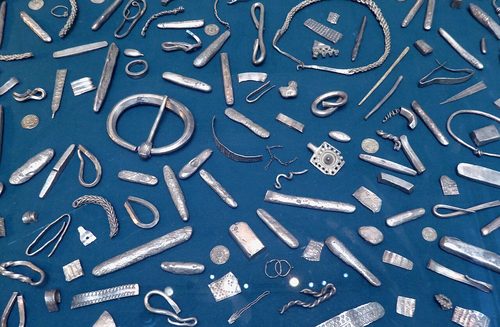
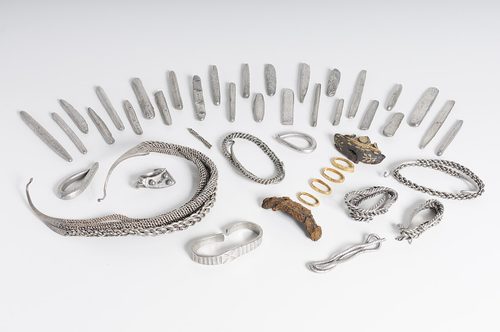
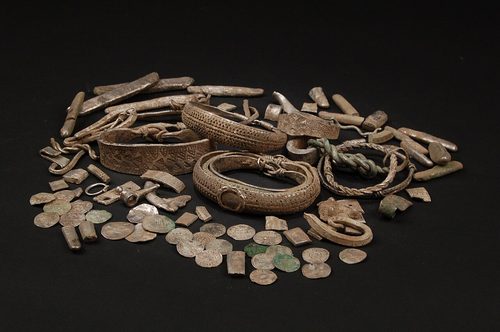
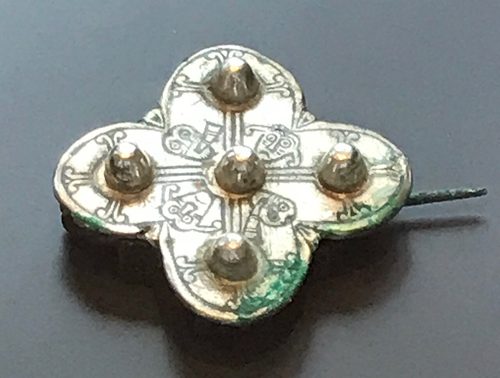
Inside and around it lay 617 silver coins, a gold arm-ring, four silver arm-rings and dozens of cut pieces of brooches, ingots and rods. The coins read like a map of the Viking world. Most are English, from Alfred the Great to Athelstan; others were struck by the Viking kings of York, some carrying the sword of St Peter; four are Carolingian; fifteen are Islamic dirhams, mostly struck by the Samanid rulers of Central Asia, one at al-Shash, modern Tashkent. A fragment of a brooch with bosses is Irish work, and some of the rings are Scandinavian types.
The coins also date the burial unusually tightly. Athelstan took York from its Viking king in 927 and promptly issued a 'Church' type penny there; the hoard holds dozens of these, freshly struck, but only a single coin of the type that followed around 928. Whoever buried the silver did so in the first unsettled year or so of English rule over the north. That fits a picture of wealthy Northumbrian Vikings adjusting to a new regime, though why this owner never came back for it is unknown.
The hoard is the largest Viking find from Britain since Cuerdale in 1840. A coroner declared it Treasure in July 2007; it was valued at £1,082,000 and bought jointly by the Yorkshire Museum and the British Museum with help from the National Heritage Memorial Fund, the Art Fund and the British Museum Friends. It has since travelled widely, including to the British Museum's 2014 Vikings exhibition, and is back on show in York.
Highlights
A Carolingian silver-gilt cup of the mid-9th century with six roundels of running animals and vine scrolls, twin to the Halton Moor cup. It held most of the hoard.
A narrow gold band with twisted wire ends, decorated with punched V-shapes. Gold arm-rings are rare in Viking hoards.
Freshly struck 'Church' type pennies of Athelstan, most with a York mint signature, record the first months of English rule in Viking Northumbria.
Fifteen Islamic coins, many cut as bullion, carried west from Central Asia along Russian river routes.
What is in it
A silver-gilt cup made in a Carolingian workshop, filled with 617 coins and pieces of silver bullion, with a gold arm-ring, other arm-rings, brooch fragments and ingots, all protected by sheet lead.
Size: 617 coins and about 65-69 other items.
| Item | Number | Notes |
|---|---|---|
| Coins | 617 | Anglo-Saxon pennies of Alfred, Edward the Elder and Athelstan, Anglo-Viking issues from York, 4 Carolingian and 15 Islamic coins |
| Silver objects | 67 | 4 arm-rings plus cut brooch fragments, ingots and rods (hacksilver) |
| Gold arm-ring | 1 | a narrow strip with twisted wire ends, 46.7 g |
| Silver-gilt cup | 1 | Carolingian, mid-9th century, 92 mm high |
| Lead | fragments | sheet lead that covered or boxed the hoard, about 2.15 kg |
Photographs
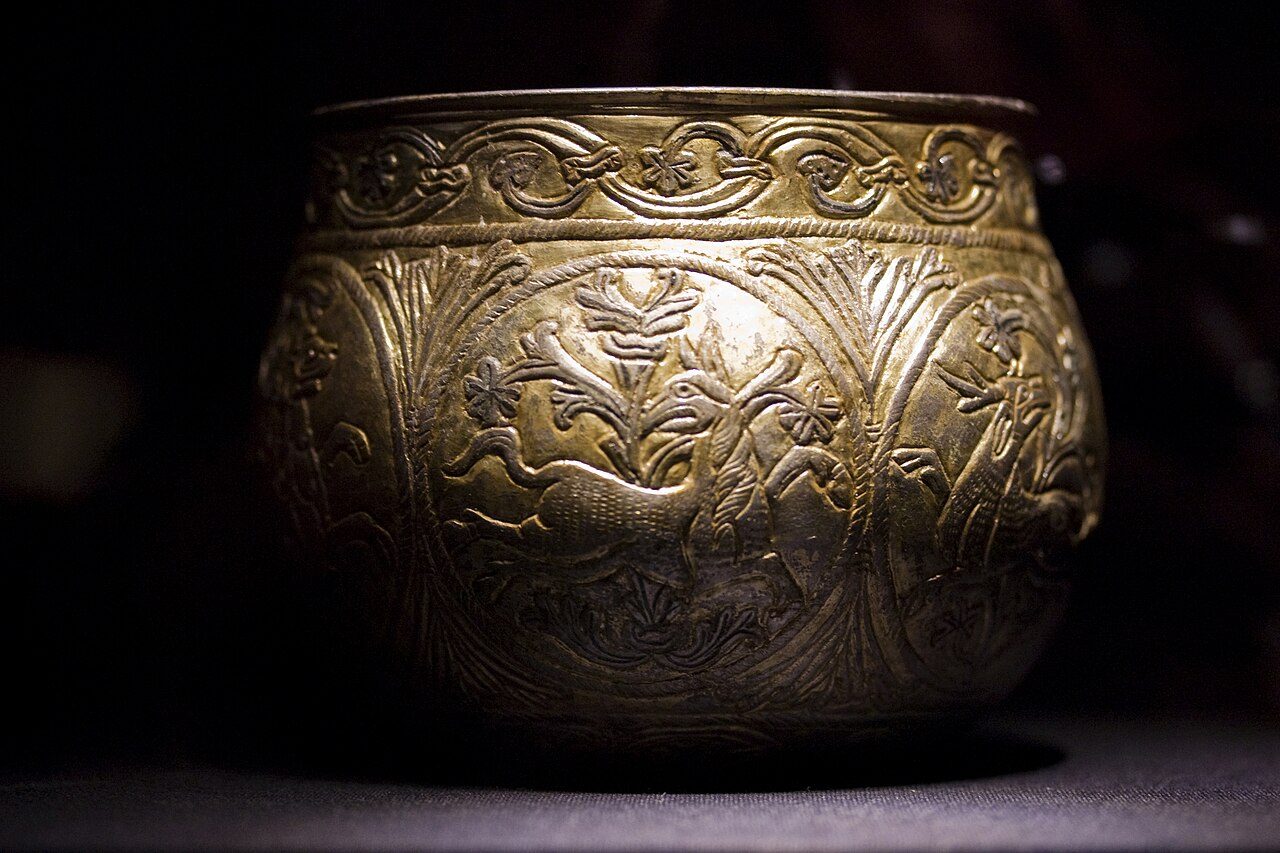
Photo: vintagedept from Olen (London), Belgium (United Kingdom), CC BY 2.0, via Wikimedia Commons
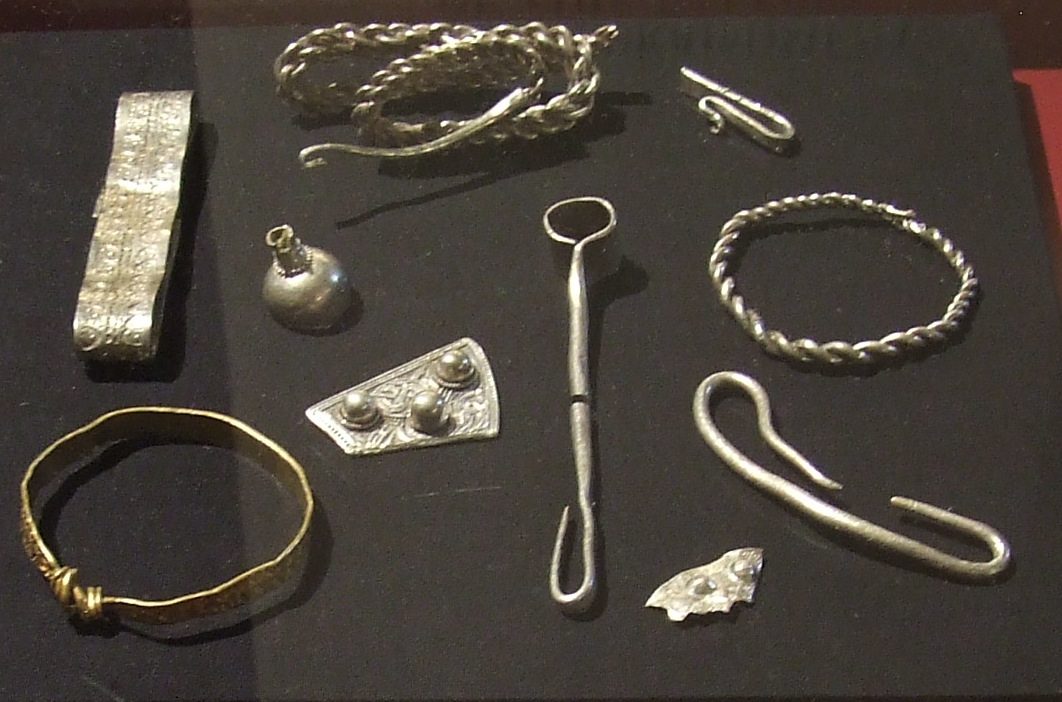
Photo: Unknown, CC BY-SA 3.0, via Wikimedia Commons
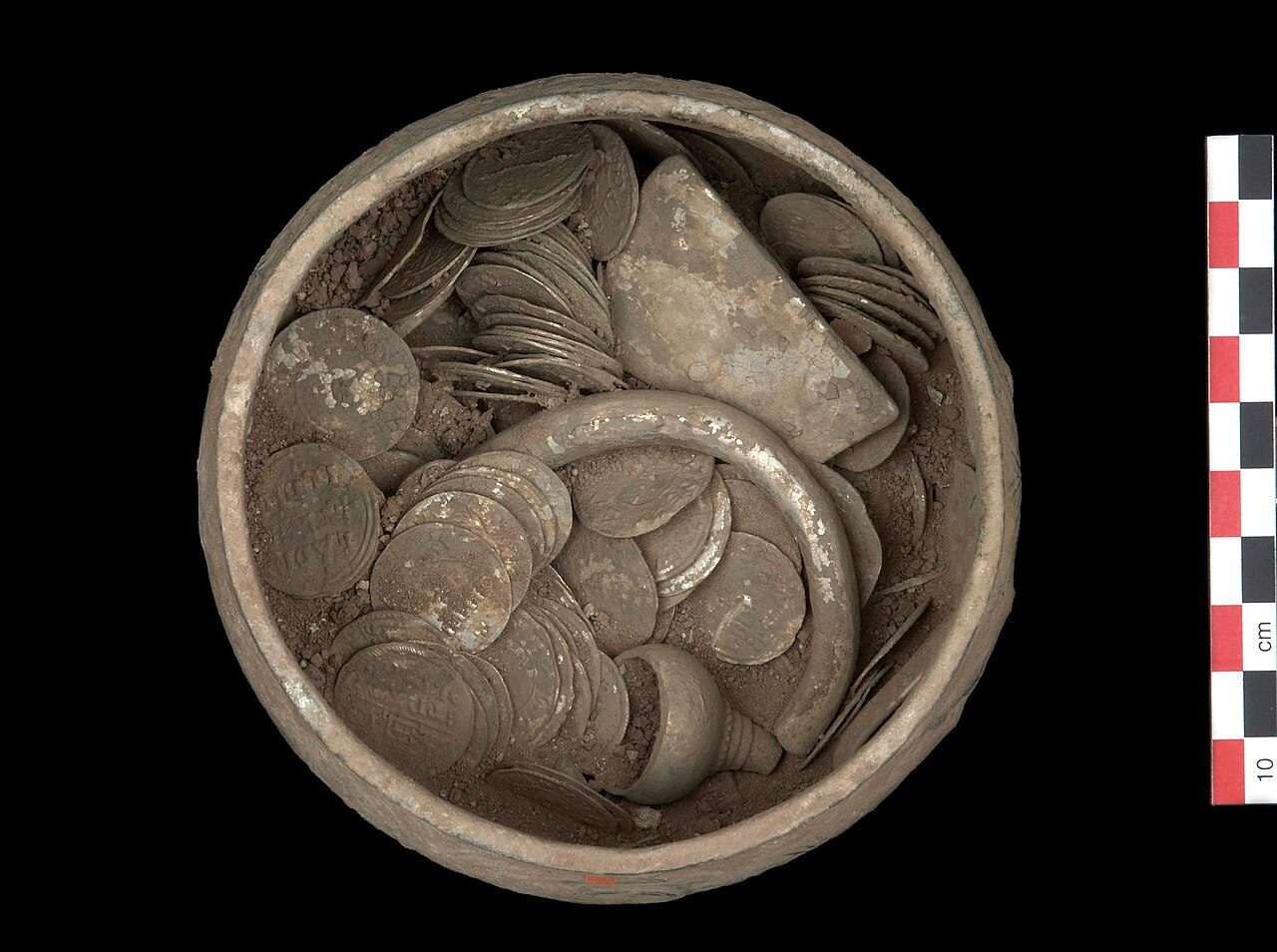
Photo: Portable Antiquities Scheme from London, England, CC BY 2.0, via Wikimedia Commons
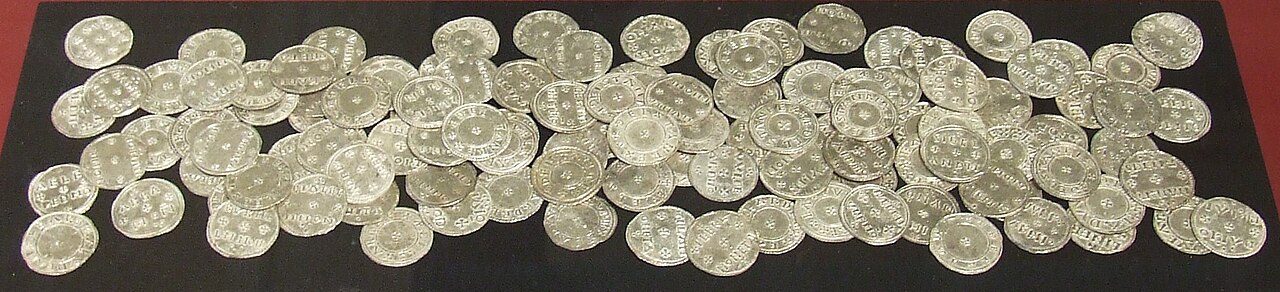
Photo: Unknown, CC BY-SA 3.0, via Wikimedia Commons
How it is dated
The Treasure report dates the burial to c. 928. Athelstan's 'Church' type, issued soon after he captured York in 927, is well represented and freshly struck, while his next type, Rex Totius Britanniae, appears only once. The latest Islamic coin, struck in 914-15, fits the usual delay of ten to fifteen years before dirhams reached English hoards.
What happened after the find
Declared Treasure under the Treasure Act 1996 at a Harrogate inquest on 19 July 2007. The Treasure Valuation Committee valued it at £1,082,000, and it was bought jointly by York Museums Trust and the British Museum, the reward going to the finders and landowner.
Where sources differ
- Object count: Wikipedia gives 617 coins and 65 other items; the British Museum Treasure report (PAS record SWYOR-AECB53) lists the cup, a gold arm-ring and 67 silver pieces besides the coins, and the PAS record gives a quantity of 686.
- The cup's animals: Wikipedia describes two lions and four beasts of prey; the Treasure report reads them as a stag, a large feline, a doe, a deer, a lion and a horse. The page says 'big cats and deer among them'.
- No total weight of silver was found in the sources consulted.
Questions
Where can I see the Vale of York Hoard?
It is jointly owned by the Yorkshire Museum and the British Museum and is normally shown at the Yorkshire Museum in York, where it features in the Viking North exhibition that opened in July 2025.
How much was the Vale of York Hoard worth?
The Treasure Valuation Committee valued it at £1,082,000. The museums paid that sum with grants, and the money was shared between the finders and the landowner.
Why is it also called the Harrogate Hoard?
It was found on farmland near Harrogate in North Yorkshire. The exact findspot is not published, so it is usually named after the wider Vale of York.