HacksilverBuried treasure, catalogued

Early medieval coins: sceattas, pennies, deniers and Viking issues

From small Anglo-Saxon sceattas to Carolingian deniers, Offa's pennies and the St Edmund and York coins struck by Viking rulers, c. 600-1100.

For most of the early Middle Ages a coin in north-west Europe meant one small silver piece, the ancestor of the penny. Larger values were reckoned, not struck: twelve pence made a shilling and 240 a pound, but no shilling or pound coin existed. Hoards of the period are therefore mostly heaps of these little coins, and their dates, mints and moneyers' names are what allow archaeologists to date everything else buried with them.

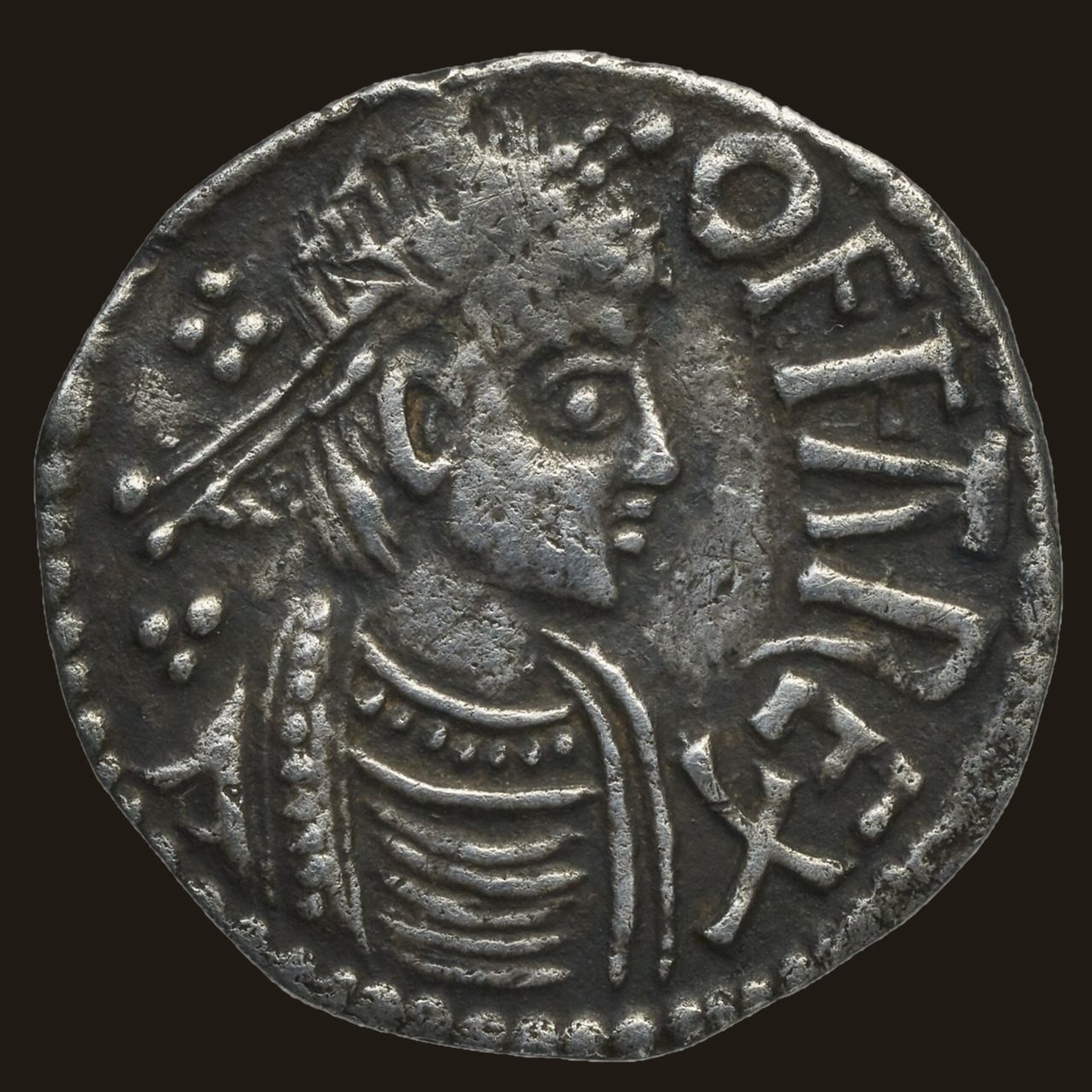
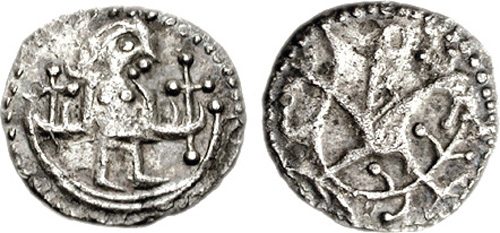
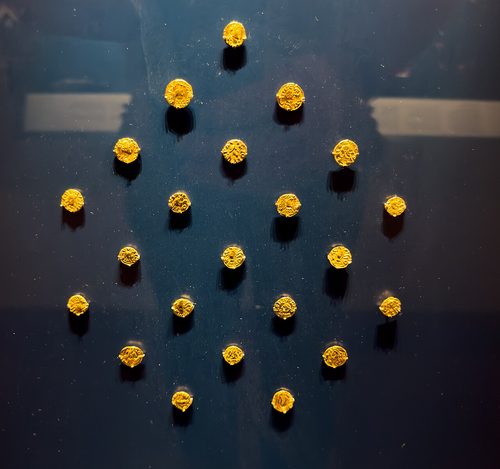
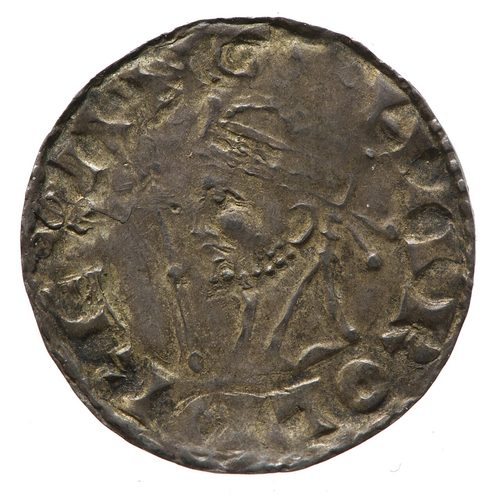
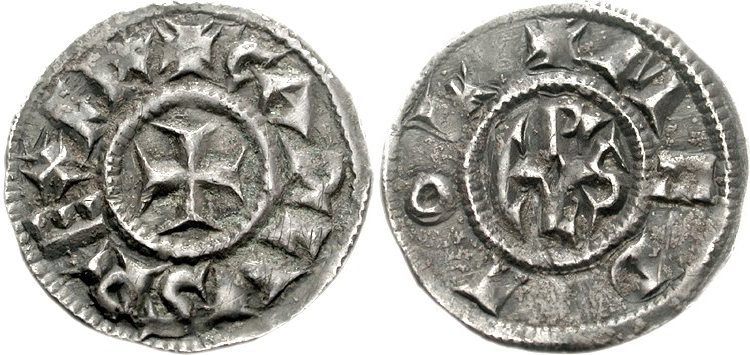
The earliest Anglo-Saxon coins were small gold pieces of the 7th century, now called thrymsas; the Crondall hoard from Hampshire, found in 1828, held 97 of them. From about 680 silver took over in the form of the sceat (plural sceattas), a thick little coin usually weighing between 0.8 and 1.3 g, struck in England, Frisia and Jutland. Sceattas rarely name a king; they carry birds, beasts, busts and crosses instead, and are now often called 'early pennies'. In the Frankish kingdom, Pepin the Short reorganised the silver coinage in 755, and Charlemagne's reform of around 793-4 introduced a heavier, broader denier of about 1.7 g, with a cross and his monogram or name. In England, Offa of Mercia (757-796) adopted the broad, thin penny in the 780s, and that coin, with the king's name and usually his portrait on one side and the moneyer's name on the other, was the English currency for centuries afterwards.

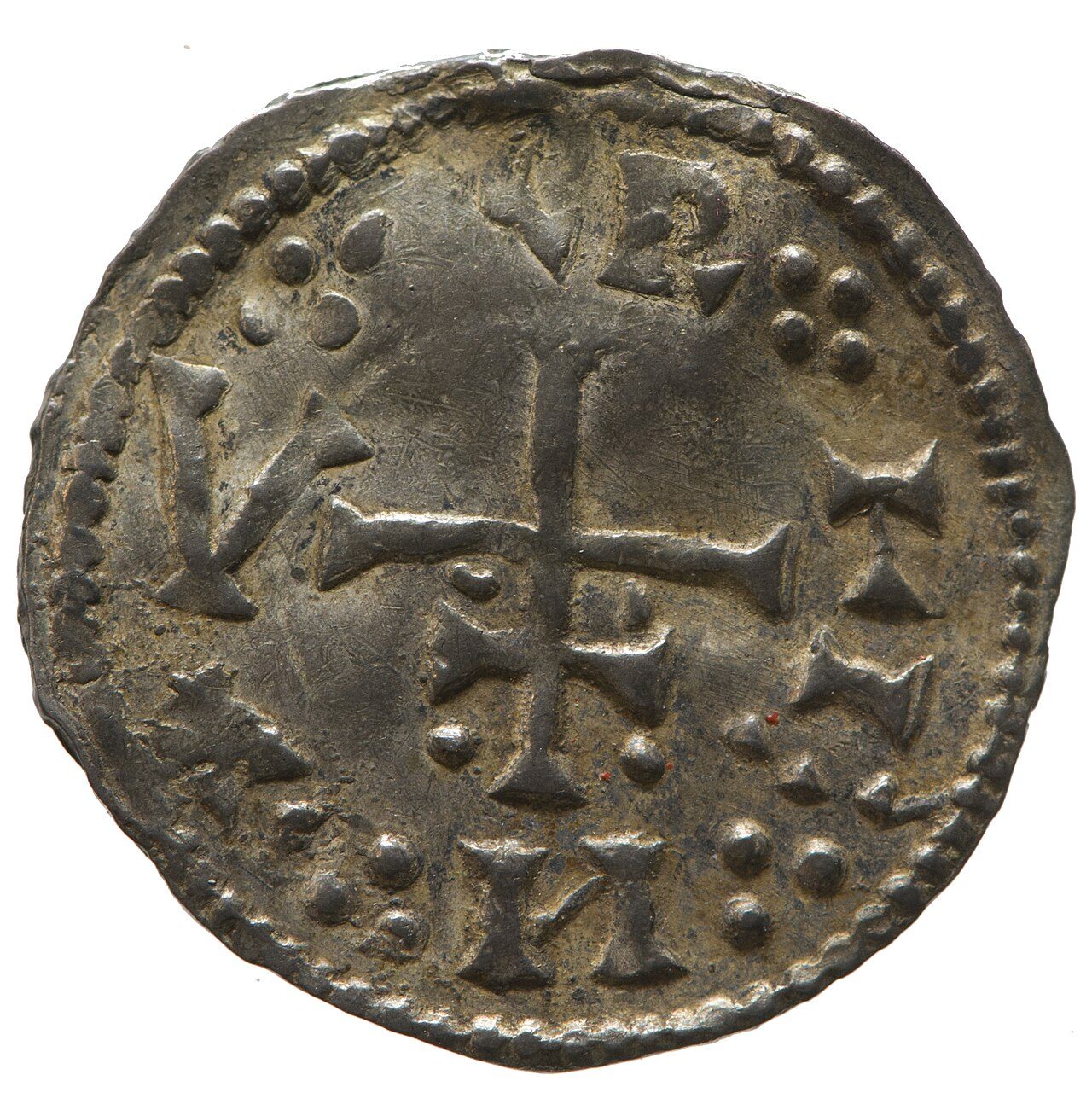
Viking settlers struck coins too. In the Southern Danelaw, a coinage in the name of St Edmund, the East Anglian king killed by a Viking army in 869, ran for some twenty years from about 895, probably until Edward the Elder took back the region in 917-18. The Cuerdale hoard alone contained between 1,800 and 1,850 of them. At York, coins name the otherwise almost unknown kings Siefred and Cnut, who are usually placed about 895-905; Cuerdale held some 3,000 Cnut pennies, many with the puzzling mint name CUNNETTI. The later St Peter coinage of York mixes a saint's name with swords and, on some coins, what looks like Thor's hammer.

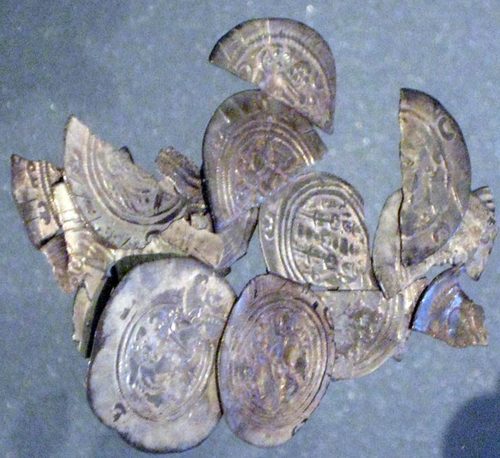
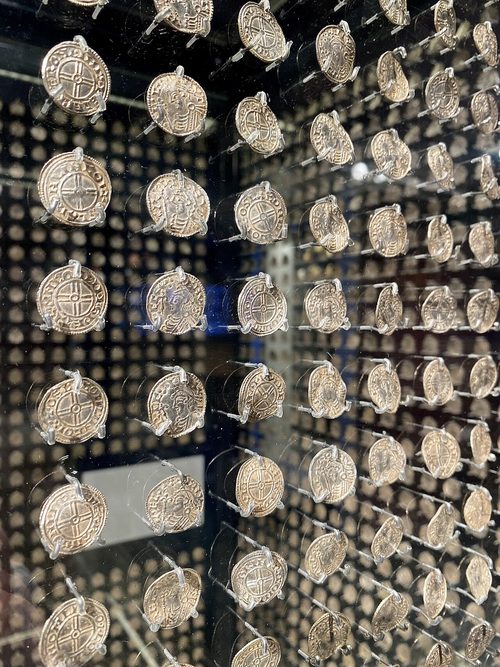
To recognise the main groups: sceattas are small (about 10-13 mm) and thick, with lively, often crude images and few letters; Carolingian deniers and Anglo-Saxon pennies are broader and thinner, with legible Latin legends naming a king and a mint or moneyer; Viking issues copy these models, sometimes with garbled lettering. Pennies were often cut into halves and quarters for small change, and in Viking hoards whole coins may be nicked or pecked to test the silver.

Coins are the timekeepers of early medieval hoards. A hoard cannot have been buried before its latest coin was struck, and when issues are well dated, as English pennies of the 9th to 11th centuries are, the margin can be a few years. The two-emperor pennies of Alfred of Wessex and Ceolwulf II of Mercia in the Watlington hoard have changed how historians read Mercian politics in the 870s, and the more than 5,000 pennies of Æthelred II and Cnut the Great in the Lenborough hoard show the scale of English coin production in the early 11th century.

Examples
Sources

Hoards with early medieval coins

22

Sutton Hoo ship burial

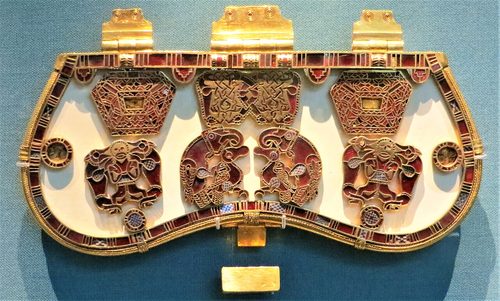
A 7th-century king's grave in a 27-metre ship, dug in Suffolk in 1939: gold and garnet regalia, a helmet, Byzantine silver and 37 Frankish coins.

Early medieval · England · found 1939

Crondall Hoard

About 100 small gold coins, most of them the earliest English coinage, found by a young man out shooting in Hampshire in 1828 and buried c. 640.

Early medieval · England · found 1828

Pereshchepina Treasure

Over 800 gold and silver objects, some 70 kg of metal, found by boys near Poltava, Ukraine, in 1912; often linked to the 7th-century Bulgar khan Kubrat.

Early medieval · Ukraine · found 1912

Sundveda Hoard

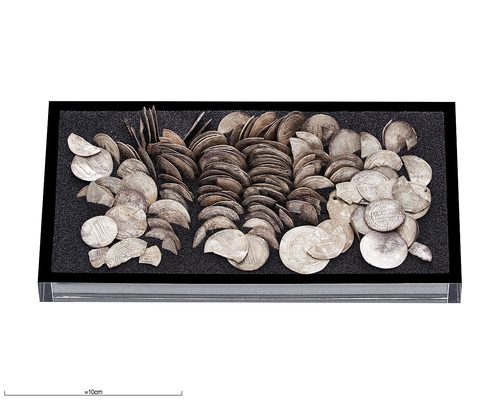
482 silver coins, mostly Islamic dirhams, found by archaeologists in an old grave near Sigtuna in 2008 and buried around 850-860.

Viking age · Sweden · found 2008

Trewhiddle Hoard

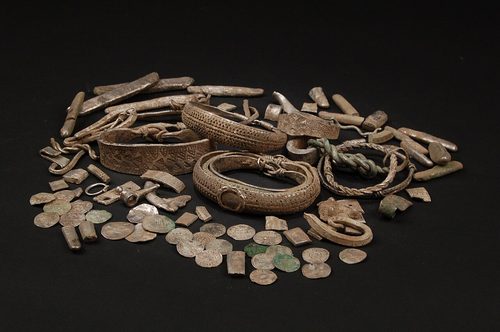
At least 114 silver pennies, a silver chalice and a unique silver scourge, found by Cornish tin-streamers in 1774 and buried in the 860s or 870s.

Viking age · England · found 1774

Beeston Tor Hoard

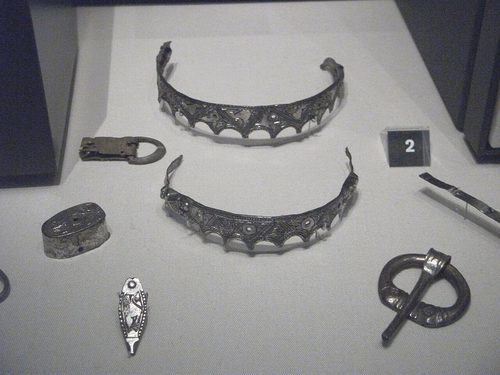
49 silver pennies, two Trewhiddle-style brooches and three rings, hidden in a Staffordshire cave around 875 and found by a clergyman caver in 1924.

Viking age · England · found 1924

Herefordshire Hoard

A Viking hoard of about 300 coins and gold jewellery buried c. 879 near Leominster, found in 2015 and sold illegally; only a tenth is recovered.

Viking age · England · found 2015

Watlington Hoard

About 200 silver coins, ingots and arm-rings buried c. 879 in Oxfordshire, with rare Two Emperors pennies showing Alfred and Ceolwulf II as partners.

Viking age · England · found 2015

Spillings Hoard

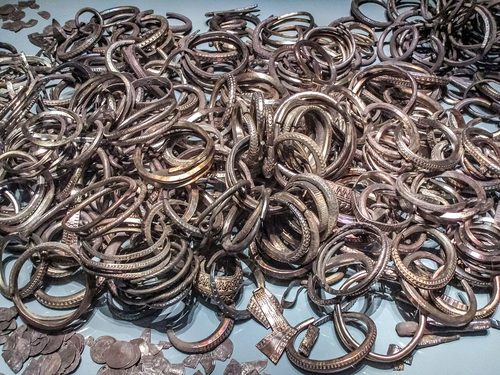
The largest Viking silver hoard known: about 67 kg of silver, 14,295 coins and nearly 500 arm-rings, buried in a Gotland storehouse after AD 870.

Viking age · Sweden · found 1999

Hoen Hoard

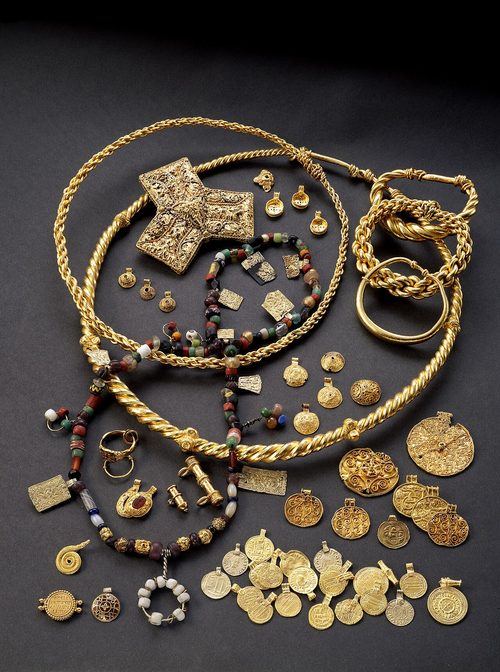
Norway's largest Viking gold find: about 2.5 kg of neck-rings, arm-rings, coin pendants and beads, dug from a bog at Hokksund in 1834.

Viking age · Norway · found 1834

Silverdale Hoard

201 pieces of Viking silver in a lead box, buried c. 900 near Silverdale, Lancashire, including a coin naming an unknown king, Airdeconut.

Viking age · England · found 2011

Cuerdale Hoard

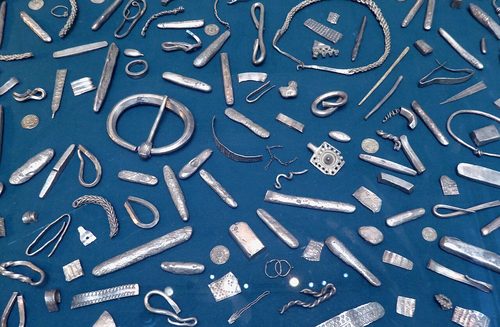
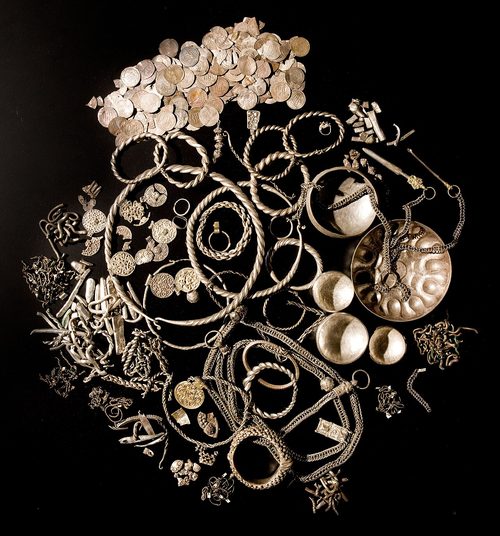
About 8,600 pieces of Viking silver, some 40 kg of coins, ingots and chopped jewellery, buried c. 905-910 beside the River Ribble in Lancashire.

Viking age · England · found 1840

Harkirke Hoard

Viking-age silver pennies dug up in 1611 in a Catholic burial ground at Little Crosby, Lancashire, recorded in an engraving, then lost or melted.

Viking age · England · found 1611

Vale of York Hoard

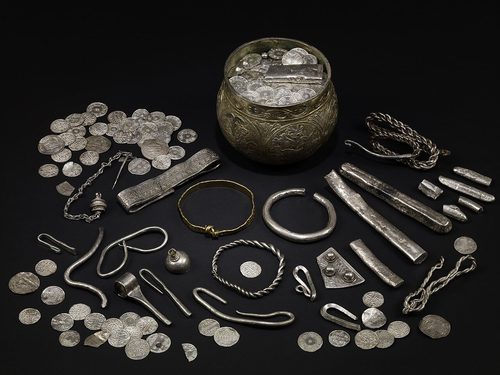
617 silver coins and dozens of ornaments packed into a Carolingian gilt cup, buried in North Yorkshire c. 928 and found by two detectorists in 2007.

Viking age · England · found 2007

Skaill Hoard

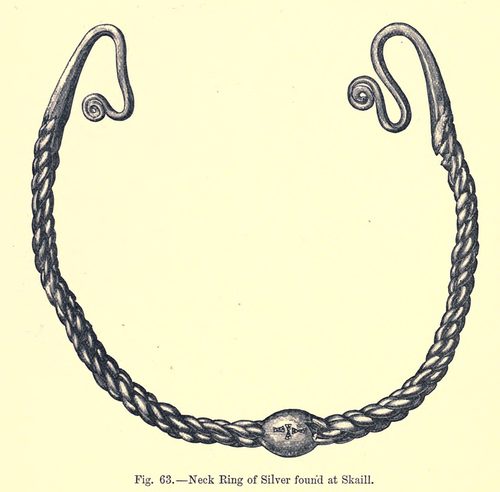
Over 100 pieces of Viking silver, about 8 kg, buried c. 950 at Skaill in Orkney and found in a rabbit hole in 1858: Scotland's largest Viking silver hoard.

Viking age · Scotland · found 1858

Terslev Hoard

6.6 kg of Viking silver dug up by two boys in a Zealand garden in 1911: 1,751 coins, silver cups and bowls, chains and fine filigree jewellery.

Viking age · Denmark · found 1911

Schaprode Hoard (Harald Bluetooth hoard)

About 1.5 kg of Viking-age silver found on Rügen in 2018, with some 100 cross coins of Harald Bluetooth, buried in the 980s as the king fled.

Viking age · Germany · found 2018

Lenborough Hoard

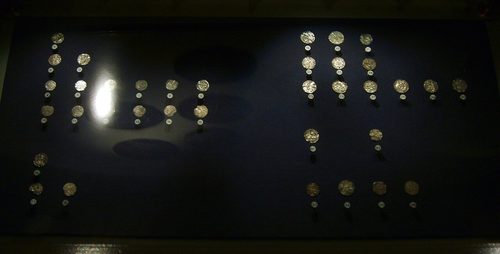
5,251 silver pennies of Æthelred the Unready and Cnut, wrapped in lead and buried around 1035 near Buckingham; found at a detecting rally in 2014.

Viking age · England · found 2014

Chew Valley Hoard

About 2,500 silver pennies of Harold II and William I buried in Somerset in 1067-68 and found by detectorists in 2019; bought for the nation for £4.3m.

Viking age · England · found 2019

Sandur Hoard

The only coin hoard found in the Faroe Islands: 98 silver pennies from six countries, buried at Sandur around 1070-1090 and found in 1863.

Viking age · Faroe Islands · found 1863

Græsli Hoard

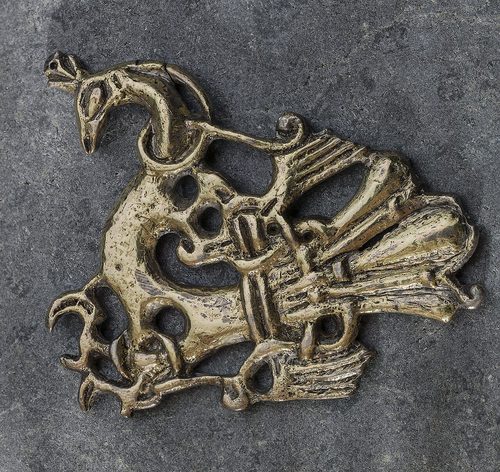
2,253 silver coins, hacksilver and a gilt bird brooch found in a potato field in Tydal, Norway, in 1878: the key hoard for King Olav Kyrre's coinage.

Viking age · Norway · found 1878

Burge Hoard

Over 10 kg of silver ploughed up at Burge on Gotland in 1967: about 3,000 coins, Russian grivna ingots and cut silver, buried soon after 1143.

Medieval · Sweden · found 1967