Derrynaflan is a low island of pasture in the bogs of County Tipperary, north-east of Cashel. In the 8th and 9th centuries it was the site of an important monastery; the ruins standing today are of a later small church. On 17 February 1980 a father and son exploring the site with metal detectors got a signal near the ruins and dug. Under a bronze basin turned upside down they found a group of silver vessels. The site was protected under the National Monuments Act and they had no permission to dig. Through their solicitors they handed the objects to the National Museum of Ireland, whose director assured them they would be treated honourably.
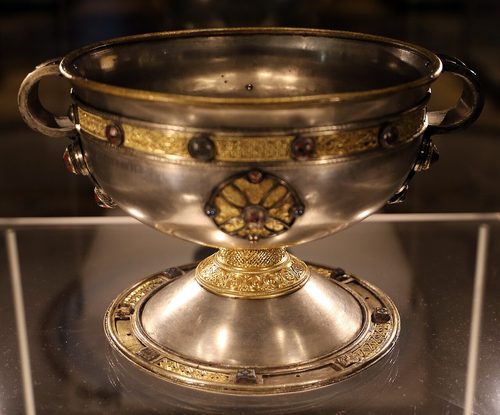
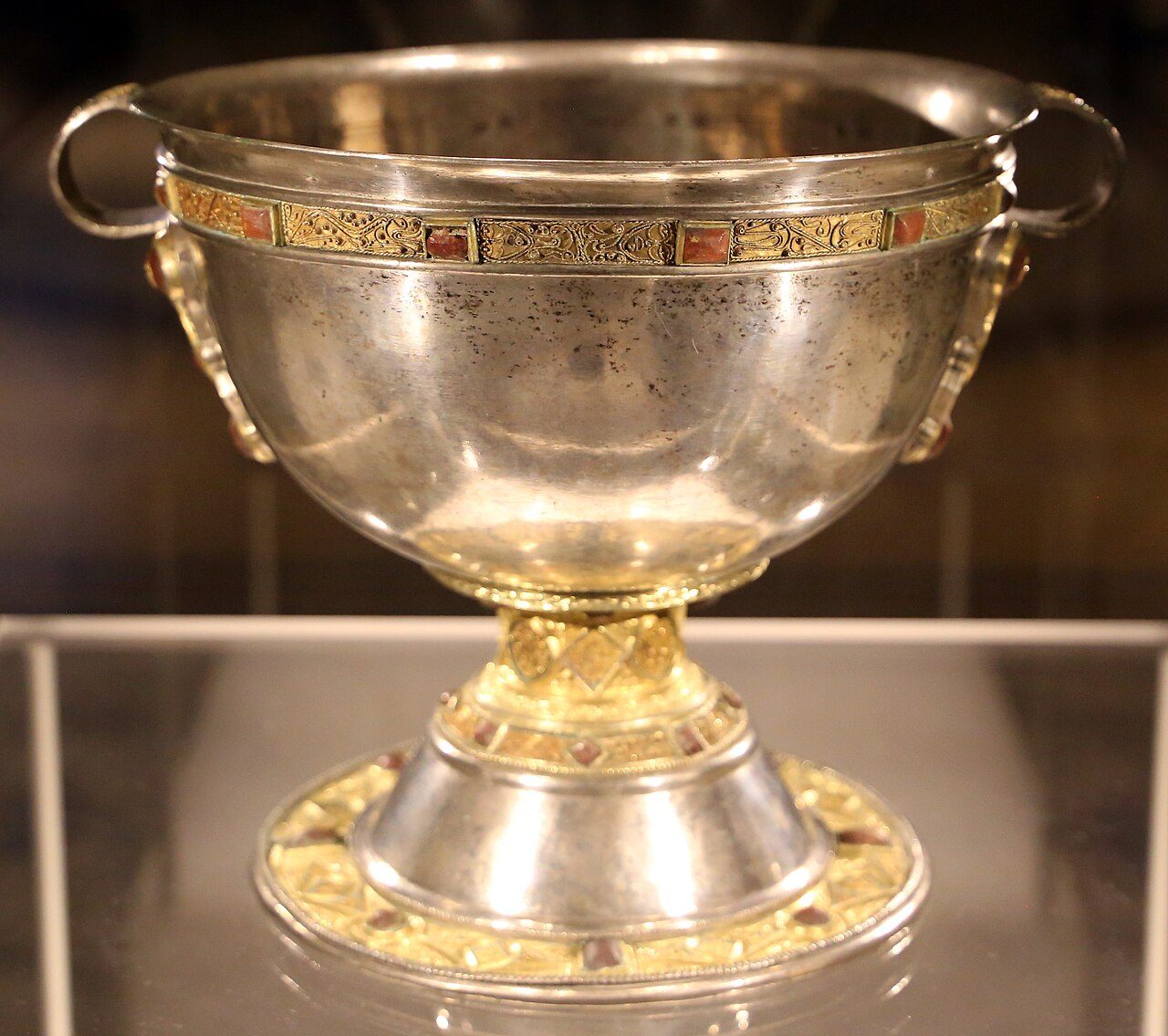
What they had found is a full set of altar plate for the Mass. The chalice is a broad two-handled silver cup with a band of gold filigree panels and studs of amber and glass below the rim, close in form to the Ardagh Chalice found in neighbouring County Limerick in 1868. The paten, the dish that held the bread, is the more complex object: a large silver plate rimmed with panels of gold filigree and stamped ornament, set with enamelled studs. A bronze hoop seems to have served as its stand. A strainer-ladle completed the group. The art historian Michael Ryan judged the hoard the most complex and sumptuous expression of Irish church art of the 8th and 9th centuries.
Because the vessels were dug out hastily, the museum carried out its own excavation afterwards and recovered missing parts of the paten, the strainer and the basin. That salvage is a reminder of what is lost when objects are pulled out of the ground without recording.
The vessels were made in the 8th and 9th centuries, but they were buried later. Ireland in the 10th to 12th centuries saw Viking raids, wars between Irish dynasties and frequent attacks on wealthy monasteries, and the 10th century in particular left many hoards. Someone at Derrynaflan evidently hid the community's altar plate in a hurry and never came back for it. One historical figure linked to the monastery is Feidlimid mac Cremthainn, king-bishop of Cashel and king of Munster, who died in 847 and was a patron of Derrynaflan; it has been suggested, without proof, that he paid for the chalice.
The find is as famous in Irish law as in art history. The State paid the landowners £25,000 each for their interest but offered the finders only £10,000, which they rejected. They sued, and in December 1986 the High Court, which valued the hoard at over £5.5 million, ordered it returned to them. In 1987 the Supreme Court, in Webb v. Ireland, reversed that: treasure trove belonged to the State by virtue of its sovereignty. But the judges held that the museum director's promise of honourable treatment gave the finders a legitimate expectation of a reasonable reward, and set it at £50,000, half to each. The case led directly to the National Monuments (Amendment) Act 1994, which vested all archaeological objects without a known owner in the State and tightened the rules on detecting. Irish law now requires a licence to use a detector to search for archaeological objects.
Highlights
A two-handled silver chalice with gold filigree panels and amber and glass studs, comparable to the Ardagh Chalice. It is usually dated to the 8th or 9th century.
A large silver paten with a rim of gold filigree panels and enamelled studs. It is among the most intricate pieces of Insular metalwork.
A liturgical strainer for removing impurities from the communion wine, an object type rarely preserved.
What is in it
A complete set of altar vessels for the Mass: a two-handled silver chalice, a large silver paten with its bronze stand, a liturgical strainer-ladle, and the bronze basin that had been turned upside down over them.
Size: 5 liturgical objects.
| Item | Number | Notes |
|---|---|---|
| Chalice | 1 | Two-handled silver chalice with gold filigree panels and amber and glass studs |
| Paten | 1 | Large silver dish for the Eucharistic bread, edged with gold filigree panels and enamel studs |
| Paten stand | 1 | A silver and bronze hoop that probably supported the paten |
| Strainer-ladle | 1 | Gilt bronze, for straining wine at the altar |
| Basin | 1 | Bronze basin found inverted over the other objects |
Photographs
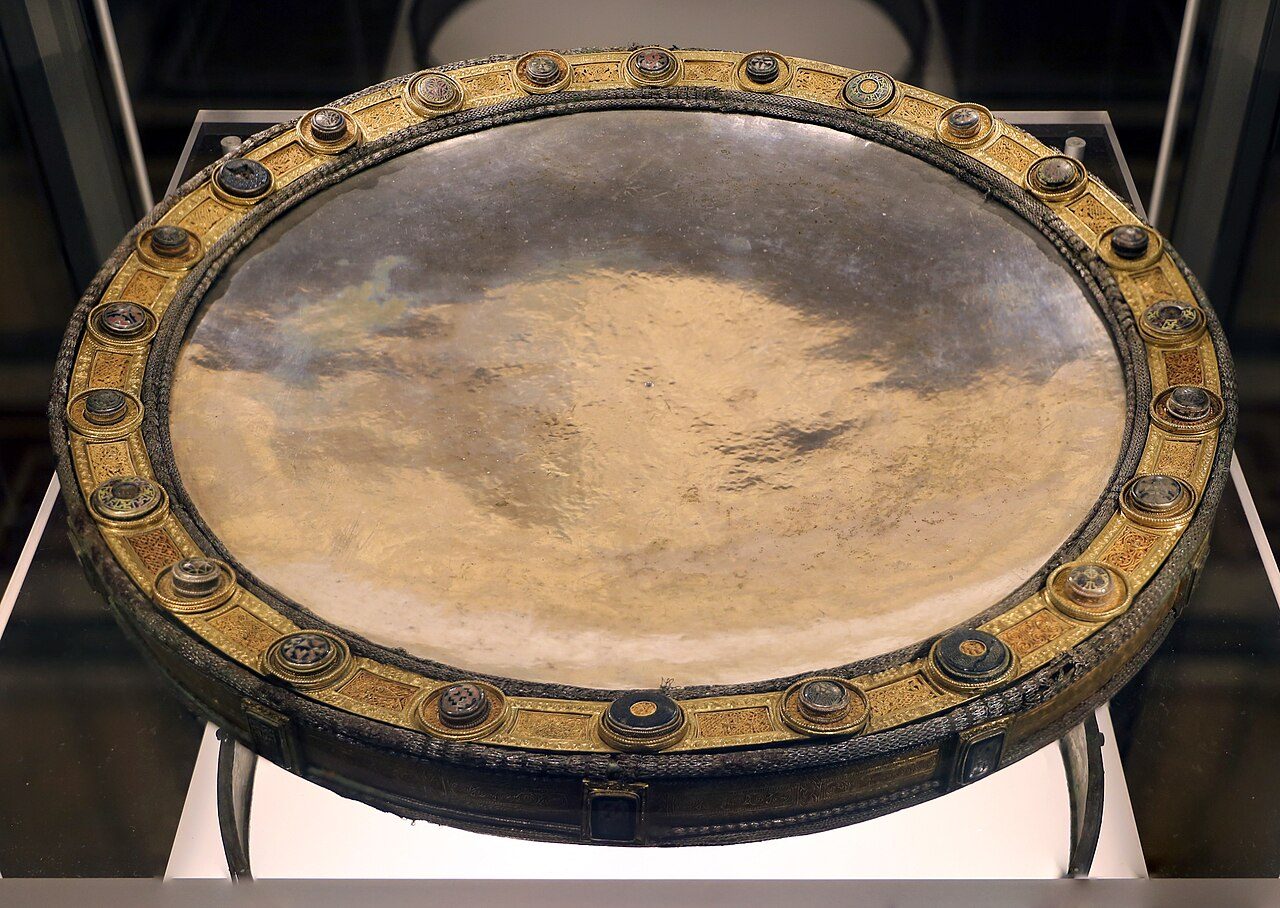
Photo: Sailko, CC BY 3.0, via Wikimedia Commons
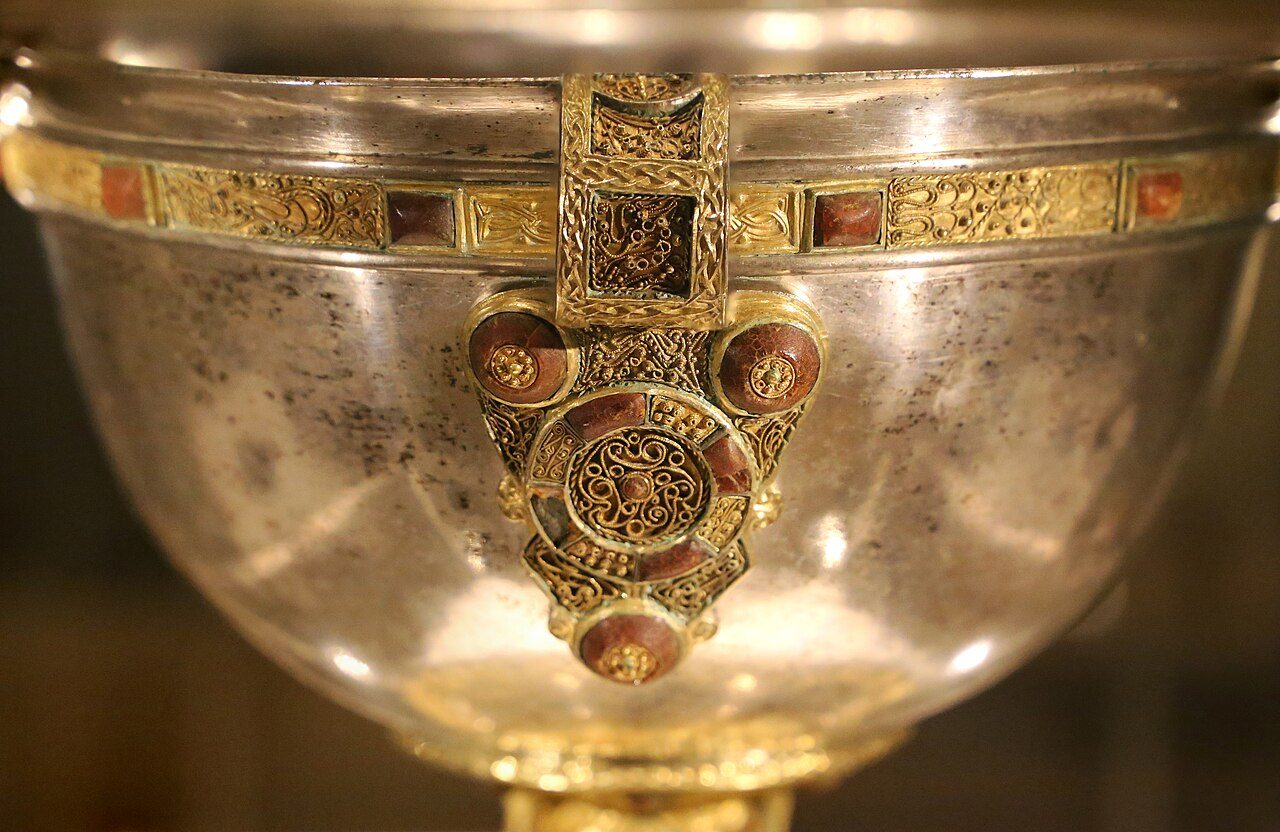
Photo: Sailko, CC BY 3.0, via Wikimedia Commons
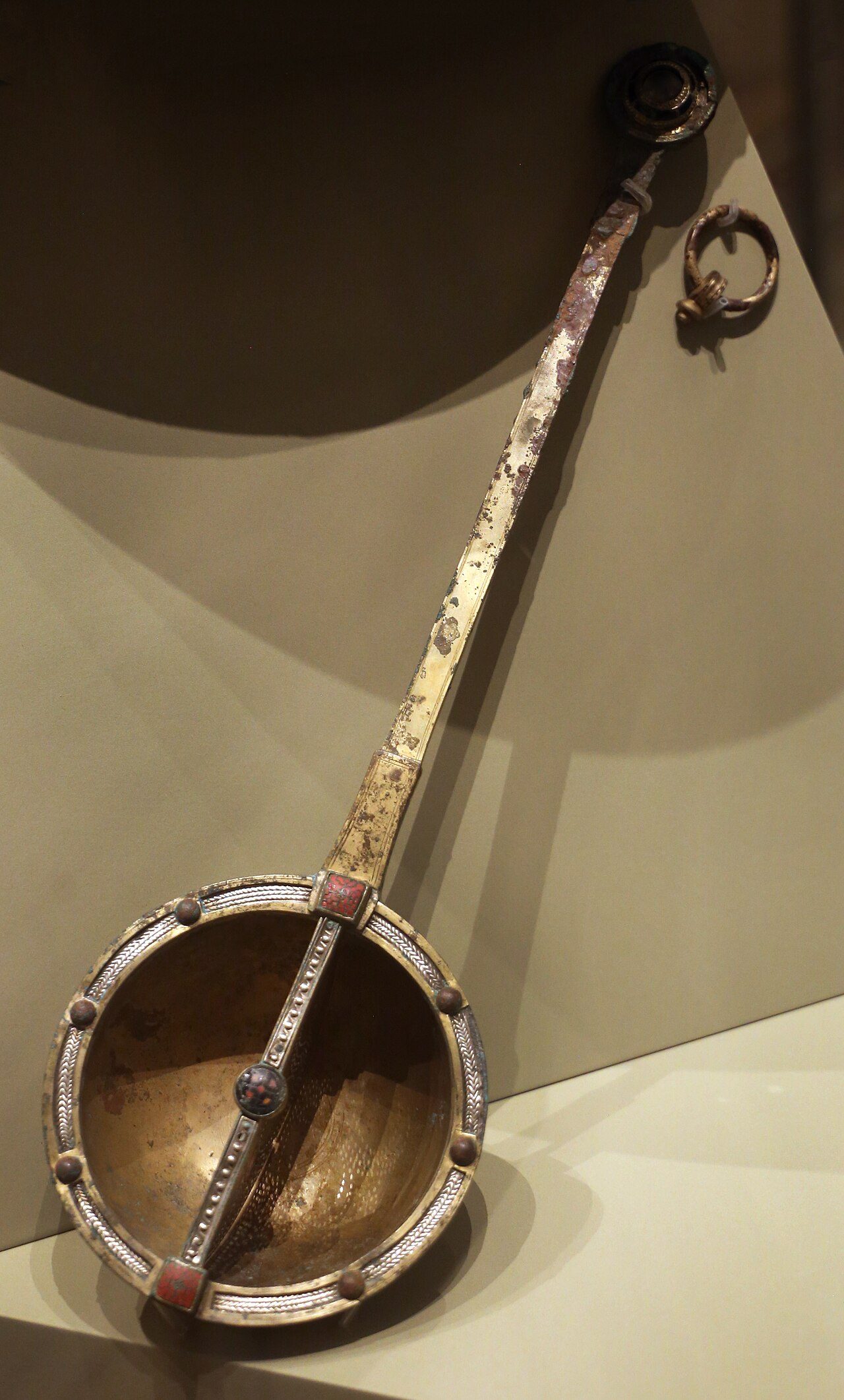
Photo: Sailko, CC BY 3.0, via Wikimedia Commons
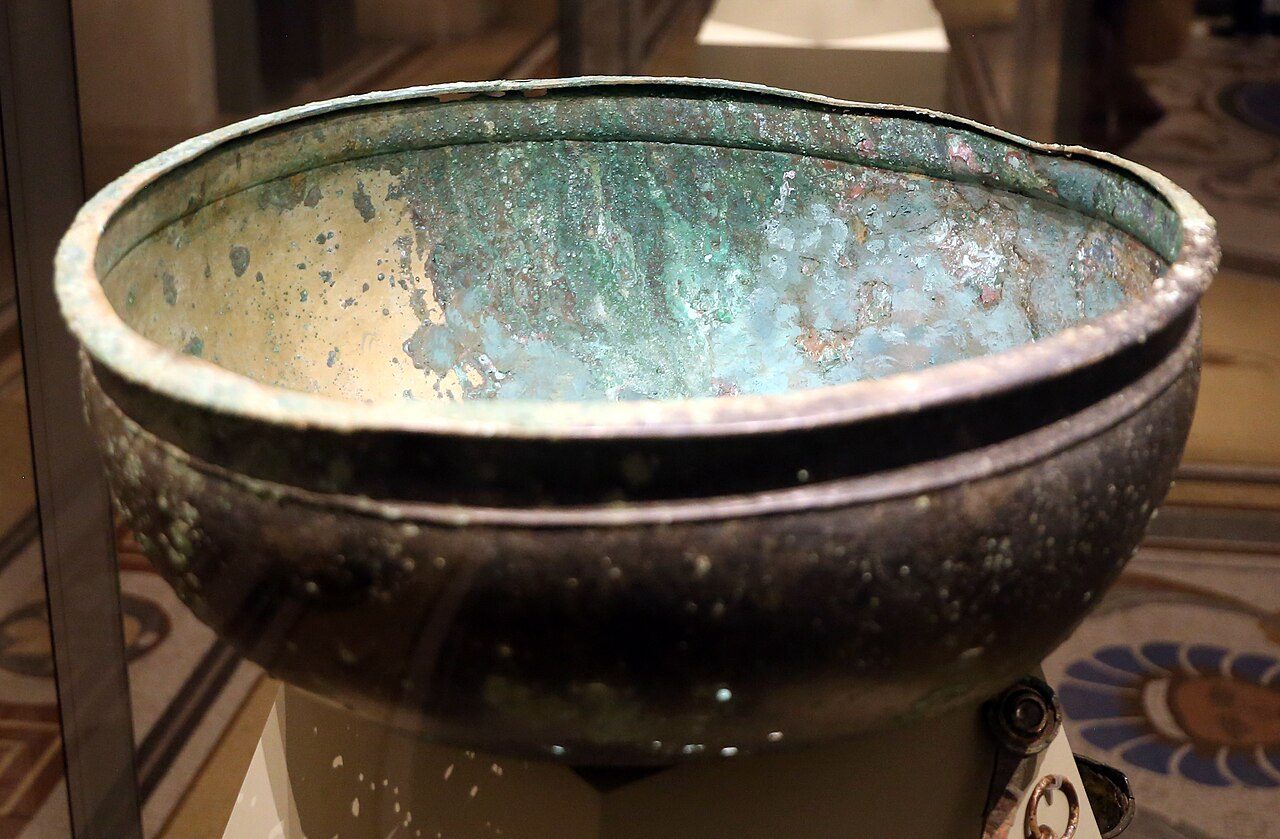
Photo: Sailko, CC BY 3.0, via Wikimedia Commons
How it is dated
The chalice is dated on style to the 8th or 9th century and the paten to the 8th. Nothing found with them fixes the moment of burial; it is placed in the turbulent 10th to 12th centuries, with the 10th century, a peak of hoarding in Ireland, often favoured.
What happened after the find
The finders dug without permission on a protected site and then sued the State for the hoard's value. In Webb v. Ireland (1987) the Supreme Court held that the State owned the hoard as treasure trove but awarded the finders £50,000 between them (the landowners had already been paid £25,000 each); the case prompted the National Monuments (Amendment) Act 1994.
Where sources differ
- Deposit date is inferred from historical context only (Wikipedia: 'probably secreted during the turbulent 10th to 12th centuries').
- Chalice date: 8th or 9th century depending on source; Commons/museum labels say 9th century for the chalice and 8th for the paten.
- Wikipedia says the find was 'initially kept secret for three weeks', but the Supreme Court judgment refers to a solicitor's letter to the Museum director dated 18 February 1980, the day after the find; the three-week claim is omitted.
- Wikipedia says the hoard was 'donated to the Irish State', which conflicts with the litigation; omitted.
- Materials (amber, glass, enamel studs) are from photographs and general descriptions, not a museum catalogue.
Questions
Where is the Derrynaflan Chalice?
The chalice and the rest of the Derrynaflan Hoard are on display in the National Museum of Ireland - Archaeology on Kildare Street in Dublin.
What happened in Webb v. Ireland?
The finders of the Derrynaflan Hoard sued for its value. In 1987 the Supreme Court ruled that the State owned the hoard but that the finders deserved a reward, and the case led to the National Monuments (Amendment) Act 1994.
Is metal detecting legal in Ireland?
Searching for archaeological objects with a detector requires a licence from the State in Ireland; the law was tightened in the years after the Derrynaflan case.