The silver of the early Church, from 4th-century Water Newton to the Ardagh and Derrynaflan chalices: what it was for, how it was made, why it was hidden.
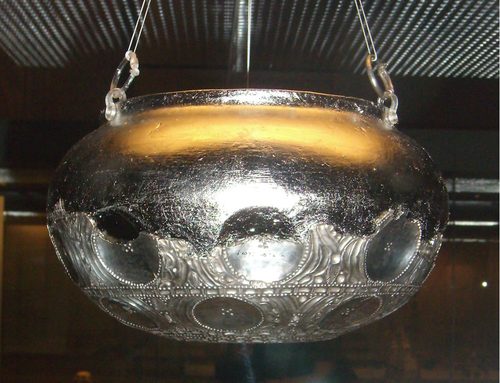
Under the base of a damaged silver bowl from Water Newton in Cambridgeshire is the name PUBLIANUS, and round its rim a line of Latin verse, flanked by chi-rho monograms, that can be translated as "O Lord, relying on you, I honour your holy altar". Found by a ploughman in 1975 with jugs, dishes, a two-handled cup and a group of thin silver votive plaques, the hoard of 27 silver objects and one gold plaque is probably the earliest set of Christian liturgical silver known from anywhere in the Roman Empire.
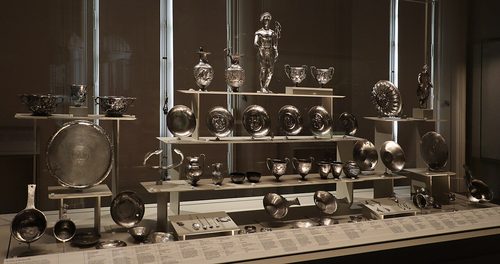
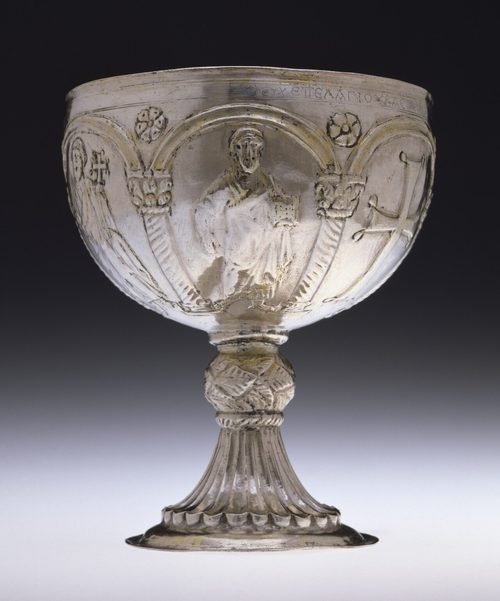
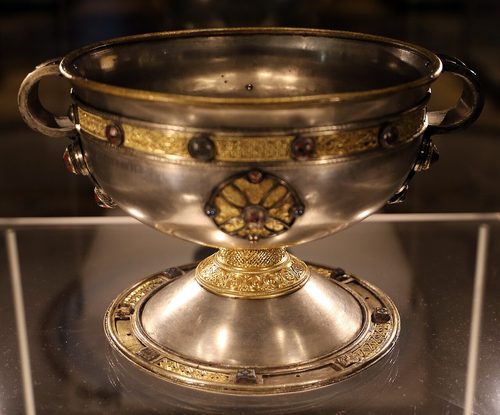
The core of church plate is a pair: the chalice, a stemmed cup for the wine of the Eucharist, and the paten, a dish for the bread. Around them grew strainers and ladles for the wine, flagons, lamps, censers, processional crosses and reliquaries, the containers made for saints' bones and contact relics, which from the 4th century were often of gold or silver set with gems and enamel. Churches received these as gifts, and many pieces carry the donor's name and a prayer. Because their value lay in the metal as well as the use, they were the first thing a raider took and the first thing a community buried when trouble came.
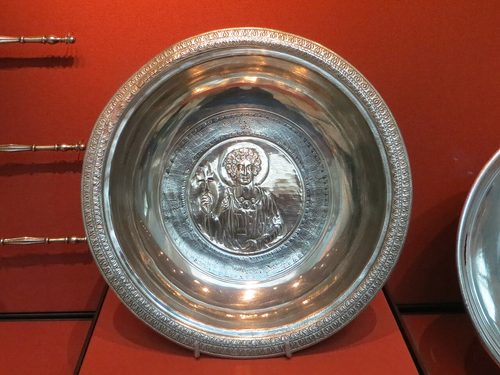
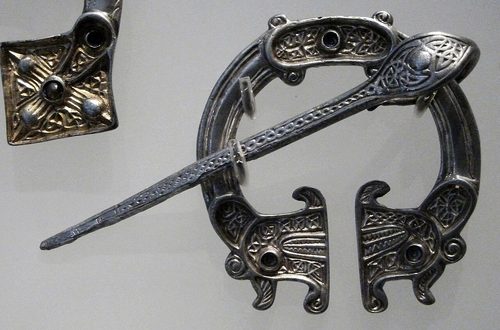
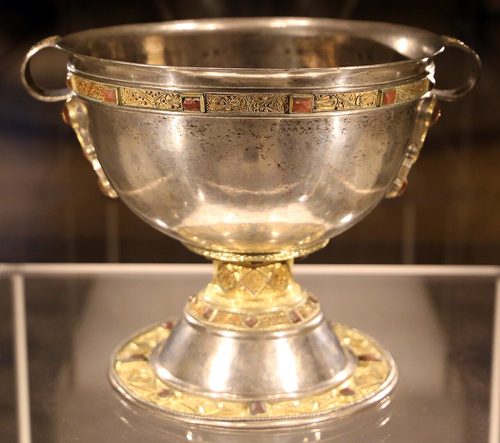
Most surviving early pieces come from hoards. The Kaper Koraon treasure from Syria, of the 6th and 7th centuries, has 56 silver objects, probably from one or more village churches, among them eight chalices, seven patens, crosses, lamps, spoons and fans; the chalices were hammered, joined and turned on a lathe to hide the seams. In Ireland the Ardagh Chalice, found by two boys in 1868 under a stone slab with a plainer copper-alloy cup and four brooches, is assembled from 354 separate pieces of silver, gold, gilt bronze, brass and enamel. The Derrynaflan group, found in 1980 on a bog island that had been an early monastery, comprised a chalice, a silver paten with its stand, a strainer and a bronze basin turned upside down over the rest. In Cornwall the Trewhiddle chalice came to light in 1774 with 114 Anglo-Saxon coins that date its burial to around 868.
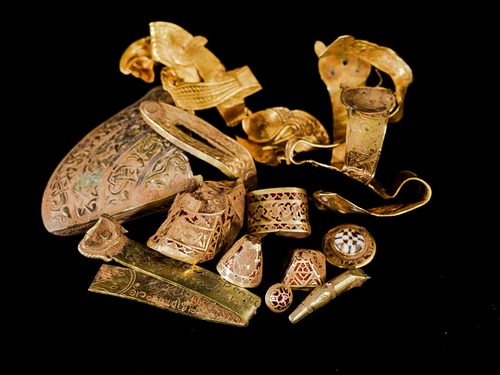
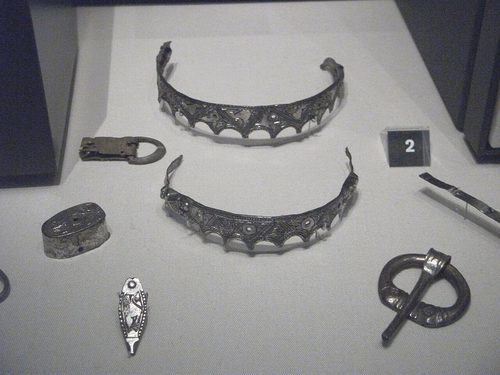
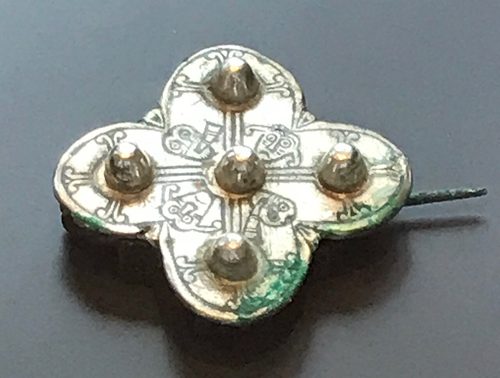
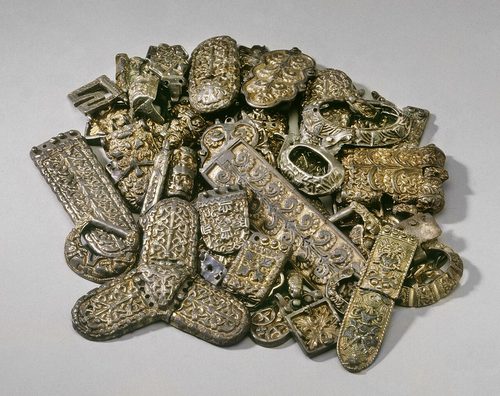
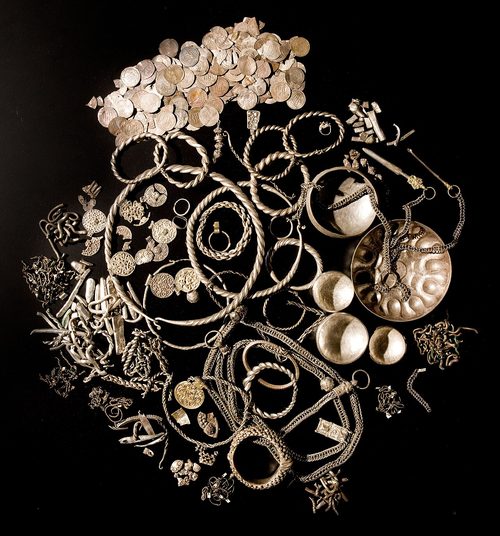
Recognising church metalwork depends on form and imagery: a deep bowl on a knopped stem, a shallow dish with an engraved cross, a house-shaped box with hinge fittings, Christian monograms, saints and dedicatory inscriptions. Fragments of such pieces also turn up cut up as hacksilver in Viking-age hoards, and Insular shrine mounts were reused as brooches in Scandinavia.
For historians these finds show how wealth flowed to the Church, how altar furnishings changed between late Rome and the early Middle Ages, and when communities felt threatened. Irish church plate seems to have been hidden mostly in the 10th to 12th centuries, a period of Viking raids and dynastic warfare; the Syrian silver seems to have gone into the ground in the 7th century, as the region passed to Persian and then Arab rule.
Examples
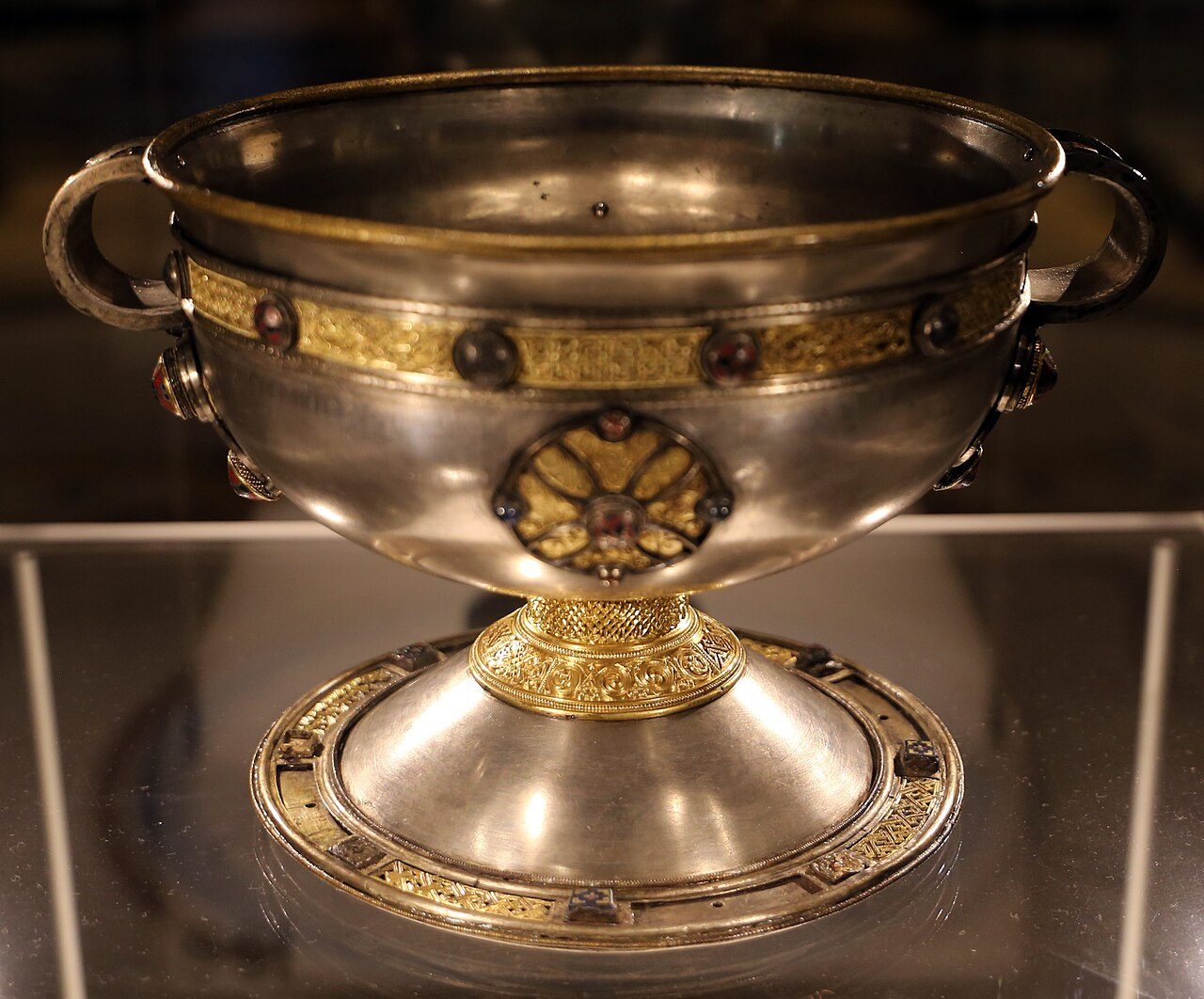
Photo: Sailko, CC BY 3.0, via Wikimedia Commons
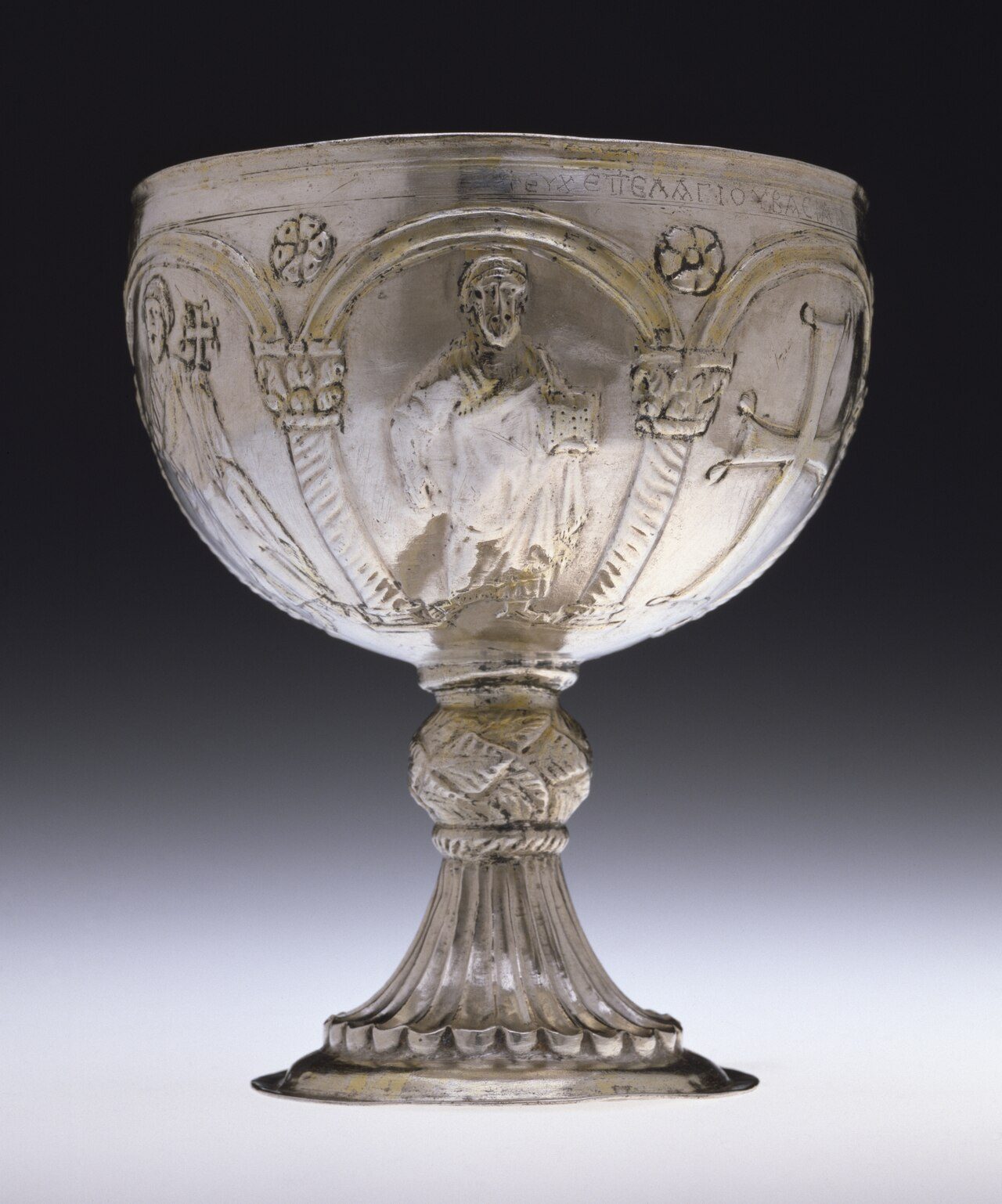
Photo: Anonymous ( Byzantine Empire ) Unknown author, Public domain, via Wikimedia Commons
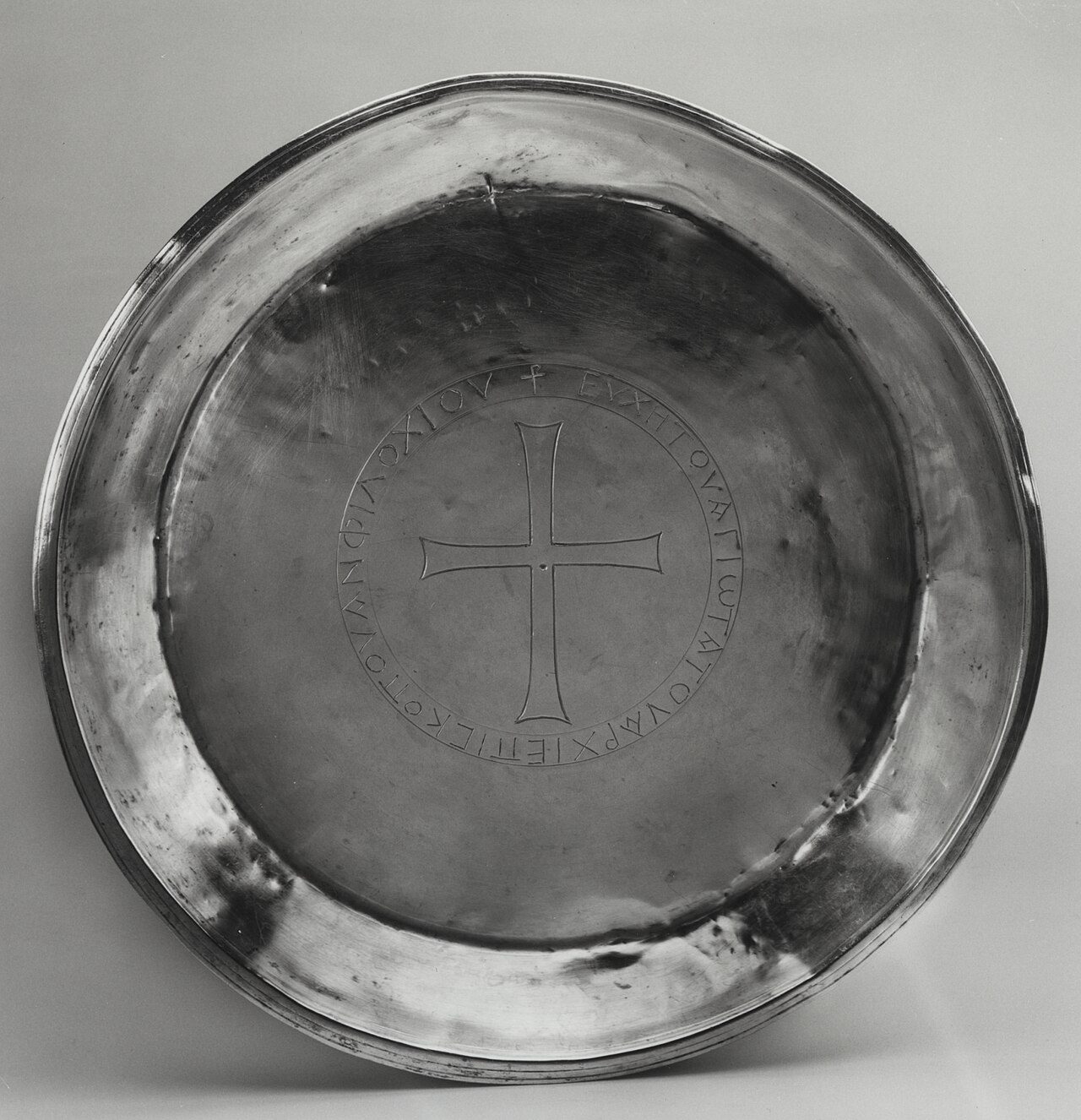
Photo: Anonymous ( Byzantine Empire ) Unknown author, Public domain, via Wikimedia Commons