HacksilverBuried treasure, catalogued

Cups, bowls and cauldrons

Gold and silver vessels from Bronze Age bowls to Thracian rhyta and the Gundestrup cauldron: how they were made, used for feasting, and buried.

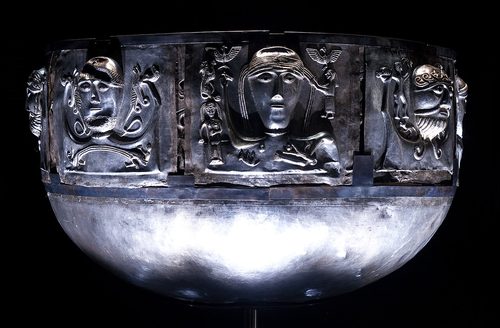
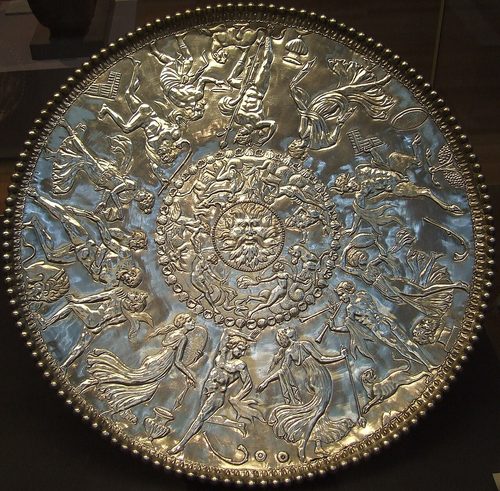
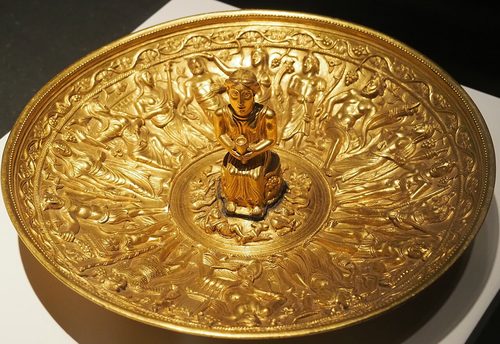
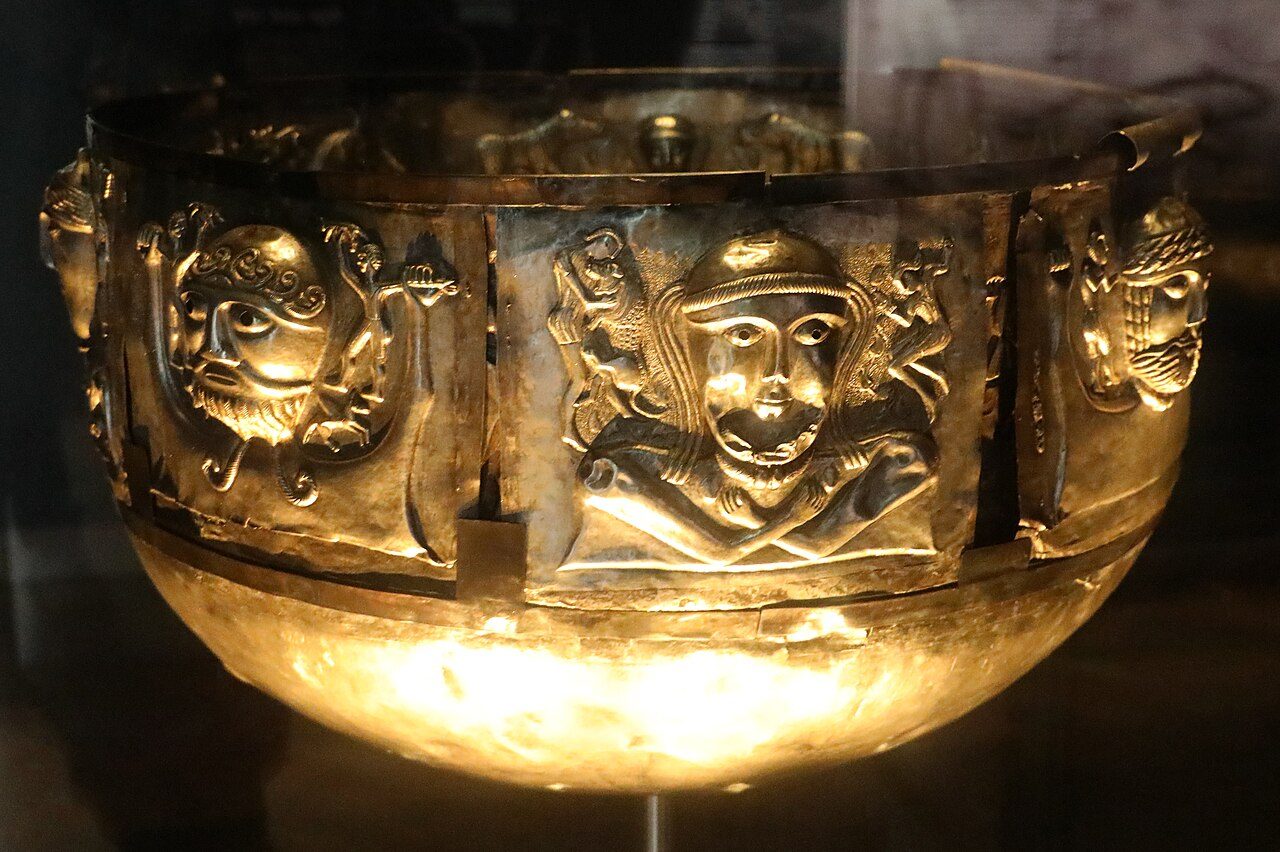
The Gundestrup cauldron is 69 cm across and weighs close to 9 kg of silver. When it was cut from a Danish peat bog in 1891 it had been taken apart and its panels stacked inside the bowl, as if it had been deliberately put out of use before it was given to the bog. Its gods, warriors and animals have been argued over ever since: with Gaulish elements in its imagery and Thracian ones in its technique, made perhaps in the last two centuries BC far from where it ended up.

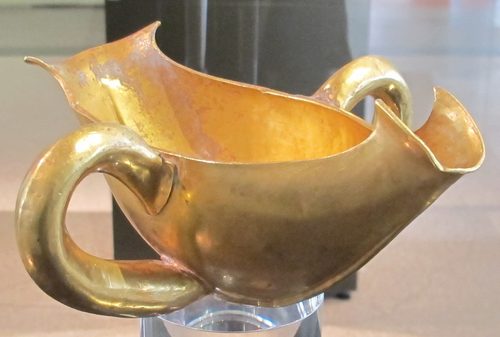
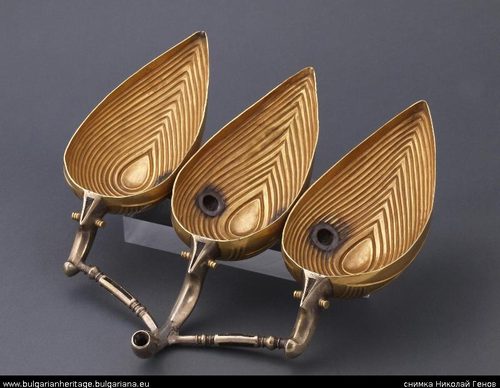
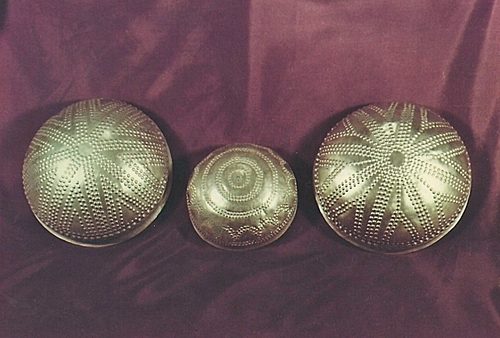
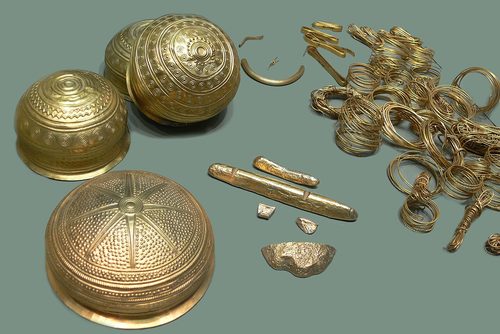
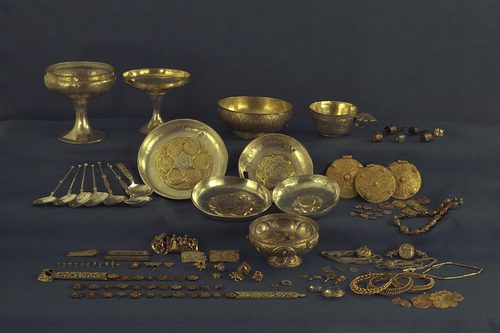
Vessels of gold and silver are among the oldest things in European hoards. Bronze Age goldsmiths raised thin bowls from a single disc by hammering it over a former, then chased in rows of bosses and ribs. At Eberswalde in Brandenburg eight such gold bowls were themselves used as containers for 73 more gold objects. The Valchitran Treasure from Bulgaria, dated to around 1300 BC, has 13 gold vessels weighing 12.5 kg in all, including a two-handled bowl of about 4.5 kg.

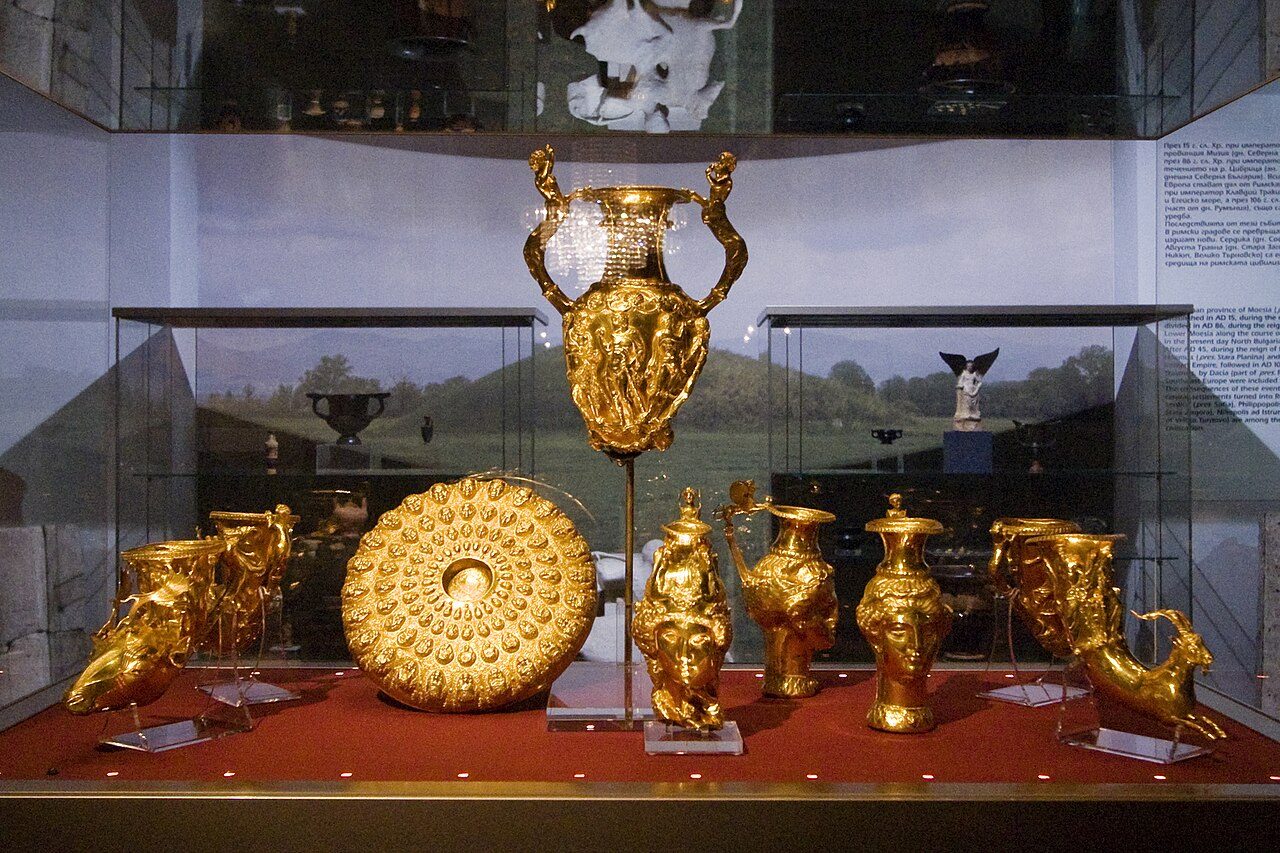
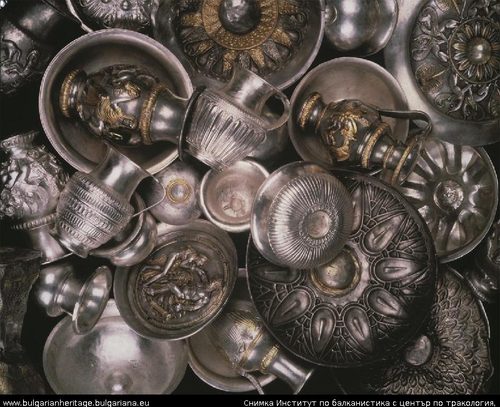
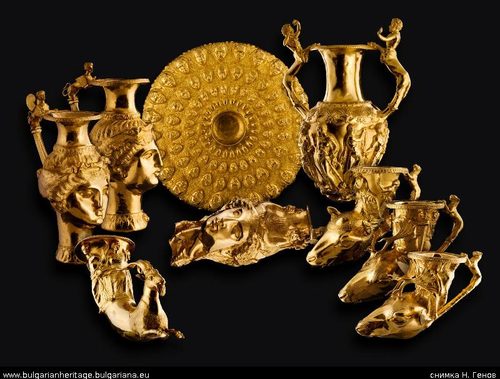
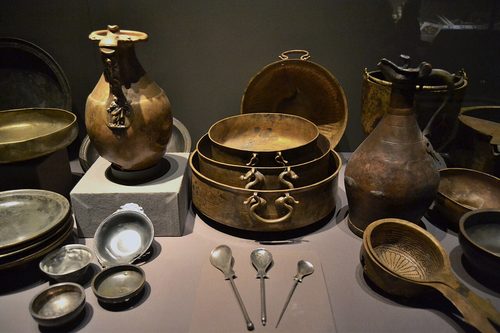
Cups and jugs were made for drinking together, and most hoards of them reflect feasting and gift-giving among elites. The Thracian kings of what is now Bulgaria collected silver on a huge scale: the Rogozen Treasure holds 165 vessels, mostly shallow libation bowls (phialai) and jugs, weighing more than 20 kg, while the nine gold vessels of Panagyurishte, a phiale, an amphora-rhyton and seven rhyta, weigh 6.164 kg. A rhyton was a horn- or head-shaped pouring vessel; wine ran out through a small hole at the base.

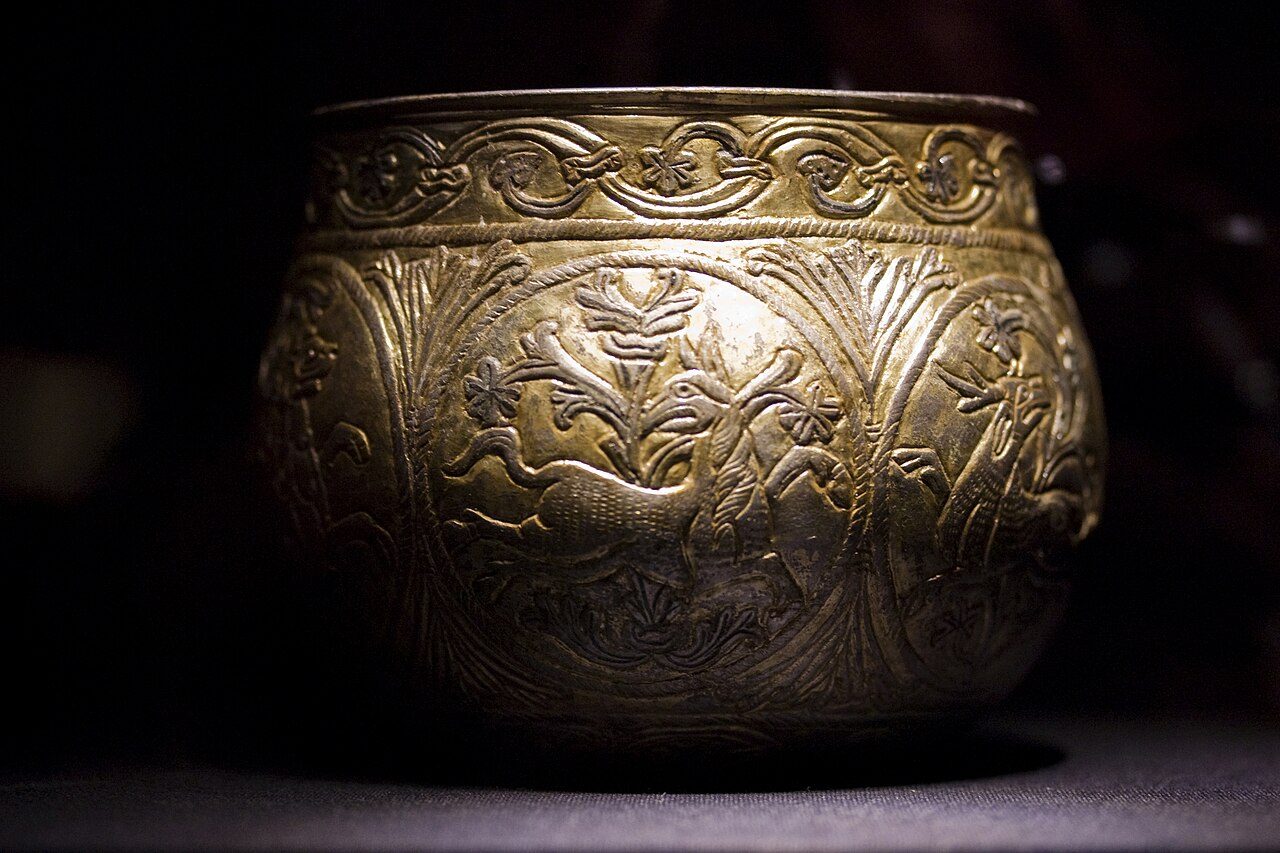
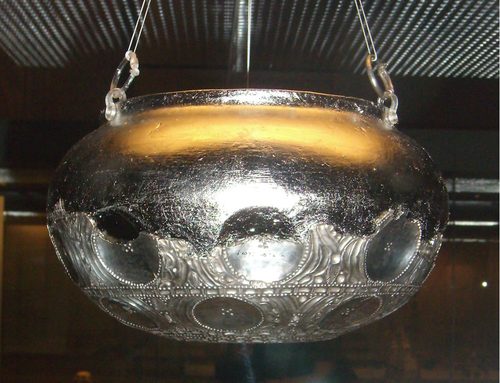
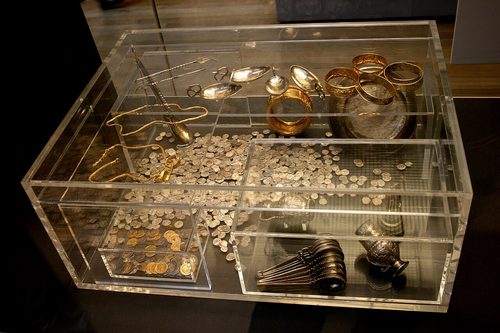
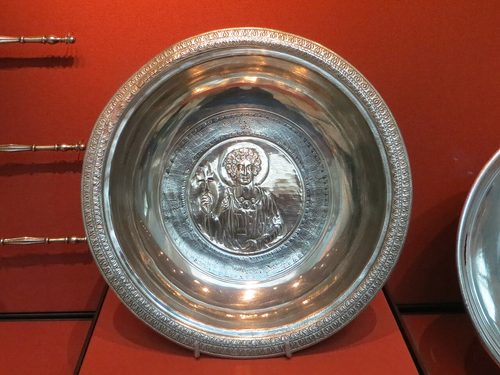
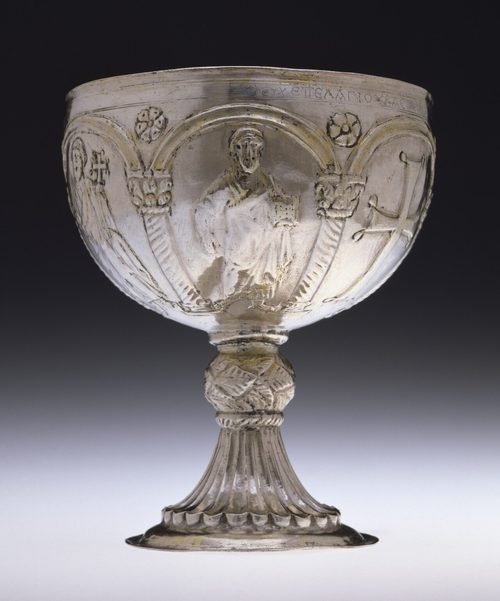
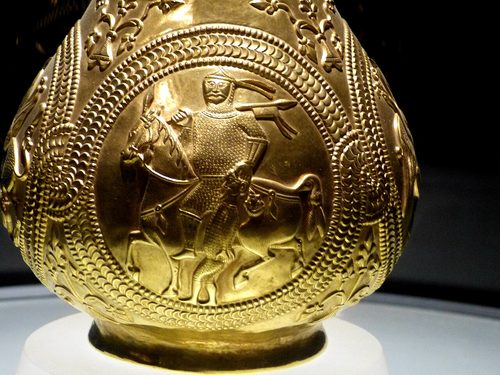
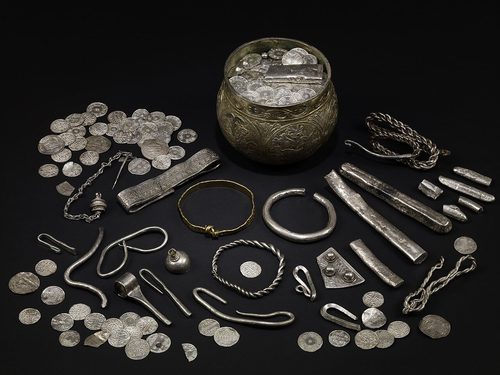
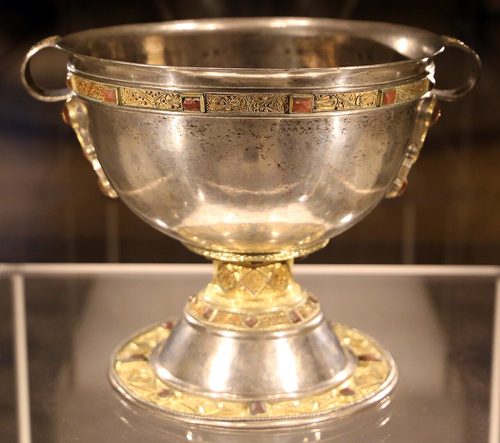
In the first millennium AD vessels travelled as gifts, tribute and loot. The Sutton Hoo ship burial included a nested set of ten silver bowls and a great silver dish carrying the control stamps of the Byzantine emperor Anastasius I (491-518); the Nagyszentmiklós treasure has 23 gold vessels weighing 9.945 kg, its date and makers still disputed. In the Viking age a silver-gilt cup from Frankish lands served as the container for the Vale of York Hoard, packed with 617 coins and 65 other items. Bronze cauldrons were the workhorses of feasting from the late Bronze Age onwards and were often reused as containers for hoards; the Trier gold hoard of about 2,500 aurei was buried in one.

To recognise a vessel fragment, look for curvature, a thickened or rolled rim, a foot-ring, rivet holes and handle attachments, and solder lines where separate parts were joined. Whole vessels let historians reconstruct how people drank and ate, who gave what to whom, and how far luxury metalwork moved. Inscriptions, weight marks and stamps, where present, can name owners and pin a date.

Examples
Sources

Hoards with vessels

44

Priam's Treasure

Early Bronze Age gold and silver dug up by Schliemann at Troy in 1873 and named for King Priam; it is a thousand years too early, and now sits in Moscow.

Bronze Age · Turkey · found 1873

Valchitran Treasure

Thirteen Late Bronze Age gold vessels weighing about 12.5 kg, turned up by two brothers in their vineyard near Pleven, Bulgaria, in December 1924.

Bronze Age · Bulgaria · found 1924

Treasure of Villena (Tesoro de Villena)

59 Bronze Age objects weighing nearly 10 kg, mostly gold bowls, bottles and bracelets, found near Villena in 1963. Most of the gold was stolen in 2026.

Bronze Age · Spain · found 1963

Eberswalde Hoard (Eberswalder Goldschatz)

81 gold objects weighing 2.59 kg, including eight decorated bowls, found in a lidded pot near Eberswalde in 1913; taken to Moscow in 1945 and still there.

Bronze Age · Germany · found 1913

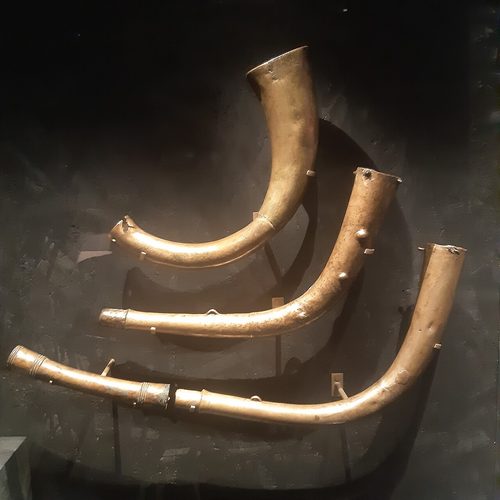
Dowris Hoard

More than 200 Late Bronze Age bronzes, including 26 horns, 48 rattle-like crotals, spears, axes and a cauldron, dug from a County Offaly bog in the 1820s.

Bronze Age · Ireland · found 1820

Rogozen Treasure

165 Thracian silver vessels, about 20 kg, found in a Bulgarian village garden in 1985-86; some are inscribed with the names of Odrysian kings.

Iron Age & classical · Bulgaria · found 1985

Panagyurishte Treasure

Nine solid gold Thracian drinking vessels, about 6.2 kg in all, dug up by brick workers near Panagyurishte, Bulgaria, in December 1949.

Iron Age & classical · Bulgaria · found 1949

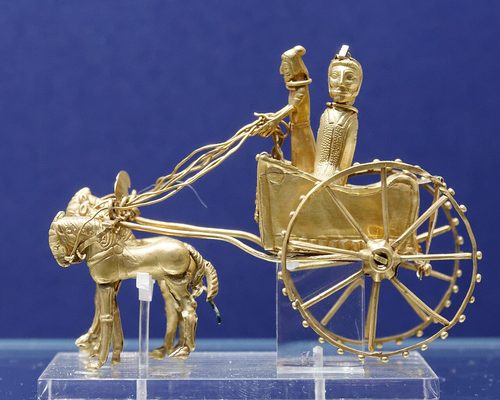
Oxus Treasure

About 180 pieces of Achaemenid Persian gold and silver found by the Oxus river around 1877-1880, sold through traders in British India and now in London.

Iron Age & classical · Tajikistan · found 1877

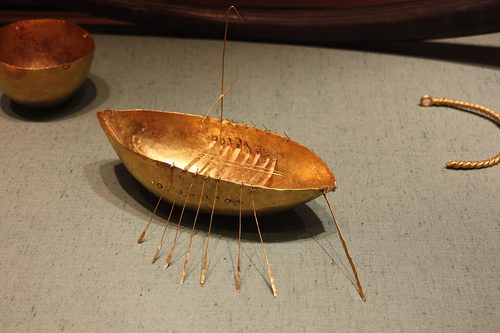
Broighter Hoard (Broighter Gold)

A tiny gold boat with oars and mast, a great decorated collar, a bowl and Roman-style chains: Iron Age gold ploughed up beside Lough Foyle in 1896.

Iron Age & classical · Northern Ireland · found 1896

Melsonby Hoard

Over 800 burnt and broken Iron Age objects, including 28 iron tyres from wagons and chariots and harness for 14 ponies, found in North Yorkshire in 2021.
Iron Age & classical · England · found 2021

Gundestrup cauldron

A gilded silver cauldron of almost 9 kg, taken apart and laid in a small Danish bog in the Iron Age; peat cutters found it in Himmerland in 1891.

Iron Age & classical · Denmark · found 1891

Hildesheim Treasure

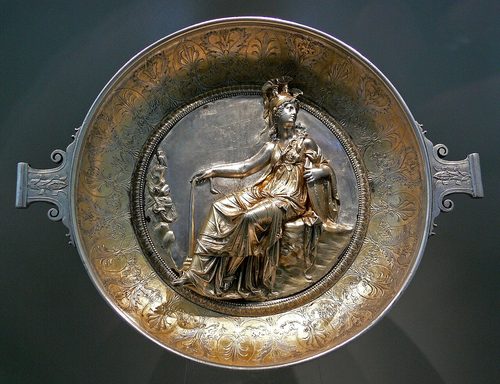
Over 70 pieces of Augustan Roman table silver, dug up by Prussian soldiers near Hildesheim in 1868: the largest Roman silver find beyond the frontier.

Roman · Germany · found 1868

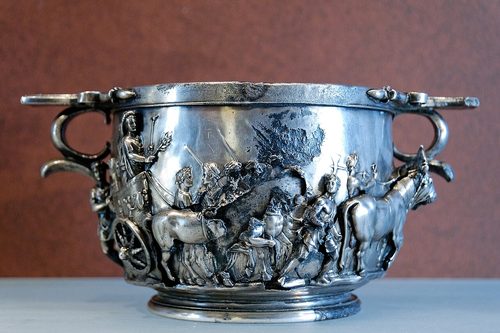
Boscoreale Treasure

More than 100 pieces of Roman silver and about 1,000 gold coins, hidden in a villa's wine-press room when Vesuvius erupted in AD 79 and found in 1895.

Roman · Italy · found 1895

Berthouville Treasure

About 90 silver offerings to Mercury, some 25 kg in all, ploughed up in a Normandy field in 1830: the richest Roman temple treasure known from Gaul.

Roman · France · found 1830

Neupotz Hoard

Over 1,000 objects and about 700 kg of Roman metalwork, booty lost in the Rhine around AD 260 and dredged up by a gravel works at Neupotz in 1967-1997.

Roman · Germany · found 1967

Cunetio Hoard

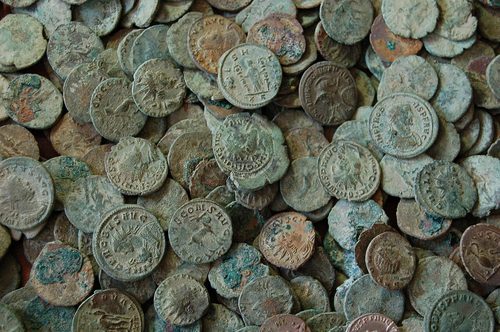
54,951 Roman radiate coins, buried around AD 274 in a jar and a lead box at Roman Cunetio, Wiltshire: the largest coin hoard from Roman Britain.

Roman · England · found 1978

Frome Hoard

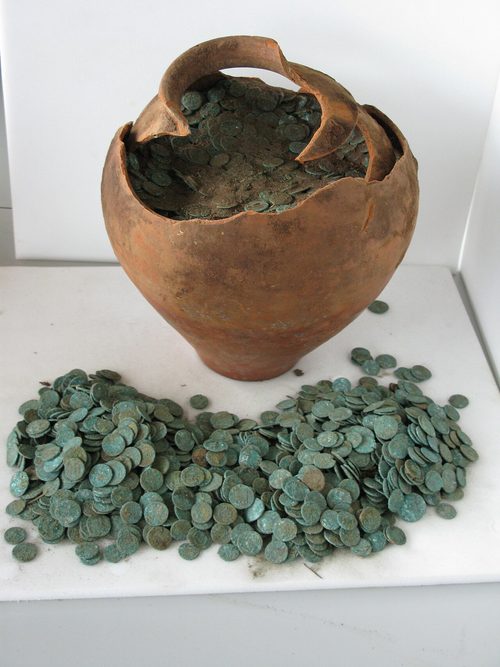
52,503 Roman coins, about 160 kg, poured into one pot near Frome, Somerset, around AD 290, including the largest group ever found of the usurper Carausius.

Roman · England · found 2010

Tomares Hoard

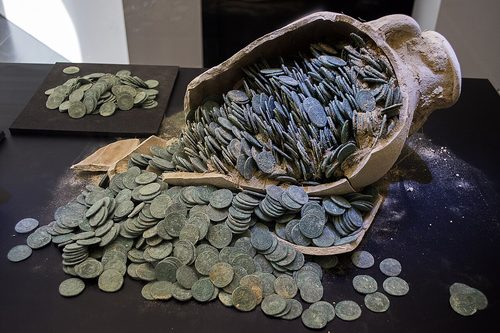
About 53,000 freshly minted Roman bronze coins, some 600 kg packed in 19 amphorae, hit by a digger in a park near Seville in April 2016.

Roman · Spain · found 2016

Shrewsbury Hoard

9,315 bronze Roman coins of Constantine's family in a storage jar near Shrewsbury, filled in two stages and sealed around AD 335 under a marker stone.
Roman · England · found 2009

Water Newton Treasure

Nine silver vessels and some 18 votive plaques marked with the Chi-Rho, ploughed up at Roman Durobrivae, 1975: the earliest known Christian church plate.

Roman · England · found 1975

Kaiseraugst Treasure

270 pieces and 58 kg of late Roman silver, buried in a Rhine fortress around AD 351 and scooped up by a digger in 1961, including the Achilles dish.

Roman · Switzerland · found 1961

Mildenhall Treasure

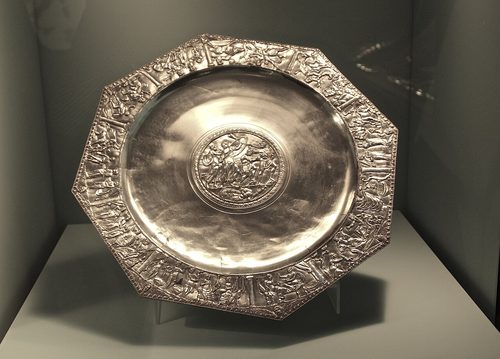
Thirty-four pieces of 4th-century Roman silver tableware ploughed up at West Row, Suffolk, in 1942, led by the 8.3 kg Great Dish of Oceanus and Bacchus.

Roman · England · found 1942

Esquiline Treasure

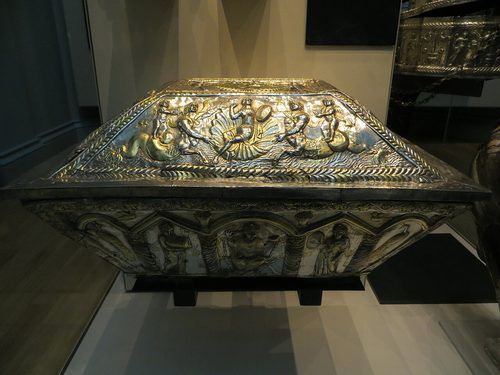
Late Roman silver of an aristocratic family, found on Rome's Esquiline Hill in 1793, with the Projecta wedding casket. Most is in the British Museum.

Roman · Italy · found 1793

Pietroasele Treasure

A Gothic gold hoard of 22 pieces found by quarrymen in Romania in 1837; twelve survive, including eagle brooches and a runic neck-ring, in Bucharest.

Migration period · Romania · found 1837

Szilágysomlyó Treasure

Found in two parts on one Transylvanian hill (1797, 1889): Roman gold medallions, a chain of 52 pendants and jewelled brooches of a Germanic royal house.

Migration period · Romania · found 1797

Hoxne Hoard

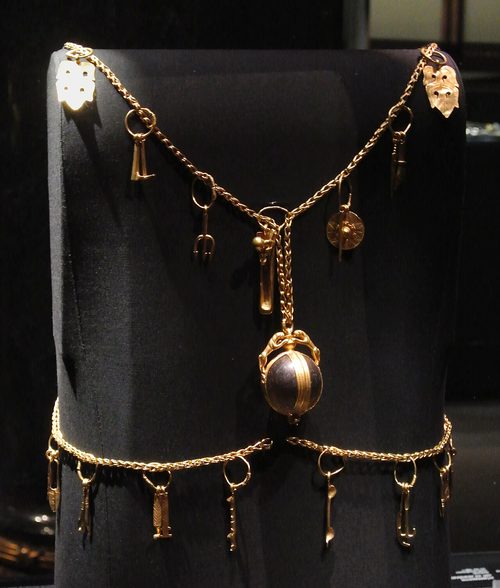
A Suffolk oak chest packed after AD 407 with 14,865 gold, silver and bronze coins, a gold body-chain, pepper pots and nearly 100 silver spoons.

Roman · England · found 1992

Traprain Law Treasure

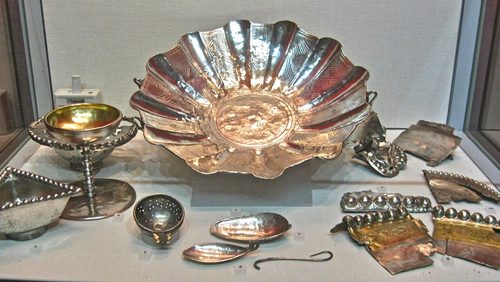
About 23 kg of late Roman silver plate, mostly cut and crushed into hacksilver, dug up in 1919 on an East Lothian hillfort beyond Hadrian's Wall.

Migration period · Scotland · found 1919

Carthage Treasure

Late Roman silver tableware and jewels of the Cresconii family, 31 objects found on the Byrsa hill at Carthage in the mid-19th century.

Roman · Tunisia · found 1850

Sutton Hoo ship burial

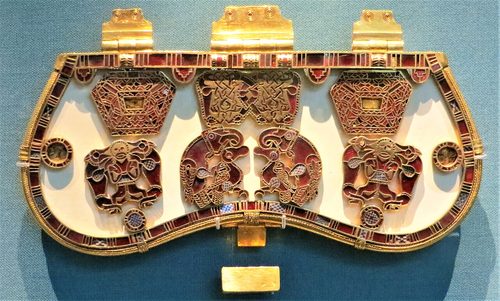
A 7th-century king's grave in a 27-metre ship, dug in Suffolk in 1939: gold and garnet regalia, a helmet, Byzantine silver and 37 Frankish coins.

Early medieval · England · found 1939

Lampsacus Treasure

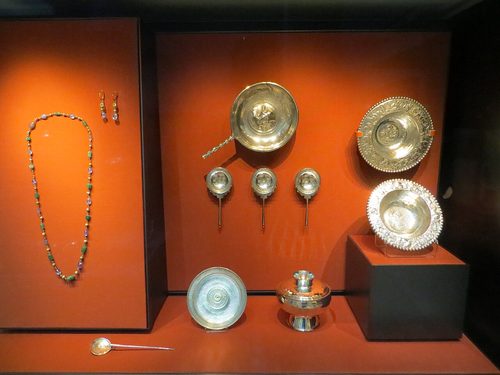
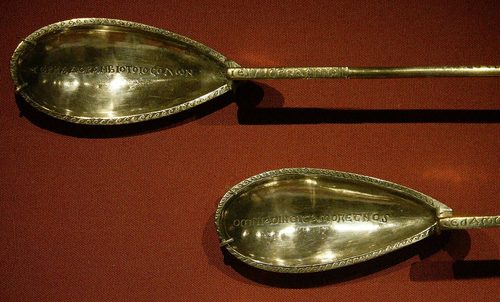
Early Byzantine silver found by farmers at Lapseki on the Dardanelles in 1847: a stamped lampstand, a polycandelon and spoons inscribed with Virgil.

Early medieval · Turkey · found 1847

Pereshchepina Treasure

Over 800 gold and silver objects, some 70 kg of metal, found by boys near Poltava, Ukraine, in 1912; often linked to the 7th-century Bulgar khan Kubrat.

Early medieval · Ukraine · found 1912

First Cyprus Treasure

28 pieces of 6th-7th century Byzantine silver found near the Acheiropoietos monastery at Lambousa, Cyprus, in 1897, bought by the British Museum in 1899.

Early medieval · Cyprus · found 1897

Kaper Koraon Treasure

About 56 pieces of 6th-century church silver from a Syrian village church of St Sergius, found c. 1908-1910 and now scattered from Baltimore to Istanbul.

Early medieval · Syria · found 1908

St Ninian's Isle Treasure

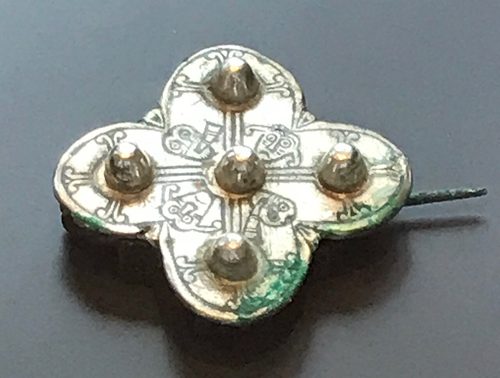
28 Pictish silver objects, including 12 brooches and 8 bowls, found under a cross-marked slab in a Shetland chapel in 1958; buried around AD 800.

Early medieval · Scotland · found 1958

Treasure of Nagyszentmiklós

23 early medieval gold vessels, almost 10 kg, dug up near Sânnicolau Mare (now Romania) in 1799 and kept in Vienna ever since; probably Avar.

Early medieval · Romania · found 1799

Galloway Hoard

Over 100 objects, more than 5 kg of silver, gold, silk and crystal, buried c. AD 900 in Kirkcudbrightshire and found in 2014. Now in Edinburgh.

Viking age · Scotland · found 2014

Ardagh Hoard

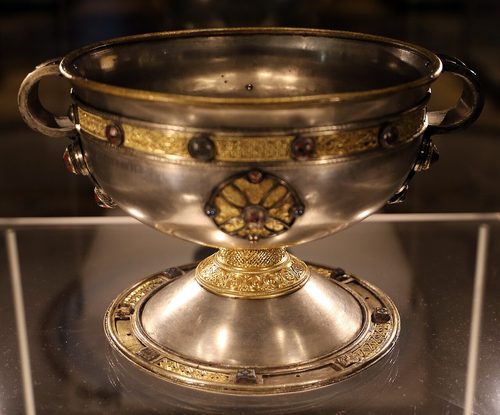
The Ardagh Chalice, a plain bronze cup and four brooches, dug up by two boys in a Limerick ringfort in 1868; buried around AD 900.

Viking age · Ireland · found 1868

Vale of York Hoard

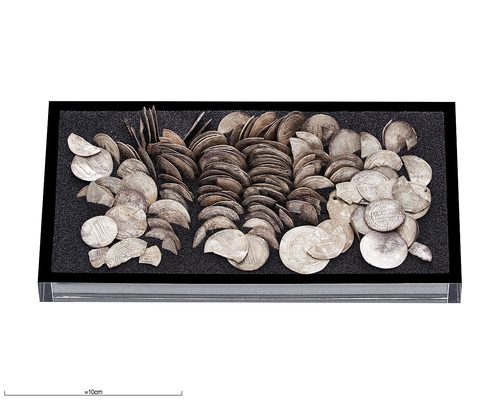
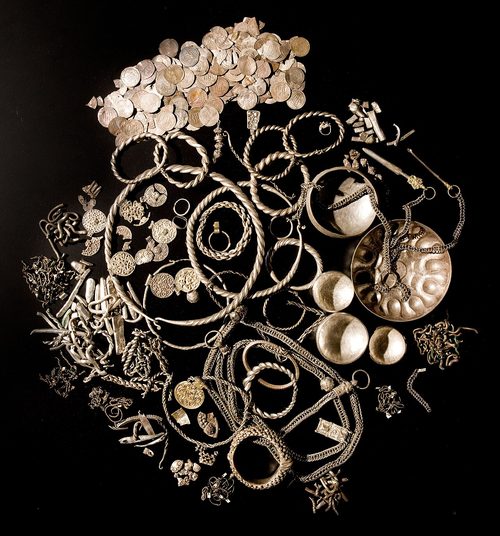
617 silver coins and dozens of ornaments packed into a Carolingian gilt cup, buried in North Yorkshire c. 928 and found by two detectorists in 2007.

Viking age · England · found 2007

Terslev Hoard

6.6 kg of Viking silver dug up by two boys in a Zealand garden in 1911: 1,751 coins, silver cups and bowls, chains and fine filigree jewellery.

Viking age · Denmark · found 1911

Derrynaflan Hoard

A silver chalice, paten, stand, strainer and bronze basin from an Irish monastic island, found by detectorists in 1980; the lawsuit changed Irish law.

Viking age · Ireland · found 1980

Burge Hoard

Over 10 kg of silver ploughed up at Burge on Gotland in 1967: about 3,000 coins, Russian grivna ingots and cut silver, buried soon after 1143.

Medieval · Sweden · found 1967

Dune Treasure

122 gold and silver bowls, spoons, chains and belt fittings hidden on a Gotland farm in the 1360s or 1370s, perhaps in 1361; found in 1881.

Medieval · Sweden · found 1881

Cheapside Hoard

About 500 jewels from a 17th-century goldsmith's stock, found under a Cheapside cellar in 1912: the finest Elizabethan and Stuart jewellery anywhere.

Early modern & later · England · found 1912

Lohe Hoard

Over 200 kg of silver: some 18,000 coins and 80 pieces of family plate packed in three copper kettles under a Stockholm cellar after 1741, found in 1937.

Early modern & later · Sweden · found 1937