In April 2010 a metal detectorist searching a field near Frome for the remains of a scattered late Roman silver hoard picked up a faint signal. About 35 cm down he found a small coin and then the rim of a pot. Recognising an intact hoard, he stopped, filled in his hole and contacted the Portable Antiquities Scheme. Over three days a contract archaeologist, two Finds Liaison Officers, the finder and members of the landowner's family excavated the site.
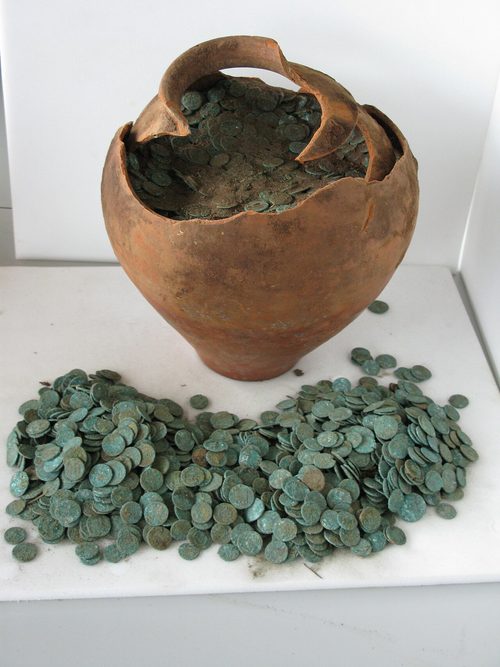
The coins filled a large coarseware jar about 45 cm across, its mouth closed with a smaller upturned bowl. The jar had cracked in the ground long ago and could not be lifted with its contents, so the coins were taken out in the field, layer by layer, into 66 labelled bags weighing about 160 kg. The team hoped to see whether the earliest coins lay at the bottom. Washing and drying at the British Museum took six weeks.
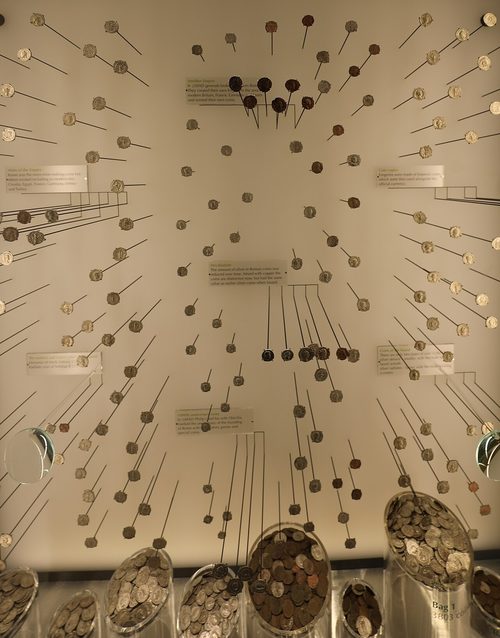
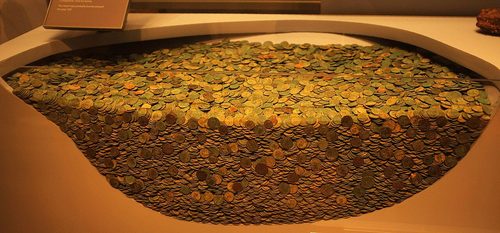
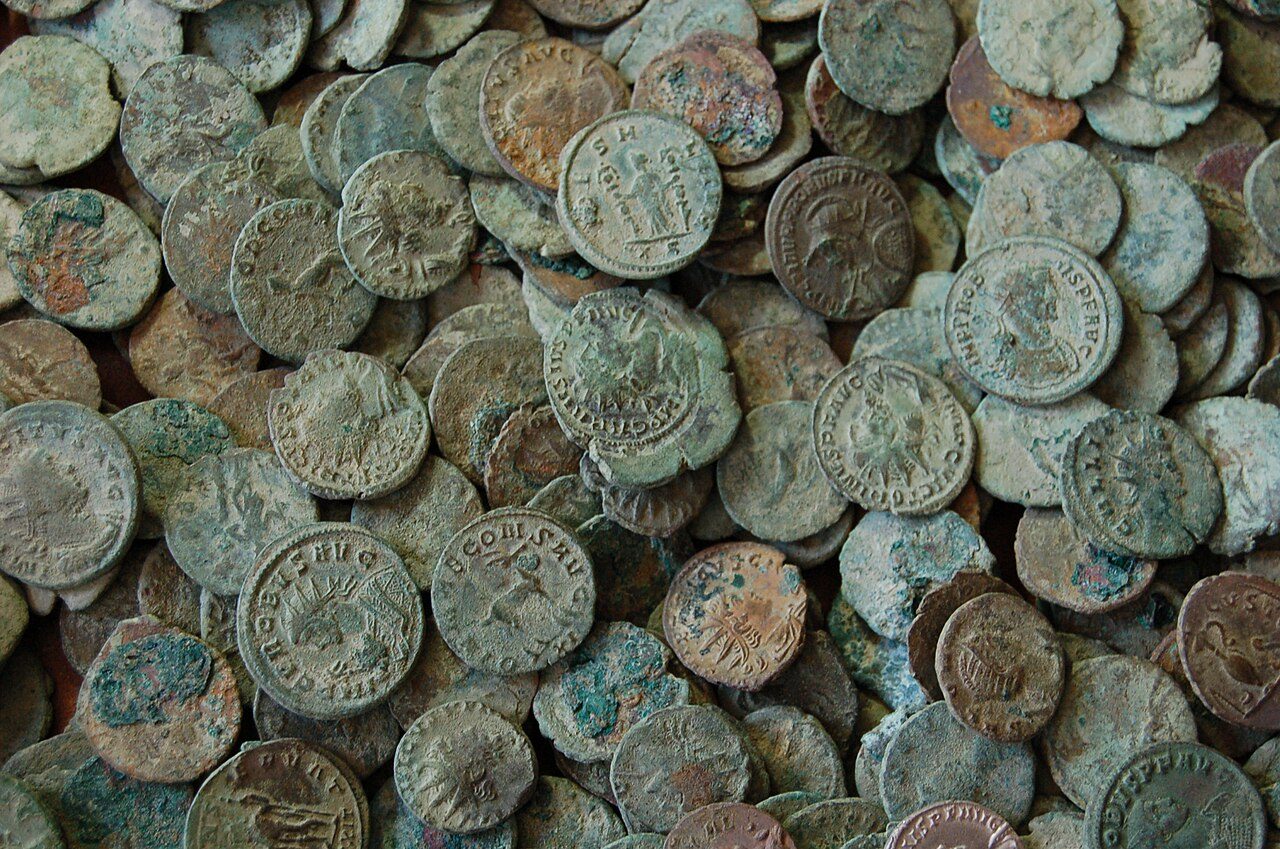
The count reached 52,503, one of the largest Roman coin hoards ever found in Britain. Almost all are radiates, the debased 'silver' coins of the later 3rd century, struck under at least 21 emperors and three empresses. More than half were issued by the breakaway Gallic Empire, which ruled Britain and Gaul from 260 to 274. The hoard's special importance lies in its 766 coins of Carausius, the naval commander who seized power in Britain and northern Gaul in 286 and was the first ruler to strike Roman coins in Britain. Five of them are silver denarii, at a time when no other part of the Empire was issuing good silver.
The way it was buried is puzzling. The weight of coin was greater than the vessel could have carried, so the empty jar must have been set in a pit and the coins poured in. Getting them out again would have meant breaking it. For that reason the British Museum and PAS team suggested the hoard was never meant to be recovered and may have been a communal offering, perhaps for a good harvest, rather than savings hidden in a crisis. A geophysical survey found no settlement nearby, and organic material packed round the pot hints at care in the burial.
The finder's decision not to dig further made all this evidence possible. The hoard was declared treasure in July 2010 and valued at £320,250. The Museum of Somerset raised the money with help from the Art Fund, the National Heritage Memorial Fund and public donations, and the coins went on show in Taunton when the museum reopened in 2011.
Highlights
One of five pure-silver denarii in the hoard. The reverse shows clasped hands with the letters RSR, read as a quotation from Virgil announcing the return of a golden age.
A Carausian silver coin showing the she-wolf suckling Romulus and Remus, Rome's founding legend, chosen by a ruler who had broken away from the central emperors.
The cracked storage jar and the smaller black-burnished bowl that sealed it are displayed with the coins in Taunton.
What is in it
Base-silver and bronze radiate coins of the mid to late 3rd century, with five silver denarii of Carausius, packed into a large pottery jar capped with a smaller bowl.
Size: 52,503 coins. Weight: about 160 kg (debased silver and bronze coins).
| Item | Number | Notes |
|---|---|---|
| Central Empire coins | 14,788 | Valerian and Gallienus to Diocletian and Maximian |
| Gallic Empire coins | 28,377 | Postumus to Tetricus I and II; Tetricus I alone accounts for 12,416 |
| Carausius | 766 | the largest group known, including five silver denarii |
| Not yet identified | 8,258 | recorded as illegible pending full conservation |
| Container | 1 jar and lid | a coarse pottery jar about 45 cm across, sealed with an inverted black-burnished bowl |
Photographs
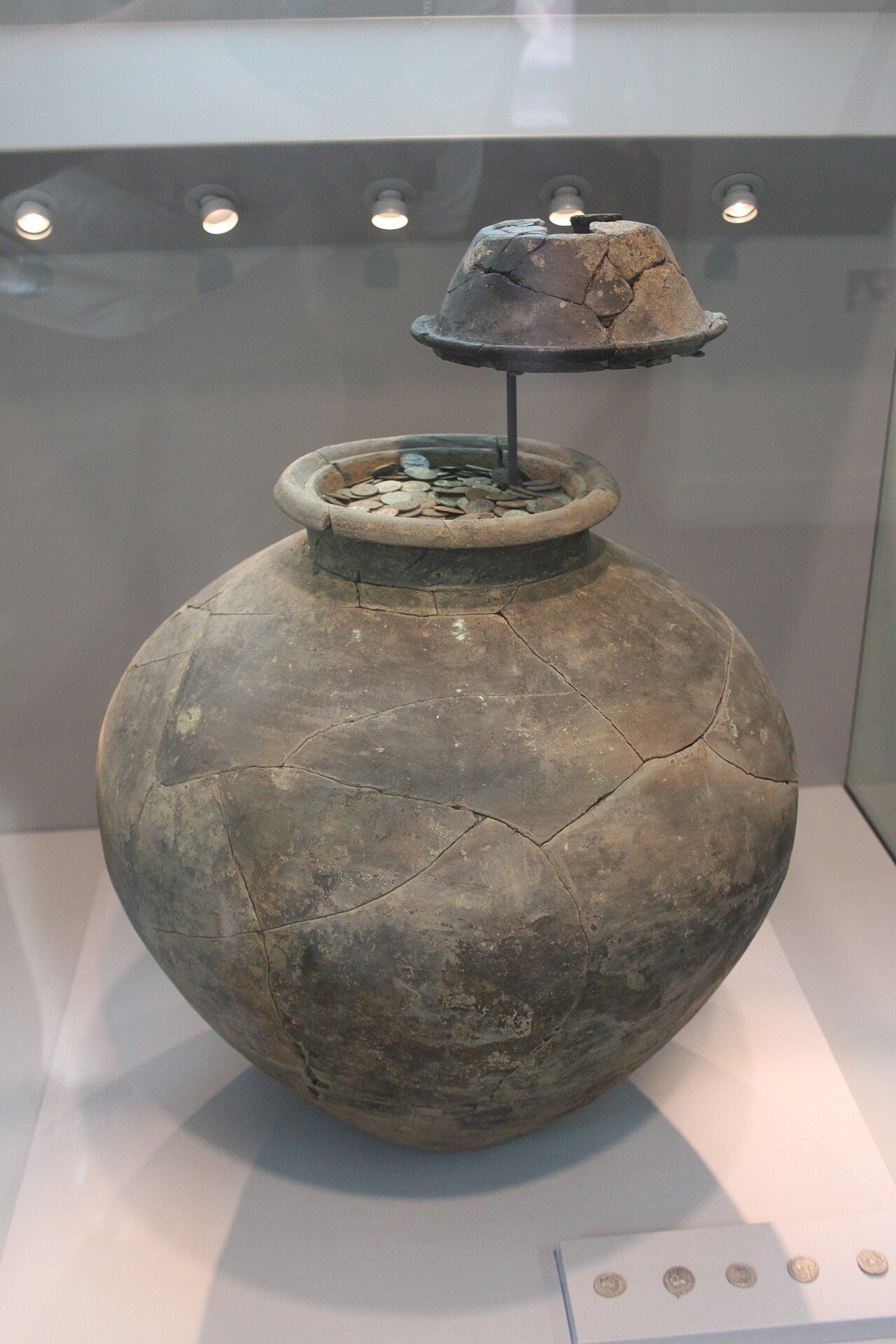
Photo: Rodw, CC BY-SA 3.0, via Wikimedia Commons
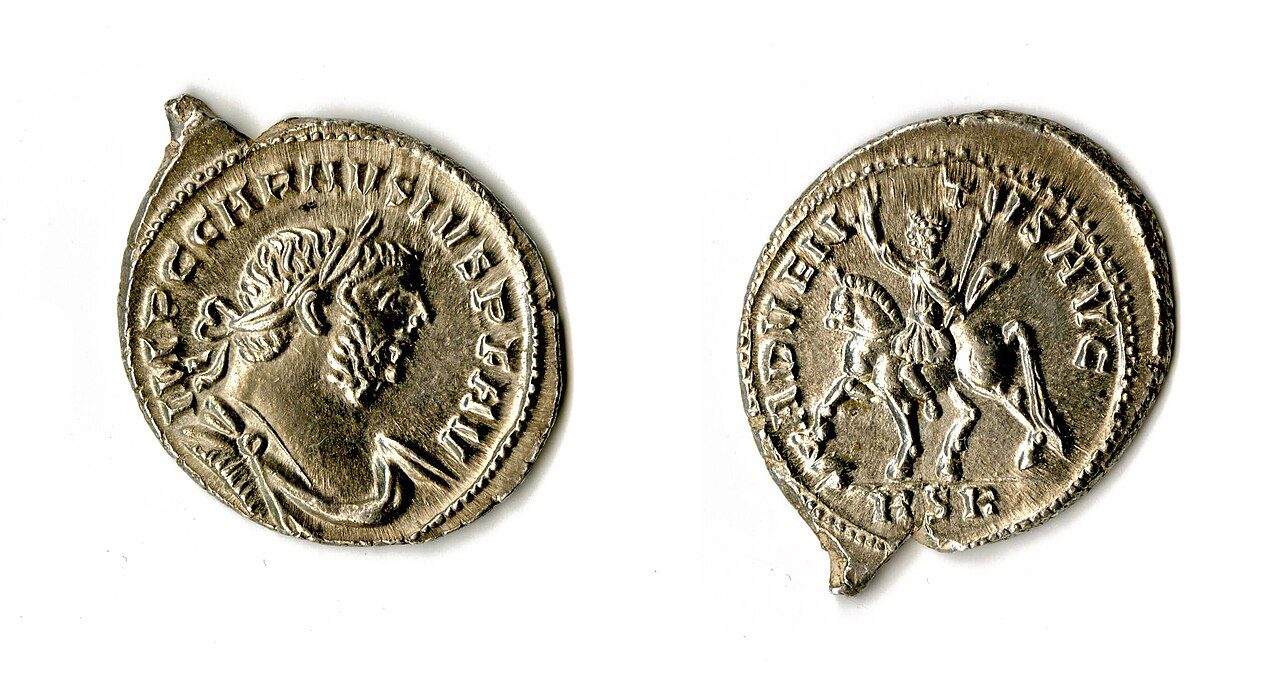
Photo: Portable Antiquities Scheme from London, England, CC BY 2.0, via Wikimedia Commons
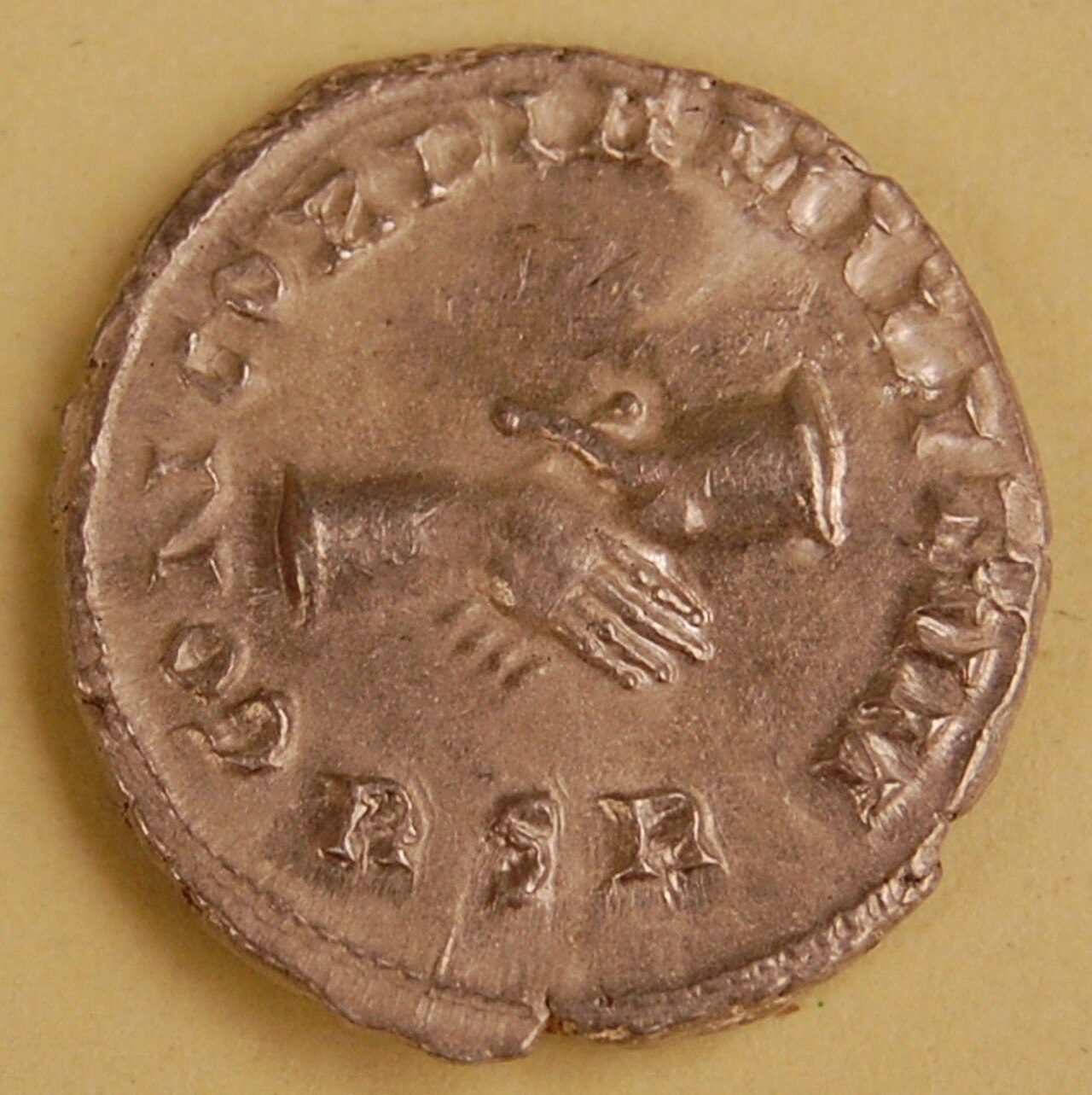
Photo: Portable Antiquities Scheme from London, England, CC BY 2.0, via Wikimedia Commons
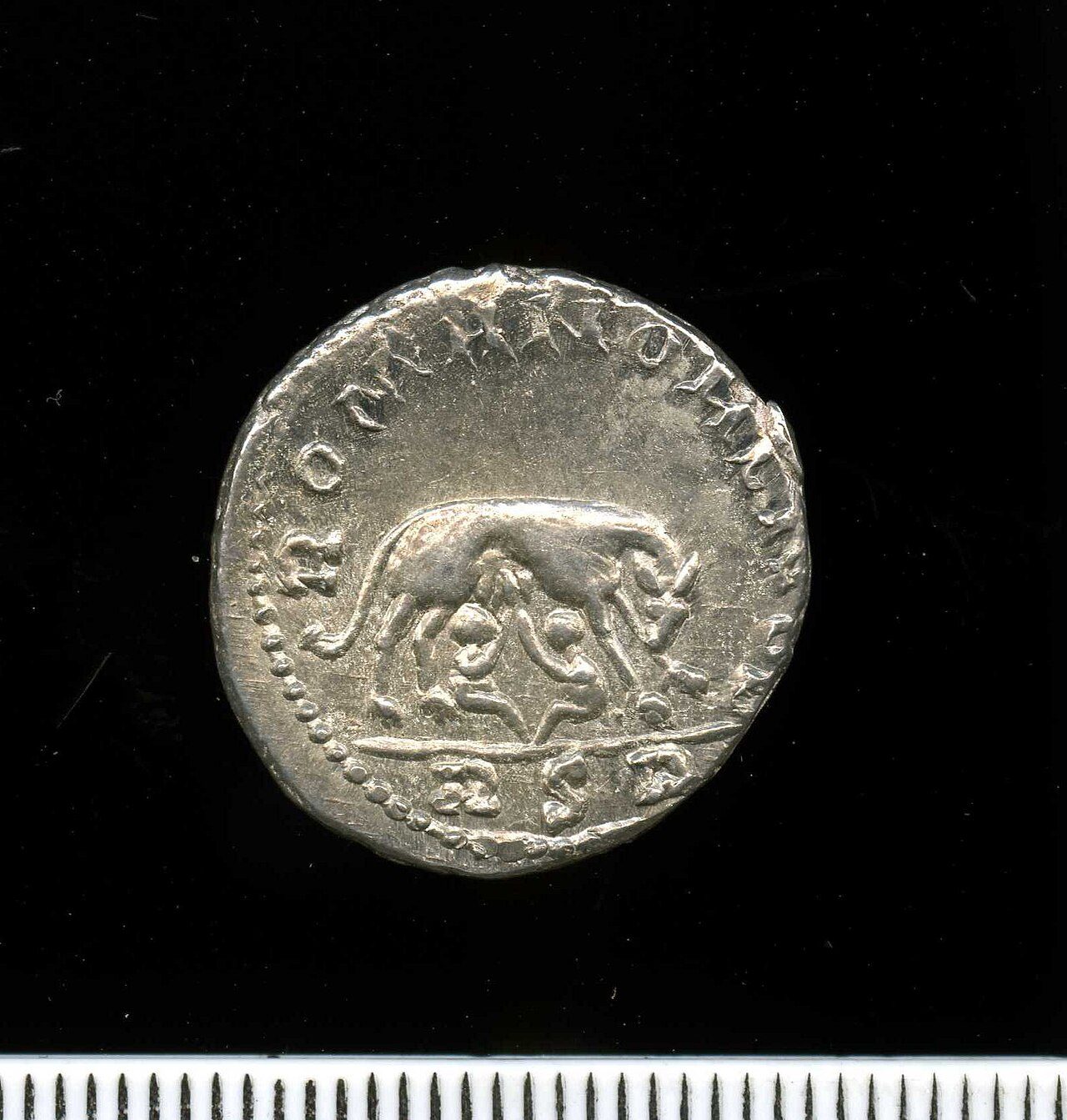
Photo: Portable Antiquities Scheme from London, England, CC BY 2.0, via Wikimedia Commons
How it is dated
The coins run from 253 to the reign of Carausius, whose rule ended in 293. With no coins of his successor Allectus and only small numbers of Diocletian and Maximian, burial around 290 is the usual estimate.
What happened after the find
A coroner's inquest on 22 July 2010 declared the coins treasure under the Treasure Act 1996. The Treasure Valuation Committee set a value of £320,250, shared between finder and landowner, and the Museum of Somerset acquired the hoard in 2011 with grants from the Art Fund and the National Heritage Memorial Fund and public donations.
Where sources differ
- Date range: early PAS and Art Fund statements give AD 253-293, while Wikipedia gives 253-305 (based on the reign dates of Diocletian and Maximian rather than the coins' issue dates). The deposition date is generally put around 290.
- Number of excavation layers: the PAS reported 12 layers, but the published section drawing shows 10.
- Some 8,258 coins were still classed as illegible in the published figures; the identified totals may change after full conservation.
- The votive interpretation is a suggestion by the excavation and museum team, not a certainty.
Questions
Where is the Frome Hoard now?
At the Museum of Somerset in Taunton Castle, which bought it in 2011. It has been on permanent display there since the museum reopened in September 2011.
How much was the Frome Hoard worth?
The Treasure Valuation Committee valued it at £320,250 in 2010. The money was shared between the finder and the landowner.
Why is the Frome Hoard important?
Besides its size, it contains 766 coins of Carausius, the largest group ever found, including five rare silver denarii. Because it was excavated by archaeologists, it also shows how the coins were buried.