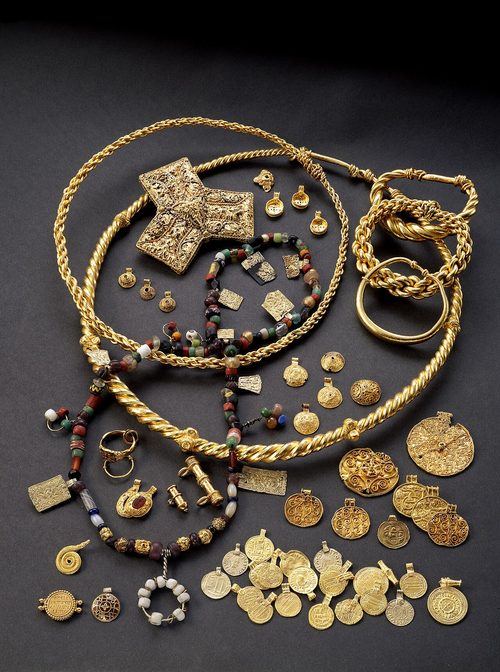
Aurei, denarii, radiates, solidi, siliquae and nummi: how Roman coins were made, how they lost their silver, and how to read a Roman coin hoard.
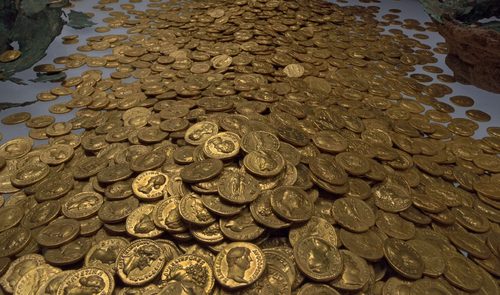
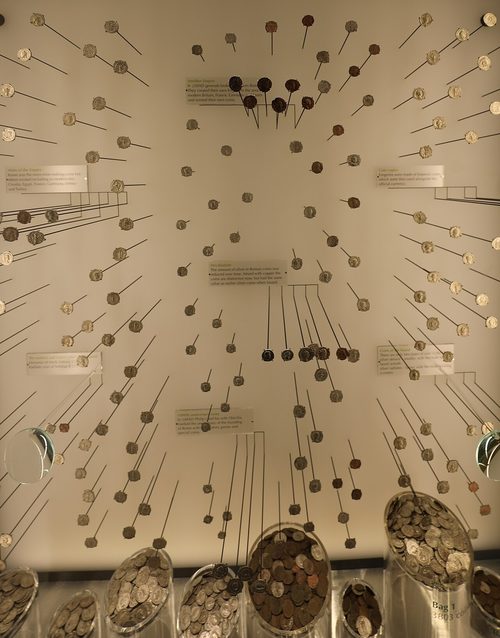
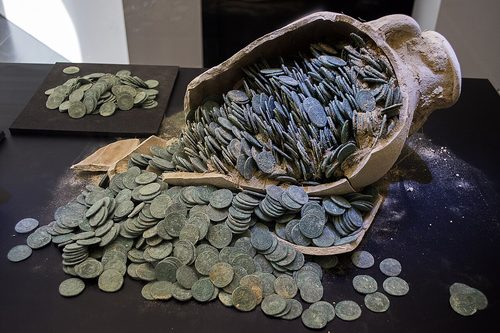
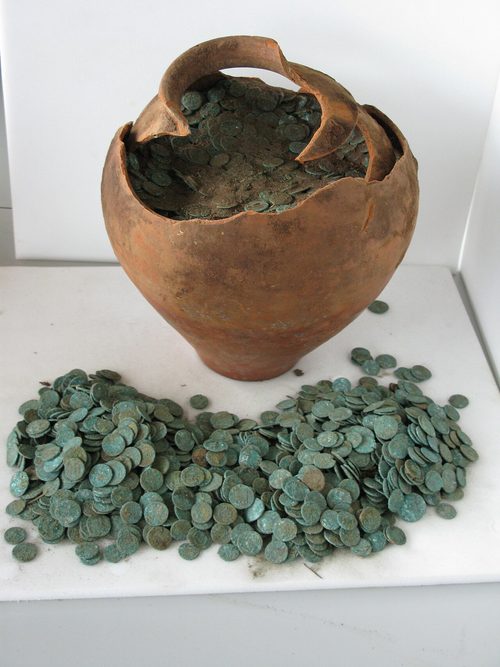
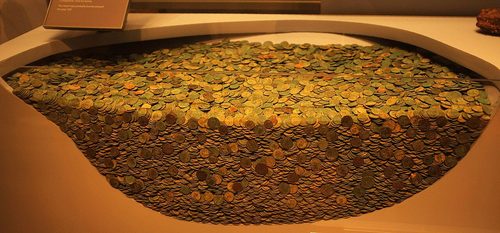
Roman coins are the commonest thing in the ground of the former empire, and hoards of them run from a handful of gold pieces to the 54,951 coins of the Cunetio Hoard or the 52,503 packed into a single pot at Frome. Every coin was struck by hand between engraved dies, and most carry the head of a ruler and a dated or datable inscription. That makes them the most useful clock an archaeologist has: the latest coin in a hoard sets the earliest date it could have been buried.
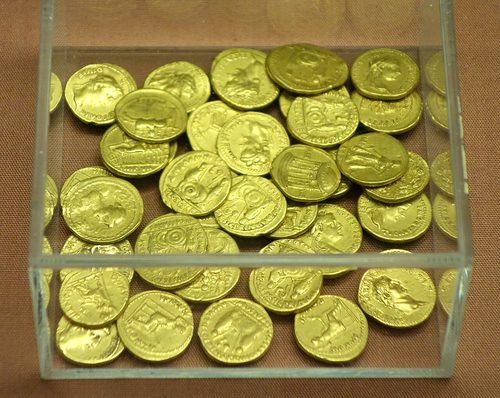
The system rested on three metals. The silver denarius, introduced around 211 BC at about 4.5 g, was the soldier's and the taxman's coin for four centuries. Gold aurei sat above it, struck at one-fortieth to one-forty-second of a Roman pound (about 8 g) under Caesar and Augustus, and brass and copper coins below. Each was supposed to contain its value in metal, and the state kept quietly shaving that promise. Nero cut the denarius to one ninety-sixth of a pound in AD 64 and lowered its fineness; later emperors kept going.
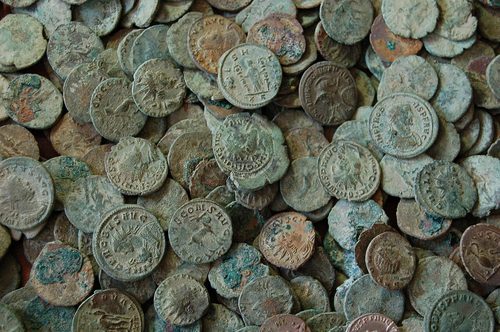
The collapse came in the third century. In 215 Caracalla introduced a larger coin with a spiky crown on the emperor's head, valued at two denarii but holding only about one and a half denarii's worth of silver. Numismatists call it the antoninianus or simply the radiate. Over roughly thirty years its silver fell from about 2.2 g to under a tenth of a gram, and by the reign of Claudius II (268-270) it was almost all copper with a silvery wash. Aurelian's reform of 274 restored a token 5 per cent silver, marked XXI, and Diocletian replaced the lot in 294 with a large silver-washed bronze, the nummus (long called the follis), of about 10 g. Millions of near-worthless radiates were buried in Britain and Gaul in these decades; that is why the giant British pot hoards are full of them.
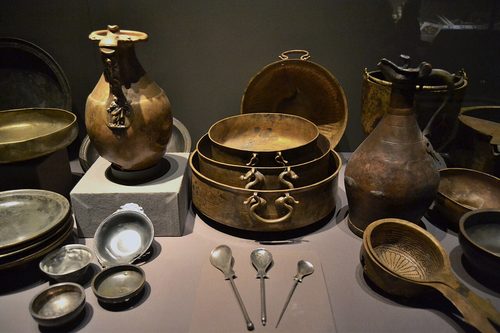
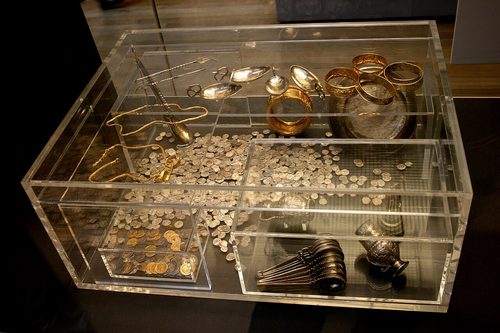
Constantine's gold solidus, struck at 72 to the pound (about 4.5 g) from around 312, held its weight for centuries and became the hard currency of the late empire and Byzantium. Beside it ran thin silver coins of 2 to 3 g that modern collectors call siliquae (the ancient name is unknown). In Britain almost every late siliqua has had its edge clipped, leaving the emperor's portrait but removing silver; the Hoxne Hoard holds 14,212 of them alongside 569 solidi whose combined weight comes to almost exactly eight Roman pounds.
To identify a Roman coin, look at the metal, the size and the head. A gold coin of about 7-8 g is an early aureus; one of about 4.5 g a solidus. A silver coin with a laurel wreath is a denarius, while a spiked crown means a radiate. Small bronzes with a laurel or pearl diadem and a Christian or military reverse belong to the 4th century. The reverse inscription and the mint mark in the exergue narrow it to a reign and a workshop. Studied in bulk, hoards show how fast debasement moved, which mints supplied which provinces, and when money stopped arriving in Britain after about 410.
Examples
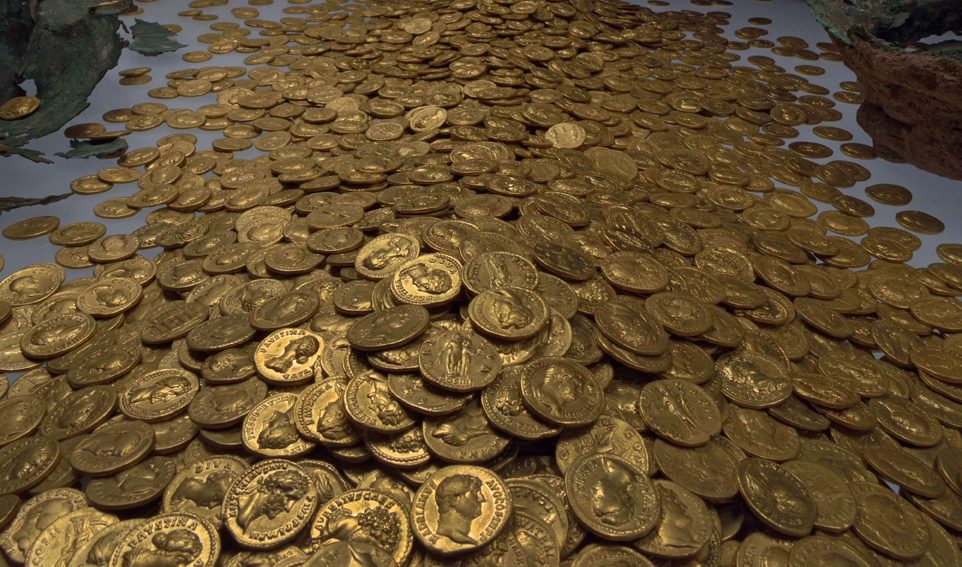
Photo: Th. Zühmer, CC BY-SA 3.0, via Wikimedia Commons
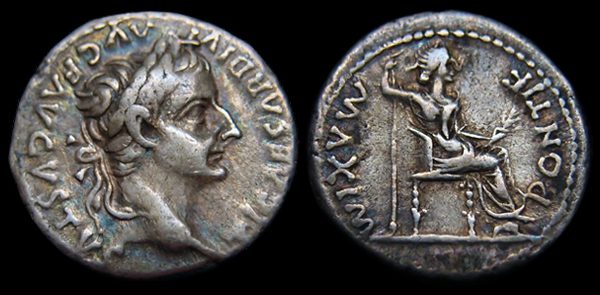
Photo: DrusMAX, CC BY-SA 3.0, via Wikimedia Commons
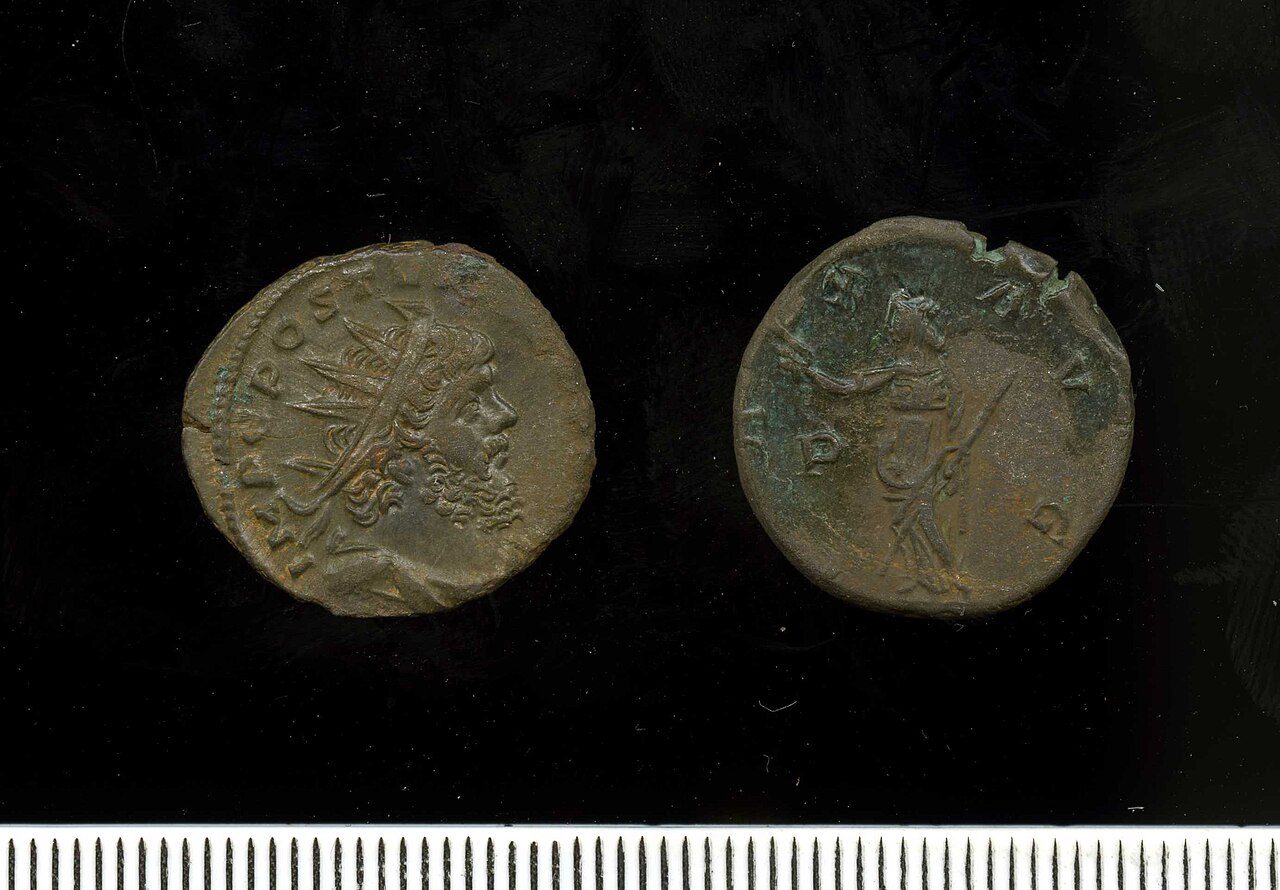
Photo: Portable Antiquities Scheme from London, England, CC BY 2.0, via Wikimedia Commons
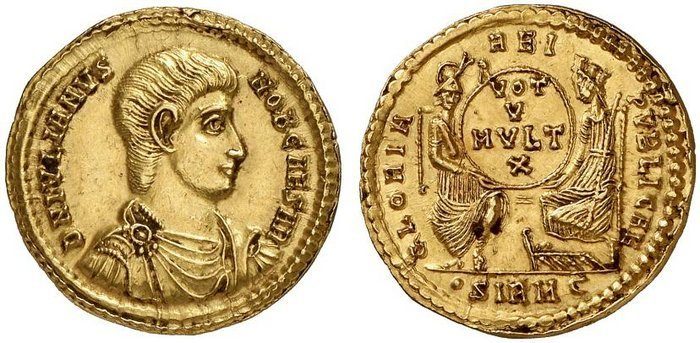
Photo: CNG, CC BY-SA 2.5, via Wikimedia Commons