In 1933 builders digging foundations for a house near the Chaman-i Hazouri park in central Kabul broke into a cache of ancient silver. The director of the French archaeological mission in Afghanistan reported about a thousand coins and some jewellery. Only 127 coins and the jewellery reached the Kabul Museum; the rest drifted into collections and museums in British India and elsewhere.
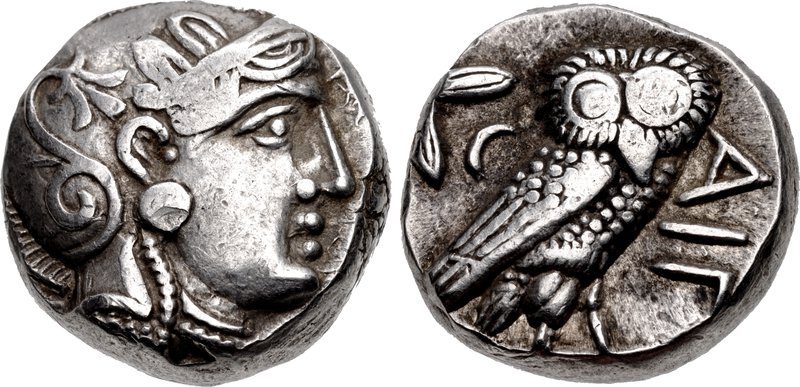
Two decades later the French scholar Daniel Schlumberger published 115 of the Kabul Museum coins, and that small sample has carried the hoard's reputation ever since. It is a remarkable mix. About thirty coins come from Greek cities as far apart as Aegina, Thasos and Chios in the Aegean, Akanthos in northern Greece, Corcyra off western Greece, and cities in Pamphylia, Cilicia and Cyprus. Another thirty-odd are Athenian owls, with one Iranian imitation of an owl. Nine are Persian sigloi showing the running archer-king. The rest are something else entirely: 29 round or cup-shaped coins struck with punches, of a kind Schlumberger called new, and 14 short bent silver bars stamped with two punch-marks.
Kabul lay in the eastern provinces of the Achaemenid Persian empire, which ruled the region from the 6th century BC until Alexander's conquest. The hoard shows Greek silver reaching the edge of India well before Alexander, alongside Persian coin. As in other hoards from the eastern provinces, Greek coins far outnumber the Persian king's own sigloi, which suggests Greek silver was central to money in this part of the empire.
Its real importance lies in the local coins. Because they were buried with Greek and Persian pieces of known date, they are among the very few early South Asian coins that can be dated with some confidence. The round punch-marked pieces follow the Persian siglos weight and seem to run from coins with pictorial designs towards coins struck with several separate punches, while the bent bars resemble the long bars found at Taxila. Numismatists such as Osmund Bopearachchi and Joe Cribb have argued that this sequence shows the idea and technique of coinage reaching India from the Achaemenid world, leading towards the punch-marked coins later issued under the Mauryan empire. Many Indian scholars instead see coinage developing independently in the Ganges plain, and the question is still argued.
The latest datable coin, the Iranian copy of an Athenian tetradrachm, has been placed around 380 BC, which is taken as the approximate date of burial; some writers prefer about 350 BC. Who buried the coins and why is not known.
The hoard's later history is a loss. The coins in the Kabul Museum stayed there until the museum was plundered during the civil war of 1992-93, when they vanished with much else. About two years later fourteen of them surfaced in a private collection in Pakistan and were published in 1995. The rest are missing.
Highlights
A local copy of the famous Athenian tetradrachm, the latest datable coin and the basis for dating the burial to around 380 BC.
Twenty-nine locally made silver coins on the Persian weight standard, central to debates about how coinage began in South Asia.
Fourteen short silver bars stamped with two circular symbols, attributed to the Kabul region under Persian rule.
Coins of Aegina, Thasos and Chios struck before 480 BC that had travelled thousands of kilometres east.
What is in it
Silver coins from Greek cities across the Aegean and eastern Mediterranean, Persian royal sigloi, and early locally made punch-marked coins and bent bars, with some jewellery.
Size: about 1,000 coins reported; 115 described in print.
| Item | Number | Notes |
|---|---|---|
| Greek city coins | 30 (of those published) | Archaic and early Classical issues of Aegina, Thasos, Chios, Akanthos, Corcyra, and cities of Pamphylia, Cilicia and Cyprus |
| Athenian owls | about 33, plus 1 Iranian imitation | Tetradrachms; the imitation is the latest datable coin |
| Achaemenid sigloi | 9 | Persian royal silver with the running archer-king |
| Round punch-marked coins | 29 | Locally made coins 'of a new kind' on the Persian weight standard |
| Bent bars | 14 | Short silver bars struck with two punch-marks |
| Jewellery | some | Not described in detail |
Photographs
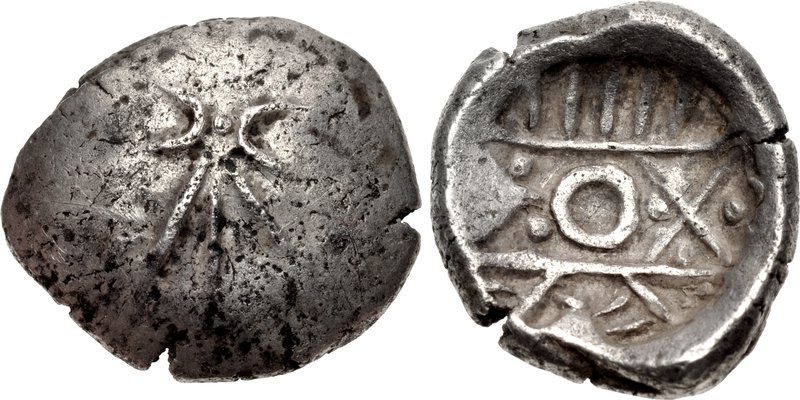
Photo: CNG Coins, CC BY-SA 3.0, via Wikimedia Commons
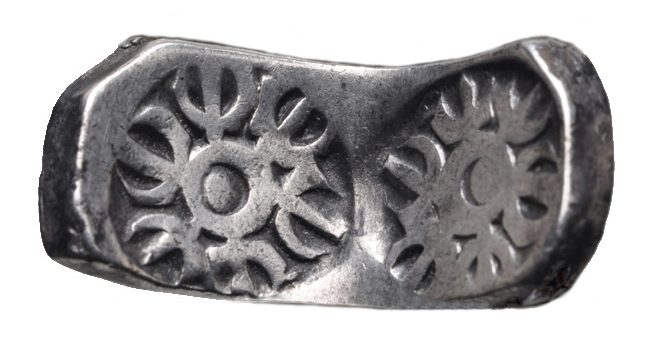
Photo: CNG Coins, CC BY-SA 3.0, via Wikimedia Commons
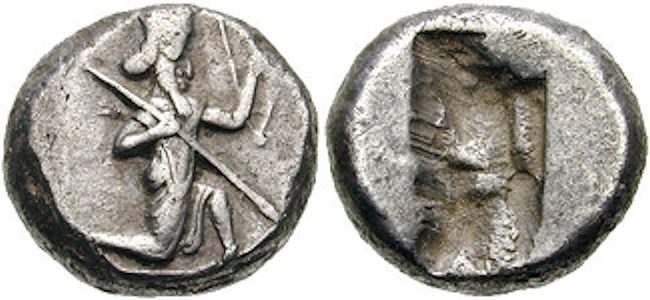
Photo: CNG, CC BY-SA 3.0, via Wikimedia Commons
How it is dated
The Iranian imitation of an Athenian owl is the latest datable coin and is placed around 380 BC by Bopearachchi; other writers give about 350 BC, and Schlumberger simply put the burial in the 4th century BC. No coins of Alexander's era are reported, which fits a burial well before his conquest.
Where sources differ
- Deposit date: about 380 BC (Bopearachchi) or about 350 BC (other estimates); Schlumberger says only 4th century BC.
- Total size (about 1,000) is a report by the French mission's director, not a count.
- The figures for Athenian coins differ slightly (33 or 34); the published total is given as 115.
- Whether Indian coinage derives from Achaemenid practice is disputed among numismatists.
- The jewellery is not described in any source I found.
Questions
Where is the Kabul hoard now?
Mostly lost. The 127 coins and jewellery in the Kabul Museum disappeared when the museum was looted in 1992-93; fourteen later surfaced in Pakistan. The rest of the hoard was dispersed soon after its discovery in 1933.
Why is the Kabul hoard important?
It buried early local punch-marked coins together with Greek and Persian coins of known date, which lets scholars date the beginnings of coinage in the region to the 4th century BC or earlier.
What does Chaman-i Hazouri mean?
It is the name of a park in central Kabul near which the hoard was found, so the find is also called the Chaman Hazouri hoard.