Iron Age and classical hoards
c. 800 BC-AD 43 · 12 hoards on this site
Two things dominate the hoards of this long period: neck-rings and coins. At Snettisham in Norfolk, at least 14 separate hoards of gold, silver and bronze torcs were buried on one hilltop, most of them around 60 BC; the largest single piece, the Great Torc, weighs 1,084 g. Across the Channel, the Grouville Hoard found in Jersey in 2012 packed 69,347 Celtic coins and several gold torcs into a single clay-bound block, the largest Iron Age coin hoard known. Coins had arrived, but people still stored wealth in the form of jewellery that could be worn, shown off and, when needed, weighed.
In the Greek world coinage was older and more settled. Athens, with its own silver mines, struck the tetradrachm of about 17.2 g, the most widely circulated coin of the Classical period and a regular find in hoards well beyond Greece. Prices give a sense of scale: at the end of the fifth century BC a skilled labourer in Athens earned about one drachma (roughly 4.3 g of silver) a day. Further north, Thracian rulers held their wealth as gold plate. The Panagyurishte Treasure, found by three brothers digging clay at a tile works in Bulgaria in 1949, is nine vessels of solid gold weighing about 6.1 kg, made around 300 BC. One dish is inscribed with its own weight in Greek drachmae and Persian darics, a reminder that fine plate was also bullion with a known value.
The debate over motive runs through the whole period. Panagyurishte has often been explained as treasure hidden during the invasions of the late fourth century BC. Elsewhere the setting points the other way. At Hallaton in Leicestershire, volunteers and archaeologists recovered more than 5,000 silver and gold coins and a silver-gilt Roman parade helmet from what excavators interpreted as an open-air hilltop shrine used around the time of the Roman conquest; 4,835 of the coins were struck by the local Corieltauvi. The Gundestrup cauldron, the largest piece of Iron Age silverwork in Europe, was found in 1891 in a Danish peat bog, taken apart, its decorated plates stacked inside the base. A bog is a strange choice of safe.
The record is uneven. Britain's is dense because of how finds are reported there: a survey published in 2018 listed over 3,260 Iron Age and Roman coin hoards from England and Wales alone, and most Iron Age examples hold tens or hundreds of gold or silver staters rather than thousands. Gold-rich deposits of the period also come from Thrace (modern Bulgaria), the Black Sea steppe and Ireland, while Denmark's bogs have yielded some of the strangest. The thread joining them is a slow shift from metal valued by weight and display towards metal counted as coin.
Iron Age & classical hoards
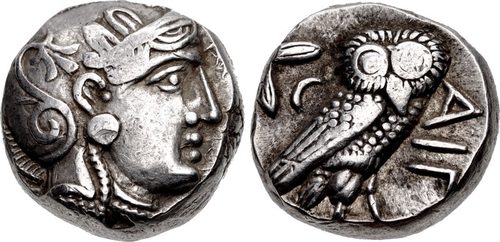
Kabul hoard
About 1,000 Greek, Persian and early local silver coins buried in Kabul around 380-350 BC and found in 1933: a key to the origins of Indian coinage.
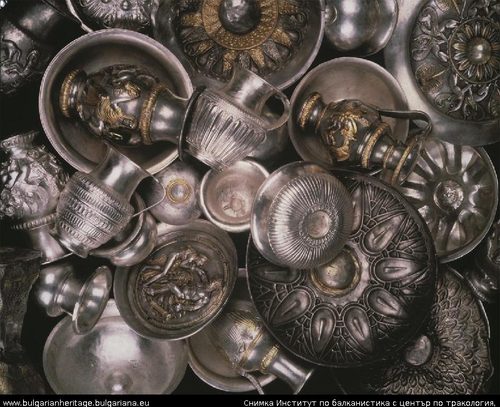
Rogozen Treasure
165 Thracian silver vessels, about 20 kg, found in a Bulgarian village garden in 1985-86; some are inscribed with the names of Odrysian kings.
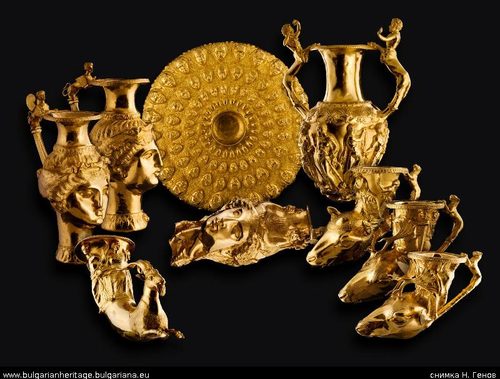
Panagyurishte Treasure
Nine solid gold Thracian drinking vessels, about 6.2 kg in all, dug up by brick workers near Panagyurishte, Bulgaria, in December 1949.
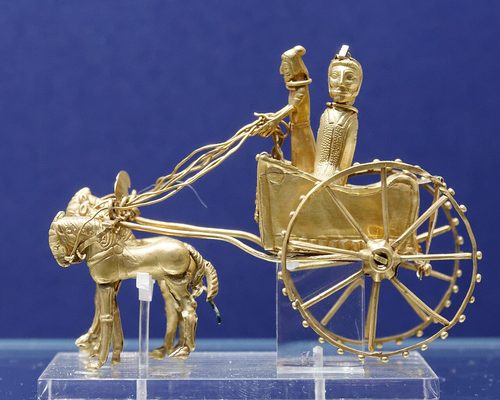
Oxus Treasure
About 180 pieces of Achaemenid Persian gold and silver found by the Oxus river around 1877-1880, sold through traders in British India and now in London.
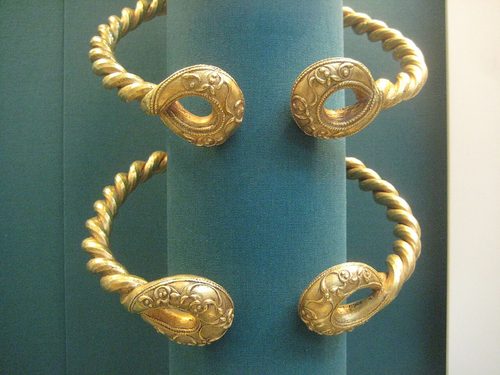
Ipswich torcs (Ipswich Hoard)
Six heavy gold torcs of the 1st century BC, five turned up by a mechanical digger on a new Ipswich housing estate in 1968, the sixth in a garden nearby.
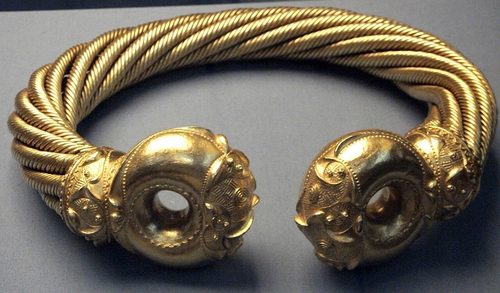
Snettisham Hoard
At least 14 Iron Age hoards of gold, silver and bronze torcs buried on one Norfolk hilltop around 60 BC, found between 1948 and the 1990s.
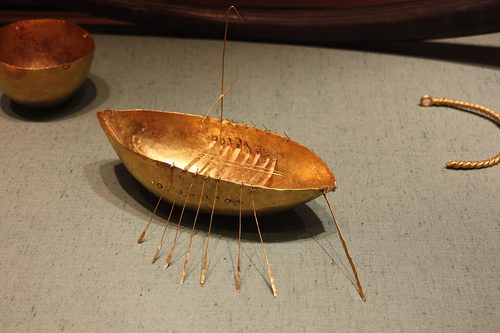
Broighter Hoard (Broighter Gold)
A tiny gold boat with oars and mast, a great decorated collar, a bowl and Roman-style chains: Iron Age gold ploughed up beside Lough Foyle in 1896.
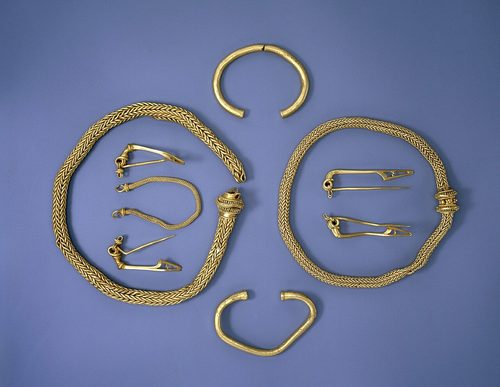
Winchester Hoard
Two matching sets of near-pure gold jewellery, torcs, brooches and bracelets, made c. 75-25 BC with Mediterranean techniques; found near Winchester, 2000.
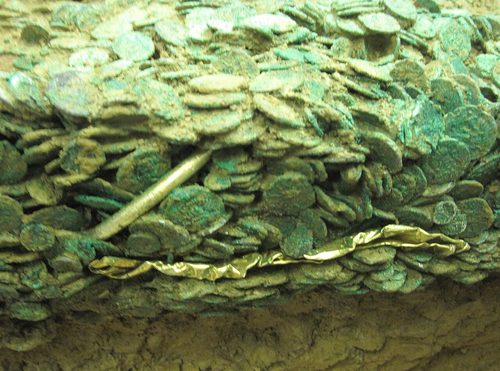
Grouville Hoard (Le Câtillon II)
69,347 Celtic coins plus gold torcs, fused into one clay block about 1.4 m long, found in Jersey in 2012: the largest Iron Age coin hoard known.
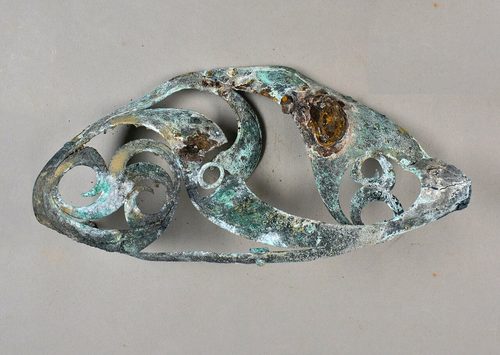
Melsonby Hoard
Over 800 burnt and broken Iron Age objects, including 28 iron tyres from wagons and chariots and harness for 14 ponies, found in North Yorkshire in 2021.
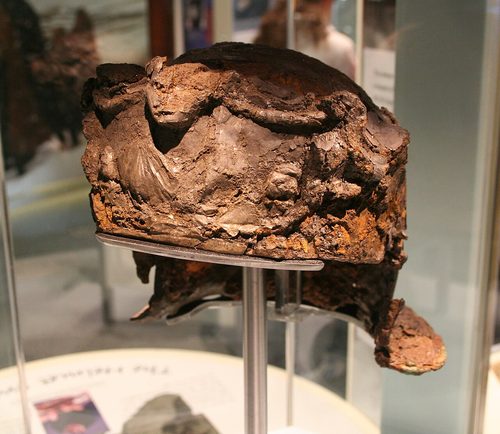
Hallaton Treasure
Over 5,000 Iron Age coins in 14 deposits, a silver-gilt Roman cavalry helmet and some 300 sacrificed pigs: a Leicestershire hilltop shrine of the AD 40s.
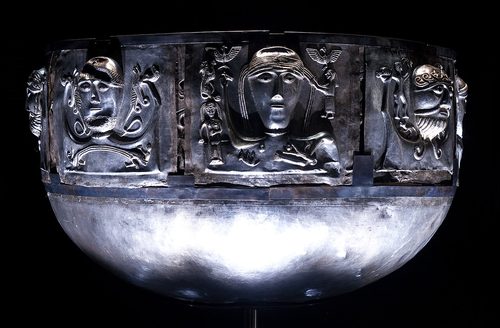
Gundestrup cauldron
A gilded silver cauldron of almost 9 kg, taken apart and laid in a small Danish bog in the Iron Age; peat cutters found it in Himmerland in 1891.