HacksilverBuried treasure, catalogued

Jewellery in hoards: rings, necklaces, chains and pendants

Finger-rings, necklaces, chains, bracelets and pendants from hoards, Roman to Jacobean: how they were made, how to read them, and what they reveal.

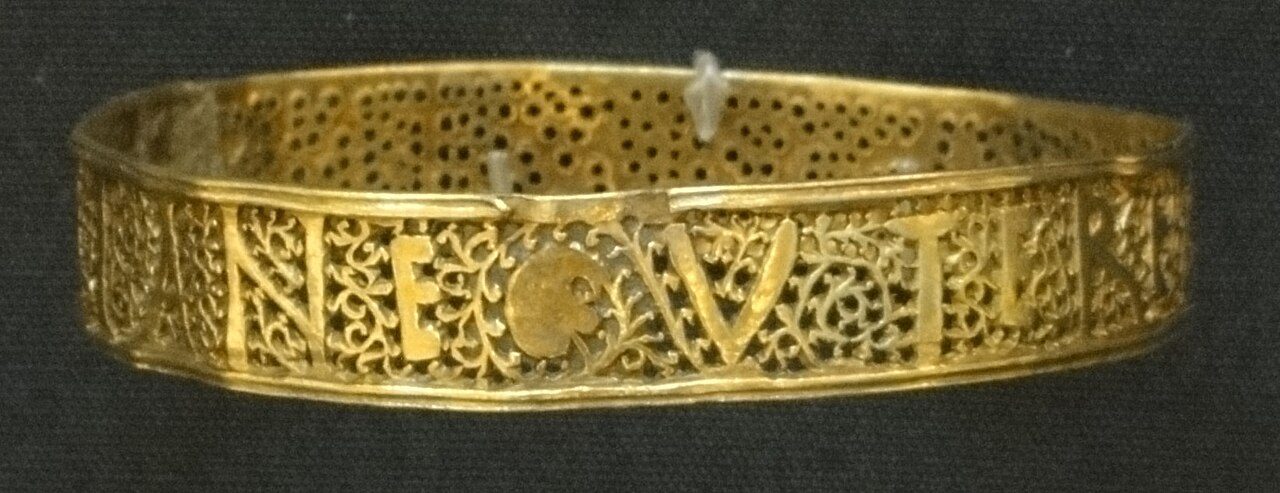
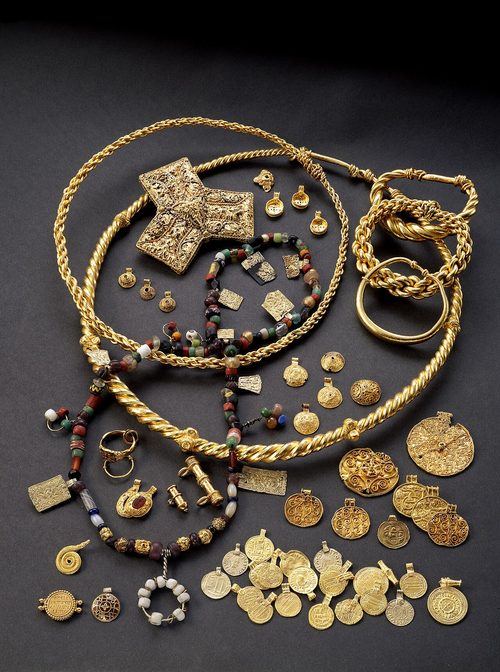
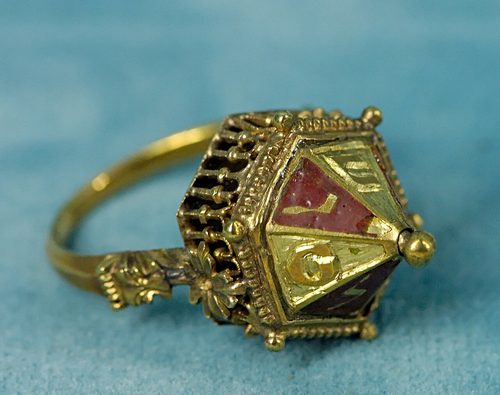
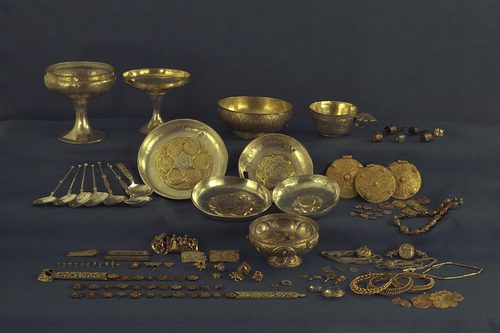
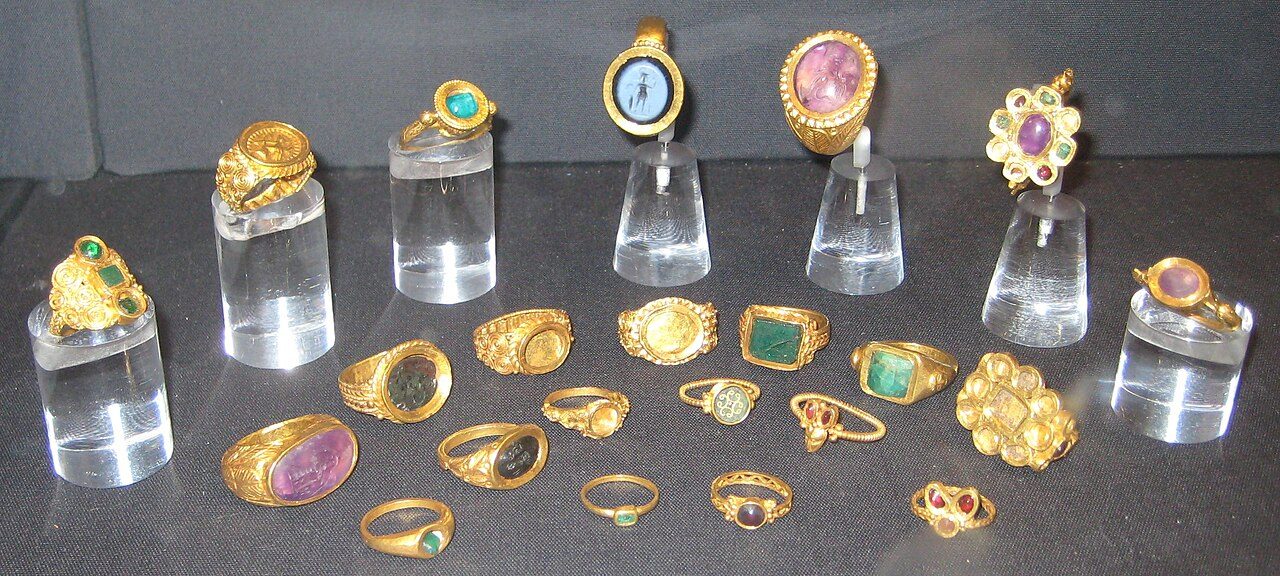
Jewellery is the part of a hoard that brings its owners closest. A Roman gold bracelet from the Hoxne hoard in Suffolk carries the openwork words VTERE FELIX DOMINA IVLIANE, 'use this happily, Lady Juliane'; a gold ring from Erfurt, hidden by a Jewish family in 1349, is topped with a tiny Gothic building and engraved with the Hebrew for 'good luck'. This page covers finger-rings, necklaces, chains, bracelets, earrings, pendants and beads. Brooches, torcs, Viking arm-rings and bracteates have their own pages.

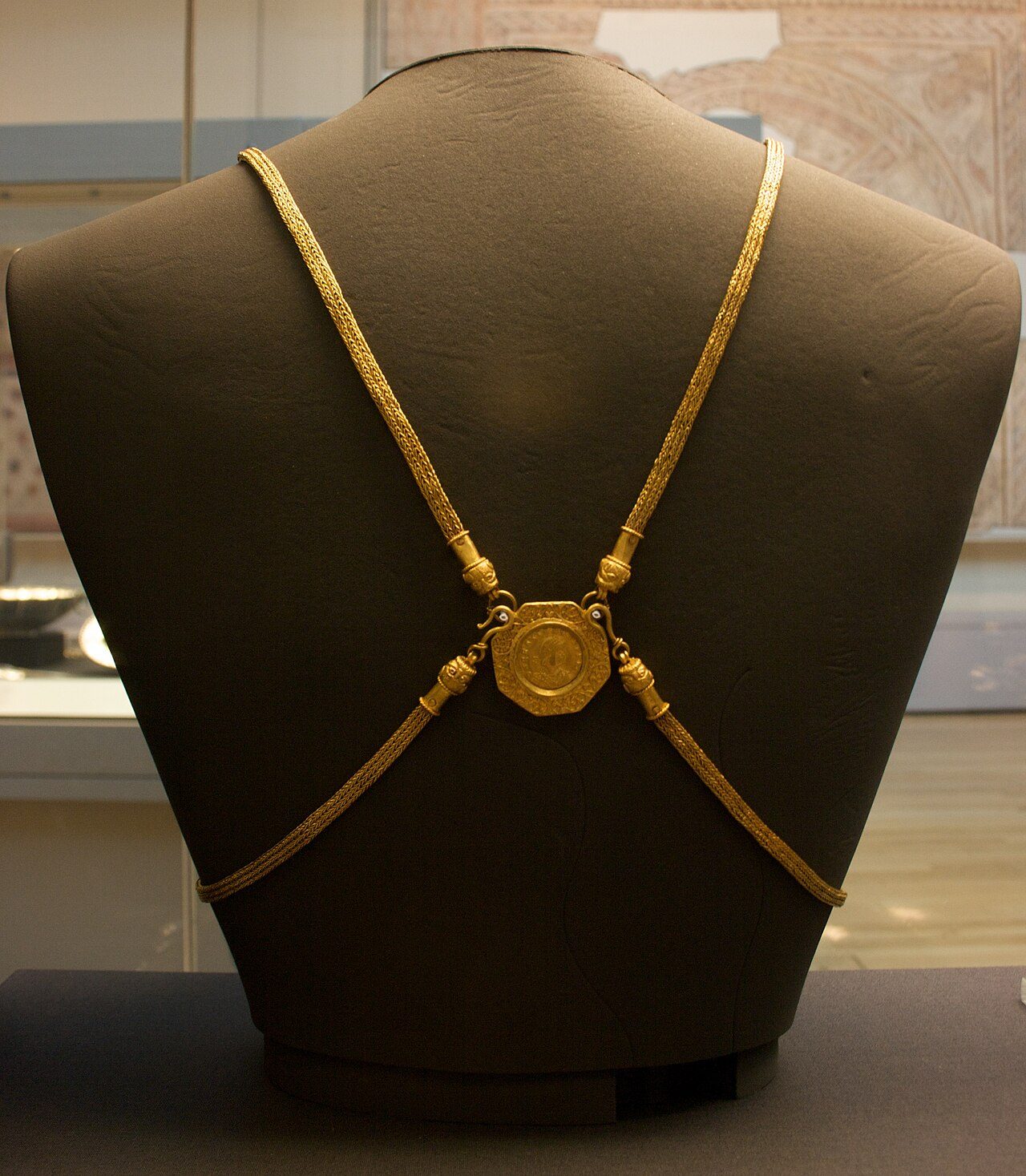
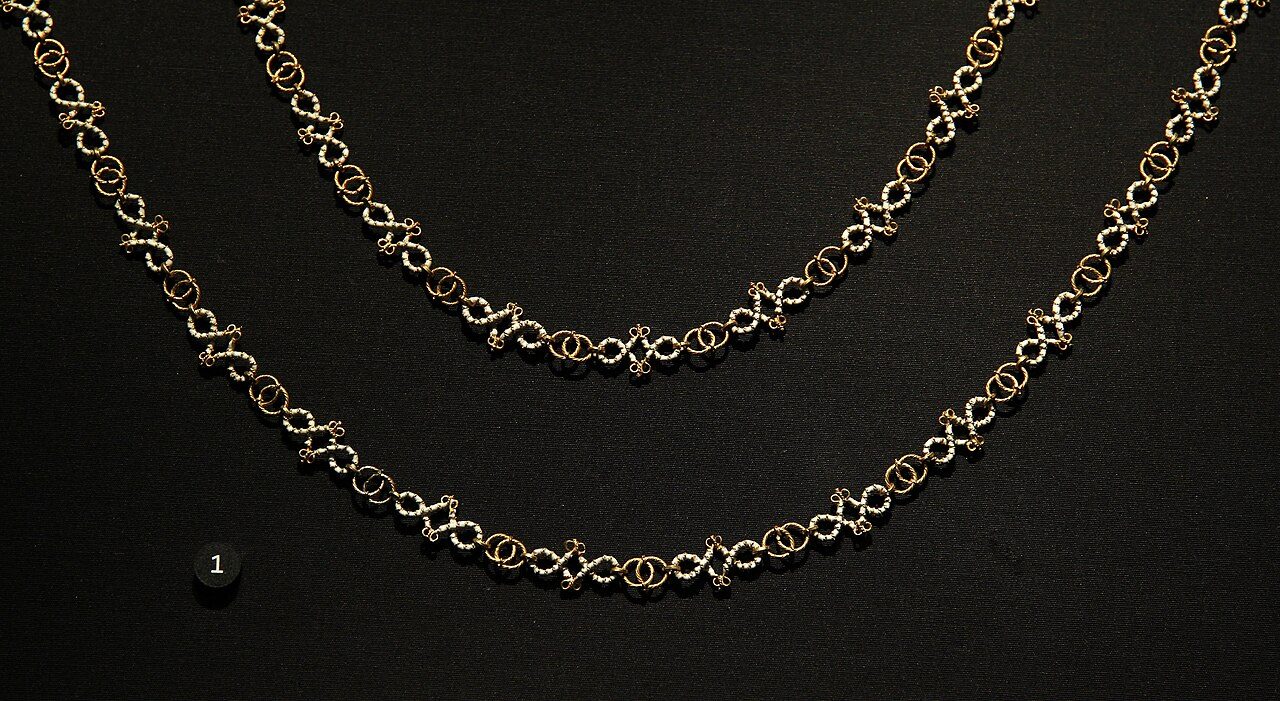
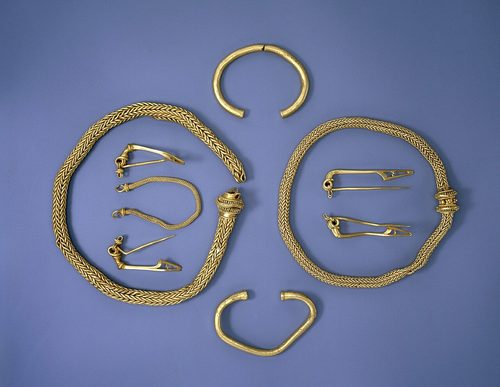
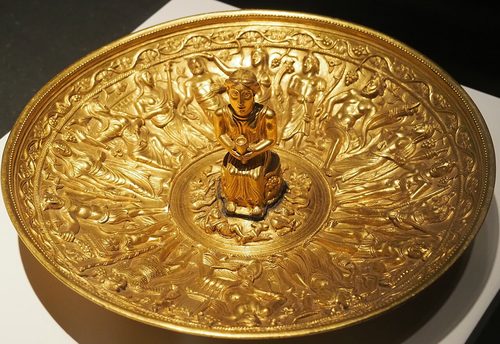
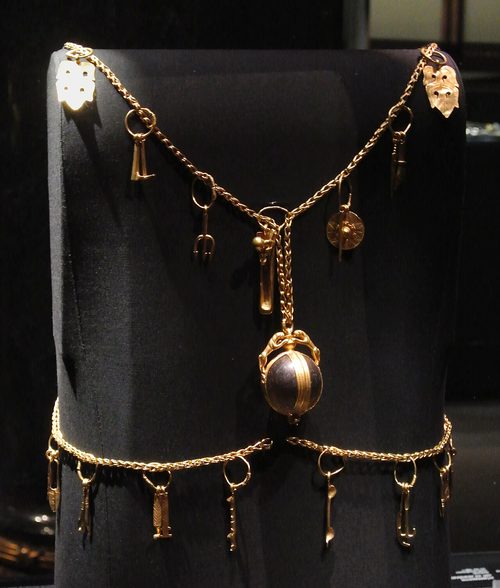
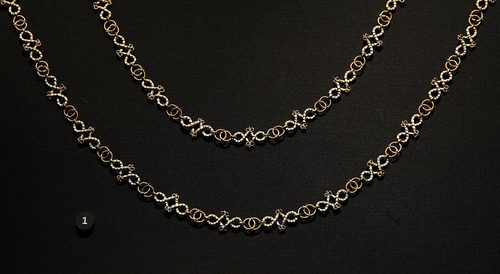
Most hoard jewellery is gold or silver, worked in a small number of techniques that recur across two thousand years. Rings and bracelets were cast or hammered from bar and sheet; filigree adds patterns of fine twisted wire, and late Roman goldsmiths pierced sheet gold into lace-like openwork (opus interrasile). Chains were often made by the loop-in-loop method, links folded through one another into a flexible rope; the four chains of the Hoxne body chain, worn crossed over the chest and back, are built this way. Stones were set in collets or box bezels, and from the Middle Ages onwards coloured enamel shares the surface with gems. Engraved gems (intaglios) in Roman rings could double as seals.

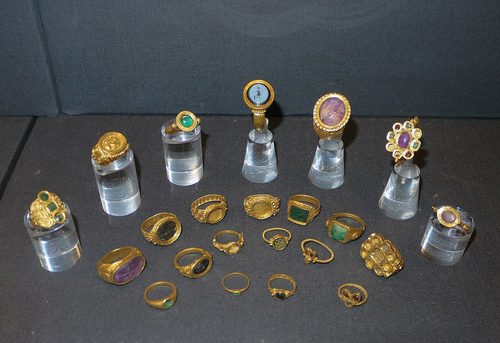
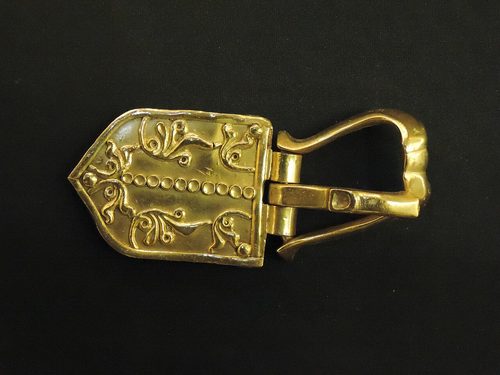
Reading a piece means looking at wear, construction and imagery together. Thetford in Norfolk, buried in the late 4th century, held 22 gold finger-rings, five chain necklaces, pendants and a buckle with a dancing satyr; most of the gold looks fresh and unworn, and some designs hint at Bacchic or pagan cult. Inscriptions, saints' names, posy mottoes and religious symbols tie an object to a faith or a moment, while gemstones trace trade routes. The Cheapside Hoard, probably the working stock of a London goldsmith of the early 17th century, holds Colombian emeralds, Indian diamond, Sri Lankan spinel and Persian turquoise side by side.

For historians the great value of hoard jewellery is that so little else survives. Gold and silver jewellery was routinely melted and remade when fashions changed, so a piece that went into the ground escaped the crucible. Erfurt's silver dress ornaments and belt fittings, Colmar's 15 silver rings and the rings, pendants and chains buried with the Fishpool coins in 1464 are rare survivors of their periods. In England and Wales, an object at least 300 years old with 10 per cent or more gold or silver is treasure and must be reported; Thetford's finder failed to report it at first, and some smaller pieces were probably lost in the haste of digging.

Examples
Sources

Hoards with jewellery

53

Priam's Treasure

Early Bronze Age gold and silver dug up by Schliemann at Troy in 1873 and named for King Priam; it is a thousand years too early, and now sits in Moscow.

Bronze Age · Turkey · found 1873

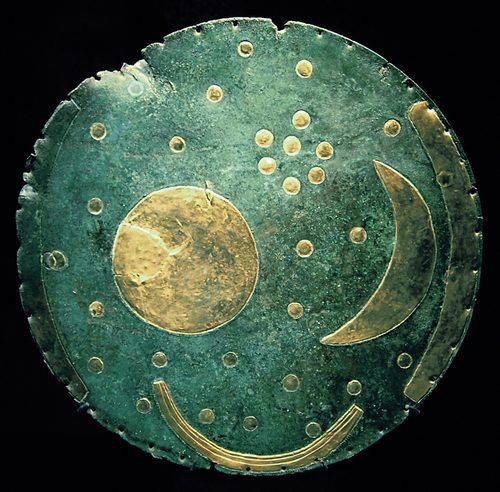
Nebra hoard (Nebra sky disc)

A bronze disc inlaid with a gold sun, moon and stars, buried c. 1600 BC with two swords, two axes, a chisel and arm spirals; looted 1999, recovered 2002.

Bronze Age · Germany · found 1999

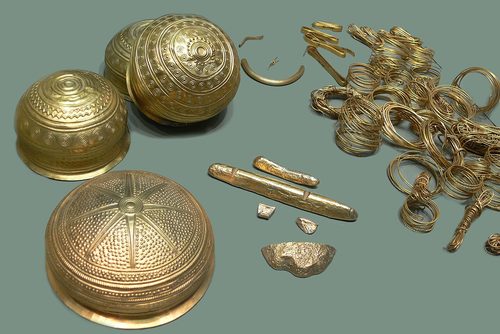
Treasure of Villena (Tesoro de Villena)

59 Bronze Age objects weighing nearly 10 kg, mostly gold bowls, bottles and bracelets, found near Villena in 1963. Most of the gold was stolen in 2026.

Bronze Age · Spain · found 1963

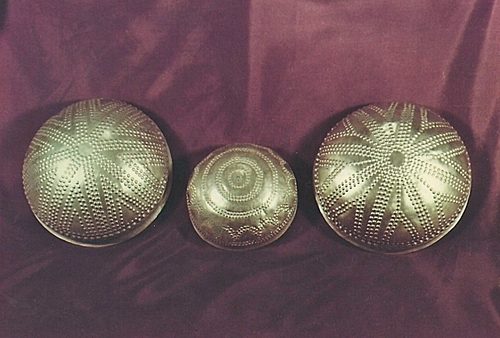
Eberswalde Hoard (Eberswalder Goldschatz)

81 gold objects weighing 2.59 kg, including eight decorated bowls, found in a lidded pot near Eberswalde in 1913; taken to Moscow in 1945 and still there.

Bronze Age · Germany · found 1913

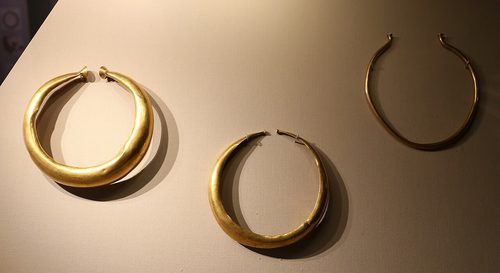
Mooghaun North Hoard (Great Clare Find)

Over 150 Late Bronze Age gold objects, more than 5 kg, found by railway workers in County Clare in 1854; all but 29 were melted down.

Bronze Age · Ireland · found 1854

Kabul hoard

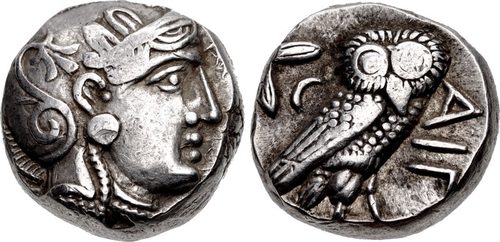
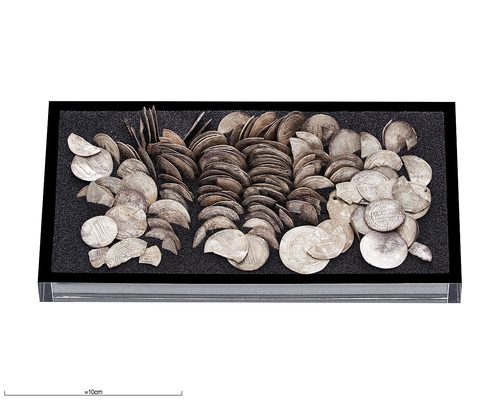
About 1,000 Greek, Persian and early local silver coins buried in Kabul around 380-350 BC and found in 1933: a key to the origins of Indian coinage.

Iron Age & classical · Afghanistan · found 1933

Oxus Treasure

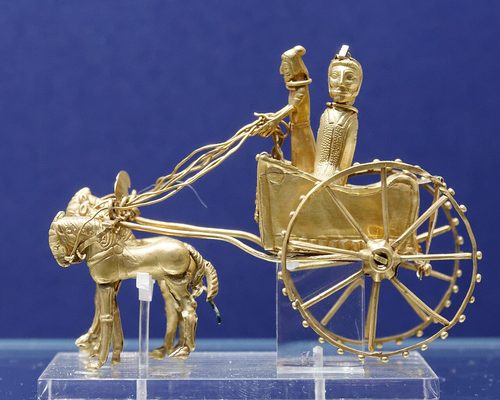
About 180 pieces of Achaemenid Persian gold and silver found by the Oxus river around 1877-1880, sold through traders in British India and now in London.

Iron Age & classical · Tajikistan · found 1877

Snettisham Hoard

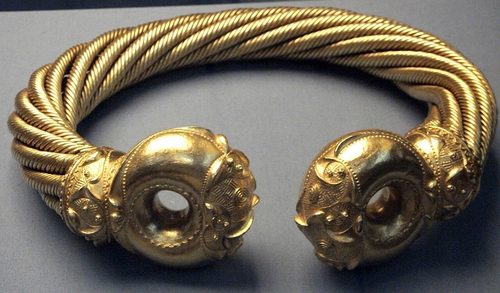
At least 14 Iron Age hoards of gold, silver and bronze torcs buried on one Norfolk hilltop around 60 BC, found between 1948 and the 1990s.

Iron Age & classical · England · found 1948

Broighter Hoard (Broighter Gold)

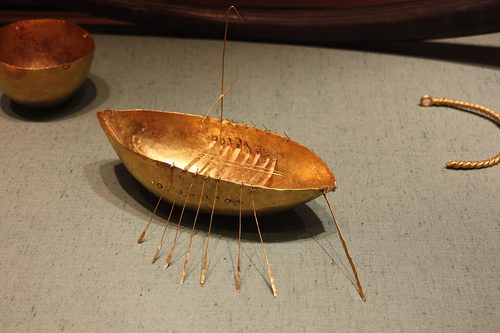
A tiny gold boat with oars and mast, a great decorated collar, a bowl and Roman-style chains: Iron Age gold ploughed up beside Lough Foyle in 1896.

Iron Age & classical · Northern Ireland · found 1896

Winchester Hoard

Two matching sets of near-pure gold jewellery, torcs, brooches and bracelets, made c. 75-25 BC with Mediterranean techniques; found near Winchester, 2000.

Iron Age & classical · England · found 2000

Grouville Hoard (Le Câtillon II)

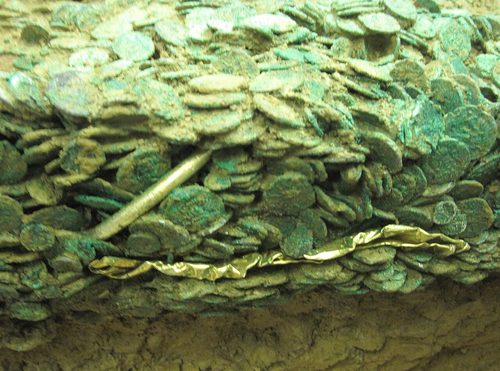
69,347 Celtic coins plus gold torcs, fused into one clay block about 1.4 m long, found in Jersey in 2012: the largest Iron Age coin hoard known.

Iron Age & classical · Jersey · found 2012

Boscoreale Treasure

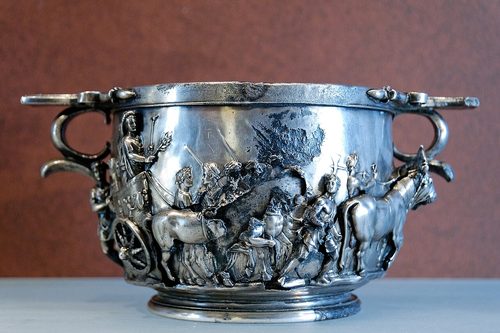
More than 100 pieces of Roman silver and about 1,000 gold coins, hidden in a villa's wine-press room when Vesuvius erupted in AD 79 and found in 1895.

Roman · Italy · found 1895

Esquiline Treasure

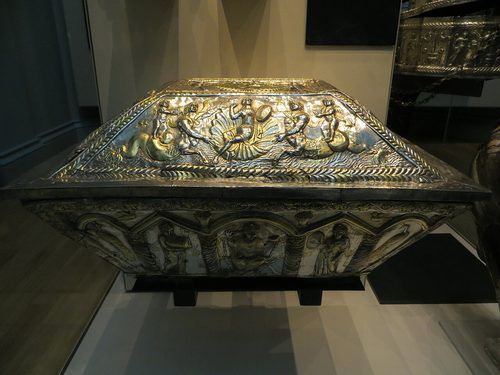
Late Roman silver of an aristocratic family, found on Rome's Esquiline Hill in 1793, with the Projecta wedding casket. Most is in the British Museum.

Roman · Italy · found 1793

Pietroasele Treasure

A Gothic gold hoard of 22 pieces found by quarrymen in Romania in 1837; twelve survive, including eagle brooches and a runic neck-ring, in Bucharest.

Migration period · Romania · found 1837

Szilágysomlyó Treasure

Found in two parts on one Transylvanian hill (1797, 1889): Roman gold medallions, a chain of 52 pendants and jewelled brooches of a Germanic royal house.

Migration period · Romania · found 1797

Thetford Hoard

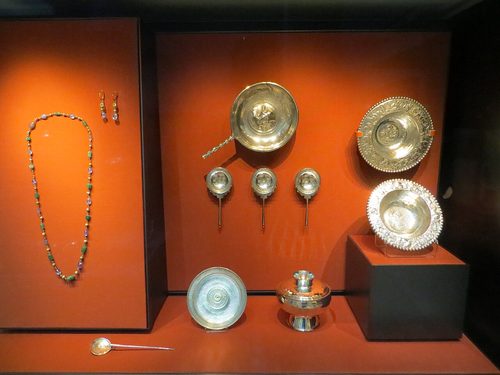
81 late Roman objects from Thetford, Norfolk: 22 gold rings, a satyr belt buckle and 36 silver spoons and strainers, many dedicated to the god Faunus.
Roman · England · found 1979

Hoxne Hoard

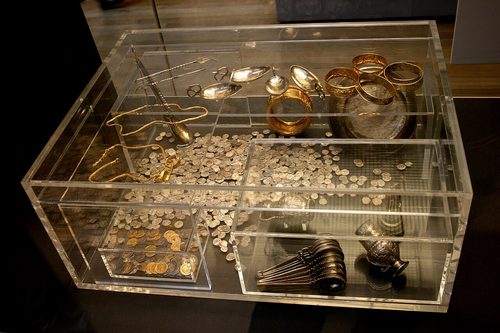
A Suffolk oak chest packed after AD 407 with 14,865 gold, silver and bronze coins, a gold body-chain, pepper pots and nearly 100 silver spoons.

Roman · England · found 1992

Traprain Law Treasure

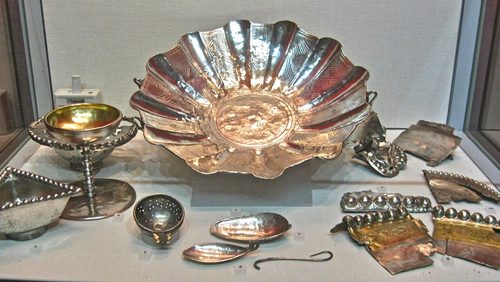
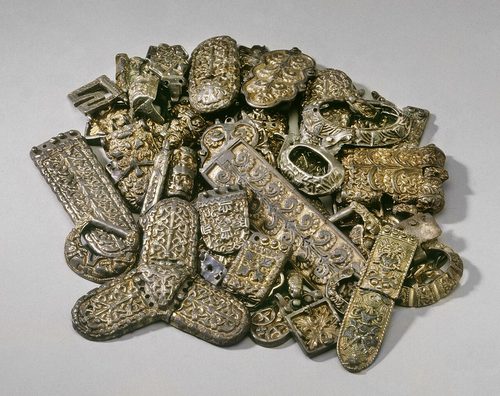
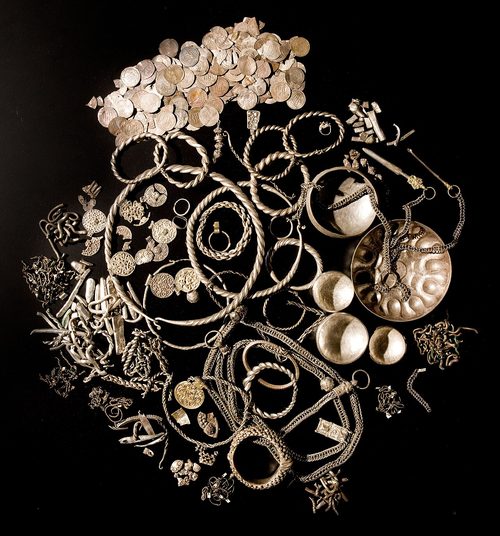
About 23 kg of late Roman silver plate, mostly cut and crushed into hacksilver, dug up in 1919 on an East Lothian hillfort beyond Hadrian's Wall.

Migration period · Scotland · found 1919

Carthage Treasure

Late Roman silver tableware and jewels of the Cresconii family, 31 objects found on the Byrsa hill at Carthage in the mid-19th century.

Roman · Tunisia · found 1850

Patching Hoard

Gold solidi, silver coins, two gold rings and 54 scraps of hacksilver buried in Sussex after AD 461: the latest hoard of Roman coins ever found in Britain.
Migration period · England · found 1997

Gaulcross Hoard
Pictish silver found in a stone circle near Fordyce in 1838; only three pieces survived until a 2013 dig recovered 100 more, with Roman coins.

Migration period · Scotland · found 1838

Vindelev Hoard

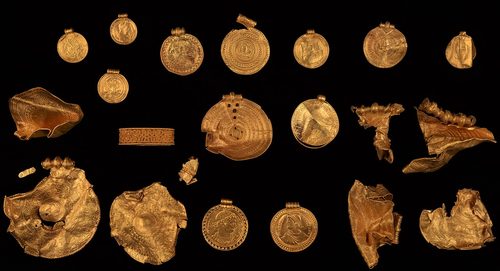
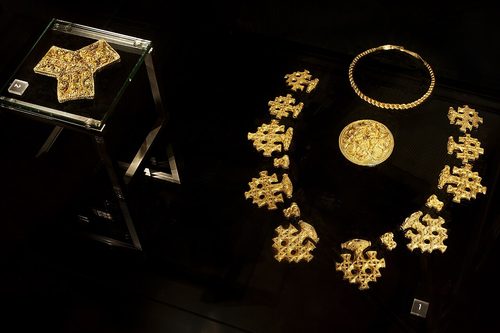
About 800 g of 5th-6th century gold found by detectorists near Jelling, Denmark, in 2020: the largest known bracteate and the earliest naming of Odin.

Migration period · Denmark · found 2020

Norrie's Law Hoard

Pictish and late Roman silver dug from a Fife cairn around 1819: perhaps 12 kg found, most melted down; about 170 pieces (750 g) survive in Edinburgh.

Migration period · Scotland · found 1819

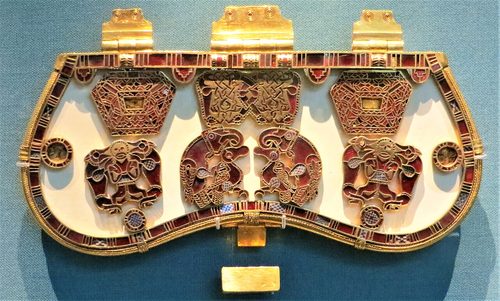
Sutton Hoo ship burial

A 7th-century king's grave in a 27-metre ship, dug in Suffolk in 1939: gold and garnet regalia, a helmet, Byzantine silver and 37 Frankish coins.

Early medieval · England · found 1939

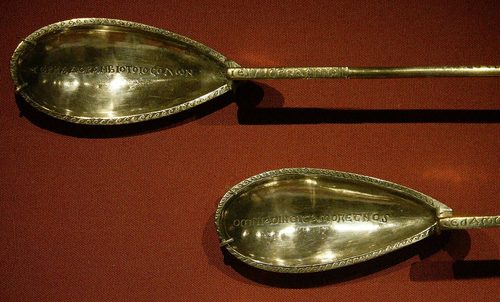
Lampsacus Treasure

Early Byzantine silver found by farmers at Lapseki on the Dardanelles in 1847: a stamped lampstand, a polycandelon and spoons inscribed with Virgil.

Early medieval · Turkey · found 1847

Crondall Hoard

About 100 small gold coins, most of them the earliest English coinage, found by a young man out shooting in Hampshire in 1828 and buried c. 640.

Early medieval · England · found 1828

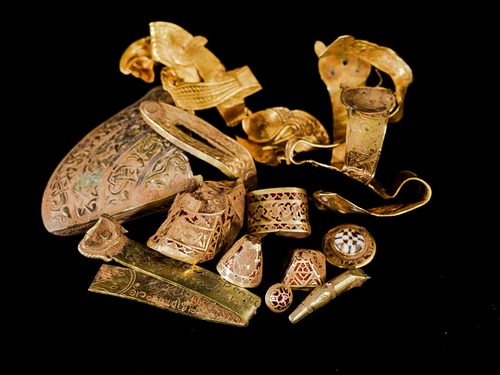
Staffordshire Hoard

Almost 4,600 gold and silver fragments, mostly stripped from 7th-century swords, found near Lichfield in 2009: the largest Anglo-Saxon hoard.

Early medieval · England · found 2009

Pereshchepina Treasure

Over 800 gold and silver objects, some 70 kg of metal, found by boys near Poltava, Ukraine, in 1912; often linked to the 7th-century Bulgar khan Kubrat.

Early medieval · Ukraine · found 1912

Pentney Hoard

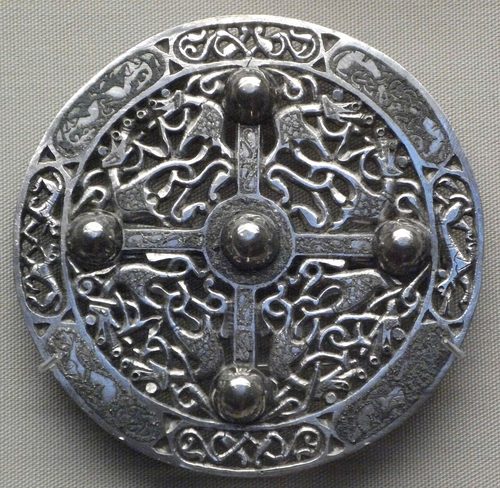
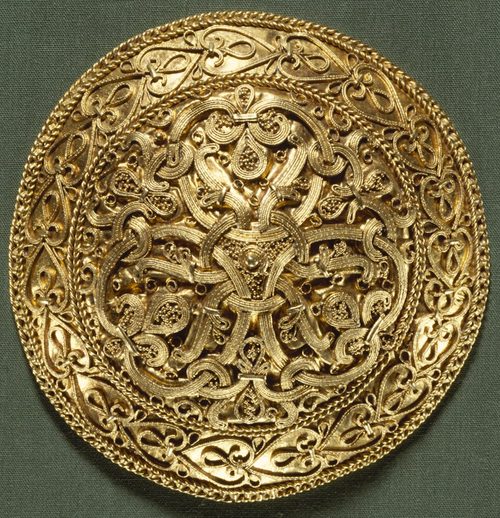
Six silver openwork disc brooches of the early 9th century, dug up by a gravedigger in a Norfolk churchyard in the late 1970s.

Viking age · England · found 1978

Trewhiddle Hoard

At least 114 silver pennies, a silver chalice and a unique silver scourge, found by Cornish tin-streamers in 1774 and buried in the 860s or 870s.

Viking age · England · found 1774

Beeston Tor Hoard

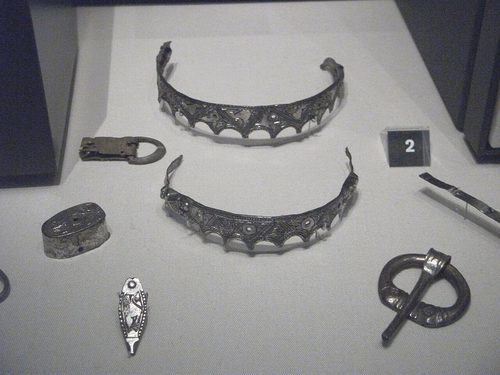
49 silver pennies, two Trewhiddle-style brooches and three rings, hidden in a Staffordshire cave around 875 and found by a clergyman caver in 1924.

Viking age · England · found 1924

Herefordshire Hoard

A Viking hoard of about 300 coins and gold jewellery buried c. 879 near Leominster, found in 2015 and sold illegally; only a tenth is recovered.

Viking age · England · found 2015

Spillings Hoard

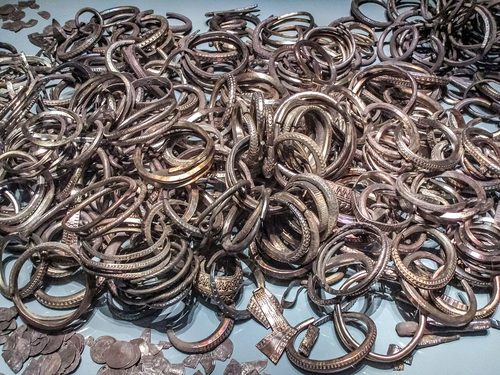
The largest Viking silver hoard known: about 67 kg of silver, 14,295 coins and nearly 500 arm-rings, buried in a Gotland storehouse after AD 870.

Viking age · Sweden · found 1999

Hoen Hoard

Norway's largest Viking gold find: about 2.5 kg of neck-rings, arm-rings, coin pendants and beads, dug from a bog at Hokksund in 1834.

Viking age · Norway · found 1834

Bedale Hoard

A gold-inlaid sword pommel, silver neck-rings and 29 ingots, buried in North Yorkshire around 900 and found in 2012. Now in the Yorkshire Museum.

Viking age · England · found 2012

Galloway Hoard

Over 100 objects, more than 5 kg of silver, gold, silk and crystal, buried c. AD 900 in Kirkcudbrightshire and found in 2014. Now in Edinburgh.

Viking age · Scotland · found 2014

Silverdale Hoard

201 pieces of Viking silver in a lead box, buried c. 900 near Silverdale, Lancashire, including a coin naming an unknown king, Airdeconut.

Viking age · England · found 2011

Duesminde Hoard

About 50 Frankish silver-gilt belt and sword-belt fittings, 1.3 kg in all, found with a detector on Lolland in 2002; buried in the mid-10th century.

Viking age · Denmark · found 2002

Skaill Hoard

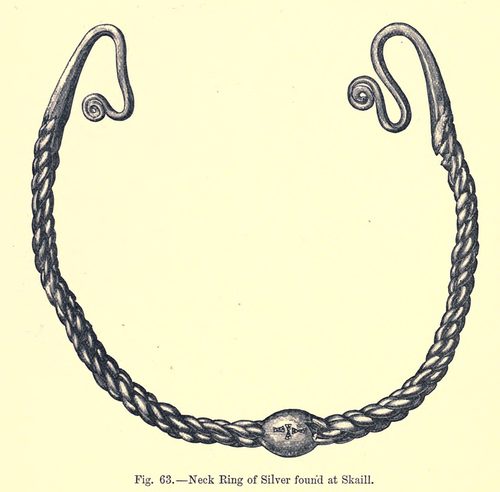
Over 100 pieces of Viking silver, about 8 kg, buried c. 950 at Skaill in Orkney and found in a rabbit hole in 1858: Scotland's largest Viking silver hoard.

Viking age · Scotland · found 1858

Vårby Hoard

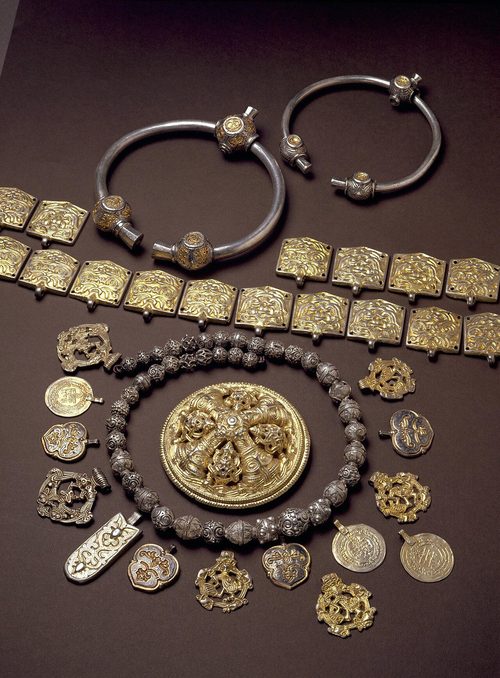
A 10th-century silver-gilt jewellery hoard found by a boy gathering brushwood near Lake Mälaren in 1871, mixing Scandinavian, Rus' and Islamic ornaments.

Viking age · Sweden · found 1871

Terslev Hoard

6.6 kg of Viking silver dug up by two boys in a Zealand garden in 1911: 1,751 coins, silver cups and bowls, chains and fine filigree jewellery.

Viking age · Denmark · found 1911

Hiddensee Treasure

Sixteen pieces of late 10th-century Viking gold jewellery, about 600 g, washed out of a Baltic beach on Hiddensee by storm floods in 1872-74.

Viking age · Germany · found 1873

Schaprode Hoard (Harald Bluetooth hoard)

About 1.5 kg of Viking-age silver found on Rügen in 2018, with some 100 cross coins of Harald Bluetooth, buried in the 980s as the king fled.

Viking age · Germany · found 2018

Hornelund Hoard

Two gold filigree brooches and a gold arm-ring found by a farmhand near Varde, Jutland, in 1892: the finest Viking goldsmith's work known from Denmark.

Viking age · Denmark · found 1892

Burge Hoard

Over 10 kg of silver ploughed up at Burge on Gotland in 1967: about 3,000 coins, Russian grivna ingots and cut silver, buried soon after 1143.

Medieval · Sweden · found 1967

Tutbury Hoard

Perhaps 200,000 or more silver pennies dug from the River Dove in 1831, probably the war chest Thomas of Lancaster lost in his flight of March 1322.

Medieval · England · found 1831

Colmar Treasure

Rings, brooches and some 300 coins hidden in a wall on Colmar's Jewish street in 1348-49, when the town's Jews were killed in the Black Death persecutions.

Medieval · France · found 1863

Erfurt Treasure

Nearly 28 kg of silver coins, ingots, tableware and jewellery hidden by a Jewish household before the Erfurt massacre of March 1349, found in 1998.

Medieval · Germany · found 1998

Środa Treasure

A royal crown, a Staufer cameo brooch and nearly 8,000 coins, pledged to a Jewish banker in 1348 and found in Środa Śląska in 1985 and 1988.

Medieval · Poland · found 1985

Dune Treasure

122 gold and silver bowls, spoons, chains and belt fittings hidden on a Gotland farm in the 1360s or 1370s, perhaps in 1361; found in 1881.

Medieval · Sweden · found 1881

Fishpool Hoard

1,237 gold coins, rings, love jewels and chains hidden in Sherwood Forest in 1463-64: the largest medieval coin hoard found in Britain.

Medieval · England · found 1966

Cheapside Hoard

About 500 jewels from a 17th-century goldsmith's stock, found under a Cheapside cellar in 1912: the finest Elizabethan and Stuart jewellery anywhere.

Early modern & later · England · found 1912

Lohe Hoard

Over 200 kg of silver: some 18,000 coins and 80 pieces of family plate packed in three copper kettles under a Stockholm cellar after 1741, found in 1937.

Early modern & later · Sweden · found 1937