Athenian owls, Persian gold darics and Celtic staters copied from Philip of Macedon: the first coinages, how they were made and why so many were buried.
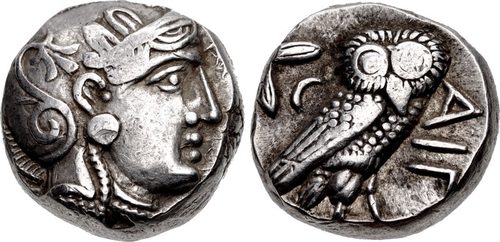
Many Athenian silver coins carry deep chisel slashes across Athena's face. These are test cuts, made by someone who wanted to know whether the coin was solid silver or a plated forgery, and they show that a coin in antiquity was still, first of all, a lump of metal of known weight. Coinage began in western Anatolia in the 7th century BC with small stamped lumps of electrum, the natural alloy of gold and silver. Within two centuries Greek cities from Sicily to the Black Sea were striking their own silver, and the Persian kings had a gold coin of their own.
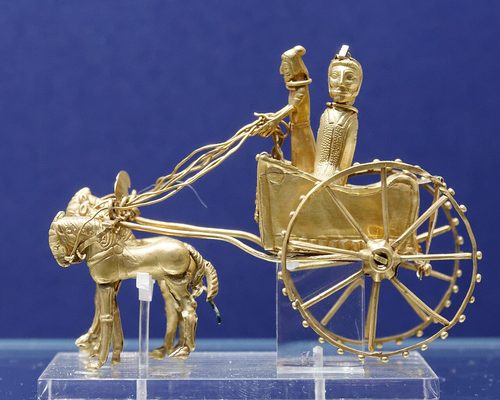
Ancient coins were hand-struck. A blank of metal, cast to weight, was heated and placed on a fixed anvil die, a second die was set on top and struck with a hammer. The earliest coins have a design on one side only and a rough punch mark on the other; that is how you can recognise the Persian daric, a thick gold coin showing the king as a running archer, with an oblong incuse on the back. Darics were introduced under Darius I around 510 to 500 BC and weighed about 8.3 to 8.4 g; one daric was worth 20 silver sigloi. Athens began its tetradrachm, the four-drachma "owl", around 515 BC on a standard of about 17.2 g, paid for with silver from the mines of Laurion. The Attic weight became the international standard, and Alexander the Great kept it for his own coinage.
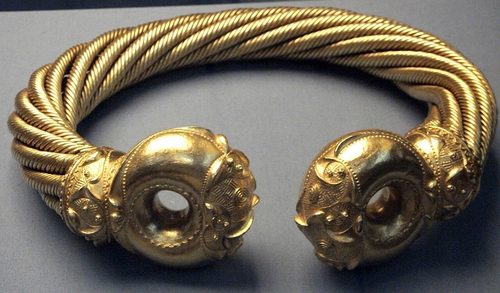
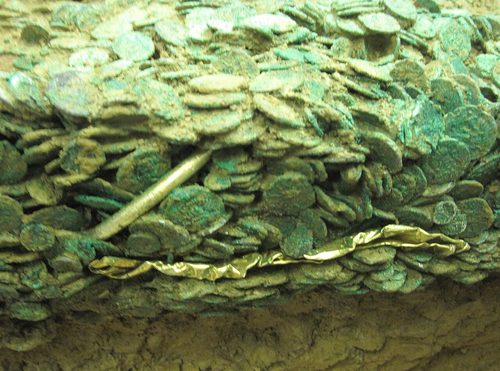
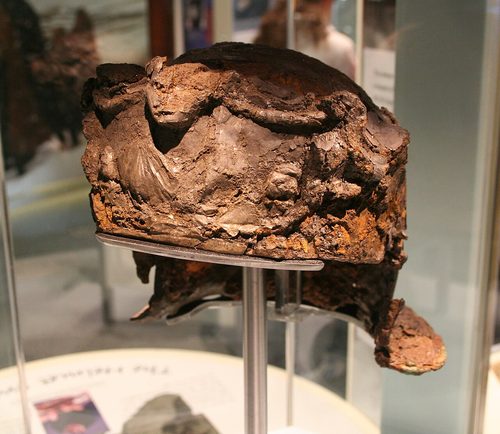
Celtic coinage grew out of this world. Celtic warriors served as mercenaries in the Greek east and came home paid in gold, especially the staters of Philip II of Macedon, which showed a head of Apollo and a two-horse chariot. From the late 4th century BC, peoples across Gaul and central Europe copied them, and each generation of copies drifted further from the model until the head became a pattern of curls and the chariot a disjointed horse with a wheel beneath it. In Britain, Gaulish gold arrived in the 2nd century BC and local staters followed, most weighing between about 4.5 and 6.5 g. In north-west France, the coins became billon, a silver alloy heavily mixed with copper, and the hoard from Le Catillon in Jersey, buried in the 1st century BC, held 69,347 of them in a single mass.
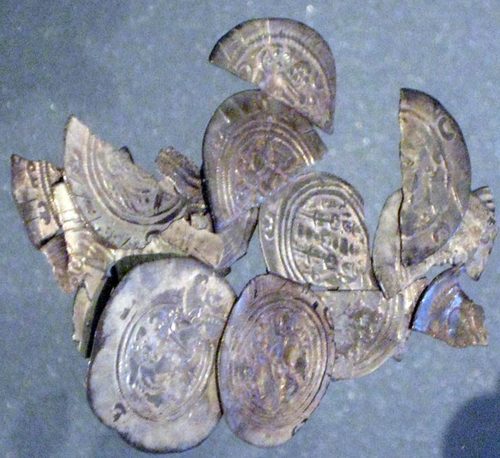
Hoards of ancient coins are the main evidence for how coinage spread and when particular issues were struck. Mixed deposits are especially telling: the Kabul (Chaman Hazouri) hoard, buried around 380 BC, combined Greek coins, Achaemenid sigloi and locally made silver issues, a cross-section of the money in use at the eastern edge of the Persian empire. In Britain, finds such as the Hallaton shrine, with over 5,000 coins of the Corieltavi, show coin being given to the gods as well as spent.
Examples
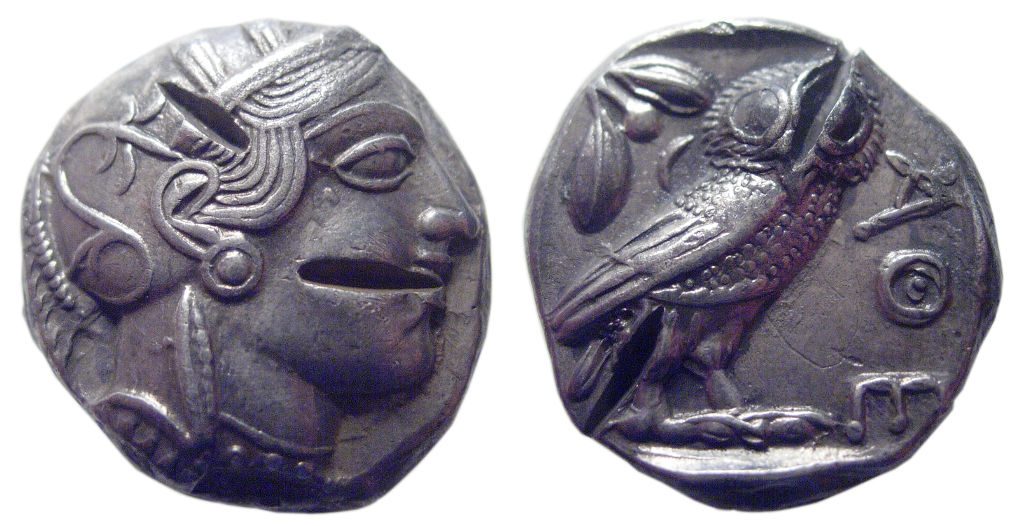
Photo: http://www.ancientcointraders.com, CC BY-SA 4.0, via Wikimedia Commons
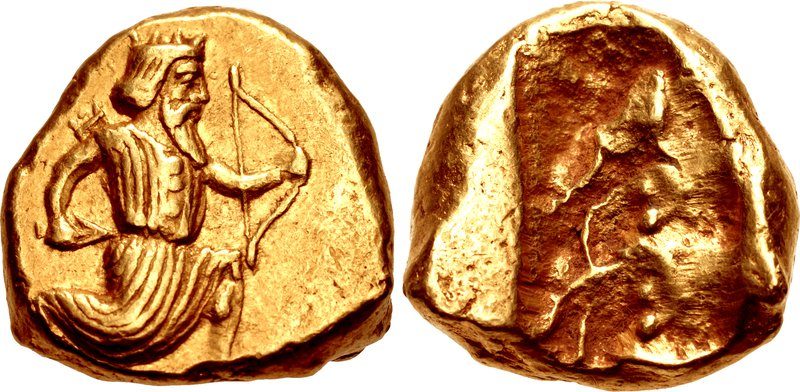
Photo: CNG, CC BY-SA 3.0, via Wikimedia Commons
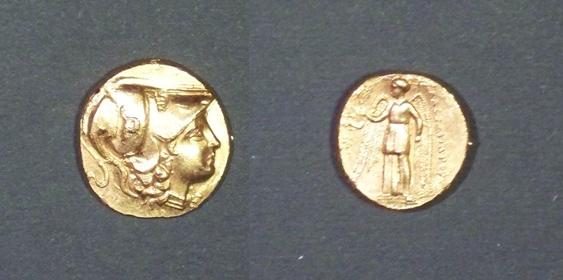
Photo: Dimboukas, Public domain, via Wikimedia Commons
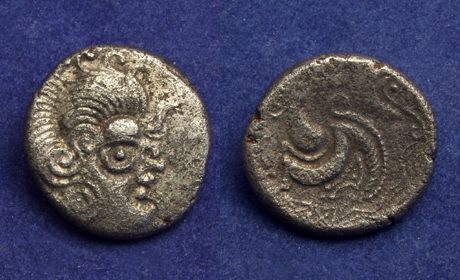
Photo: Numisantica, CC BY-SA 3.0 nl, via Wikimedia Commons