Between about 1908 and 1910 lots of early Byzantine silver began to emerge from the villages of northern Syria, in the hills between Aleppo and the coast. Ottoman officials seized one group, from a field at Stuma near Idlib, and sent it to the imperial museum in Istanbul in February 1908. Others passed quietly through dealers in Aleppo and Hama, through a bank manager who took them to Port Said, and on to Paris and the great American collectors. Each group came with its own find story, some of them contradictory, and they were sold under different names: the Hama, Riha, Antioch and Stuma treasures.
In the 1980s the Byzantinist Marlia Mundell Mango argued that these lots belonged together. Several pieces from the Hama group carry the same dedication, to Saint Sergius of the village of Kaper Koraon, the ancient name of Kurin, a village near Idlib. Donor inscriptions recur across groups, and the patens and fans of Stuma and Riha are clearly pairs, made in the same workshop with the same imperial control stamps. Her reconstruction, about 56 objects in all, became known as the Kaper Koraon Treasure and was presented in an exhibition at the Walters Art Gallery in 1986. Not everyone accepts that every piece belongs.
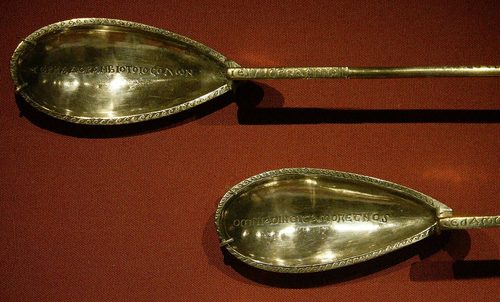
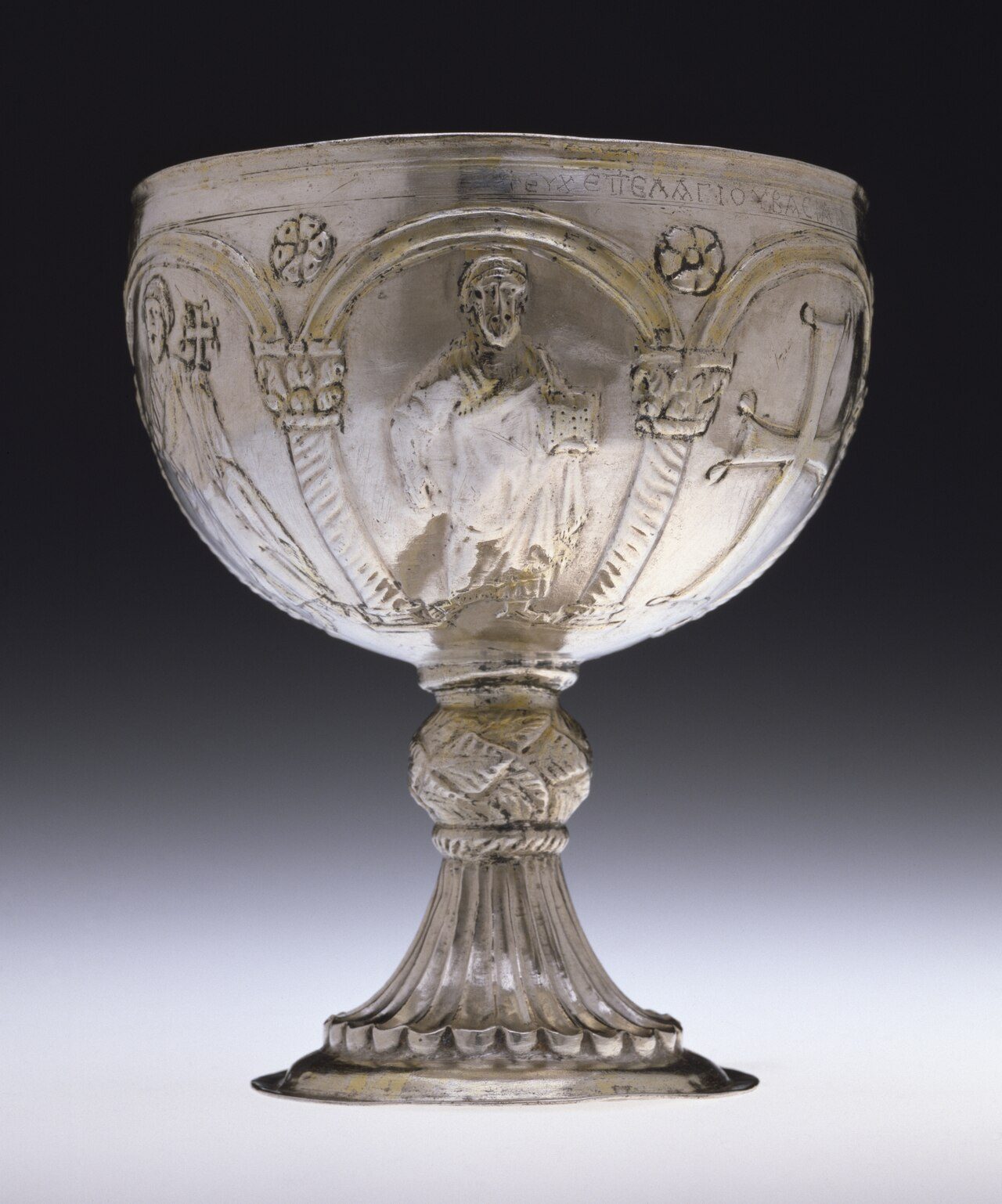
Read as one, the treasure is the church plate of a prosperous village over three generations. There are chalices and patens for the Eucharist, crosses for procession or the altar, lamps and tall lampstands, ewers, fans that deacons waved over the altar, spoons, strainers and decorative plaques. Most were gifts. One lampstand records that the sons of a man named Maximinus, Sergius, Symeon, Daniel and Thomas, gave it with their prayers; a chalice was the prayer of Pelagius and Basianus. The Walters suggests that donors gave pieces from their own dinner services in fulfilment of vows.
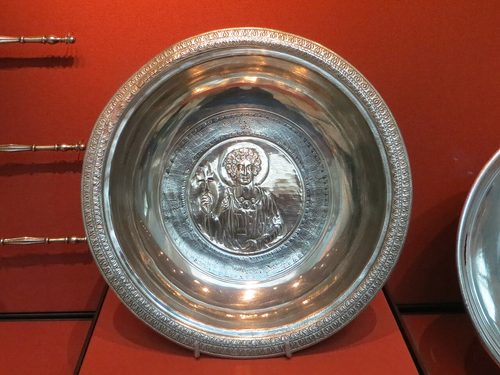
The quality varies. The Stuma and Riha patens, with gilded scenes of Christ giving communion to the apostles, are imperial-standard work stamped in the 570s. Other pieces are thinner village commissions, and analysis has shown copper and other metals alloyed with the silver. Dates on control stamps run from 542 to the 570s, and some objects are thought to be early 7th century.
When and why the silver went into the ground is uncertain. Northern Syria passed to Persian occupation in the early 7th century and then to the Arab conquest, and some scholars link the burial to those upheavals. The Walters Art Museum prefers the 8th century, when parts of Syria were gradually abandoned by Byzantine Christians.
The most famous object associated with the treasure is the Antioch Chalice in the Metropolitan Museum, a silver cup in an openwork gilded shell of vines enclosing Christ and the apostles. When it surfaced it was hailed by some as the Holy Grail. The Met dates it to 500-550 and suggests it may have been a standing lamp rather than a cup.
Highlights
A pair of large silver patens with gilded scenes of the Communion of the Apostles, dated by control stamps to the 570s; one is in Washington, the other in Istanbul.
A Walters chalice inscribed as a sacred vessel of the church of St Sergius in the village of Kaper Koraon, the inscription that gives the treasure its name.
Tall silver lampstands of about 550 in the Walters, given by four brothers of the village 'with their prayer'.
A gilded openwork cup of 500-550 in the Met, once claimed as the Holy Grail and perhaps really a lamp.
What is in it
Liturgical and household silver given to a village church of St Sergius: chalices, patens, crosses, lamps and lampstands, ewers, fans, spoons, strainers and plaques, many with donors' inscriptions.
Size: about 56 objects.
| Item | Number | Notes |
|---|---|---|
| 'Hama' group | 29 | Mostly in the Walters Art Museum, Baltimore; several pieces name Kaper Koraon |
| 'Antioch' group | about 17 | Including the Antioch Chalice, in the Metropolitan Museum, plus pieces in the Louvre and Dumbarton Oaks |
| 'Stuma' group | 5 | Fan, patens and a lamp, mostly in the Istanbul Archaeological Museums |
| 'Riha' group | 5 | Paten, fan and chalice at Dumbarton Oaks, two jugs at the Abegg-Stiftung |
Photographs
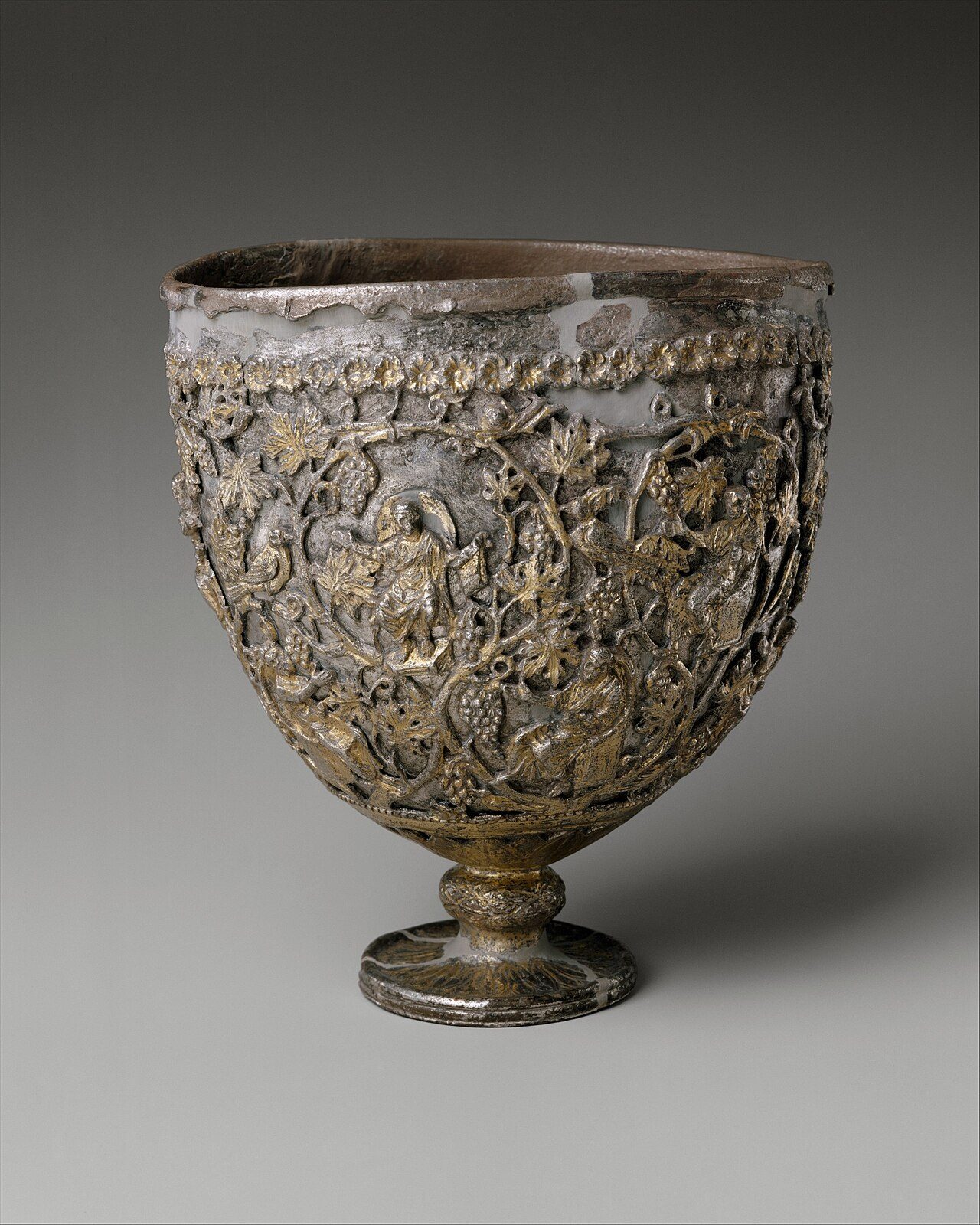
Photo: Unknown, CC0, via Wikimedia Commons
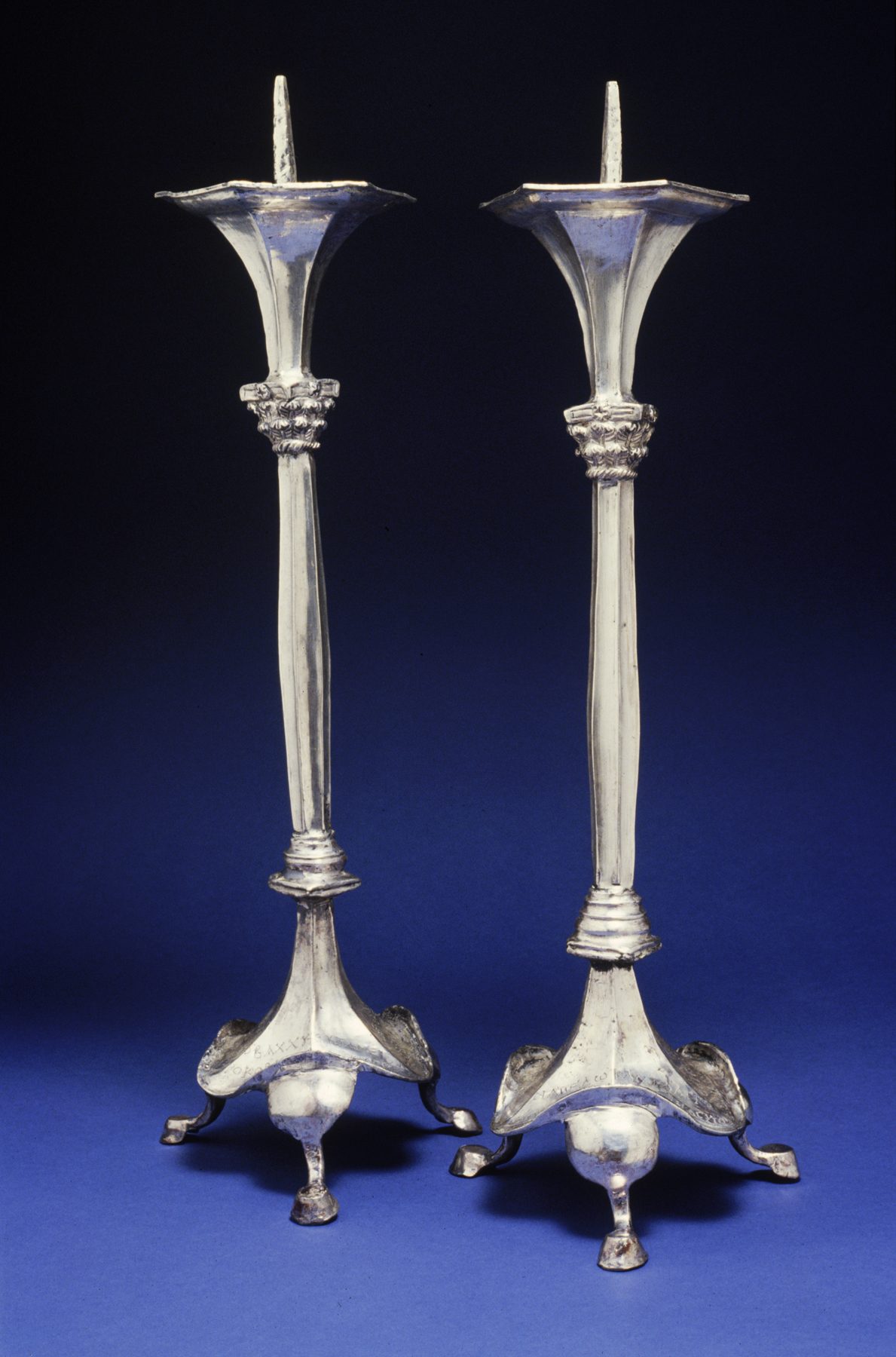
Photo: Anonymous ( Byzantine Empire ) Unknown author, Public domain, via Wikimedia Commons
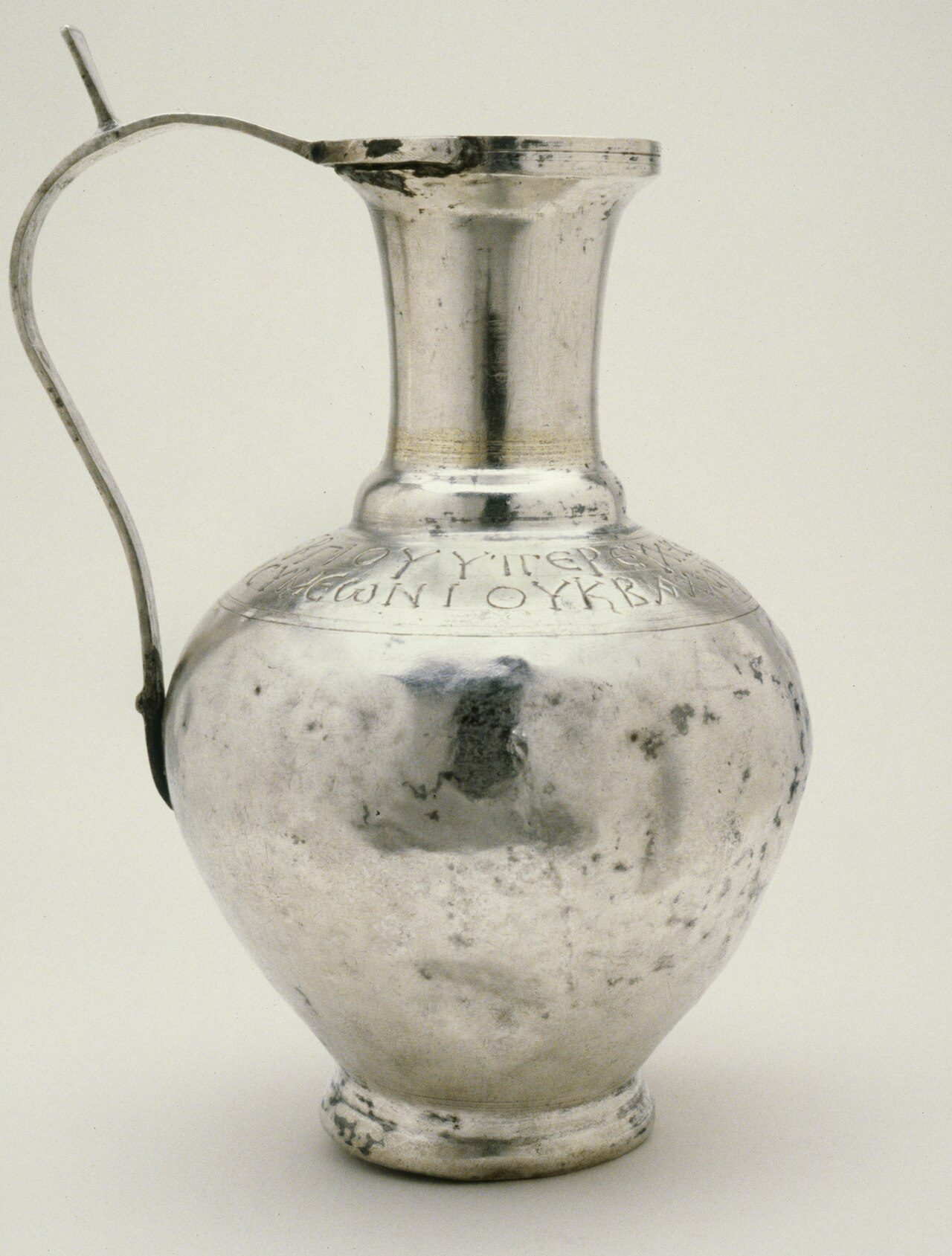
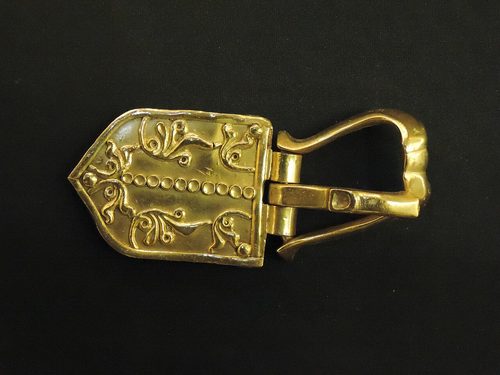
Photo: Anonymous ( Byzantine Empire ) Unknown author, Public domain, via Wikimedia Commons
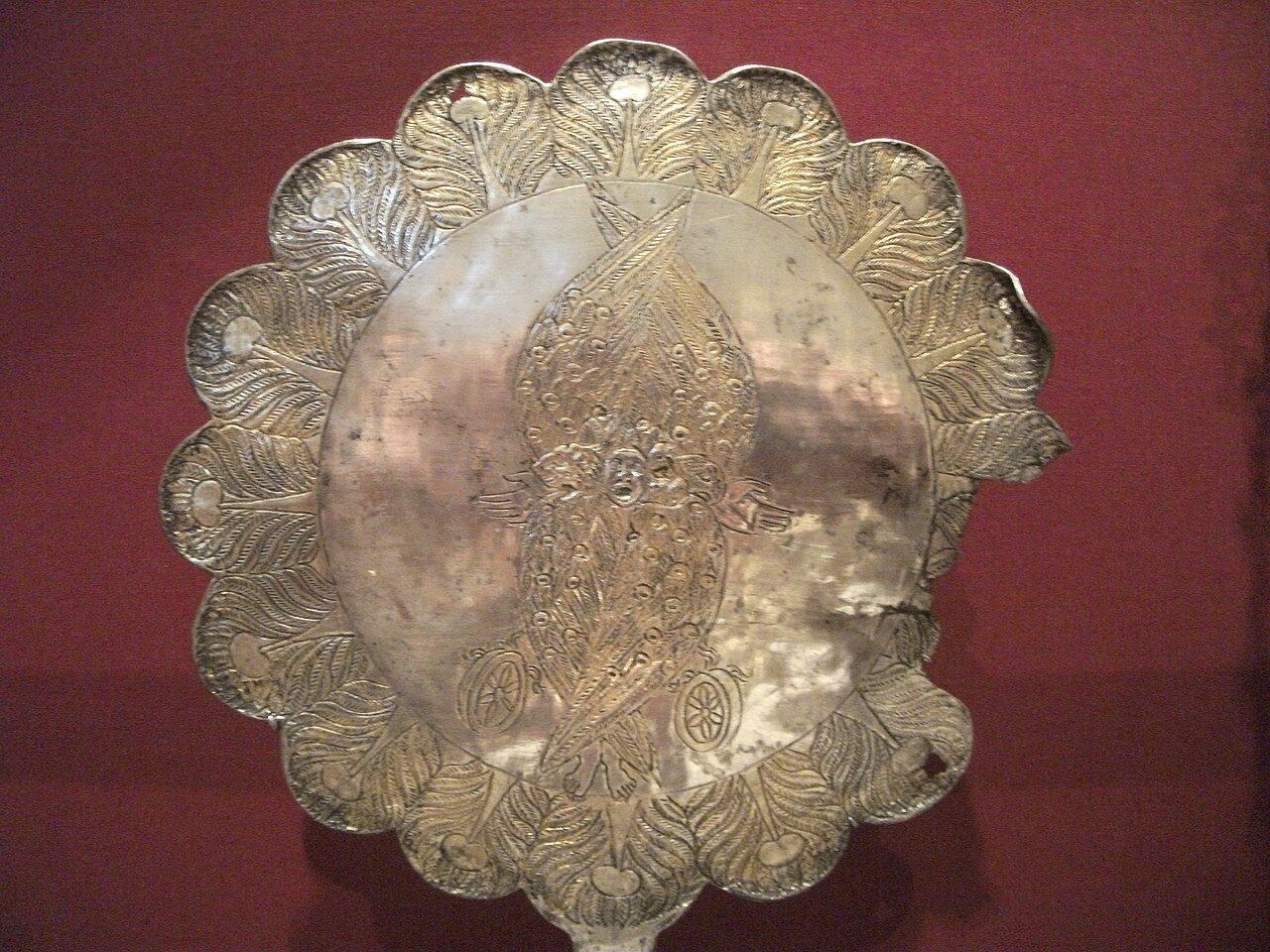
Photo: Johnbod, CC BY-SA 4.0, via Wikimedia Commons
How it is dated
Imperial control stamps on 14 pieces date them between 542 and the 570s, and other pieces are early 7th century. The burial is placed in the 7th century by some (Persian and Arab conquests of Syria) and in the 8th by the Walters Art Museum.
What happened after the find
Found in Ottoman Syria; one group was confiscated by Ottoman officials in 1908 and is in Istanbul, while the rest was exported and sold through dealers over the following decades (one lamp only in 1964) to museums and collectors in Europe and the USA.
Where sources differ
- Whether all four groups (Hama, Antioch, Stuma, Riha) really belong to one church treasure is debated; the link rests largely on inscriptions on the Hama pieces.
- Burial date: 7th century (English Wikipedia) or 8th century (Walters Art Museum).
- The Walters describes the Hama group as 23 vessels found in Kurin in 1910; German Wikipedia assigns 29 objects to it, noting that pieces were added and lost between 1910 and 1929.
- Whether the Antioch Chalice belongs to the Kaper Koraon group is disputed.
- Count of the Antioch group: 17 or 19 depending on the source.
Questions
Where is the Kaper Koraon Treasure?
It is scattered. Most of the Hama group is in the Walters Art Museum in Baltimore; Dumbarton Oaks in Washington, the Istanbul Archaeological Museums, the Metropolitan Museum in New York, the Abegg-Stiftung in Switzerland and the Louvre hold other pieces.
What does Kaper Koraon mean?
It is the Greek form of the name of a Syrian village, modern Kurin near Idlib. Inscriptions on several silver pieces dedicate them to the church of St Sergius in Kaper Koraon.
Is the Antioch Chalice the Holy Grail?
No. It was promoted as the Grail when it surfaced in the early 20th century, but the Metropolitan Museum dates it to the first half of the 6th century and thinks it may have been a lamp.