In 1847 farmers digging in a field outside Lapseki, a village on the Asian shore of the Dardanelles, turned up a cache of silver. Lapseki is ancient Lampsacus, a harbour town and bishopric that guarded the crossing between Asia and Europe and lay on the sea road to Constantinople. The find was split up almost at once. Henry Wellesley, the British envoy in Constantinople and later Earl Cowley, bought a large part and presented it to the British Museum in 1848.
Other pieces drifted through the market for decades. The British Museum bought a bowl and four spoons from London dealers in 1886, and three more spoons came with the bequest of Sir Augustus Wollaston Franks in 1897. Two bowls are in Istanbul and two spoons in the Louvre. Another spoon, published in 1882, was kept at the Evangelical School in Smyrna and was lost when the city burned in 1922. About 28 pieces survive today.
Much of the treasure is for light. A plain three-legged lampstand about 21 cm high carries imperial control stamps of the reign of Justinian I (527-565), applied in Constantinople to guarantee the silver's purity. A polycandelon, a pierced disc that held several glass oil lamps and hung from chains, is dated by its stamps to 577. Such fittings lit churches, but their modest size here could equally suit a wealthy house.
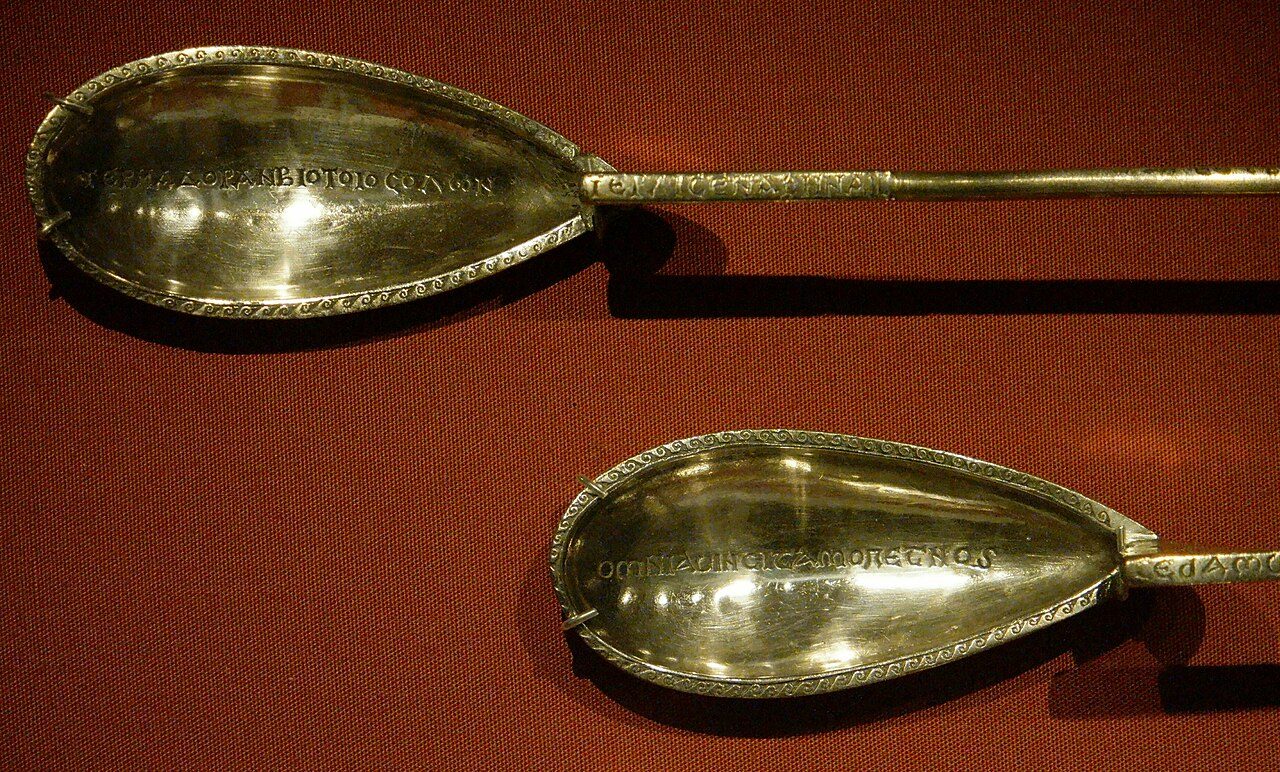
The spoons are the most personal pieces. Several are engraved with Latin lines from Virgil's Eclogues or with Greek maxims attributed to the Seven Sages of ancient Greece: table talk for an educated diner. Latin quotation of this kind was unusual in the Greek-speaking East around 600. Some spoons carry a monogram read as 'of Bishop Andrew'.
That bishop's monogram has encouraged the view that the hoard was church property. Many scholars now see it instead as the private silver of a cleric or a wealthy household: the spoons were not used in the Orthodox liturgy until much later, and the jewellery and folding stool belong to domestic life. Lampsacus had no bishop recorded between 458 and 787, so Andrew cannot be identified.
Why the treasure was buried is unknown. Lampsacus was used repeatedly as a base for attacks on Constantinople, and the hoard could have been hidden during any of several crises of the late 6th or 7th century. Its stamped pieces make it one of the reference groups for the early Byzantine system of silver control stamps.
Highlights
A plain tripod lampstand about 21 cm high and 333 g, stamped in Constantinople under Justinian I; one of only three stamped silver lampstands known.
Pear-shaped spoons engraved with Latin lines from Virgil and Greek sayings of the Seven Sages, a rare glimpse of educated table talk.
A pierced silver disc for hanging several glass lamps, dated by its stamps to 577.
What is in it
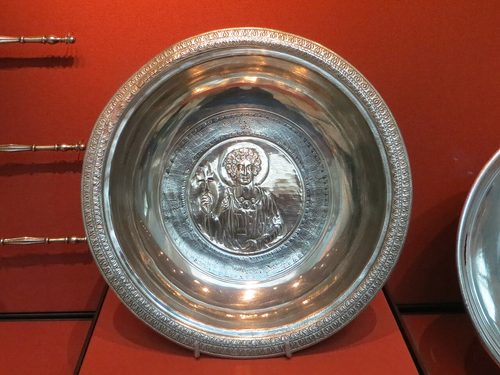
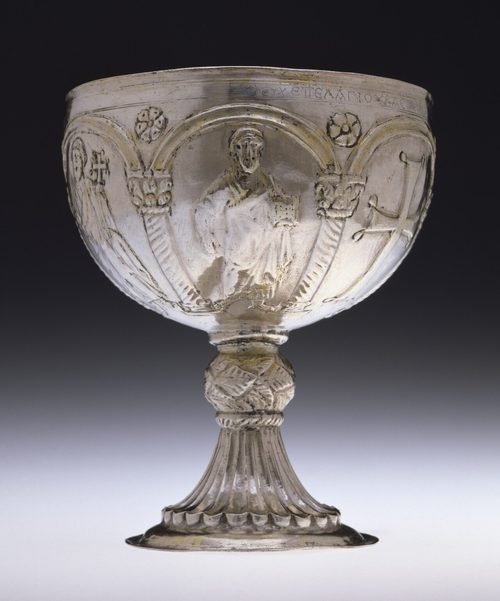
Household silver of the 6th and 7th centuries: a tripod lampstand, a polycandelon, bowls and dishes with monograms, a chalice, a mirror handle, parts of a folding stool, inscribed spoons, and some gold jewellery.
Size: about 28 surviving pieces in several museums.
| Item | Number | Notes |
|---|---|---|
| Spoons | about 15 | Pear-shaped spoons, several engraved with Latin lines of Virgil and Greek sayings of the Seven Sages |
| Lighting | 2 | A tripod lampstand stamped under Justinian I and a polycandelon dated 577 |
| Vessels | several | Bowls and dishes with niello monograms and a chalice |
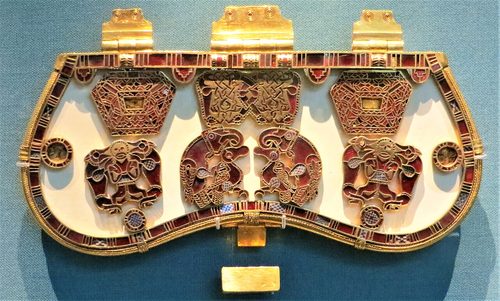
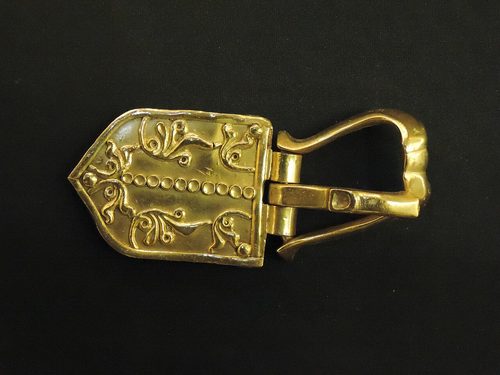
| Other | several | Mirror handle, fittings and fragments of a folding stool, a gold chain with stone pendants, an earring |
Photographs
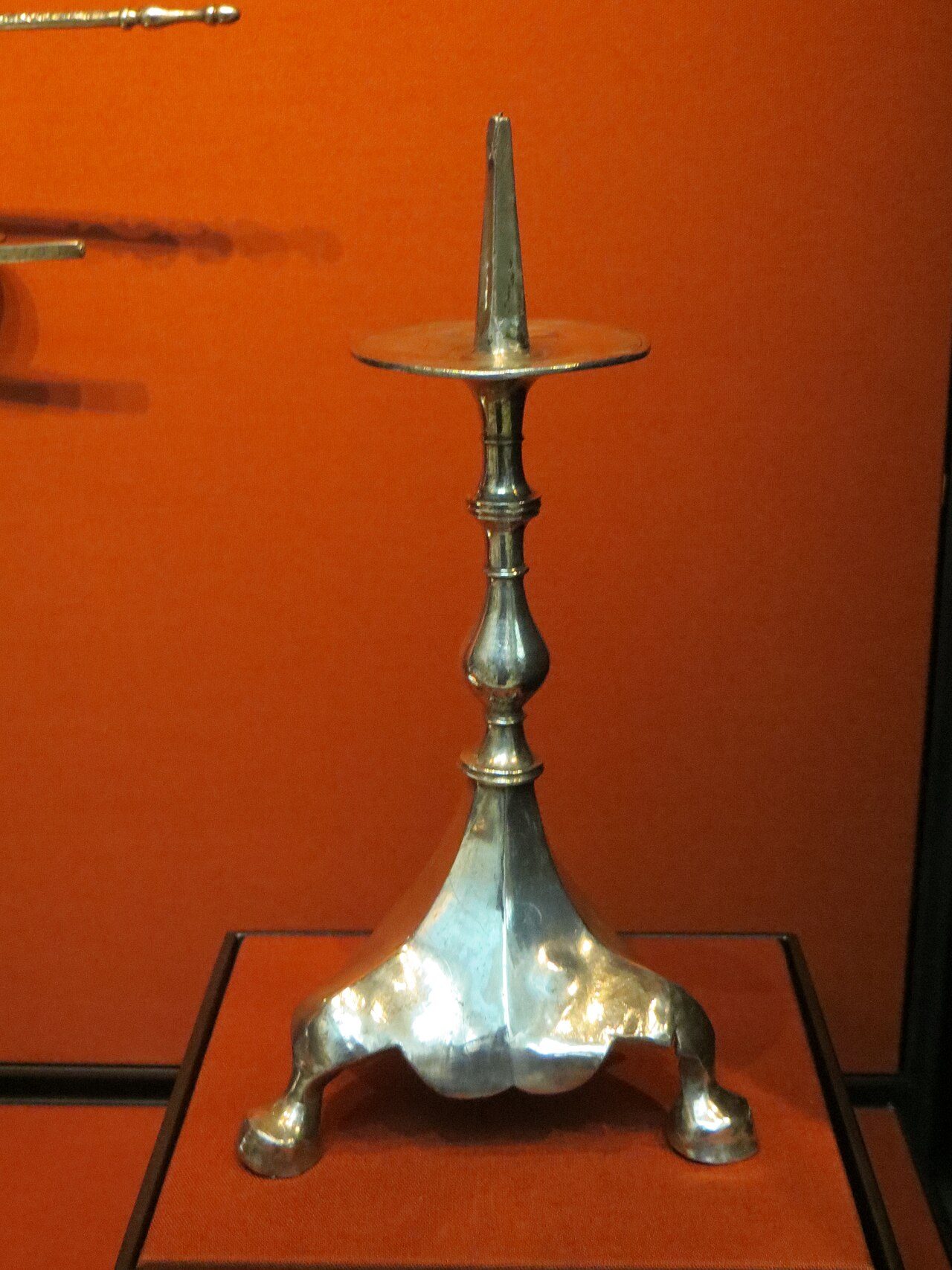
Photo: Jononmac46, CC BY-SA 3.0, via Wikimedia Commons
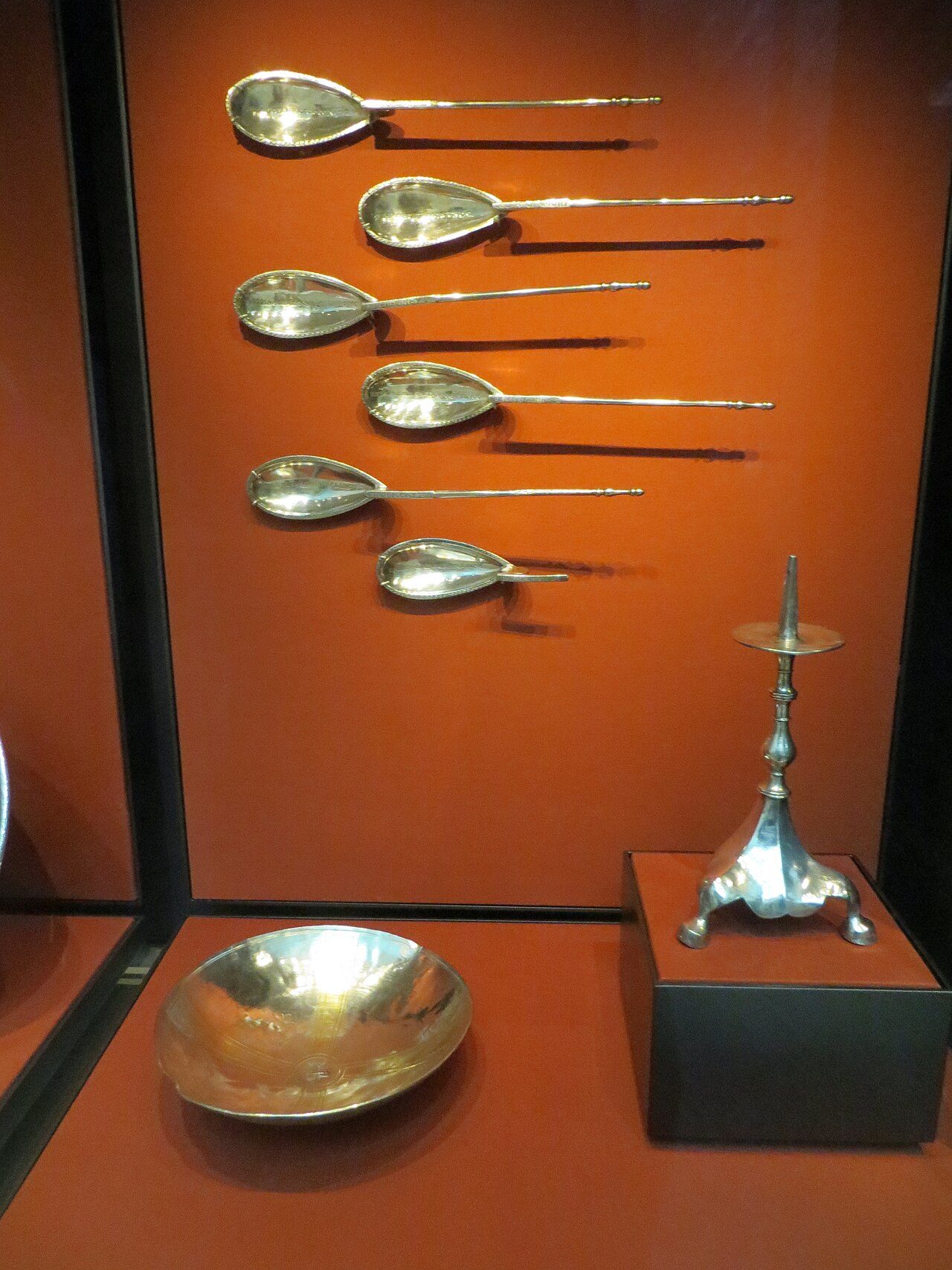
Photo: Jononmac46, CC BY-SA 3.0, via Wikimedia Commons
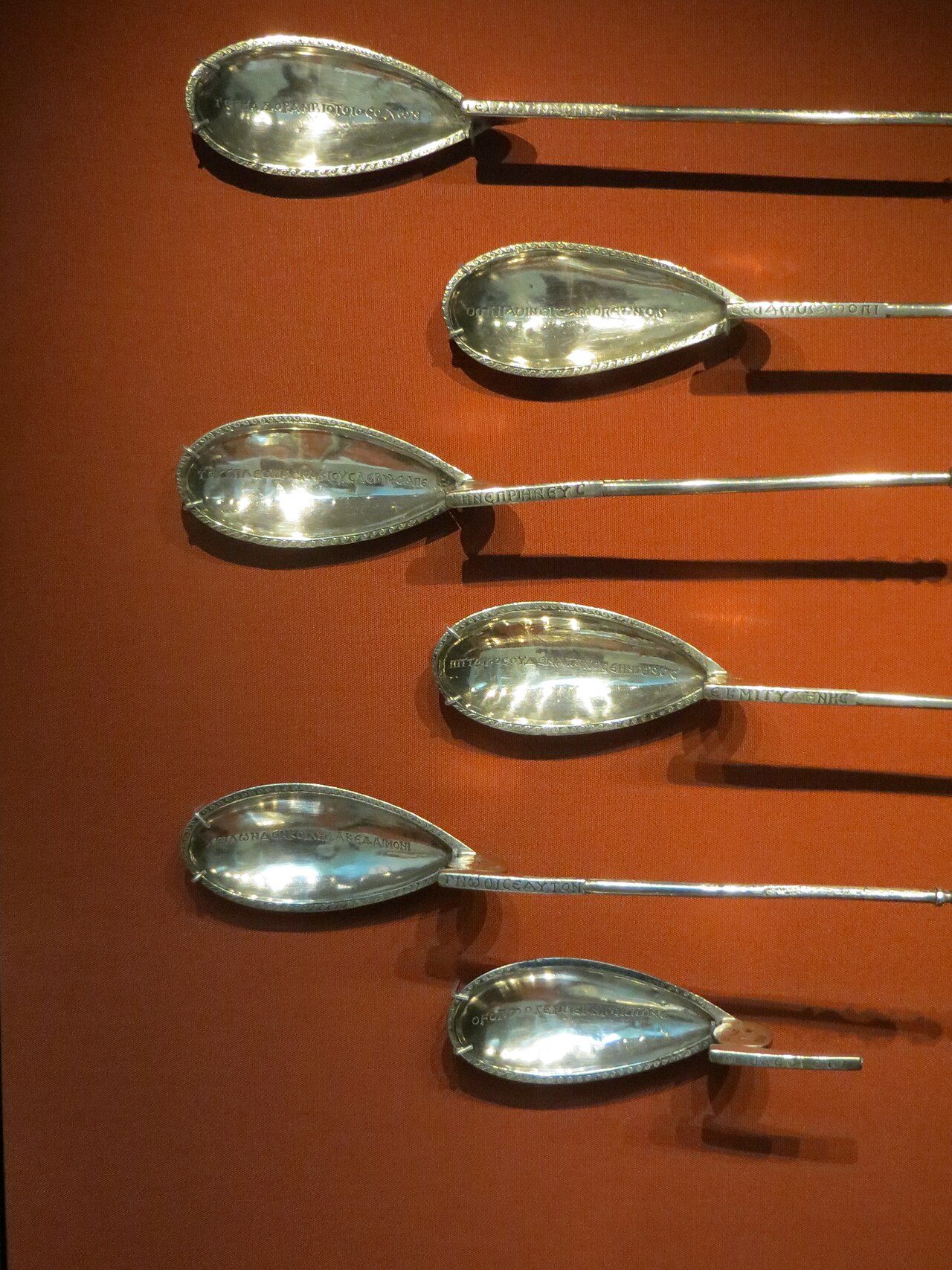
Photo: Jononmac46, CC BY-SA 3.0, via Wikimedia Commons
How it is dated
Imperial control stamps date the lampstand to 527-565 and the polycandelon to 577. The inscribed spoons are generally placed around 600. The burial must be later than 577 and is usually put in the late 6th or 7th century.
What happened after the find
Found by farmers in Ottoman Turkey and sold; the British envoy Henry Wellesley (later Earl Cowley) bought a large part and gave it to the British Museum in 1848.
Where sources differ
- Whether the treasure was church property or private: the bishop's monogram suggests the first, the domestic objects the second.
- The burial date is not known beyond 'after 577'.
- English Wikipedia describes the find as of '6th and 7th centuries' and lists twelve spoons in the British Museum; German Wikipedia's breakdown (six from Cowley, four in 1886, three from Franks) gives thirteen.
- A second silver find at Lampsacus in 1887 (the 'India' dish in Istanbul) is a separate hoard and is not counted here.
- Room 41 display location is from Wikipedia; the British Museum website could not be reached.
Questions
Where is the Lampsacus Treasure?
Most of it is in the British Museum in London. Two bowls are in the Istanbul Archaeological Museums and two spoons in the Louvre.
What is written on the Lampsacus spoons?
Several carry Latin lines from Virgil's Eclogues or Greek sayings of the Seven Sages of ancient Greece, and some a monogram read as 'of Bishop Andrew'.
How is Byzantine silver dated?
By control stamps punched into the metal when it was certified, which often include the reigning emperor's monogram. The Lampsacus lampstand's stamps date it to the reign of Justinian I (527-565).