Early medieval hoards
c. 600-800 · 9 hoards on this site
The defining hoard of these centuries is a heap of broken war-gear. The Staffordshire Hoard, found by a metal detectorist near Hammerwich in 2009 and promptly reported, is almost 4,600 items and fragments: about 5.1 kg of gold, 1.4 kg of silver and some 3,500 pieces of garnet cloisonné. Nearly all of it came off weapons, especially sword hilts, and nearly all of it had been deliberately prised from the objects it once decorated. There is nothing obviously feminine in it. It was probably buried between about 650 and 675 beside Watling Street, in what was then the kingdom of Mercia, and two museums bought it jointly under the Treasure Act for £3.285 million.
Explaining it shows how hard the safekeeping-or-offering question becomes once warfare and kingship are involved. The choice of martial pieces and the high quality of everything in it make simple battlefield loot an unlikely story. Nicholas Brooks linked it to the heriot, the war-gear a lord's followers owed back to the king when they died; others point to Beowulf, where warriors strip the hilts from defeated enemies' swords and the poet speaks of treasure given back to the earth. A trophy hoard, a royal store or a dedication: each has advocates, and the find-spot in empty upland between two Mercian peoples does not settle it.
Elsewhere the richest finds are ecclesiastical or aristocratic silver. On St Ninian's Isle in Shetland, a schoolboy helping visiting archaeologists dig a ruined medieval chapel in 1958 found a wooden box under a cross-marked slab, holding 28 silver and silver-gilt objects of the later eighth century: twelve penannular brooches, eight bowls, a spoon, sword chapes and other fittings, now in the National Museum of Scotland. In 1980 a father and son with a metal detector found a chalice, a paten and its stand, a strainer and a bronze basin turned over them on Derrynaflan, a former monastic island in a Tipperary bog; the vessels date from the eighth or ninth century and were probably hidden in the troubled tenth to twelfth centuries. The finders' long lawsuit over a reward ended with Ireland replacing its treasure trove law in 1994. On the steppe, the Pereshchepina find of 1912 near Poltava, more than 800 pieces including 35 gold and silver vessels, may come from the grave of the Bulgar ruler Kubrat; whether it is a grave or a hoard is itself debated.
Money played a smaller part than in Roman times. In England the first coins were small gold pieces, but by around 675 large silver issues were being struck: the thick little silver pennies collectors call sceattas, usually weighing 0.8 to 1.3 g. Around 785 Offa of Mercia introduced a broader, thinner penny of about 1.3 to 1.5 g, modelled on the Frankish denier, and that coin remained the basis of English money for centuries. Anglo-Saxon hoards are relatively rare; far more of the period's metalwork comes from graves. In Ireland and Pictish Scotland, wealth was still held largely as brooches and church plate rather than coin, which is why the hoards from those places look like treasuries rather than purses.
Early medieval hoards
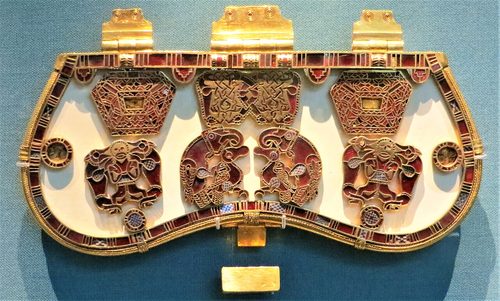
Sutton Hoo ship burial
A 7th-century king's grave in a 27-metre ship, dug in Suffolk in 1939: gold and garnet regalia, a helmet, Byzantine silver and 37 Frankish coins.
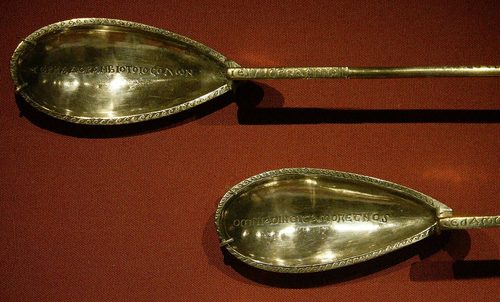
Lampsacus Treasure
Early Byzantine silver found by farmers at Lapseki on the Dardanelles in 1847: a stamped lampstand, a polycandelon and spoons inscribed with Virgil.
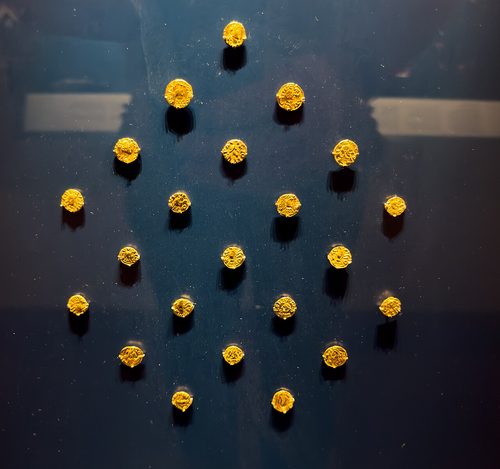
Crondall Hoard
About 100 small gold coins, most of them the earliest English coinage, found by a young man out shooting in Hampshire in 1828 and buried c. 640.
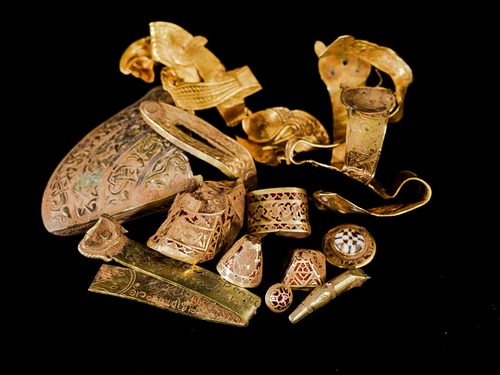
Staffordshire Hoard
Almost 4,600 gold and silver fragments, mostly stripped from 7th-century swords, found near Lichfield in 2009: the largest Anglo-Saxon hoard.
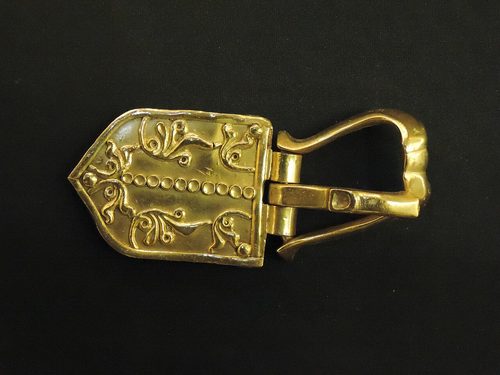
Pereshchepina Treasure
Over 800 gold and silver objects, some 70 kg of metal, found by boys near Poltava, Ukraine, in 1912; often linked to the 7th-century Bulgar khan Kubrat.
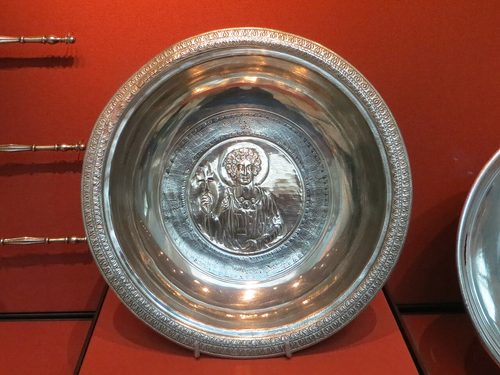
First Cyprus Treasure
28 pieces of 6th-7th century Byzantine silver found near the Acheiropoietos monastery at Lambousa, Cyprus, in 1897, bought by the British Museum in 1899.
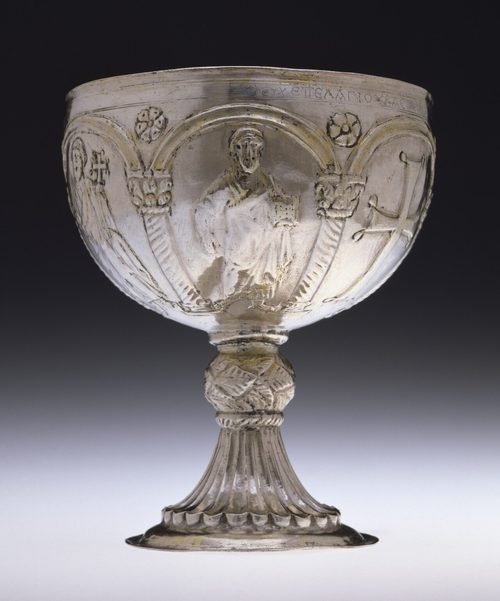
Kaper Koraon Treasure
About 56 pieces of 6th-century church silver from a Syrian village church of St Sergius, found c. 1908-1910 and now scattered from Baltimore to Istanbul.
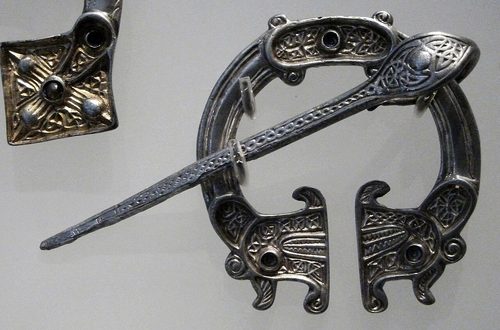
St Ninian's Isle Treasure
28 Pictish silver objects, including 12 brooches and 8 bowls, found under a cross-marked slab in a Shetland chapel in 1958; buried around AD 800.
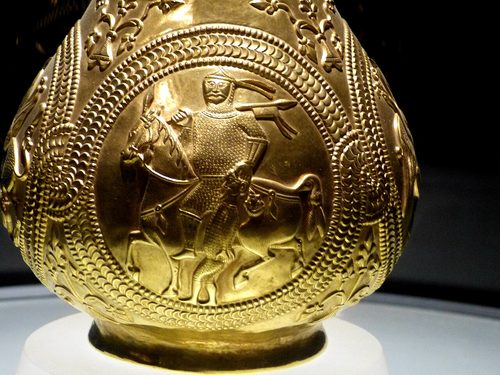
Treasure of Nagyszentmiklós
23 early medieval gold vessels, almost 10 kg, dug up near Sânnicolau Mare (now Romania) in 1799 and kept in Vienna ever since; probably Avar.