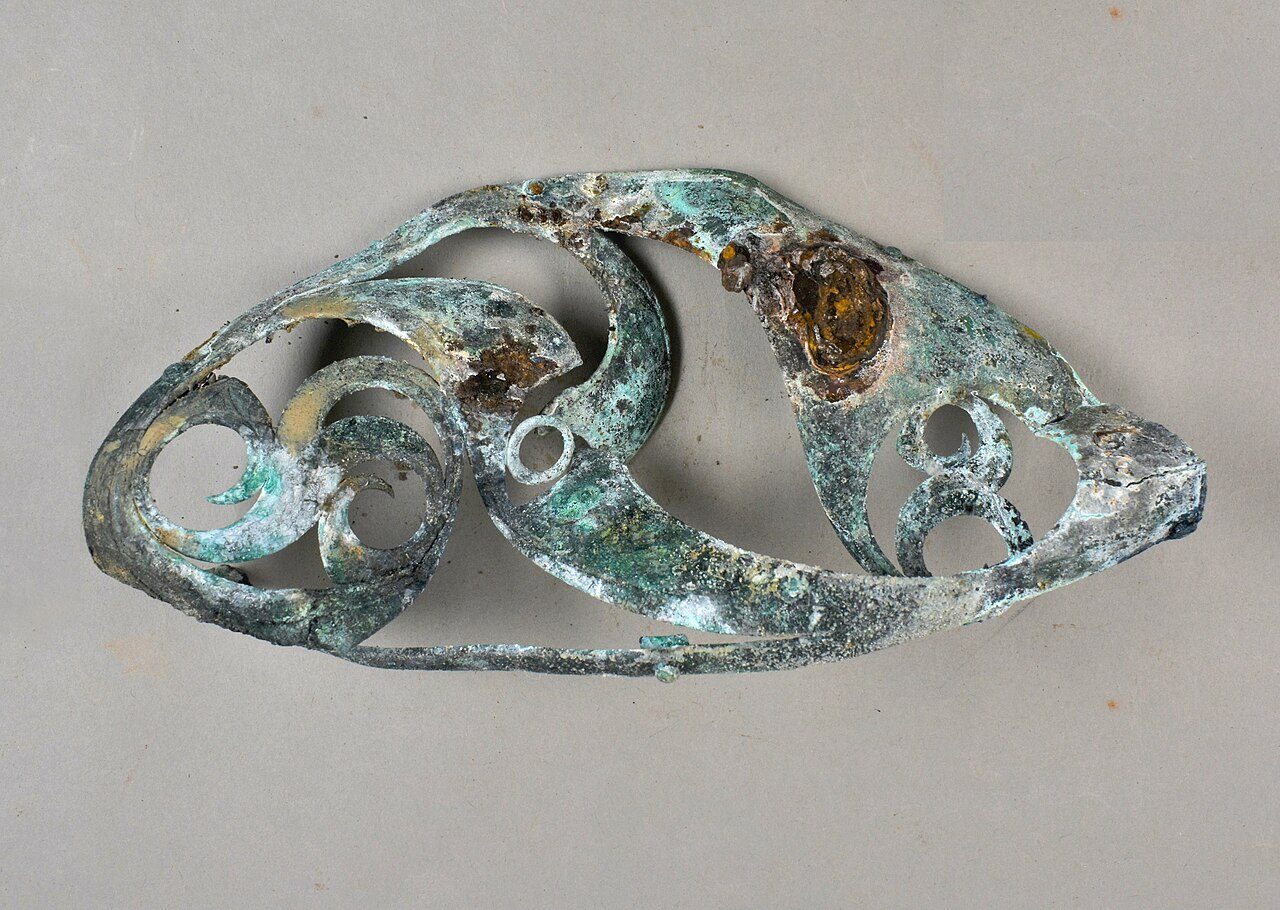
Twenty-eight iron wheel tyres lay in a cluster in a field in North Yorkshire, some of them deliberately bent out of shape, with bronze bridle bits, linchpins and harness fittings in among them. Nearby, in a ditch, two ornate vessels had been set upside down. In a second ditch, a bundle of spears and decorated pony harness had been wrapped together before burial. Together they make the Melsonby Hoard, at more than 800 objects one of the largest finds of Iron Age metalwork in Britain.
A metal detectorist found the first pieces in December 2021 and reported them. Because so much was fragile and corroded, Durham University excavated the site in 2022, with more than £120,000 from Historic England and advice from the British Museum. Some material was lifted in soil blocks and scanned with X-ray CT at the University of Southampton, so archaeologists could see what was inside before digging it out in the laboratory.
The vehicle parts come from more than seven wagons and chariots, and the harness was made for at least fourteen ponies. Some harness pieces are larger than usual for the period and are set with red coral from the Mediterranean and coloured glass. One of the vessels, lidded and decorated in a mix of Iron Age and Mediterranean styles, was probably used for mixing wine. Some objects have close parallels elsewhere in Britain; for others the best matches are on the continent.
Much of the hoard was burnt or broken before it was buried. The excavators suggest this was a deliberate display of wealth and power: only the very rich could afford to destroy so much. The objects may have been burnt on a funeral pyre, but no human remains were found. Burial seems to have taken place in the 1st century AD, around the time Rome was conquering southern Britain.
The site lies close to the great Iron Age enclosure at Stanwick, usually linked with the rulers of the Brigantes, the people who controlled much of northern England when Rome arrived. The find challenges the old view that the wealthiest and most connected British elites of the period lived in the south. Whoever buried it belonged to a network that reached across Britain, into Europe and to the Roman world.
Under the Treasure Act the hoard was valued for acquisition. York Museums Trust launched an appeal in March 2025 to buy and conserve it, and by July had secured the purchase with £192,096 from the National Heritage Memorial Fund, about £54,000 from a public crowdfunder and £20,000 in other donations. Conservation and research will continue for years.
Highlights
Twenty-eight iron tyres from horse-drawn vehicles, some deliberately bent, evidence for both four-wheeled wagons and two-wheeled chariots.
A lidded vessel decorated in both Mediterranean and Iron Age styles, found upside down at the bottom of a large ditch.
Openwork strap junctions and fittings set with red Mediterranean coral and coloured glass, larger than usual for the period.
Three ceremonial spears wrapped together with decorated harness and lifted as a single block for laboratory excavation.
What is in it
Parts of wagons and chariots, horse harness, bridle bits, ceremonial spears and two vessels, many burnt, bent or broken before burial in two ditches; some fittings are inlaid with red Mediterranean coral and coloured glass.
Size: more than 800 objects.
| Item | Number | Notes |
|---|---|---|
| Iron tyres | 28 | from more than seven four-wheeled wagons and two-wheeled chariots; some deliberately bent |
| Harness and bridle bits | for at least 14 ponies | cast copper-alloy bits, linchpins, rein rings and strap fittings, some set with coral and glass |
| Ceremonial spears | 3 | bundled with harness pieces and lifted as a block |
| Vessels | 2 | cauldrons or bowls, one lidded and probably a wine-mixing bowl, placed upside down |
Photographs
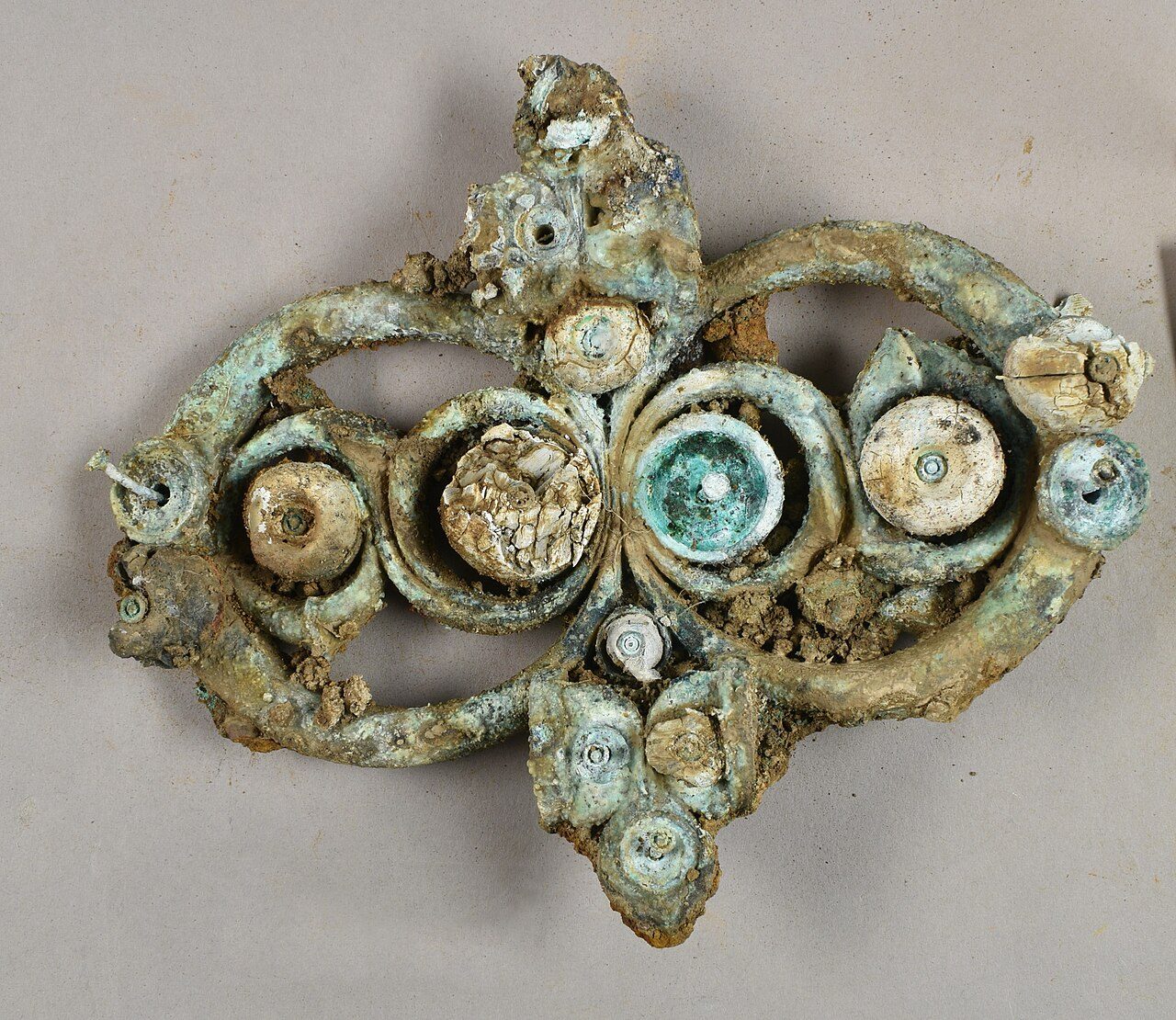
Photo: Rebecca Griffiths, CC BY 2.0, via Wikimedia Commons
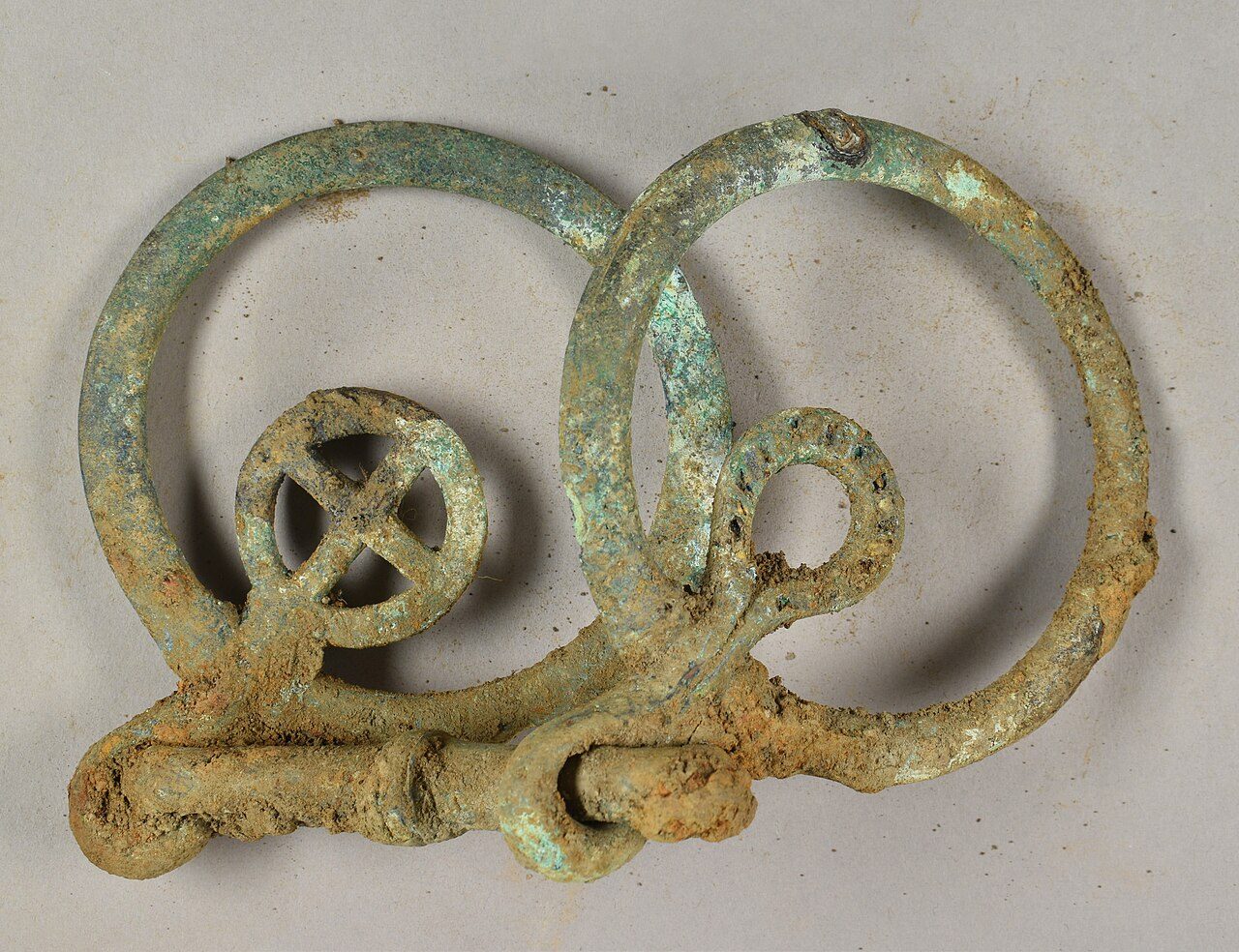
Photo: Rebecca Griffiths, CC BY 2.0, via Wikimedia Commons
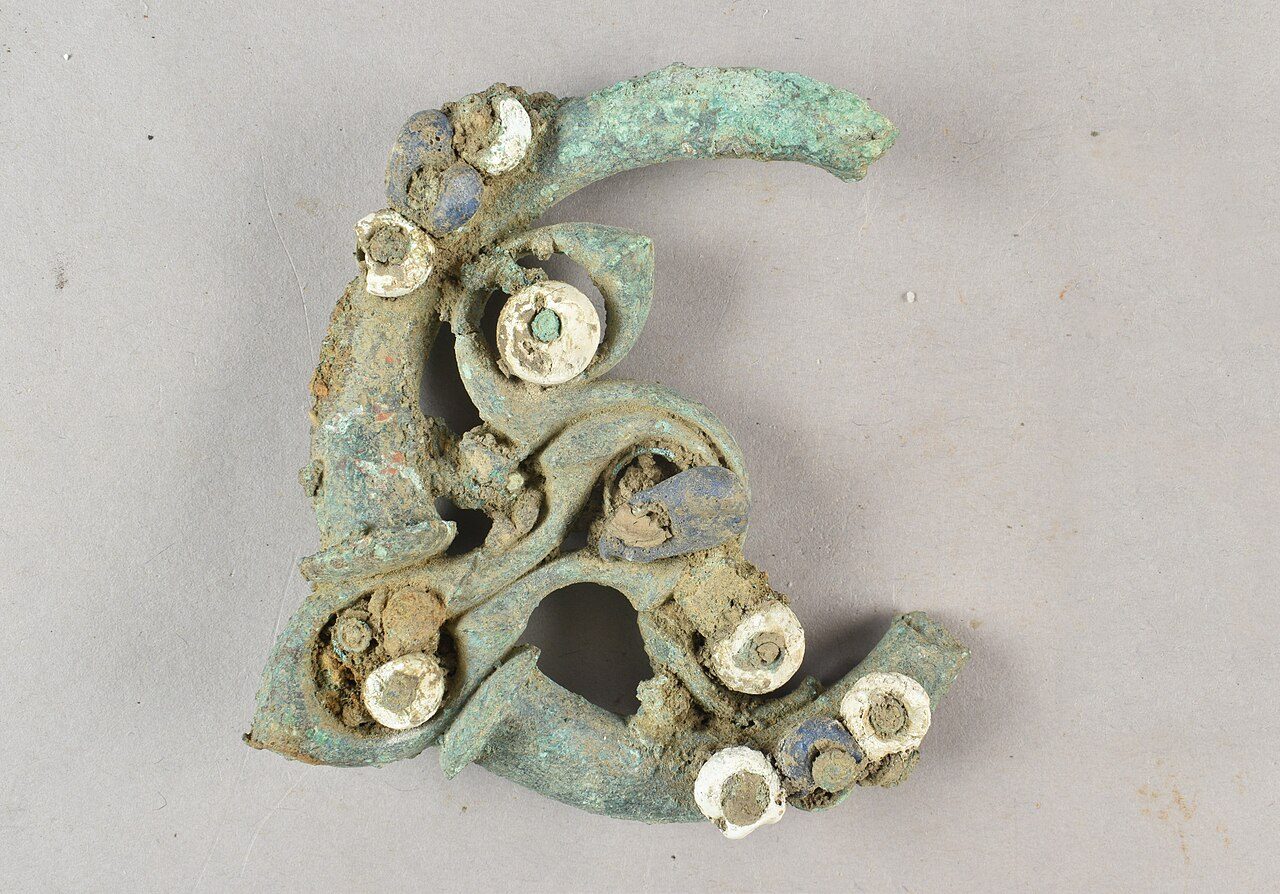
Photo: Rebecca Griffiths, CC BY 2.0, via Wikimedia Commons
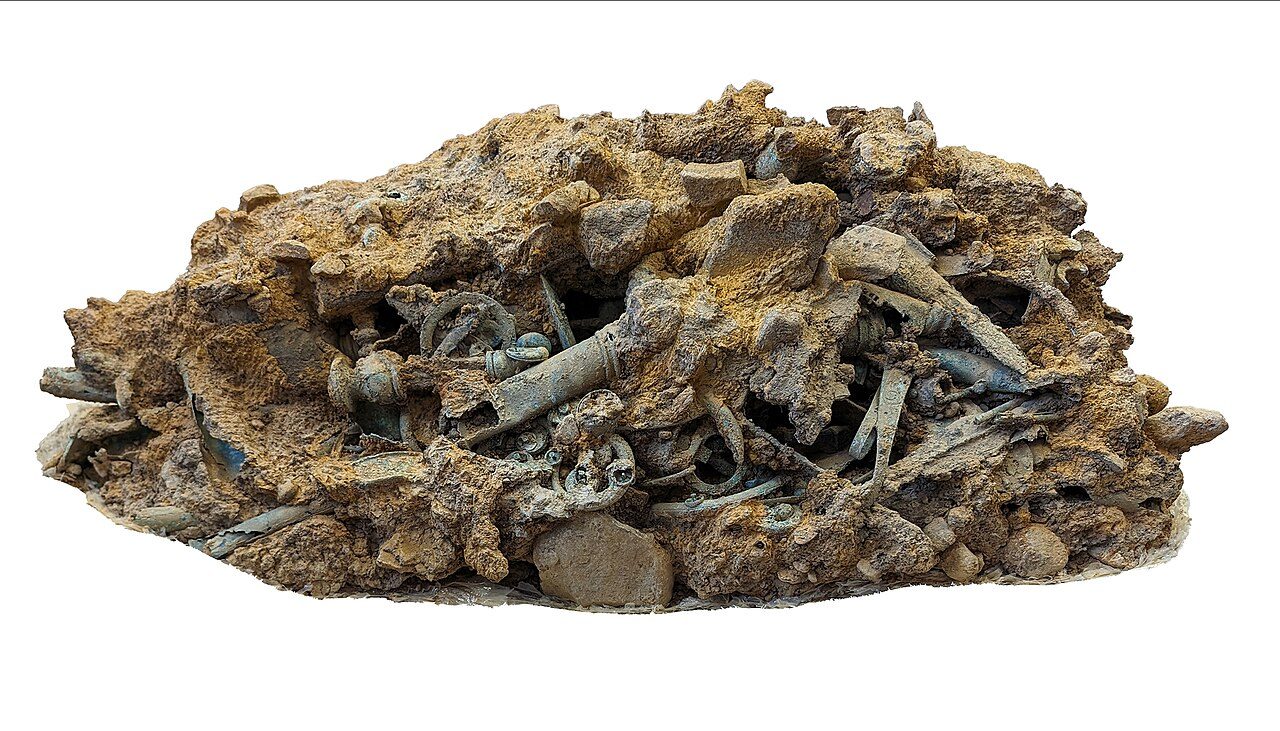
Photo: Rebecca Griffiths, CC BY 2.0, via Wikimedia Commons
How it is dated
There are no coins. Initial assessment of the metalwork places burial in the 1st century AD, around the Roman conquest of southern Britain; some pieces may be earlier. Detailed dating is part of ongoing research.
What happened after the find
Reported under the Treasure Act 1996 and recorded with the Portable Antiquities Scheme. The Yorkshire Museum acquired the hoard in 2025 at its Treasure valuation, with £192,096 from the National Heritage Memorial Fund and public donations.
Where sources differ
- Object count: 'more than 800' (York Museums Trust, Museums Association, NHMF) versus 'over 900' (Wikipedia, citing later reporting). Counting is ongoing as blocks are excavated.
- Vehicle count: 'more than seven' (York Museums Trust) or 'at least seven' (other reports).
- Treasure valuation: Wikipedia gives £254,000; the total raised for purchase was more than £265,000 (Museums Association). The exact purchase price was not confirmed from a primary source.
- Attribution to the Brigantes is an inference from location near Stanwick.
Questions
Where can I see the Melsonby Hoard?
At the Yorkshire Museum in York, which bought it in 2025. The exhibition 'Chariots, Treasure and Power: Secrets of the Melsonby Hoard' runs until summer 2027.
Why were the Melsonby objects burnt and broken?
The excavators think the destruction was deliberate, a way for a powerful group to show it could afford to destroy wealth. The objects may have been burnt on a funeral pyre, but no human remains were found.
Sources
- Iron Age hoard discovery alters our understanding of life in Britain 2,000 years ago (York Museums Trust, 25 March 2025)
- Yorkshire Museum acquires iron age hoard after fundraising campaign (Museums Association, July 2025)
- Melsonby Hoard (National Heritage Memorial Fund)
- The Melsonby Hoard (Durham University)
- Melsonby Hoard (Wikipedia)
- Wikidata Q133520491 (CC0)