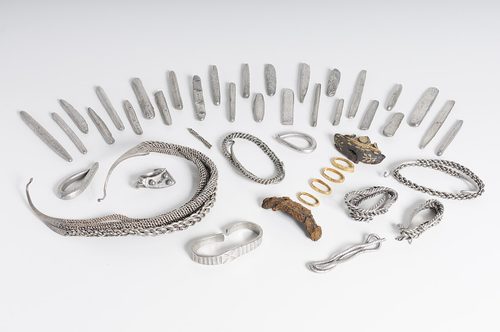
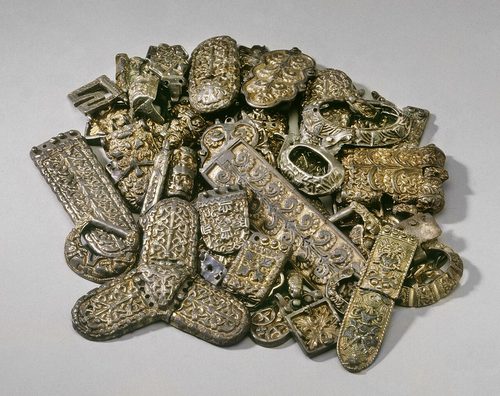
Gold pommels, hilt collars and helmet plates stripped from weapons: how to recognise war-gear in a hoard, from Staffordshire to Sutton Hoo.
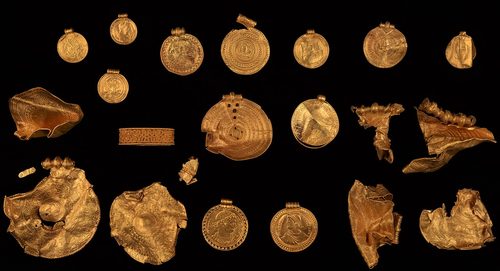
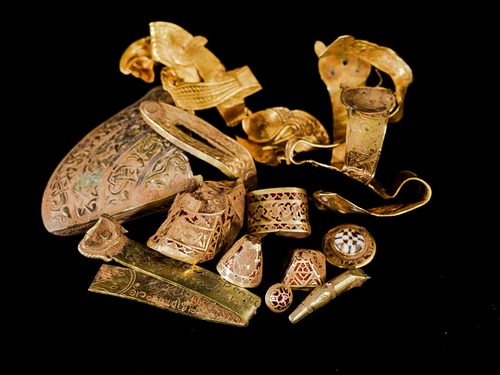
Hoards seldom hold whole weapons. What survives is the precious metal that once dressed them: pommel caps, hilt collars and hilt plates from swords, mounts from scabbards and sword-belts, and plates from helmets. The outstanding example is the Staffordshire Hoard, found in 2009 near Lichfield. Its roughly 4,600 fragments include 86 sword pommels, the largest group ever found in one place, and dozens of gold hilt collars. Apart from a handful of Christian objects almost everything in it came off weapons and armour; there are no dress fittings for women and no tableware.
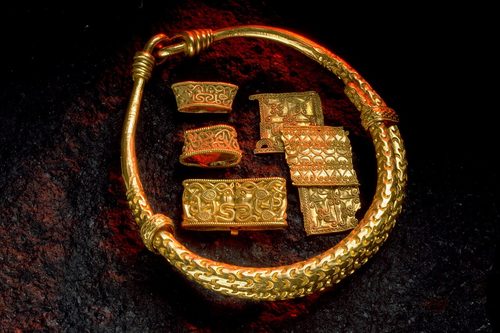
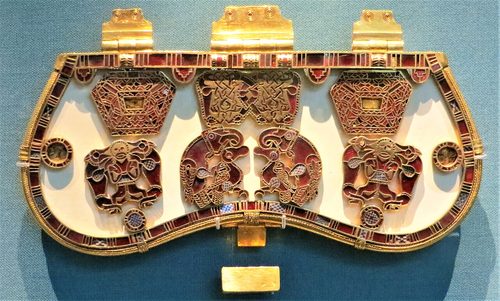
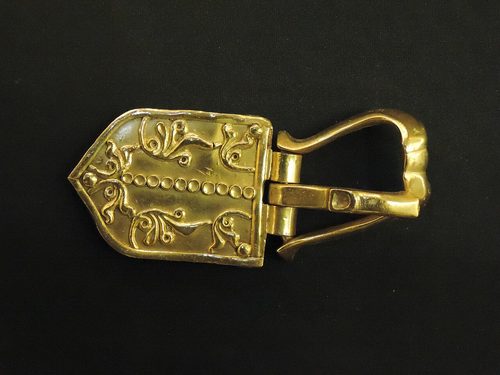
Anglo-Saxon smiths built a sword hilt in layers. A cap sat on top of the grip, collars in gold or silver bound each end, and plates held the guard together; all were pinned or riveted on, so they could be taken off again. The finest were worked in cloisonné, with garnets cut to shape and set in walls of gold, or in filigree, fine gold wire soldered into interlace. Helmets were iron caps clad in sheets of decorated metal. About a third of the Staffordshire fragments come from a single helmet, clad in silver-gilt panels with friezes of warriors and animals and fitted with cheek-pieces covered in interlaced beasts; it is only the sixth Anglo-Saxon helmet known. The Sutton Hoo ship burial, closed in the early 7th century, shows what a complete set looked like: a pattern-welded sword with a gold and garnet pommel, its belt and harness mounts, a shield, spears and the famous helmet.
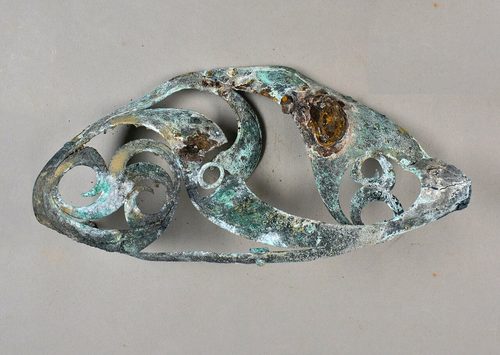
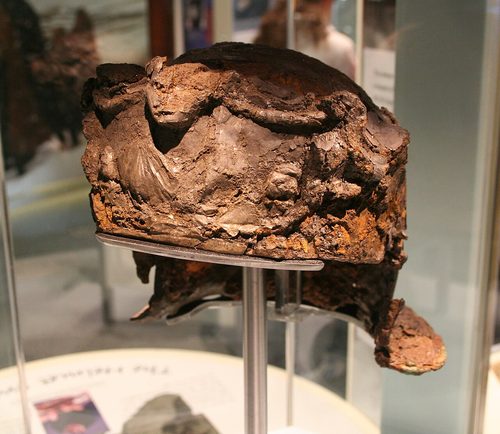
War-gear is not only Anglo-Saxon. The Hallaton hoard in Leicestershire contained a Roman cavalry helmet of iron covered in silver sheet and touched with gold leaf, buried at a British shrine around the time of the Roman conquest. The Iron Age deposit at Melsonby in North Yorkshire holds harness for 14 ponies, three decorated spears and iron tyres from at least seven vehicles. In Ukraine, the Pereshchepina treasure includes an iron sword with gold-faced hilt and scabbard, often linked with the 7th-century Bulgar ruler Kubrat.
In a find, war-gear shows up as small, heavy pieces of gold or silver with rivet holes, sockets or slots, and many are bent, torn or prised loose. That damage matters. At Staffordshire the fittings seem to have been stripped from finished weapons, and the leading suggestion is that they were trophies or spoils taken from defeated warriors, though nobody can show who buried them or why. The project publication dates most of the metalwork between the mid-6th and mid-7th centuries and the burial to about 650-675, in the heartland of the kingdom of Mercia. Because such pieces are gold or silver and centuries old, a find of them in England or Wales must be reported as treasure.
Examples
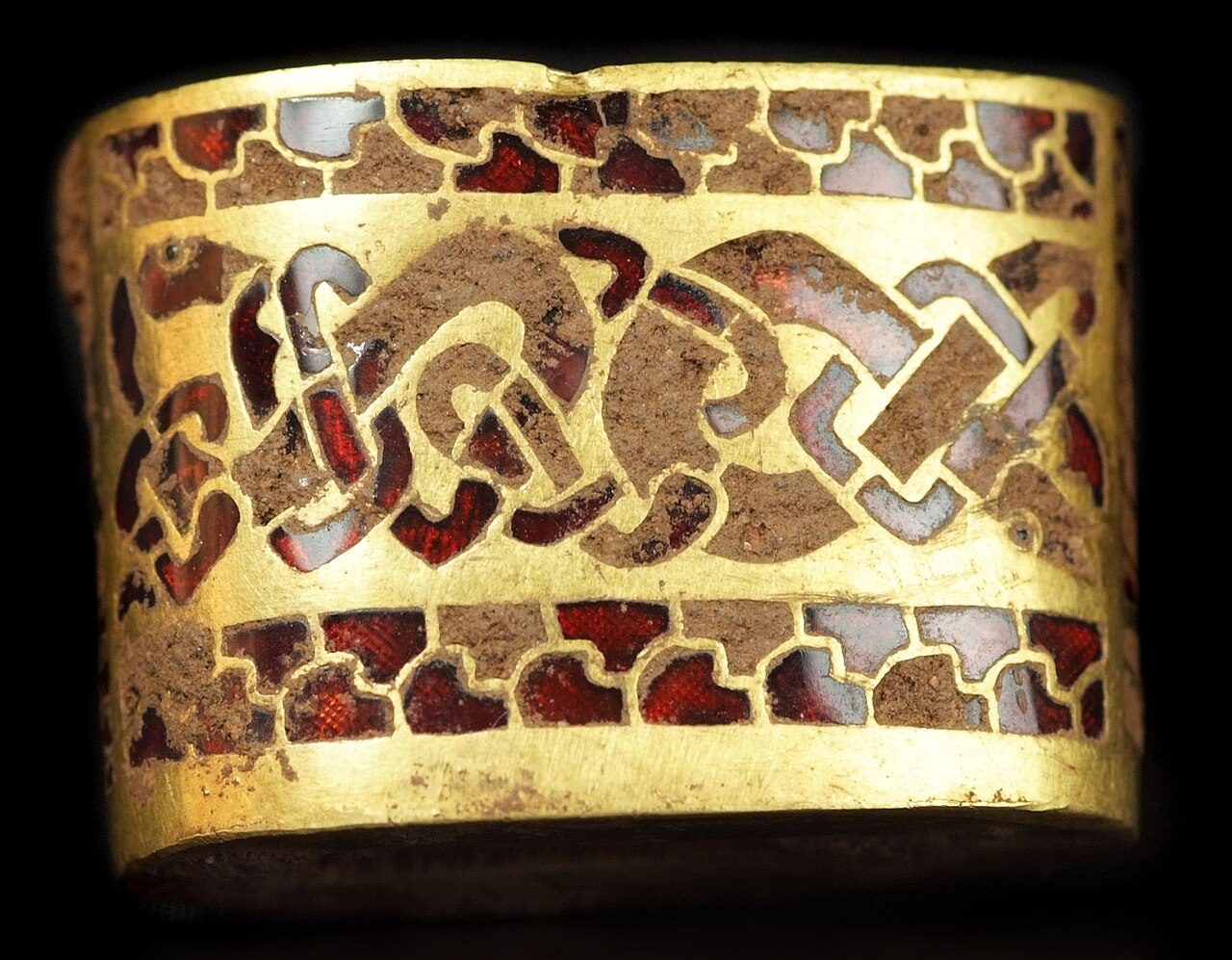
Photo: portableantiquities, CC BY 2.0, via Wikimedia Commons
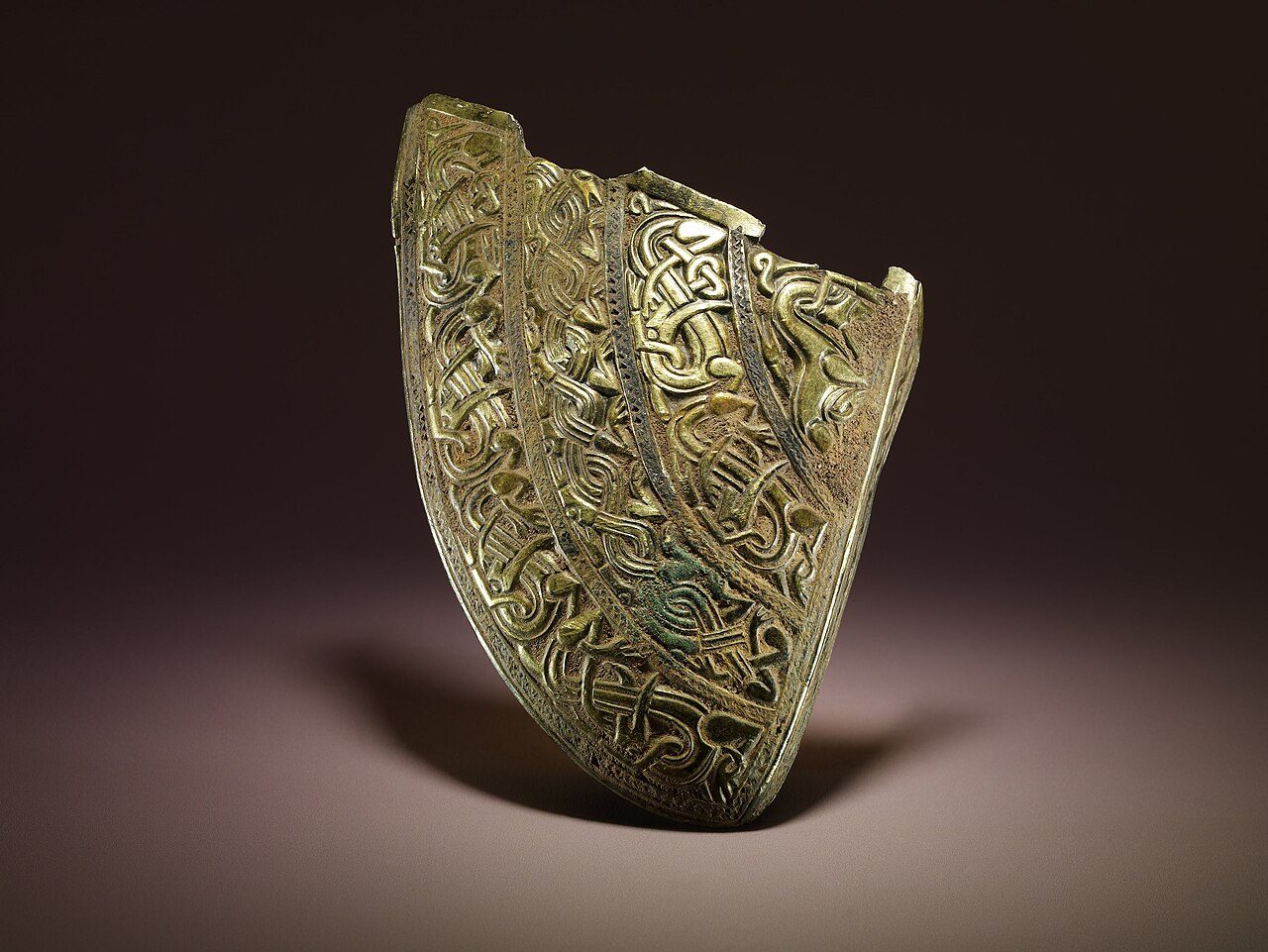
Photo: Flickr user "Portable Antiquities Scheme", CC BY 2.0, via Wikimedia Commons
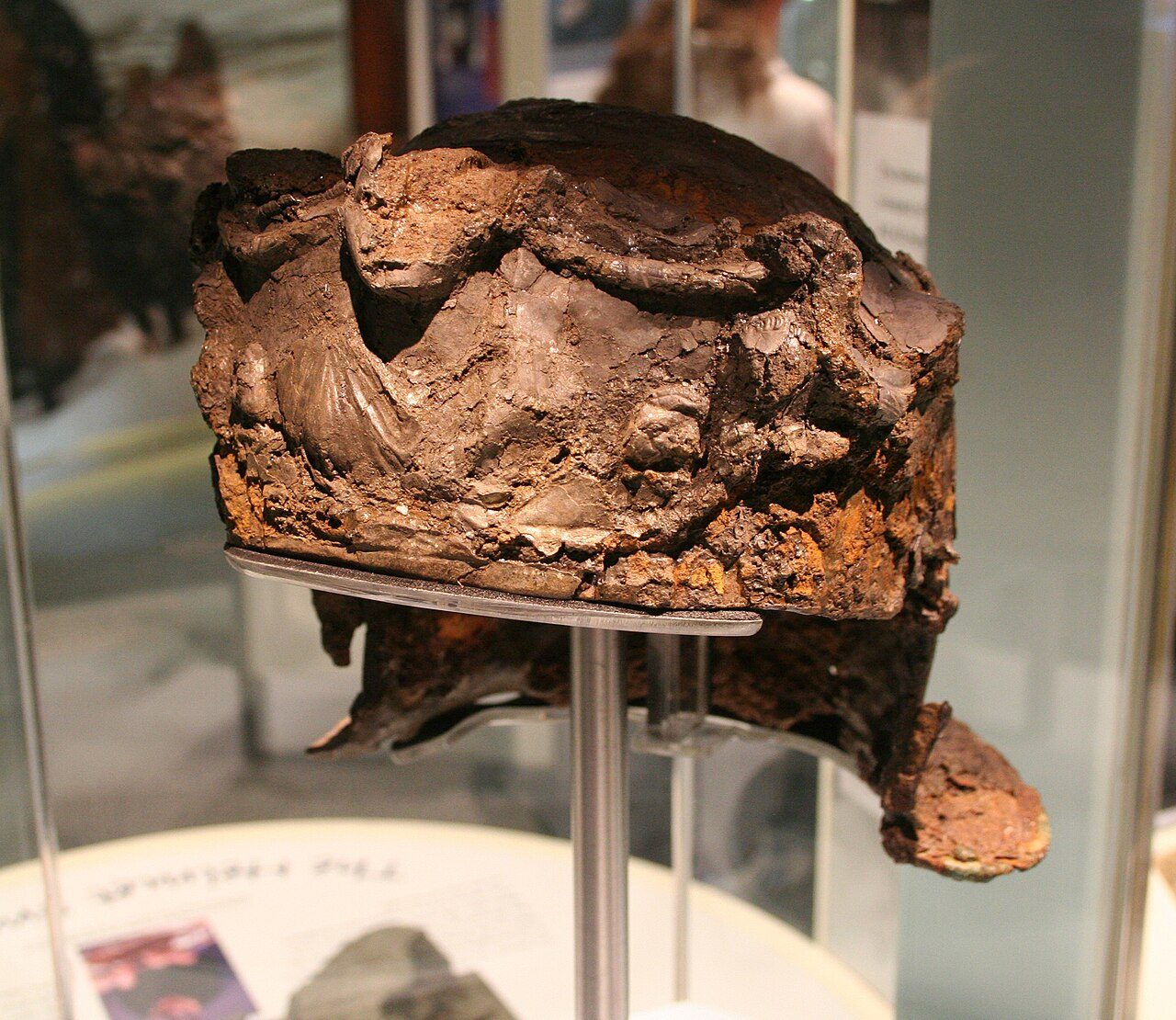
Photo: Prioryman, CC BY-SA 4.0, via Wikimedia Commons
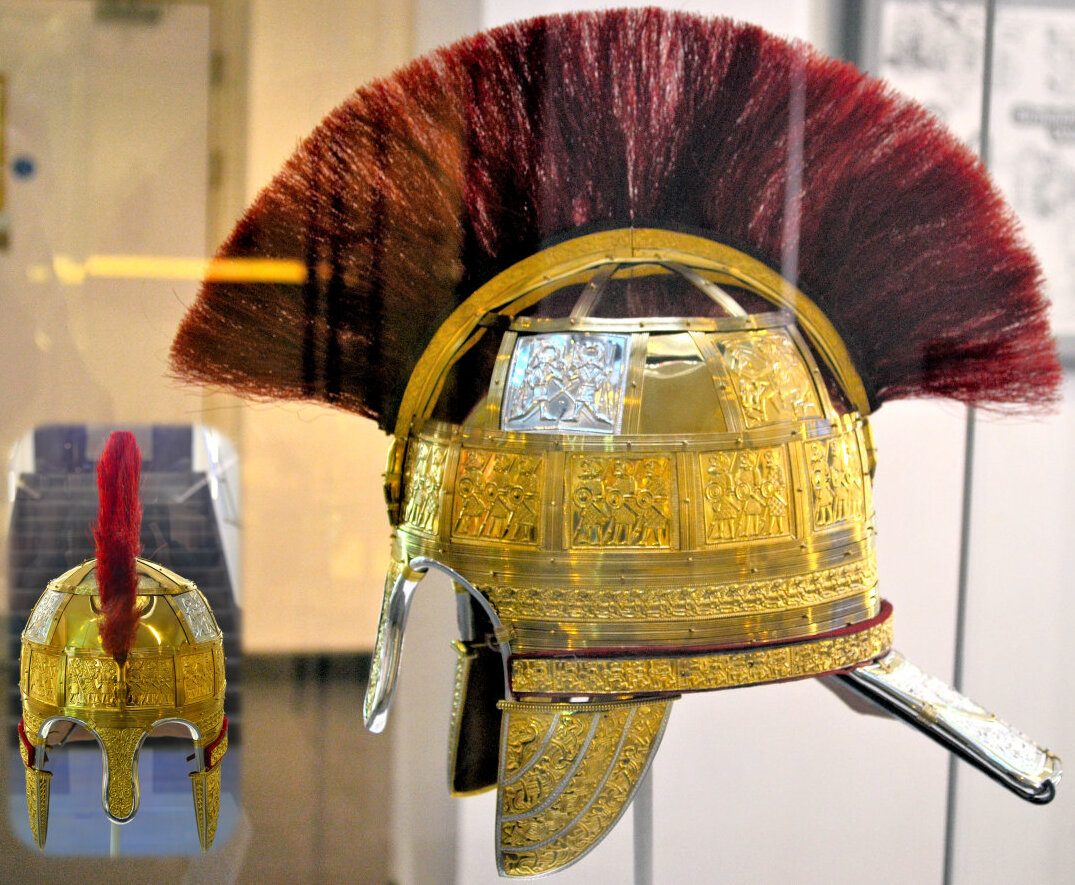
Photo: Juan Enrique Gilardi from Mar del Plata, Argentina, CC BY-SA 2.0, via Wikimedia Commons