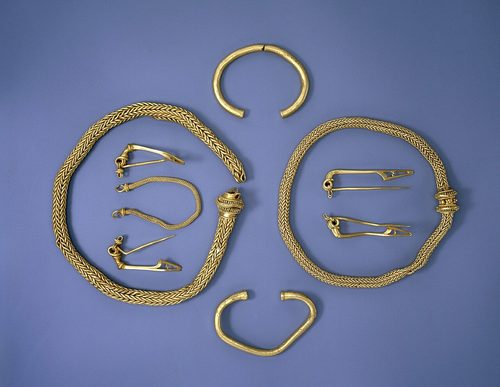
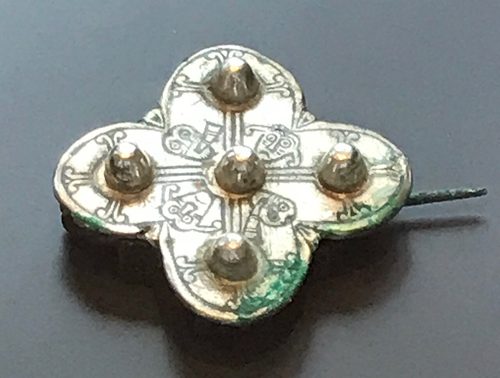
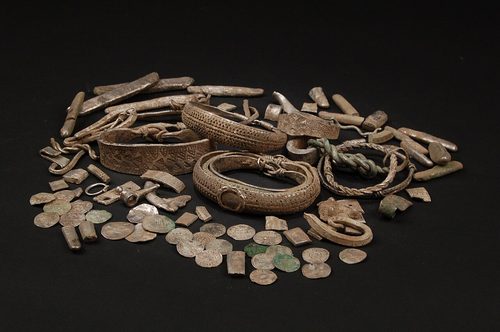
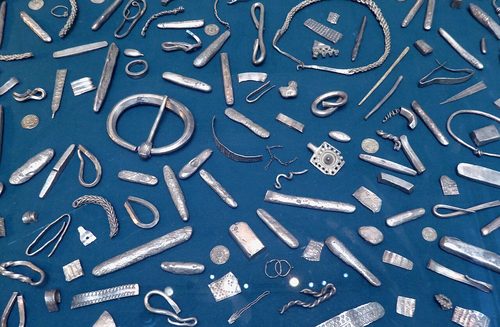
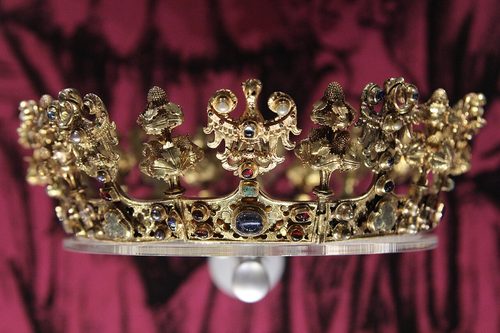
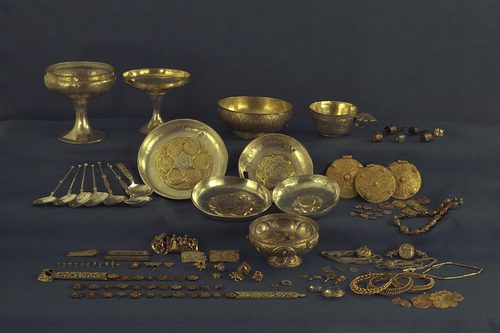
Dress fasteners that changed with every fashion, so they date the hoards they lie in: Roman fibulae, Pictish and Irish penannulars, Viking oval brooches.
Brooches are the archaeologist's clock. Before buttons, almost every cloak and dress was held together with a pin, and the shape of that pin changed with fashion every generation or two, so a brooch can often date a grave or a hoard to within a few decades. Most early European brooches work on the safety-pin principle: a pin held under tension by a coiled spring or swinging on a hinge, closing into a catch. Archaeologists call these fibulae. The earliest, the flat "violin-bow" type, appeared in Mycenaean Greece in the 14th century BC, and in Britain brooches came into common use in the Iron Age, from roughly 600 BC.
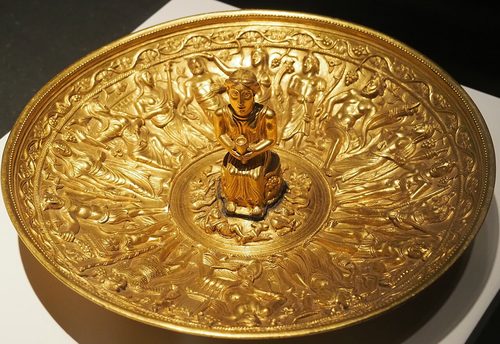
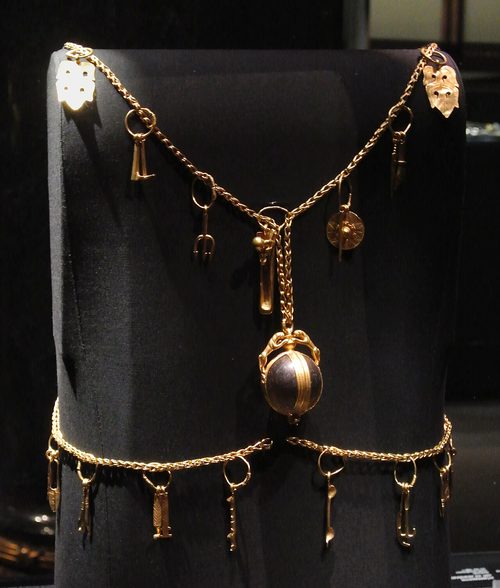
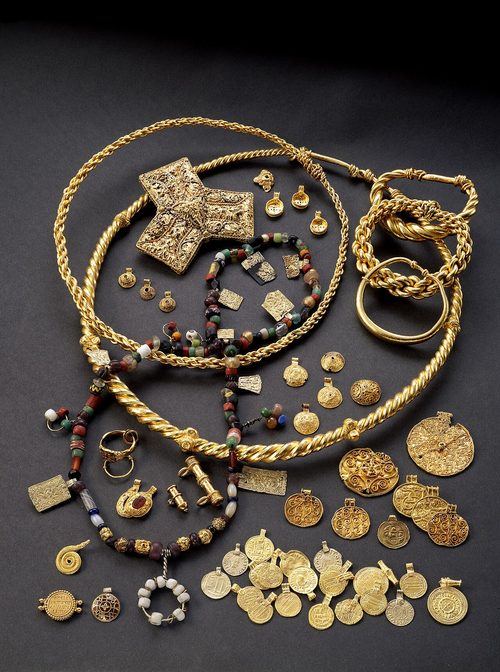
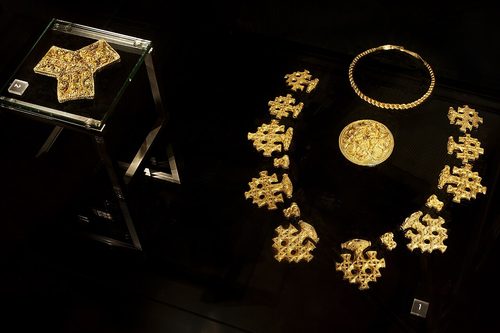
The Romans made fibulae by the million in bronze, and a few in silver and gold. In the 3rd century AD the crossbow brooch appeared, with a hinged pin set in a long cross-bar, and gold examples became badges of rank for officials and officers of the later empire. Germanic peoples of the Migration Period wore bow brooches, radiate-headed brooches and gem-set disc brooches, often in pairs at the shoulders; the hoards from Pietroasele and Szilágysomlyó contain jewelled gold brooches of this kind made for royal families.
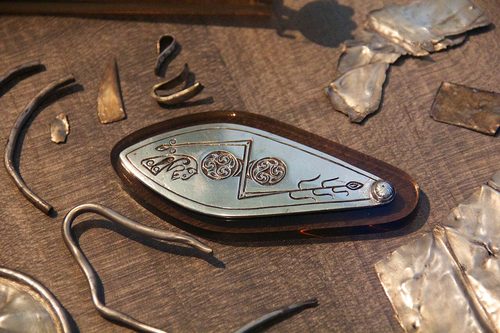
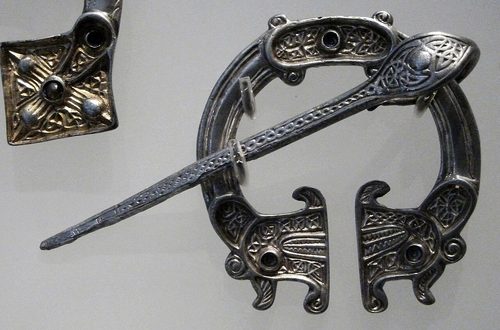
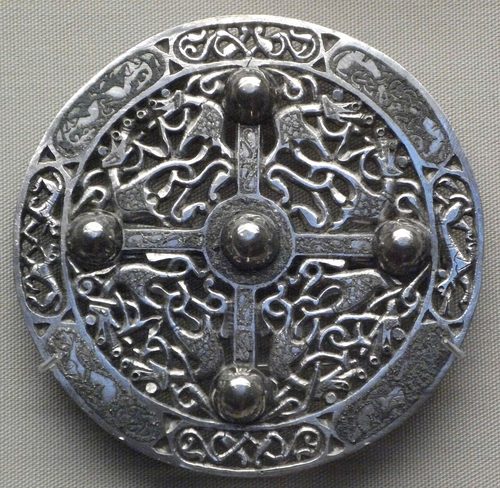
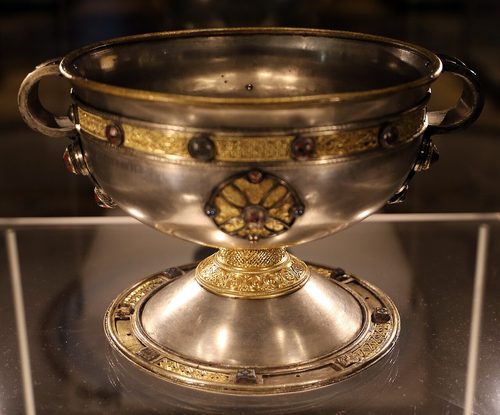
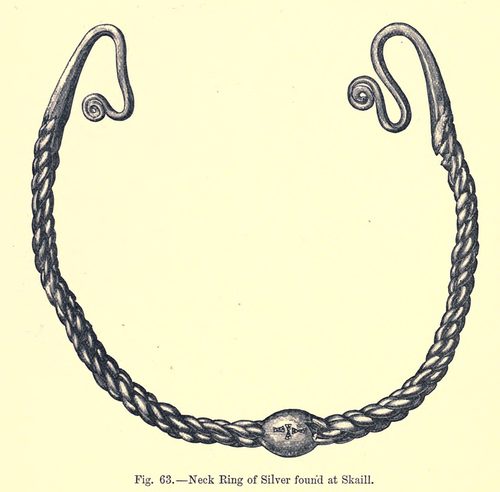
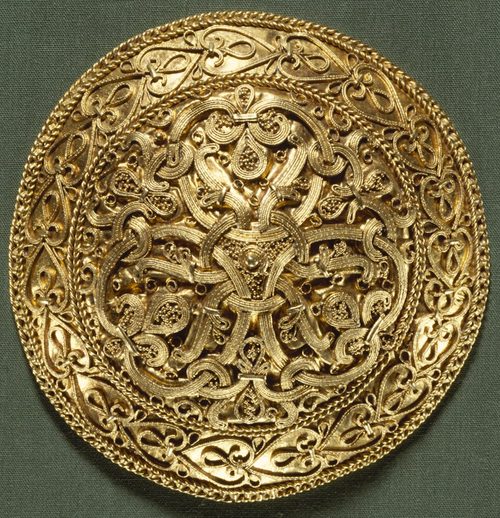
In Ireland and Scotland the plain open-ring or penannular brooch of the Roman period grew, between about 700 and 900, into some of the finest metalwork of early medieval Europe. The pin hangs from a ring, and on the true penannular there is a gap between the two decorated terminals for the pin to pass through. Scottish and Pictish brooches, such as the twelve buried under the chapel floor on St Ninian's Isle in Shetland, usually keep the gap; Irish brooches like the Tara Brooch close it, making a pseudo-penannular ring. They were made in many pieces of silver, often gilded and set with glass, amber and filigree panels. In Anglo-Saxon England, the fashion was for flat disc brooches, and the six openwork silver brooches from Pentney in Norfolk, made around 800 and buried in the 9th century, are among the best.
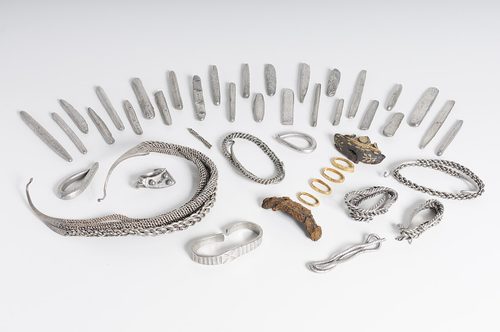
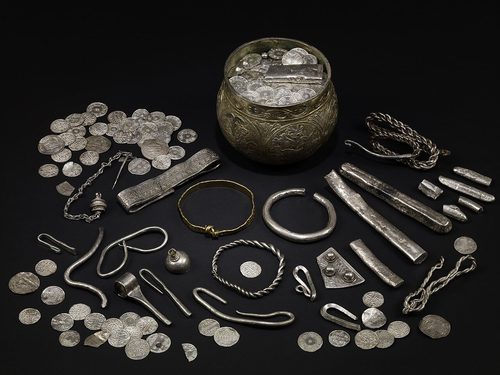
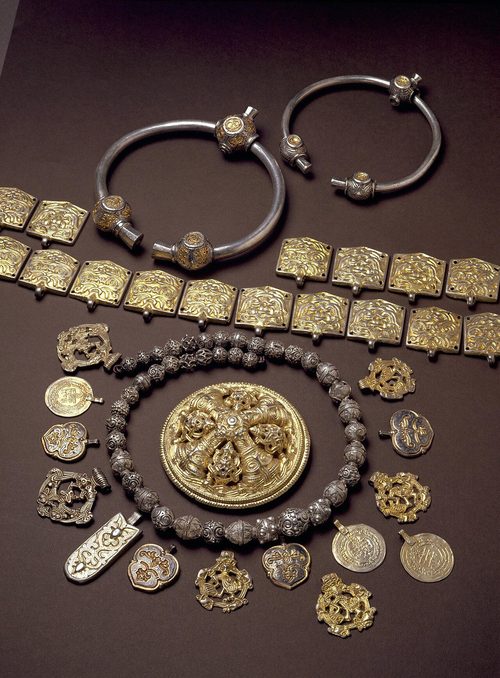
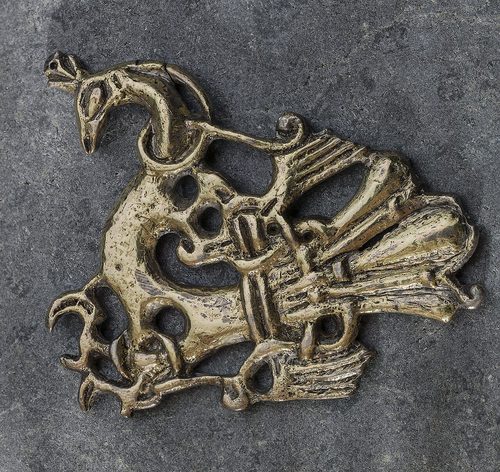
The Viking age changed the materials. With silver flooding in, Irish and Scottish smiths made heavy, plainer brooches of solid silver, including the thistle brooch, named after its ball-shaped terminals. Scandinavian women wore a pair of domed oval brooches on the upper chest to hold the straps of their dress, cast in bronze and often gilded. Big silver brooches had obvious bullion value, and fragments of them are common in hacksilver hoards, chopped up to make weight.
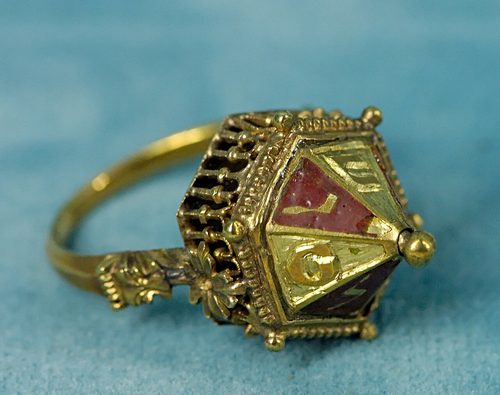
In the later Middle Ages, simple ring brooches in gold or silver, often inscribed with mottoes of love or faith, were worn by men and women alike, alongside grander gem-set brooches. Gem-set brooches are among the jewellery hidden by Jewish families in Erfurt and Colmar during the persecutions of 1348-49.
Examples
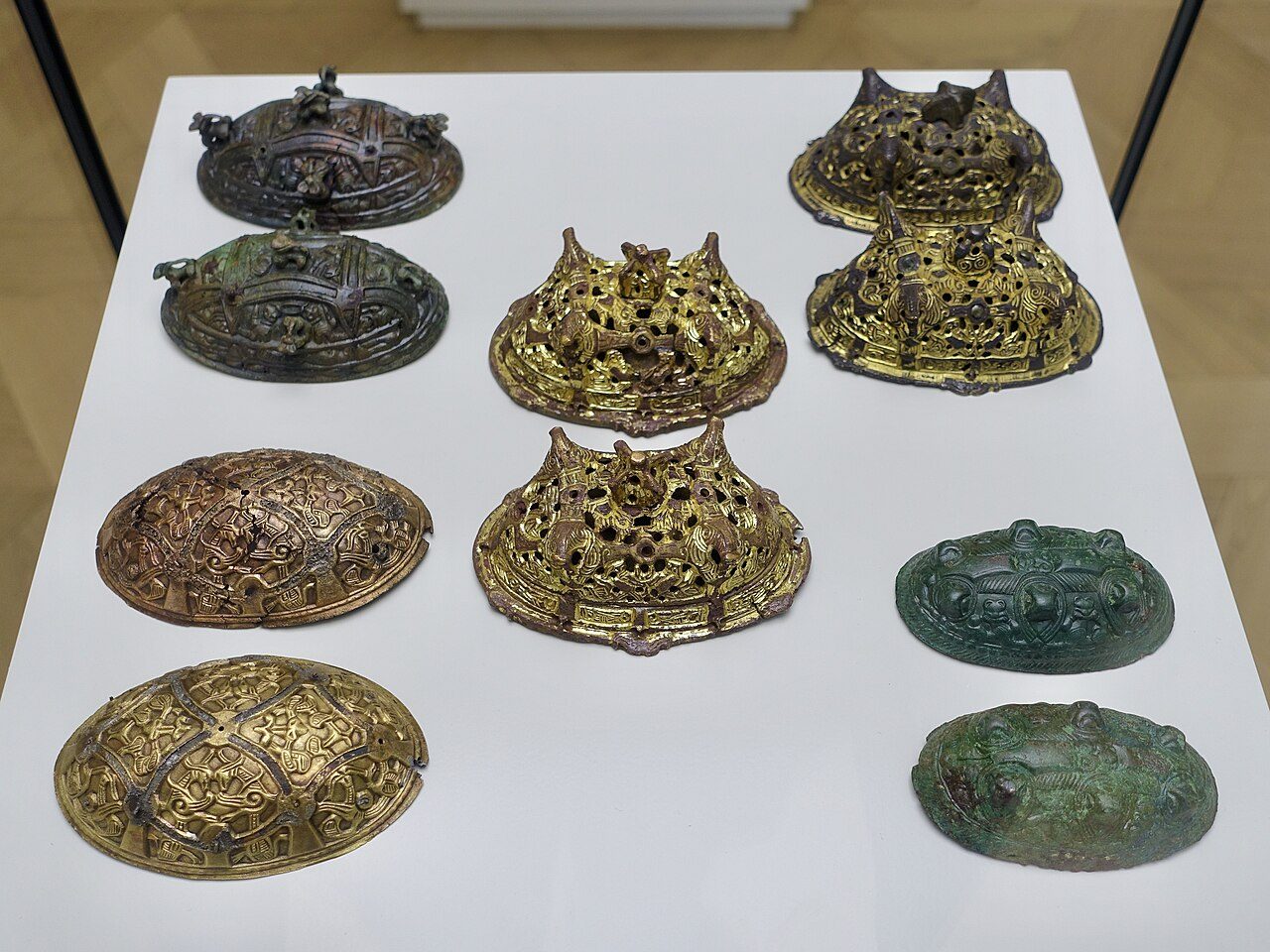
Photo: Wolfmann, CC BY-SA 4.0, via Wikimedia Commons
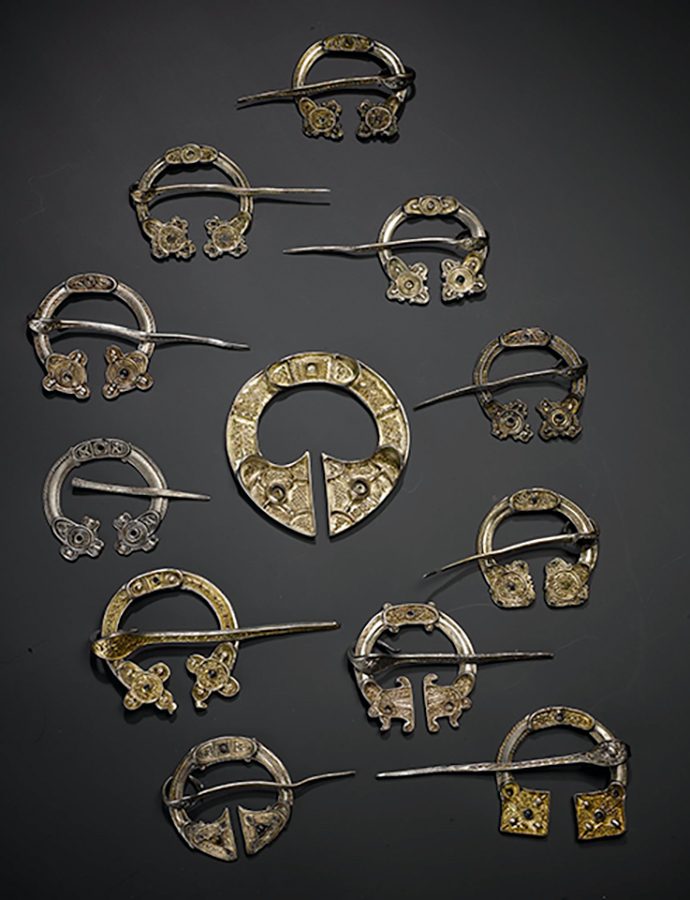
Photo: National Museums Scotland, CC BY-SA 4.0, via Wikimedia Commons
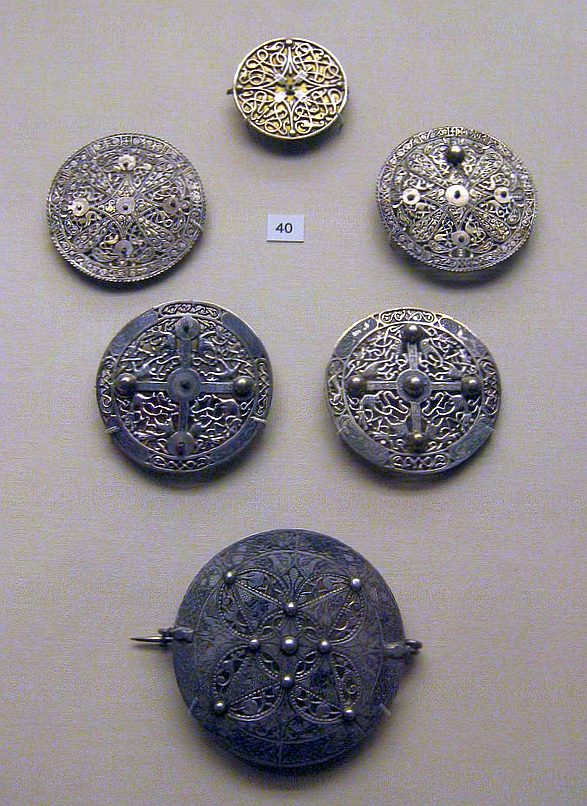
Photo: Claire H. from New York City, USA, CC BY-SA 2.0, via Wikimedia Commons
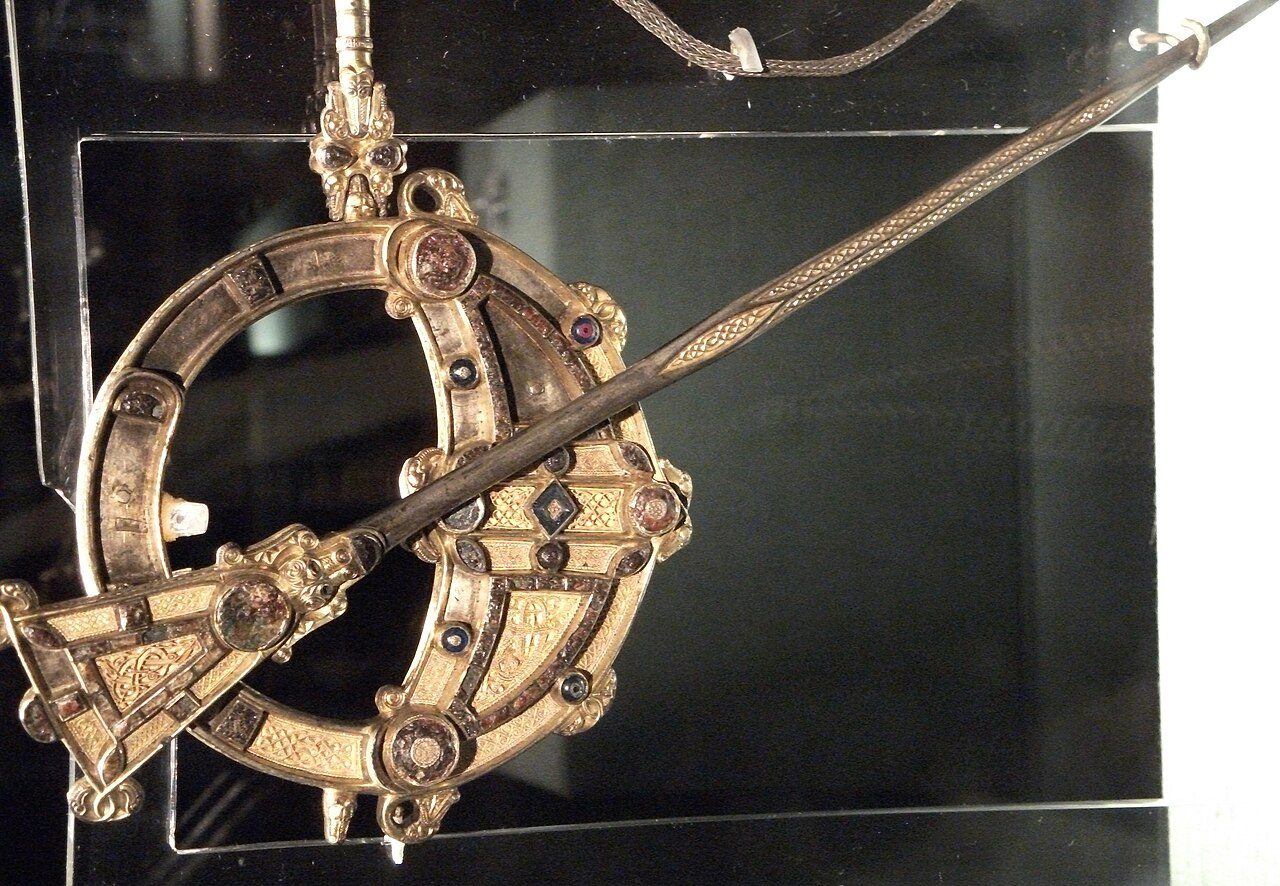
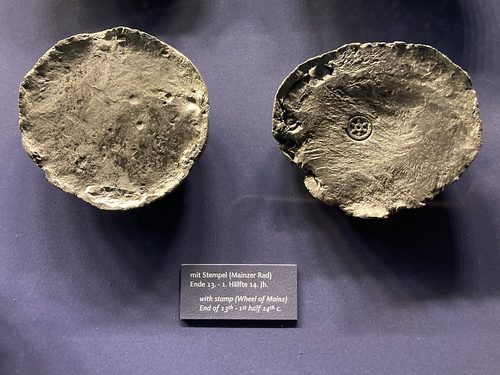
Photo: Johnbod, CC BY-SA 3.0, via Wikimedia Commons