Roman North Africa was one of the richest parts of the empire, yet it has yielded remarkably little of the silver its landowners must have eaten from. The exception is a small treasure found by chance on the Byrsa, the old citadel hill of Carthage later known as the Hill of St Louis, in the middle of the nineteenth century. Nobody recorded exactly when or how; it surfaces in the record when the great British Museum collector Sir Augustus Wollaston Franks acquired most of it, and it came to the museum with his bequest in 1897. A few pieces went to the Louvre.
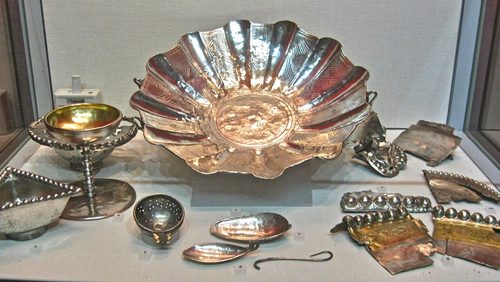
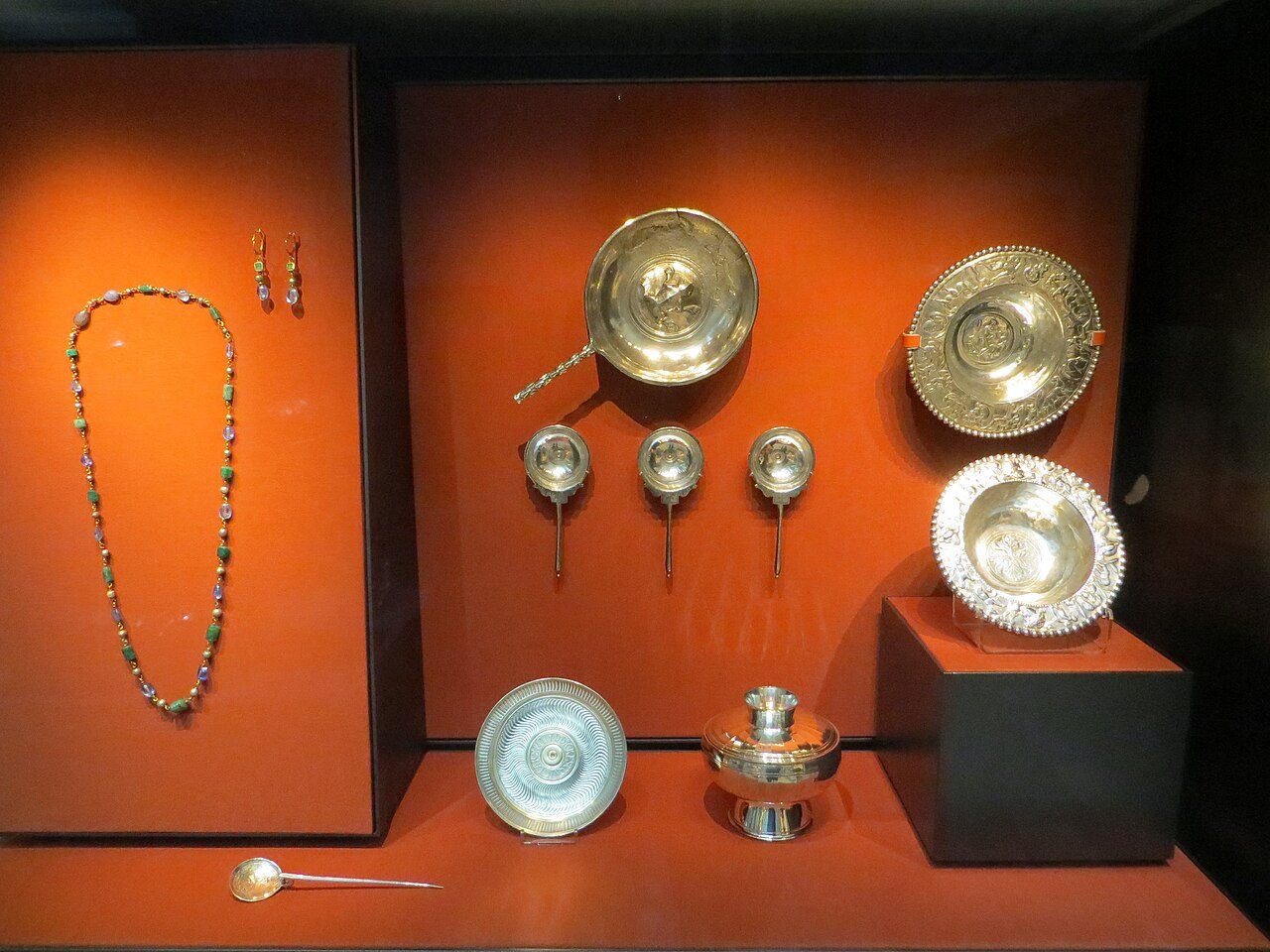
The treasure has 31 objects, modest beside the great Roman hoards of Britain and Gaul but chosen with taste. It combines the two halves of a Roman household's plate: the drinking service and the dining service. There are two flat dishes, two bowls with lively reliefs of shepherds and flocks round their rims, four tall-footed hemispherical bowls, a dozen spoons and a shallow patera with a frog engraved at its centre, an unusual and appealing motif.
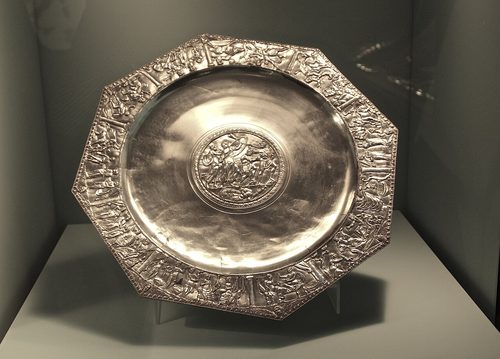
One dish carries the key to its owners. Around its centre runs the inscription D D I CRESCONI CLARENT, read as a gift to the illustrious Cresconii. The Cresconii were a prominent Carthaginian family of the late Roman period, known from records of office-holders and churchmen, and the hoard is generally taken to be theirs. One spoon carries a Christian monogram, so the family was probably Christian.
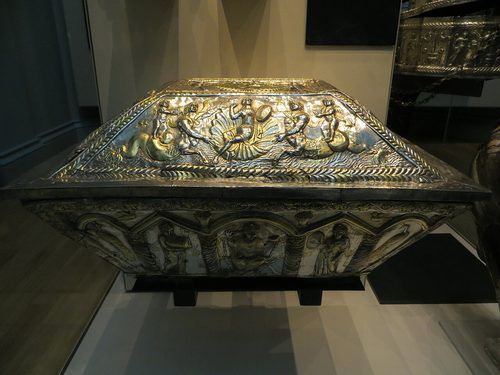
The jewellery adds colour. A matching set of a necklace and earrings combines polygonal emeralds, sapphires and pearls on gold links; such gems were later restricted to imperial use. With it are a gold necklace, a ring, a cameo and engraved gems. The lidded bowls, about 12 cm high, are cleverly designed: the knob on the lid doubles as a foot, so the lid can be turned over and used as a dish. Close parallels have been found at Viminacium on the Danube.
Why the family buried their silver is not known. The usual suspects are religious strife in Africa around 400 and, more likely, the Vandal invasion: Gaiseric's army crossed from Spain in 429 and captured Carthage in 439, making it the capital of a Vandal kingdom. The French specialist François Baratte, who published the treasure with three colleagues in 2002, would place the hiding in the course of the fifth century. Whoever hid it did not come back.
Small as it is, the Carthage Treasure is the most spectacular find of late Roman silver from Africa, and it shows that the provincial elite there owned silver of the same fashions and quality as their peers in Rome, Gaul and the Balkans.
Highlights
A flat silver dish with fluted decoration and the inscription D D I CRESCONI CLARENT around its centre, naming the family who probably owned the hoard.
Two bowls whose rims are chased with shepherds, flocks and rustic life in low relief.
A tall-footed silver bowl whose lid can be inverted to serve as a second dish; the only complete example of its kind.
Twelve emeralds, thirteen sapphires and 25 pearls joined by gold links, with matching earrings.
What is in it
A family's silver for dining and drinking, with jewellery: dishes, bowls with pastoral reliefs, lidded bowls, a frog patera, spoons, and a necklace of emeralds, sapphires and pearls.
Size: 31 objects.
| Item | Number | Notes |
|---|---|---|
| Dishes and bowls | 8 | Two flat dishes (one inscribed for the Cresconii), two bowls with pastoral reliefs and four footed hemispherical bowls, two with lids |
| Patera | 1 | A shallow handled bowl with a frog engraved in the centre |
| Spoons | 12 | Some with niello decoration and one with a Christian monogram |
| Jewellery | about 10 | Two necklaces, a pair of earrings, a ring, a cameo and engraved gems |
Photographs
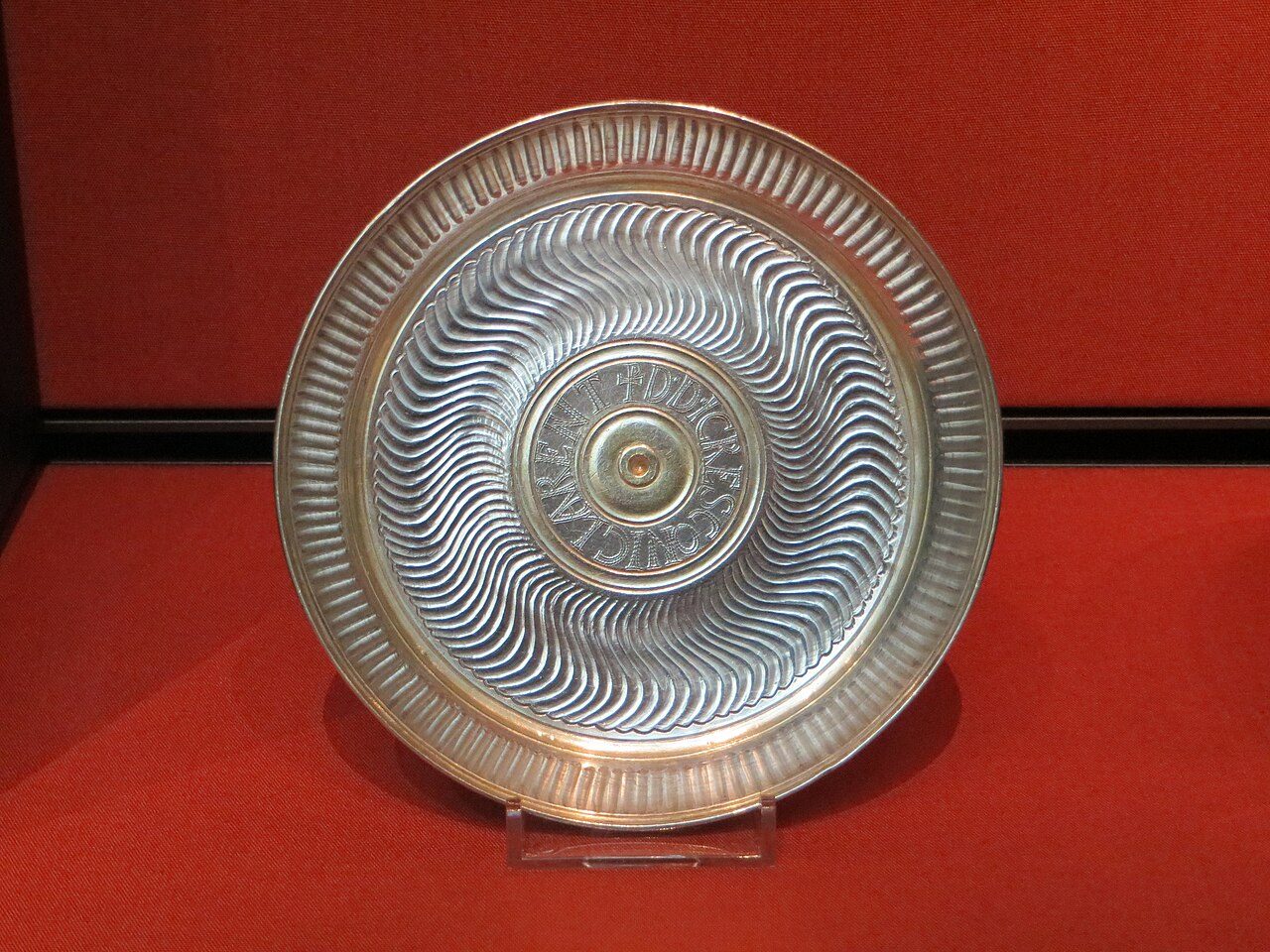
Photo: Jononmac46, CC BY-SA 3.0, via Wikimedia Commons
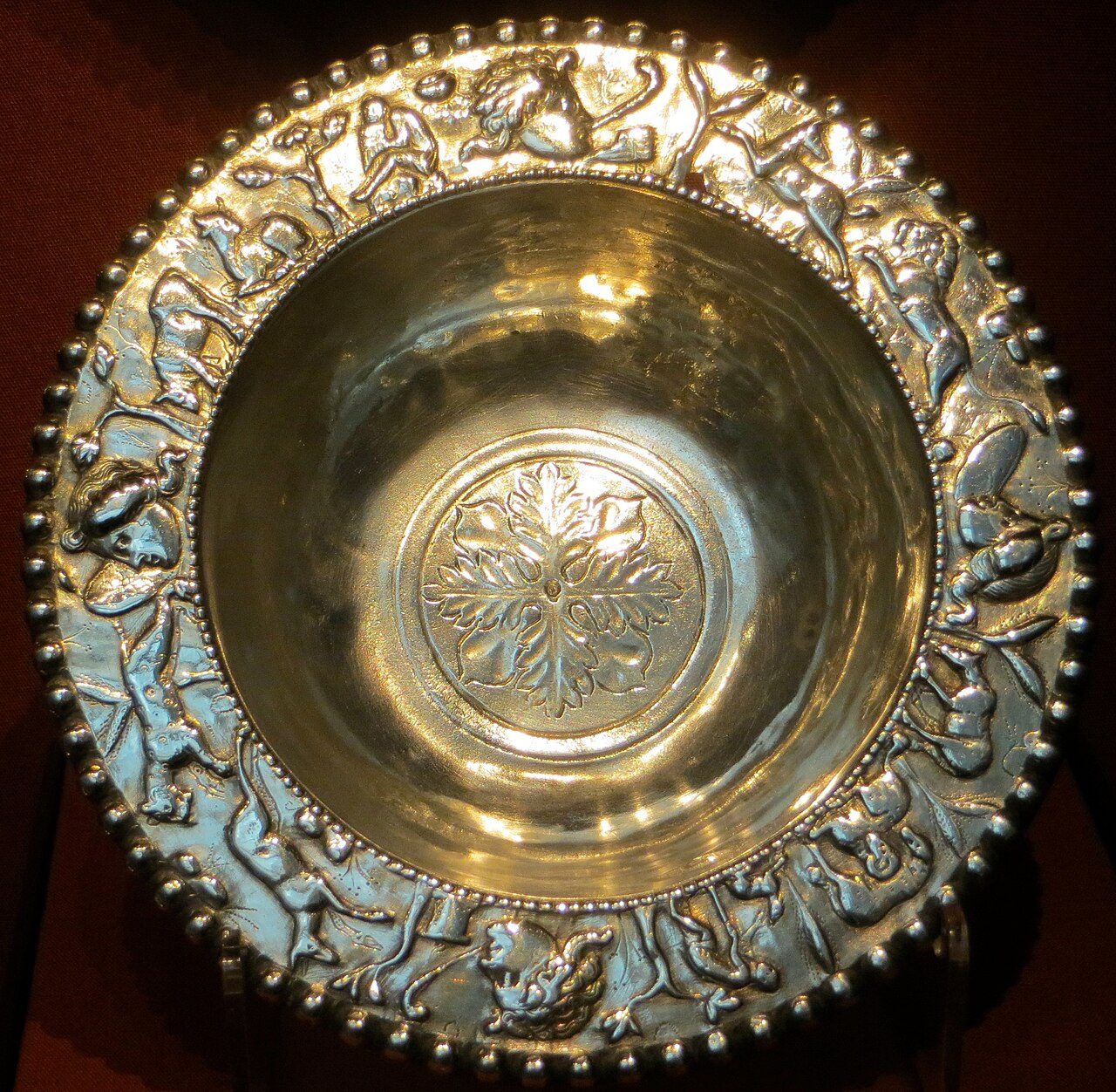
Photo: Jononmac46, CC BY-SA 3.0, via Wikimedia Commons
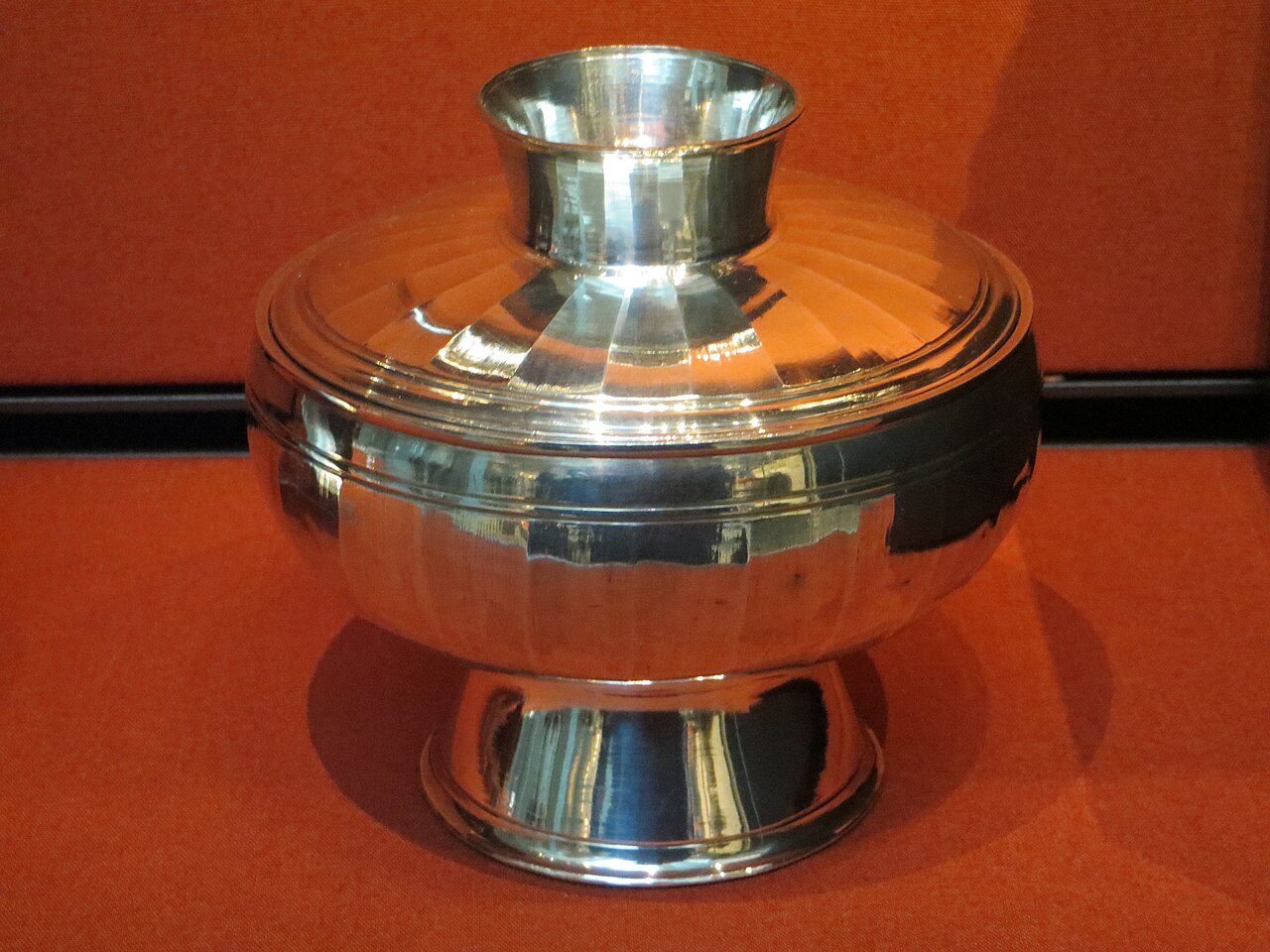
Photo: Jononmac46, CC BY-SA 3.0, via Wikimedia Commons
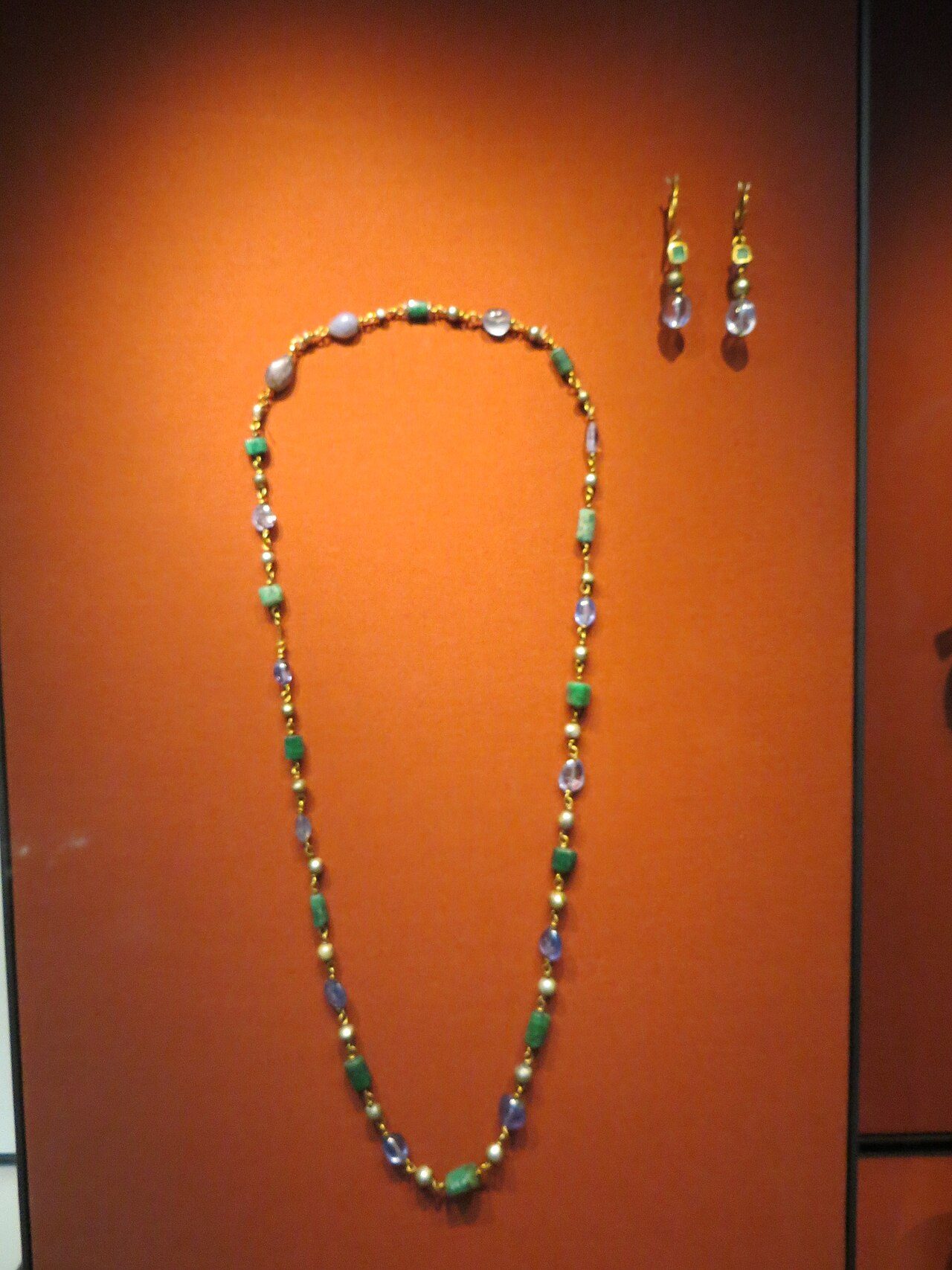
Photo: Jononmac46, CC BY-SA 3.0, via Wikimedia Commons
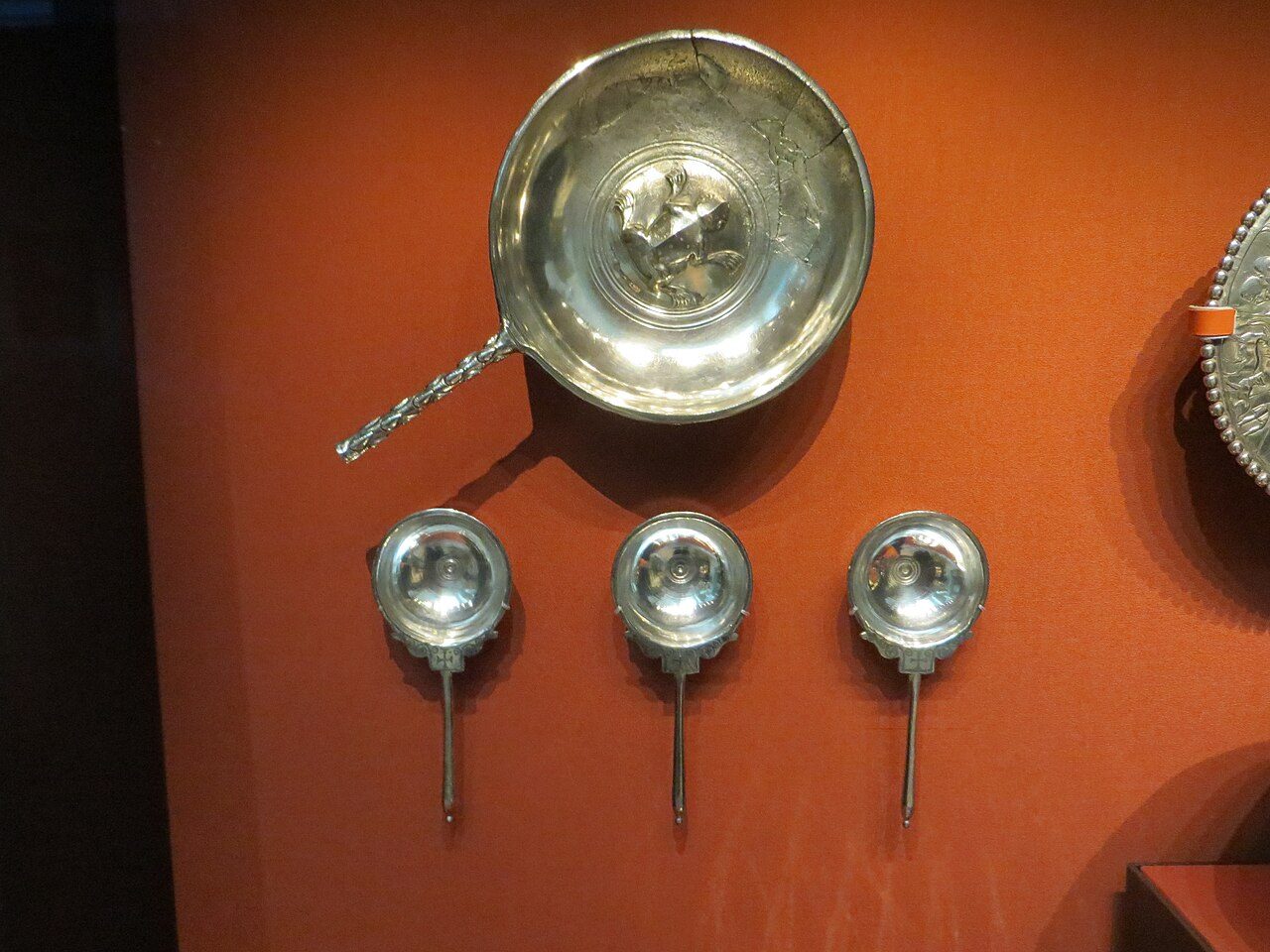
Photo: Jononmac46, CC BY-SA 3.0, via Wikimedia Commons
How it is dated
There are no coins. Style dates the silver to the later 4th or early 5th century, and François Baratte places the concealment in the course of the 5th century. A link with the Vandal capture of Carthage in 439 is plausible but unproven.
What happened after the find
Acquired privately in the 19th century; most of it came to the British Museum with the bequest of Sir Augustus Wollaston Franks in 1897.
Where sources differ
- The find year is not recorded; sources say only '19th century' or 'mid-19th century'. 1850 is used as a placeholder year for the timeline.
- Date of the silver: Wikipedia says the second half of the 4th century, British Museum labels (as transcribed on World History Encyclopedia) around 400.
- The burial date and reason (religious unrest around 400 or the Vandal conquest of 429-439).
- The reading of the inscription ('Gift given to the distinguished Cresconii') follows British Museum label text as transcribed by World History Encyclopedia.
- Which pieces the Louvre holds was not checked against the Louvre's own database.
Questions
Where is the Carthage Treasure?
Most of it is in the British Museum in London, which received it in 1897 through the bequest of Sir Augustus Wollaston Franks. A few pieces, including one of the lidded bowls, are in the Louvre in Paris.
Who owned the Carthage Treasure?
An inscription on one dish names the Cresconii, a leading family of late Roman Carthage, and the treasure is generally attributed to them.
When was the Carthage Treasure buried?
Probably in the 5th century. The Vandal invasion of Africa, which reached Carthage in 439, is a likely occasion, but no coin or record fixes the date.
Sources
- Carthage Treasure (Wikipedia)
- Baratte, Lang, La Niece and Metzger, Le trésor de Carthage (2002), publisher's summary (Centre Camille Jullian)
- Inscribed Dish from the Carthage Treasure (World History Encyclopedia)
- Silver Lidded Bowl from the Carthage Treasure (World History Encyclopedia)
- Wikidata Q16825760 (CC0)