Traprain Law, a prominent hill in East Lothian, carries a hillfort that in the Roman Iron Age was a major local political centre, well north of Hadrian's Wall. Excavations there have produced a wealth of Roman finds, evidence of long contact with the Empire. On 12 May 1919, during excavations on the upper part of the hill, the diggers came on a pit dug inside a cluster of houses. In it was a heap of flattened, folded and cut-up silver.
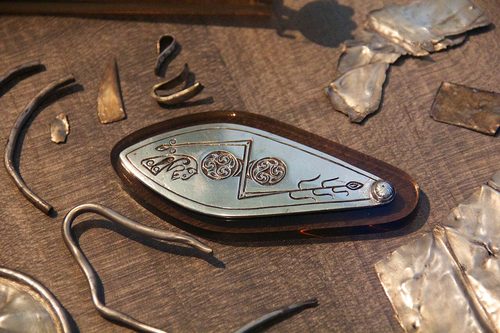
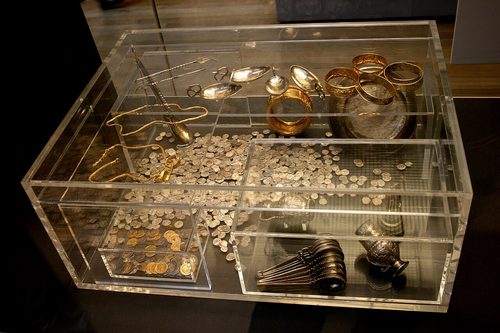
Weighing just over 23 kg, it is the largest hoard of Roman hacksilver yet known. Most of it was once high-status Roman tableware: platters and bowls for serving food at feasts, cups and jugs for wine, and spoons. There is also silver from the bath and dressing table, such as fluted basins, cosmetic pots and mirror fragments, a few belt fittings and a brooch, and a handful of silver siliquae of Valens, Arcadius and Honorius, all clipped in the way typical of Britain after Roman rule ended.
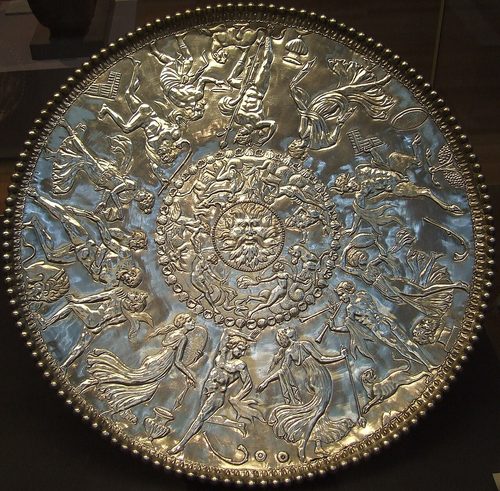
Many owners are represented. Different sets have been mixed, and graffiti on the vessels record a number of names. The decoration is a mixture too: a jug carries scenes from the Old and New Testaments, while other pieces show pagan figures such as Venus rising from the sea.
Early scholars saw the treasure as barbarian loot, Roman plate grabbed in a raid south of the Wall and chopped up by people who cared only for the metal. Closer study has changed that picture. Many of the cuts were made carefully, and some groups of fragments match Roman weight standards closely; one set of dish fragments weighs almost exactly eight Roman ounces. That suggests the silver had already been turned into bullion inside the Roman world, perhaps in a financial crisis, and was then sent north as payment, perhaps a diplomatic gift to a friendly ruler or wages for military service. Some pieces were cut more than once, as if they had passed through several hands.
On Traprain Law the silver was valued as raw material. Crucibles from the hill show that silver was worked there, and the finds from Traprain include a massive silver chain probably made from reused Roman silver. Traprain is therefore a key to how Roman wealth seeded the early medieval silver jewellery of Scotland.
After the find the Edinburgh silversmiths Brook & Son annealed and reshaped many pieces back to their original form, sometimes smoothing away the cut marks, and also sold replicas, a few adapted to modern taste. The National Museum of Scotland has shown the treasure almost continuously since 1920.
Highlights
A nearly complete silver flagon decorated with scenes from the Old and New Testaments, a reminder that Christian and pagan silver ended up in the same melting pot.
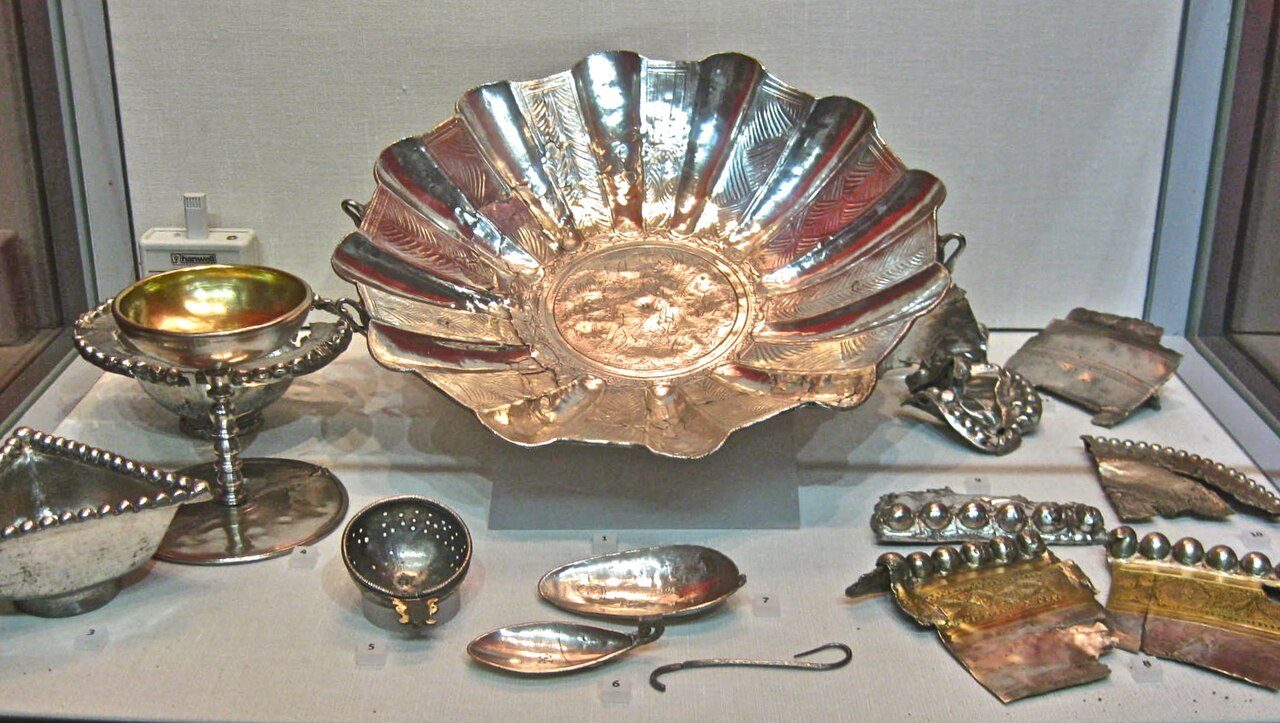
A complete fluted silver bowl, a type used for washing hands at the table and found also in the Mildenhall and Esquiline treasures.
A hacked piece of a silver plate showing Venus rising from the waves, cut through regardless of the image.
A beaded triangular dish and pedestalled cups, restored by Brook & Son after the find.
What is in it
Late Roman silver tableware and toilet vessels from many different sets, mostly cut into pieces or flattened, with a few complete vessels, personal fittings and clipped silver coins.
Size: several hundred pieces (over 250 to 327, depending on the count). Weight: just over 23 kg.
| Item | Number | Notes |
|---|---|---|
| Tableware | most of the hoard | platters, bowls, cups, jugs, ladles and spoons, mostly cut up |
| Toilet silver | several | fluted wash basins, cosmetic containers and mirror fragments |
| Personal items | a few | belt fittings and a brooch |
| Siliquae | a few | clipped silver coins of Valens, Arcadius and Honorius |
Photographs
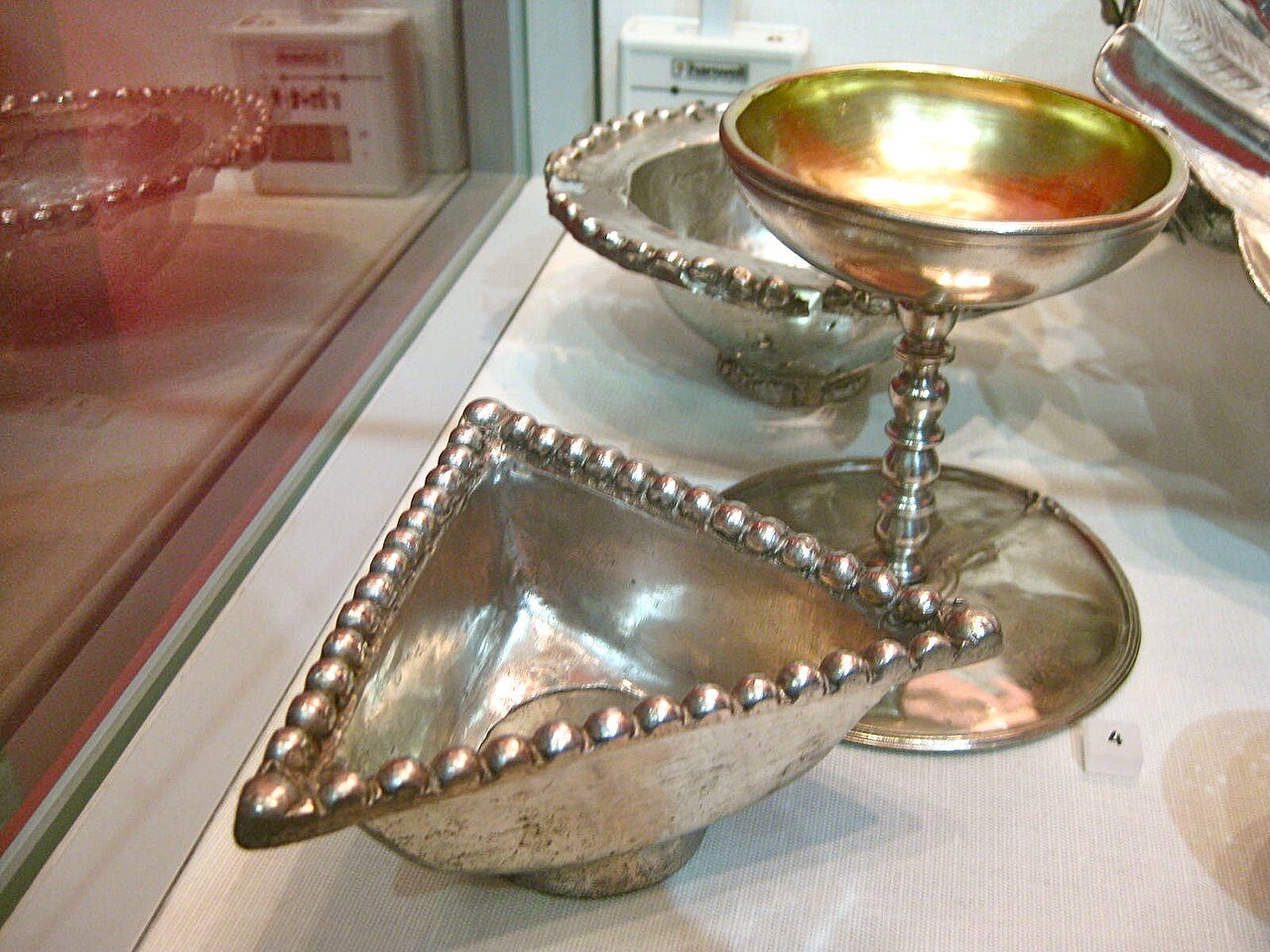
Photo: Tyssil, CC BY-SA 4.0, via Wikimedia Commons
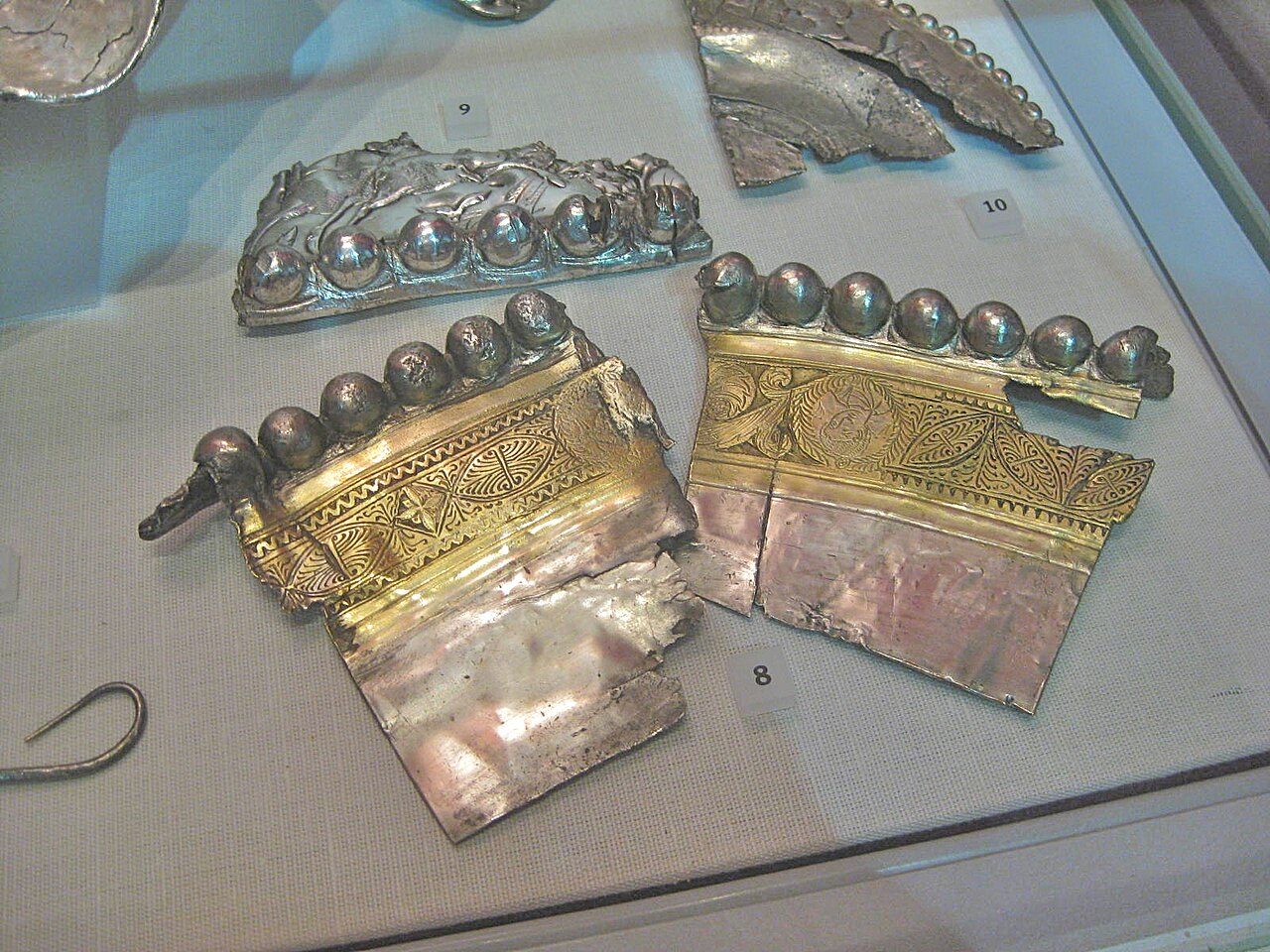
Photo: Tyssil, CC BY-SA 4.0, via Wikimedia Commons
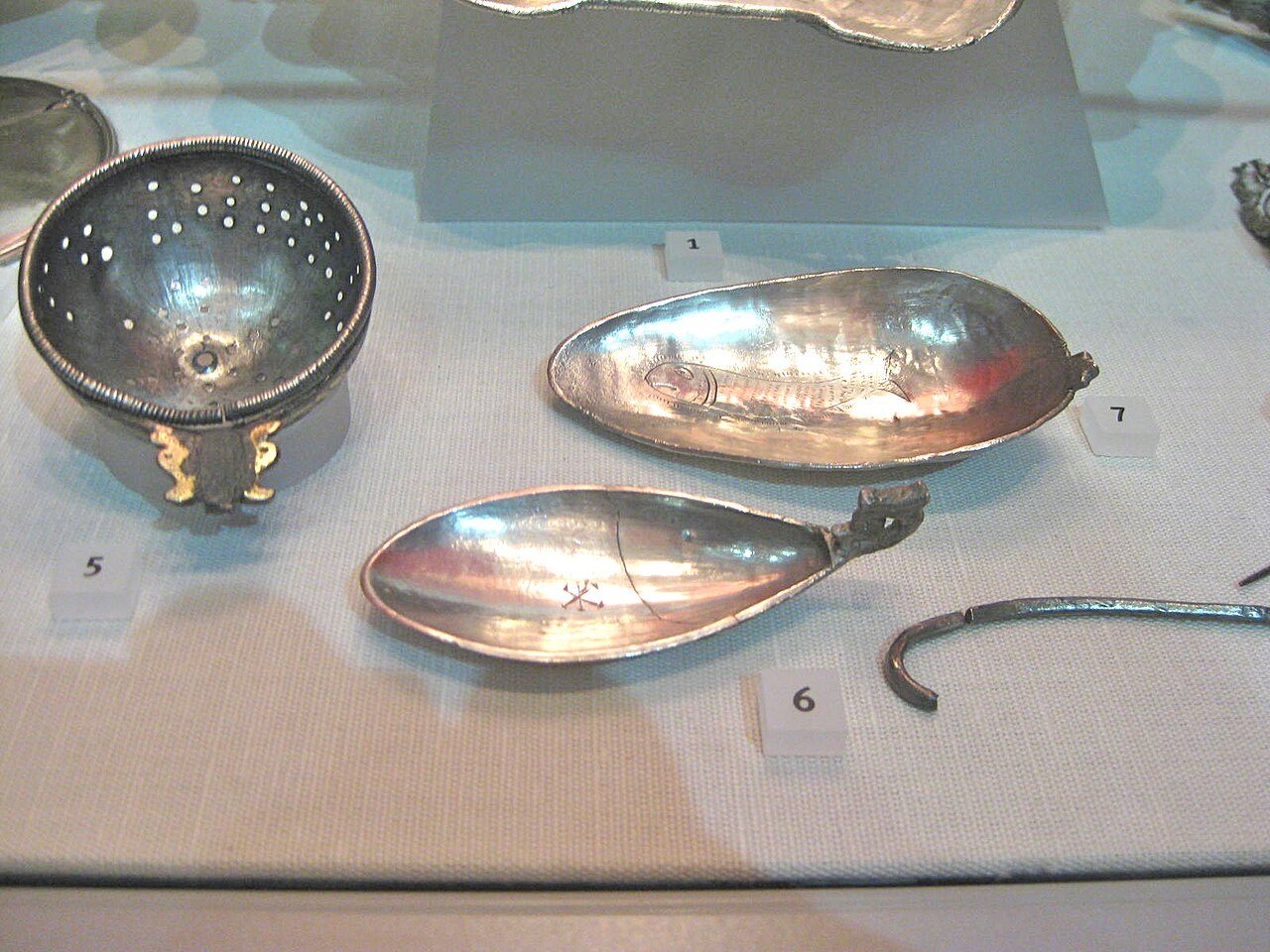
Photo: Tyssil, CC BY-SA 4.0, via Wikimedia Commons
How it is dated
The latest coins are clipped siliquae of Arcadius and Honorius (emperors from 383 and 393), and clipping of this kind is typical of Britain after formal Roman rule ended, which takes the burial into the 5th century. The National Museum of Scotland dates the deposit to around the middle of the 5th century; Wikipedia gives the early 5th century.
What happened after the find
Found during an archaeological excavation in 1919; the treasure has been in the national collection in Edinburgh since then.
Where sources differ
- Weight: just over 23 kg (Wikipedia; Current Archaeology) versus 22 kg (a National Museums Scotland page seen only as a search extract).
- Number of fragments: over 250, over 300 and 327 are all quoted.
- Burial date: early 5th century (Wikipedia) or around the middle of the 5th century (National Museums Scotland, via search extract).
- Loot, diplomatic payment or military pay: the purpose of the silver is debated.
Questions
Where is the Traprain Law Treasure?
In the National Museum of Scotland in Edinburgh, which has displayed it almost continuously since 1920.
What is hacksilver?
Silver objects cut or broken into pieces and used for their metal value rather than as finished objects. At Traprain the pieces were Roman plate, often cut to standard Roman weights.
Was the Traprain Law Treasure loot?
That was the first explanation, but many scholars now think it was bullion sent north by the Romans as diplomatic gifts or payment for military help.