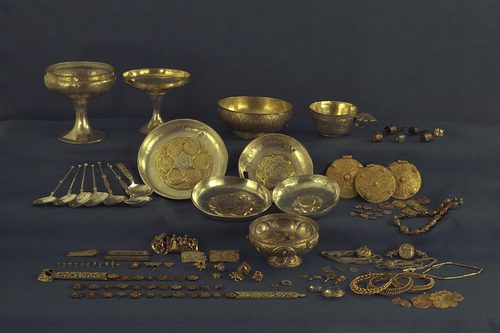
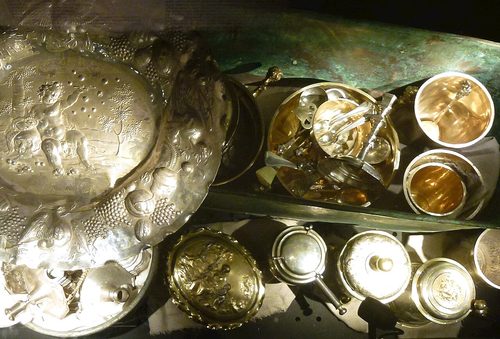
Dishes, bowls, spoons and pepper-pots: how Roman silver plate was made, weighed and stamped, and why so much of it ended up buried or cut to pieces.
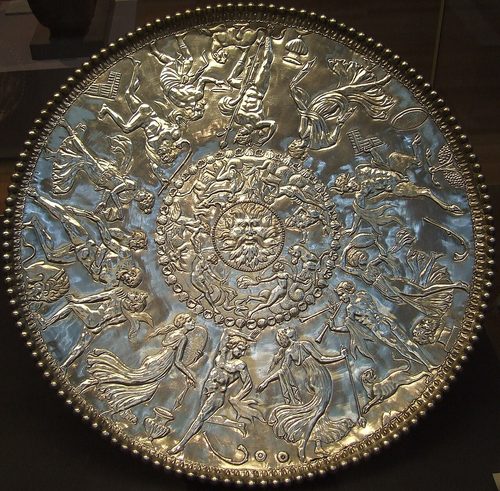
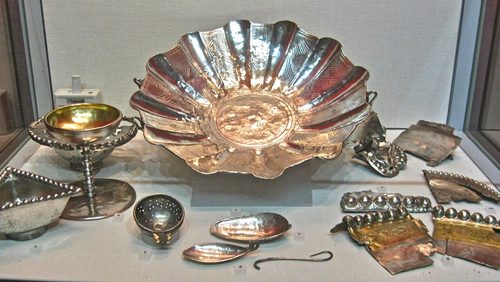
The Mildenhall Great Dish is 605 mm across and weighs a little over 8.2 kg: a sea-god's face at the centre, a ring of sea creatures, and an outer frieze of Bacchus, Hercules and dancing followers, all worked into the silver from the front. Pieces like it were the most visible form of wealth a Roman household owned. They were laid out at dinner, given as political gifts, and counted at their bullion weight as part of the family's capital.
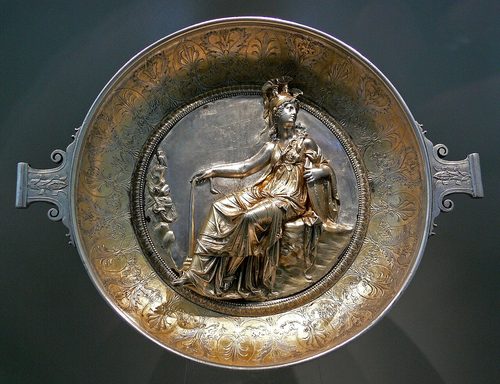
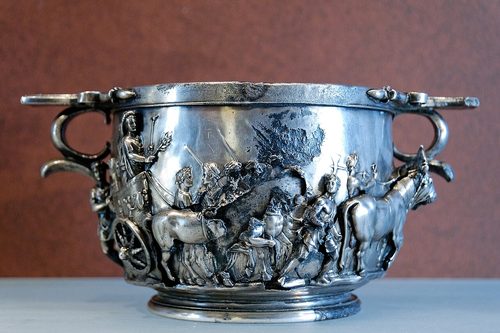
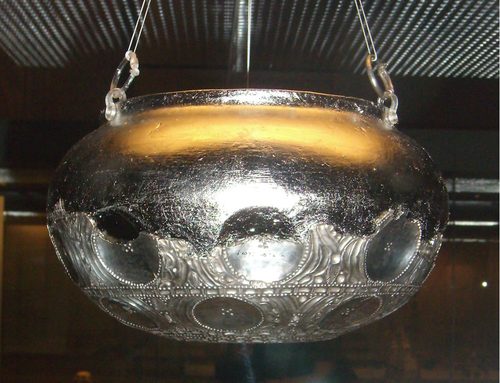
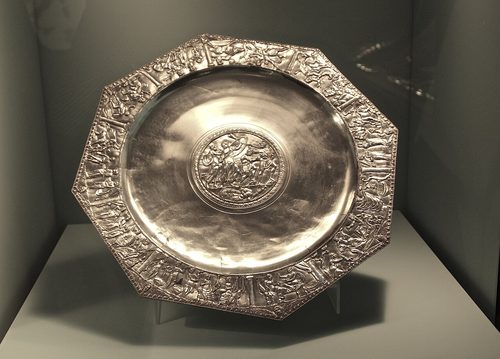
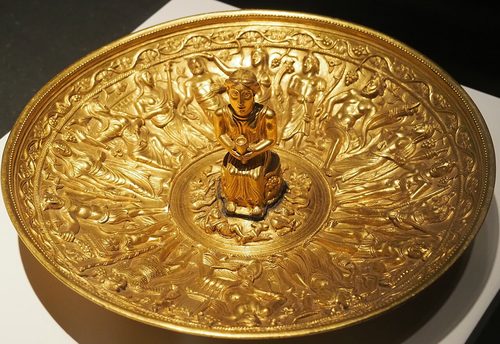
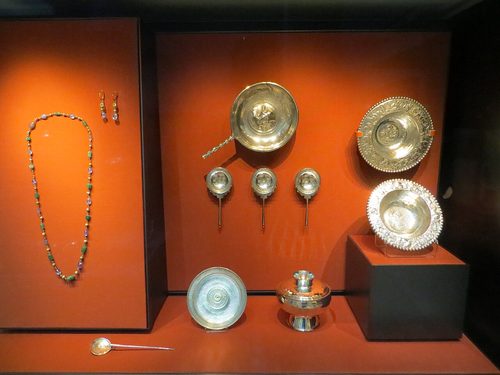
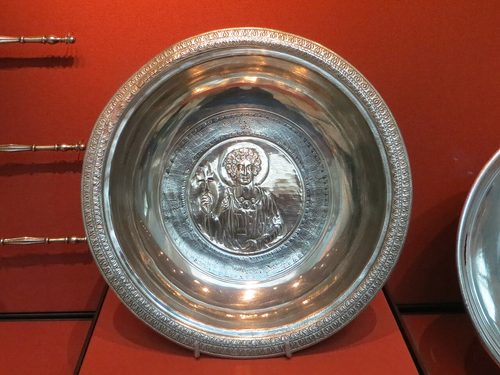
Most Roman plate was raised or cast from a silver alloy of high purity, then turned on a lathe, chased and engraved. Relief was added by chasing from the front, by hammering out from behind, or by soldering on separately cast medallions; gilding and black niello inlay picked out details. Because owners thought in weight as much as in looks, many large dishes carry weight inscriptions scratched lightly under the base, sometimes recording a whole set rather than the single piece. From the 6th and early 7th centuries, Byzantine silver often bears official control stamps, up to five punched marks with names and monograms; on the David Plates from Cyprus they date the set to between 613 and 630.
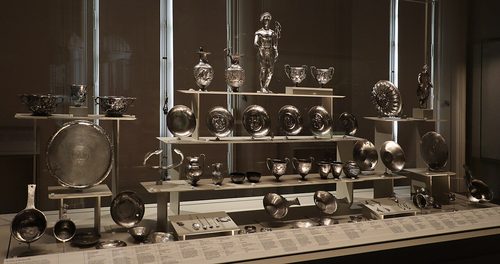
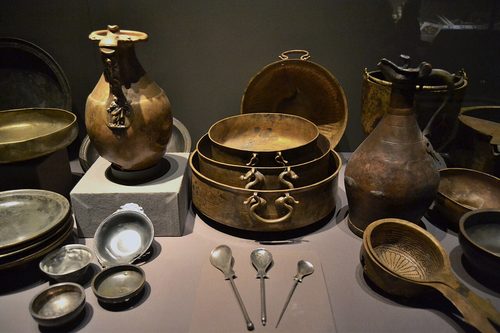
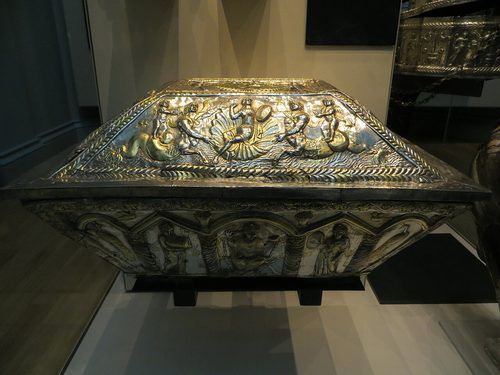
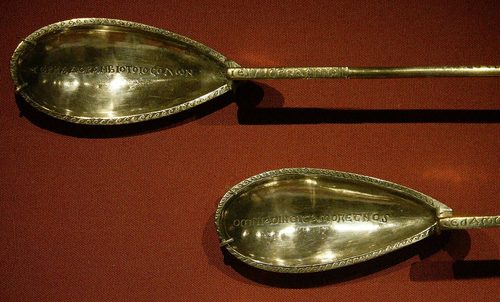
The early empire is best represented by the about seventy drinking and dining vessels of the Hildesheim Treasure, found by Prussian soldiers in 1868 and mostly of the 1st century AD, and by the silver buried at Boscoreale when Vesuvius erupted in 79. The late Roman finds are larger and heavier. The Kaiseraugst treasure, hidden at a Rhine fort around 351, comprises about 270 objects and some 58 kg of silver: great platters, 35 spoons, ingots and coins. One platter showing the youth of Achilles is signed by its maker, Pausylypos, and one ingot bears the portrait of the usurper Magnentius, which helps pin down when the hoard was put together.
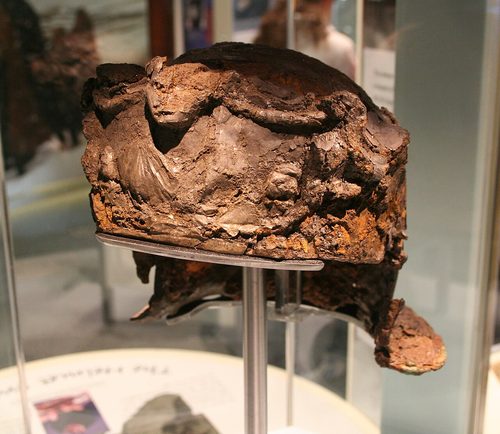
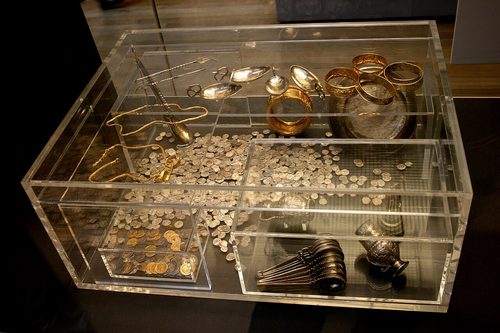
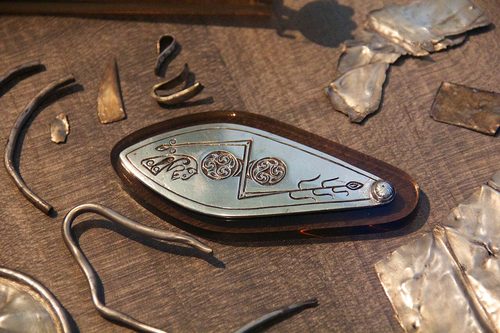
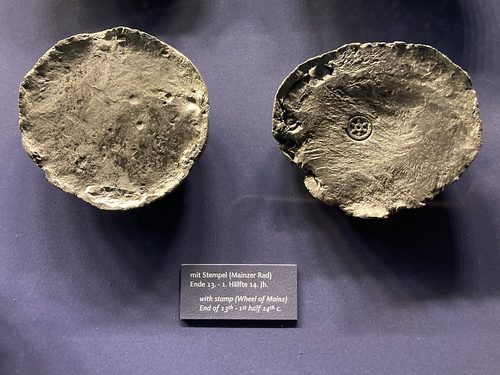
Silver plate is the commonest raw material of hacksilver in the late Roman north. At Traprain Law in East Lothian, just over 23 kg of dishes, flagons and spoons had been folded and chopped up. Recent study suggests that many pieces were cut carefully to Roman weight units, so the silver may have reached the hillfort already as bullion, as a payment or a diplomatic gift, and changed hands more than once before burial.
To recognise a fragment, look for a turned foot-ring on the underside, beaded or ovolo rims, chased figure scenes, and traces of gilding or niello. Inscriptions and graffiti tell historians about owners, workshops and value; distribution shows how far official silver travelled, from Germany beyond the frontier to the Scottish Lowlands; and the burial of so much plate between the 350s and the early 400s mirrors the stress on the western provinces in those decades.
Examples
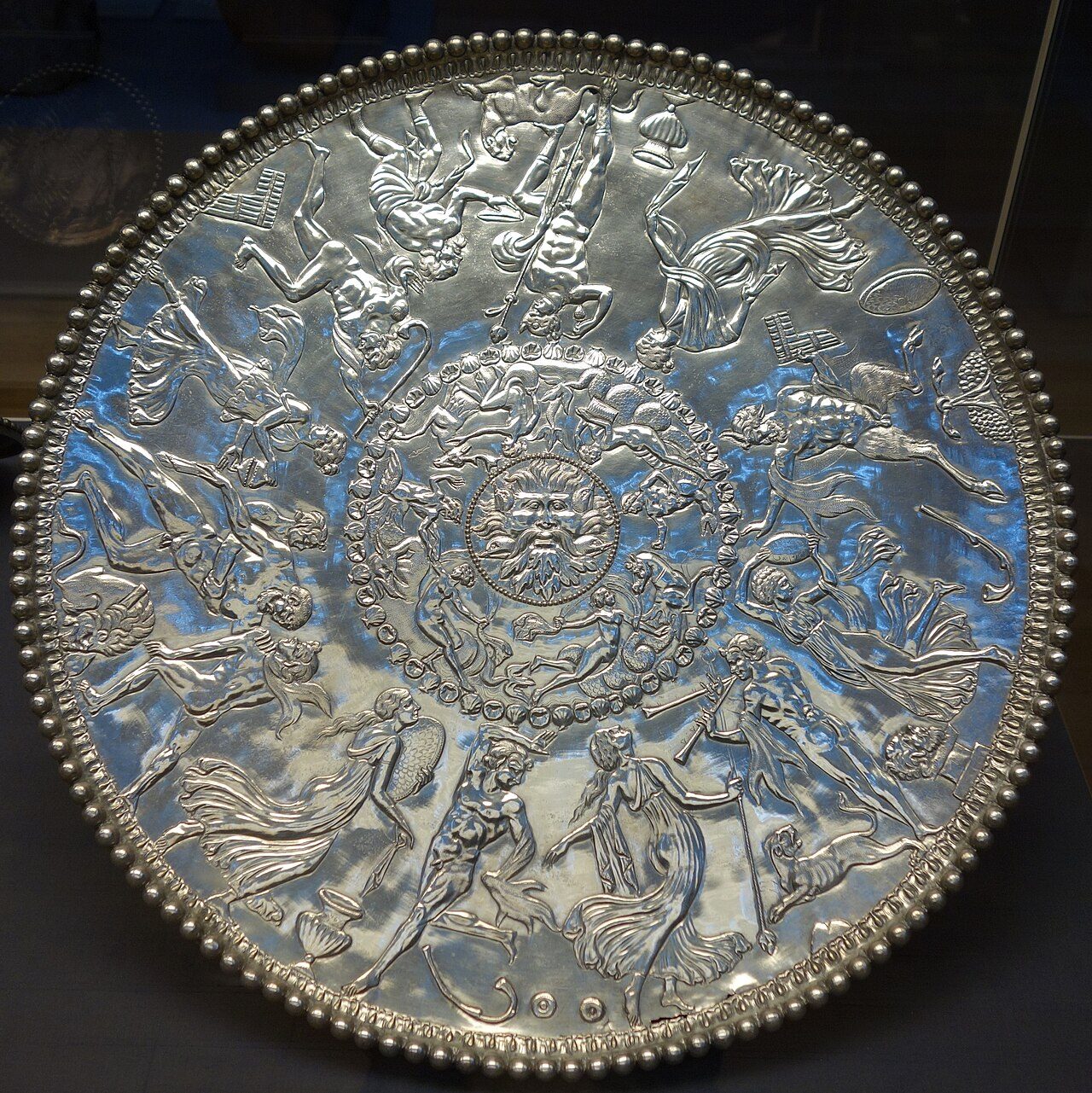
Photo: Daderot, CC0, via Wikimedia Commons
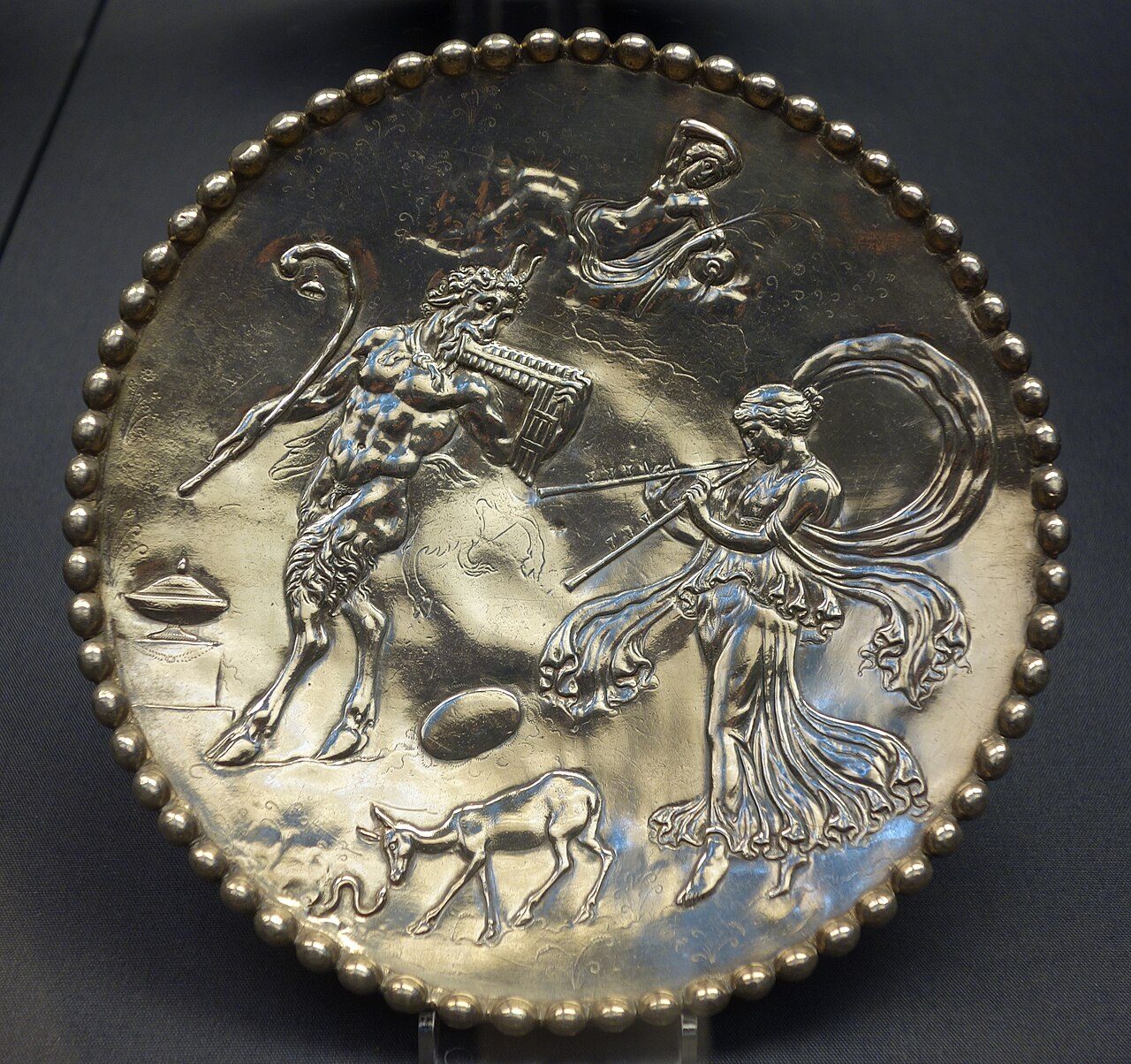
Photo: Daderot, CC0, via Wikimedia Commons
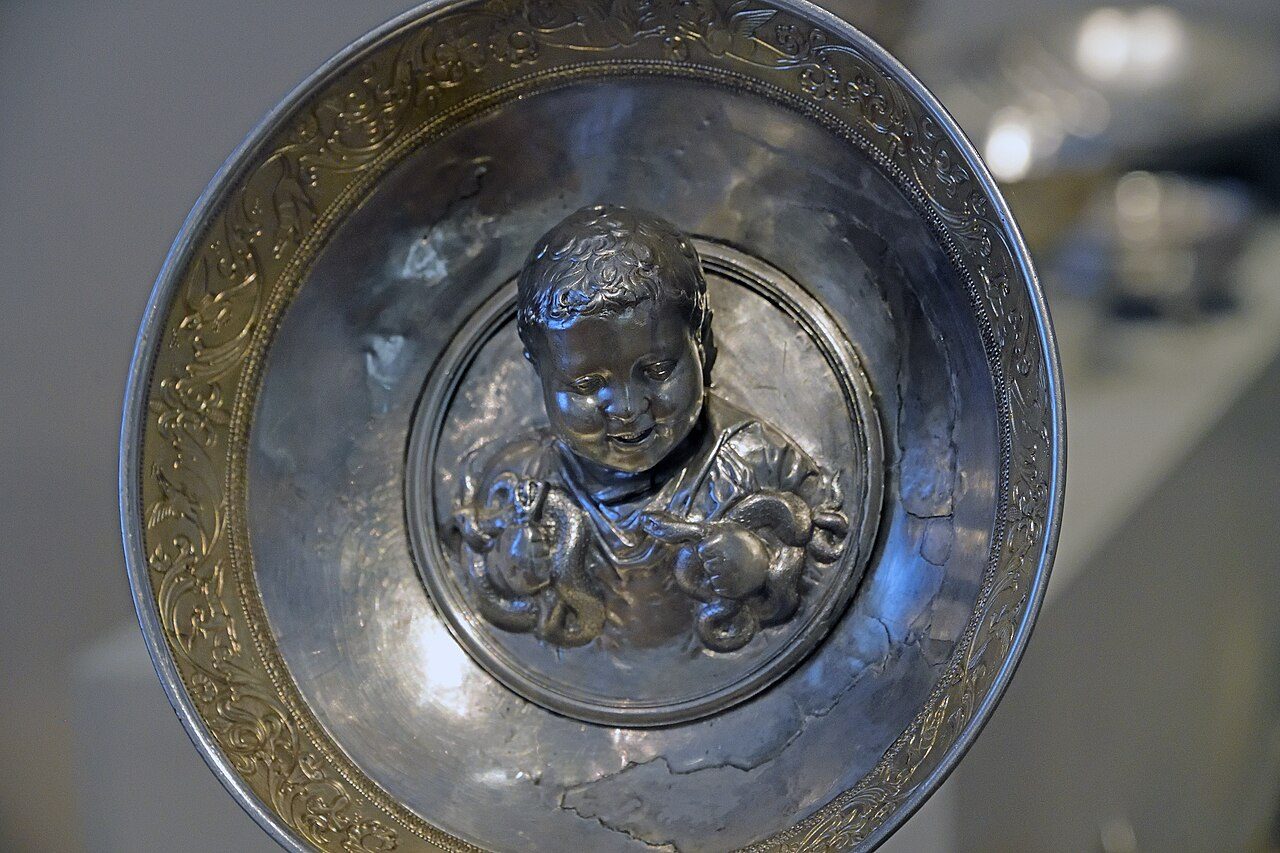
Photo: Dosseman, CC BY-SA 4.0, via Wikimedia Commons
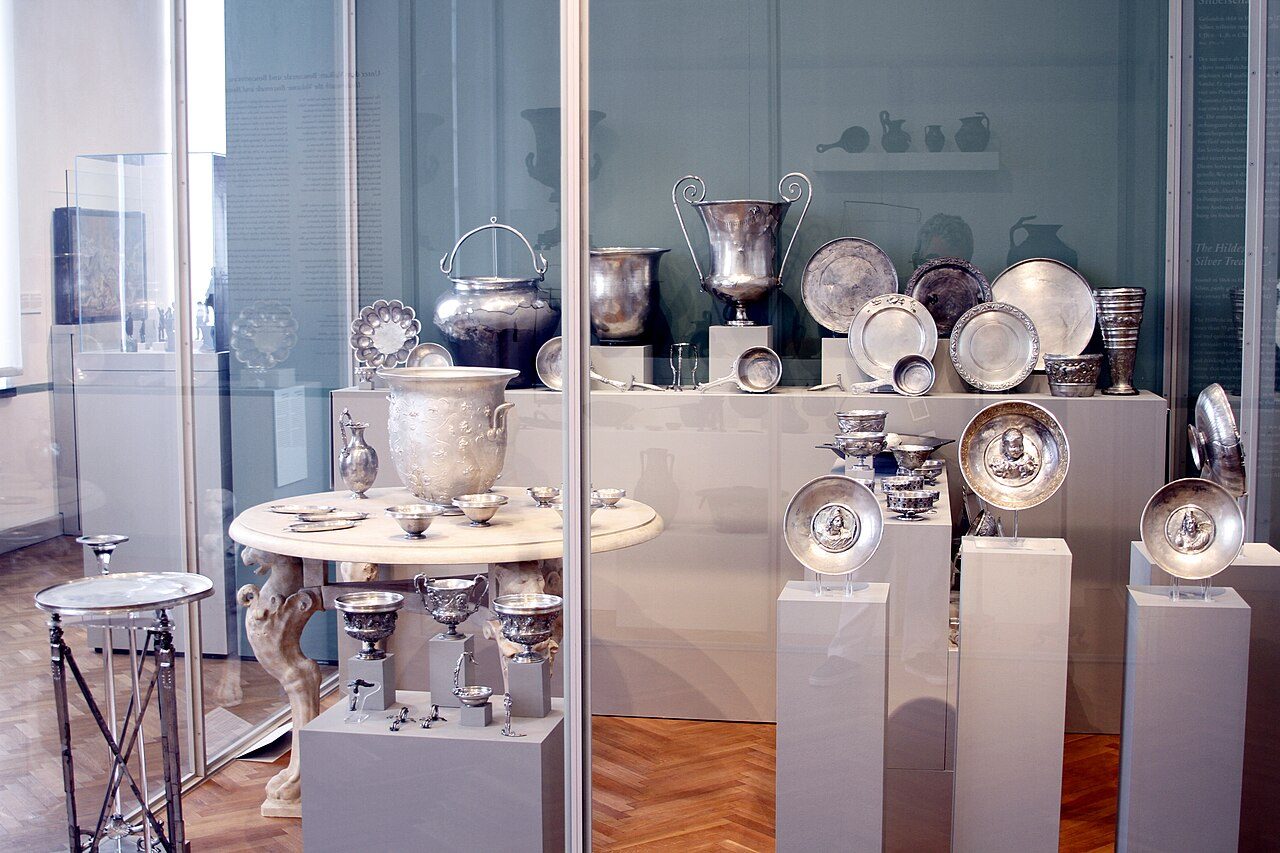
Photo: José Luiz, CC BY-SA 4.0, via Wikimedia Commons