In the summer of 1793 workmen digging at the foot of the Esquiline Hill in Rome came upon a mass of silver in the ruins of a Roman house. The Esquiline had been a favoured address of the Roman aristocracy for centuries, and what they found was the plate of one of its great families. Within a year the antiquary Ennio Quirino Visconti, later head of the Capitoline Museum, had published an essay on the find for the prelate who administered the convent on whose land it lay.
No inventory was drawn up at the time. The silver was restored over the following decades, sold and resold, and other ancient pieces were added to the group along the way, so that by the 1860s about 61 items circulated under its name, against the 25 or 27 that the early accounts describe. Most of it ended up with the French collector and diplomat the Duc de Blacas, whose collection was bought entire by the British Museum in 1866. Two pieces went elsewhere: a patera now in the Petit Palais in Paris and a jug in Naples.
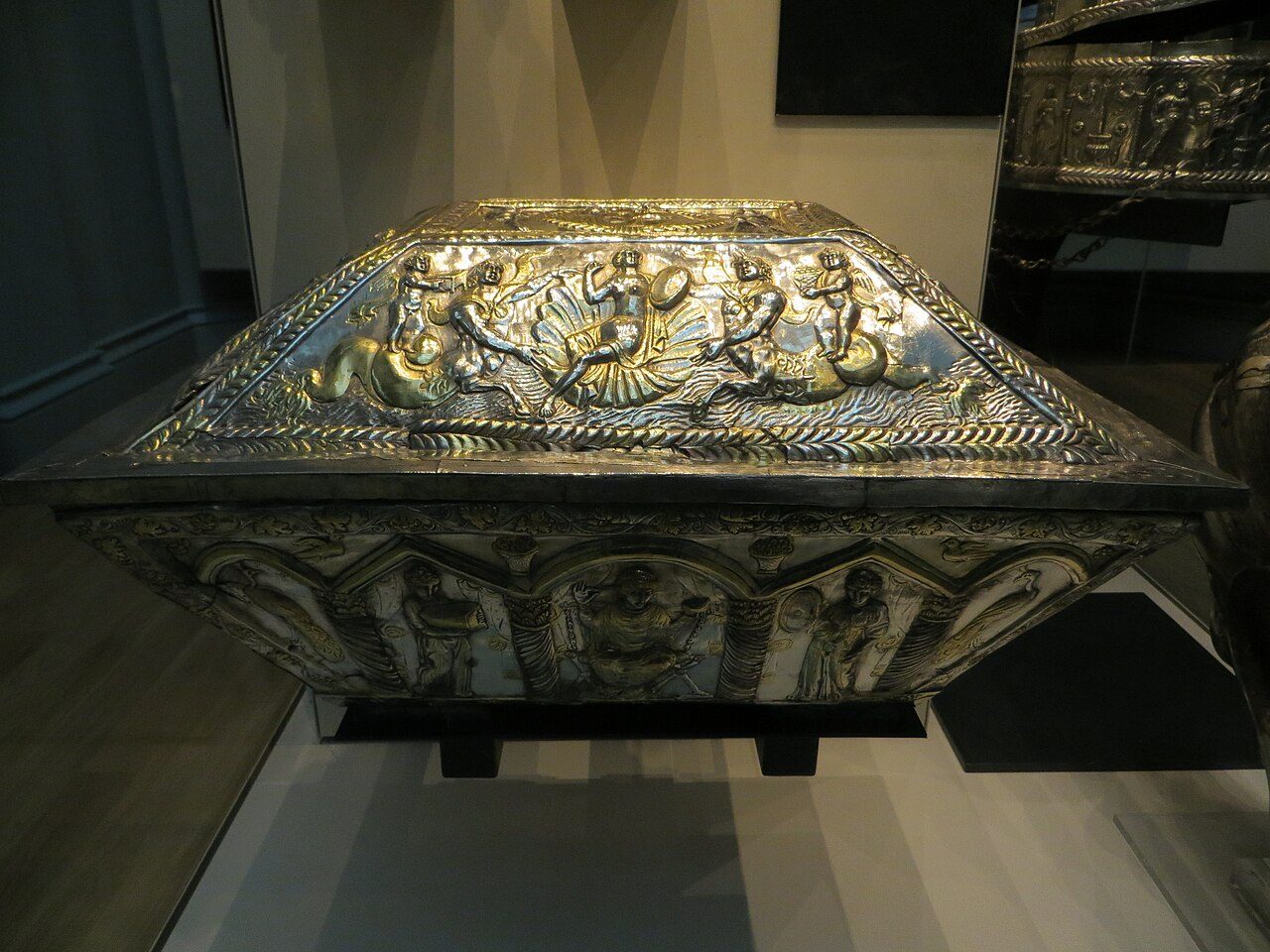
The centrepiece is the Projecta Casket, a gilded silver chest about 56 cm long, worked in relief. On its lid a man and a woman appear in a wreath held by cupids, above the inscription SECUNDE ET PROIECTA VIVATIS IN CHRISTO, 'Secundus and Projecta, may you live in Christ'. Around them Venus sits in a shell and sea nymphs ride monsters; on the box below, servants bring caskets, toilet things and candlesticks to a lady at her toilet. Its pair, the domed Muse Casket, hung from chains and held five little silver flasks for perfumes or oils; a servant on the Projecta Casket carries one just like it.
Other pieces point to public rank. Four seated silver figures of the Tyches of Rome, Constantinople, Antioch and Alexandria, the presiding goddesses of the empire's great cities, probably capped the posts of a chair or litter, the kind used by a high official. Plates carry monograms, one read as 'Projecta Turci', and a fluted ewer is inscribed for a woman named Pelegrina.
That reading has made the hoard a puzzle for historians. Projecta is often identified with a young woman of that name whose verse epitaph, written by Pope Damasus, records her death in 383 aged sixteen, soon after her marriage; her husband would then be Lucius Turcius Secundus, of a family that held high offices and stayed largely pagan. Others reject the link and see two different women. The British Museum follows Kathleen Shelton in dating the silver to about 330-370, while Alan Cameron argued for around 380.
Whatever the exact owners, the Esquiline Treasure is rare evidence of silver made in Rome itself for the city's Christian and pagan elite at the end of antiquity. Its mix of Venus and nereids with a Christian blessing shows how easily the two worlds sat together on a rich family's dressing table.
Highlights
A gilded silver wedding or toilet casket about 56 cm long, with a portrait couple, Venus in a shell and a Christian inscription naming Secundus and Projecta.
A domed sixteen-sided box hung on chains, with eight Muses in niches and five small flasks inside.
Gilded fittings personifying Rome, Constantinople, Antioch and Alexandria, probably from the posts of an official's chair or litter.
A fluted silver jug inscribed with the name of a woman, Pelegrina, otherwise unknown.
What is in it
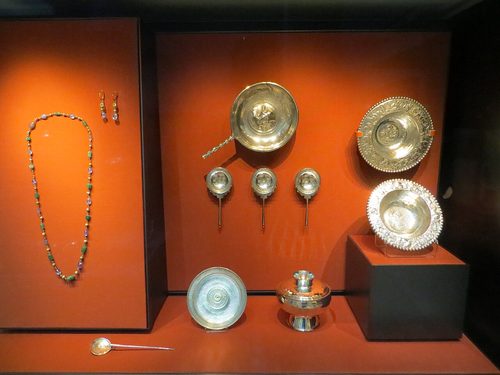
The silver of a wealthy Roman household: two toilet caskets, plates with monograms, a fluted dish, ewers and a flask, four city-goddess furniture fittings, horse trappings and jewellery.
Size: 57 objects in the British Museum (the original find was smaller, about 27 pieces).
| Item | Number | Notes |
|---|---|---|
| Caskets | 2 | The Projecta Casket and the domed Muse Casket with five small flasks inside |
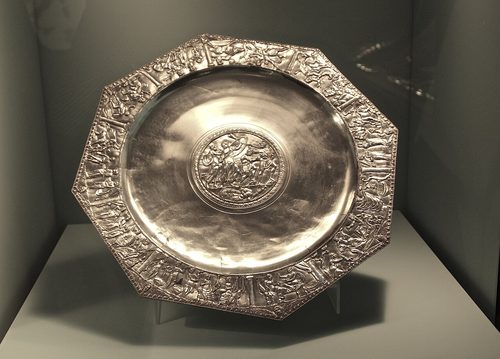
| Plates and dishes | 9+ | Four round and four rectangular plates, several with monograms, and a fluted dish |
| Jugs and flasks | several | Including the ewer inscribed for Pelegrina and a flask with embossed scenes |
| Furniture fittings | 6 | Four Tyches of Rome, Constantinople, Antioch and Alexandria, and two hand-shaped fittings |
| Horse trappings | 6 | Silver mounts from harness |
Photographs
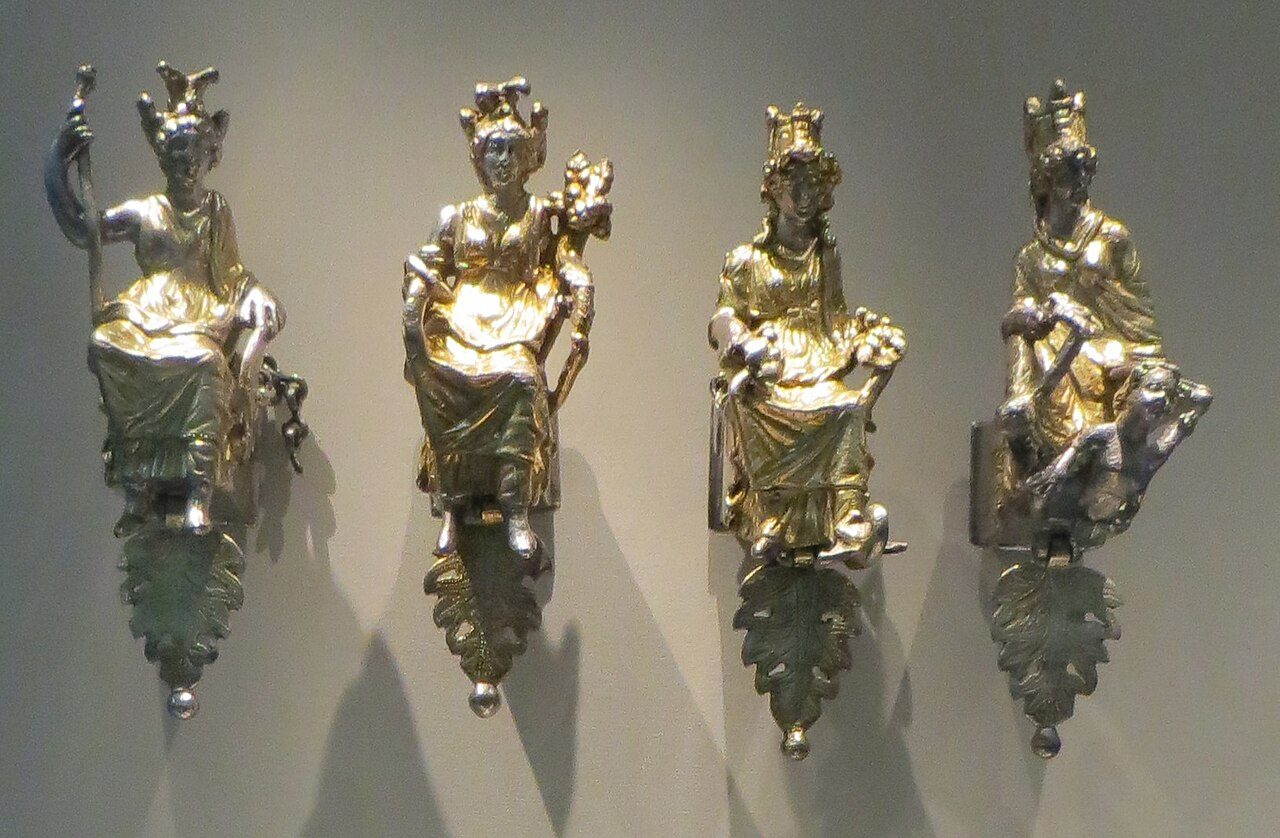
Photo: Recruos, CC BY-SA 4.0, via Wikimedia Commons
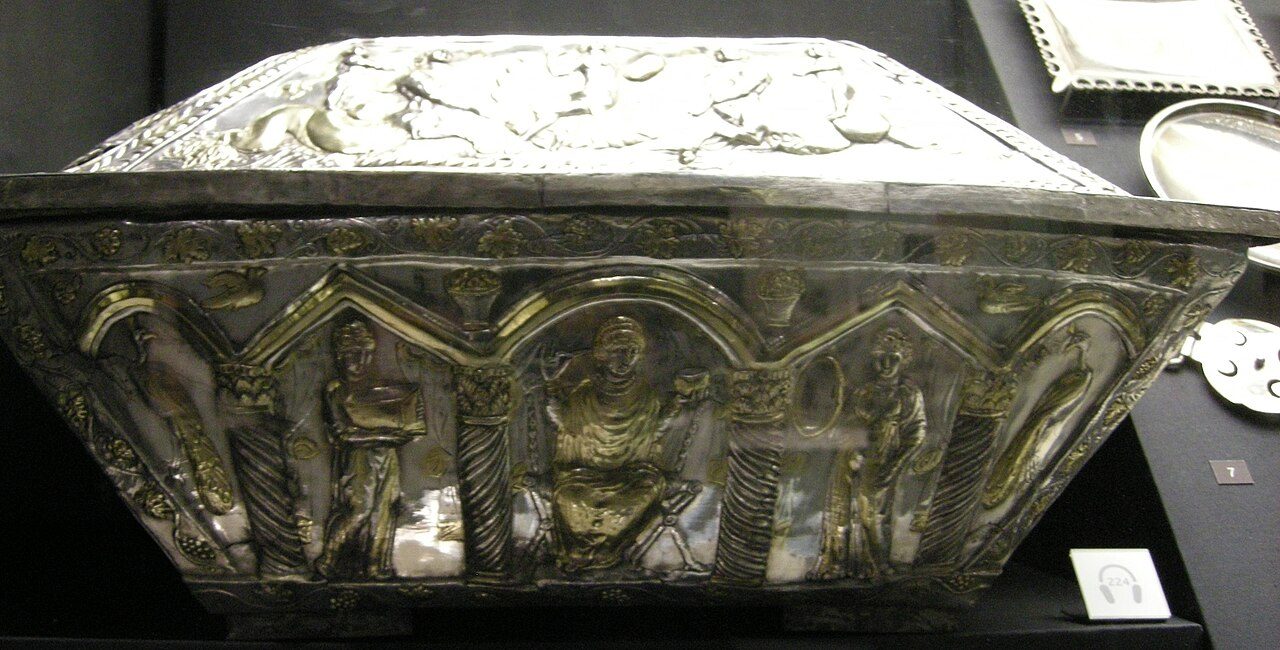
Photo: sailko, CC BY-SA 3.0, via Wikimedia Commons
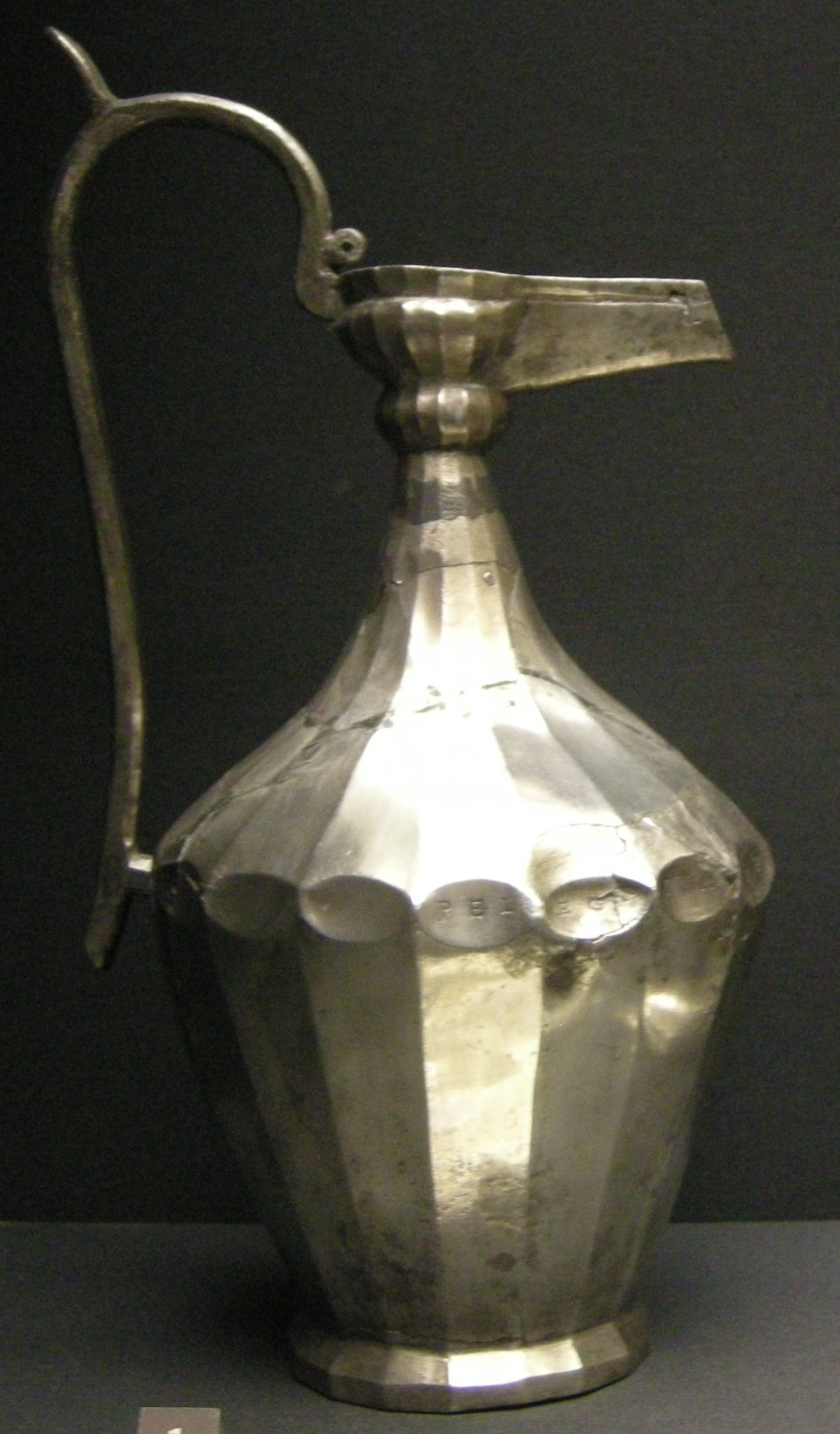
Photo: sailko, CC BY-SA 3.0, via Wikimedia Commons
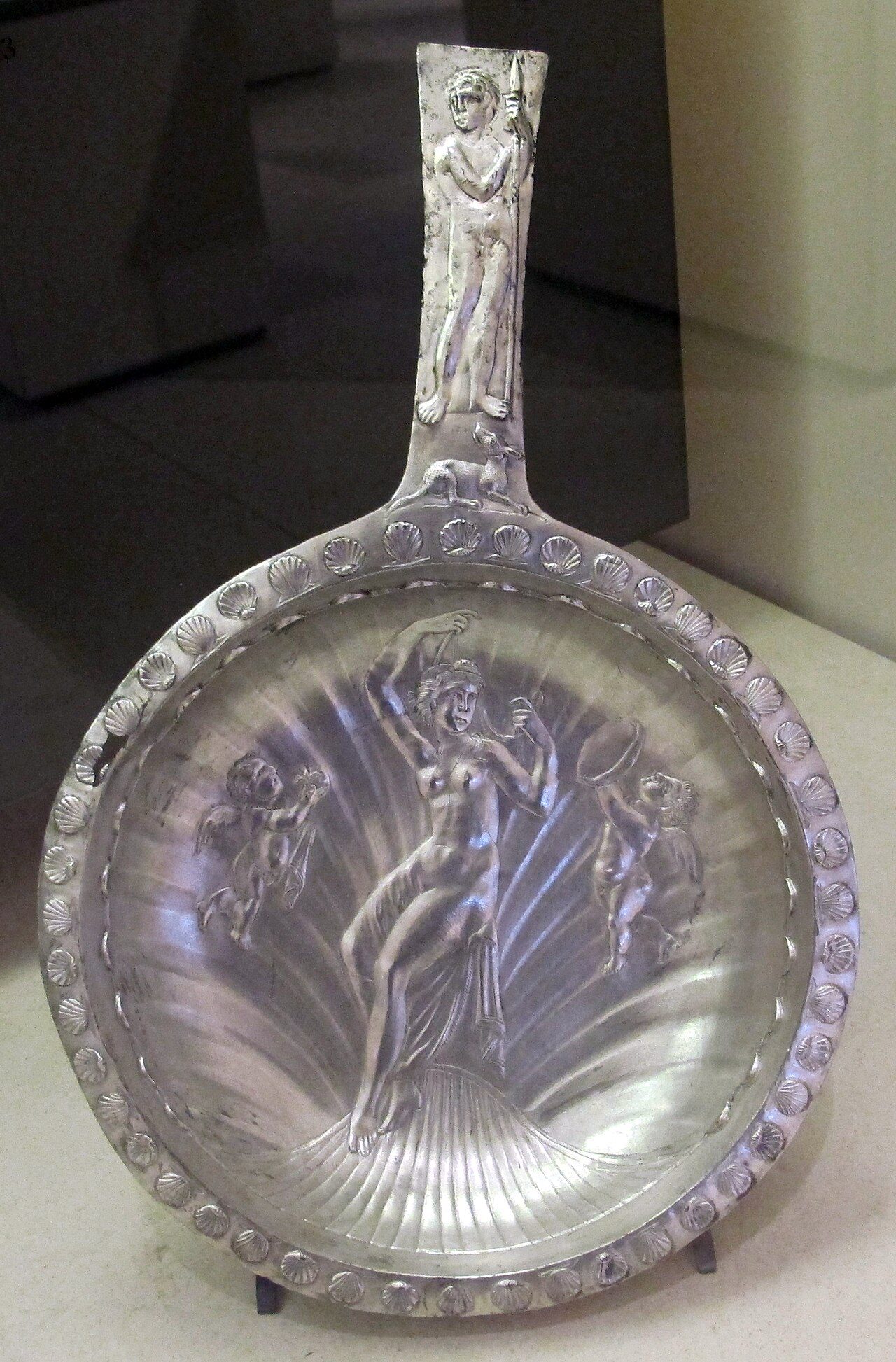
Photo: Sailko, CC BY-SA 3.0, via Wikimedia Commons
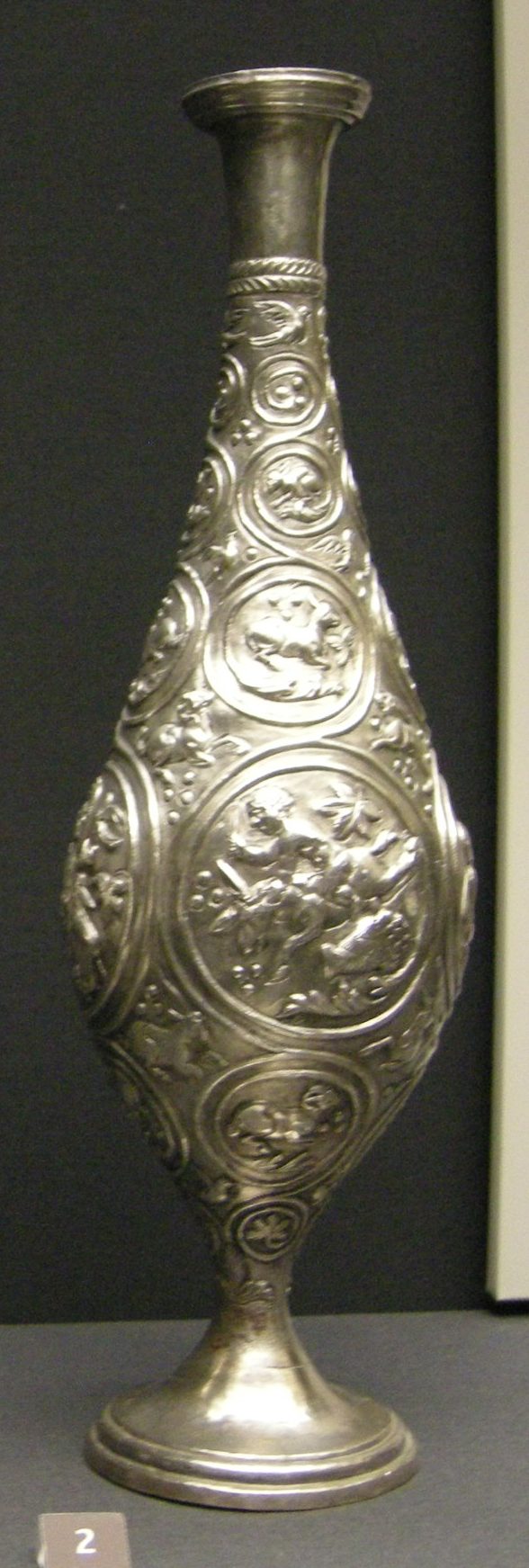
Photo: sailko, CC BY-SA 3.0, via Wikimedia Commons
How it is dated
There are no coins. The main objects are dated by style and inscriptions to the mid to late 4th century: the British Museum follows Kathleen Shelton's c. 330-370, while Alan Cameron's identification of Projecta with a woman who died in 383 would place the casket around 380. When and why the hoard was buried is unknown; a deposit before the Visigothic sack of 410 has been suggested.
What happened after the find
Found in 1793 and sold privately; most of it entered the British Museum with the Blacas collection, bought in 1866.
Where sources differ
- How many objects belong to the original find: German Wikipedia counts 27 core pieces (Visconti mentioned 25), but 57 objects in the British Museum go under the name.
- The weight of the Projecta Casket: English Wikipedia says 8.2 kg, German Wikipedia 7.153 kg.
- The exact findspot: contemporaries placed it on the land of the convent of San Francesco di Paola or of another religious house.
- Whether the Projecta of the casket is the Projecta of Damasus' epitaph (d. 383) is disputed between Cameron and Shelton.
- Room 41 display location is from Wikipedia; the British Museum website could not be reached to confirm.
Questions
Where is the Esquiline Treasure?
Most of it, 57 objects including the Projecta and Muse caskets, is in the British Museum in London, which bought it with the Blacas collection in 1866. A patera is in the Petit Palais in Paris and a jug in the archaeological museum in Naples.
Who was Projecta?
The casket names Secundus and Projecta. Many scholars identify her with a young aristocrat who died in 383 and whose epitaph was written by Pope Damasus, and him with Lucius Turcius Secundus, but the link is debated.
Is the Esquiline Treasure Christian or pagan?
Both. The Projecta Casket carries a Christian blessing but is decorated with Venus, nereids and cupids, a normal mix for elite Roman silver in the 4th century.