On 16 May 1913 a workman digging foundations for a new workers' house at the Hirsch copper and brass works near Eberswalde, north-east of Berlin, put his spade into a lidded clay pot about a metre down. It broke, and gold spilled out. Inside were eight gold bowls nested together, and inside those another 73 gold objects. At 2.59 kg it is still the largest prehistoric gold find from Germany.
The firm's owner, Aron Hirsch, called in Carl Schuchhardt, director of the prehistoric department of the Royal Museums in Berlin, who catalogued 81 pieces. Hirsch paid the workmen half the valuation so that the hoard was entirely his, and a week after the find presented it to Kaiser Wilhelm II, who had it shown in the Berlin palace. After the Kaiser's abdication it passed to the state museums and from 1922 was on permanent display in Berlin.
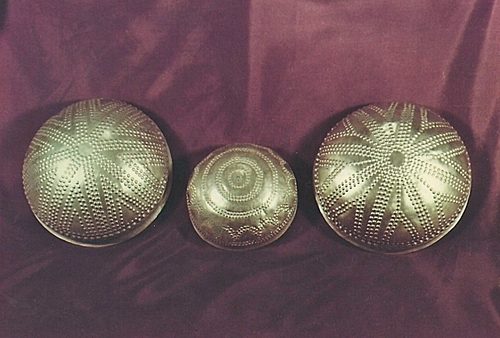
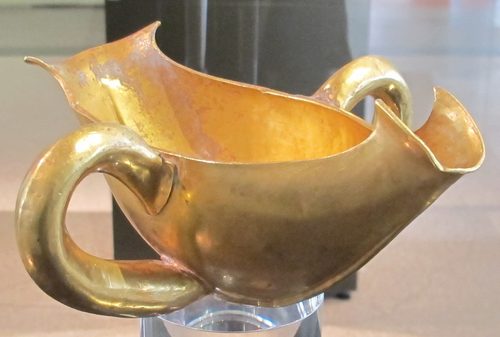
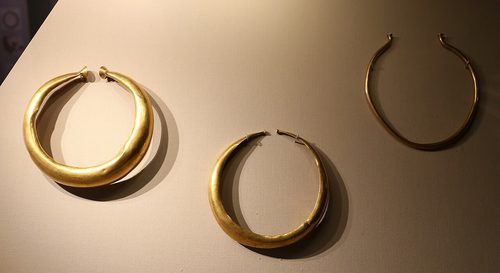
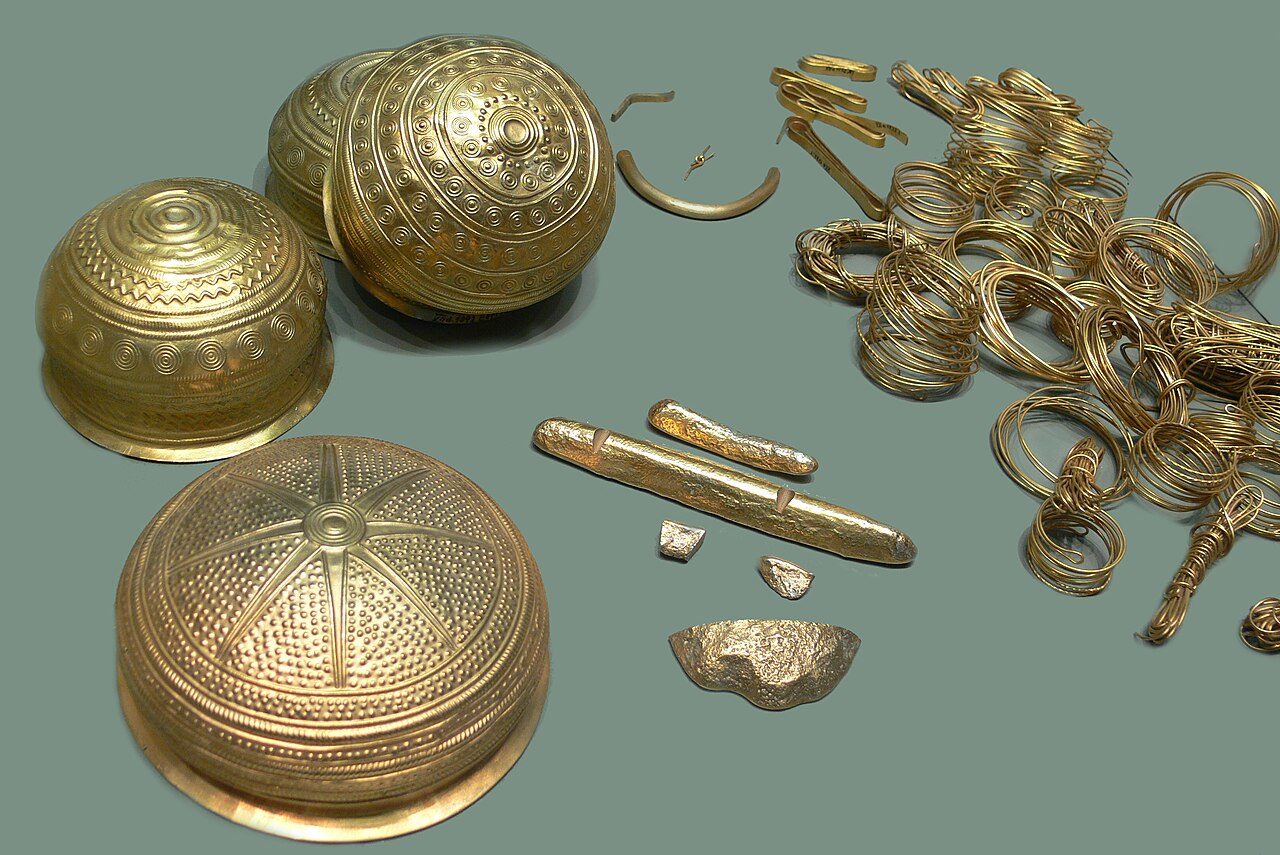
The bowls are the glory of the hoard: gold beaten so thin it is almost foil, with domed bases and walls chased with ribs, bosses and concentric rings. Some carry circular designs that have been read as sun symbols, and some researchers have looked for calendar counts in their decoration. With them were neck rings, bracelets and sixty wire arm spirals, fifty-five of them tied in bundles, as well as an ingot, a crucible-shaped lump and two other pieces of raw gold.
The raw metal and the bundled spirals once suggested a merchant's or goldsmith's stock. More recent research favours a ritual or prestige deposit, wealth belonging to a powerful person or community and placed in the ground deliberately. Bowls of the same family are known from Denmark and northern Germany, and the type is close enough to the gold vessels of the Treasure of Villena in Spain that both are sometimes grouped together, a sign of long-range contacts in Late Bronze Age Europe.
During the Second World War the treasure was stored first in the Prussian State Bank and from 1941 in the flak tower at Berlin Zoo. In 1945 the museum director was made to hand it, with Schliemann's 'Treasure of Priam', to the Red Army. For decades the Soviet Union denied having either. After Russia acknowledged the Priam gold, a German television reporter located the Eberswalde hoard in a storeroom of the Pushkin Museum in Moscow in 2004.
Russia regards such objects as legitimate compensation for wartime losses, and Germany continues to seek their return. The originals were shown in public in 2013 for the first time since 1941, in a Bronze Age exhibition at the Hermitage in St Petersburg. Visitors in Germany see replicas: in Berlin's Neues Museum, in the Eberswalde museum and at the find site itself.
Highlights
Eight thin-walled bowls of beaten and chased gold, decorated with ribs, bosses and concentric circles; they held the rest of the hoard.
Sixty gold wire arm spirals, fifty-five of them double spirals tied into bundles, perhaps a form of stored wealth.
An ingot, a crucible-shaped lump and two small pieces, raw material that hints at gold-working.
What is in it
Eight thin, richly decorated gold bowls packed inside a lidded pot, holding 73 more gold objects: neck rings, bracelets, bundles of wire spirals, an ingot and pieces of raw gold.
Size: 81 gold objects. Weight: 2.59 kg.
| Item | Number | Notes |
|---|---|---|
| Gold bowls | 8 | thin-walled, beaten and chased with bosses, concentric rings and bands |
| Wire arm spirals | 60 | 55 double spirals tied in bundles |
| Neck rings and bracelets | number not given in the sources used | |
| Raw material | 4 | an ingot, a crucible-shaped lump and two smaller pieces |
Photographs
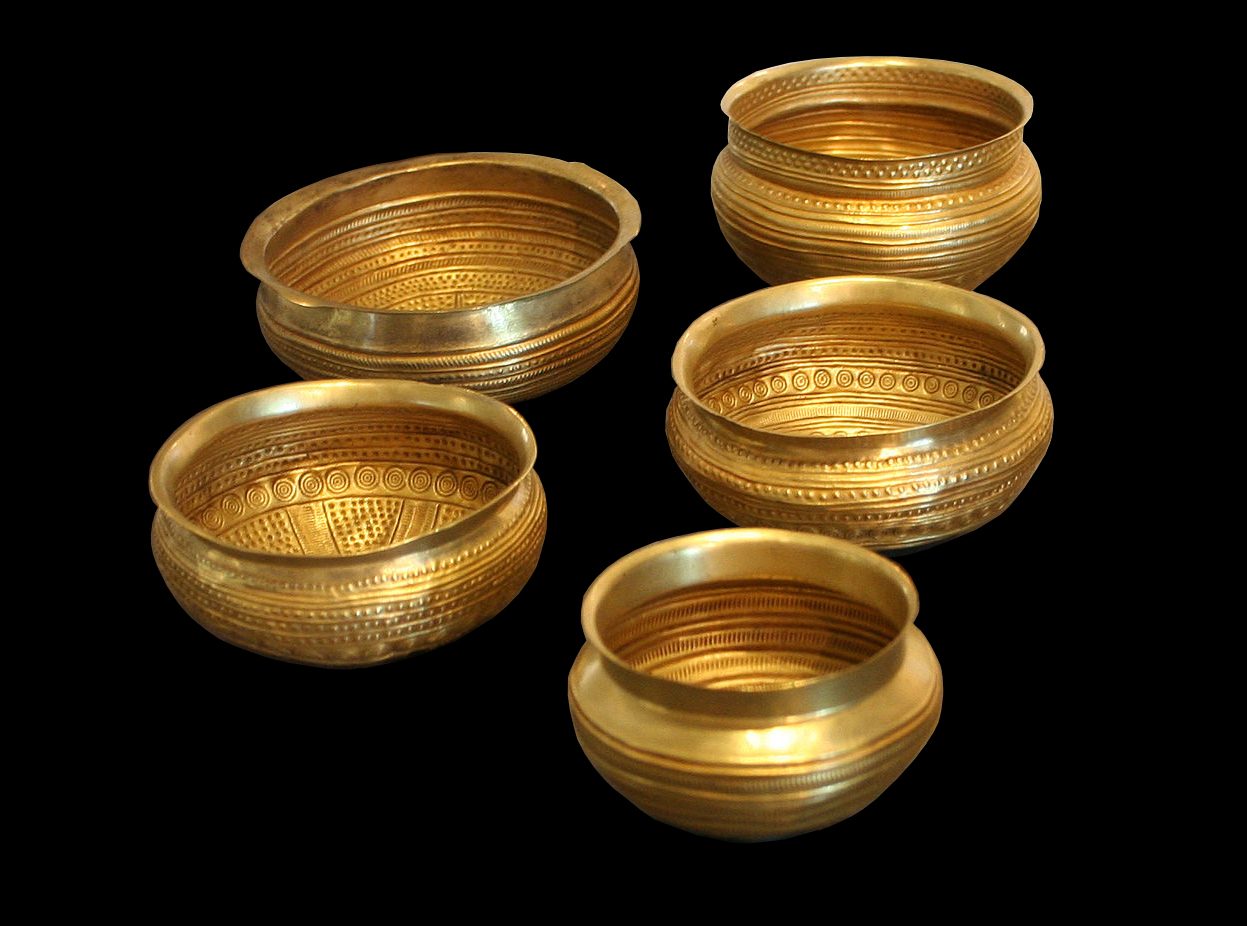
Photo: Einsamer Schütze, CC BY-SA 3.0, via Wikimedia Commons
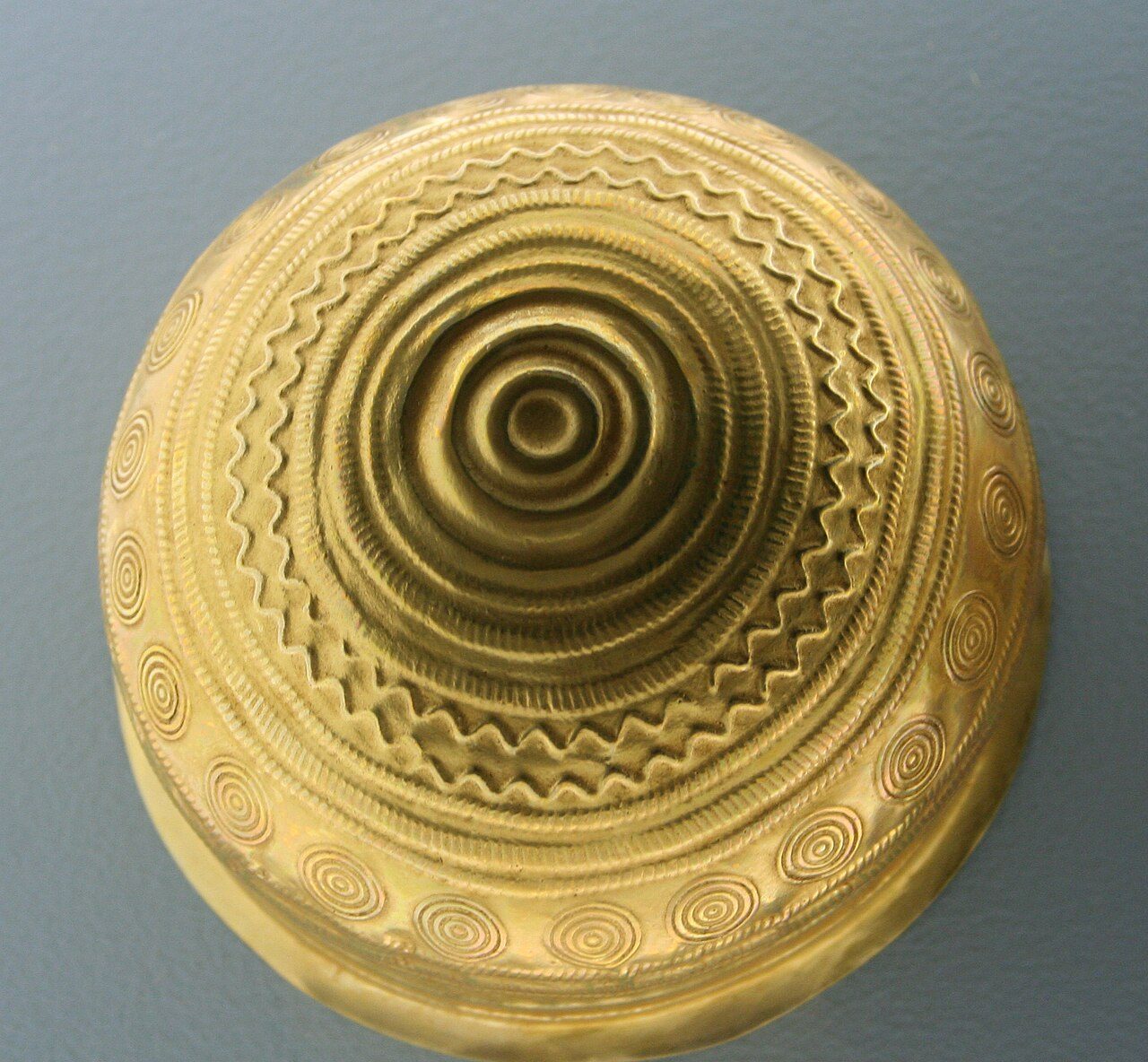
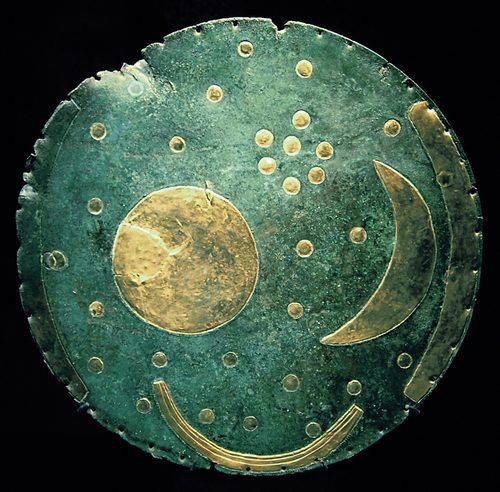
Photo: Einsamer Schütze, CC BY-SA 3.0, via Wikimedia Commons
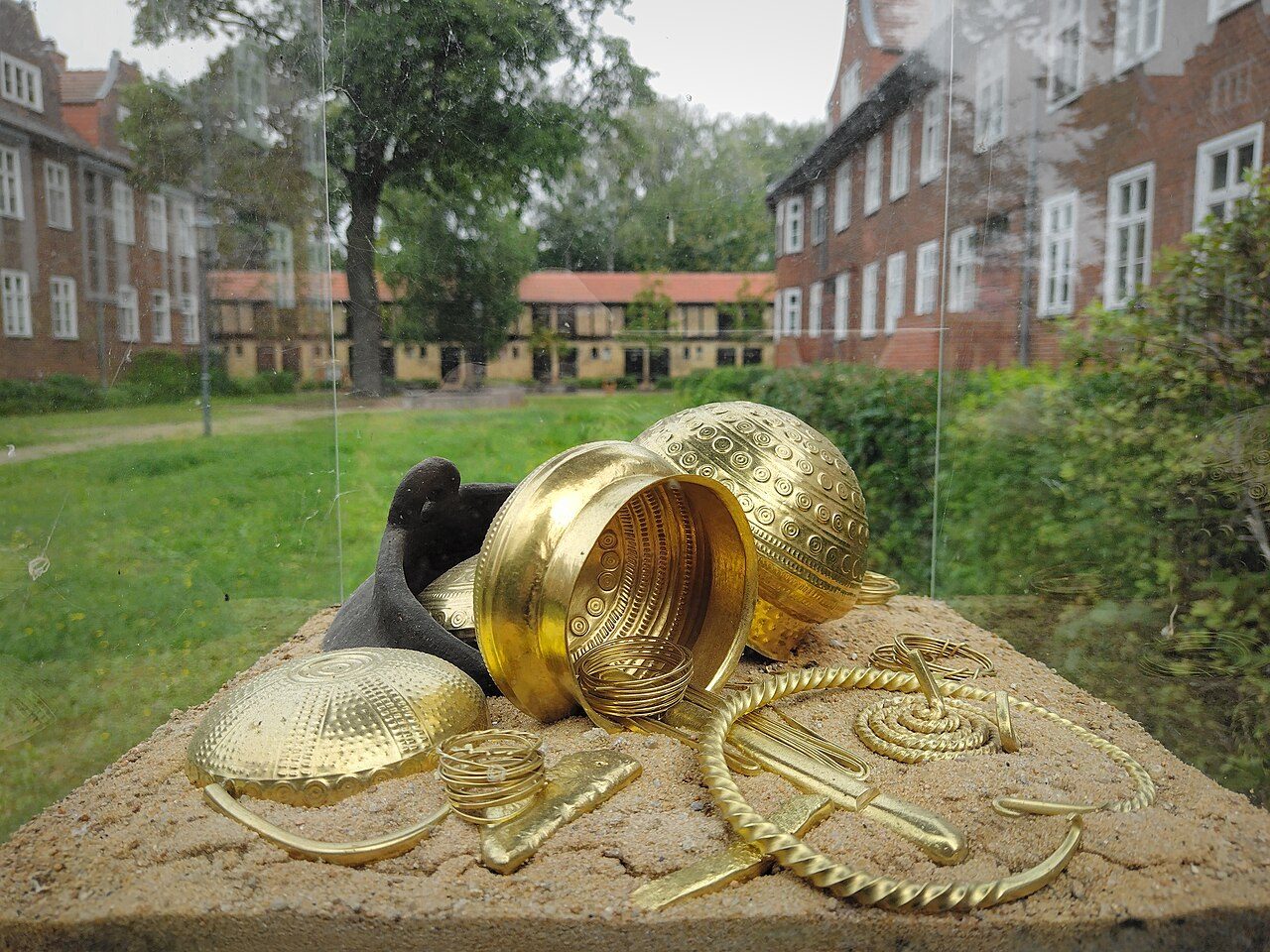
Photo: Bildarbeiter, CC BY 4.0, via Wikimedia Commons
How it is dated
The hoard is dated by the style of the bowls and ornaments, compared with other Late Bronze Age gold work in northern and central Europe. Most accounts place it in the 10th or 9th century BC.
What happened after the find
Found on private industrial land in 1913; the owner paid the workmen half the valuation and gave the hoard to Kaiser Wilhelm II, after which it passed to the Prussian state museums. Removed by the Red Army in 1945, it is held in Moscow and claimed by Germany as looted art.
Where sources differ
- Date: English Wikipedia says 9th century BC; German Wikipedia says 10th or 9th century BC.
- Cultural attribution varies between the Nordic Bronze Age and the central European Urnfield sphere.
- Whether it was a merchant's or goldsmith's stock or a ritual or prestige deposit is debated.
- Current display status in Russia is unknown; the 2013 Hermitage showing is the last public display confirmed.
- Counts of neck rings and bracelets were not given in the sources used.
Questions
Where is the Eberswalde gold hoard now?
The originals are in Russia, held by the Pushkin Museum in Moscow since they were removed from Berlin in 1945. Replicas are shown in the Neues Museum in Berlin and in Eberswalde.
Will the Eberswalde gold be returned to Germany?
Germany has asked for it, but Russia treats wartime cultural property removed from Germany as compensation, and negotiations have produced no result.