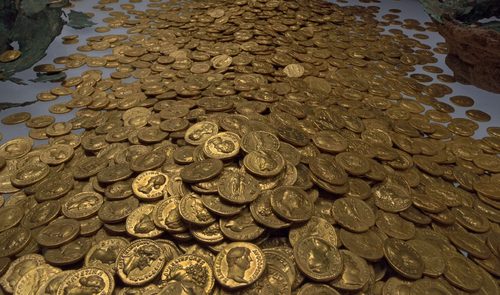
For thirty years, from 1967 to 1997, the grab of a floating gravel dredger working a flooded pit near Neupotz, between Karlsruhe and Speyer, kept bringing up Roman metalwork from eight to twelve metres down. Piece by piece it added up to the largest Roman metal hoard found in Europe: 1,062 objects weighing more than 700 kg. The gravel layer that held it had been the bed of a meandering main channel of the Rhine in the third century.
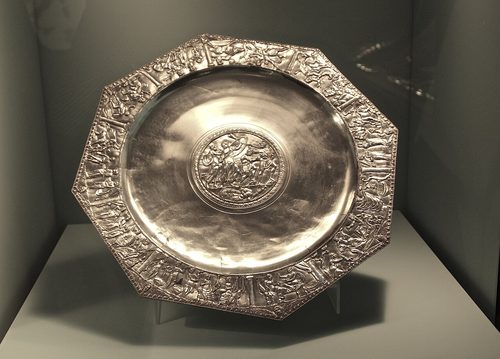
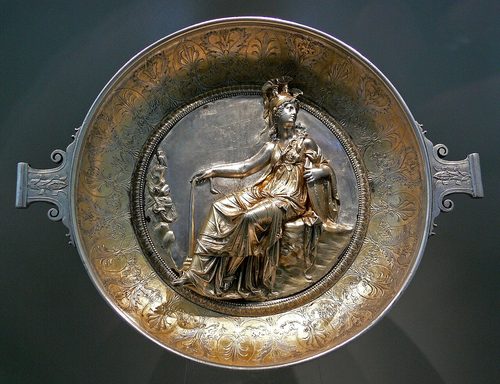
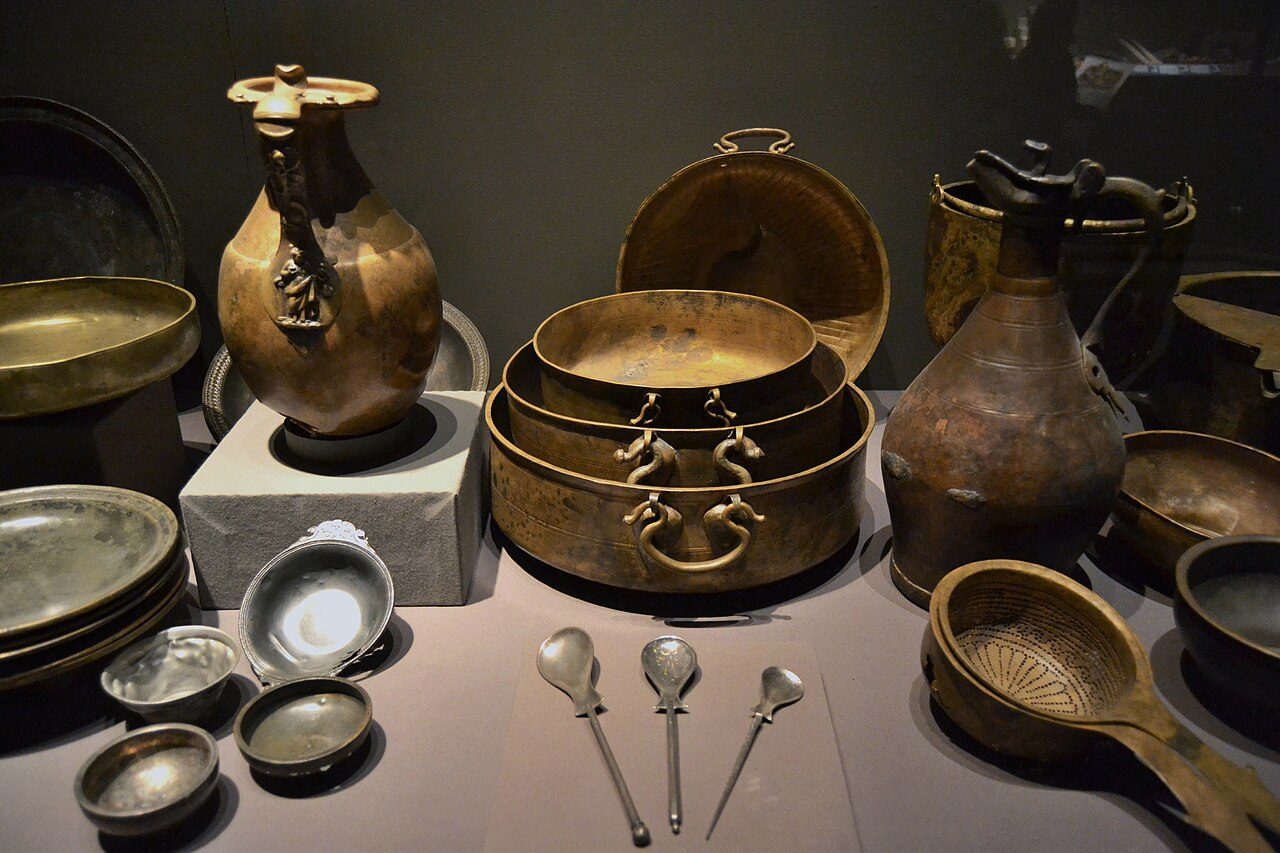
Hardly anything here is precious in the usual sense. About 513 kg is iron, 203 kg copper alloy and only about 10 kg silver. There are four great bronze cauldrons that had been used as containers for smaller vessels, stacks of cooking pots, pans, jugs and sieves, silver cups and dishes, carpenters' and farmers' tools, padlocks and the iron fittings of goods wagons. Several vessels carry dedications, showing that shrines were stripped as well as kitchens. Some silver had been chopped up before it reached the river, valued for its weight, not its craftsmanship.
Most chilling are the fetters: ankle rings and manacles of a kind that could only have been meant for people. They do not prove that prisoners drowned at Neupotz, since they lay among the loot, but they fit the inscription on the Augsburg victory altar, which records thousands of Italian captives freed from raiders in 260.
The 39 coins end with an issue of the emperor Gallienus of 258-259. A worn coin of Probus from the 270s was once taken to date the hoard later, but it was picked up separately from a spoil heap and is now generally thought not to belong. The usual reading ties the hoard to 259/260, when Germanic war bands, probably Alamanni, broke through the Limes and plundered deep into Gaul. Returning home heavily laden, one group seems to have lost a wagon train or boats while crossing the Rhine, perhaps under attack from Roman river patrols, and the booty sank.
Neupotz is one of eighteen dredged hoards of the third century from the stretch of the Rhine between Seltz and Mannheim, including a similar find at nearby Hagenbach. Together they show what raiders wanted from the Roman provinces: metal of any kind, tools and the skills that went with them. The dredge also brought up a few prehistoric weapons and vessels and about 21 medieval objects, a reminder that a river bottom is not a sealed find.
The hoard belongs to the owners of the gravel works. After a major exhibition at the Historical Museum of the Palatinate in Speyer in 2006, they lent it in 2016 to the Museum für Vor- und Frühgeschichte in Berlin, which displays a selection in the Neues Museum beside the Xanten Boy, another Roman bronze lost in the Rhine.
Highlights
A silver mirror back with a bust of the goddess in relief, one of the luxury pieces among the kitchenware.
Iron fetters and manacles, some usable only on people, evidence that captives were part of the raiders' haul.
Iron parts of Roman goods wagons, which allowed a full reconstruction of a 3rd-century transport wagon.
Four huge cauldrons that served as packing cases for smaller bronze vessels.
What is in it
The contents of looted Roman households, workshops and shrines: cauldrons and kitchenware, silver tableware, tools, wagon fittings, padlocks, shackles and votive offerings, with 39 coins.
Size: 1,062 objects. Weight: about 700 kg (mixed: about 513 kg iron, 203 kg copper alloy, 10 kg silver).
| Item | Number | Notes |
|---|---|---|
| Bronze and copper-alloy vessels | hundreds | Four huge cauldrons used as packing for smaller pots, pans, jugs and sieves |
| Silver tableware | about 10 kg | Cups, dishes and a mirror with Minerva, some cut up for their metal |
| Iron objects | about 513 kg | Tools, farm implements, wagon fittings, padlocks, and fetters for animals and people |
| Coins | 39 | Ending with Gallienus, 258-259 |
Photographs
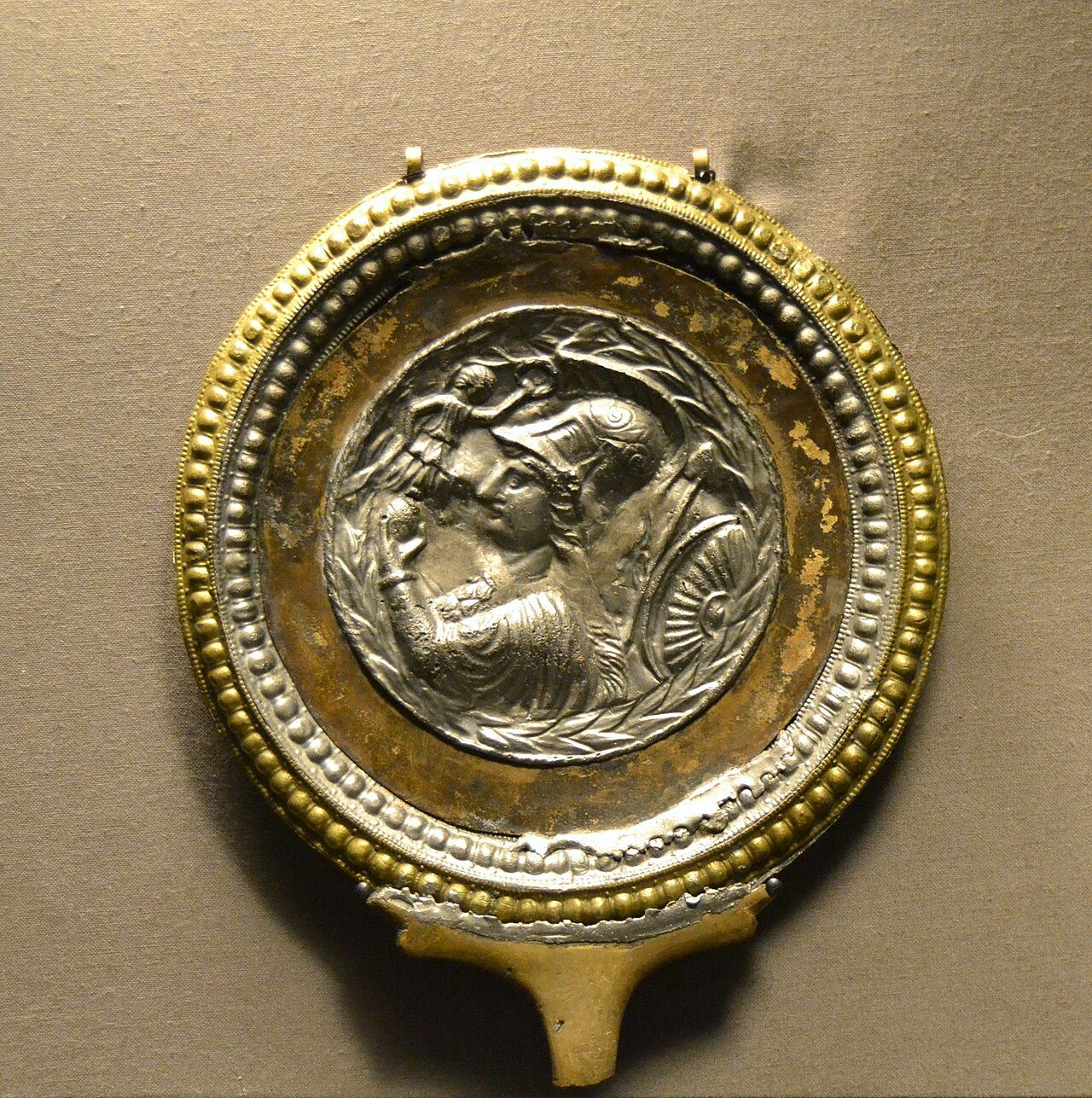
Photo: Joanbanjo, CC BY-SA 3.0, via Wikimedia Commons
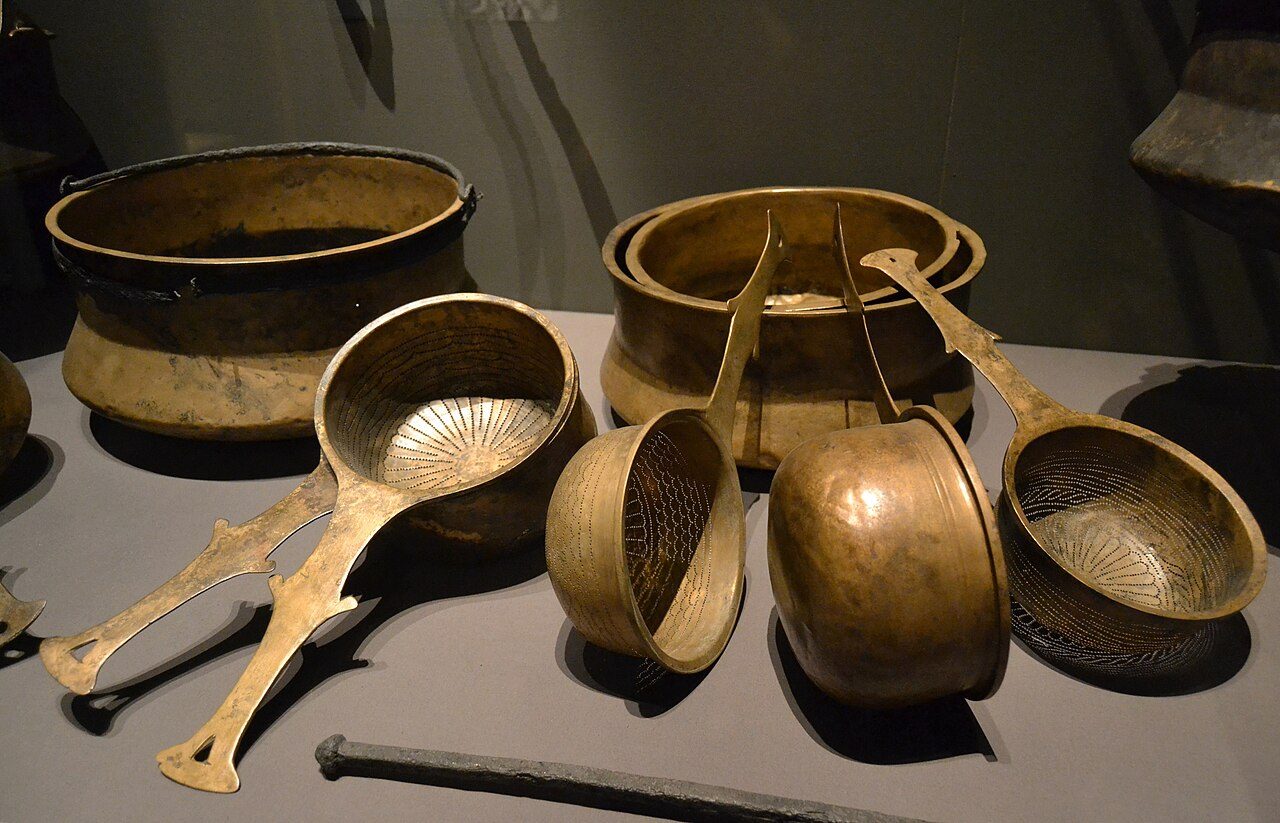
Photo: Joanbanjo, CC BY-SA 3.0, via Wikimedia Commons
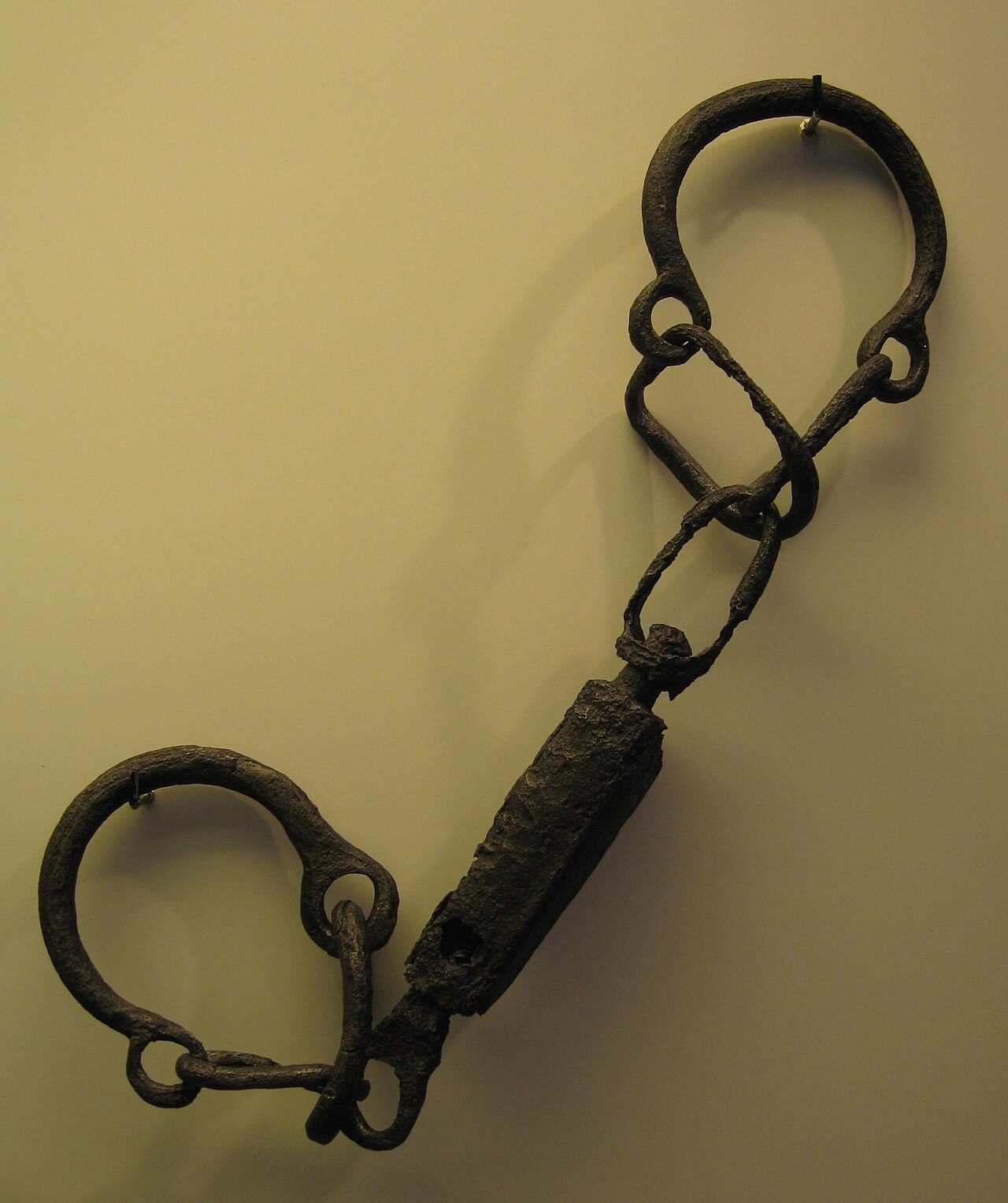
Photo: eigene Aufnahme, Public domain, via Wikimedia Commons
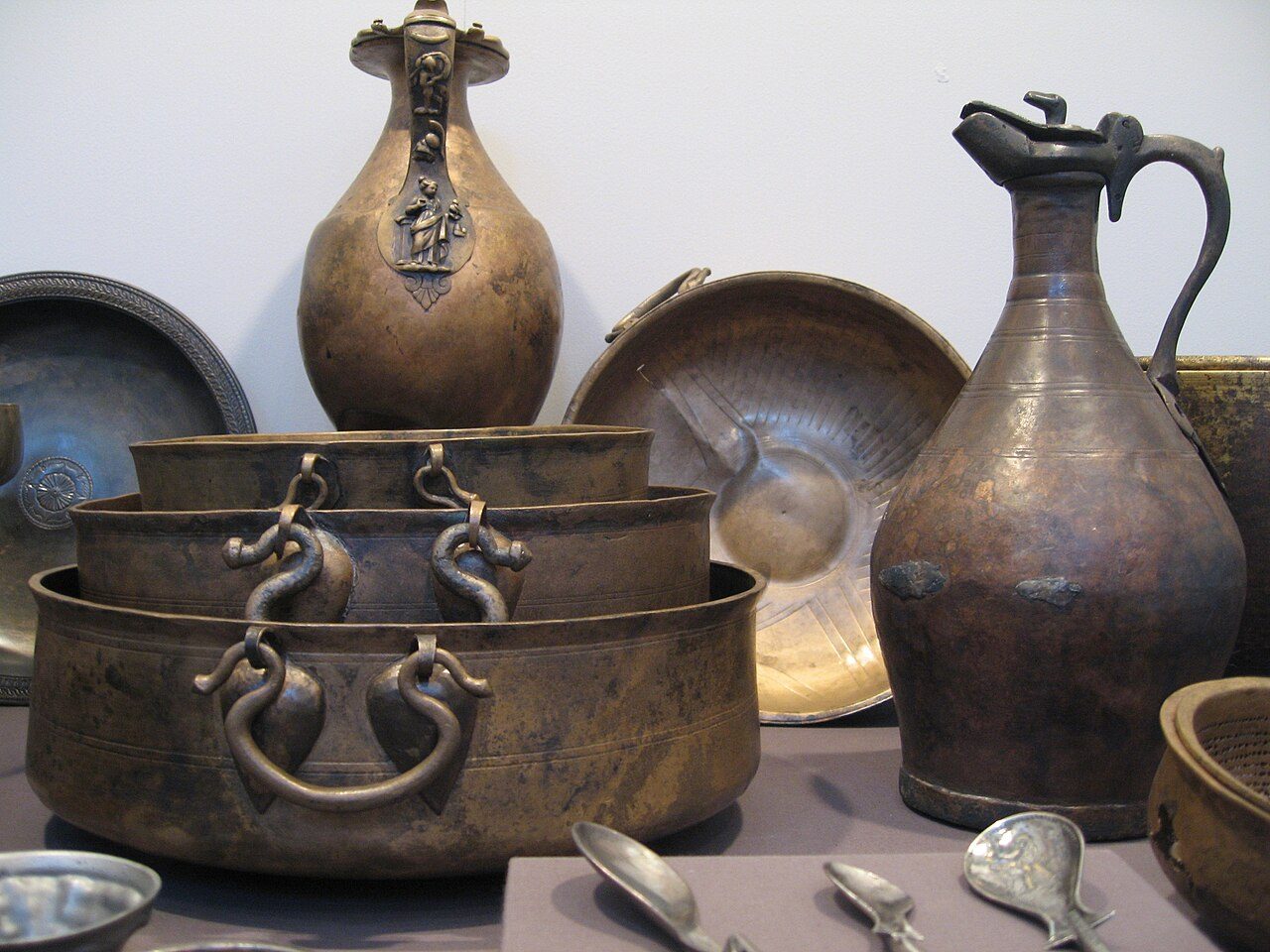
Photo: own, Public domain, via Wikimedia Commons
How it is dated
Apart from one stray, the coins end with Gallienus in 258-259, placing the loss in the raids of 259/260. A single worn coin of Probus (c. 277/278) was found separately and is now usually excluded; if it belonged, the hoard would date to the Probus campaigns instead.
What happened after the find
The objects were recovered by a private gravel works and remain the property of its owners, who lent the hoard to the Staatliche Museen zu Berlin in 2016 (reported as an initial ten-year loan).
Where sources differ
- Date: c. 260 (latest coins of Gallienus) or 277/278 if the Probus coin belongs.
- The raiders are usually called Alamanni, but the identity of the group is an inference.
- Not a closed find: some objects may come from other losses in the river.
- The Berlin loan was reported in 2016 as limited initially to ten years; whether it has been extended after 2026 was not confirmed. Wikidata lists the Historical Museum of the Palatinate, Speyer, which held the 2006 exhibition.
Questions
Where is the Neupotz treasure now?
A selection of about 300 pieces is on long-term loan to the Museum für Vor- und Frühgeschichte in Berlin and shown in the Bacchus Hall of the Neues Museum on Museum Island.
Why is it called the Barbarian Treasure?
Because it is not a Roman's hidden savings but loot carried off by Germanic raiders, the 'barbarians' of Roman sources, and lost in the Rhine on their way home around AD 260.
How was the Neupotz hoard found?
Not by digging but by gravel dredging: a grab dredger in a flooded gravel pit brought the objects up from the old Rhine bed over thirty years, between 1967 and 1997.