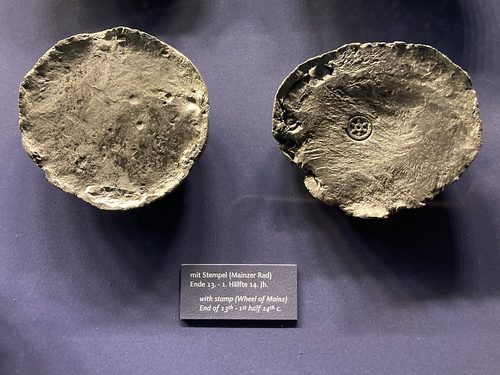
On 8 June 1985 builders digging foundations for a telephone exchange in Środa Śląska, a small town west of Wrocław, found an earthenware jug packed with 14th-century silver groschen. The police secured it and work went on. Three years later, on 24 May 1988, the demolition of the tenement next door at 14 Daszyńskiego Street broke into the same hiding place, and this time the find was far larger: gold florins, more silver, and jewellery fit for a queen.
What followed is one of the sorriest episodes in European archaeology. Before officials arrived, much of the find had been carried off, and rumours spread that more lay in the rubble dumped at the town's sports ground, where crowds went digging. Only then did a proper excavation begin, at first with schoolchildren and police cadets, later with professional archaeologists. The culture minister offered three times the metal value for anything returned, and the police mounted a nationwide search known as Operation Korona. Many objects came back; others did not, and pieces have resurfaced as late as 2005.
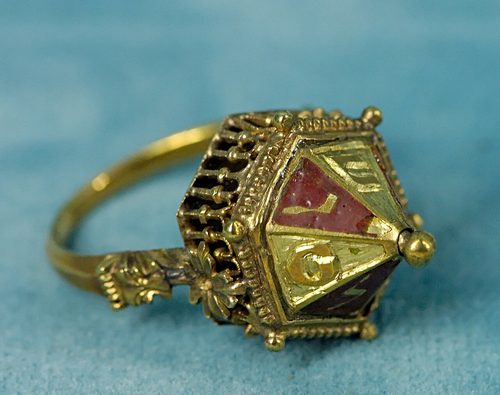
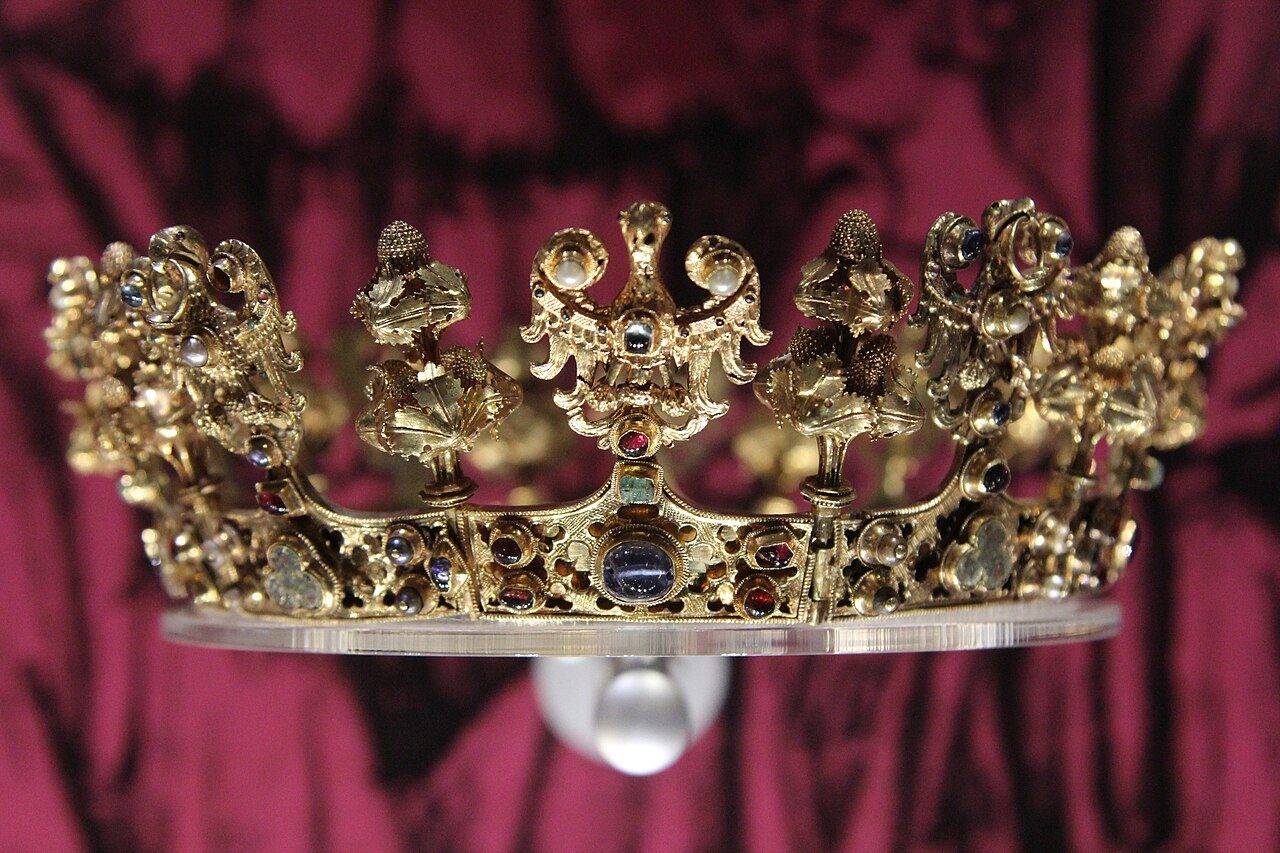
The star of the hoard is a gold woman's crown of the early 14th century: ten hinged segments set with sapphires, garnets, emeralds and pearls and topped by eagles holding rings in their beaks. Two segments were lost or destroyed and have been replaced in gilded silver. It is usually linked to Blanche of Valois, first wife of Charles IV of Luxembourg, king of Bohemia and later emperor. Beside it lie a great gold brooch, 13 cm across, made in southern Italy in the later 13th century around a chalcedony cameo of an eagle in the style of Frederick II's court; two pairs of gold pendants, the older of the 12th century; a clasp crowned by a tiny gold falcon; and rings, one with dragon heads, one with a star sapphire.
How royal regalia came to be buried under a house in a Silesian market town is explained by a debt. In 1348 Charles IV, raising money for his bid to be crowned emperor, pledged valuables to a Jewish banker known as Muscho, or Moses, of Środa. The prevailing reconstruction holds that the banker hid the pledge in the cellar of his house and, during the wave of persecution of Jews that accompanied the Black Death, left the town and never came back. Nobody reclaimed the treasure. The story fits the evidence well, though no document records the burial itself.
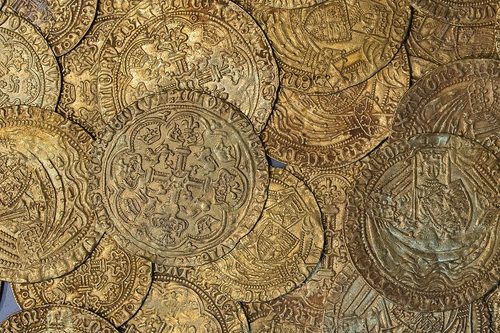
The coins tell the same mid-14th-century story: almost all are Prague groschen and Meissen groschen of the first half of the century, with 39 gold florins. After cataloguing, 7,691 silver coins were inventoried between the Archaeological Museum and the National Museum in Wrocław and the museum in Środa.
Since 1997 the jewels have been the centrepiece of the Regional Museum in Środa's old town hall. Polish writers often call it the treasure of the millennium; estimates of its value run to tens of millions of dollars, though prices mean little for objects with almost no parallels.
Highlights
Early 14th-century open crown of ten segments crowned by eagles, set with sapphires, garnets, emeralds and pearls; possibly the crown of Blanche of Valois.
A gold brooch 129 mm across and weighing 217 g, made in southern Italy in the third quarter of the 13th century around a cameo of about 1240 showing the Staufer eagle.
A pair of gold pendants decorated with filigree, enamel, a citrine and a sapphire, perhaps from Sicily or southern Italy, later updated with enamelled crescents.
A small 13th-century clasp of twisted gold wire topped by a bird of prey, perhaps made in Hungary.
What is in it
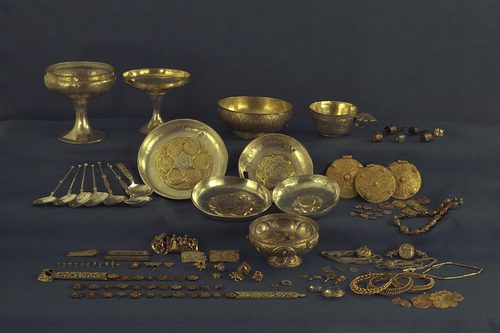
A Gothic gold crown, a large gold brooch with a 13th-century cameo, two pairs of gold head pendants, a clasp topped by a bird of prey, gold rings, a gold ribbon, 39 gold florins and nearly 7,700 silver groschen.
Size: about 7,730 coins and over a dozen jewels (as inventoried; some pieces still missing).
| Item | Number | Notes |
|---|---|---|
| Silver coins | 7,691 inventoried | Mainly Prague groschen of Wenceslas II and later kings, with Meissen groschen of Frederick II |
| Gold coins | 39 | Florins, with a ducat |
| Crown | 1 | Gold, ten hinged segments topped by eagles, early 14th century; reconstructed weight 587 g |
| Brooch (zapona) | 1 | Gold, 129 mm across, 217 g, set with garnets, emeralds, pearls and a chalcedony cameo of an eagle |
| Pendants and clasp | 4 pendants, 1 clasp | A 12th-century pair, a 13th-century pair, and a wire clasp with a bird of prey |
| Rings and other gold | several | Rings with dragon heads, a star sapphire, a crescent and star, and a pearl; a 90 cm gold ribbon |
Photographs
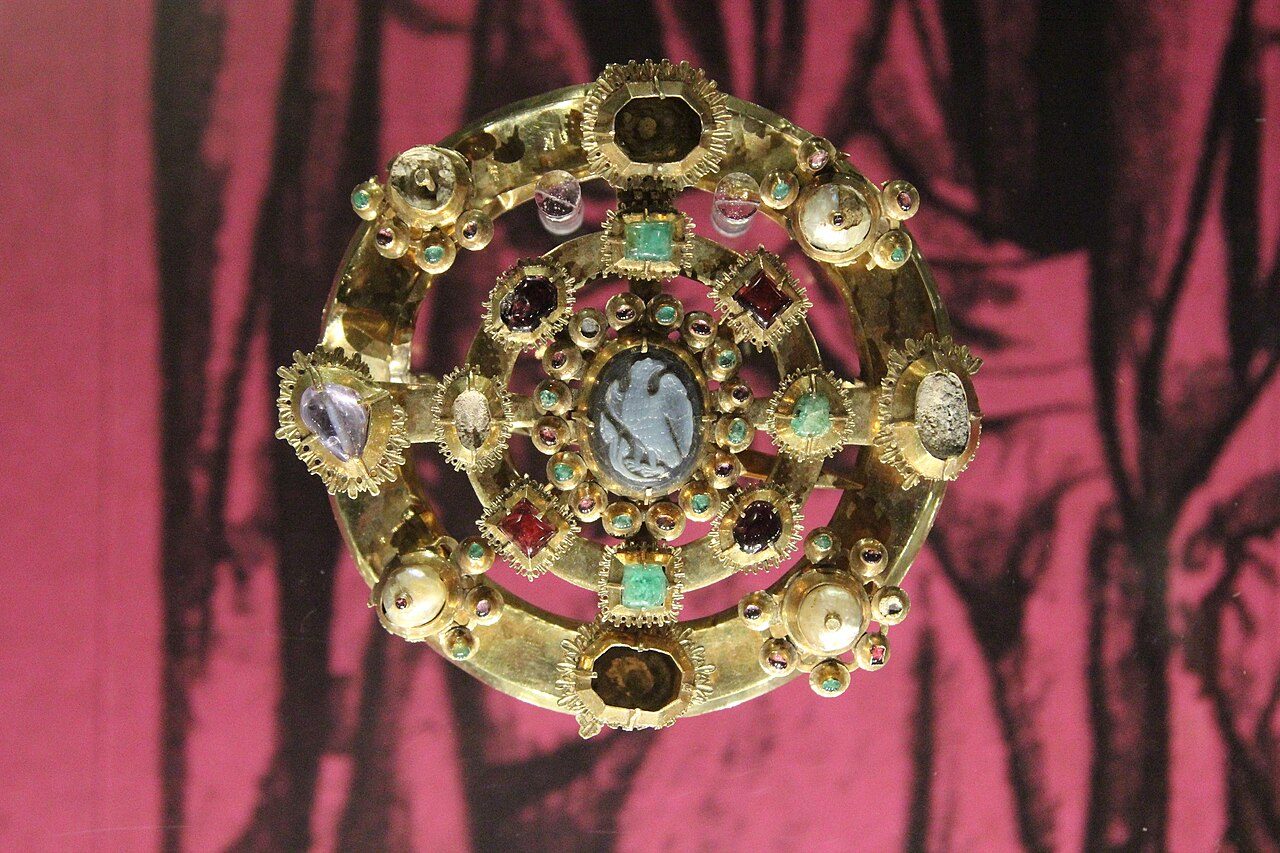
Photo: Fallaner, CC BY-SA 4.0, via Wikimedia Commons
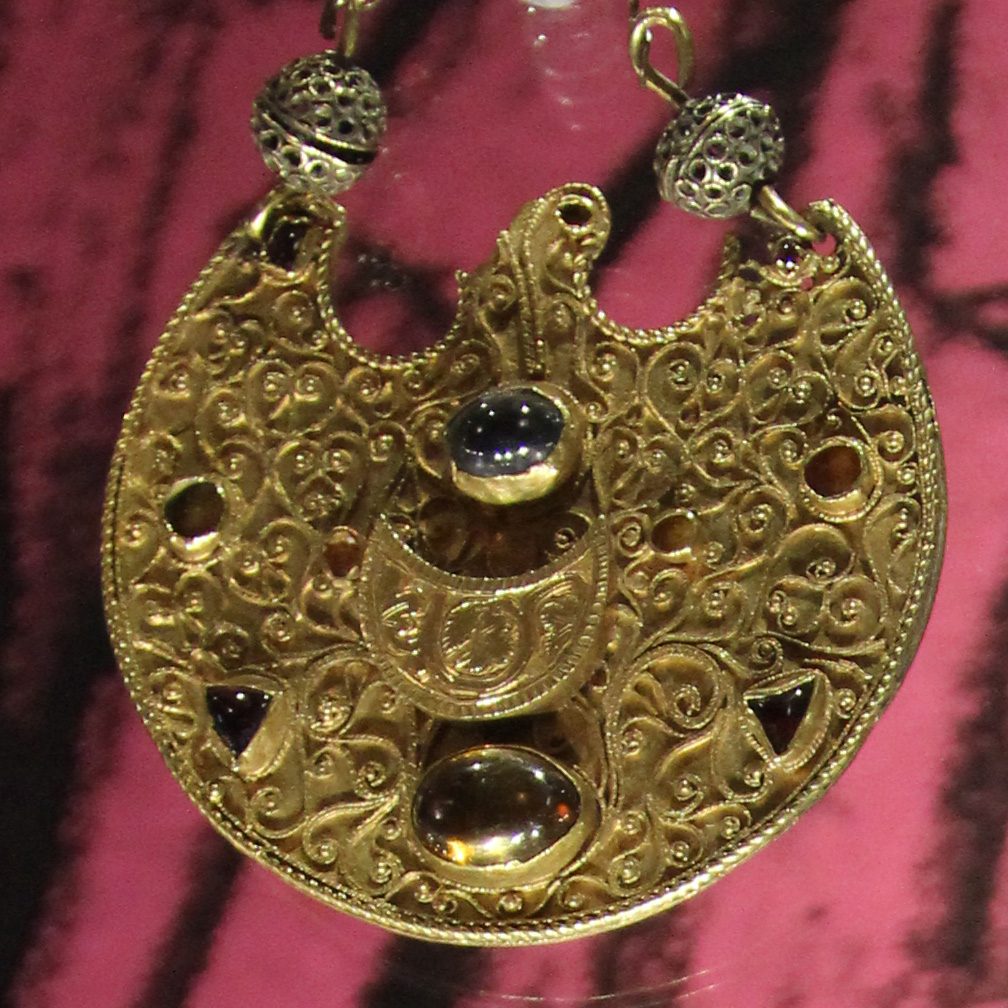
Photo: Fallaner, CC BY-SA 4.0, via Wikimedia Commons
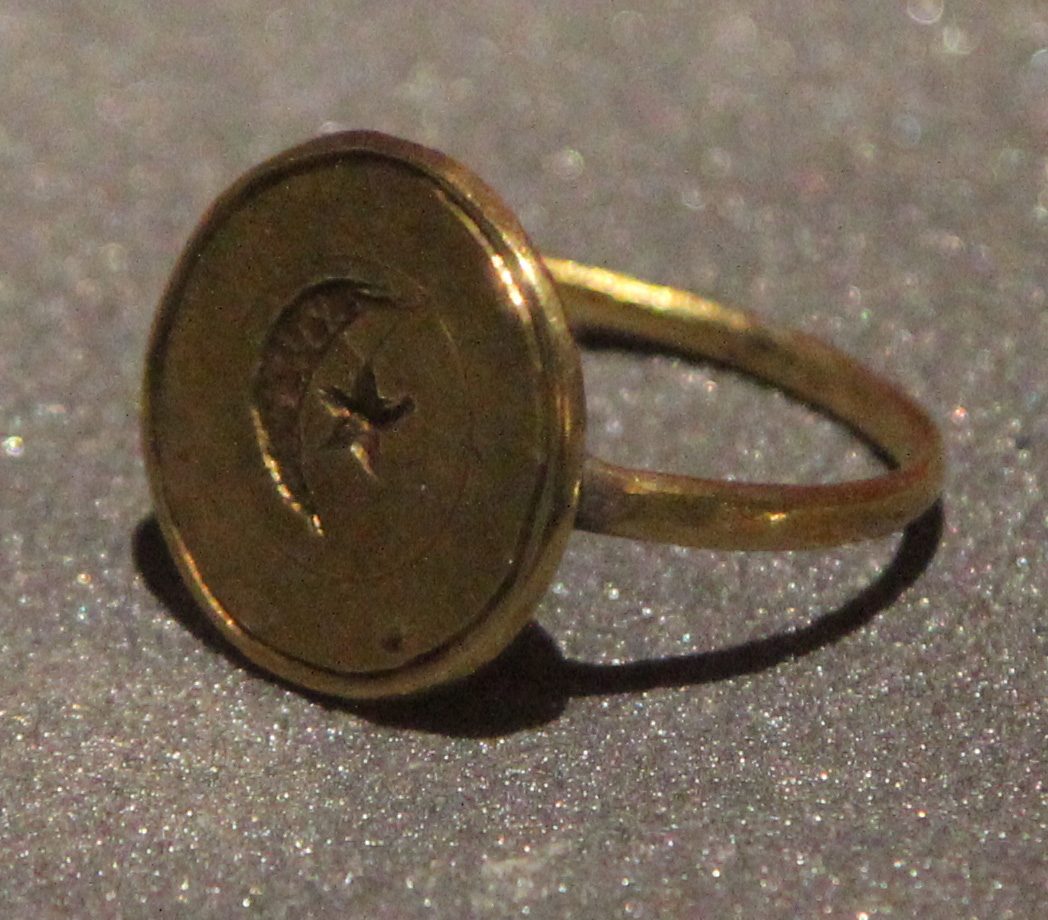
Photo: Fallaner, CC BY-SA 4.0, via Wikimedia Commons
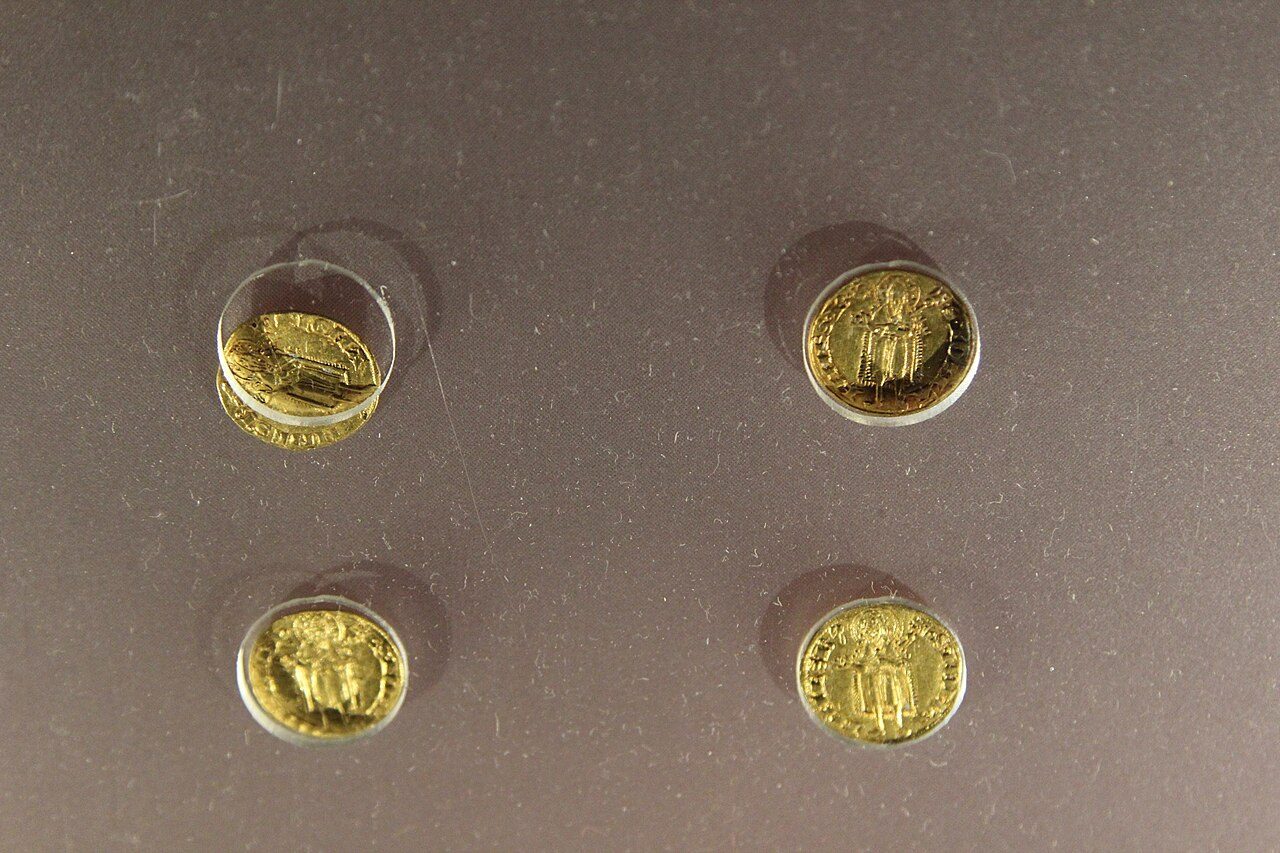
Photo: Fallaner, CC BY-SA 4.0, via Wikimedia Commons
How it is dated
The coins, mostly Prague and Meissen groschen of the first half of the 14th century plus gold florins, close the hoard around the middle of the century. The jewels range from the 12th to the early 14th century. The historical link to Charles IV's 1348 pledge and the persecutions of 1348-49 points to a burial around 1348-50.
What happened after the find
The 1985 coins were secured by police and went to the Archaeological Museum in Wrocław. After the 1988 looting the culture minister offered finders three times the bullion value for returned items, police ran a nationwide recovery operation, and several people were prosecuted; an amnesty spared most from punishment. The treasure is state property administered by the National Museum in Wrocław.
Where sources differ
- Coin counts differ: the 1985 jug held about 3,000 coins (English Wikipedia) or 3,771 (1996 museum catalogue cited by Polish Wikipedia); the 1988 silver coins are given as 2,924 or 3,924.
- The banker's flight during the persecutions is the accepted reconstruction, not a documented event.
- Some writers (e.g. Tomasz Bonek) have proposed that the regalia were stolen rather than pledged; this is a minority view and was not used.
- The link of the crown to Blanche of Valois is probable, not certain.
- An unknown number of pieces looted in 1988 remain missing.
Questions
Where is the Środa Treasure displayed?
The crown, brooch and other jewels are in the Regional Museum in Środa Śląska's town hall, a branch of the National Museum in Wrocław. Part of the coin hoard is in the Archaeological Museum in Wrocław.
Whose crown is in the Środa Treasure?
It is usually linked to Blanche of Valois, first wife of Charles IV. Charles pledged royal valuables to a Jewish banker in Środa in 1348 to finance his imperial ambitions, and they were never redeemed.
Why is part of the Środa Treasure missing?
When the second find was made during demolition in 1988, people carried off coins and jewels before the site was secured. A reward scheme and a police operation recovered much, but not all.