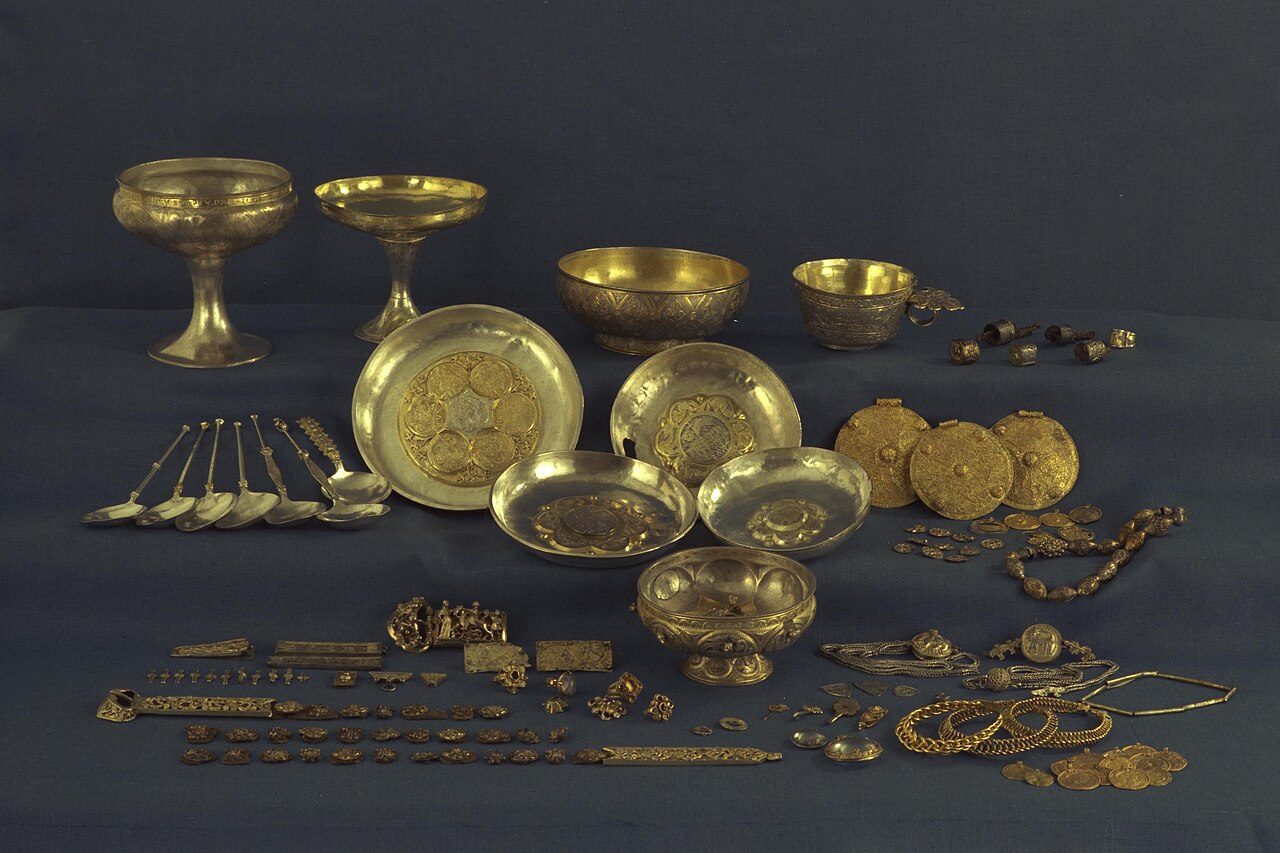
In 1881, during ditch digging on the farm of Dune, in Dalhem parish in the middle of Gotland, struck the remains of a wooden chest under a small pile of stones. Over it someone had laid a broken scythe blade, as if to guard it. Inside were 122 objects of silver and gold, one of the largest medieval treasures found in Europe.
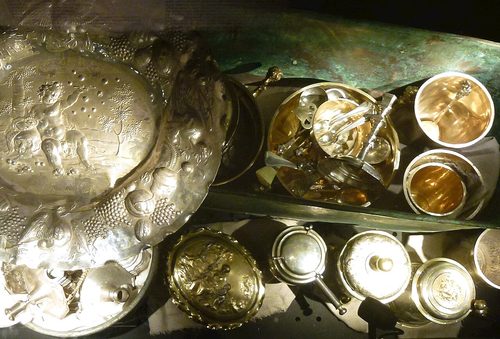
The Dune treasure is not a merchant's stock or a pile of coin but the accumulated valuables of a household. There are gilded silver bowls and stemmed cups decorated with fabulous animals, spoons, neck chains, pendants, arm and finger rings, buckles, belt mounts, brooches, hooks, spangles for sewing onto clothes, and knives with ornamented handles. Some pendants are made from coins: Spanish, Andalusian, Moroccan, German and Russian imitations of Arabic dirhams, mounted to be worn.
The objects span about three centuries. The oldest go back to the 11th century, the newest to the middle of the 14th, and they come from Gotland itself and from Byzantium, Germany, France, England and Norway: a fair map of the island's trading world. Several pieces carry owners' inscriptions, some in runes. "Tjocke, the merchant, owns me", says one; others name Botvid of Alskog and Siglaiv. One name, Zalognev, probably belonged to a Russian merchant. A cup is engraved with the SATOR AREPO word square and a pentagram, both used as protective charms. The spread of names and dates suggests a family adding to its silver generation by generation.
The farm was evidently prosperous. A merchant called Bartholomew of Dune, probably from this farm, sold wine to the English court in 1252, and in 1412 a Botulf Dune was judge of the local district court. No medieval stone house is known there, but the farm seems to have been among the island's leading ones.
Why the chest went into the ground is not recorded. The newest objects place the burial in the 1360s or 1370s. The Swedish History Museum suggests, with a question mark, the invasion of Gotland by the Danish king Valdemar Atterdag in 1361, when farms across the island were plundered and many farmers lost their lives. Whoever buried the Dune silver did not come back for it.
The treasure is in the Swedish History Museum in Stockholm, where it is shown in the Gold Room alongside other great finds of Swedish gold and silver.
Highlights
A footed bowl richly decorated with fantastic animals, one of several in the hoard; height 77 mm, diameter 138 mm.
A cup engraved with the SATOR AREPO palindrome and a pentagram, magic formulas meant to protect the owner.
Spoons and other pieces bearing owners' names, among them the runic inscriptions that let us hear the names of 14th-century Gotlanders.
Pendants made from imitations of Arabic coins struck in Spain, Morocco, Germany and Russia.
What is in it
A family's precious metalwork gathered over several generations: gilded silver bowls and cups, spoons, neck chains, pendants including mounted coins, arm and finger rings, buckles, belt mounts, brooches, hooks, spangles and knives with decorated handles.
Size: 122 objects.
| Item | Number | Notes |
|---|---|---|
| Bowls and cups | several | Gilded silver, some with fabulous beasts; one cup carries a SATOR square and a pentagram |
| Spoons | several | Some with owners' inscriptions, including runes |
| Necklaces and pendants | several | Including pendants made from Spanish, Moroccan, German and Russian imitations of Arabic coins |
| Rings, buckles, belt mounts, brooches, hooks and spangles | many | Dress and belt fittings in silver and gold |
| Knives | a few | With decorated handles |
Photographs
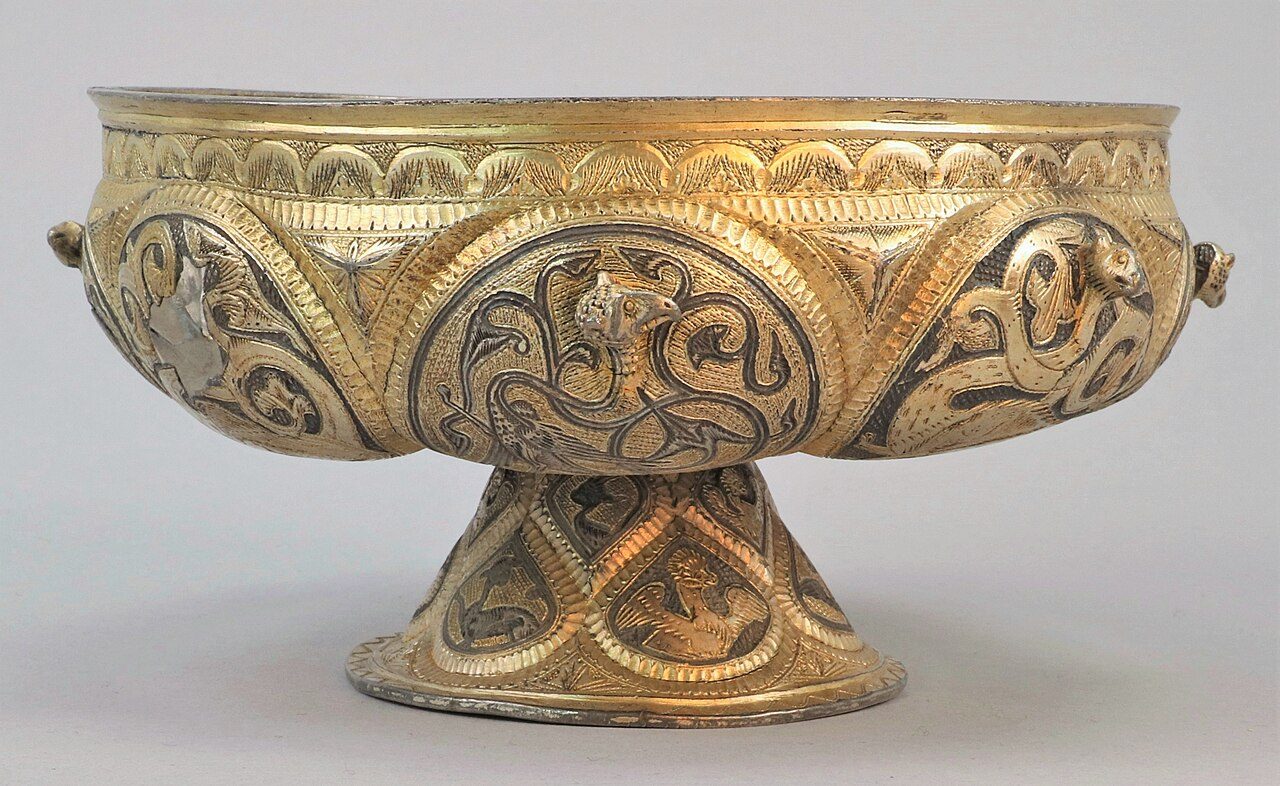
Photo: Unknown, CC BY 4.0, via Wikimedia Commons
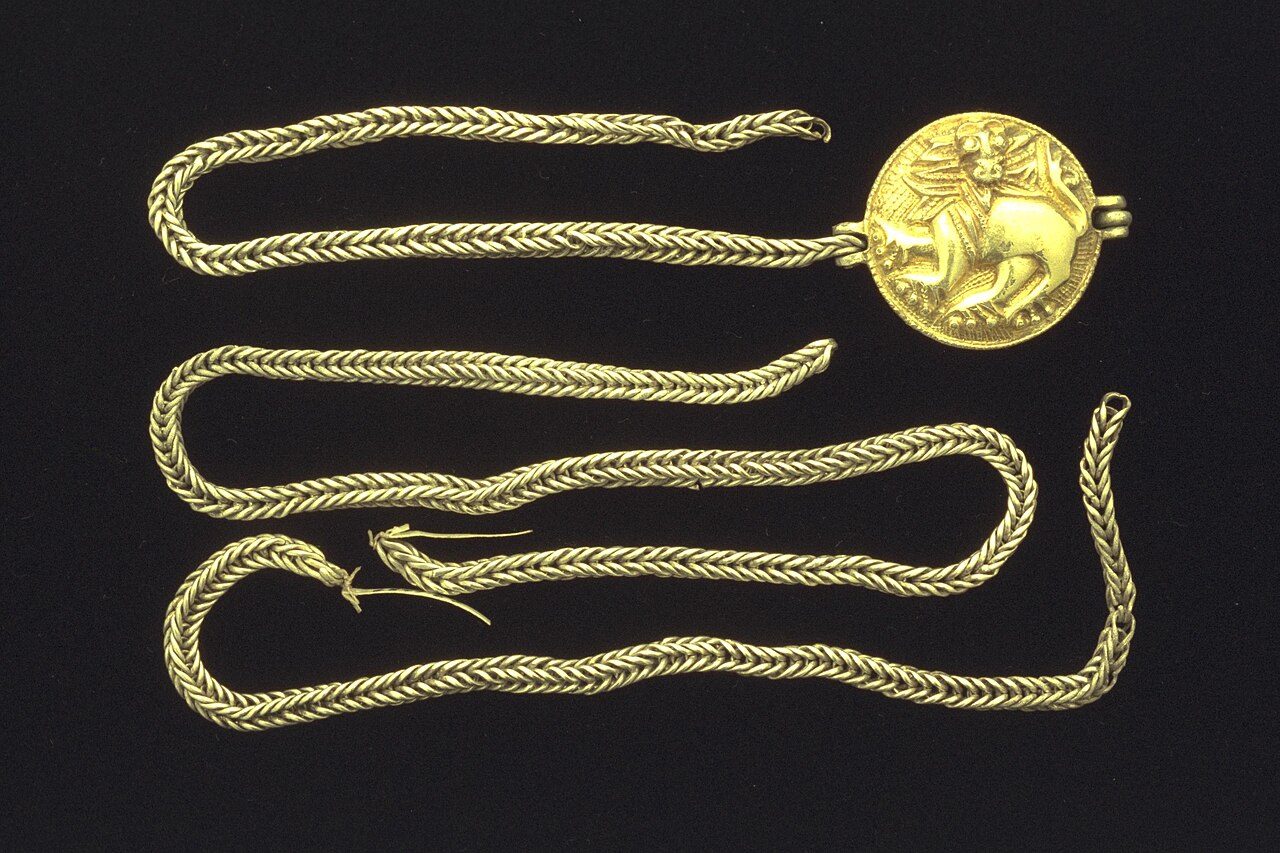
Photo: Unknown, CC BY 4.0, via Wikimedia Commons
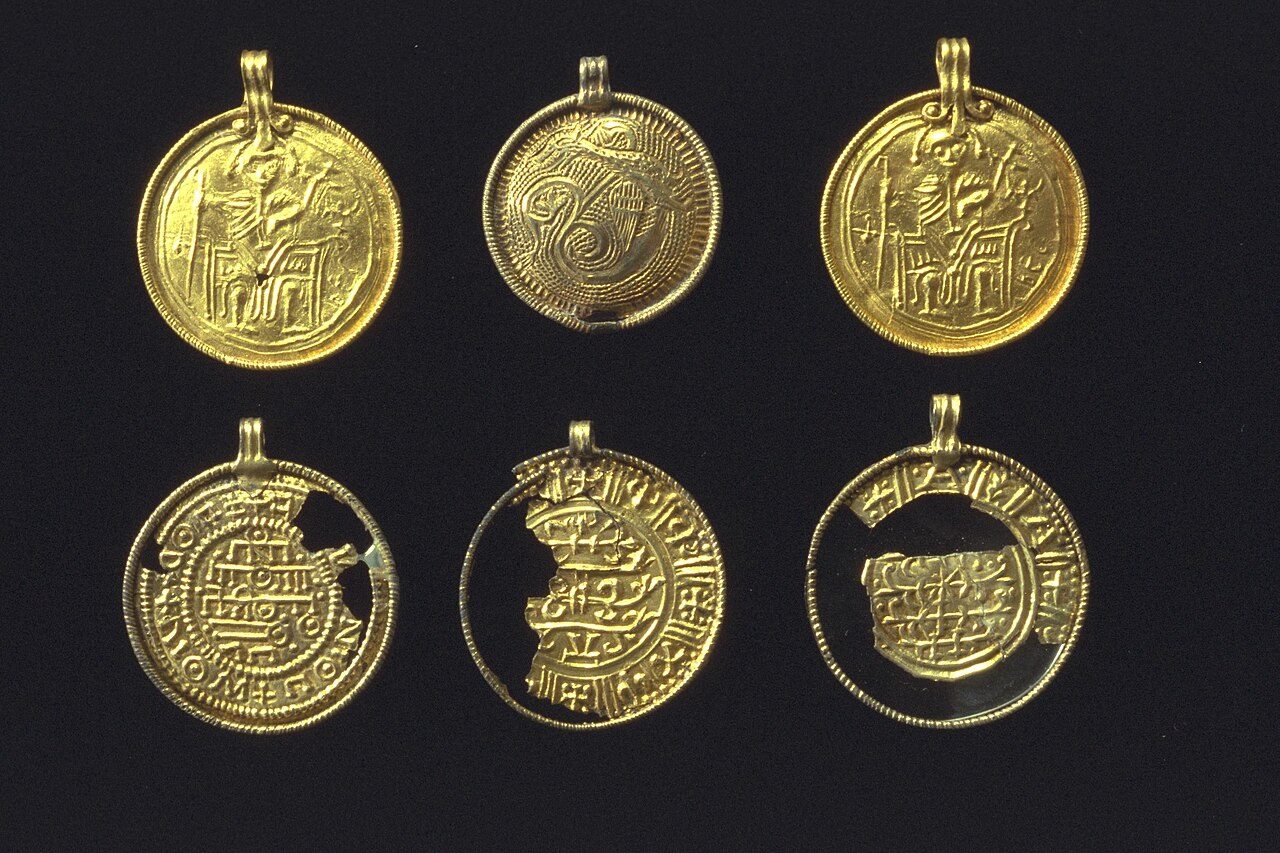
Photo: Unknown, CC BY 4.0, via Wikimedia Commons
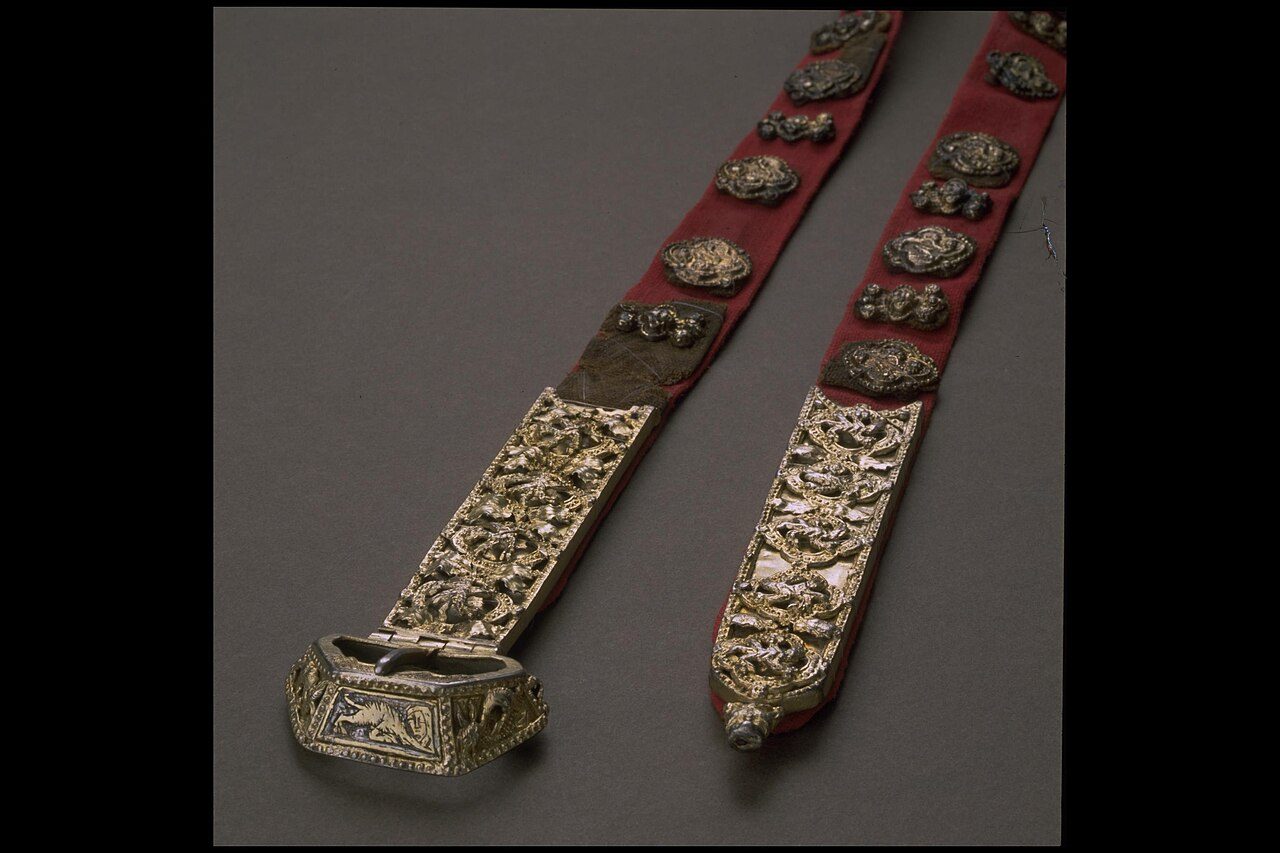
Photo: Unknown, CC BY 4.0, via Wikimedia Commons
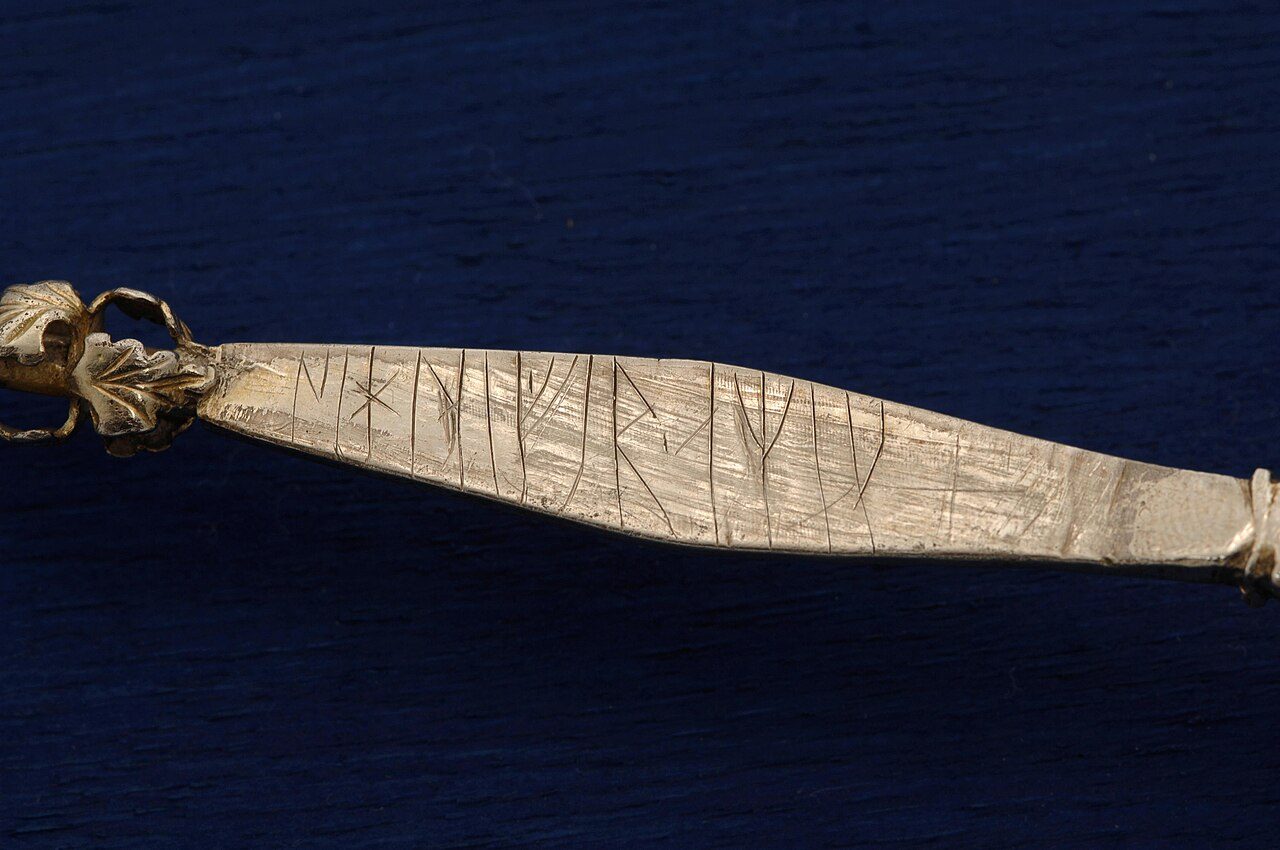
Photo: Unknown, CC BY 4.0, via Wikimedia Commons
How it is dated
The newest objects date from around the middle of the 14th century, which puts the burial in the 1360s or 1370s. The Danish invasion of 1361 is a plausible occasion but is offered by the museum only as a possibility.
What happened after the find
Found during farm work in 1881 and acquired by the State Historical Museum in Stockholm; details of any reward were not checked.
Where sources differ
- The object count of 122 comes from Anders Andrén's guidebook as cited in Swedish Wikipedia; the museum page gives no count.
- The link with the 1361 invasion is a suggestion, not established.
- Whether 'Tjocke' is a nickname ('the fat one') or a personal name is not discussed in the sources used.
- How the treasure reached the museum in 1881 (inquest, reward) was not checked.
Questions
Where can I see the Dune treasure?
In the Gold Room (Guldrummet) of the Swedish History Museum in Stockholm, which owns it.
Why was the Dune treasure buried?
Nobody knows for sure. The newest pieces date to the mid-14th century, and the museum suggests the Danish invasion of Gotland in 1361 as a possible reason.
What is in the Dune treasure?
122 objects of silver and gold: bowls and cups, spoons, chains, pendants, rings, buckles, belt fittings and knives, collected over about three centuries.