In 1863 workmen renovating a house on the rue des Juifs in Colmar, the street at the heart of the town's medieval Jewish quarter, opened a wall and found a hidden cache of small, dusty objects. Cleaned, they turned out to be gold and silver jewellery and coins, the savings of a Jewish family who had concealed them some five centuries earlier and never returned.
The reason they never returned is well documented. When the Black Death reached the Upper Rhine in 1348, Jews across the region were accused of poisoning wells. In late December 1348 Colmar's council reported to Strasbourg that a Jewish man had confessed to such a plot, a confession obtained under torture. The town's Jews were then put to death, most by burning, without trial. Accounts give the killings as late 1348 or early 1349, and no survivors from the community are recorded. Jews had lived in Colmar since at least the late 13th century, working among other trades in the wine business, and had a synagogue and a ritual bath.
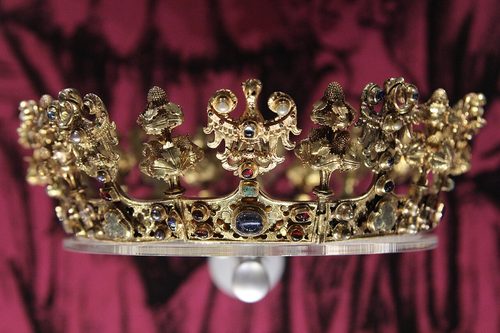
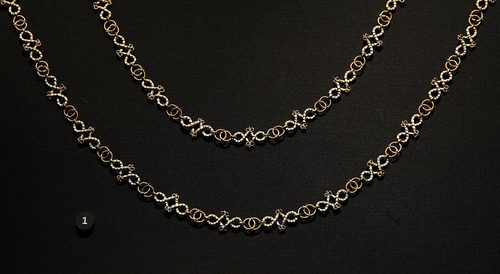
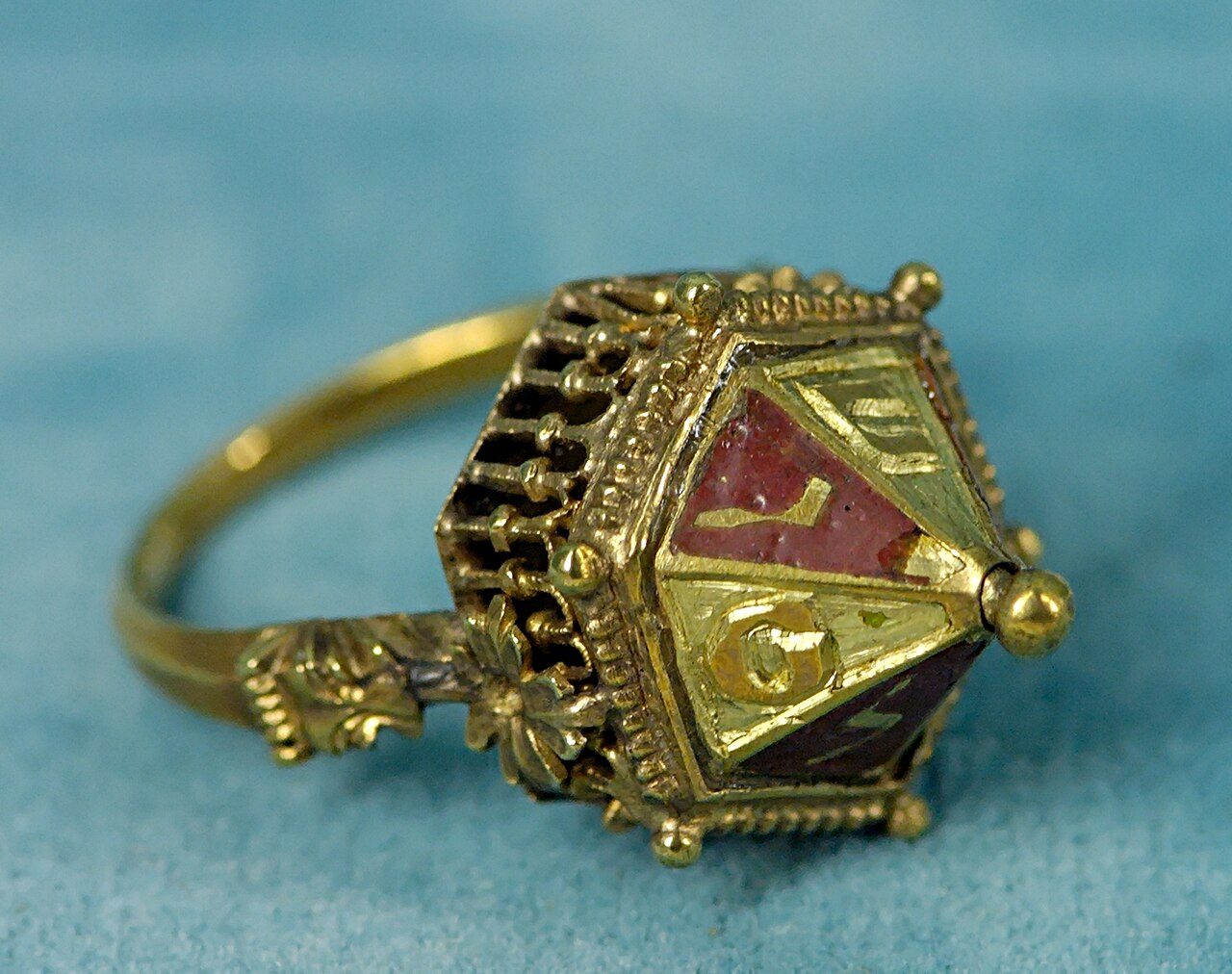
What survives is small in scale but unusually intimate. The most famous piece is a gold wedding ring, made around 1300 and before 1348, whose bezel is a tiny six-sided building with an enamelled roof engraved with the Hebrew words mazal tov. Rings of this kind are generally thought to have been used in the wedding ceremony rather than worn every day; the miniature building is usually read as the Temple in Jerusalem or the couple's new home. Its style suggests it may have been made in Italy. Around it are rings set with sapphire, onyx and other stones, a jewelled brooch of gilded silver with sapphires, rubies, garnet and pearls, an enamelled belt, gilded buttons and a small silver key, together with over 300 coins.
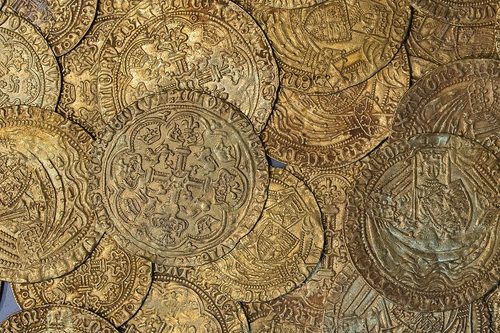
The coins help date the deposit. Most are silver, but the latest datable piece is a gold florin of Louis the Great of Hungary of a type issued in 1342-53, which fits a burial at the time of the persecution. The jewellery ranges from the late 13th century to the mid-14th.
Not everything reached a museum. The finders are believed to have sold some items before the whole treasure was recorded, and the Musée de Cluny in Paris acquired the bulk only in 1923, according to a French gemmological account. A few pieces are in the Musée Unterlinden in Colmar itself. The treasure was fully published only in 1999, for an exhibition in Colmar, and was shown with the Erfurt Treasure in the Cluny's 2007 exhibition on the treasures of the Black Death and at The Met Cloisters in New York in 2019-20.
Hoards like this one, and those from Erfurt, Środa Śląska, Weißenfels and Lingenfeld, are among the few physical traces left by the Jewish communities destroyed in 1348-50. They survive precisely because their owners did not.
Highlights
Gold and enamel, about 1300 to before 1348, crowned by a miniature hexagonal building inscribed mazal tov in Hebrew. One of only a handful of medieval Ashkenazi wedding rings known.
A brooch of gilded silver set with sapphires, rubies, garnet and pearls, from the second quarter of the 14th century.
A gold ring set with a sapphire, dated to the second quarter of the 14th century.
A gold florin of a type struck in 1342-53, the latest datable coin in the hoard.
What is in it
The portable valuables of a well-off Jewish household: gold and silver rings, gem-set brooches, an enamelled belt, gilded buttons, a small silver key, silver tableware and a purse of mostly silver coins.
Size: about 50 objects and about 300 coins (some pieces were sold before recording).
| Item | Number | Notes |
|---|---|---|
| Coins | over 300 | Mostly silver, with gold including a florin of Louis of Hungary |
| Rings | about 16, including fifteen of silver | Includes a gold Jewish wedding ring and rings set with sapphire, onyx and other stones |
| Brooches, belt fittings and buttons | several | Gilded silver brooch set with sapphires, rubies, garnet and pearls; enamelled belt; gilded buttons |
| Silver tableware and small objects | a few | Including a double cup and a small silver key |
Photographs
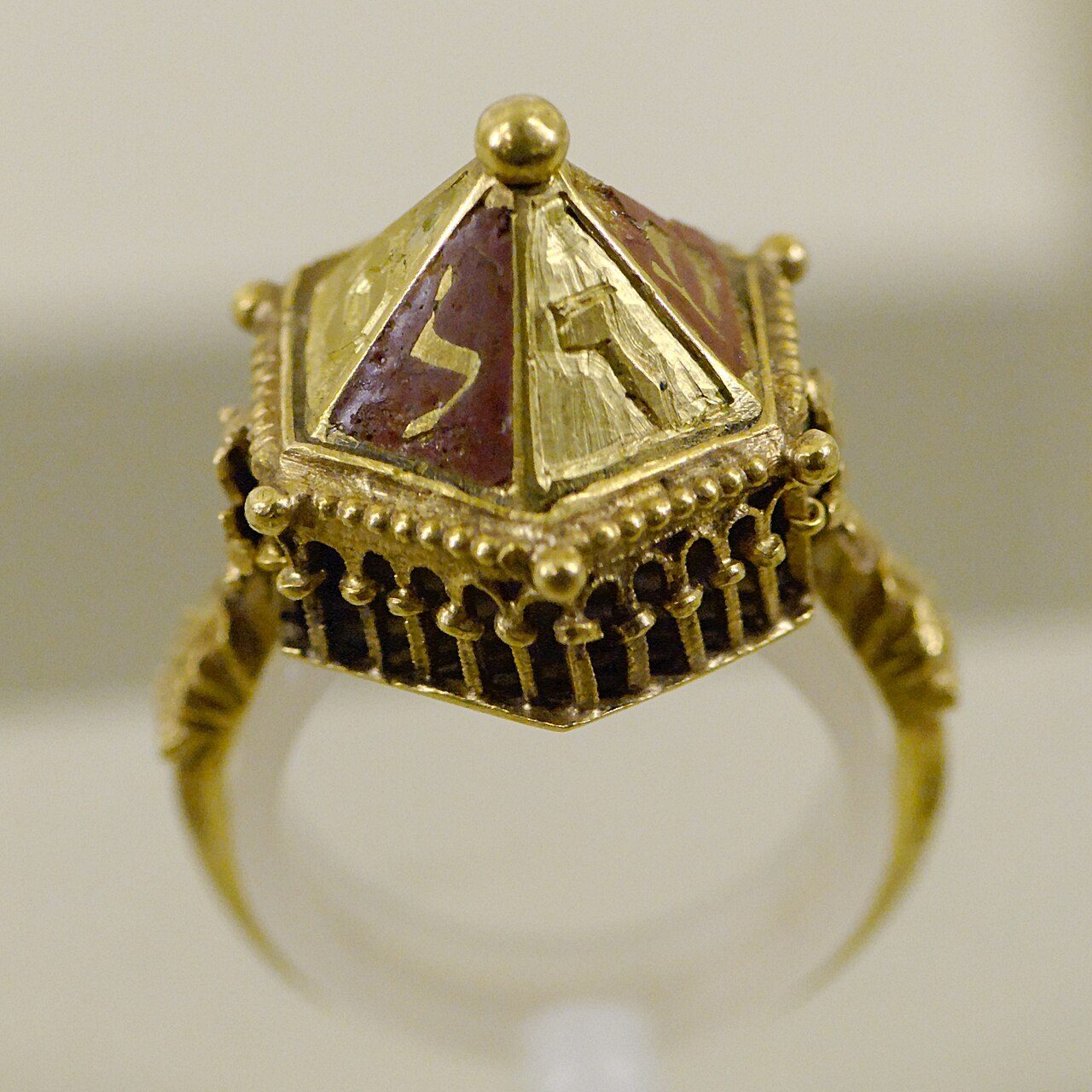
Photo: Unknown, CC BY 2.5, via Wikimedia Commons
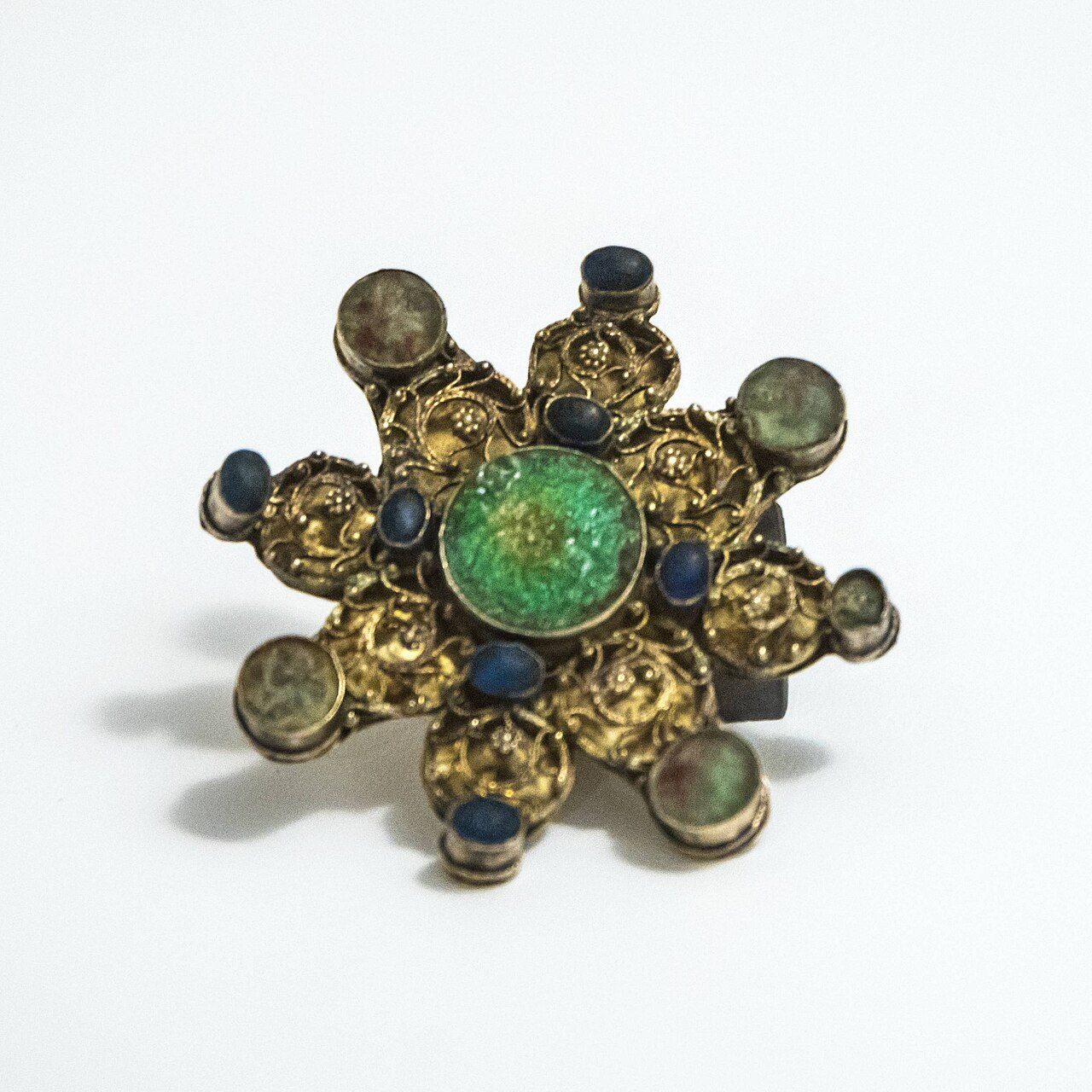
Photo: joergens.mi, CC BY-SA 3.0, via Wikimedia Commons
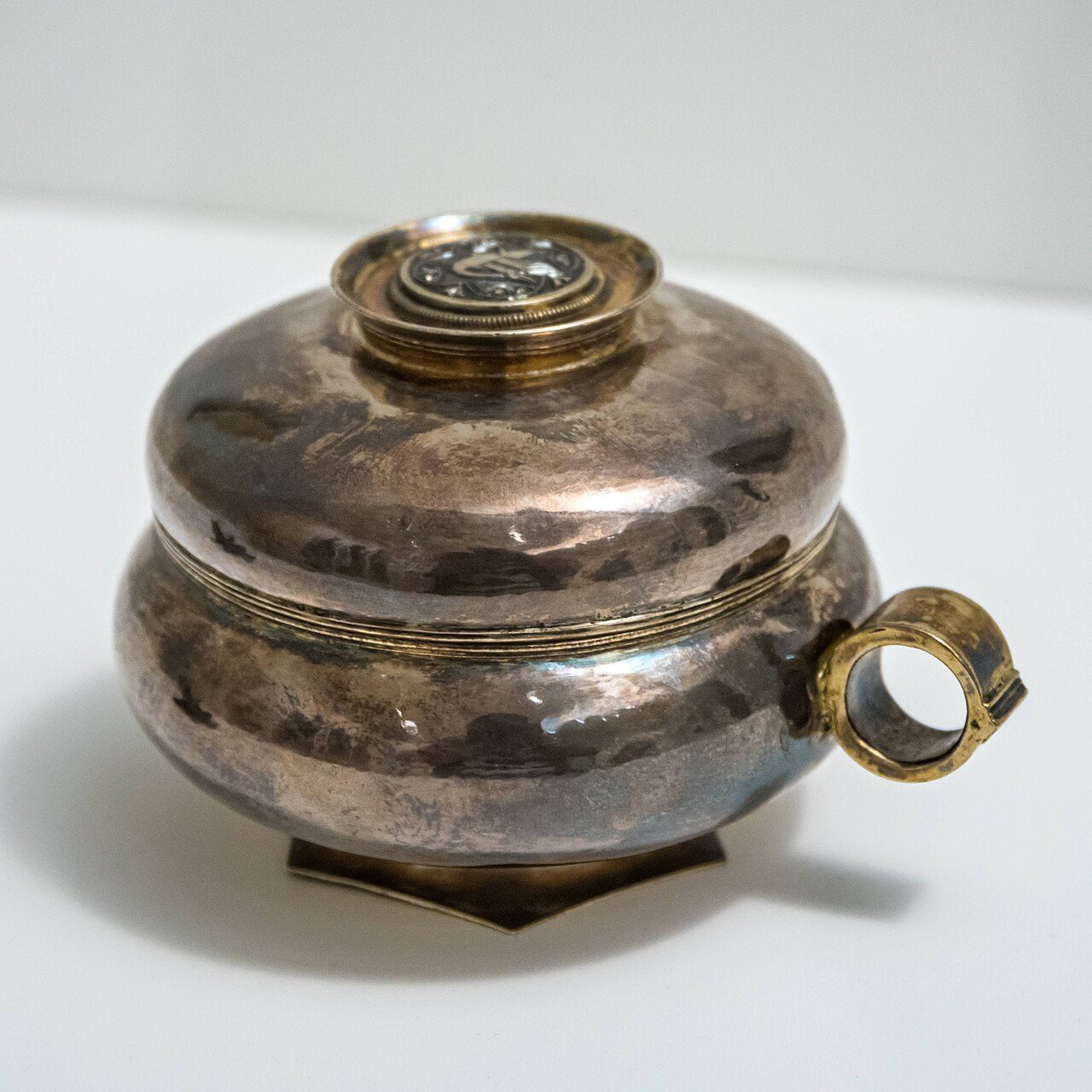
Photo: joergens.mi, CC BY-SA 3.0, via Wikimedia Commons
How it is dated
The latest datable coin, a florin of Louis of Hungary of the 1342-53 type, shows the hoard was closed in the mid-14th century, and the jewellery runs from the late 13th century to the second quarter of the 14th. The findspot in the Jewish street and the near-total destruction of Colmar's Jewish community in 1348-49 make that persecution the most likely occasion for the concealment.
What happened after the find
Found during building work in 1863; some pieces are believed to have been sold by the finders before recording. The bulk was acquired by the Musée de Cluny in 1923 (date from a single source).
Where sources differ
- Object counts are approximate: sources give 'over 300 coins' and 'about 50 pieces'; fifteen silver rings is from a scholarly volume cited by Wikipedia.
- Date of the killings at Colmar: sources give late December 1348 or 1349.
- The 1923 Cluny acquisition date comes from one source (legemmologue.com) and was not confirmed elsewhere.
- Whether the house's 1863 occupant was a confectioner comes from press accounts of the 2019 Met exhibition.
Questions
Where is the Colmar Treasure today?
Most of it belongs to the Musée de Cluny, the national museum of the Middle Ages in Paris. A few pieces are in the Musée Unterlinden in Colmar. It was lent to The Met Cloisters in New York in 2019-20.
Why was the Colmar Treasure hidden?
It was almost certainly hidden by a Jewish family during the Black Death persecutions of 1348-49, when Colmar's Jews were falsely accused of poisoning wells and killed. The owners never came back for it.
What is special about the Colmar wedding ring?
It is one of very few medieval Jewish wedding rings to survive. Instead of a stone it carries a tiny gold and enamel building inscribed mazal tov, a form linked to the Temple in Jerusalem or the couple's new home.