In 1998, as an excavation at Michaelisstraße 43 in central Erfurt was nearly finished, archaeologists found a hoard tucked beneath the wall of a cellar entrance. It weighed nearly 28 kilograms. A few streets away stood the Old Synagogue, and the house lay in what had been the city's Jewish quarter until March 1349.
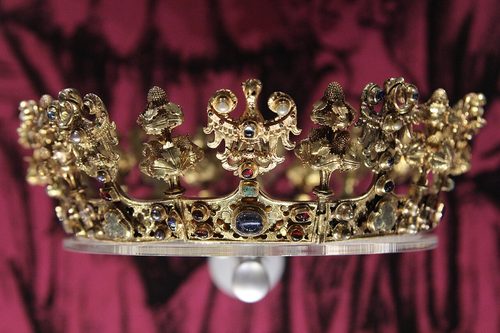
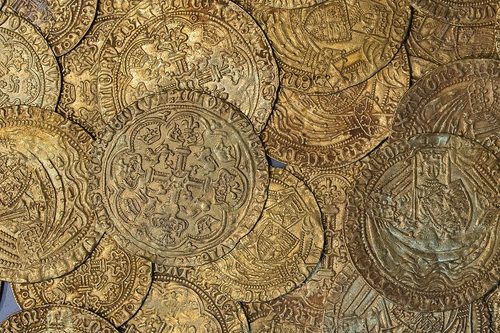
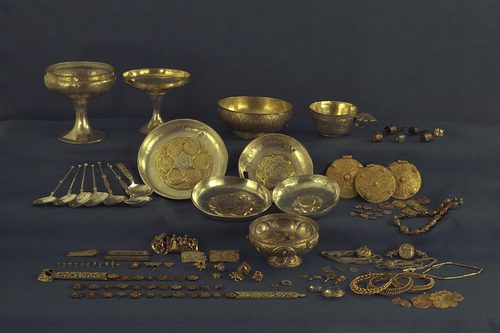
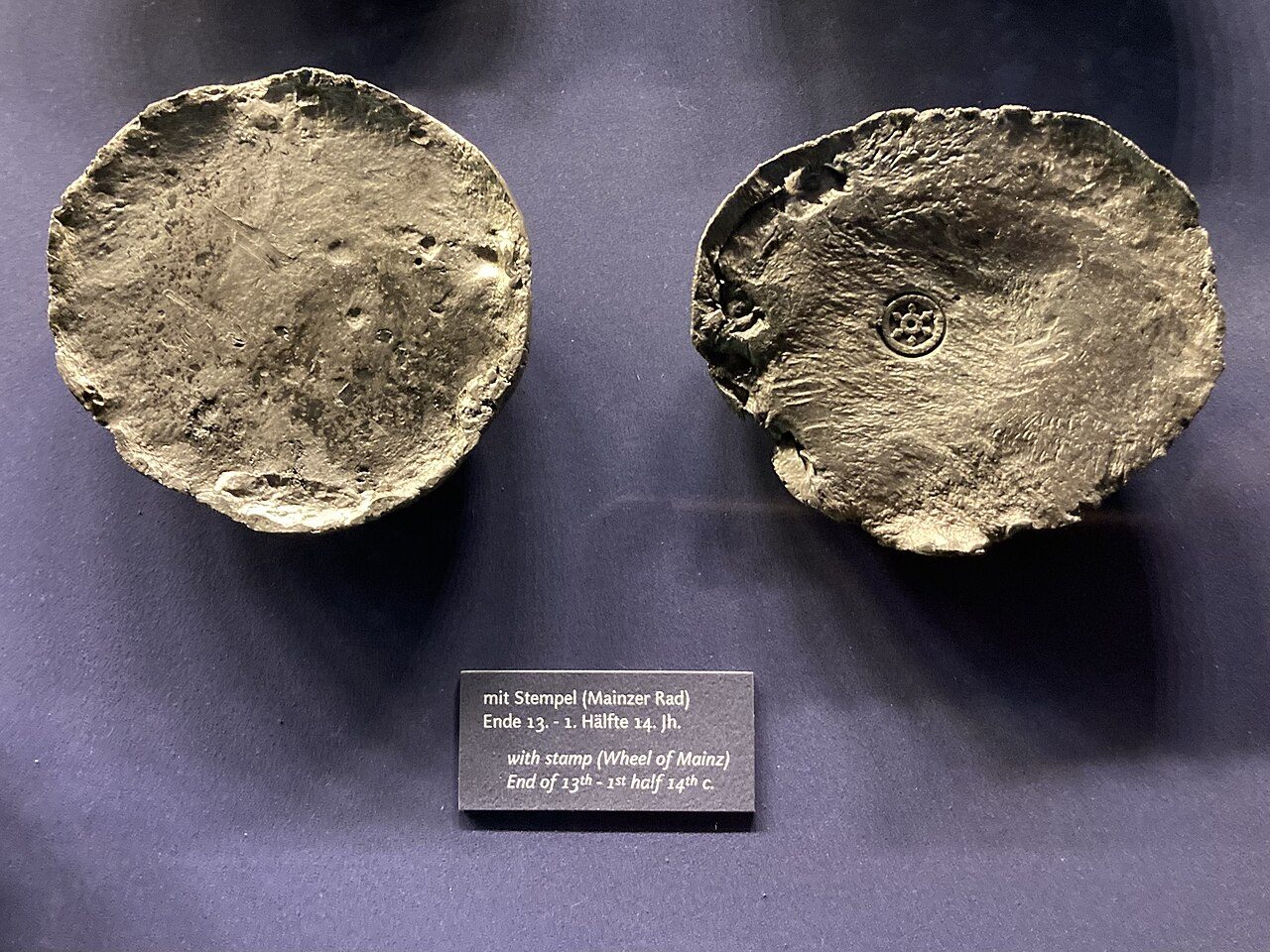
Most of the weight is money: 3,141 silver coins and 14 silver ingots, about 24 kilograms in all. The coins are gros tournois, the large French silver pennies, and related issues of the late 13th and early 14th centuries, making this the largest single find of the type. All but one of the ingots carry stamps. Around them lay more than 700 pieces of Gothic goldsmiths' work: a set of eight silver beakers that stack inside one another, decorated with gilded arcades, a ewer, a shallow drinking bowl and a double cup; eight brooches, some thickly set with stones; eight gold and silver rings; and some 600 small silver fittings for belts and clothing.
Those fittings are rarer than they sound. Silver sequins sewn onto dress were high fashion in the 14th century, but when tastes changed they went straight back to the melting pot. Almost all other survivors are on church vestments, so Erfurt gives a rare look at how a well-off secular household dressed. The same is true of the tableware and jewellery: secular silver of the period was valued for its metal, pawned, sold or remade, and very little escaped.
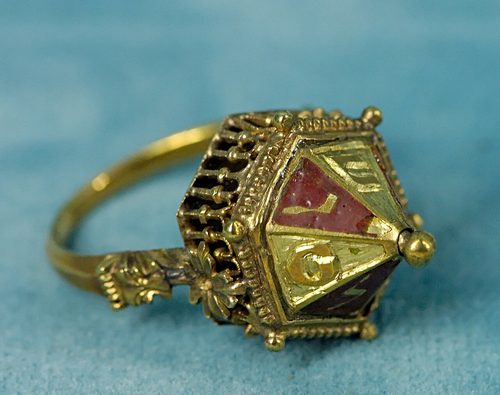
The treasure's best-known piece is a gold Jewish wedding ring from the first half of the 14th century. In place of a stone it carries a tiny Gothic structure of openwork tracery capped by a faceted roof, engraved with the Hebrew letters for mazal tov. Only two other Jewish wedding rings of that period are known from central Europe, from Colmar and Weißenfels.
The context is the Black Death persecutions. On 21 March 1349 a mob attacked Erfurt's Jewish community; estimates of the dead run from about a hundred to several thousand, and survivors were expelled. The killings came before the plague itself reached the city in 1350, part of a wave of violence driven by accusations that Jews were spreading the disease. Many families hid valuables as the threat grew. Research by the archaeologist Maria Stürzebecher suggests the owner of this cache was a moneychanger named Kalman of Wiehe, who did not survive to reclaim it.
Before settling in Erfurt the treasure travelled: to the Musée de Cluny in Paris in 2007, shown beside the Colmar Treasure, then to New York, London and Tel Aviv. Since 2009 it has been displayed in the cellar of the Old Synagogue, which with the medieval mikveh and the Stone House was inscribed as a World Heritage Site in 2023.
Highlights
Pure gold, first half of the 14th century, with a miniature Gothic tower engraved mazal tov in Hebrew. One of only three such rings of the period known from central Europe.
Eight silver beakers that fit inside one another, decorated with gilded Gothic arcades, made in the first half of the 14th century.
Eight brooches of different sizes, some heavily set with stones, the largest about 7 cm across.
Fourteen ingots of varying weight, all but one carrying a stamp, a rare look at how silver was stored as wealth.
What is in it
Silver coins and stamped ingots making up most of the weight, with a nesting set of silver beakers, a ewer and a double cup, eight brooches, eight rings including a gold Jewish wedding ring, and hundreds of silver dress and belt fittings.
Size: 3,141 coins, 14 ingots and over 700 other objects. Weight: nearly 28 kg (about 24 kg of it coins and ingots).
| Item | Number | Notes |
|---|---|---|
| Silver coins | 3,141 | Gros tournois (Tornesel) and related pieces of the late 13th and early 14th century; the largest single find of this coin type |
| Silver ingots | 14 | Of different sizes and weights; all but one stamped |
| Silver tableware | 11 | Eight nesting beakers with gilded Gothic arcades, a ewer, a drinking bowl and a double cup |
| Brooches | 8 | Some richly set with stones; the largest about 7 cm across |
| Rings | 8 | Gold and silver, including a Jewish wedding ring |
| Dress and belt fittings | about 600 | Silver appliqués to be sewn onto clothing, and belt mounts |
Photographs
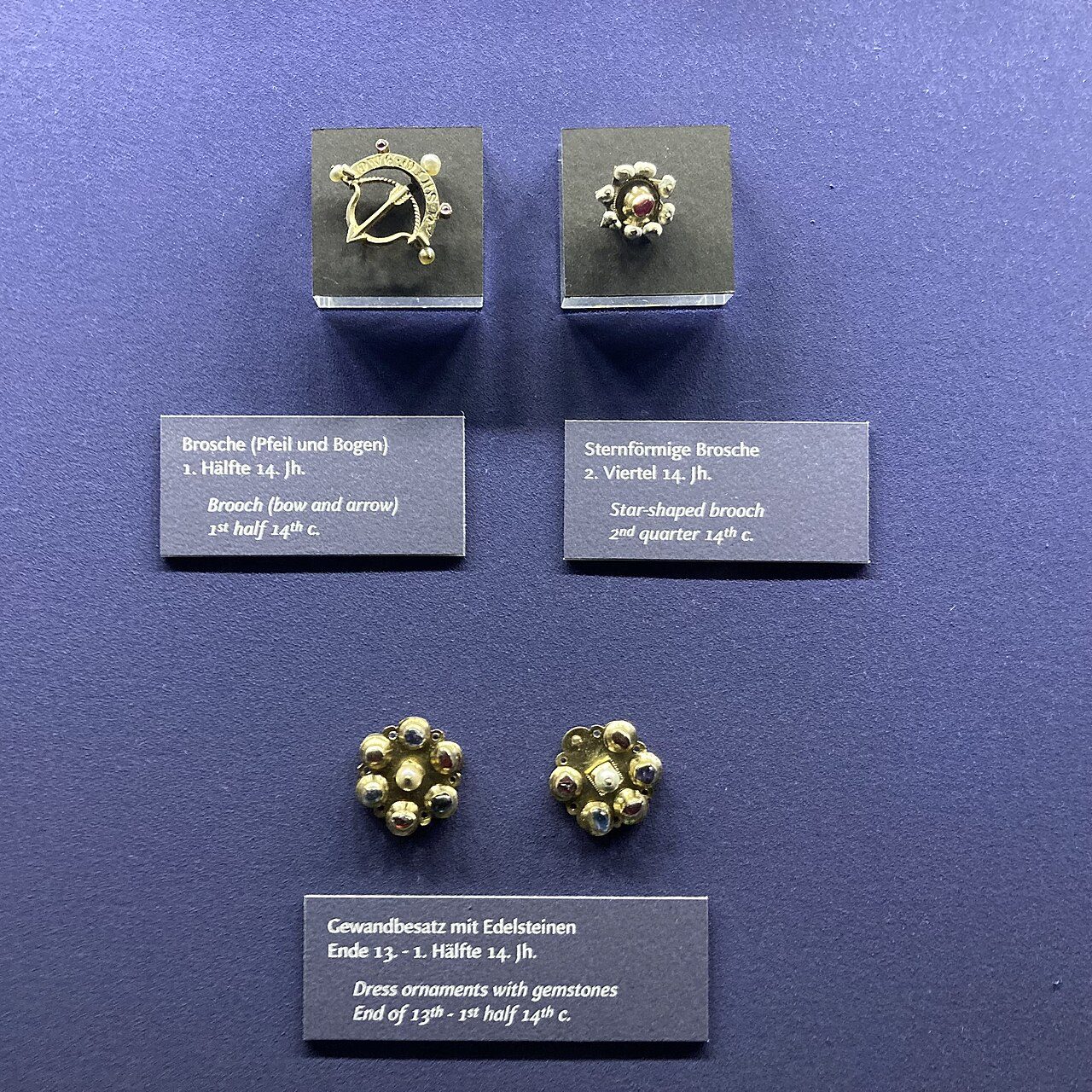
Photo: Markus Köllner, CC BY-SA 4.0, via Wikimedia Commons
Photo: Markus Köllner, CC BY-SA 4.0, via Wikimedia Commons
How it is dated
The goldsmiths' work dates from the late 13th to the first half of the 14th century, and the wedding ring to the second quarter of the 14th. The coins are of the late 13th and early 14th centuries. With the findspot in the Jewish quarter, this places the concealment just before the pogrom of 21 March 1349.
What happened after the find
Recovered by archaeologists of the Thuringian state heritage office during a planned excavation, so it never passed through private hands.
Where sources differ
- Date of the wedding ring: the city's site says second quarter of the 14th century; Wikipedia says early 14th century.
- The death toll of the 1349 massacre is uncertain: estimates range from about 100 to 3,000.
- The attribution to Kalman of Wiehe is a scholarly suggestion (Stürzebecher), not proven.
- Exact coin composition beyond 'Tornesel' (some may be imitations from the Low Countries) was not checked in a numismatic report.
- The legal ownership route (Thuringian state treasure rules) was not verified; the 'law' field says only that it was found in a state excavation.
Questions
Where can I see the Erfurt Treasure?
In the cellar of the Old Synagogue in Erfurt, where it has been on permanent display since 2009. The synagogue is part of a World Heritage Site inscribed in 2023.
Who owned the Erfurt Treasure?
A Jewish household in Erfurt that hid it before the massacre of March 1349. Research points to a moneychanger called Kalman of Wiehe, though this cannot be proved.
Why is the Erfurt wedding ring important?
Very few medieval Jewish wedding rings survive. The Erfurt ring, with its tiny gold tower inscribed mazal tov, is one of only three of the period known from central Europe.