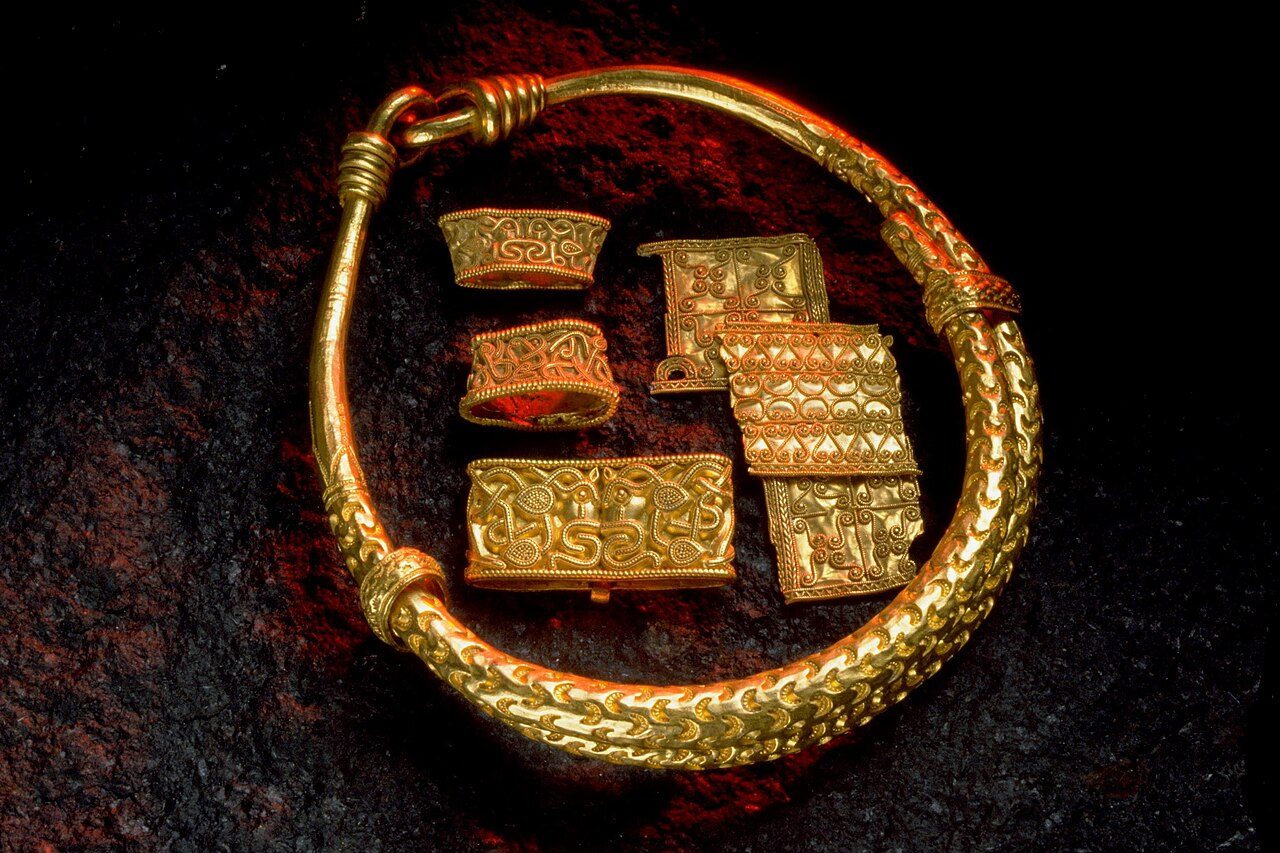
In 1774 a farm in the village of Tuna, in Västerljung parish on the Södermanland coast south-west of Stockholm, produced one of the largest gold finds ever made in Scandinavia. The gold came to light on two separate occasions and weighed about 12 kilograms in all. The circumstances were never well recorded, but the land belonged to the Tureholm estate, and its owner, the councillor of the realm Count Nils Adam Bielke, became the person entitled to the reward.
Under Swedish practice the Crown could redeem finds of precious metal by paying their value. It chose only a few pieces: a massive neck-ring, the mouthpiece of a sword scabbard and two socket-shaped fittings from the grip of a sword. The rest, around nine-tenths of the weight, consisted of gold rods wound into spirals, a form in which Scandinavians stored and paid with bullion in the Migration Period. The state's finances were too poor to buy them, so the count kept them. According to the records he had them melted down, struck into ducats and used the money to pay his debts.
What survives is still remarkable. The neck-ring weighs 985.3 grams, the heaviest of its kind known. It is made of two thick gold rods that cross over each other around the neck, held by two decorated bands that lock the ring shut. Its surface is stamped all over with small crescents, giving a texture like the scales of a reptile, and the pattern ends in a punched triangle that may represent a stylised snake's head. Snakes, which shed and renew their skins, carried associations with long life, and the decoration may have been meant to protect the wearer as much as to impress.
The sword fittings are equally telling. Gold mounts for scabbards and hilts are a mark of the highest rank in Migration Period Scandinavia, when a sword was the possession of a war leader and his closest followers. Together with the neck-ring and the bullion, they suggest that the Tureholm gold was the treasury of a regional ruler.
Most of that gold ultimately came from the Roman world. In the 4th to 6th centuries large quantities of Roman and Byzantine gold coins, paid as subsidies, ransom or wages for service, reached Scandinavia, where many were melted down and reworked into rings, rods and ornaments. The Tureholm hoard is one of the largest single accumulations of that gold, which is why its fate is so often lamented: the bulk of a Migration Period royal treasure became 18th-century coinage.
Highlights
A gold ring weighing 985.3 g, made of two massive crossed rods locked by decorated bands and stamped all over with crescents. It is the heaviest neck-ring of its type.
A gold scabbard mouthpiece and two socket-shaped fittings from a sword grip, the equipment of a high-ranking warrior.
What is in it
Mostly spiral-wound gold rods used as bullion, with a massive stamped neck-ring and gold fittings from a sword. Only the ring and the sword fittings were kept.
Size: unknown; four pieces survive. Weight: about 12 kg (original find).
| Item | Number | Notes |
|---|---|---|
| Spiral gold rods (bullion) | unknown | About nine-tenths of the find by weight; melted down after 1774 |
| Neck-ring | 1 | 985.3 g, the heaviest of its kind; surviving |
| Scabbard mouthpiece | 1 | Surviving |
| Sword-grip fittings | 2 | Socket-like mounts for the hilt; surviving |
Photographs
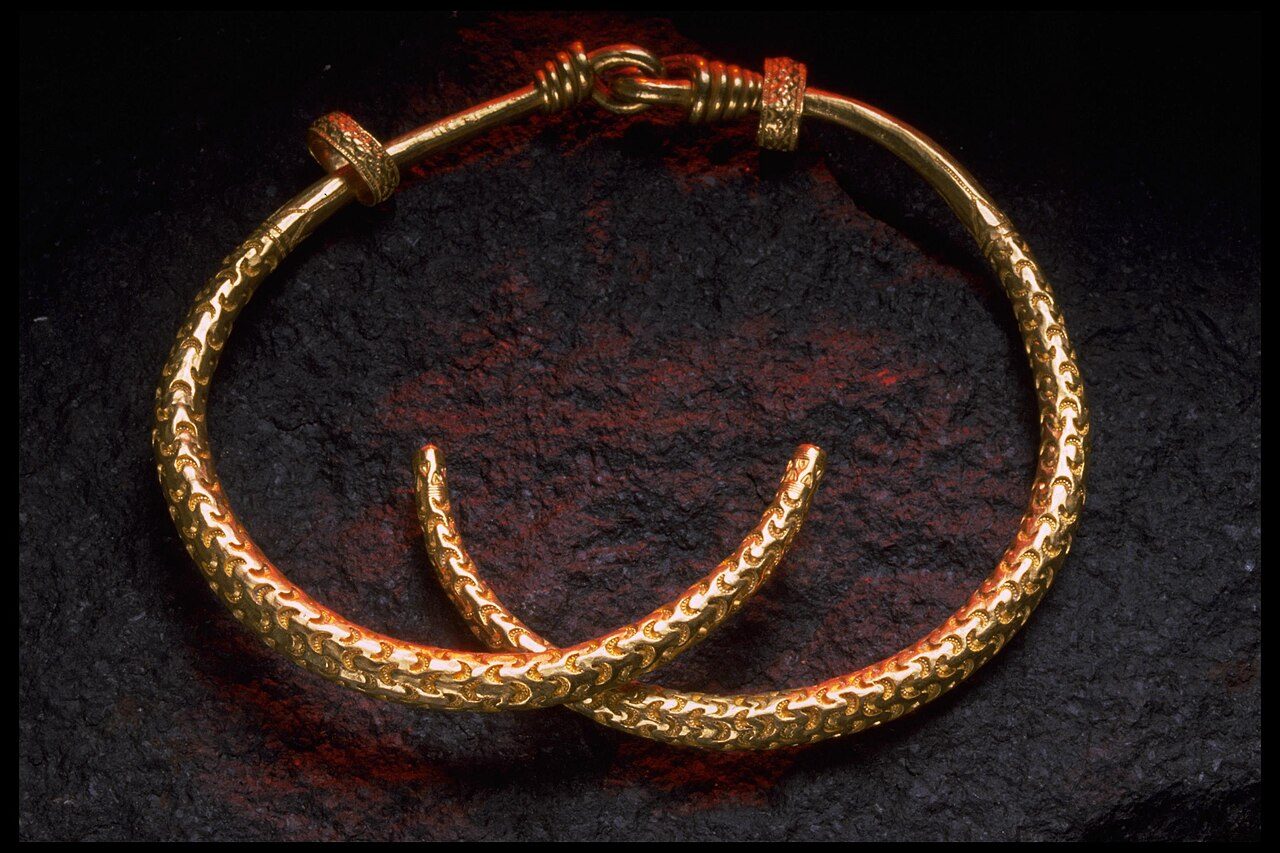
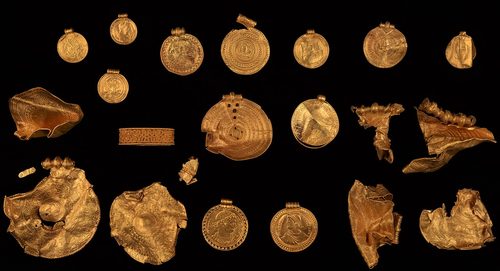
Photo: Unknown, CC BY 4.0, via Wikimedia Commons
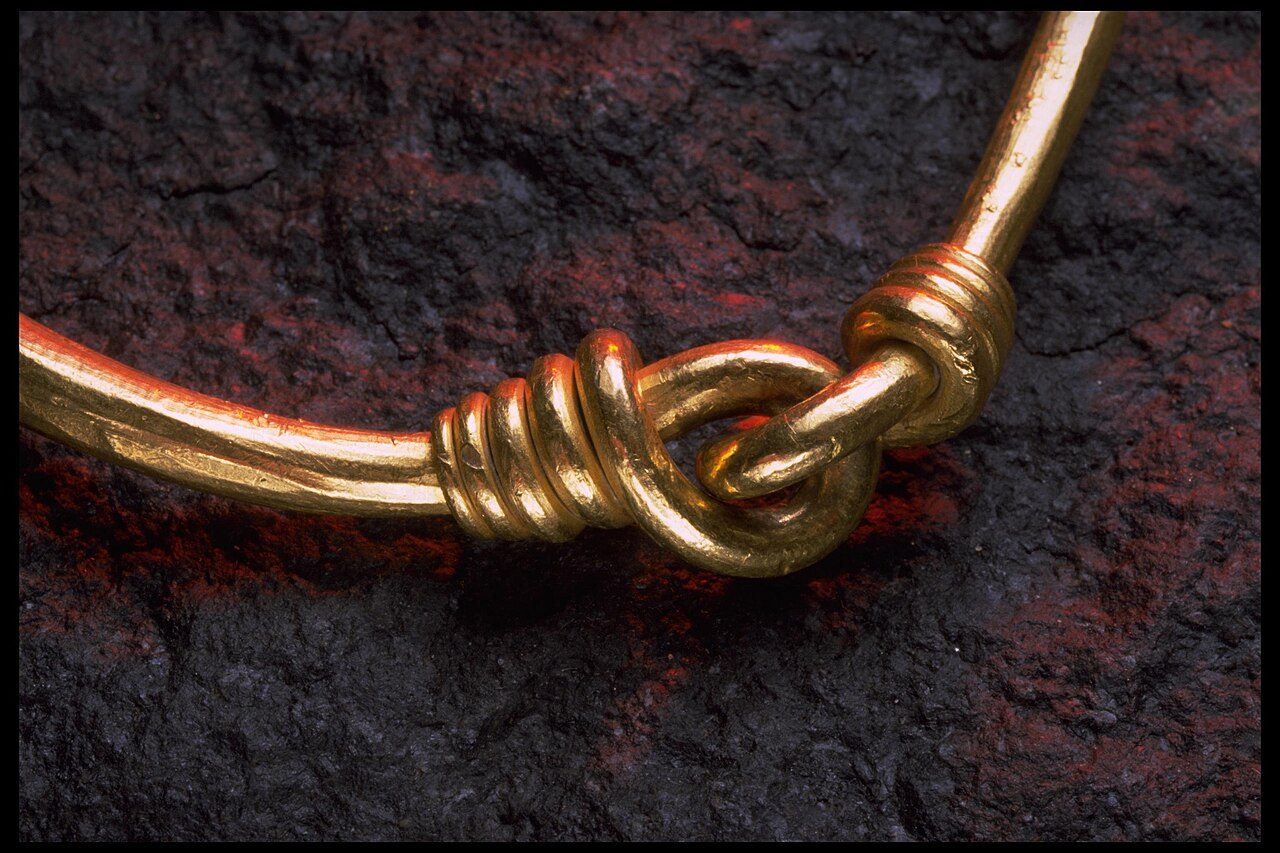
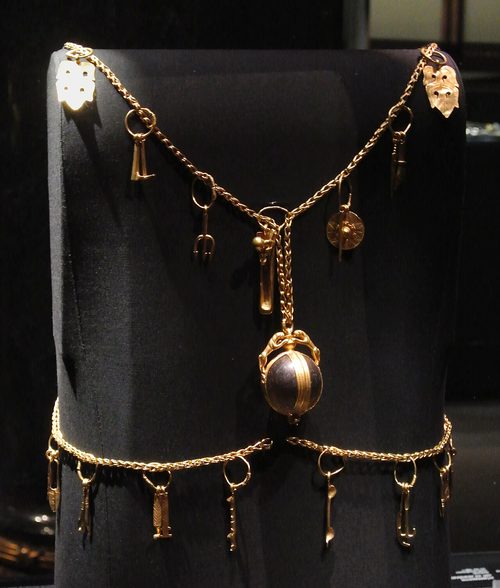
Photo: Unknown, CC BY 4.0, via Wikimedia Commons
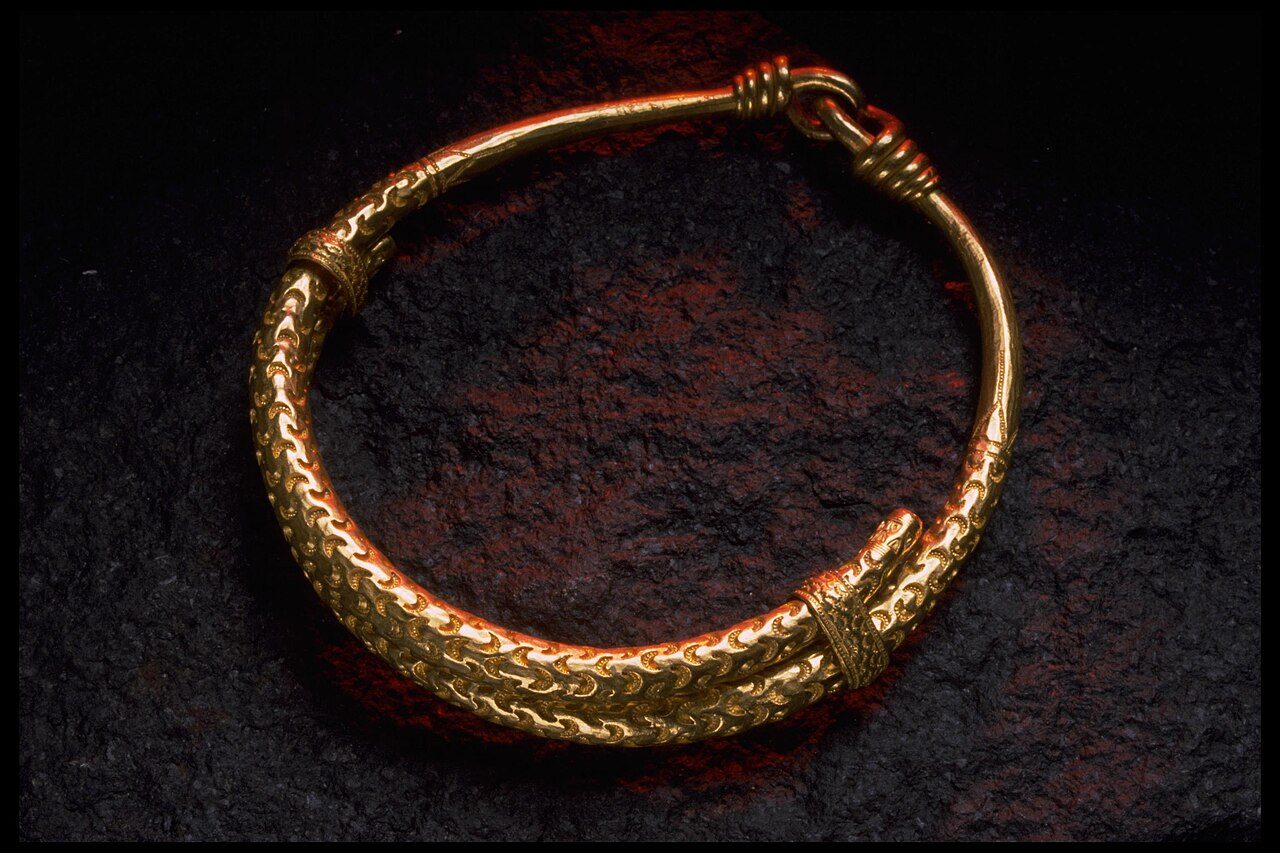
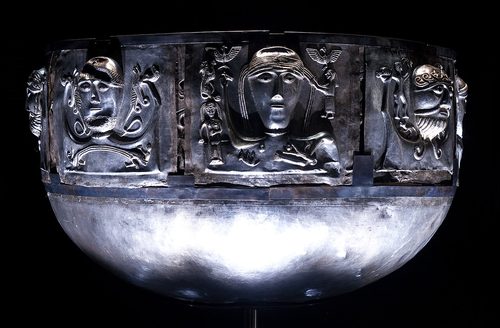
Photo: Unknown, CC BY 4.0, via Wikimedia Commons
How it is dated
With the bullion melted down, dating depends on the surviving neck-ring and sword fittings, which belong to the Scandinavian Migration Period. Swedish Wikipedia gives a span of about AD 300 to 550 for the gold; Wikidata places it in the 5th century.
What happened after the find
The find was offered to the Crown for redemption; the state bought the neck-ring and sword fittings but could not afford the bullion, which was left with the landowner, Count Nils Adam Bielke, and melted down.
Where sources differ
- Exact find dates and finders are unrecorded; the museum says only that the gold was found on two occasions in 1774 and that the circumstances are unclear.
- Swedish Wikipedia says the count reported the find to King Gustav III, who redeemed parts of it; the museum text does not mention the king.
- Date range: Swedish Wikipedia gives c. 300-550; Wikidata gives the 5th century.
- Whether the surviving neck-ring is the 'jointed neck-ring' (ledad halsring) in the museum photographs: the museum's description of two crossed rods locked by bands matches the photographed ring, but the photo captions do not give the weight.
Questions
Where can I see the Tureholm treasure?
The surviving pieces, a heavy gold neck-ring and gold sword fittings, are in the Gold Room of the Swedish History Museum (Historiska museet) in Stockholm.
What happened to the rest of the Tureholm gold?
About nine-tenths of the 12 kg find was spiral gold bullion. The Swedish state could not afford to redeem it, so the landowner kept it, had it melted down and struck into ducats to pay his debts.
How heavy is the Tureholm neck-ring?
It weighs 985.3 grams, which the Swedish History Museum describes as the heaviest neck-ring of its kind.