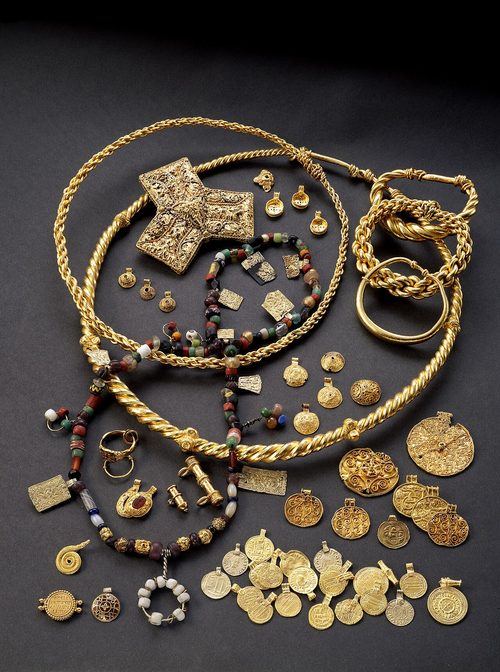
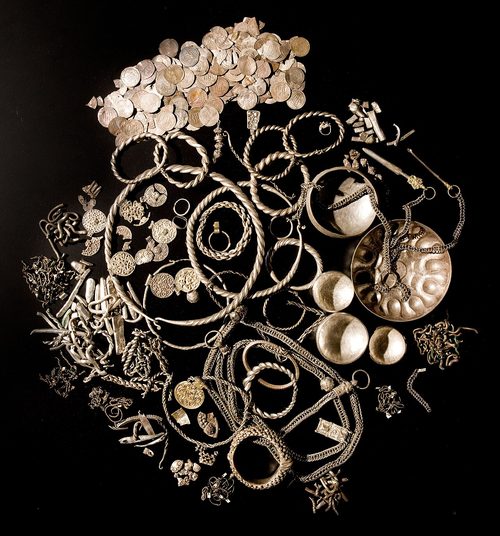
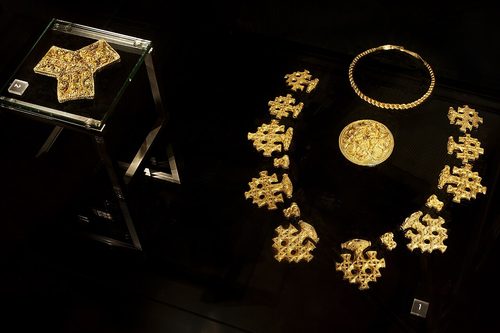
Rigid neck-rings of gold, silver and bronze, worn by the Iron Age elite of Europe, buried in hoards from Norfolk to Galicia and cut up as bullion.
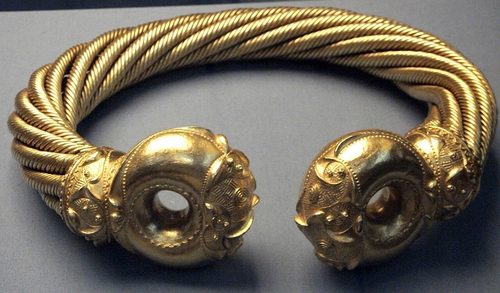
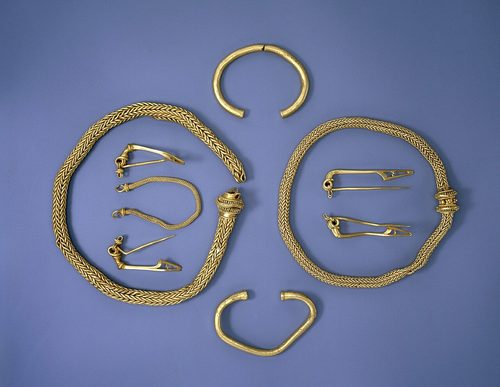
A torc is a stiff ring worn around the neck, usually open at the front so the two decorated ends sit under the chin. The name comes from the Latin torques, from torquere, "to twist", and many are exactly that: rods or ropes of metal twisted together. The finest surviving example, the Great Torc from Snettisham in Norfolk, is made of 64 strands of gold alloy wire grouped into eight ropes, with hollow ring terminals cast separately and joined on. It weighs just over a kilogram.
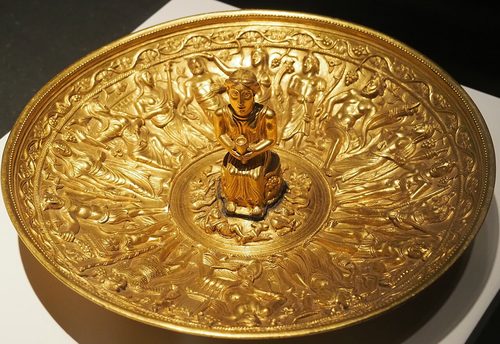
Twisted gold neck-rings were already made in the later Bronze Age, from about 1200 BC, but the torc is above all an Iron Age ornament. Celtic-speaking peoples across Europe wore them from the 5th century BC onwards, and Greek and Roman writers treated the torc as the mark of a Gaul. Polybius describes Gaulish warriors at Telamon in 225 BC fighting naked but for their neck-rings and armlets, and the Roman Titus Manlius took the cognomen Torquatus after stripping a torc from a Gaul he had killed. Torcs appear on stone statues and around the necks of gods, including the antlered figure on the Gundestrup cauldron.
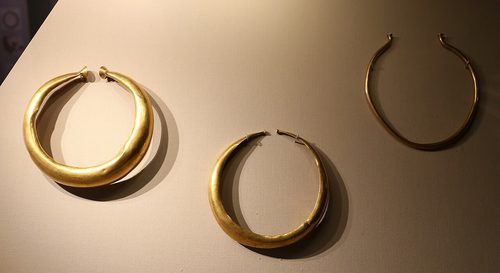
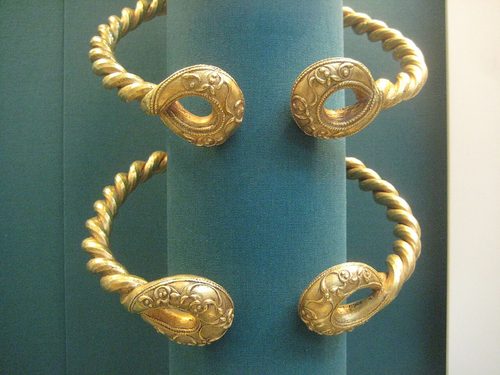
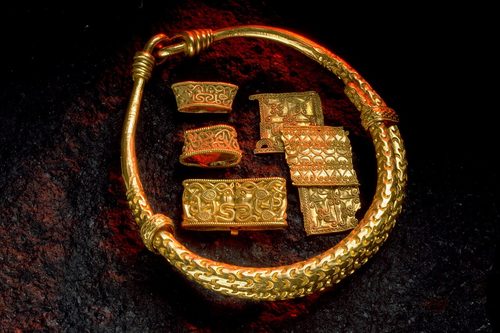
Regional styles are distinct enough to place most torcs on a map. Continental pieces from France and Germany favour buffer terminals, flat discs pressed together at the throat. British torcs, especially from East Anglia, have looped or ring terminals on a hoop of twisted bars, as at Snettisham and Ipswich. In north-west Spain and Portugal, smiths made heavy gold torcs with pear-shaped or double-moulded terminals; the one from Burela in Galicia weighs about 1.8 kg. The simplest type, the twisted ribbon torc, is a thin strip of gold spiralled on itself, a form found in Scotland and Ireland in both the Bronze and Iron Ages.
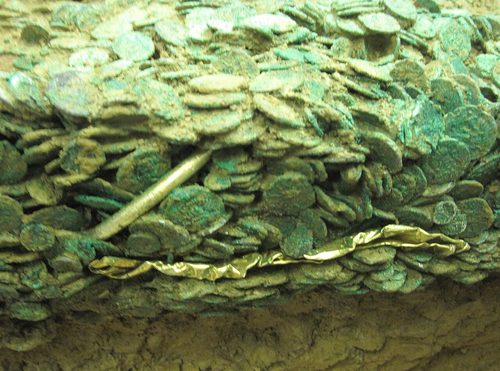
Torcs carried value as well as rank. Many are found broken, folded or cut, and some were evidently made to fixed weights, so they could serve as a store of bullion. The great deposits of torcs, such as the dozen or more pits at Snettisham, were not graves; whether they were offerings, treasuries or a goldsmith's stock is still argued. Analysis of the metal helps with dates and sources: Iron Age gold tends to contain more silver than Bronze Age gold, and the four gold torcs found at Leekfrith in Staffordshire in 2016, measured at about 74 to 78 per cent gold, are thought to have been made on the Continent around 400 to 250 BC, which would make them among the earliest Iron Age gold work from Britain.
To recognise a torc, look for a heavy penannular hoop with emphasised terminals and, often, a twist. Bracelets and armlets can share the same forms at a smaller size. After the Roman conquest a humbler type, the beaded torc in copper alloy, was worn in northern Britain from about AD 75 for a century or more.
Examples
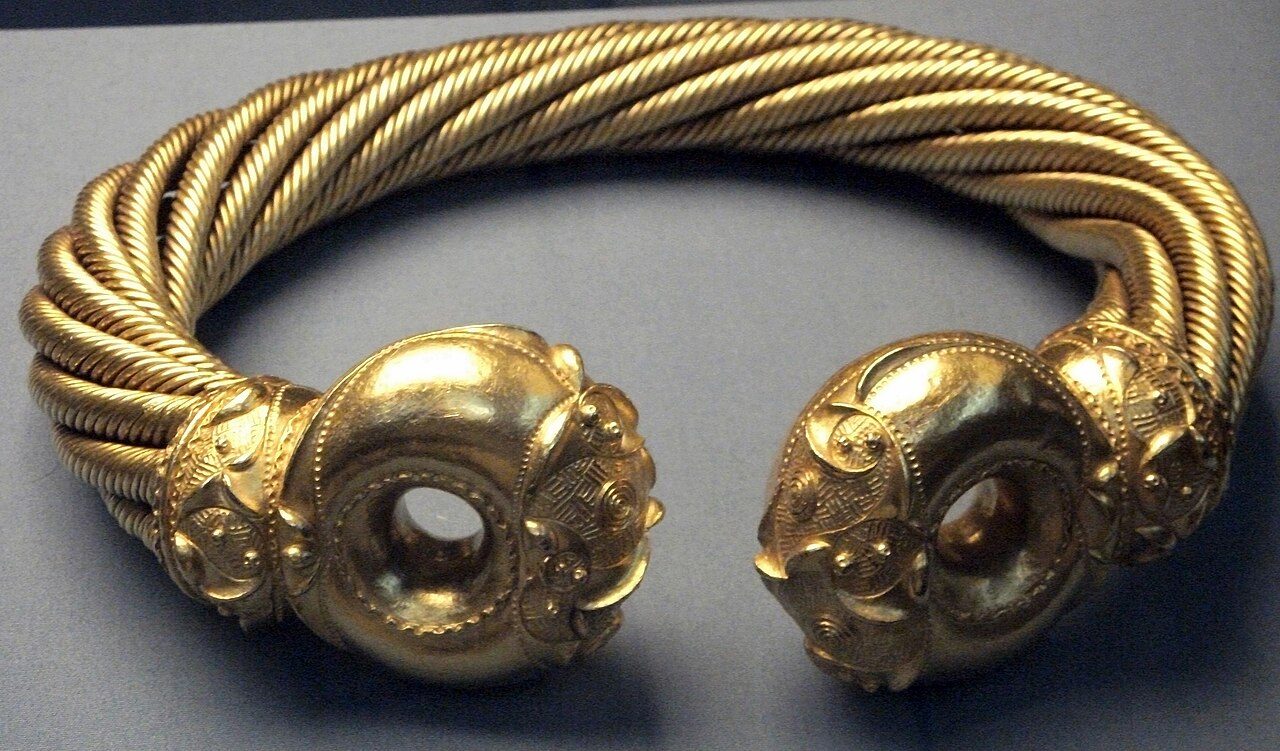
Photo: Johnbod, CC BY-SA 3.0, via Wikimedia Commons
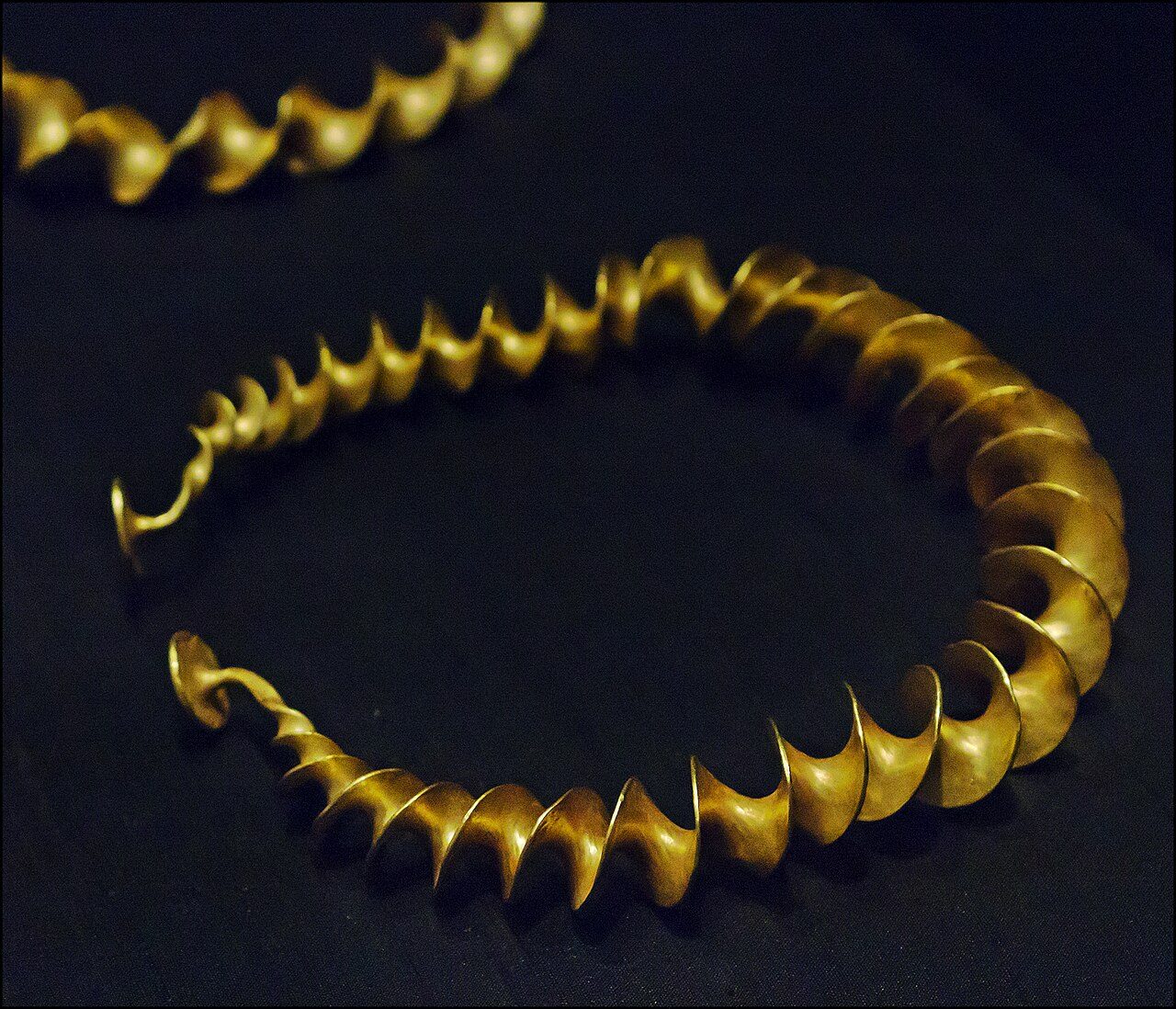
Photo: dun_deagh, CC BY-SA 2.0, via Wikimedia Commons
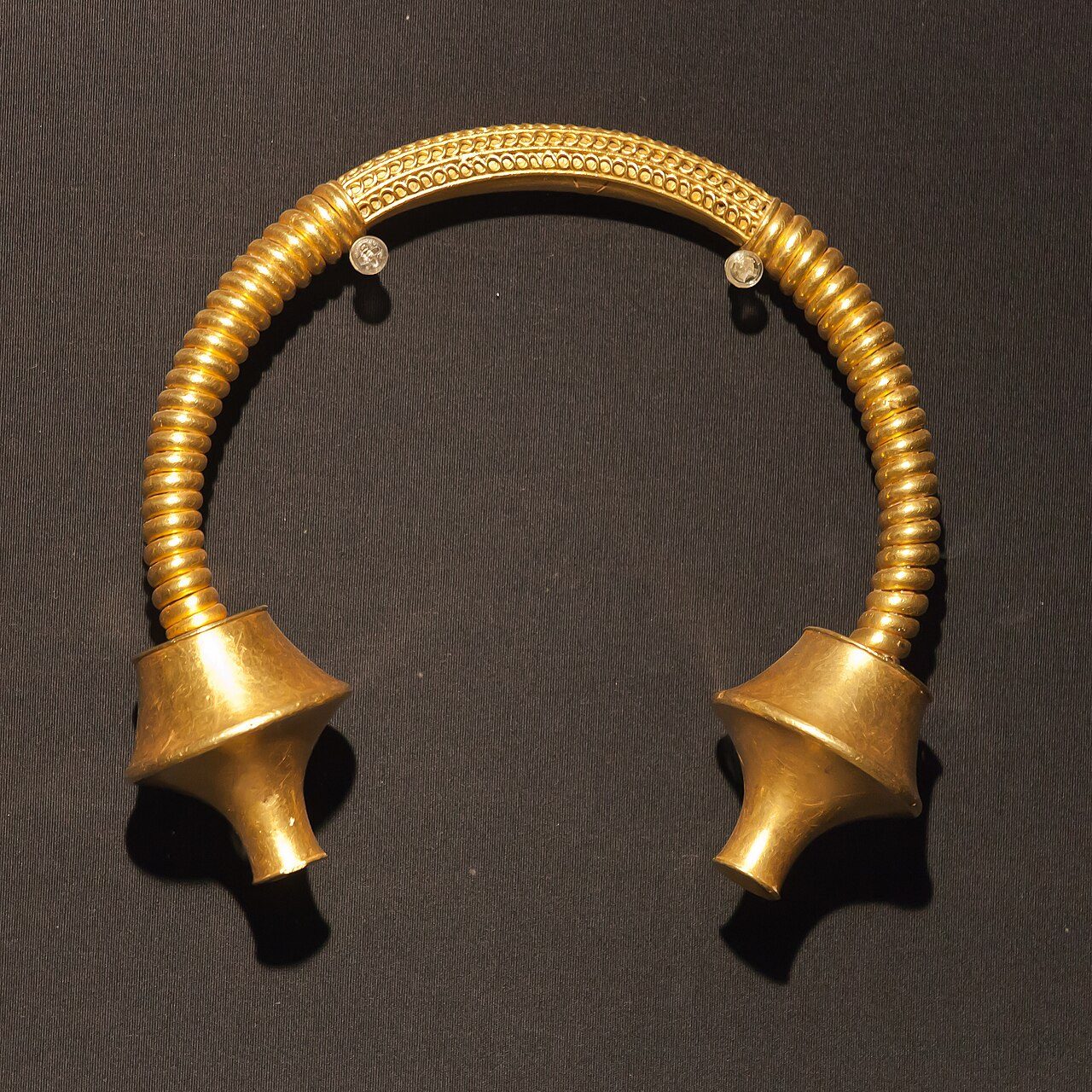
Photo: Luis Miguel Bugallo Sánchez (Lmbuga), CC BY-SA 3.0, via Wikimedia Commons
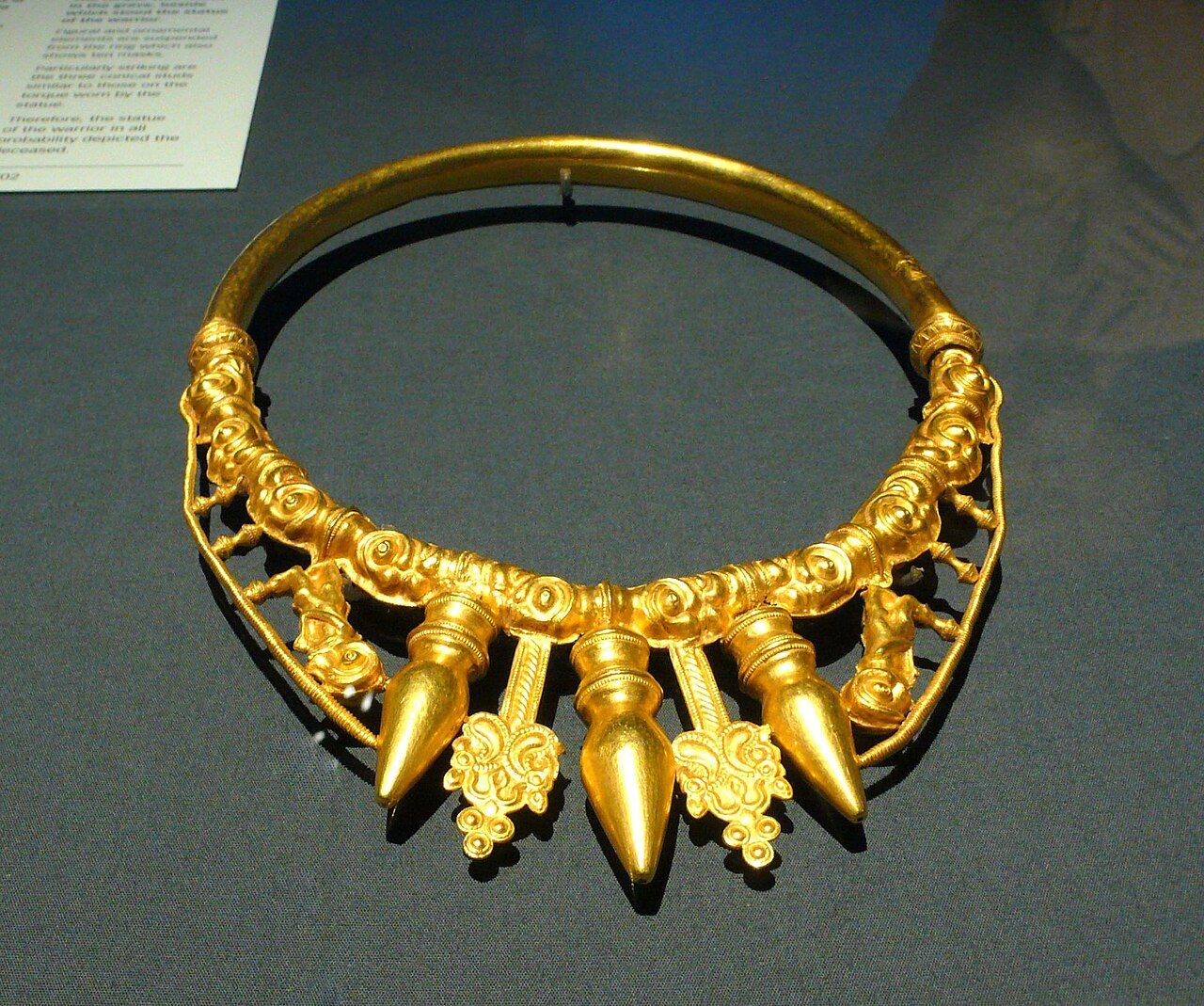
Photo: Rosemania, CC BY 2.0, via Wikimedia Commons