Twice in less than a century the same hillside outside Szilágysomlyó, a market town in the north-west of Transylvania now called Șimleu Silvaniei, gave up royal gold. On 3 August 1797 two children herding animals on Măgura hill found a group of gold objects. In 1889 labourers working the same ground uncovered a second deposit close by. Scholars now treat the two as parts of a single treasure that was split by the accidents of discovery, and divided again by the borders of the Habsburg monarchy: the first find went to Vienna, the second to Budapest.
The 1797 find was acquired for the imperial collection on the advice of the court numismatist Joseph Hilarius Eckhel. Its core is a set of seventeen Roman gold medallions, fourteen of which survive. These were not coins for spending but presentation pieces, struck in multiples of the gold solidus for emperors to hand out to officers and allied princes. They run from Maximian in the 290s through Constantine and Constantius II to Valens and Gratian in the 370s, and several are Germanic imitations of Valens' types. Most were fitted with gold frames and loops so they could be worn, one of them in a star-shaped border set with garnets. One medallion of Valens is the largest gold medallion to survive from antiquity.
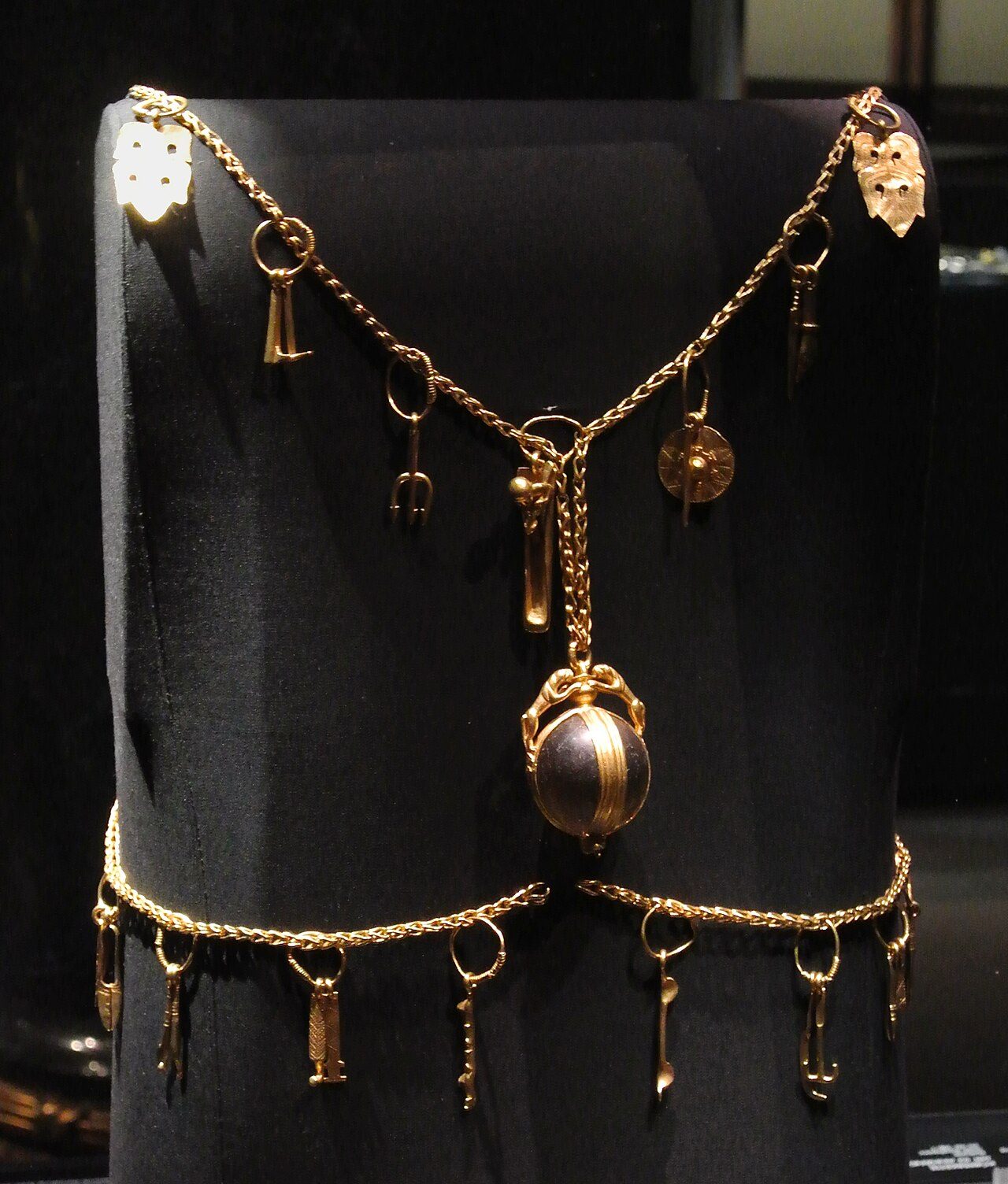
Alongside them lay a long gold body chain hung with 52 tiny pendants: ploughshares, saws, tongs, scissors, spearheads, vine leaves and other miniature objects, probably charms for prosperity and protection. There were also two dozen rings of sheet gold, a finger ring and smaller jewellery.
The 1889 find has a different character. It contained around ten pairs of large brooches, made of silver covered with gold sheet and set with garnets and coloured stones, in the polychrome style of the 5th century. With them were three gold bowls with applied ornament, a heavy gold ring and an onyx brooch in a gold mount, a type of brooch associated with Roman imperial costume.
Wear on many pieces shows they were used until they were buried. The mix of Roman diplomatic gifts and Germanic dress jewellery points to a ruling family among the East Germanic peoples living just beyond the Roman frontier in the Carpathian Basin. The Gepids, who dominated this region after the collapse of Hunnic power, are the usual candidates, but no inscription names an owner. Why the treasure was buried is unknown; this was a period of Hunnic domination and frequent conflict, and a dynasty might hide its wealth for many reasons.
The two halves have rarely been seen side by side. In 1999 the Kunsthistorisches Museum and the Hungarian National Museum reunited them for the exhibition Barbarenschmuck und Römergold (Barbarian jewellery and Roman gold), shown in Vienna and Budapest.
Highlights
A long gold chain worn crosswise over the body, hung with miniature tools, weapons and leaves, probably amulets.
A Roman gold medallion of the 290s set into a star-shaped border of garnets by a Germanic goldsmith.
A gold medallion of the emperor Valens in a wide decorated frame, described as the largest surviving gold medallion of antiquity.
An oval onyx set in a gold mount with pendants, of the kind worn by Roman emperors and high officials to fasten a cloak.
Three gold bowls from the 1889 find, decorated with applied mounts set with stones.
What is in it
Roman gold medallions set as pendants, a body chain hung with 52 miniature tools and charms, rings and jewellery (1797); pairs of large jewelled brooches, an onyx brooch, gold bowls and a ring (1889).
Size: 73 surviving gold and silver objects. Weight: about 8 kg (gold and silver).
| Item | Number | Notes |
|---|---|---|
| Roman gold medallions (1797) | 17 | Three now lost; struck from the 290s to the 370s, plus Germanic imitations, most mounted as pendants |
| Gold chain with 52 pendants (1797) | 1 | Miniature tools, weapons, leaves and charms |
| Sheet-gold rings and other jewellery (1797) | about 28 | 24 rings, a disc pendant, a finger ring, a bracelet fragment and a mount with a human figure |
| Brooches (1889) | about 10 pairs plus one | Large silver-gilt brooches with gold sheet and coloured stones, and the onyx 'imperial' brooch |
| Gold bowls and ring (1889) | 4 | Three gold bowls and an 'oath ring' |
Photographs
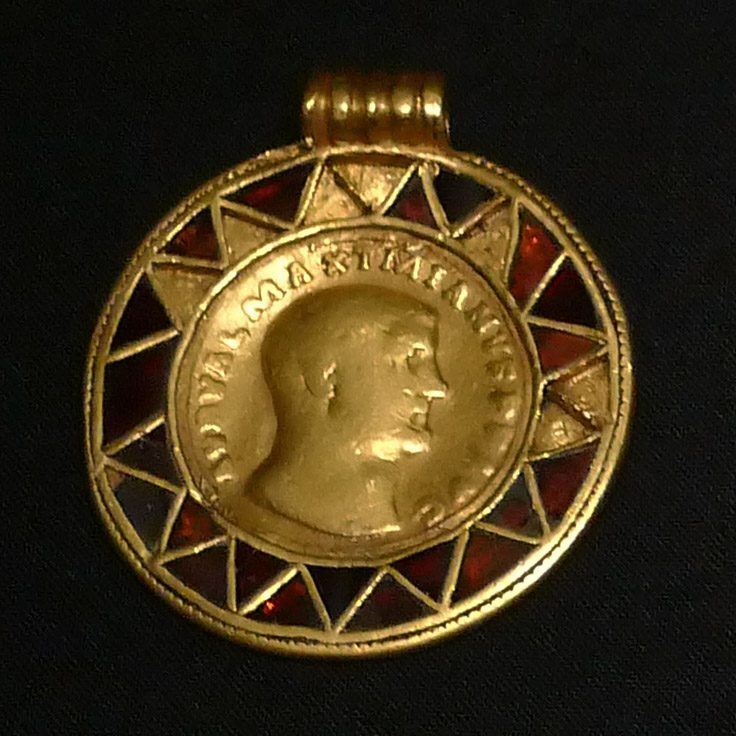
Photo: Unknown artist, CC BY 3.0, via Wikimedia Commons
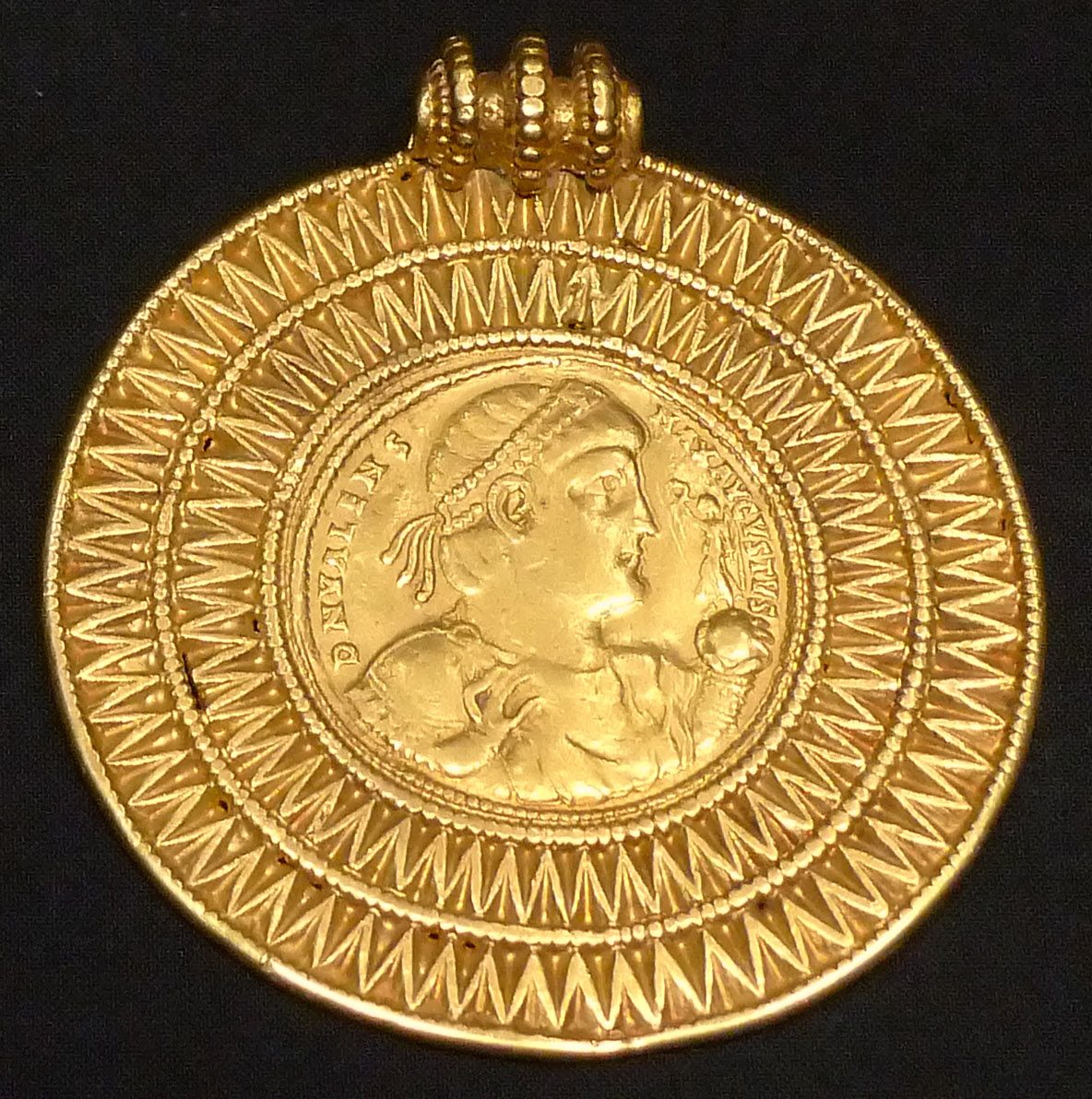
Photo: Unknown artist, CC BY 3.0, via Wikimedia Commons
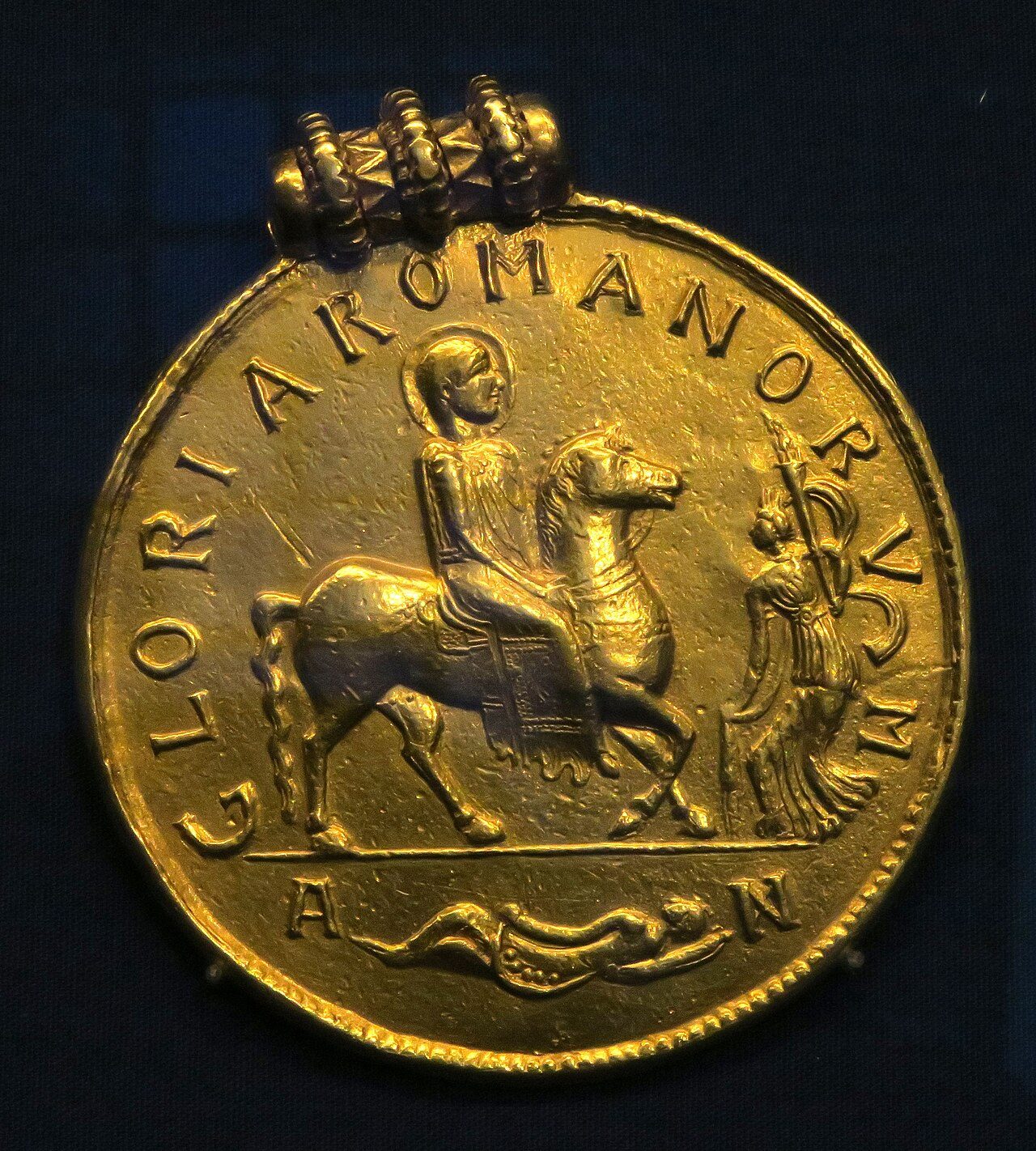
Photo: Burkhard Mücke, CC BY-SA 4.0, via Wikimedia Commons
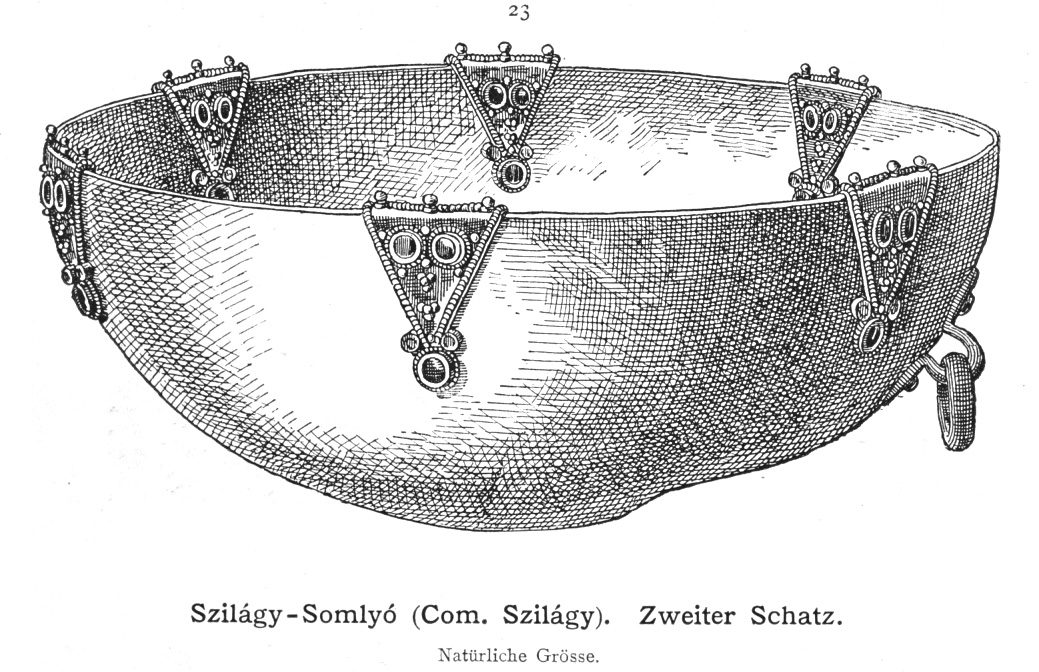
Photo: József Hampel, Public domain, via Wikimedia Commons
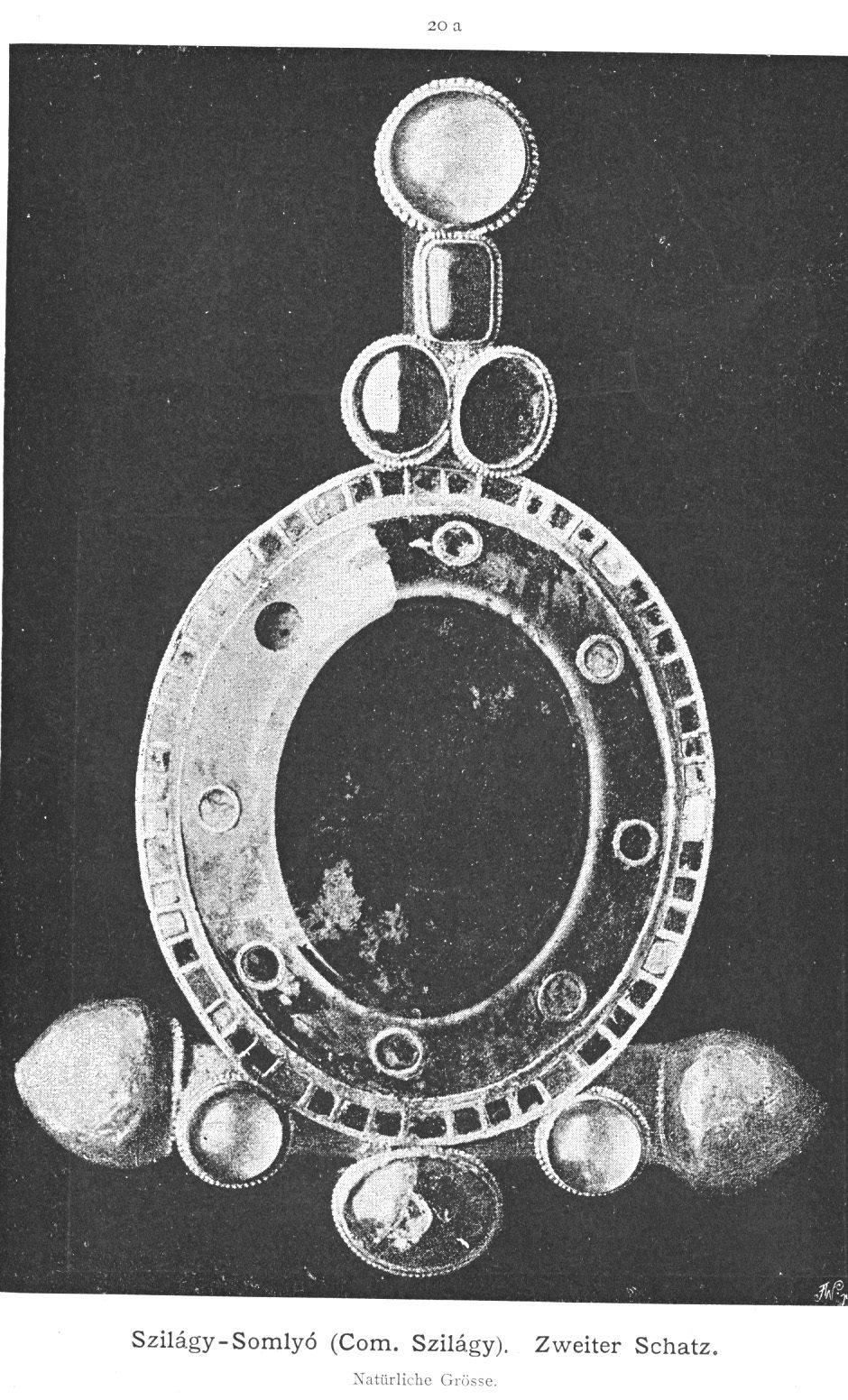
Photo: József Hampel, Public domain, via Wikimedia Commons
How it is dated
The Roman medallions give a lower limit: the latest were struck under Valens and Gratian in the 370s, and some are barbarian copies made after 378. The polychrome brooches from 1889 are dated by style to the early 5th century, so the deposit is usually placed around 400 or in the first half of the 5th century.
What happened after the find
The 1797 find was bought for the imperial collection in Vienna; the 1889 find was acquired by the Hungarian National Museum.
Where sources differ
- Weight: German Wikipedia gives about 8 kg for the 73 surviving objects; Romanian Wikipedia gives over 2 kg for the 1797 find and about 3 kg for the 1889 find, which together is much less.
- Brooches in the 1889 find: German Wikipedia says 10 pairs; Hungarian Wikipedia says eight pairs plus fragments.
- Who found the 1889 part: labourers (German Wikipedia) or a peasant ploughing on 20 April 1889 (Romanian Wikipedia).
- Attribution to the Gepids is a widely held hypothesis, not established.
- The 1797 children are called shepherd children in Hungarian Wikipedia and herders in German Wikipedia; Romanian Wikipedia names two Romanian boys.
Questions
Where is the Szilágysomlyó treasure now?
It is split between two museums. The 1797 find, including the medallions and the pendant chain, is in the Kunsthistorisches Museum in Vienna; the 1889 find with the brooches and gold bowls is in the Hungarian National Museum in Budapest.
What is the Șimleu Silvaniei treasure?
It is the same hoard. Șimleu Silvaniei is the Romanian name of the town known in Hungarian as Szilágysomlyó, where the treasure was found in two parts in 1797 and 1889.
Who owned the Szilágysomlyó treasure?
Probably a ruling family of an East Germanic people, most often identified as the Gepids, in the late 4th or 5th century. The Roman medallions were diplomatic gifts of the kind emperors gave to allied leaders.