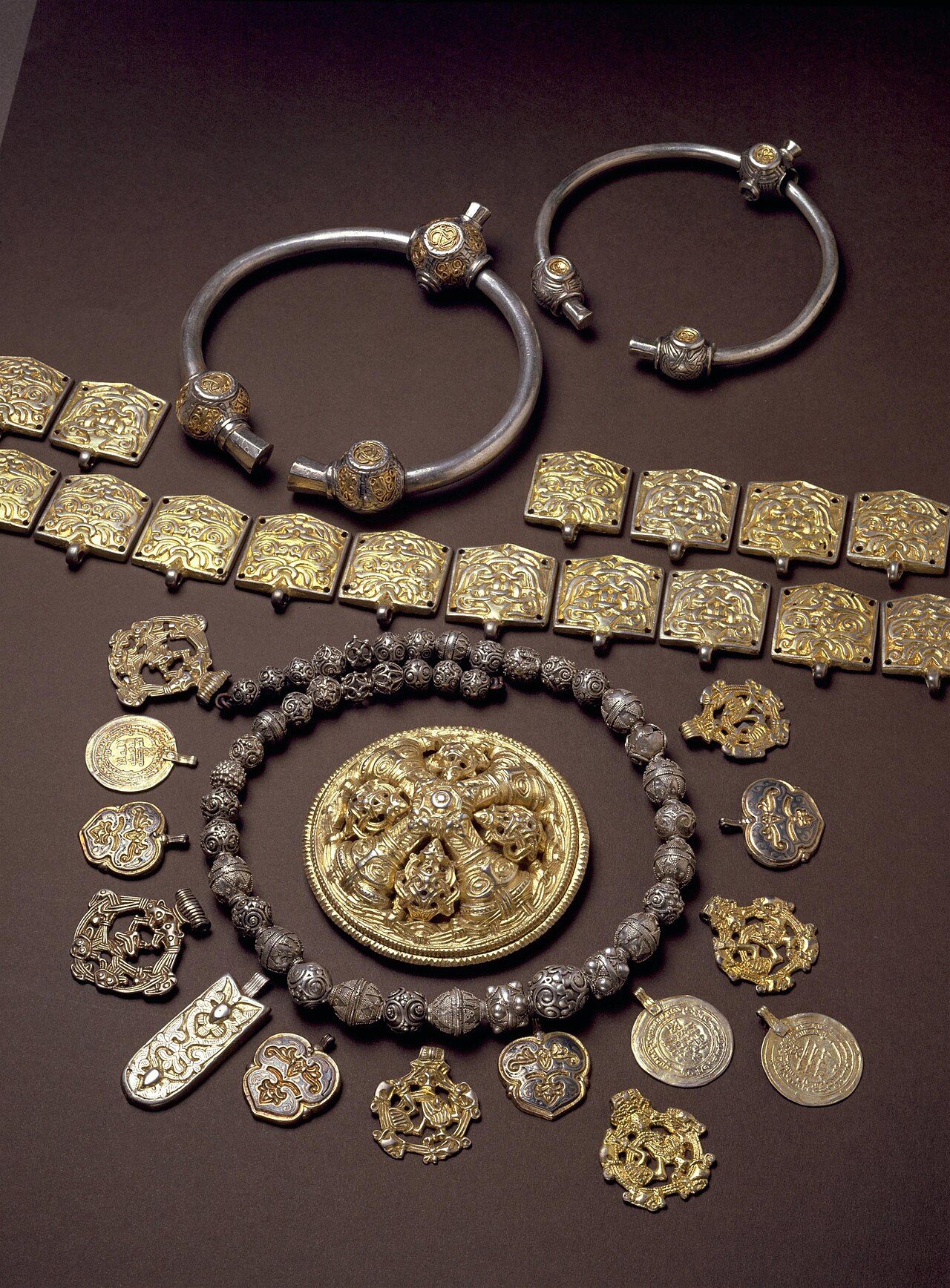
On 16 April 1871 a 14-year-old boy was gathering brushwood in the Vårby woods, on the southern shore of Lake Mälaren just south-west of Stockholm, when he came upon a cache of silver jewellery. Four days later the acting district bailiff wrote to the county governor to report the find. The boy received a reward of 250 kronor, and the treasure went to the national collection, where it has been a showpiece of Viking-age silver ever since.
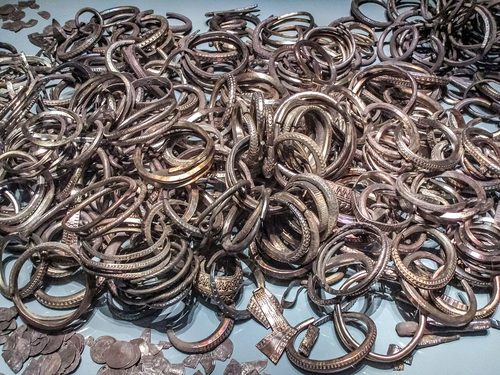
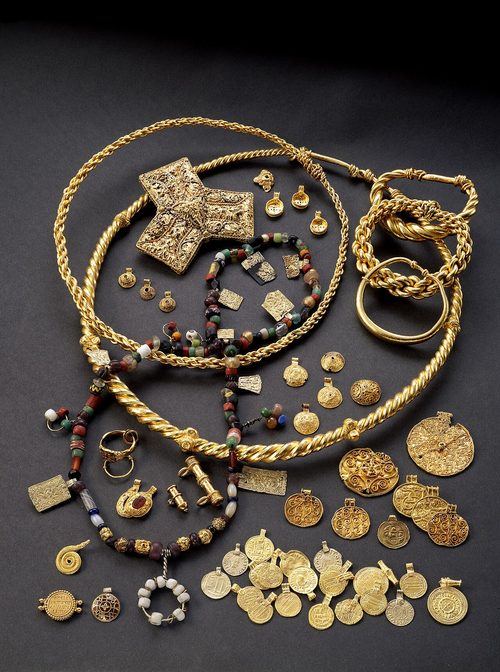
Vårby is not a hoard of scrap. Unlike most Scandinavian silver deposits, where coins and ornaments are chopped into weighable fragments, almost everything here is whole: a complete outfit of high-status jewellery and dress fittings, much of it gilded. There is a necklace of 42 hollow silver beads worked with filigree and granulation, nineteen gilt belt mounts, around nineteen pendants, six coin pendants, a large round brooch and a pair of silver rings with gilt knobs, catalogued by the museum as ring-pins.
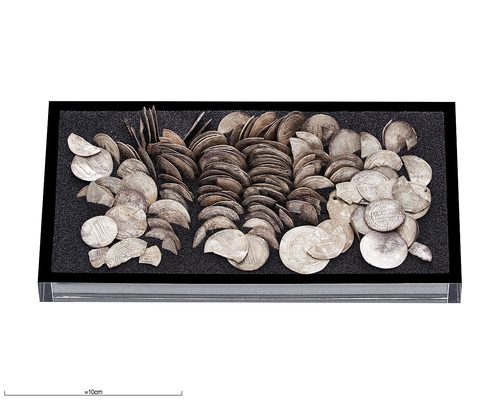
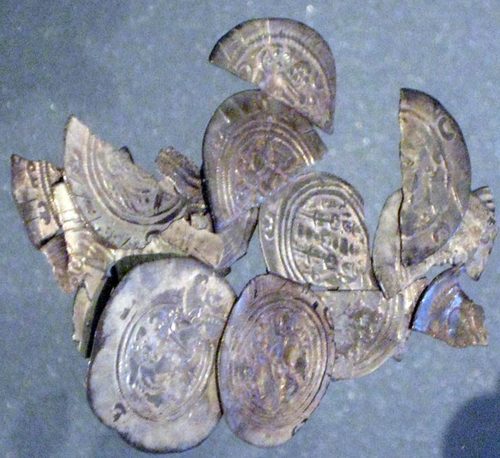
What has made the find famous among archaeologists is where these things come from. The openwork pendants with gripping animals are Scandinavian. The heart-shaped pendants with plant scrolls and the belt mounts are of south Russian type, from the world of the Rus' and the steppe peoples to the south and east. Two of the coin pendants are genuine Arab dirhams; the other four are imitations made to look like them. The round brooch is decorated in the Scandinavian Borre style.
One specialist who studied the hoard proposed that much of it was made by a Scandinavian goldsmith working near Kiev around the middle of the tenth century. That would make the set a souvenir, in the most literal sense, of the eastern journeys that brought Swedes into contact with the Rus' lands and the silver of the Caliphate. Whether its owner travelled east in person or acquired the pieces through trade cannot be known.
Vårby was a well-placed estate. It lay beside the sea lanes of Mälaren with a sheltered harbour, a short sail from the trading centres of Birka and Helgö, and a large Viking-age cemetery with nearly a hundred visible graves, including several big mounds, survives nearby. The hoard looks like the wealth of the family that held this land, hidden in the tenth century and never retrieved.
The hoard has also become part of local identity. Its beads inspired a large ceramic relief of glazed stoneware spheres, unveiled in 2008 on a building near the find spot.
Highlights
Forty-two hollow silver beads decorated with filigree and granulation, still strung as a single necklace.
Nineteen matching gilt mounts from a belt of south Russian type.
Silver pendants with gilt plant scrolls on a dark ground, ornament typical of imports from the east.
A large gilded disc brooch covered with knotwork and animal masks in the Scandinavian Borre style.
What is in it
A complete set of fine jewellery and dress fittings rather than scrap: a necklace of 42 decorated silver beads, 19 belt mounts, about 19 pendants, coin pendants, a large round brooch and two knobbed rings, much of it gilded.
Size: about 90 pieces.
| Item | Number | Notes |
|---|---|---|
| Silver beads | 42 | Hollow beads with filigree and granulation, strung as one necklace |
| Belt mounts | 19 | Gilt mounts of a type associated with the steppes and the Rus' lands |
| Pendants | about 19 | Openwork Scandinavian animal-style pendants and heart-shaped pendants with plant ornament of eastern type |
| Coin pendants | 6 | Two genuine Arab dirhams and four imitations, fitted with loops |
| Brooch and rings | 3 | A large gilt round brooch in Borre style and two silver rings with gilt knobbed terminals, catalogued by the museum as ring-pins |
Photographs
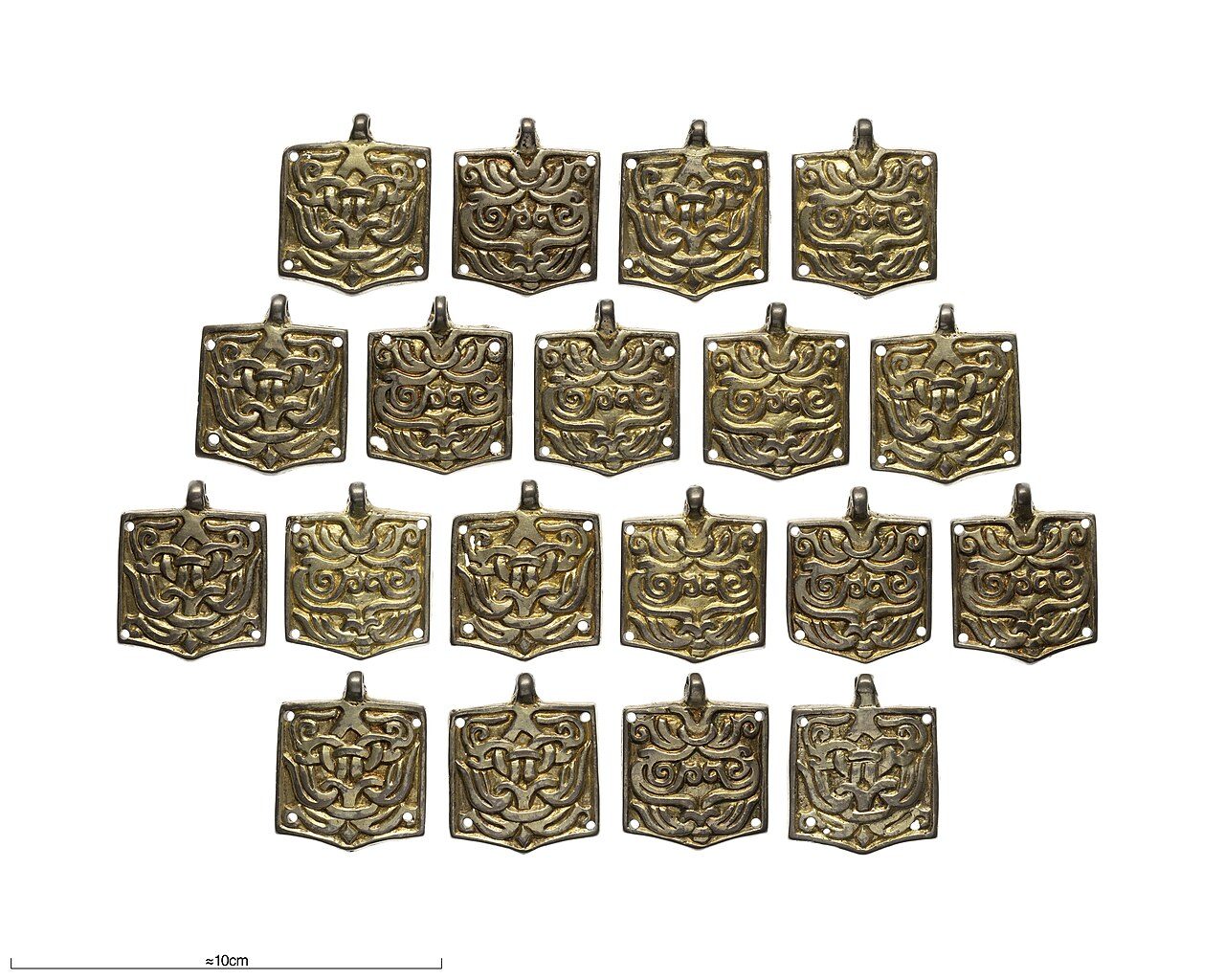
Photo: Jens Mohr, CC BY 4.0, via Wikimedia Commons
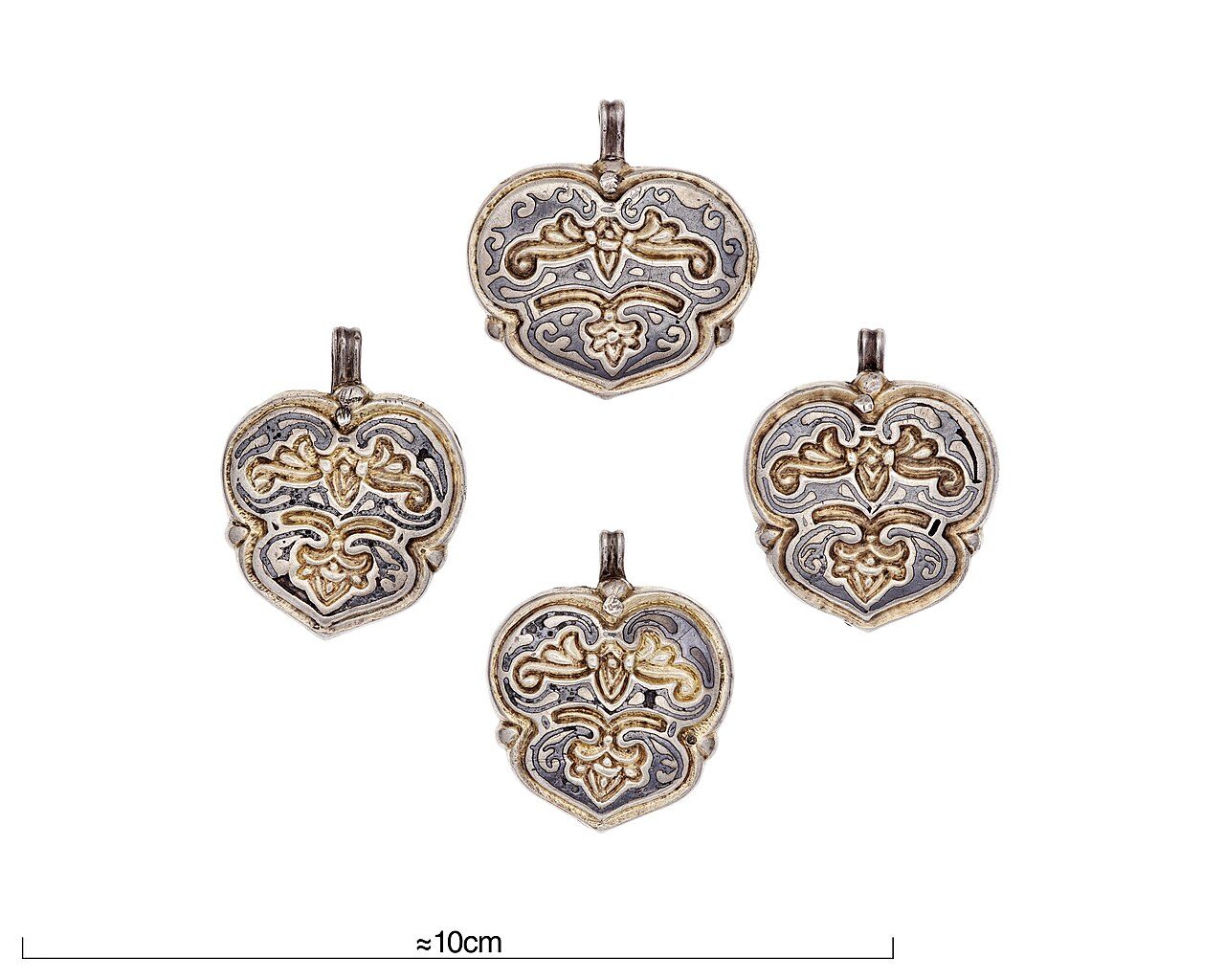
Photo: Ola Myrin, CC BY 4.0, via Wikimedia Commons
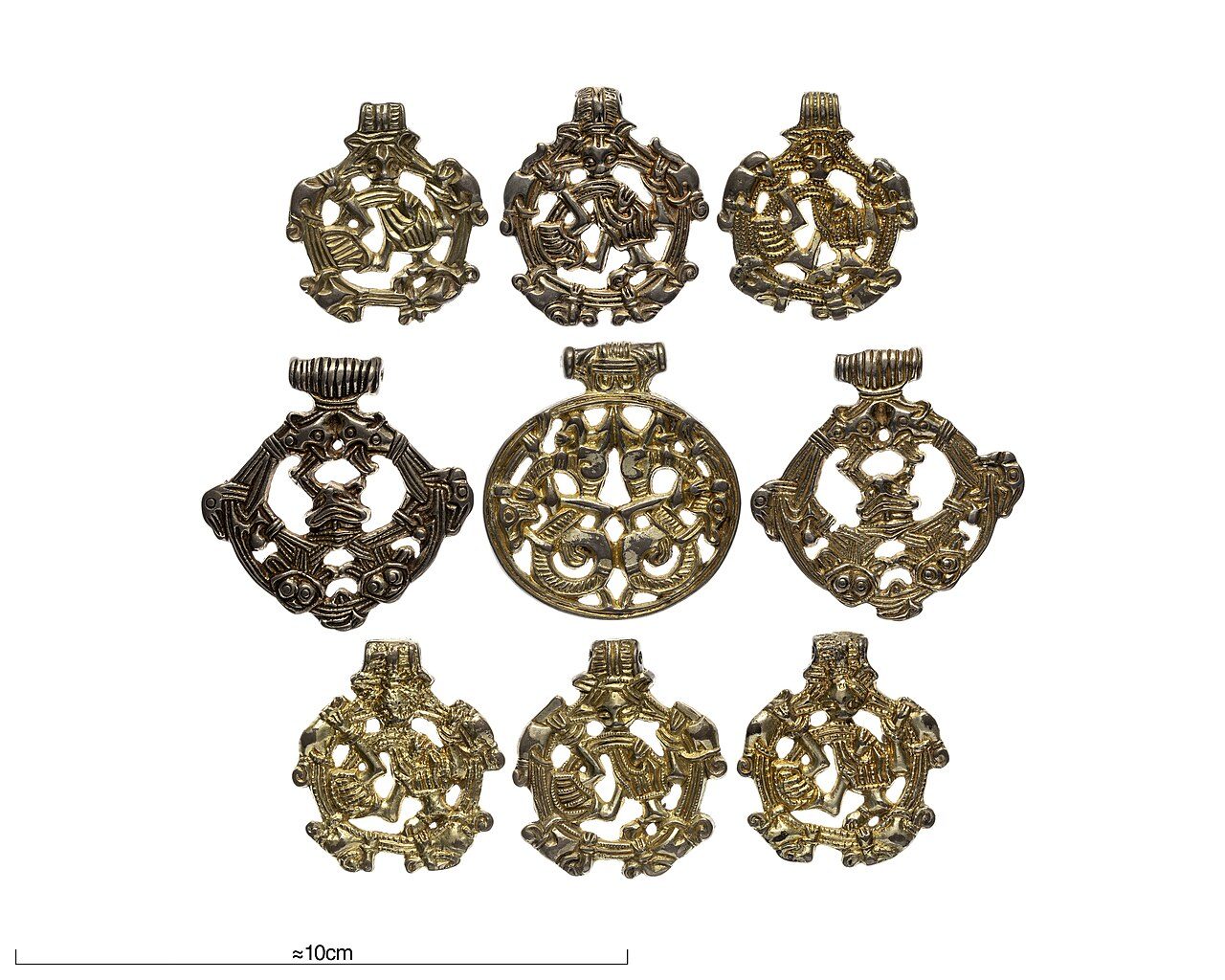
Photo: Jens Mohr, CC BY 4.0, via Wikimedia Commons
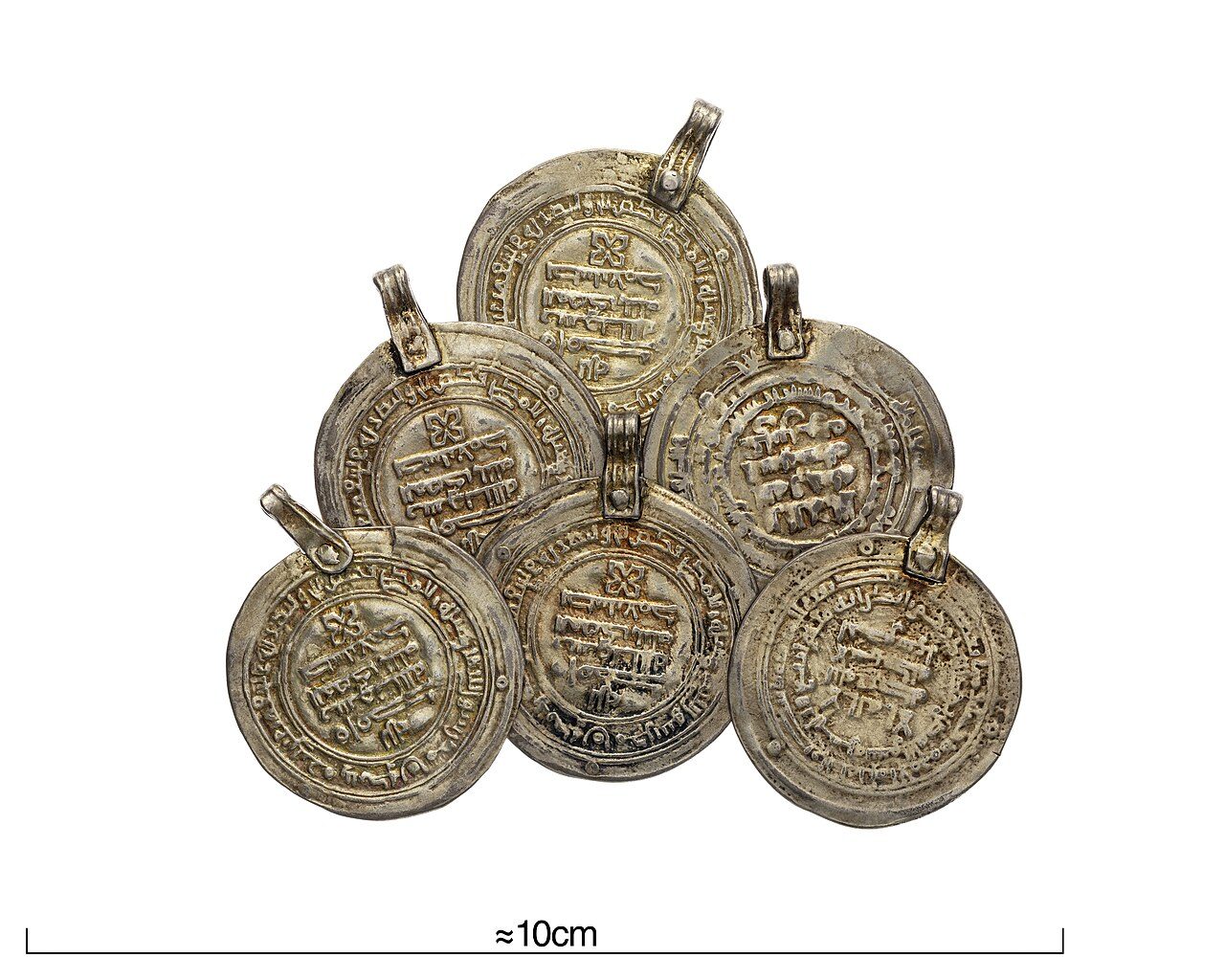
Photo: Jens Mohr, CC BY 4.0, via Wikimedia Commons
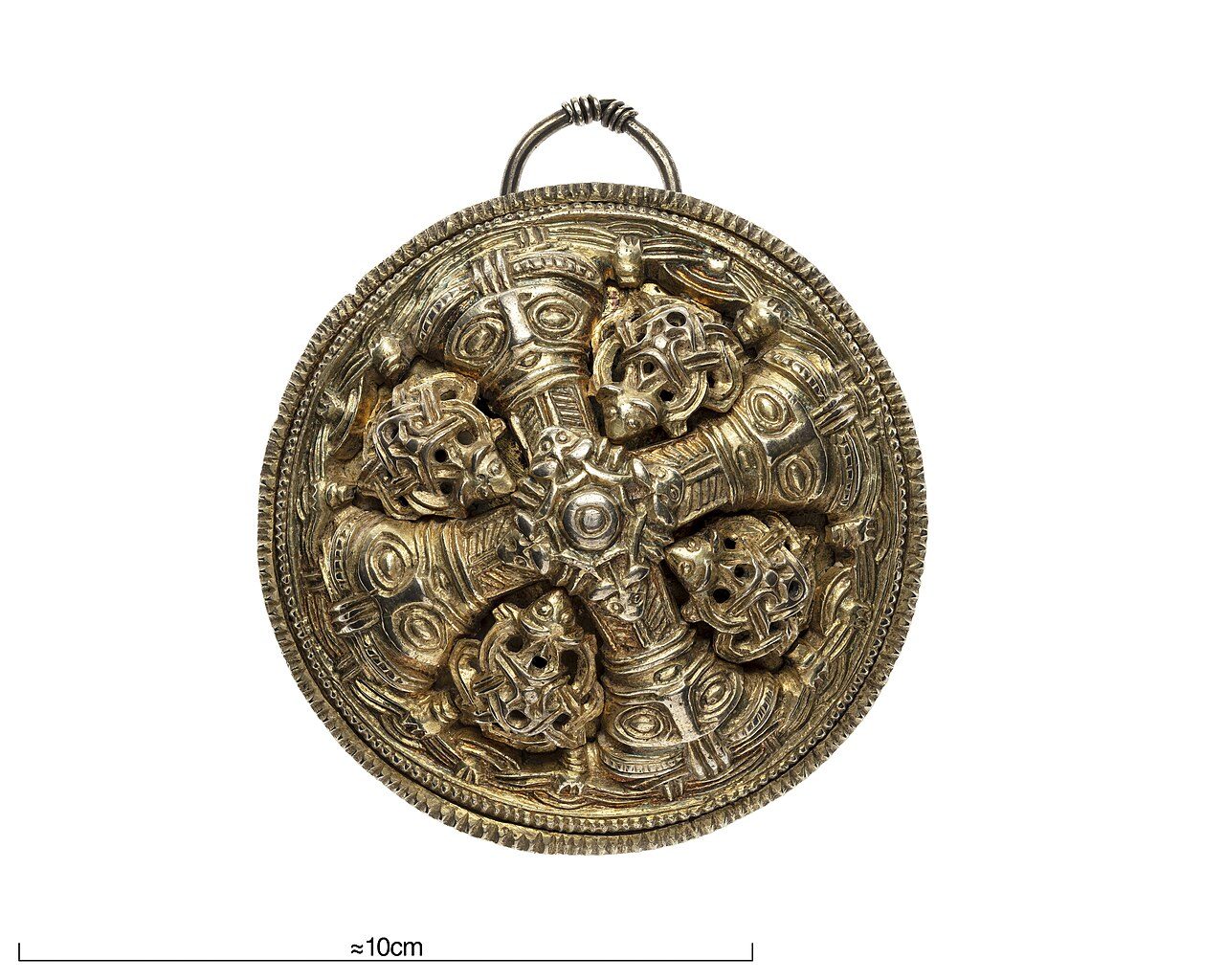
Photo: Jens Mohr, CC BY 4.0, via Wikimedia Commons
How it is dated
There are no closely datable coins: the two genuine dirhams and four imitations give only a broad tenth-century range. The date rests on the jewellery types and ornament styles, which belong to the tenth century, with one study placing the manufacture of much of the set around the mid-900s.
What happened after the find
The find was reported to the county authorities by the district bailiff within days, and the finder received a reward of 250 kronor; the hoard passed to the state collection now held by the Swedish History Museum.
Where sources differ
- Total number of objects and total weight not found in sources I could access; 'about 90 pieces' is my sum of the listed groups (42 + 19 + c. 19 + 6 + 3) and is approximate.
- The 'Nordic goldsmith near Kiev' attribution is one researcher's view, reported second-hand in a 1968 Stockholm City Museum publication.
- Find date and reward come from Swedish Wikipedia only (citing a Huddinge municipality leaflet now offline).
- Whether the whole hoard is currently on display is not confirmed; the 1968 source says it had 'a place of honour' in the museum's Viking silver collection.
Questions
Where is the Vårby treasure?
In the Swedish History Museum (Historiska museet) in Stockholm, which holds the whole hoard.
What is special about the Vårby Hoard?
It is a complete set of fine jewellery rather than cut-up silver, and it mixes Scandinavian pieces with belt mounts, pendants and coins from the Rus' lands and the Islamic world.
How old is the Vårby Hoard?
It dates from the tenth century, probably around its middle, judging by the style of the jewellery.