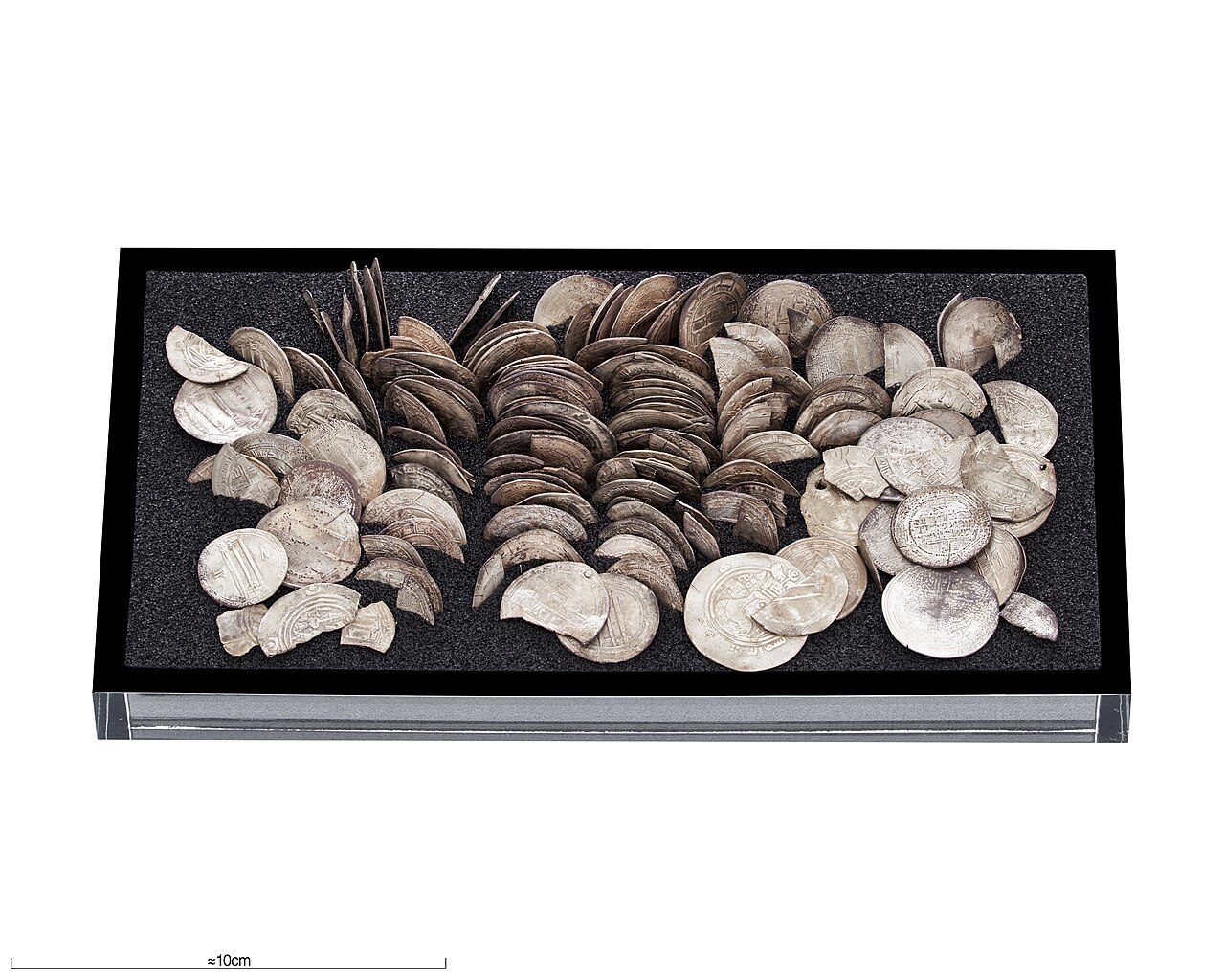
On 16 August 1967 a farmer at Burge, in Lummelunda parish on the north-west coast of Gotland, was ploughing a field that had been meadow until about twenty years earlier when his plough smashed a bronze vessel. Out spilled coins, silver bars and broken jewellery. The hoard weighed about 10.4 kg. Until the Spillings find of 1999 it was the largest silver hoard known from Sweden, and on Gotland, where an ordinary hoard weighs a few hundred grams, it was extraordinary.
The field had given a hint before. Three years earlier the same farmer had turned up three silver coins there. They were never reported and have since been lost, a small reminder of how much depends on finds being declared.
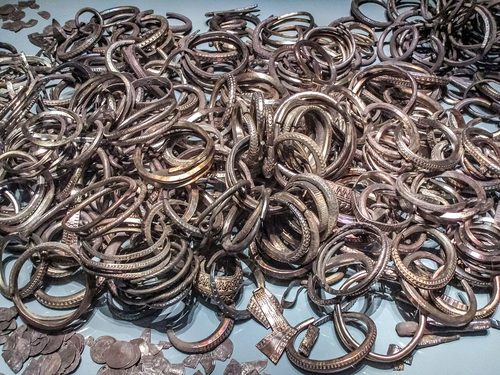
What makes Burge different from most Gotland hoards is that it is mostly bullion rather than coin. There are cast bars and ingots and quantities of scrap silver, including several grivnas, the elongated silver ingots used as money in medieval Russia. Some carry Cyrillic letters scratched into the surface, direct evidence that this silver came from the east. The jewellery is mostly chopped into pieces destined for the melting pot; only seven arm-rings are whole.
The coins, about 3,000 in all, tell a story of shifting trade. Thirty are Persian or Islamic, the last of them struck in 999, a late echo of the dirham flow that had dominated Gotland's silver two centuries earlier. A hundred and twenty-nine come from England and Ireland. The great majority are German pennies, nearly half of them from the imperial mint at Goslar near the Harz silver mines and most of the rest from other Saxon towns. By the twelfth century Gotlanders were getting their silver from Germany and Russia, not from the Islamic world.
The youngest coin, a penny of Count Palatine Frederick II of Sommerschenburg struck in the early 1140s, shows that the hoard was buried around the middle of the twelfth century. That is later than the Viking age as usually defined, and Burge is better seen as a hoard of Gotland's prosperous early medieval farming and trading society. The lack of any coins from Gotland's own mint, which began in this period, suggests it was hidden not long after 1143.
The find spot proved to be a settlement site. Trial trenches located the foundations of several ancient houses, excavated in 1970-71, with finds mainly of the late Viking and early medieval period. The silver had been buried in or beside a farmstead, and its owners never came back for it.
Highlights
Elongated Russian silver ingots, some scratched with Cyrillic letters, showing the eastern source of part of the silver.
Close to half the German coins come from Goslar, the imperial mint fed by the silver mines of the Harz.
A penny of Count Palatine Frederick II of Sommerschenburg from the early 1140s, which dates the burial.
What is in it
Mainly bullion: cast bars, Russian-style grivna ingots and scrap silver, with cut-up jewellery, seven arm-rings and about 3,000 coins, packed in a bronze vessel.
Size: about 3,000 coins plus bars, ingots and scrap silver. Weight: about 10.4 kg of silver.
| Item | Number | Notes |
|---|---|---|
| German coins | about 2,740 (2,528 whole, 111 halves, 97 fragments) | Nearly half from Goslar, the rest mostly from other Saxon mints such as Halberstadt, Quedlinburg, Magdeburg, Brunswick and Hildesheim |
| English and Irish coins | 129 | Struck between 979 and about 1130 |
| Oriental coins | 30 | Persian and Islamic; oldest 584, youngest 999 |
| Bars, ingots and scrap | the bulk by weight | Including grivna ingots, some scratched with Cyrillic letters |
| Arm-rings | 7 | Plus jewellery mostly chopped up for melting |
Photographs
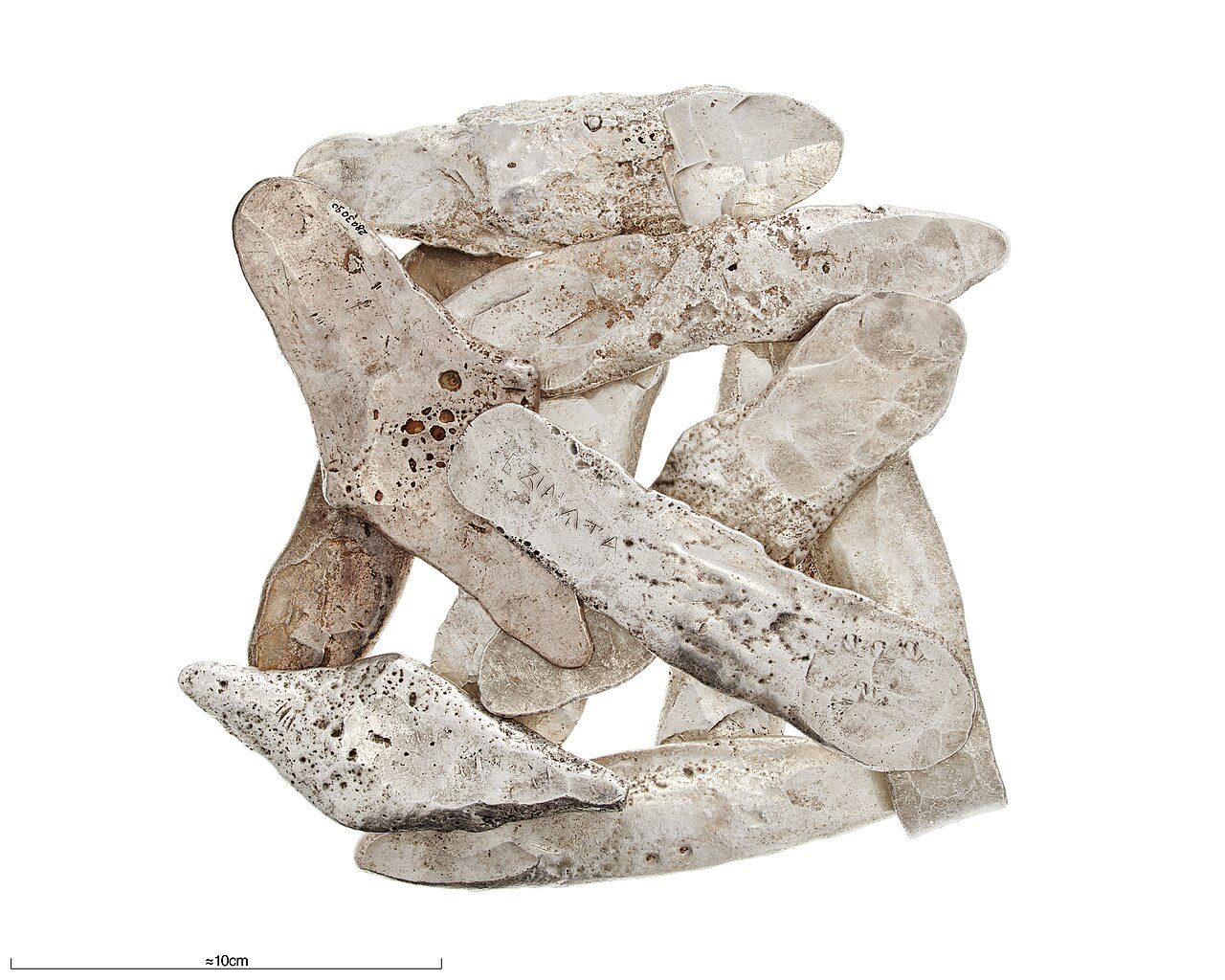
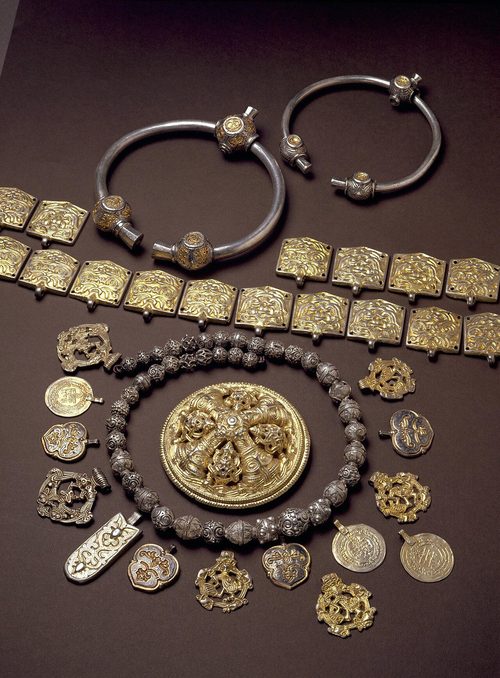
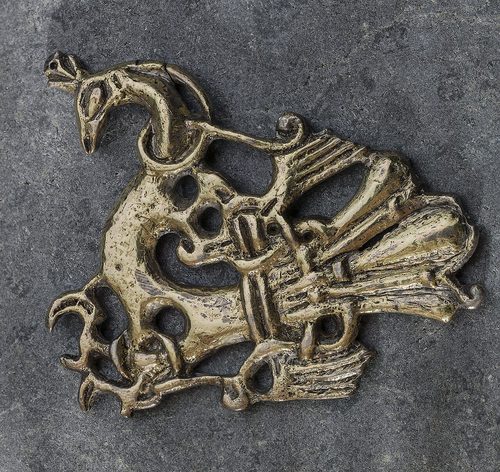
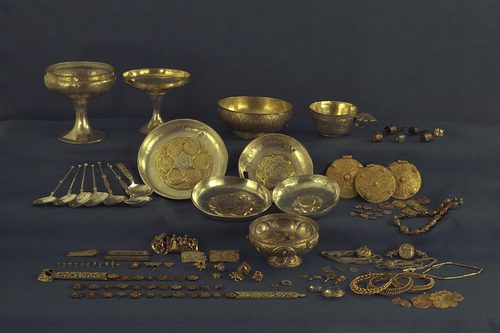
Photo: Ola Myrin, CC BY 4.0, via Wikimedia Commons
How it is dated
The latest coin, of Frederick II of Sommerschenburg, was struck in 1140-45, and the standard publication of the German coins gives a terminus post quem of 1143. Gotland began minting its own pennies in the twelfth century and none are in the hoard, which suggests it went into the ground shortly after the latest coin.
What happened after the find
Under Swedish law the hoard was claimed by the state and passed to the Swedish History Museum. Three earlier stray coins from the same field, found in 1964, were never reported and are lost.
Where sources differ
- Period: listed by the coordinator as a Viking-age hoard and described by the Swedish History Museum as 'the largest Viking Age silver hoard in Sweden' before Spillings, but its deposit date (after 1143) falls in the medieval period under this site's rules, so period is set to medieval.
- Find year: 1967 for the hoard (Swedish Wikipedia, Swedish History Museum); the Swedish Wikipedia article on Lummelunda parish gives 1964, the year of the stray coins.
- Weight: 10,369 g (Swedish Wikipedia, citing Nylén 1969) versus 10.4 kg (Swedish History Museum, rounded).
- Coin totals: Swedish Wikipedia gives 'about 3,000' and a German total of 2,736; I could not check these against the Hatz catalogue.
- Current display status not confirmed.
Questions
How big is the Burge Hoard?
About 10.4 kg of silver, including roughly 3,000 coins. It was Sweden's largest known silver hoard until the Spillings find of 1999.
Is the Burge Hoard Viking?
It is often called Viking, but the latest coin dates to the early 1140s, so it was buried in the early medieval period, a few decades after the Viking age is usually said to end.
Where is the Burge Hoard now?
It belongs to the Swedish History Museum in Stockholm, which has published photographs of its coins and ingots.