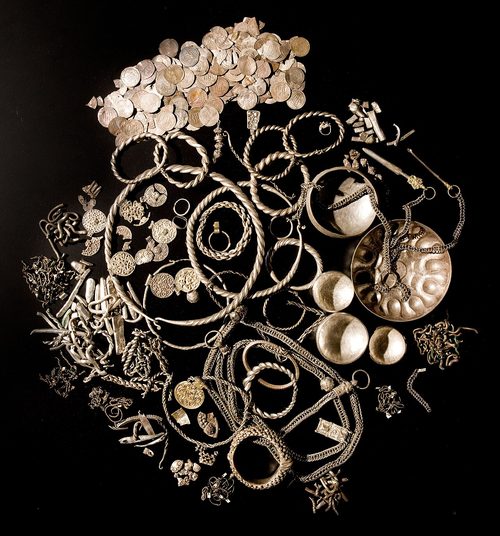
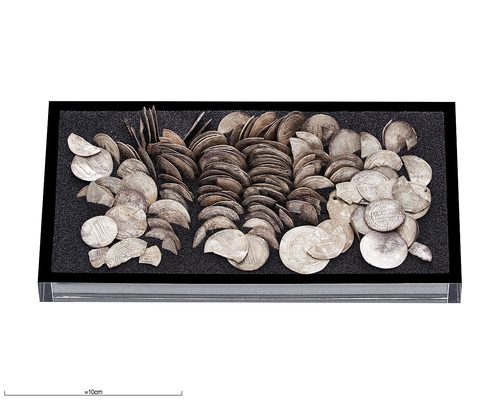
Hundreds of thousands of silver dirhams, most from Samanid Central Asia, reached the Baltic by river and ended up whole, cut or melted in Viking hoards.
The dirham was the silver coin of the Islamic world, and in the Viking age it became the main source of silver for northern Europe. Its name goes back to the Greek drachma. From the 690s Islamic dirhams carried no images at all, only Arabic inscriptions in angular Kufic script: a statement of faith, often a Qur'anic verse, the mint and the year of striking counted from the Hijra. Because mint and date are written on the coin, a single dirham can be placed more precisely than almost anything else in a Viking hoard.
Dirhams first reached Scandinavia around 800. Most of those found in the north were struck in the 10th century by the Samanid emirs, who ruled Transoxiana and Khurasan (in today's Uzbekistan, Tajikistan, Afghanistan and Iran) and controlled the richest silver mines in the Islamic world. Samarqand and al-Shash (Tashkent) were their busiest mints. From there the coins travelled north-west to the trading centre of Bulghar on the middle Volga, and then by the Russian rivers to the Baltic. Furs and enslaved people went the other way. Kershaw and colleagues, citing Jankowiak, put the number of surviving dirhams from northern and eastern Europe, including Russia, at roughly 350,000 to 400,000. Gotland alone has produced tens of thousands; the Spillings hoard has about 14,200 Islamic coins, the latest struck in 870.
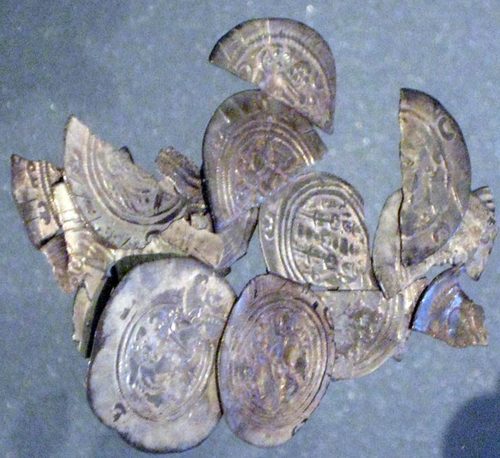
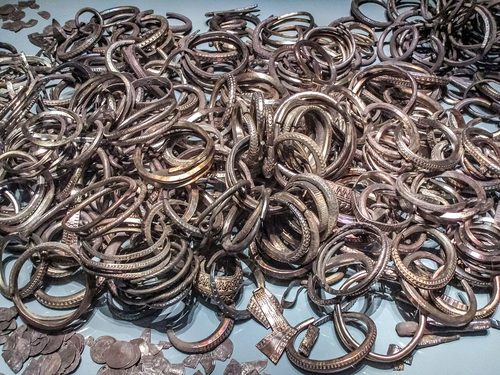
In theory a dirham was a fixed weight of silver: ten dirhams were reckoned equal to seven mithqals, which gives a standard of about 2.97 g. Real coins drift on both sides of that. Two Samanid dirhams of Nuh ibn Nasr (943-954) in the Khalili Collection weigh 3.27 g and 3.38 g. In the north this hardly mattered, because nobody counted dirhams; they weighed them. That is why so many are cut into halves and quarters, pierced for wearing, bent, or covered in test nicks. At the Viking army's winter camp at Torksey in Lincolnshire (872-3), every one of over a hundred dirham finds had been cut up.
To recognise a dirham, look for a thin, broad silver coin, usually around 25 mm across, with no portrait, a central field of horizontal Arabic lines and one or two circular legends round the edge. Fragments are common and are often identifiable only by a few Kufic letters. Contemporary imitations, struck north of the Islamic world with garbled inscriptions, also circulated.
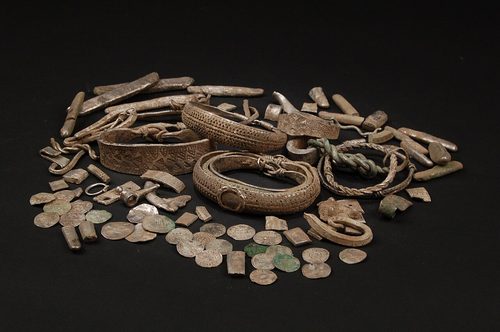
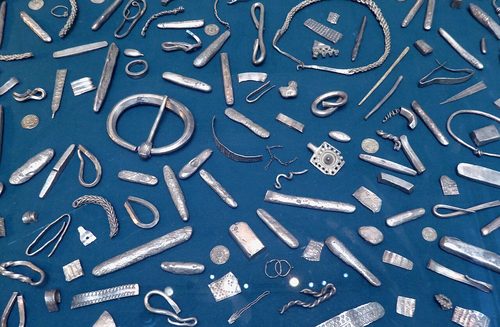
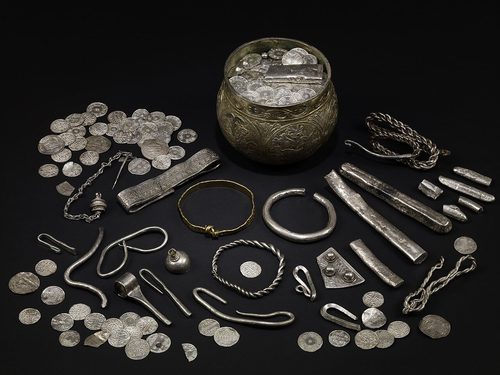
Dirhams give historians a timetable for trade with the East. Hoard dates show the flow from the Islamic world building through the 9th century, peaking in the 10th and fading out around the end of it, as Samanid silver output fell and the dynasty collapsed in 999. German and English pennies then replaced dirhams in Baltic hoards. In Britain and Ireland, dirhams are a minor but telling ingredient of Viking hoards such as Cuerdale and the Vale of York, proof that silver from Central Asia was being weighed out in Yorkshire and Lancashire.
Examples
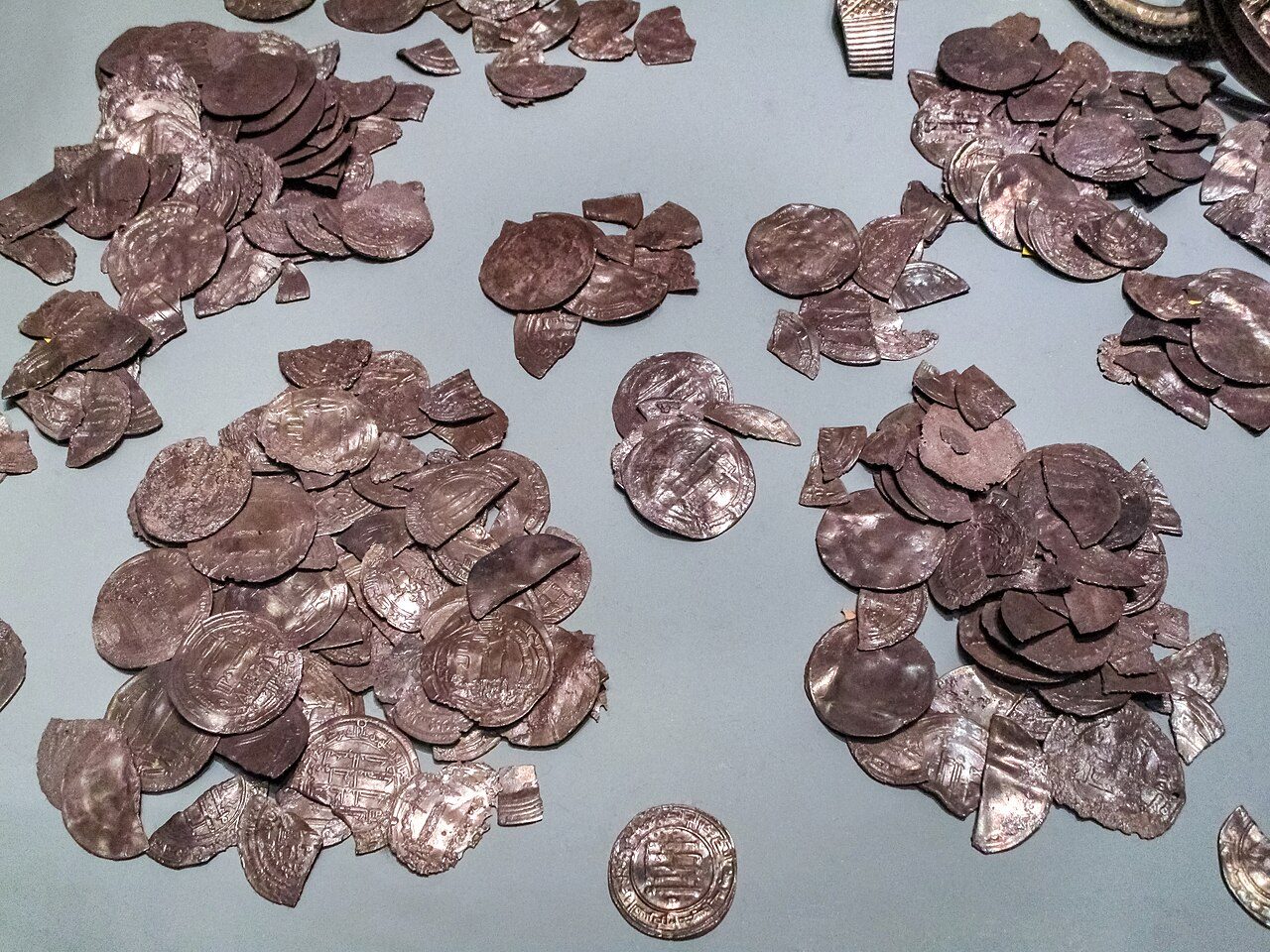
Photo: W.carter, CC BY-SA 4.0, via Wikimedia Commons
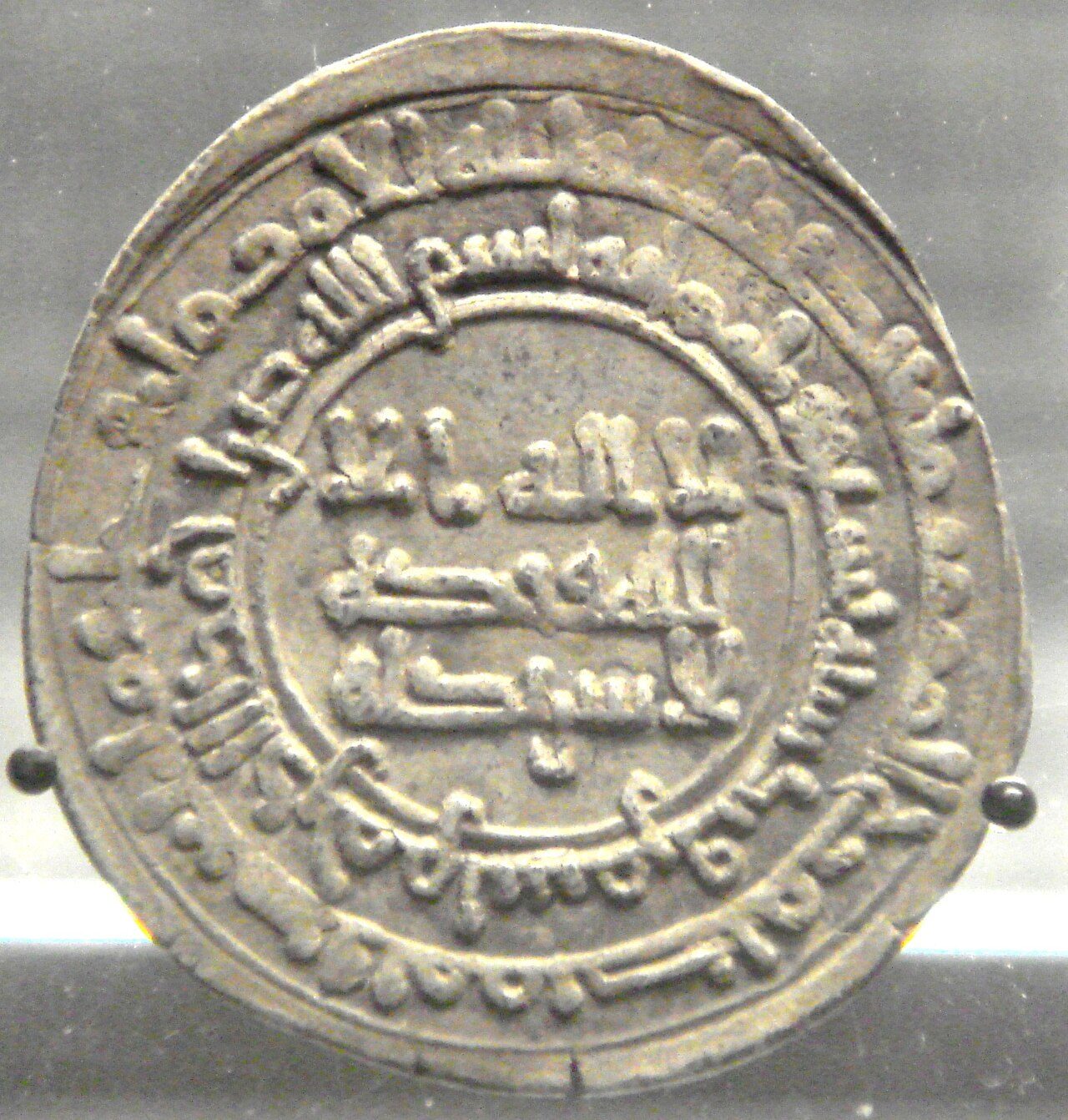
Photo: PHGCOM, Public domain, via Wikimedia Commons
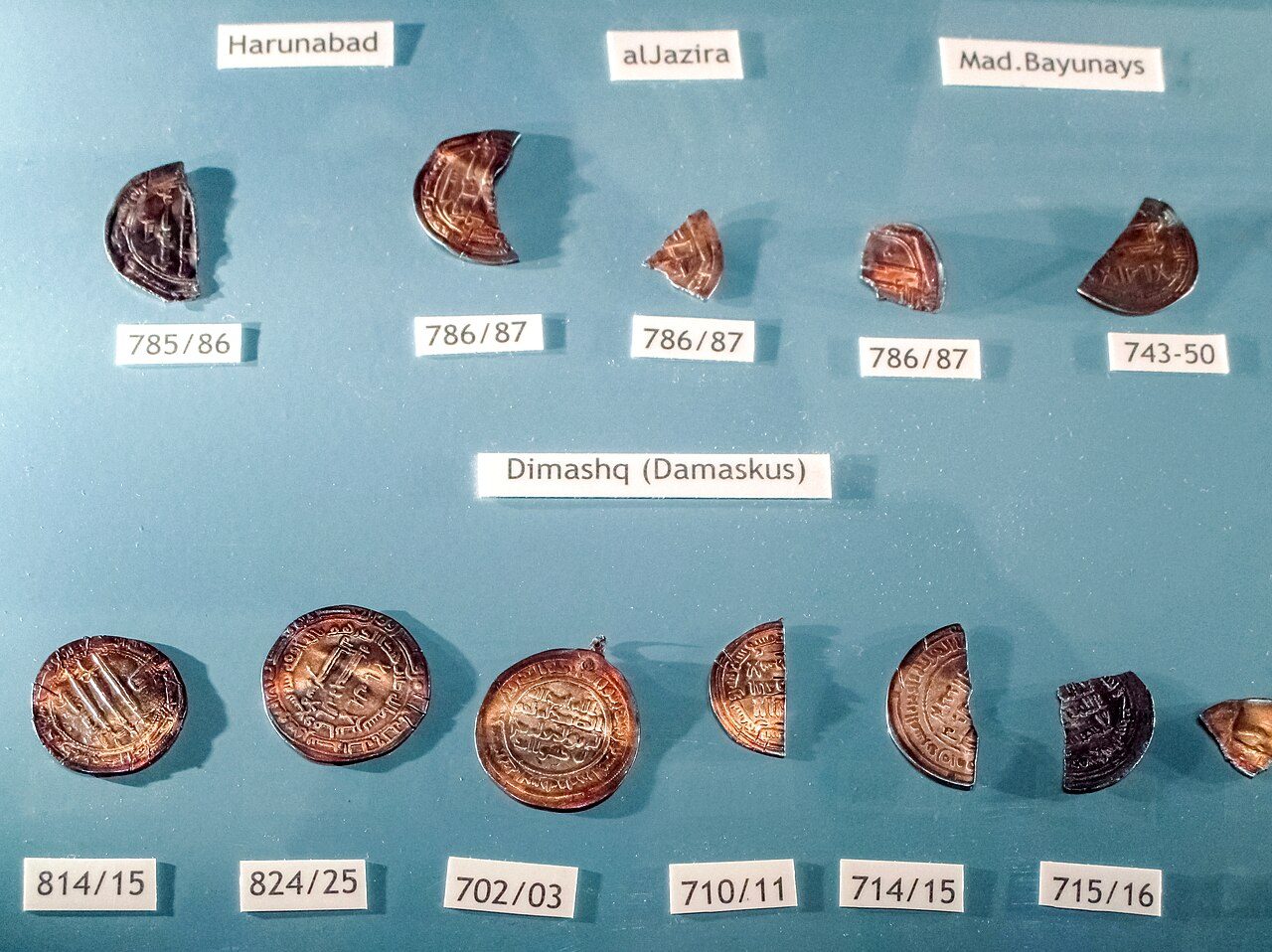
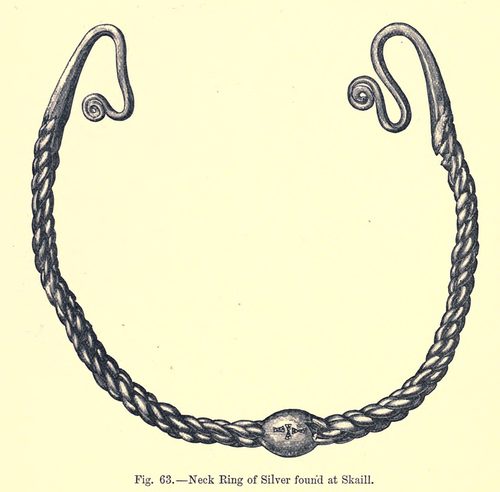
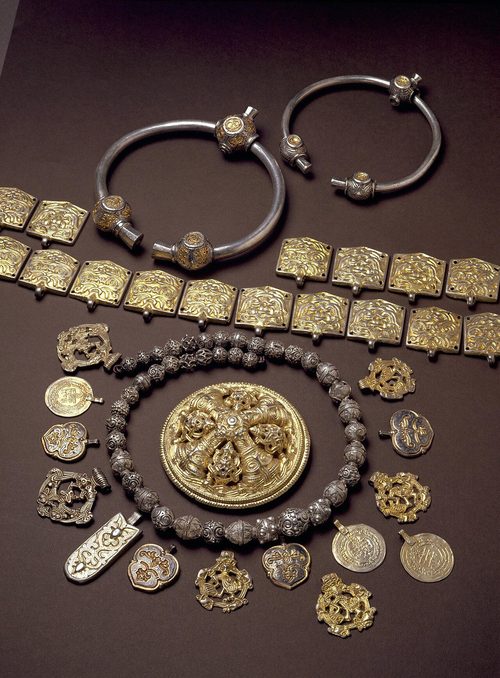
Photo: W.carter, CC BY-SA 4.0, via Wikimedia Commons
Sources
- Kershaw et al., 'The Provenance of Silver in the Viking-Age Hoard From Bedale, North Yorkshire', Archaeometry (2025)
- Dirham (Wikipedia)
- Samanid Empire (Wikipedia)
- Khalili Collections: Samanid silver dirham, Samarqand 342 AH (3.38 g)
- Viking Torksey: inside the Great Army's winter camp (Current Archaeology)
- wariq: history notes summarising Kovalev, Michailidis and the Gruszczynski hoard catalogue