How people have verified money, recorded it and kept it scarce, from Viking hacksilver to digital ledgers, with the limits of each modern parallel.
One question, many answers
Every money has to settle three things: whether a payment is genuine, who keeps track of who owns what, and what stops anyone making more of it. Modern payment systems answer with banks, card networks and central banks. Public blockchains answer with open software, shared records and rules written into code. A Viking trader at Kaupang or Birka in the 9th century answered with a lump of silver, a folding balance and a sharp knife.
This series follows those answers through the hoards. It is a history first. Where we draw parallels with modern digital money, they are analogies, each with a note on where it breaks. Nobody in the Viking age anticipated cryptocurrency, and the point of the comparison is to see both systems more clearly, not to flatter either.
Verification without an issuer
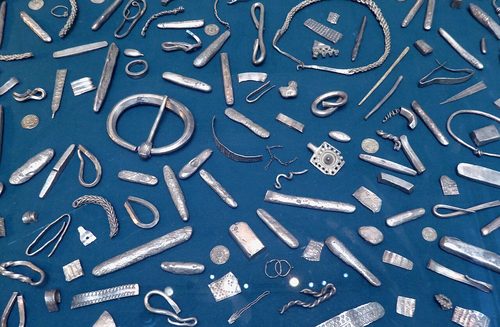
In the bullion economy no authority stood behind the metal. Silver was worth what it weighed, and it was paid by cutting and weighing (the bullion economy). From the 860s and 870s standard weights spread across most of Scandinavia, so that strangers could agree on a mass (folding balances). The knife checked what the scale could not: nicks exposed plated fakes and let a payee feel whether an alloy was too hard or too soft (nicks and pecks).
Trust did not vanish; it moved to the tools and the people holding them. The owner of the copper balance box found in Sigtuna in 1911 had runes cut round it naming him, Djarfr, recording where he got the scales and picturing a raven tearing apart a thief. A balance was a merchant's most valuable possession because it was how everyone else decided whether to trust him.
Handing verification to a king
Coins offered a short cut. Instead of testing each piece, you accepted the issuer's stamp. Viking rulers in York and East Anglia were striking their own pennies by the mid-890s, yet in the Danelaw bullion and coin ran side by side from about 865 until at least 930-940. Kershaw finds local coins only occasionally tested there, while foreign dirhams were always cut: people trusted what they knew.
Edgar's reform of about 973 made the short cut national: one design from some forty mints, silver of high and uniform fineness, and a law that one coinage should run throughout the kingdom. In Scandinavia, Sweyn Forkbeard and Olof Skötkonung struck the first royal coins around 995. The scales went back in their boxes at different speeds: by about 1030 in Ireland, by the 1060s in the Scottish isles, and on Gotland only after the island began striking its own coins about 1140 (from weight to coin).
Ledgers nobody meant to keep
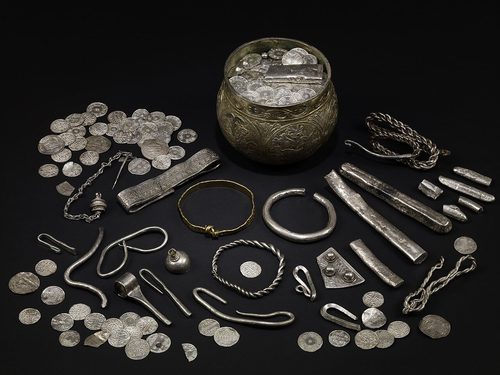
The Viking age left no account books, but it left hoards. The Cuerdale hoard lists, in metal, its owner's sources: about 5,000 Danelaw coins, 1,000 English, 1,000 Frankish, some 50 Islamic, and more than 36 kg of bullion. The Vale of York hoard can be dated to about 928 from the freshness of King Athelstan's coins (hoards as ledgers).
Modern science adds provenance. Inscriptions name mints and years; die links tie coins to workshops; lead isotopes traced the Galloway hoard's lidded vessel to Iranian ore and showed that most of its hacksilver was melted English coin (tracing provenance).
Scarcity you could not print
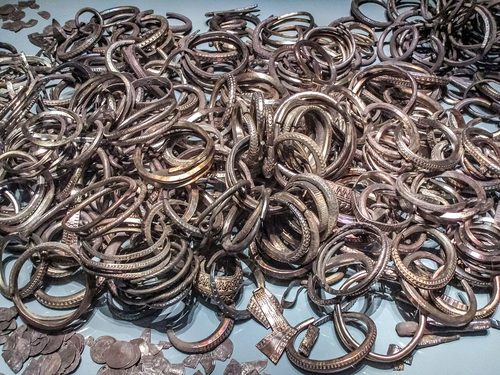
Silver's scarcity was physical and, for Scandinavians, distant. Much of it came from Central Asian mines by way of Samanid mints and the Volga trade, a trade bound up with the sale of enslaved people (dirhams north). Gotland alone has yielded about 168,000 Viking-age silver coins. When the eastern supply dried up at the end of the 10th century, Scandinavia's money changed with it, as western and then royal coin took over.
Within that scarcity people made change by cutting: dirham fragments found as single finds in England average only 0.57 g. Once kings controlled the coin, they also decided what counted as good money, and how much of it there was.
Five parallels, with their limits
Set out plainly, here are the comparisons this series draws. Each is an analogy, not a claim of descent.
- Verify, don't trust. Nicking an ingot is like a network node checking every transaction itself. *Where it breaks:* a knife test is partial, destructive and depends on skill; cryptographic checks are exact and repeatable.
- Open standards. Standard weights let anyone run the same check with compatible tools. *Where it breaks:* nobody enforced them, and Torksey's weights show no single standard.
- Bearer value. Hacksilver needed no issuer and settled when it changed hands. *Where it breaks:* silver had uses outside exchange and no record of the payment existed anywhere.
- Ledgers and timestamps. A hoard resembles a snapshot of one wallet, its latest coin a timestamp. *Where it breaks:* a hoard was private and secret, recorded no transactions and could not be checked by anyone in its own time.
- Provenance. Die links and lead isotopes give objects an origin story, as provenance records try to do for digital works. *Where it breaks:* archaeological provenance is probabilistic, and a digital record proves only what was entered into it.
Modern parallel (an analogy)
The Viking story runs from trusting no one but your own scales to trusting a king's stamp. Digital money is often described as a move in the opposite direction, from trusting banks back towards checking the record yourself. Seen across 1,200 years, the more lasting lesson is that every system mixes the two: Viking payees still trusted their weights, and modern users still trust the software they run.
For creators and anyone building a reputation online, the hoards make one more point. Value has always depended on someone being able to check where a thing came from and whether it is what it claims to be.
Where the analogy breaks: Medieval silver was a physical commodity with uses beyond exchange; digital assets are not. Viking verification relied on bodily skill and local knowledge, not mathematics, and its 'records' were buried by accident. Nothing on this page is financial or investment advice, and no historical parallel says anything about the value of any modern asset.
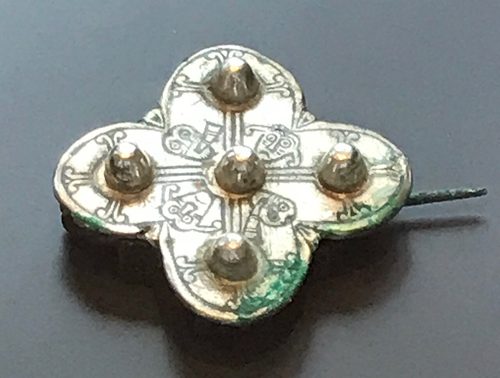
Objects
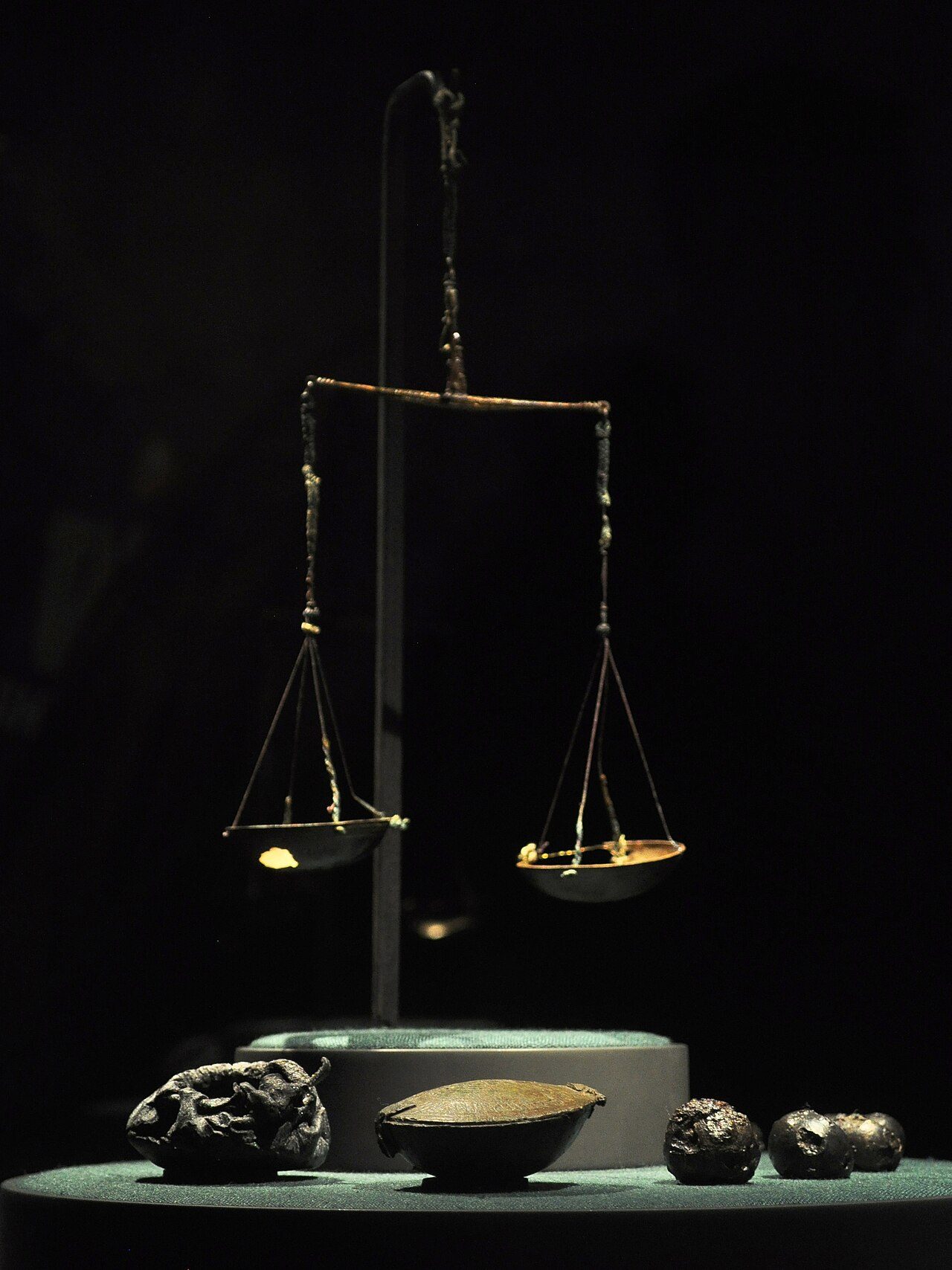
Photo: Joe Mabel, CC BY-SA 4.0, via Wikimedia Commons
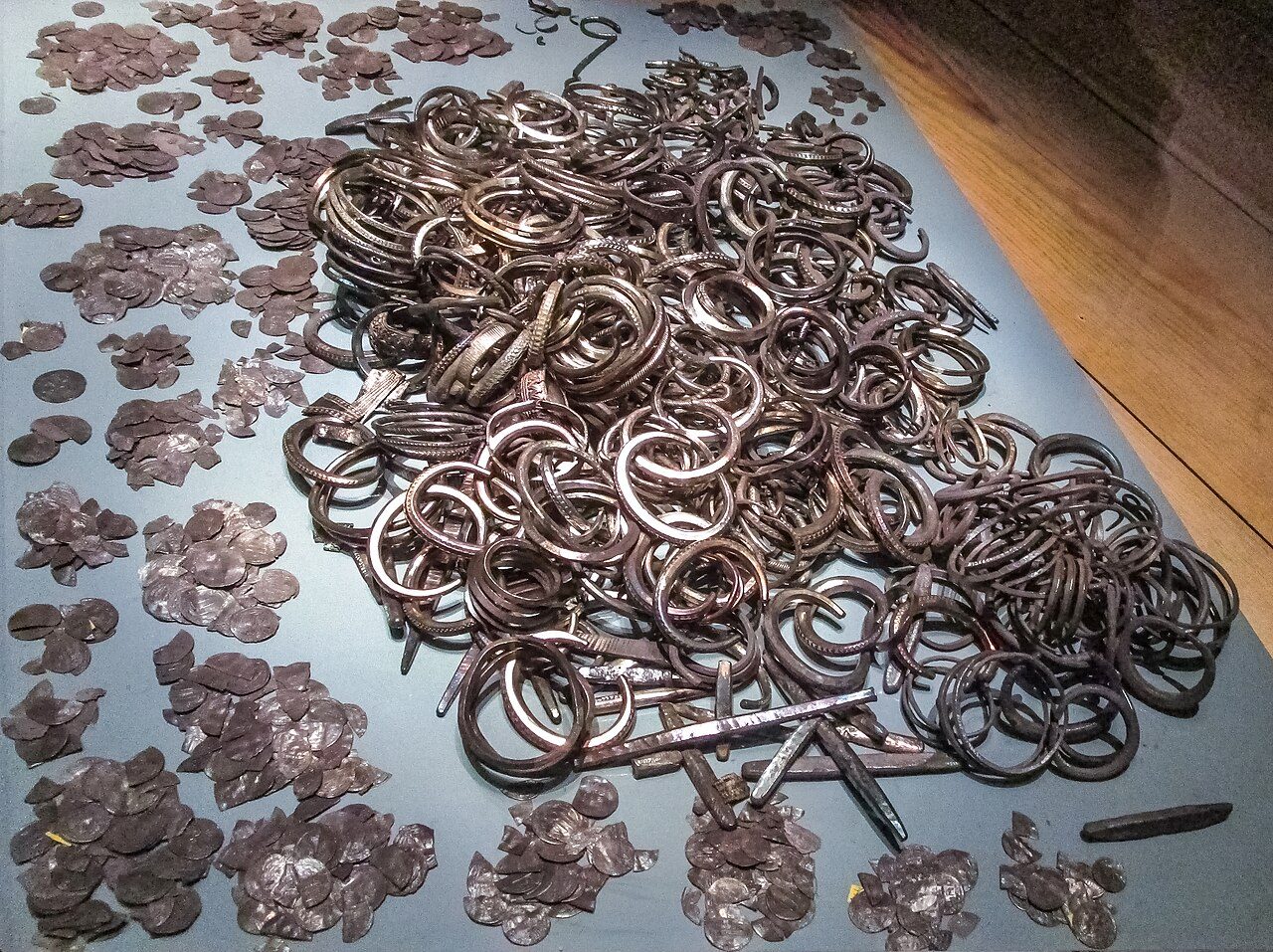
Photo: W.carter, CC BY-SA 4.0, via Wikimedia Commons
Sources
- Kershaw, 'An early medieval dual-currency economy: bullion and coin in the Danelaw', Antiquity (2017)
- Hadley and Richards, 'The winter camp of the Viking Great Army, AD 872-3, Torksey', Antiquaries Journal (2016)
- National Museum of Denmark, 'Silver's route to Denmark' (archived)
- Gotlands Museum, Skattkammaren
- Sigtuna box (Wikipedia)
- National Museums Scotland, 'Conserving the Galloway Hoard vessel'
Analogies on this page are comparisons, not claims about the past. Nothing here is financial or investment advice.