How royal coins replaced weighed silver: Hedeby coins, Viking York and St Edmund pennies, Edgar's reform of c. 973 and the first Scandinavian royal coins.
Early experiments in the north
The first coins struck in Scandinavia are the so-called Hedeby coins, traditionally attributed to the trading town of Hedeby at the base of the Jutland peninsula and dated from about 825. Most are thin and struck on one side only, copying Frankish coins from Dorestad, and they travelled as far as Birka, where one with a ship design was found in a grave. Four turned up in the Spillings hoard among more than 14,000 Islamic coins.
These early coins did not create a coin economy. In the hoards they are a small minority among dirhams and hacksilver, and for another century and a half Scandinavia's money was metal, not a promise.
Viking kings who struck coins
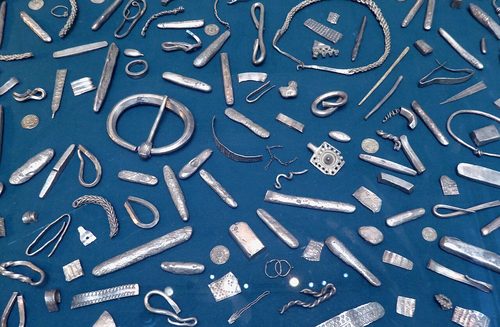
The settlers in England learned faster. After imitating Alfred's pennies, the Viking rulers of York began striking their own coins around 895, with the names of kings such as Siefred and Cnut and the mint name EBRAICE for York; their dating rests largely on the Cuerdale hoard. In East Anglia the settlers issued a large memorial coinage in the name of St Edmund, the king they had killed, struck from about 895 to 910. The Cuerdale hoard holds about 5,000 of these Danelaw coins.
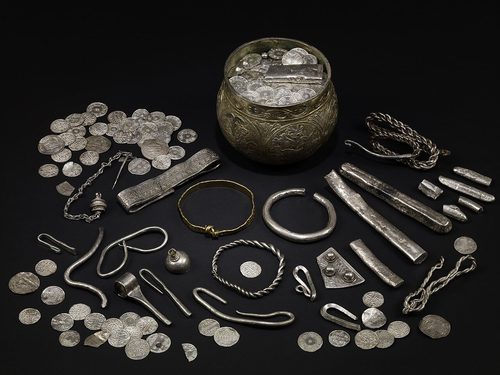
Coins did not drive out bullion at once. Jane Kershaw's survey finds weighed silver still in use across the Danelaw until at least 930-940, and the Vale of York hoard, buried about 928, mixes freshly struck coins of King Athelstan, minted at York after he took the city in 927, with ingots and cut arm-rings.
Edgar's reform: one coin for one kingdom
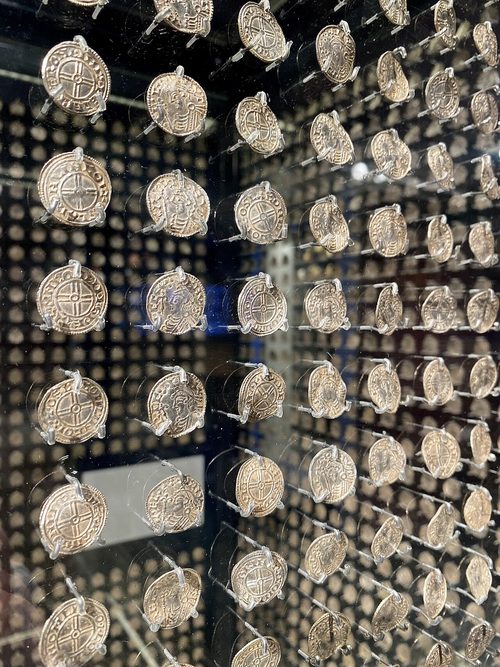
The decisive step came under Edgar, king of the English, towards the end of his reign, conventionally about 973. His reformed penny had one design for the whole kingdom: the king's bust facing left and his name, EADGAR REX ANGLORUM, on one side, a small cross with the moneyer's name and the mint on the other. For the first time all of England's forty or so mints produced the same coin. Its silver was high and consistent, about 96 per cent, and one account says the design was changed about every six years. The system outlived the Norman Conquest.
Oddly for so important a change, no contemporary writer describes it. The reform is first mentioned by Roger of Wendover in the 13th century; the date comes from the coins themselves. Edgar's law code says the rest: 'one coinage is to be current throughout all the king's dominion', alongside rules for standard weights and measures.
The Lenborough hoard, buried about 1035, shows the result: 5,251 pennies of Æthelred II and Cnut from about 40 English mints, and not a scrap of hacksilver.
Royal coin in Denmark, Norway and Sweden
Scandinavian kings followed in the 990s, copying English pennies they knew well from tribute and plunder. Around 995 Sweyn Forkbeard of Denmark struck a penny reading ZVEN REX AD DENER, 'Sven, king of the Danes', with the moneyer Godwine named on the reverse, the first Danish coin to name a Danish king. In Sweden Olof Skötkonung, king from about 995, struck pennies at Sigtuna, signed OLUF REX or OLAF REX with forms of the town's name; a few hundred survive. In Norway Olaf Tryggvason, king from 995 to 1000, issued coins on an English model.
Royal coinage did not always stick. In Sweden minting stopped after Olof's son Anund Jacob and did not resume until the late 12th century. Denmark's coinage became firmly organised under Cnut the Great in the 1020s, with Lund as the main mint.
How quickly the scales were put away
The change from weighing to counting spread unevenly, and the hoards show it region by region:
- England: local coins were rarely tested even in the Danelaw; after Edgar, English hoards are essentially coin-only.
- Ireland: Dublin struck its own coins from 997, and the last Irish coin hoard with any non-coin silver, about 1030, held a single ingot.
- Norway: the Græsli hoard, buried after about 1080, contains 2,209 Norwegian pennies out of 2,253 coins, mostly of Olav Kyrre, though it still has some cut silver.
- Scottish Isles: the last hoard of purely Scandinavian character in Britain or Ireland to contain hacksilver, from Dunrossness in Shetland, seems to date from the 1060s.
- Gotland: the Burge hoard, buried soon after 1143, is still mostly bars and scrap. Gotland struck its own coins only from about 1140, so the island was among the last to give up the balance.
Modern parallel (an analogy)
Moving from weighed silver to royal coin moved trust from the asset to the issuer. Instead of checking every piece yourself, you accepted the king's stamp as proof of weight and fineness, the way people now accept a platform's verification badge or a bank's balance instead of checking anything themselves. Edgar's single design across forty mints was a medieval version of a standard user interface: every coin in the kingdom looked and worked the same.
The uneven retreat of the scales is a reminder that trusted intermediaries win region by region, and some communities stick with self-verification for generations.
Where the analogy breaks: A medieval penny was still made of silver, so it kept value even where the king meant nothing; its guarantee was enforced by law and punishment, not by technology. Users could also go back to weighing, as Gotland did for a century and a half, which is not an option a purely digital system offers.
Objects
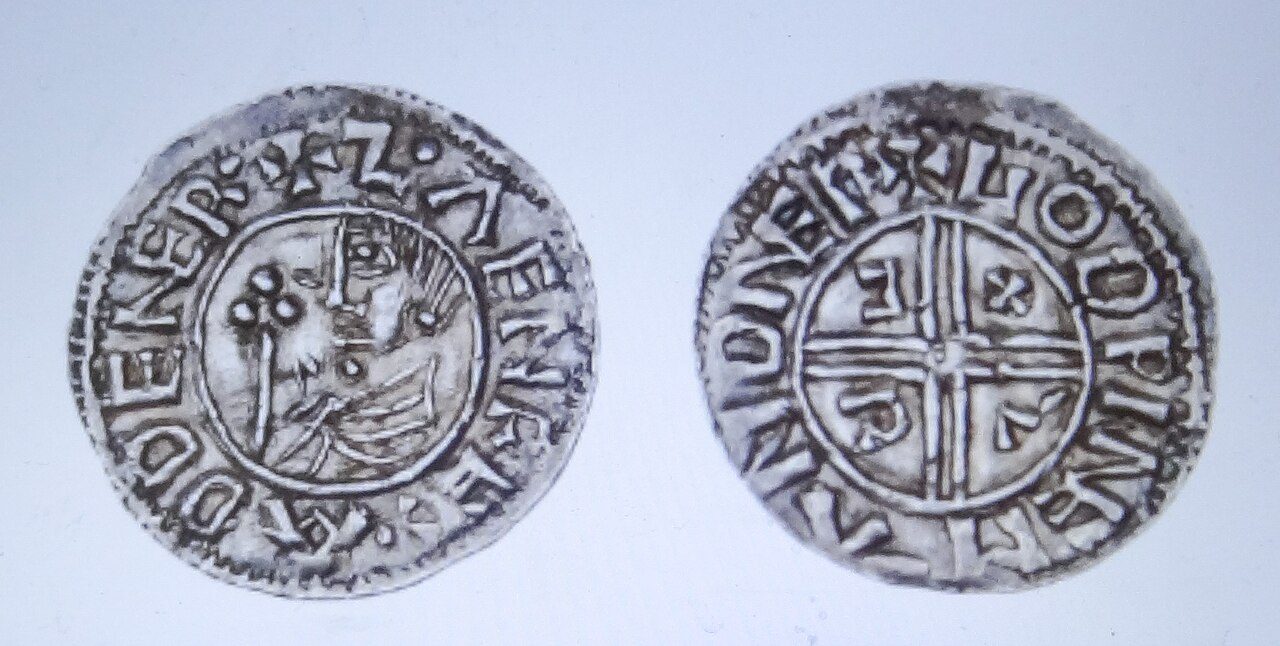
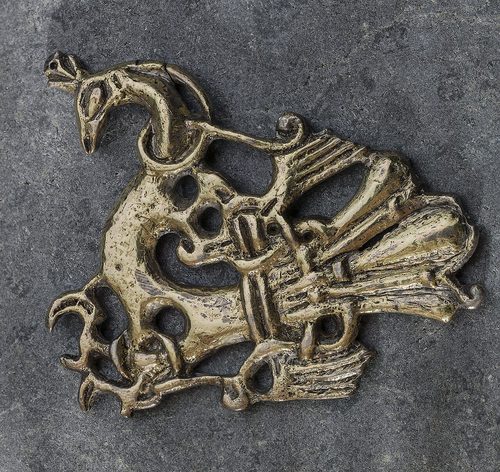
Photo: Ola Myrin, Public domain, via Wikimedia Commons
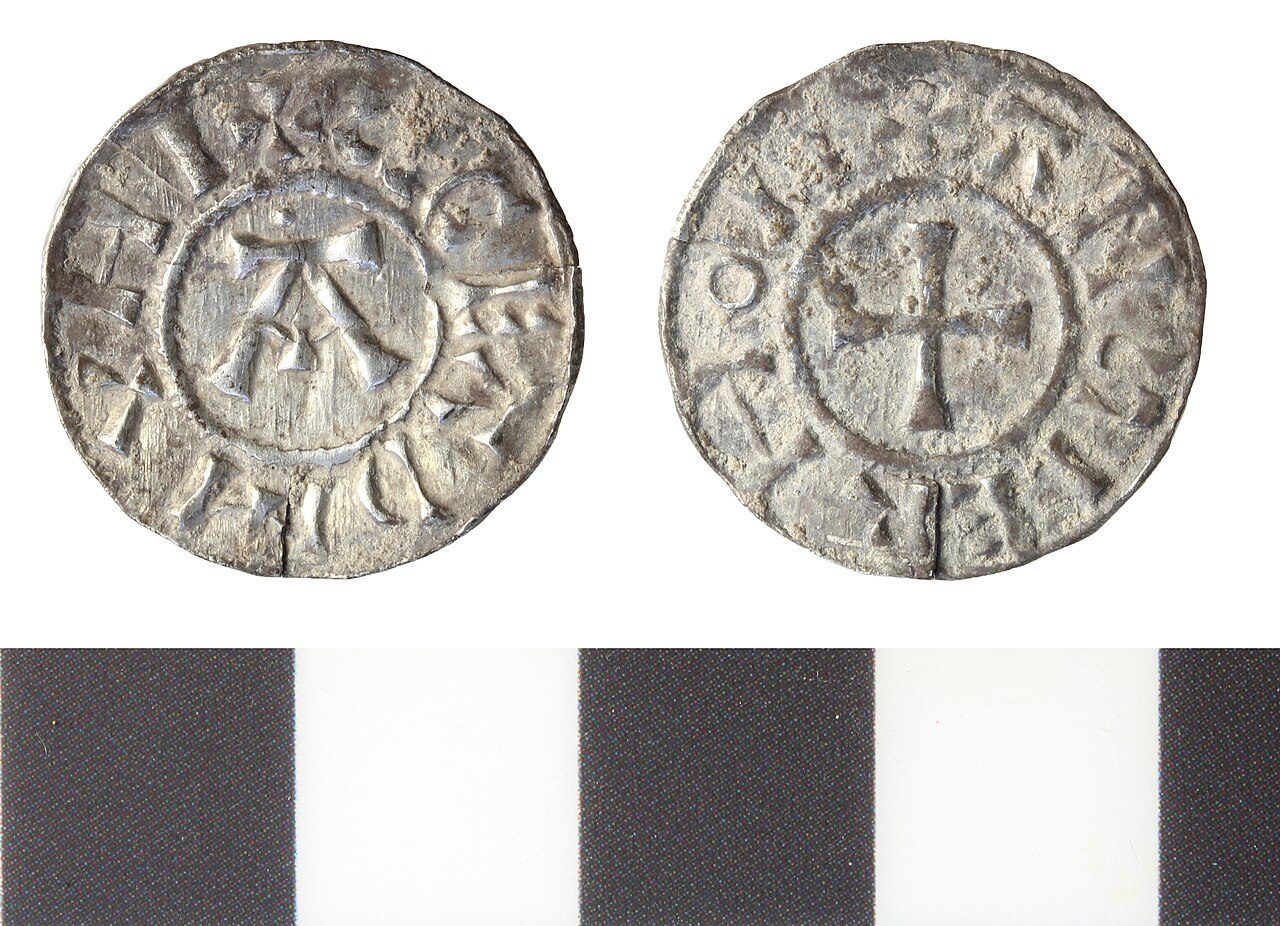
Photo: Salisbury and South Wiltshire Museum, Wil Partridge, 2019-01-03 14:24:23, CC BY 2.0, via Wikimedia Commons
Sources
- Edgar, King of England (Wikipedia)
- Viking coinage (Wikipedia)
- Scandinavian York (Wikipedia)
- Kershaw, 'An early medieval dual-currency economy', Antiquity (2017)
- Graham-Campbell, 'The Viking-age silver and gold hoards of Scandinavian character from Scotland', PSAS 107 (1976)
- Gotlands Museum, Skattkammaren
Analogies on this page are comparisons, not claims about the past. Nothing here is financial or investment advice.