What a Viking hoard reveals about one person's wealth, its sources and its date, why so many were never dug up, and the safekeeping or offering debate.
A snapshot of one person's wealth
Nobody in the Viking world kept written accounts that survive. Hoards are the nearest thing: a person's liquid wealth, packed up at one moment and left untouched. Read carefully, the contents say where the money came from, roughly when it was assembled and what its owner thought worth keeping.
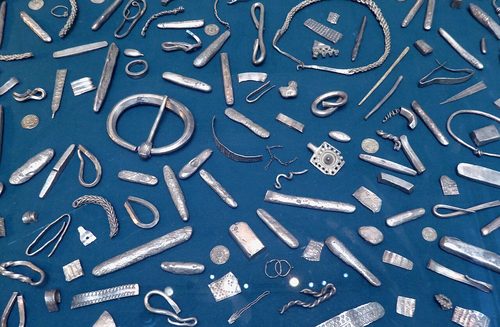
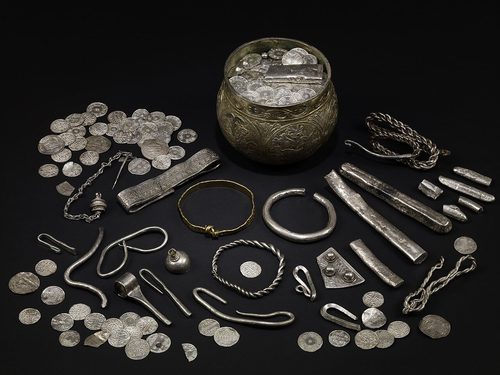
The Cuerdale hoard is the classic case. Its more than 7,000 coins break down, according to the British Museum's curators, into about 5,000 struck in the Danelaw, about 1,000 official Anglo-Saxon issues, about 1,000 Frankish coins, a handful of early Scandinavian coins, about 50 Islamic dirhams and imitations of them, and a single Byzantine piece. Beside them lay more than 36 kg of bullion: Irish-style arm-rings, Carolingian fittings, Pictish and Scandinavian fragments. Oddly, among all that metal there are only two pieces of Anglo-Saxon jewellery to set against over 1,000 Anglo-Saxon coins. Each group is a line in an account: plunder from Francia, fresh coin from Viking York, silver from the Irish Sea and, at second or third hand, from the East.
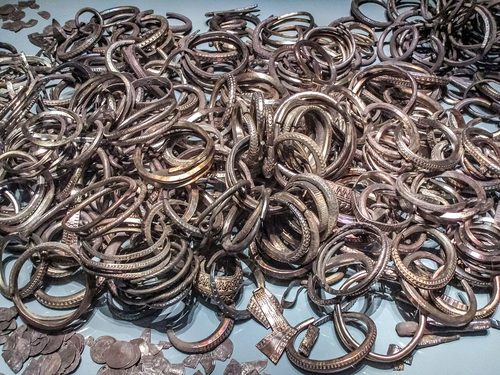
Smaller hoards record smaller lives. The Swedish History Museum puts the typical Gotland silver hoard at 200 to 300 grams, a farm's savings rather than an army's treasury.
Reading the date
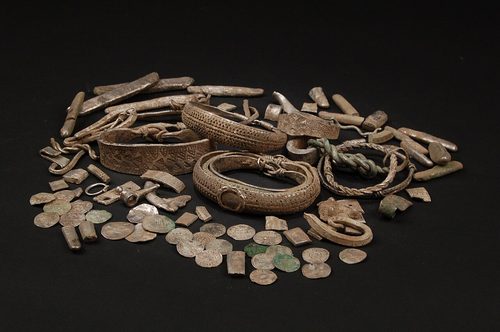
Coins make hoards datable. The youngest coin gives the earliest possible date of burial, and the mix of older coins narrows it further. The Treasure report on the Vale of York hoard is a model of the method. Of its 617 coins, those of King Athelstan make up 17 per cent, and his 'Church' type, struck soon after he took York in 927, is freshly struck and well represented, while his next type, naming him king of all Britain, appears only once. Its latest Islamic coin, struck at al-Shash in 914-15, fits the usual ten-to-fifteen-year lag before dirhams reached English hoards. Everything points to burial in about 928.
Sometimes the ledger rewrites the history books. Cuerdale is so large and so securely dated, to about 905-910, that numismatists date the Viking coinages of the Danelaw from it rather than the other way round. The Silverdale hoard, found in Lancashire in 2011, held a coin naming AIRDECONUT, an otherwise unrecorded ruler of the region around 900. No chronicle mentions him; one buried purse does.
Banks in the ground
Most hoards look like savings put somewhere safe. The National Museum of Denmark judges that most Viking-age finds were stocks of valuables hidden, for example in troubled times, while a few may be votive offerings. The Spillings hoard was buried inside a building, under its floor. Hoards were packed with care: Cuerdale in a lead-lined chest, the Vale of York hoard inside a gilded Carolingian cup wrapped in lead sheet, the Galloway hoard in parcels and a lidded vessel.
A buried hoard had real advantages before banks. Nobody could see it, it could not be stolen from a chest or a belt, and only its owner, or someone told the secret, knew where to dig.
Why so many were left
The puzzle is why so many were never collected. Gotlands Museum calls it strange that so many hoards were left behind, given how common hiding valuables was. The plainest answer is that owners died, fled or were enslaved, and took the secret with them; the Viking age had no shortage of all three.
There is an older answer too. Snorri Sturluson's Ynglinga saga, written in Iceland in the 13th century, says that Odin laid down a law: the dead were to be burned with their property, and everyone would come to Valhalla with what was on the pyre, 'and he would also enjoy whatever he himself had buried in the earth'. Gotlands Museum notes that some interpret hoards in this light, as silver kept for use after death, which might explain why several generations' silver sometimes turns up in the same container.
Snorri was a Christian writing two centuries or more after most of these hoards were buried, so his 'law of Odin' is at best a late echo of earlier belief. Archaeologists generally treat it as one possibility among several. Hoards deposited in graves or old monuments, such as the Sundveda hoard pushed into an Iron Age stone setting, are the cases where an offering is easiest to argue; hoards under house floors are the hardest.
Modern parallel (an analogy)
A hoard is less like a ledger than like a snapshot of a single wallet. From the composition you can tell which sources fed it, the latest coin works like the most recent timestamp, and by comparing hundreds of hoards archaeologists reconstruct the flows of silver across a continent, much as analysts reconstruct flows on a public blockchain from many individual balances.
The unrecovered hoards have a modern echo as well: value secured by secret knowledge that is lost forever when the only person who held the secret is gone.
Where the analogy breaks: A hoard records an end state, not the transactions that built it, and it carries no signatures or agreed timestamps. It was private, invisible and unaudited in its own time, the opposite of a shared public ledger that everyone can check while it is in use. Archaeologists only read it after its owner's plans failed.
Objects
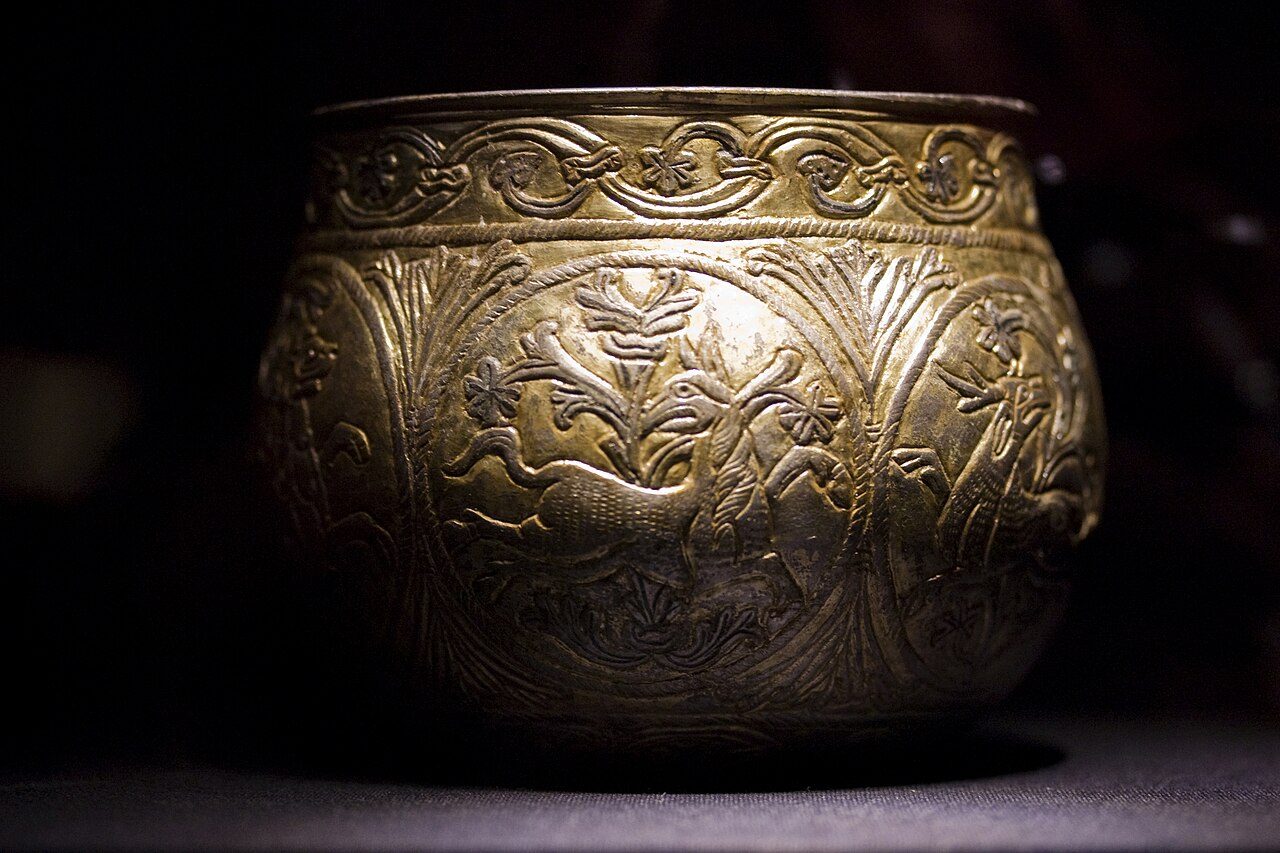
Photo: vintagedept from Olen (London), Belgium (United Kingdom), CC BY 2.0, via Wikimedia Commons
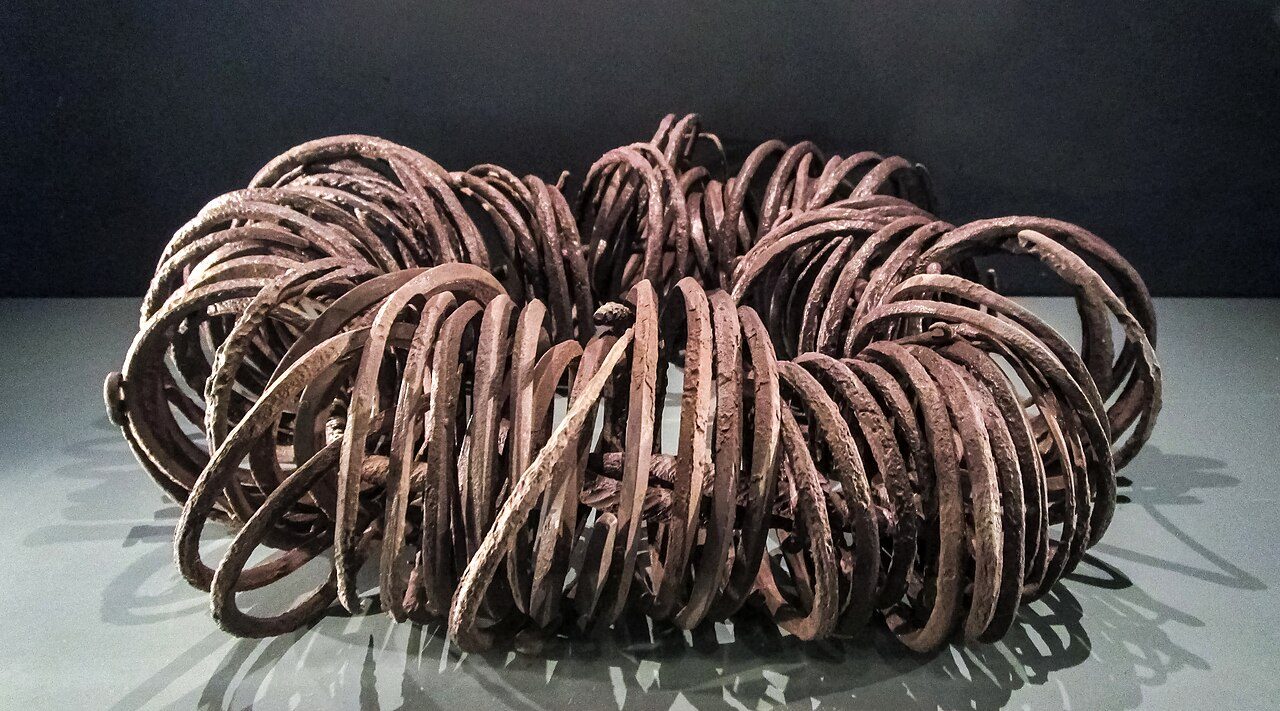
Photo: W.carter, CC BY-SA 4.0, via Wikimedia Commons
Sources
- BBC History, 'The Cuerdale Hoard' (Williams and Webster)
- Vale of York hoard, PAS record SWYOR-AECB53 (archived)
- National Museum of Denmark, 'The silver hoards of the Vikings' (archived)
- Gotlands Museum, Skattkammaren
- Ynglinga saga, tr. Laing (Wikisource)
- Swedish History Museum, 'The world's largest Viking treasure'
Analogies on this page are comparisons, not claims about the past. Nothing here is financial or investment advice.