How silver dirhams from Samanid mints in Central Asia reached Gotland and the Baltic, when the flow peaked, and why it stopped around the year 1000.
The coin with a date on it
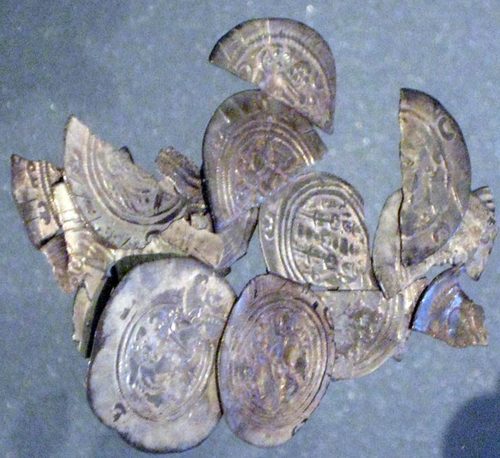
The dirham was the silver coin of the Islamic world. The caliph Abd al-Malik introduced it in its classic form in 698/9, at an average weight of about 2.97 g, and for centuries afterwards it carried no portrait at all, only Arabic religious formulas and, crucially for archaeologists, the name of the mint and the year of striking. A dirham found in a Birka grave, for example, names its mint as al-Shash, the modern city of Tashkent in Uzbekistan.
That habit of dating every coin makes dirhams the best clocks in Viking archaeology. Find enough of them in a hoard and the youngest gives the earliest date it can have been buried. The British Museum's report on the Vale of York hoard also notes a regular delay: dirhams generally reached Danelaw hoards ten to fifteen years after they were struck.
The eastern road
The silver came north along the rivers of what is now Russia. Rus traders, largely of Scandinavian origin, moved down the Volga to the markets of the Volga Bulgars and the Khazars, where they sold furs and enslaved people to Muslim merchants for silver and silk. The trade in captives was central to it and should not be softened. The earliest and richest finds of Arabic coins in Europe come from Russia itself, along the Volga route.
From there silver reached the Baltic. The National Museum of Denmark describes two main routes into Scandinavia: an eastern one along the Russian rivers, largely in Swedish hands, and a western one through the Frankish kingdom. It suggests the eastern silver trade may have been controlled by a relatively small group of people.
The Sundveda hoard, found in 2008 between Märsta and Sigtuna, shows the early phase. Its 482 coins and fragments came from mints spread from Spain and Morocco to Afghanistan and Uzbekistan, and the youngest that can be read was struck in 843/44. Most were cut or broken: in the north a dirham was a weighed piece of silver, not a coin with a face value.
The Samanid century
In the 10th century the flow was dominated by one dynasty. The Samanids ruled Khorasan and Transoxiana from 819 to 999, from Samarkand and then, after 892, from Bukhara. Their mints at al-Shash (Tashkent) and Samarkand struck the coins that turn up most often in Scandinavian hoards of the 900s. Behind them lay rich silver mines in the eastern caliphate, among them the workings of the Panjshir valley in Afghanistan and the Tashkent region.
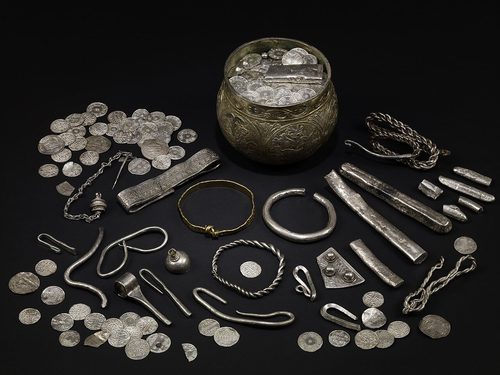
The coins travelled astonishing distances. The latest dirham in the Vale of York hoard was struck for the Samanid emir Nasr ibn Ahmad at al-Shash in AH 303, AD 914-15. A quarter of a dirham of the same emir lay in grave Bj 581 at Birka. The Cuerdale hoard (c. 905-910) held about 50 Kufic dirhams from across the Islamic world, which the British Museum's curators think arrived in Britain by way of Scandinavia.
Why Gotland
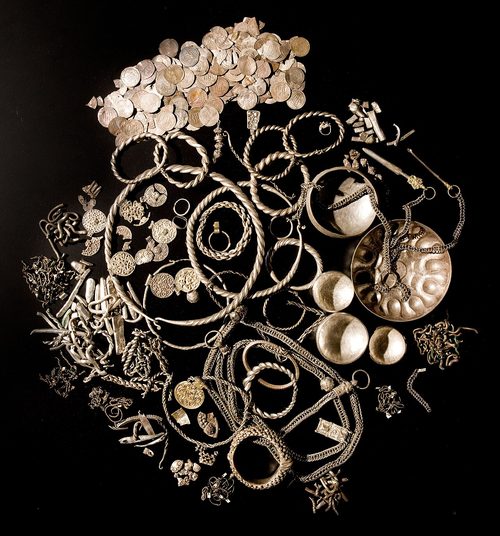
No place has more of this silver than Gotland, a Baltic island of farmers and traders. Gotlands Museum reckons the island accounts for about two-thirds of all Viking-age silver coins found in Sweden, roughly 168,000, and says that relative to its size Gotland has produced more Viking-age silver hoards than anywhere else. Swedish Wikipedia puts the number of silver hoards found on the island at more than 700.
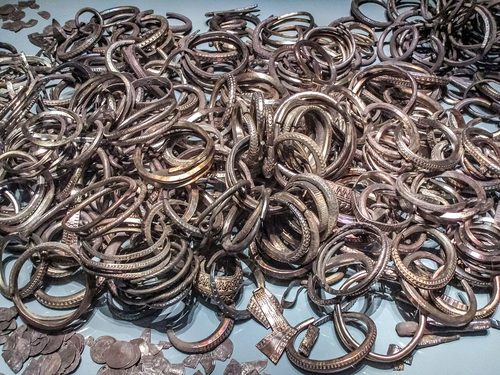
The Spillings hoard at Othem is the extreme case: 14,295 coins, most of them Islamic, and about 486 arm-rings in two deposits weighing some 67 kg. Its youngest coin dates from about 870. Among its curiosities is a Khazar imitation dirham struck around 837 that names Moses as the messenger of God. Across the water in Denmark, the Terslev hoard holds 1,751 coins, 1,708 of them Arab, the latest from 944.
How the flow ended
The silver road did not last. The National Museum of Denmark puts it simply: at the end of the 900s the flow of Arab coins stopped, and western European coins took their place. A mid-20th-century Swedish summary describes the same shift in stages: from about 950 English and German coins appear beside the dirhams in Scandinavian hoards, and around 1000 they take over completely, a change it links to the exhaustion of the eastern mines and the rapid growth of silver mining in Saxony. The youngest dirhams recorded in Sweden were struck around 1010.
In England the trickle stopped earlier. Kershaw finds freshly minted dirhams still reaching the Danelaw as late as about 940. After that, the silver in English and Scandinavian purses was increasingly western, increasingly in the form of coin, and increasingly struck by kings (see from weight to coin).
Modern parallel (an analogy)
The dirham shows value escaping its issuer. The Samanid emirs never sent coins to Gotland; once struck, the silver moved through private hands across borders the caliphate never controlled, and was accepted by people who could not read its inscriptions. Anyone who has watched digital assets move across jurisdictions without the original issuer's involvement will recognise the pattern.
The dated inscriptions add another familiar idea: every coin carried a timestamp and an origin that anyone with the right knowledge could read, centuries later.
Where the analogy breaks: In the north a dirham's value was only its silver, not its maker's authority, which is the reverse of an asset whose value depends on its network. The movement was slow (often ten years or more), physical and dangerous, controlled by armed traders and bound up with slavery. Nothing about it was open or permissionless.
Objects
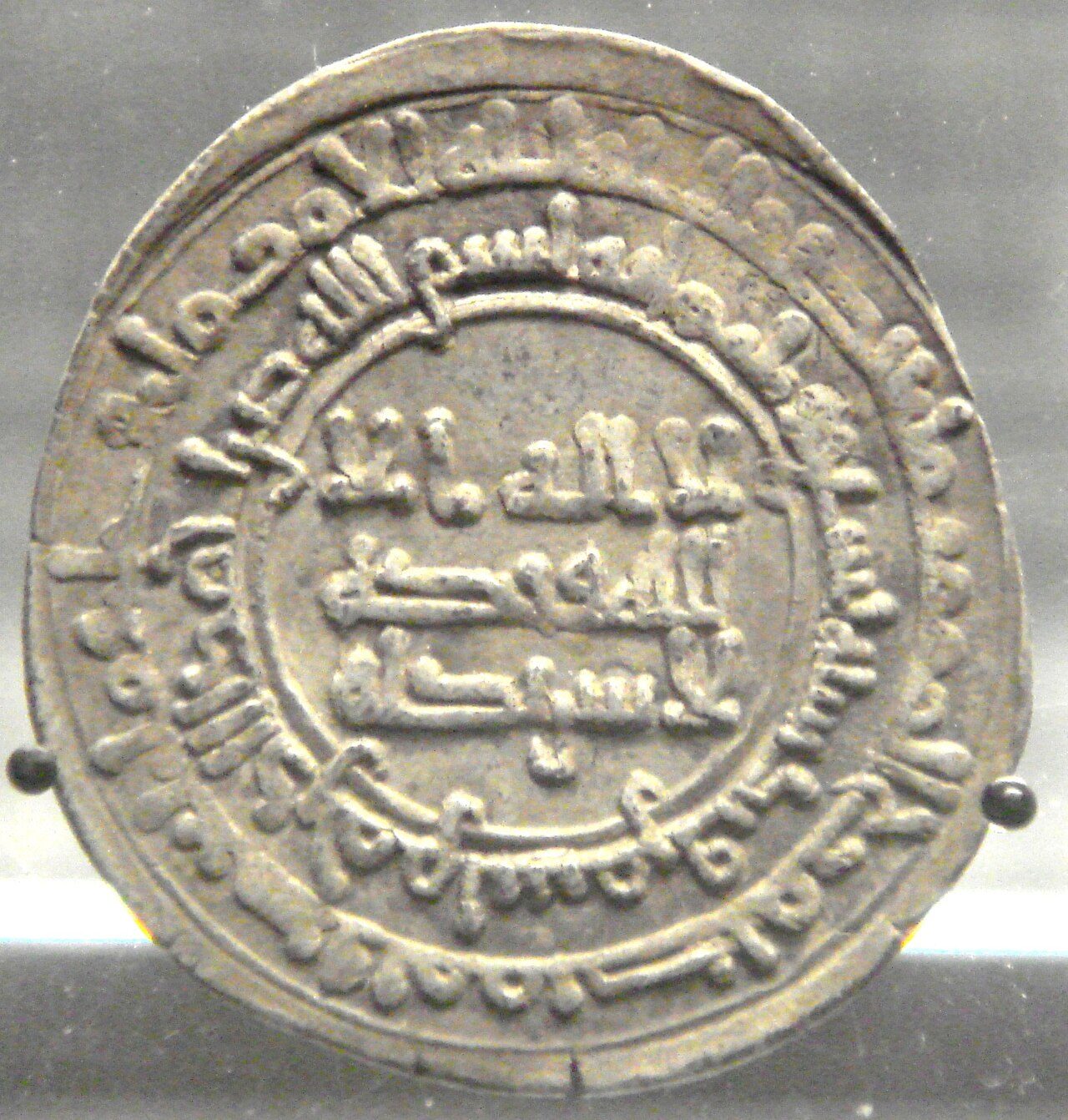
Photo: PHGCOM, Public domain, via Wikimedia Commons
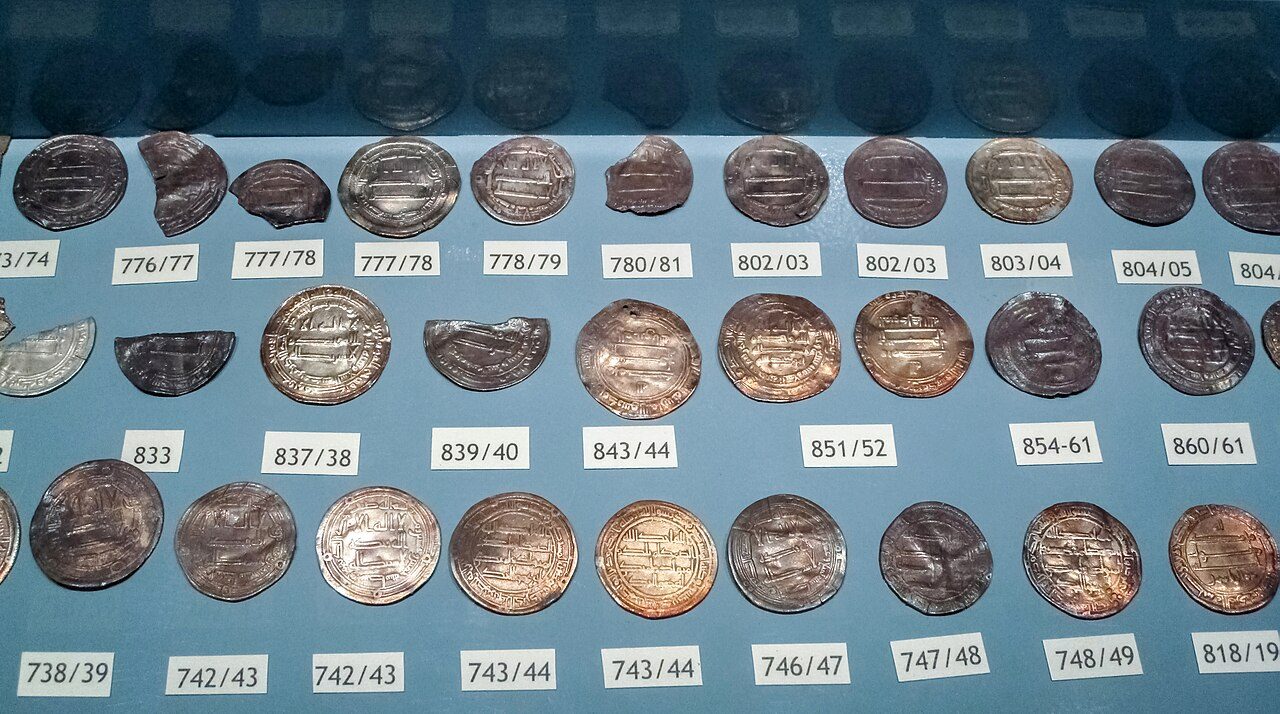
Photo: W.carter, CC BY-SA 4.0, via Wikimedia Commons
Sources
- National Museum of Denmark, 'Silver's route to Denmark - trading with the Arab coins' (archived)
- Gotlands Museum, Skattkammaren
- Swedish History Museum, 'The world's largest Viking treasure'
- Volga trade route (Wikipedia)
- Arabiska mynt (Swedish Wikipedia)
- Vale of York hoard, PAS record SWYOR-AECB53 (archived)
Analogies on this page are comparisons, not claims about the past. Nothing here is financial or investment advice.