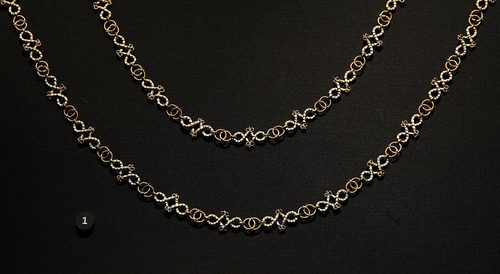
On 15 October 1937 workmen clearing out the cellar of a potato shop at Lilla Nygatan 5, in Stockholm's old town, drove a spade into the earth floor and hit metal. Under the floor were three copper kettles crammed with silver: in all more than 18,000 coins, about 80 pieces of silver plate and a gold necklace, weighing over 200 kilograms. It is still the largest silver hoard ever found in Sweden.
Work stopped, and the State Historical Museum sent two archaeologists to lift the find properly; an architect drew the kettles in their pit. Ten days later the treasure was on show at the Stockholm City Museum, where more than 35,000 people came to see it in three weeks before it toured the country. The five building workers shared a finder's reward of 15,000 kronor, a large sum in the 1930s.
The owners are not in doubt. Initials and inscriptions tie the silver to the Lohe family, among the richest in 17th- and early 18th-century Stockholm. They had come from Germany in the 1620s and grown rich from shipping, iron works, a sugar refinery, country estates and lending money at high interest, including to the Crown. Twenty gilt spoons are funeral spoons engraved for the banker Johan Lohe, who died in January 1704; such spoons were given to those who served at a grand funeral. Several silver pieces also appear in the family's probate inventory of 1731.
The house was bought in 1722 by Johan's widow, Anna Lohe, and after her death in 1731 two of their unmarried children, Adolphe Tobias and Johanna, lived on there until both died in 1759. Two pairs of the four large candlesticks are engraved AL and IL, perhaps their initials. The youngest coin is dated 1741, so the treasure went into the ground no earlier than that. The 1740s were anxious years in Stockholm: Sweden lost a war with Russia in 1741-43, and in 1743 thousands of rebels from Dalarna marched on the capital. A popular explanation is that the siblings buried their silver during that uprising, but the museums say plainly that when, why and even by whom it was hidden cannot be proved.
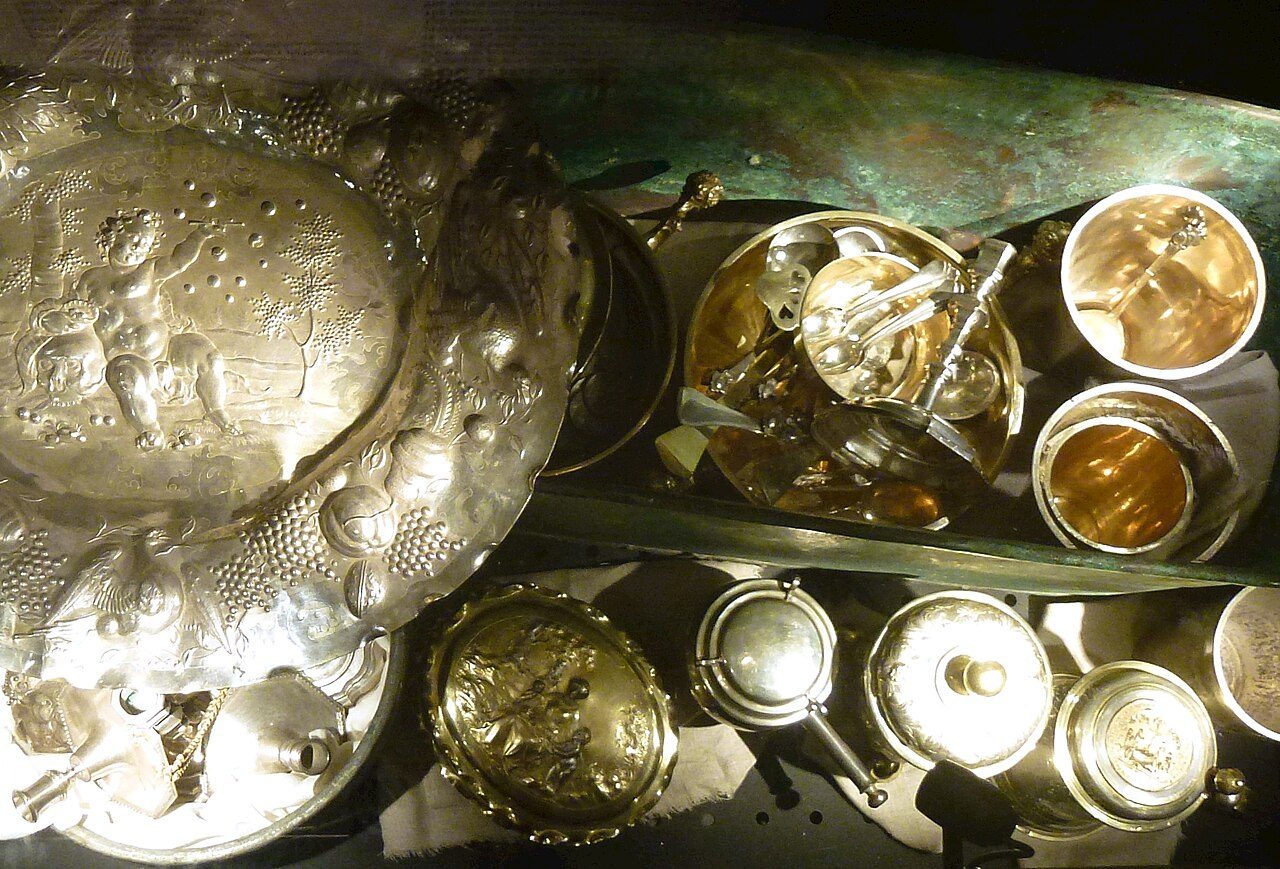
The coins are almost all Swedish, from Queen Christina's reign to Frederick I's, and around 15,000 of them are silver mark pieces, high-value coins for the time. A large silver teapot, found inside one of the kettles, held 912 coins of its own, which suggests it was used as a money box. Among the plate, a big oval presentation dish by the Stockholm goldsmith Henning Petri, half a metre across and decorated with a putto blowing bubbles, was found lying on top of one kettle.
Today the coins and medals belong to the Economy Museum and the silver objects to the Swedish History Museum; part of the treasure has been shown in the Economy Museum's exhibition MONEY! since 2024.
Highlights
An oval Baroque display dish about 500 mm across, decorated with a putto blowing bubbles, the largest such dish known from Petri's workshop.
Twenty gilt silver spoons inscribed for Johan Lohe, who died on 19 January 1704, made as gifts for those who served at his funeral.
An unusually large silver teapot that held 912 coins when it was found.
Four matching large candlesticks, two engraved AL and two IL, perhaps for the siblings Adolphe Tobias and Johanna Lohe.
What is in it
About 18,200 silver coins, mostly Swedish mark pieces, with some 80 pieces of silver plate (candlesticks, bowls, a large dish, a teapot, cutlery) and a gold necklace, packed in three copper kettles.
Size: about 18,217 coins, about 80 silver objects and a gold necklace. Weight: just over 200 kg.
| Item | Number | Notes |
|---|---|---|
| Silver coins | about 18,217 | From Queen Christina to Frederick I; about 15,000 are mark coins (1, 2, 4 and 8 mark), then 10 öre pieces; only 15 are foreign |
| Silver plate | about 80 (85 in some accounts) | Six candlesticks, bowls including a sweetmeat bowl, a presentation dish, a teapot and cutlery |
| Funeral spoons | 20 | Gilt silver, inscribed for Johan Lohe, who died on 19 January 1704 |
| Gold necklace | 1 | |
| Copper kettles | 3 | The containers |
Photographs
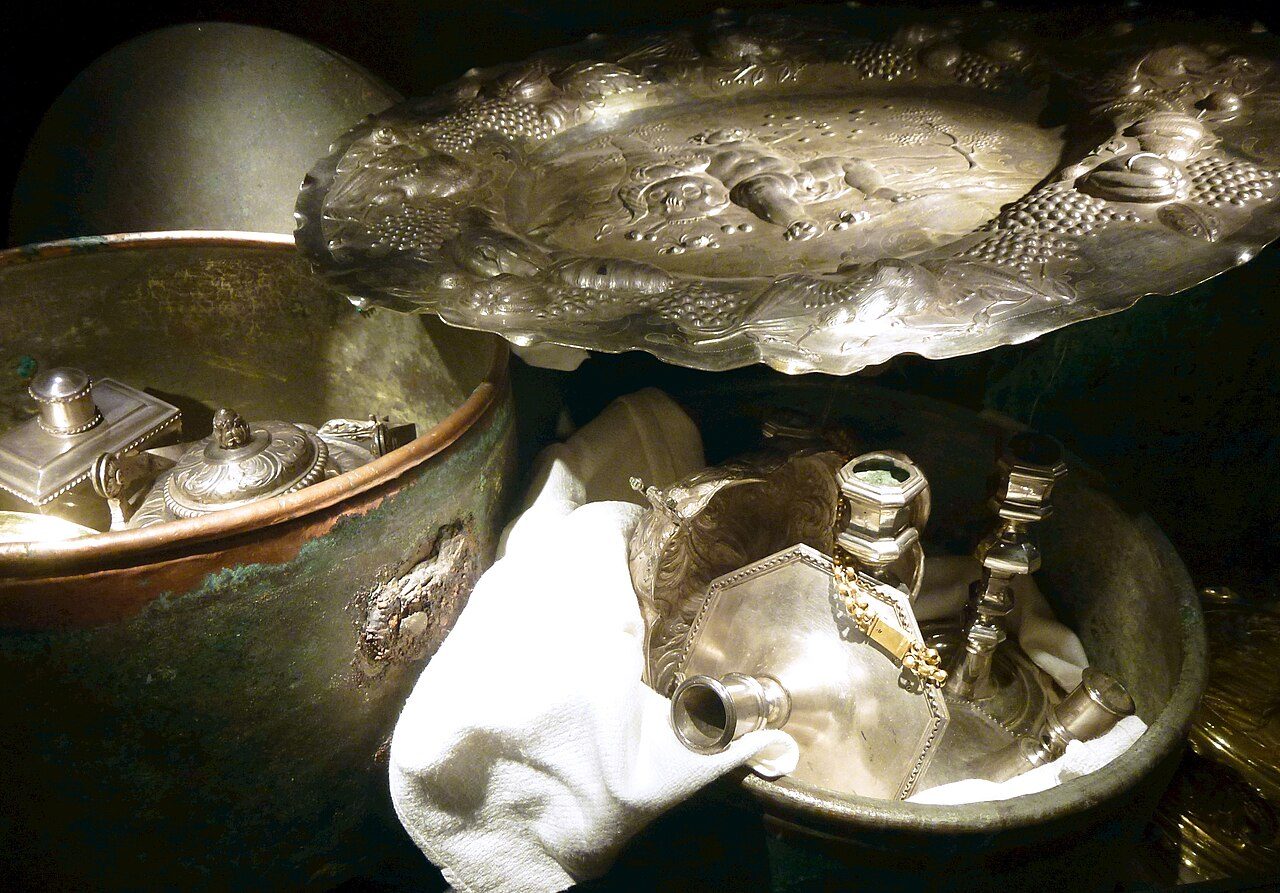
Photo: Holger.Ellgaard, CC BY-SA 3.0, via Wikimedia Commons
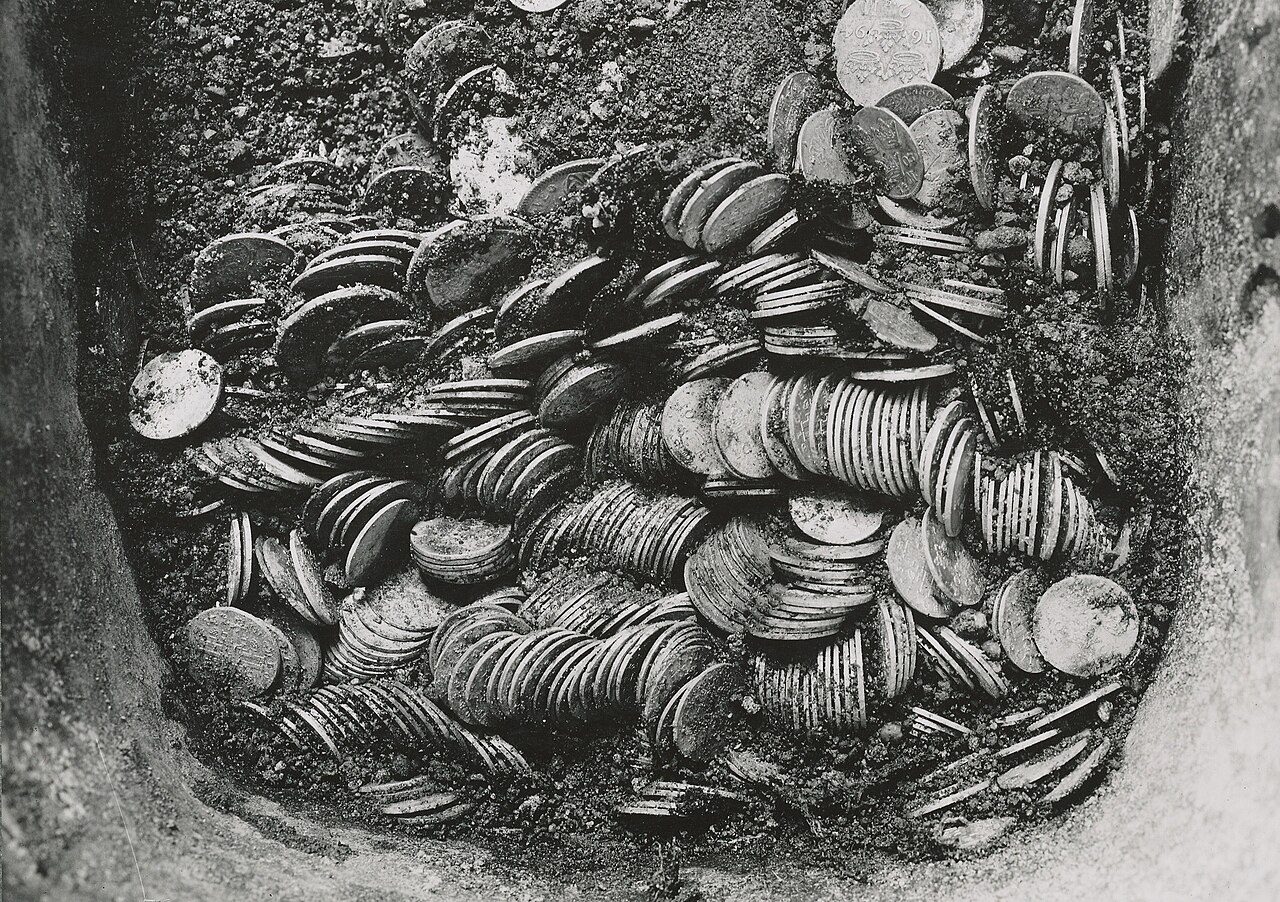
Photo: G. Löwendahl, Public domain, via Wikimedia Commons
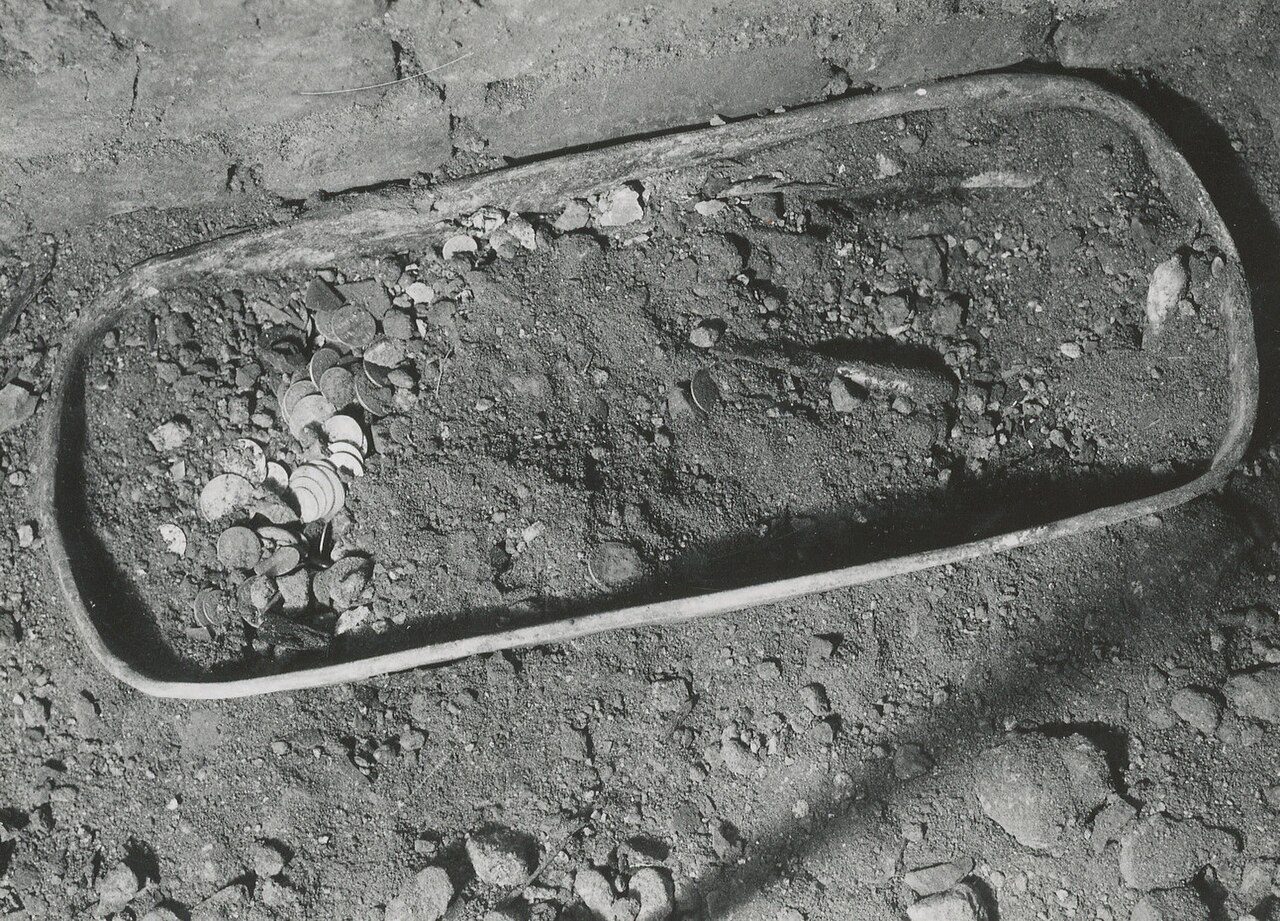
Photo: G. Löwendahl, Public domain, via Wikimedia Commons
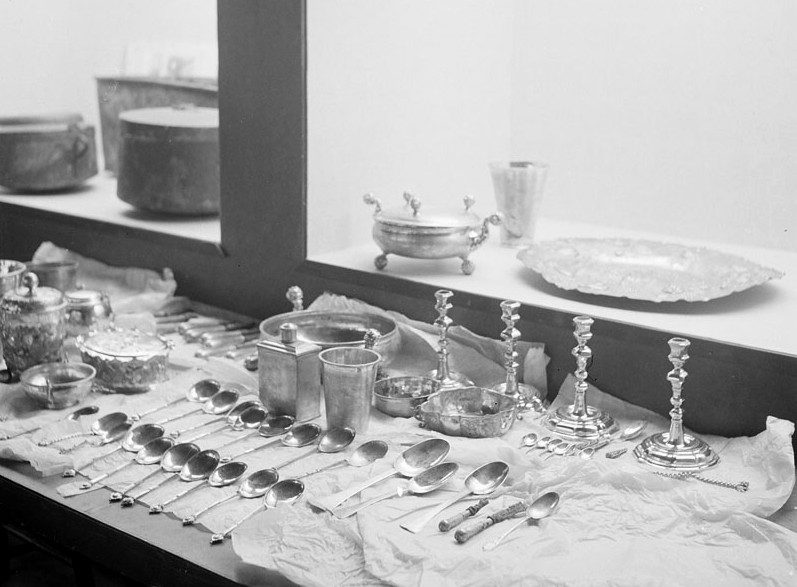
Photo: Petersens, Lennart af, Public domain, via Wikimedia Commons
How it is dated
The youngest coin is from 1741, which gives the earliest possible burial date. Silver listed in the 1731 inventory and the family monograms show the hoard belonged to the Lohes, and the last siblings in the house died in 1759, so it was probably hidden between 1741 and 1759; the uprising of 1743 is a popular but unproven occasion.
What happened after the find
Reported at once; State Historical Museum archaeologists excavated it. Under Swedish law the state acquired the find and the five workmen shared a finder's reward of 15,000 kronor.
Where sources differ
- Number of silver objects: about 80 (Economy Museum) or 85 (Swedish Wikipedia).
- Weight: 'just over 200 kg' (Economy Museum) or 205 kg (Swedish Wikipedia).
- Which sibling hid it: Swedish Wikipedia names Adolf, Stockholmskällan names Tobias; the Economy Museum gives Adolphe Tobias as one person and says the hider cannot be proved.
- The 1743 Dalecarlian rebellion is a popular explanation, not established.
- The 'under Swedish law the state acquired' wording is inferred from the museum ownership and finder's reward, not from a legal document.
Questions
Where can I see the Lohe Treasure?
Part of it is on show in the Economy Museum's permanent exhibition MONEY! at Narvavägen 17 in Stockholm, the building it shares with the Swedish History Museum. The coins belong to the Economy Museum and the silver objects to the History Museum.
Who hid the Lohe Treasure?
It belonged to the wealthy Lohe family, whose initials are on the silver. It was probably hidden by the last siblings living in the house, sometime after 1741, though the museums say this cannot be proved.
How big is the Lohe Treasure?
It weighs over 200 kilograms and contains about 18,000 silver coins and some 80 pieces of silver plate, making it the largest silver hoard ever found in Sweden.