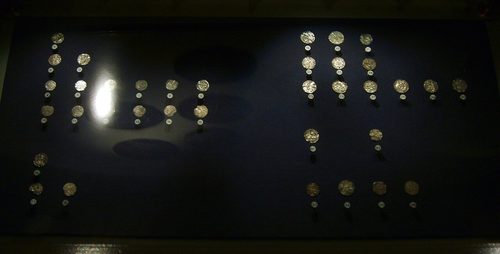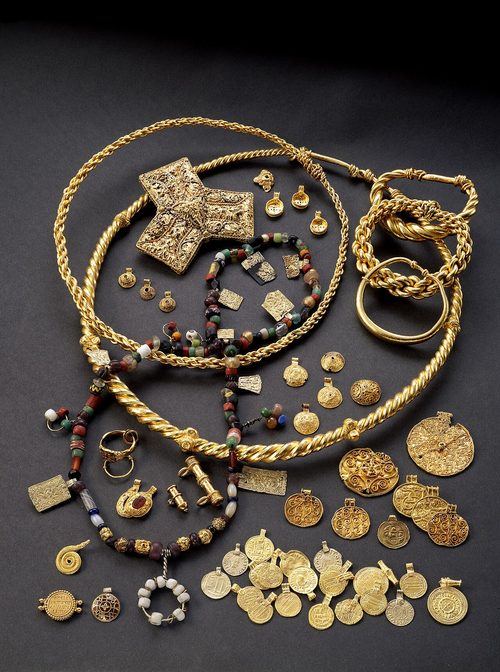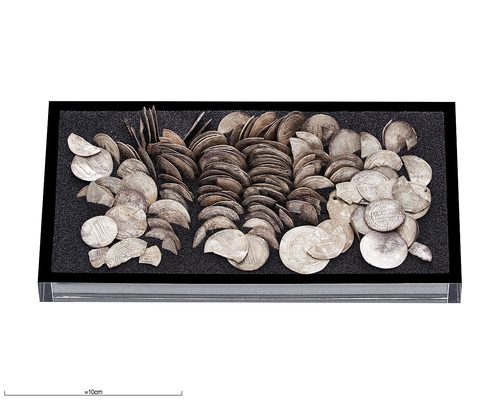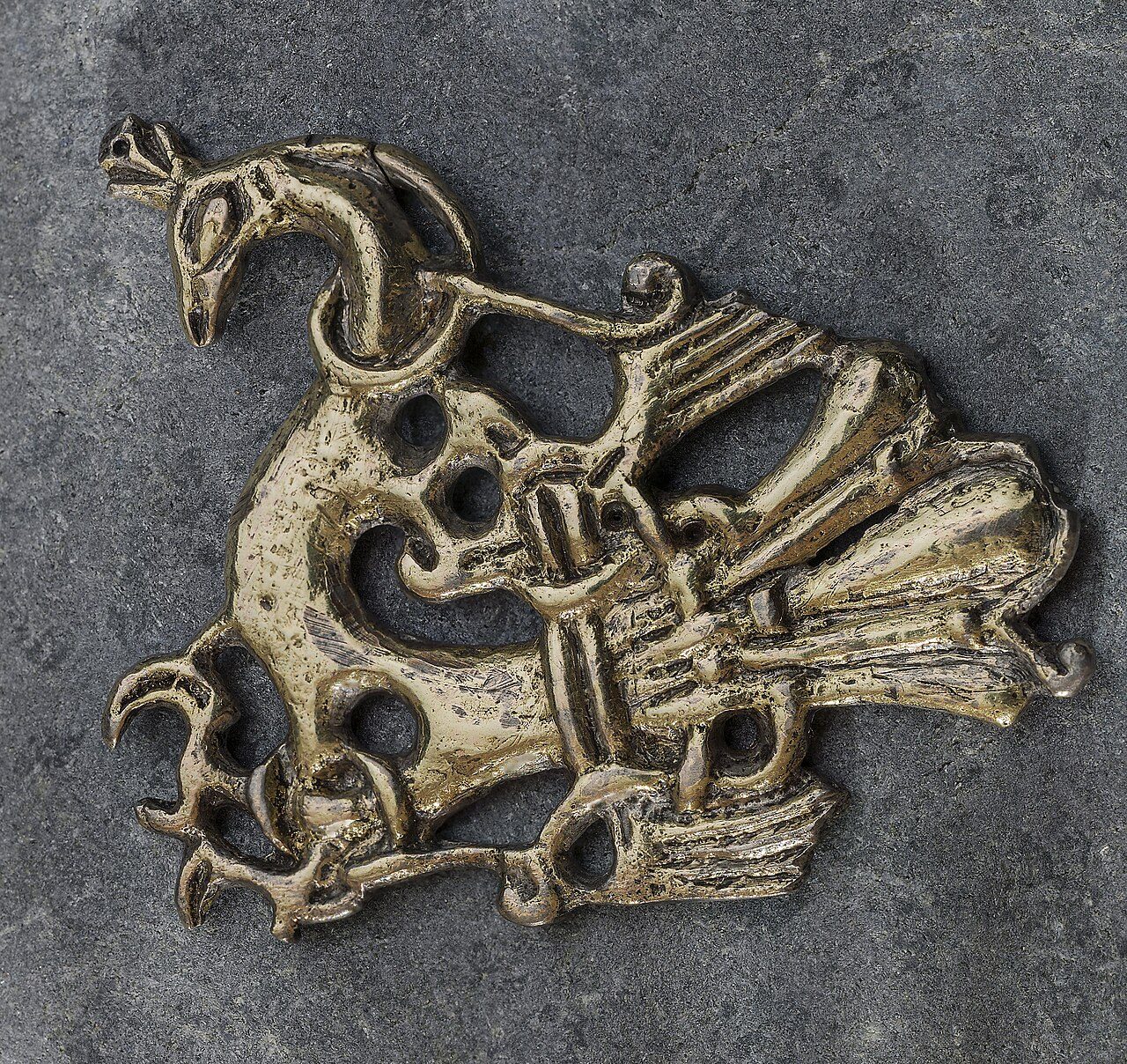
In 1878 a farmer at Græsli, in the mountain valley of Tydal south-east of Trondheim, was hilling his potato rows when he dug into a mass of silver. The spot had once been covered by a heap of stones, since cleared from the field. Out came 2,253 coins, pieces of chopped silver, a twisted ring and a small gilt brooch in the shape of a bird. The whole find weighs about 2.25 kg. At the time it was the largest coin hoard ever found in Norway, and it is still among the largest.
Its real value is to numismatists. The coins are overwhelmingly Norwegian, 2,209 pennies, almost all of them struck for King Olav Kyrre, 'the Peaceful', who ruled from 1067 to 1093. Before about 1060 Norwegian hoards are full of foreign coins; from then on they contain almost nothing but Norwegian ones. Græsli catches that change in progress, and it holds so many of Olav's coin types that it has become the main source for his extensive coinage. The director of the University of Oslo's coin cabinet published a meticulous catalogue of it in 1881.
A handful of coins came from elsewhere: 38 German pennies, two Danish, two imitations of Anglo-Saxon pennies and two that cannot be identified. The latest Norwegian types put the burial after about 1080.
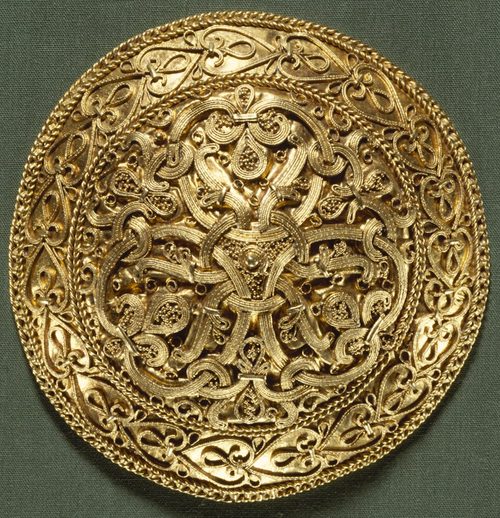
The bird brooch is the hoard's showpiece. It is a flat openwork figure of a bird with a curving neck and long tail feathers, made in gilded silver in the late Viking Ringerike tradition. Bird brooches were made in large numbers in Scandinavia in the later eleventh century, but this one is unusually elegant.
Why so much silver ended up under a cairn in a remote valley is not known. Tydal lies on an old route over the mountains between Trøndelag and Sweden, and one idea is that a traveller hid it on the way to or from Trondheim. The cathedral at Trondheim was begun around this time, and local tradition has linked the money to that project or to the silver shrine of St Olav, but these are guesses. The museum that photographed the find estimates it was worth 30 to 40 cows in its day.
In 1978, a century after the discovery, a memorial stone carrying an enlarged copy of the bird brooch was set up at the find spot.
Highlights
A gilt silver openwork brooch in the shape of a bird, made around the 1080s and among the finest of its type.
More than 2,200 Norwegian pennies of Olav Kyrre's reign, the largest single source for his coinage.
Cut pieces of stamped silver ornaments, still used as payment by weight alongside coins in late eleventh-century Norway.
What is in it
Mostly Norwegian silver pennies of Olav Kyrre, with a few German, Danish and imitation Anglo-Saxon coins, pieces of cut silver and rings, and a gilt silver brooch in the form of a bird.
Size: 2,253 coins plus hacksilver and a brooch. Weight: 2,248 g of silver.
| Item | Number | Notes |
|---|---|---|
| Norwegian pennies | 2,209 | About 1055/65 to 1080/95; almost all of Olav Kyrre (1067-1093), a few of Harald Hardrada |
| German pennies | 38 | 983/1002 to 1068/90 |
| Danish pennies | 2 | 1035/42 to 1047/74 |
| Imitation Anglo-Saxon pennies | 2 | About 997/1003 to 1023/29 |
| Unidentified coins | 2 | |
| Hacksilver and ornaments | several pieces | Cut stamped silver, a twisted ring, a spiral-ended fragment, and a gilt bird-shaped brooch |
Photographs
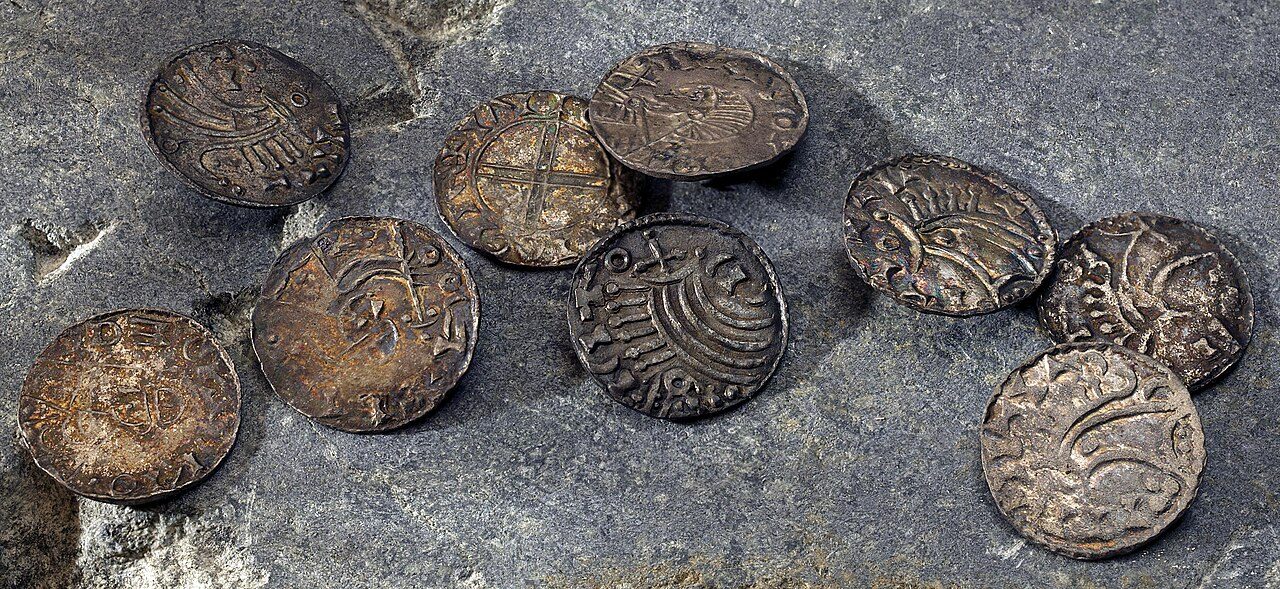
Photo: NTNU Vitenskapsmuseet, CC BY 2.0, via Wikimedia Commons
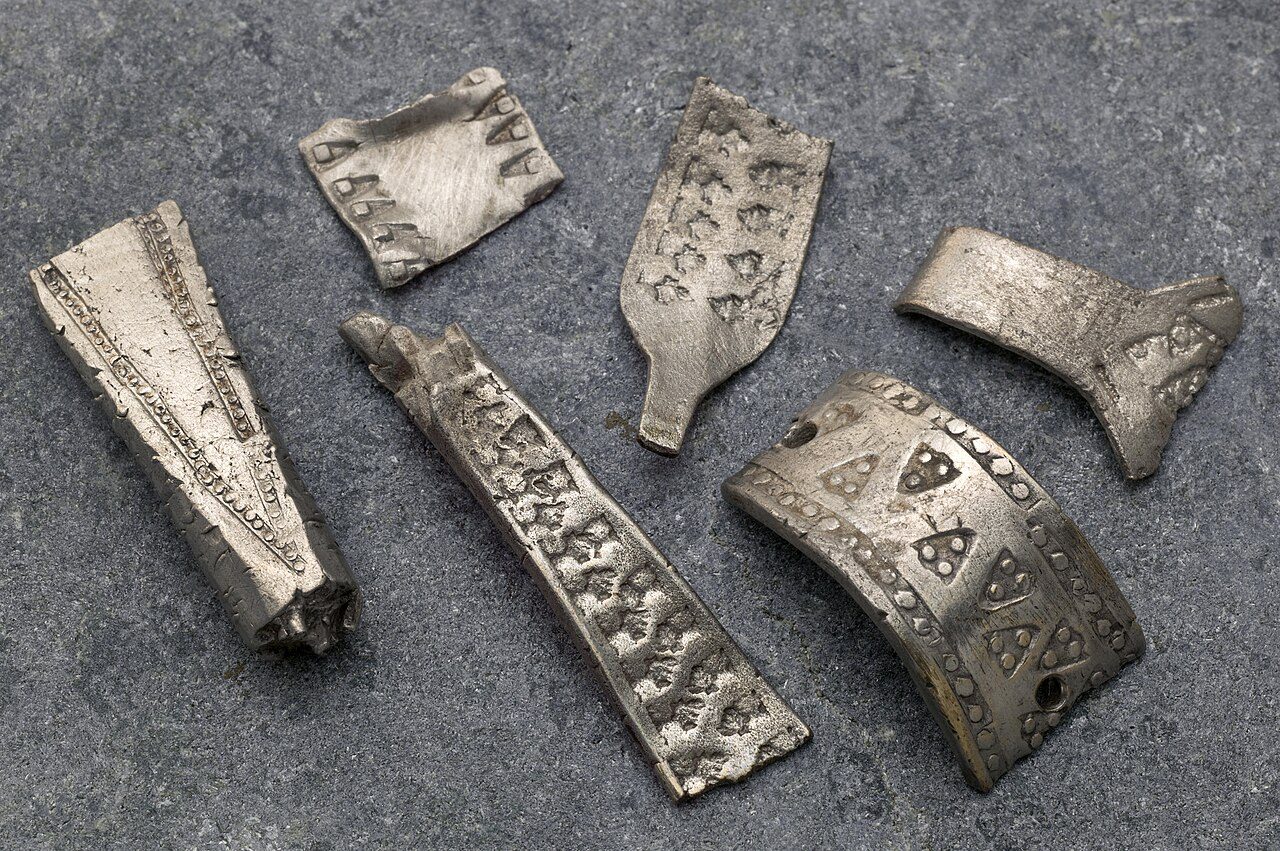
Photo: NTNU Vitenskapsmuseet, CC BY 2.0, via Wikimedia Commons
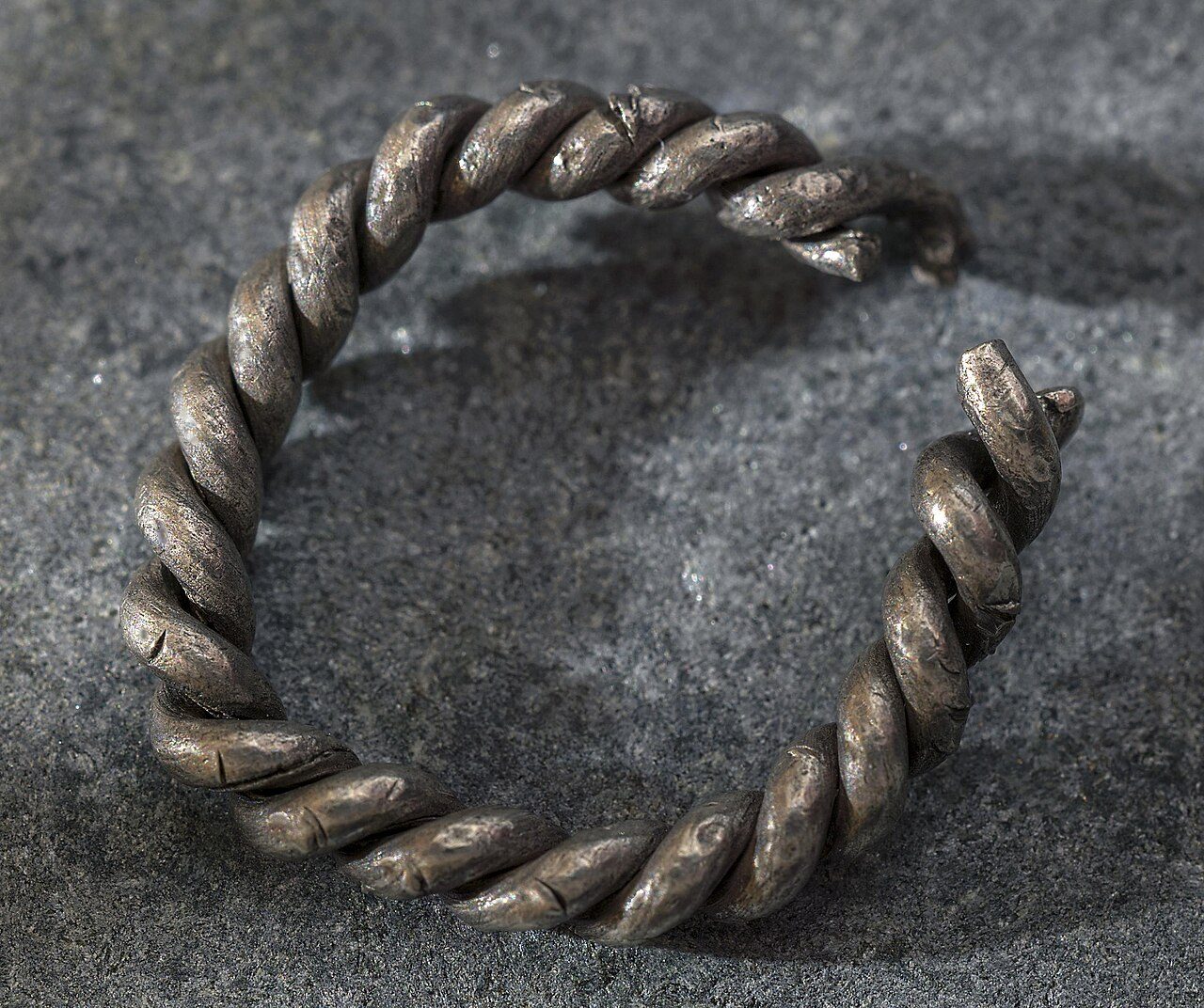
Photo: NTNU Vitenskapsmuseet, CC BY 2.0, via Wikimedia Commons
How it is dated
The coins give the date. The latest Norwegian pennies are of Olav Kyrre, with types dated to about 1080-1095, and the University of Oslo coin cabinet dates the hoard 'after ca. 1080'. Popular accounts therefore place the burial in the 1080s.
What happened after the find
The coins were acquired by the University Coin Cabinet in Oslo, and the finder and landowner received a reward. Some duplicates were later exchanged with other collections, so a few Græsli coins are now elsewhere.
Where sources differ
- Coin breakdown: the University of Oslo coin cabinet lists 2,209 Norwegian, 38 German, 2 Danish, 2 imitation Anglo-Saxon and 2 unidentified (total 2,253). NTNU's Flickr captions say 200 coins are foreign, Norwegian Wikipedia says 8 are foreign, and German Wikipedia gives 1,209 Norwegian coins (probably a typo). I follow the coin cabinet.
- Norwegian Wikipedia attributes the Norwegian coins to Harald Hardrada's time; the coin cabinet, NTNU and German Wikipedia attribute nearly all to Olav Kyrre.
- Where the bird brooch and hacksilver are held, and whether anything is on display, is not confirmed.
- The 'Ringerike style' attribution of the brooch is from German Wikipedia only.
- German Wikipedia's claim that Harald's and Olav's coins were struck in Odense is doubtful (NTNU says the coins seem to have been struck in Trondheim); I left it out.
Questions
What is the Græsli Hoard?
A hoard of 2,253 silver coins, cut silver and a gilt bird brooch found at Græsli in Tydal, Norway, in 1878 and buried after about 1080.
Why is the Græsli Hoard important?
It contains more than 2,200 pennies of King Olav Kyrre, making it the most important source for Norway's coinage under him, at the moment when Norwegian coins replaced foreign ones in circulation.