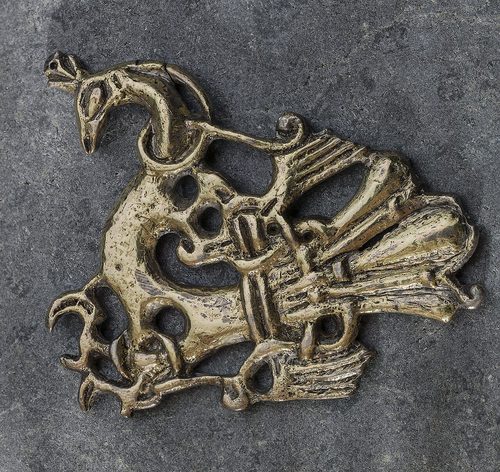
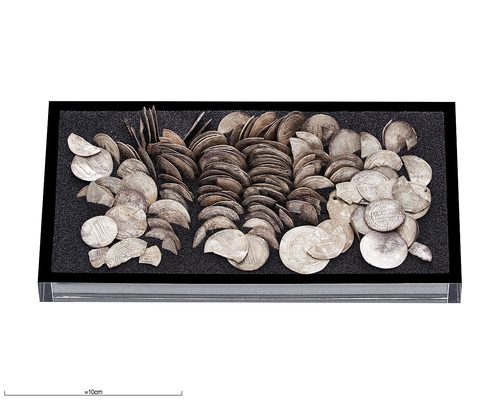
Chopped arm-rings, ingots, coins and plate: how hacksilver worked as money, how it was tested and weighed, and which hoards are full of it.
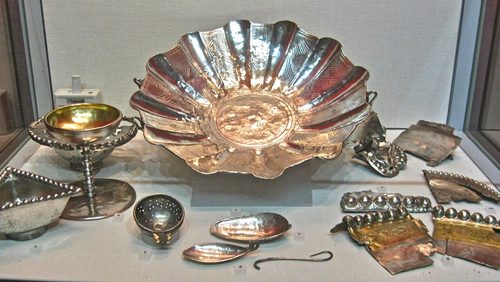
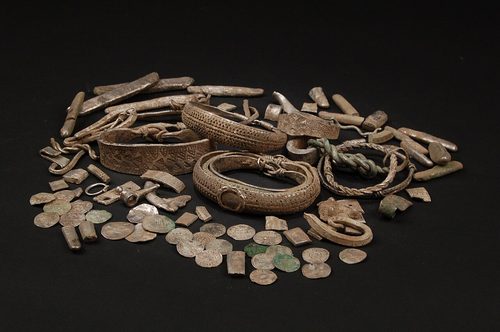
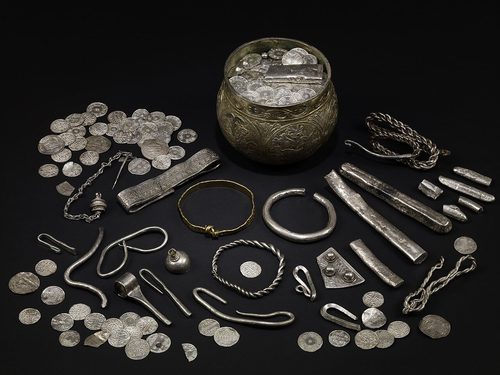
Hacksilver is silver that has been cut, bent or broken so that it can be spent by weight. A Viking-age hoard of it looks like scrap: the end of an arm-ring, a clipped bar, half a coin, a twist of wire, a sliver of a church dish. To its owner every piece was money, worth exactly what it weighed on a balance and no more. The word is modern (German archaeologists say Hacksilber), but the habit is old. Silver was cut and weighed in the Near East centuries before the first coins, and in the late Roman world fine tableware was hacked into pieces, sometimes still showing their decoration, then paid out or carried off. The Traprain Law treasure from East Lothian, found in 1919, holds just over 23 kg of it.
The classic hacksilver economy belongs to the Viking age, roughly 800 to 1050. Scandinavia had no silver mines of its own, so every gram came from outside: Islamic dirhams brought up the Russian rivers, and English and Frankish coin and plate taken as loot, tribute or payment. Much of it was melted into ingots and rings and then cut again as needed. In the Danelaw of eastern England and around the Irish Sea, coins were common but were often still handled as bullion, so a single hoard can mix pennies struck to different standards with ingots and chopped ornaments. At the Viking army's winter camp at Torksey in Lincolnshire (872-3), excavators found over 50 pieces of chopped silver, more than ten of hack-gold, over a hundred dirhams cut into halves or quarters, and more than 100 weights from several sets.
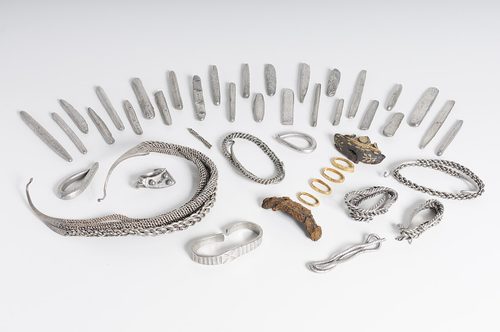
Because silver was taken by weight, it had to be both weighed and trusted. Traders used small portable balances with pans and sets of standardised weights. Two forms, the cubo-octahedral weight and the spherical weight with flat poles (usually an iron core in a copper-alloy skin), came into use around the Baltic in the second half of the 9th century and seem to derive from Islamic models. Quality was checked by cutting into the metal. A nick is a short knife-slice on an edge; a peck is a stab into the surface. Both exposed the core and revealed plated forgeries, and they built up as a piece changed hands: one ingot in the Bedale hoard carries 16 nicks.
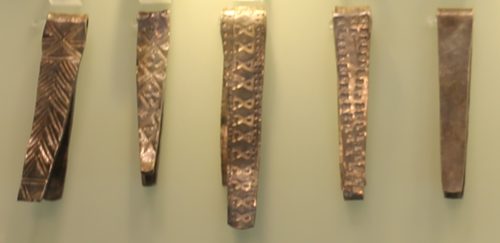
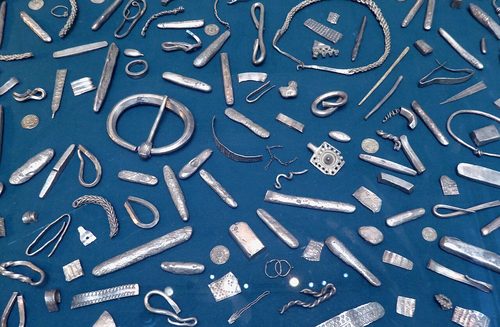
To recognise hacksilver, look for clean cut faces at the ends of fragments, objects folded or flattened to save space, and those small V-shaped nicks along edges. Ingots are usually cigar- or bar-shaped and plain. Cut coins tend to be halves and quarters.
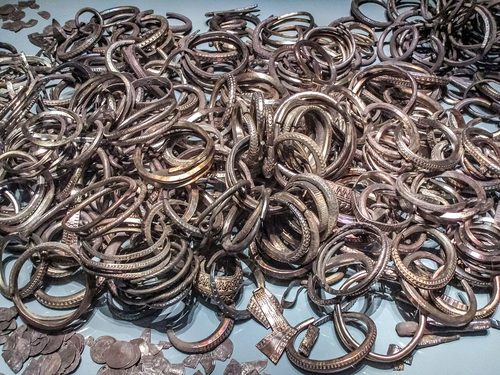
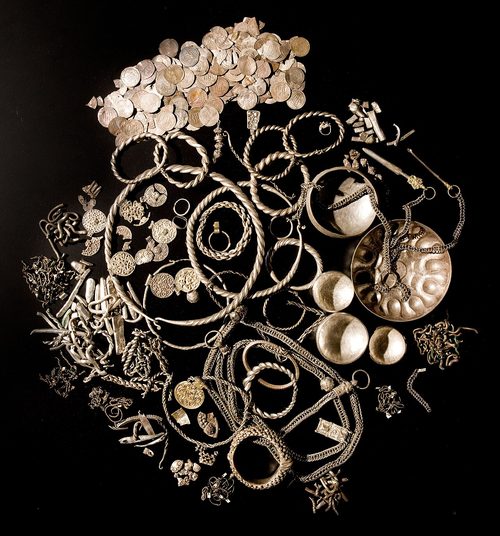
For historians, hacksilver is a record of where silver came from and how it moved. The proportion of Islamic to western coin in a hoard tracks the rise and fall of trade routes. Lead-isotope and trace-element analysis can now trace the source of melted-down silver, and the Bedale study found ingots made from western European silver, Islamic silver and mixtures of the two. The sheer fragmentation of a hoard such as Cuerdale, with its many hundreds of cut pieces, shows silver being spent in small, carefully weighed amounts long after coins were available.
Examples
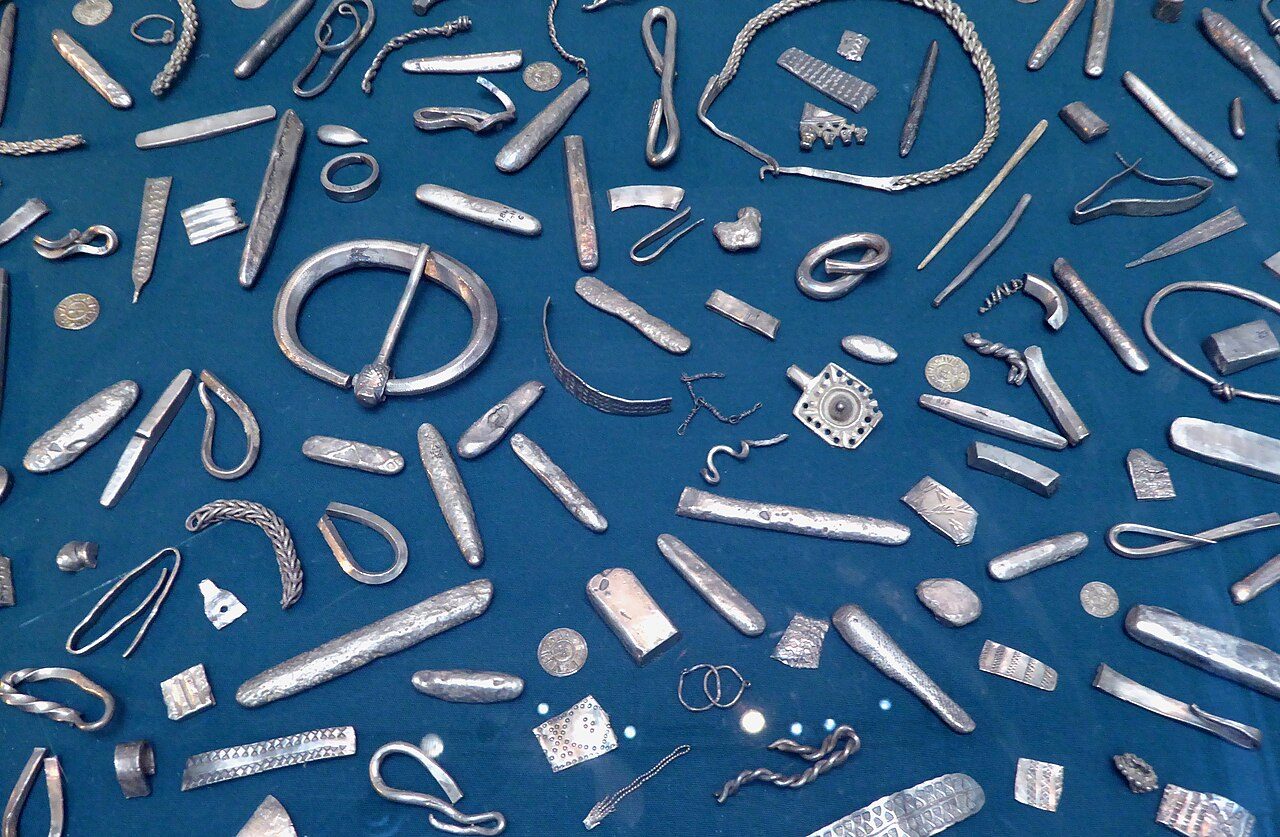
Photo: Ethan Doyle White, CC BY-SA 4.0, via Wikimedia Commons
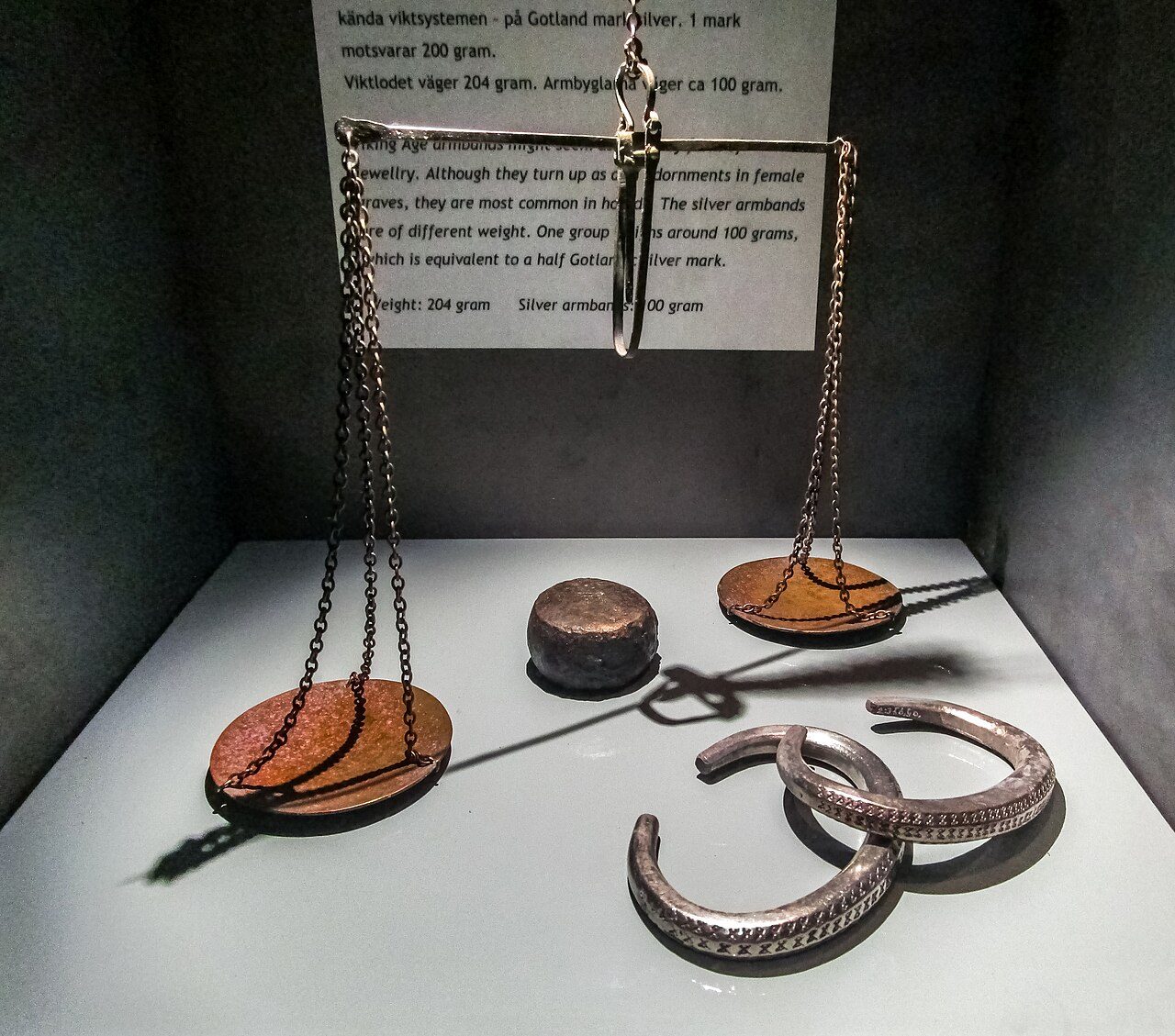
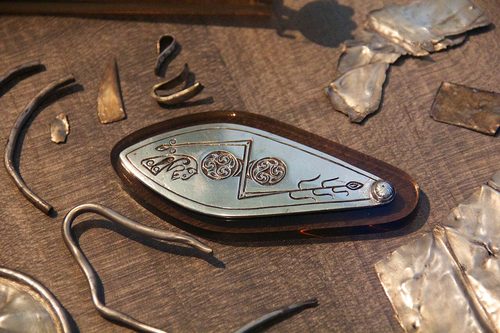
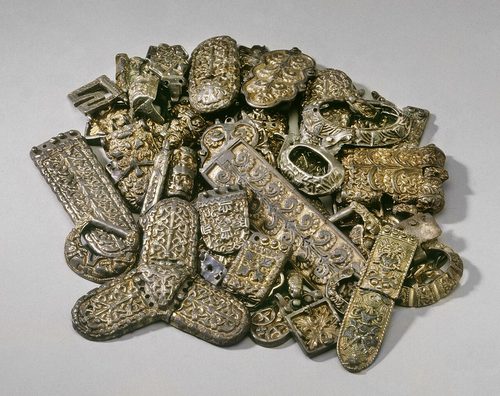
Photo: W.carter, CC BY-SA 4.0, via Wikimedia Commons
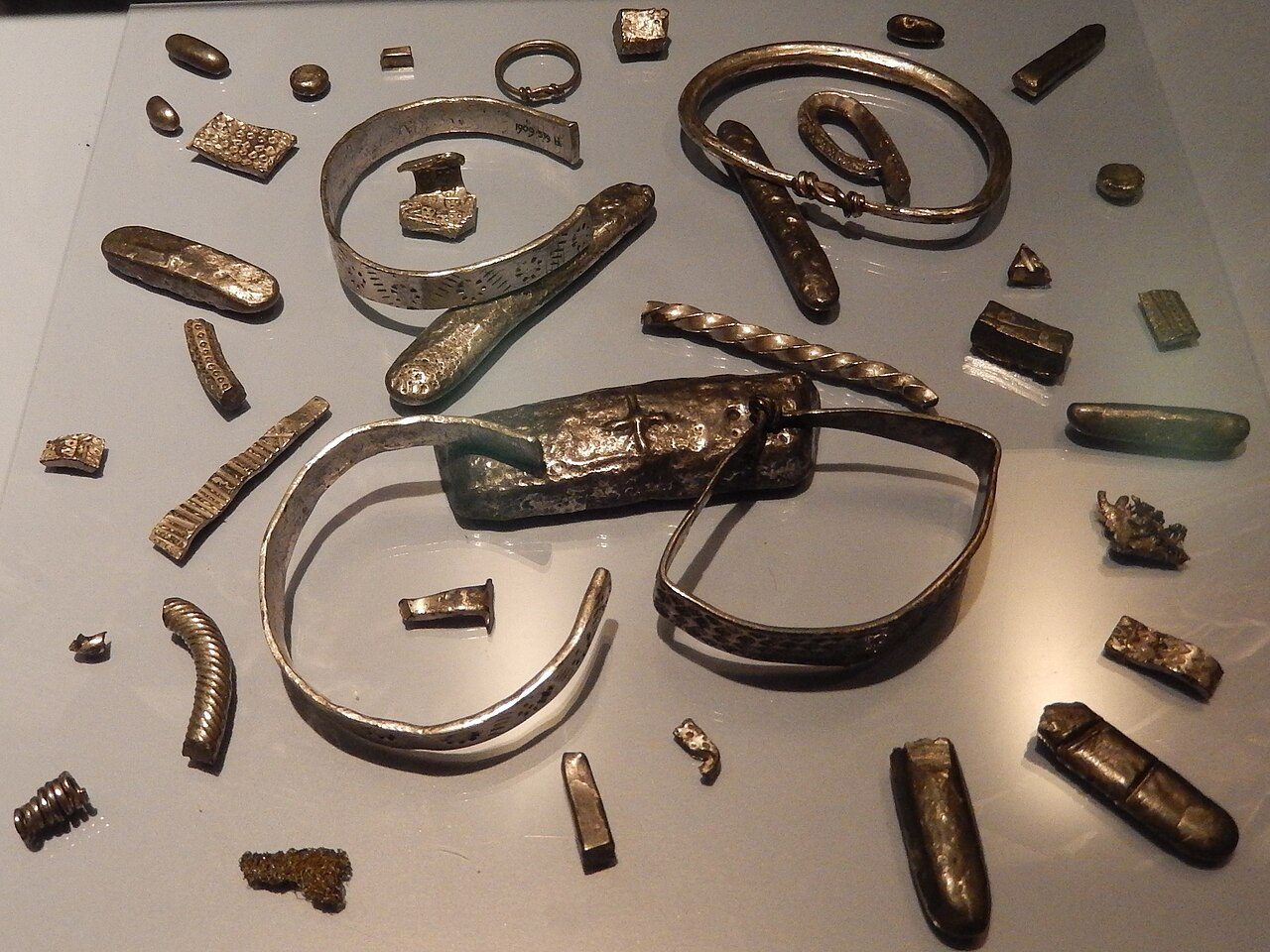
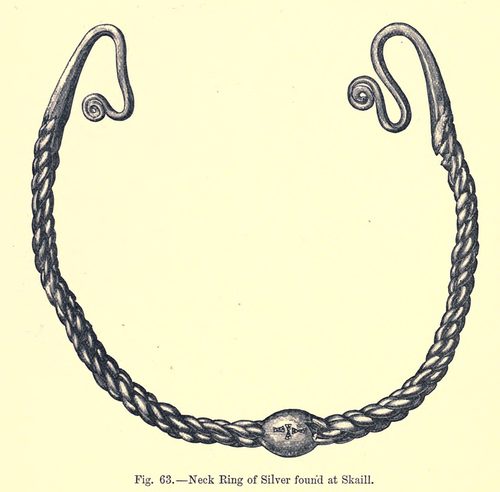
Photo: BabelStone, CC BY-SA 3.0, via Wikimedia Commons
Sources
- Blackburn and Bonser, 'A Viking-age silver ingot from near Easingwold, Yorks.', Medieval Archaeology 34 (1990)
- Kershaw et al., 'The Provenance of Silver in the Viking-Age Hoard From Bedale, North Yorkshire', Archaeometry (2025)
- Viking Torksey: inside the Great Army's winter camp (Current Archaeology)
- Fernstål, 'A Bit Arabic: Pseudo-Arabic Inscriptions on Viking Age Weights in Sweden', Current Swedish Archaeology 15-16 (2007/2008)
- Hacksilver (Wikipedia)
- Traprain Law treasure (Wikipedia)