Worn on the arm, given by lords and cut up as bullion: broad-band arm-rings, Scottish ring-money and Permian rings, and the weights they were made to.
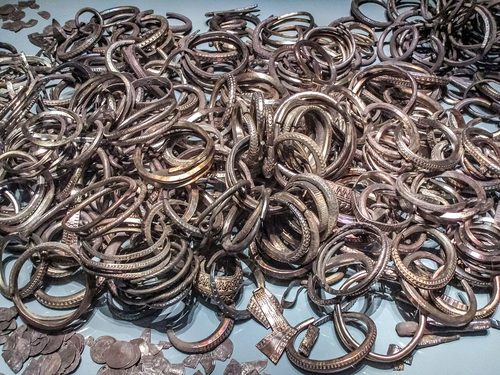
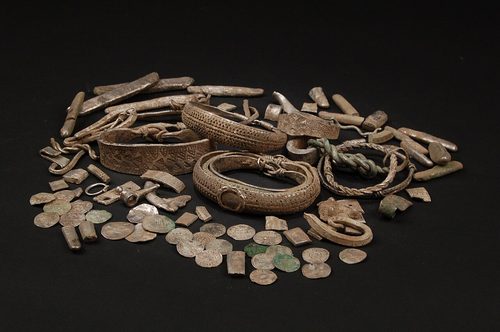
A silver arm-ring was the most wearable form of wealth in the Viking world. It could be displayed on the arm, handed to a follower as a mark of loyalty, or cut into pieces and weighed out as payment. Hoards show all three uses at once: complete rings sit beside fragments chopped from identical ones, and many carry the knife-nicks that traders made to test the metal.
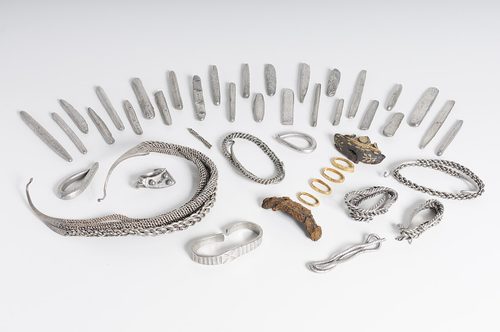
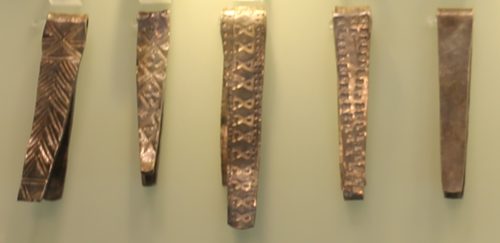
Several families of ring turn up in hoards around the North Sea and Irish Sea. Hiberno-Scandinavian broad-band arm-rings are wide, flat bands that taper to the terminals, punched with rows of small stamps and often a cross in the centre. They were the main product of the Scandinavian silversmiths of Ireland and occur in 29 Irish hoards; John Sheehan dates the type to about 850-950, with most made between about 880 and 930. Cheshire's Huxley hoard of c. 900-910 is a bundle of about twenty of them, folded flat. Ring-money is the name given to plain penannular rings, usually without decoration, found mainly in Viking-age Scotland. There are over ninety complete examples, dated between the 9th and 11th centuries but most common in the late 10th and early 11th. Permian rings are heavier neck- and arm-rings made of rods covered in fine spiral grooves, named after the Perm region west of the Urals where they cluster. They reached Scandinavia in the early Viking age and occasionally further west: the Storr Rock hoard from Skye has the only fragment known from Scotland, and a cut piece turned up in the Bedale hoard from Yorkshire.
Whether the rings were made to fixed weights is still argued over. Richard Warner's study of Scottish ring-money found a target of about 24 g. Sheehan found that complete broad-band arm-rings cluster at roughly 26 g, and Susan Kruse found ingots from England and Wales grouping between 20 and 30 g. That suggests a loose unit somewhere around 25 g, an ounce-like measure that made counting easier, but the scatter is wide and every ring would still have been weighed. Rebecca Hall argues that the weights of Scottish ring-money vary too much to be a currency at all, and that the rings were above all gifts binding men to their lords. In Gotland, many arm-rings in the Spillings hoard weigh about 100 g, half the local mark.
To recognise the main types: broad-band rings are flat and stamped, with the band widest in the middle; ring-money is a plain, penannular rod, often lozenge-shaped or round in section, with blunt ends; Permian rings have a ribbed, almost screw-threaded surface; twisted rings are made from two or more rods wound together. Fragments are often only identifiable by their stamps or section.
These rings let archaeologists map connections. A broad-band arm-ring in a Yorkshire or Scottish hoard points to Dublin or another Irish Viking town; a Permian fragment points east to the Volga and the Baltic. Imitation ring-money made of base metal with a silver coating, found at Whithorn in Galloway, is a sign that people thought the real thing worth faking.
Examples
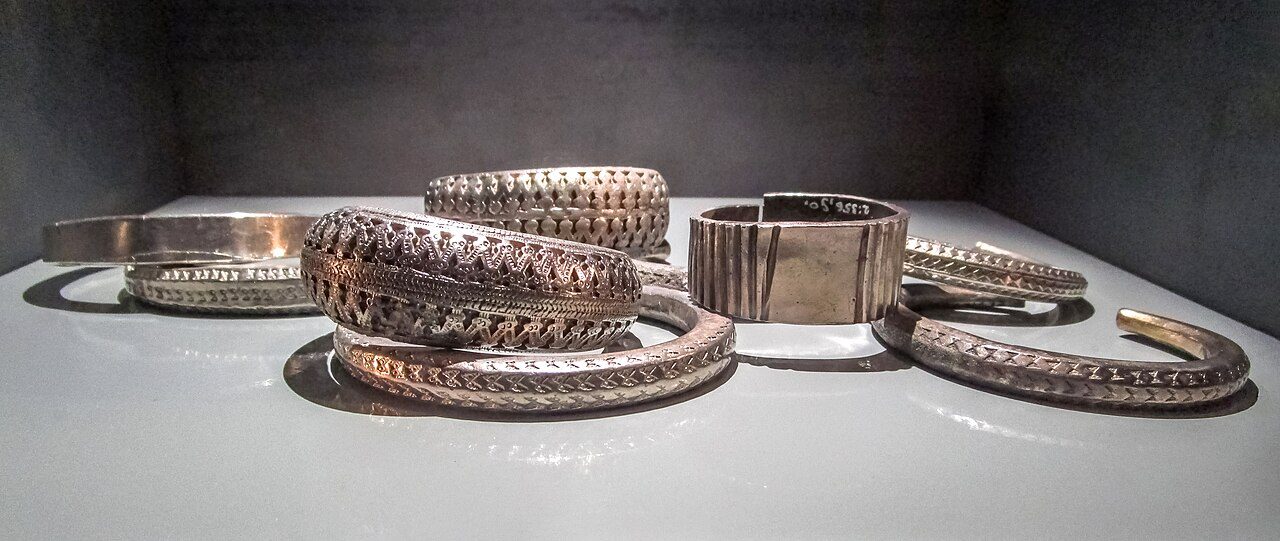
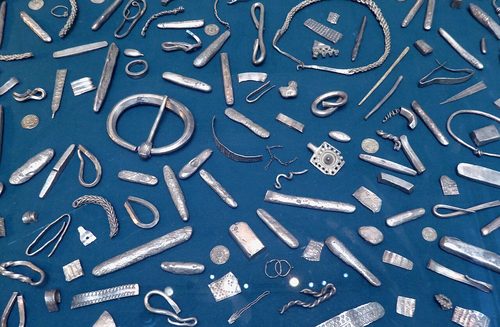
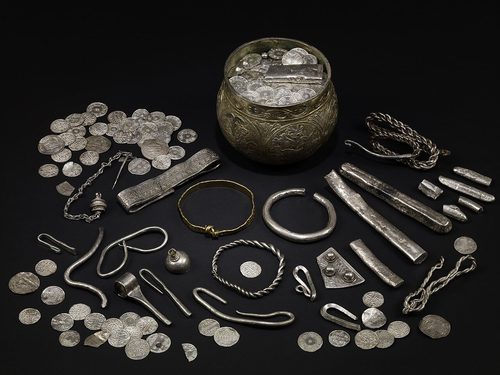
Photo: W.carter, CC BY-SA 4.0, via Wikimedia Commons
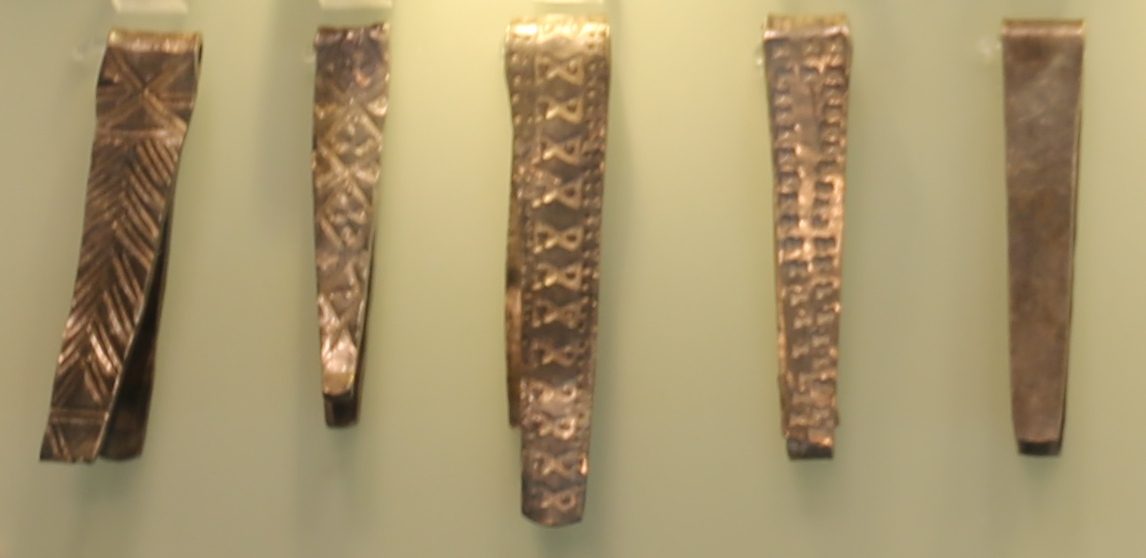
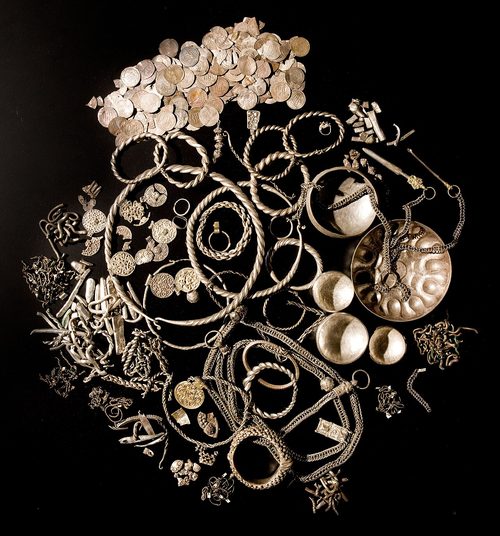
Photo: Geni, CC BY-SA 4.0, via Wikimedia Commons
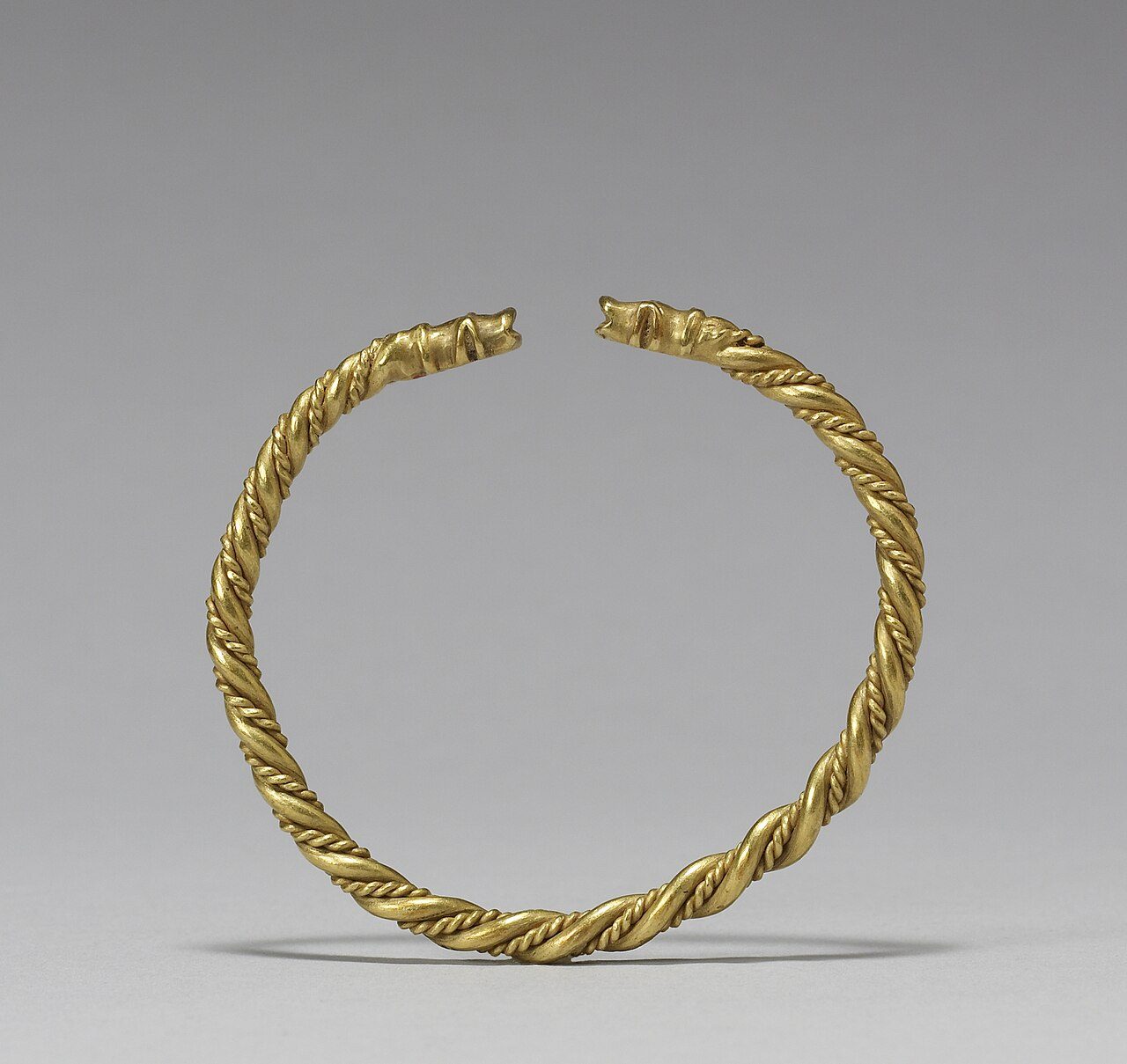
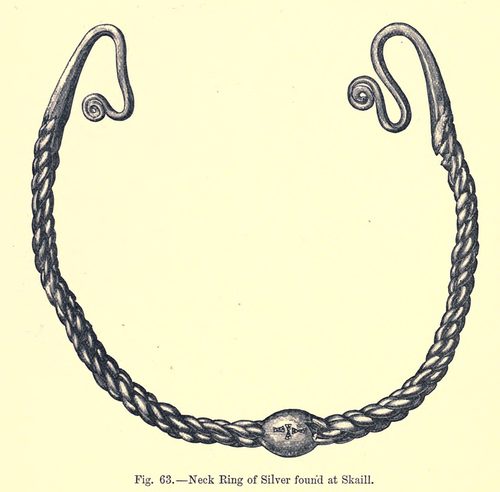
Photo: Anonymous ( Vikings ) Unknown author, Public domain, via Wikimedia Commons
Sources
- Sheehan, 'Bullion rings in Viking Age Britain and Ireland', in Viking Settlements and Viking Society (2011)
- Hall, 'The Silver Hoards of Viking-Age Scotland: The Power of "ring-money"', Northern Studies 43 (2012)
- Hårdh, 'Silver rings and marten skins: contacts between the Volga region and the Baltic in the early Viking Age' (2024)
- Case study: Viking silver hoard, Storr Rock, Skye (ScARF)
- Kershaw et al., 'The Provenance of Silver in the Viking-Age Hoard From Bedale, North Yorkshire', Archaeometry (2025)
- Spillings Hoard (Wikipedia)