On the evening of 15 May 1840 a gang of workmen mending the south bank of the River Ribble, about three miles upstream of Preston, broke into a rotted lead chest a few feet below the pasture. Coins and bars of grey metal poured out, and a scramble began. The bailiff of Cuerdale Hall arrived in time to tell the men the metal was probably pewter and the coins tin counters; most of it was handed back, washed in a tub with a birch broom and lodged in a Preston bank the next day. Each labourer was allowed to keep one coin.
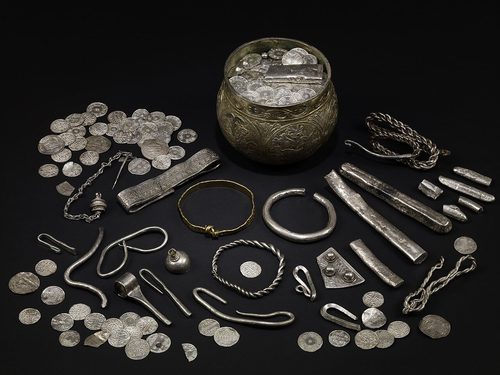
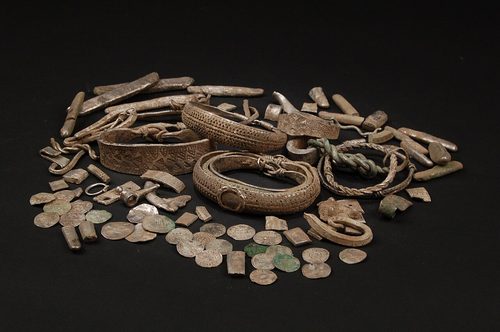
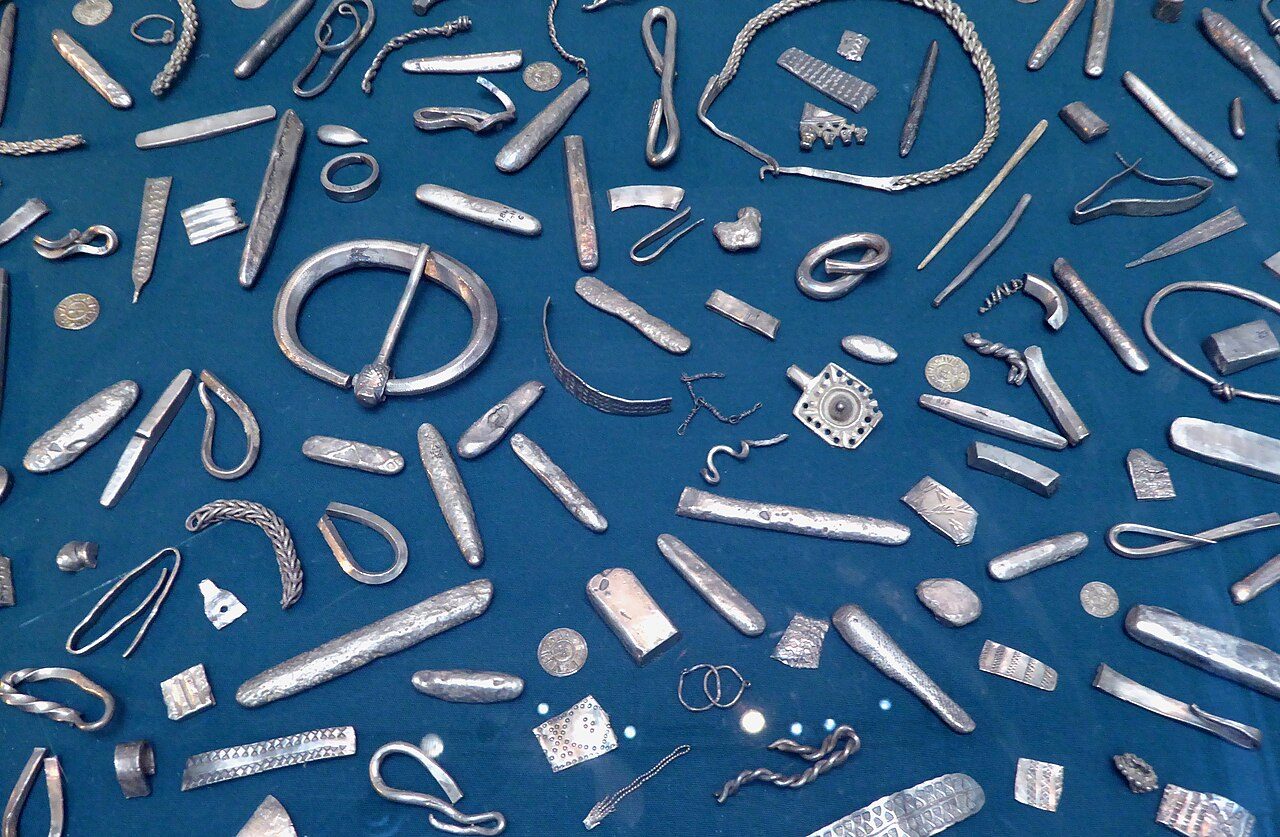
What they had found is still the largest Viking silver hoard from Britain or Ireland, outweighed in the Viking world only by the Spillings Hoard from Gotland. It held about 8,600 pieces and weighed some 40 kg, and far more of that weight was bullion than coin: ingots of several shapes, arm-rings and neck-rings, and great quantities of jewellery chopped into small pieces to be weighed out as payment. Bone pins found with it suggest the silver had been packed in separate bags, as if parcels had been added at different times.
The coins span the whole Viking world. The biggest group, about 5,000, was struck by the Viking rulers of Northumbria and East Anglia, including thousands of pennies naming the shadowy kings Cnut and Siefred and a mint called CUNNETTI that nobody has securely located. There are about a thousand Anglo-Saxon pennies, many of Alfred the Great, and about a thousand Frankish coins, mostly from western France and probably raided there. A few dozen Islamic dirhams and a Byzantine coin of the 7th century came by the eastern routes through Russia and Scandinavia.
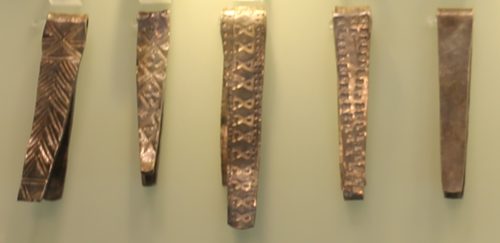
The bullion tells the same story. Much of it is Irish-Norse: stamped arm-rings and pieces of large bossed and thistle brooches. There are Scandinavian rings, fragments of Permian rings from the eastern Baltic, a gilded Carolingian buckle, and what appear to be pieces of Pictish silver. Only two objects in the whole mass are Anglo-Saxon work, a strap-end and a small mount, against more than a thousand Anglo-Saxon coins.
Who buried it, and why, is unknown. The coins put the burial at about 905-910, shortly after the Norse were expelled from Dublin in 902, and the Ribble valley was then the main route between the Irish Sea and Viking York. That has led curators to suggest a war chest gathered by Dublin exiles planning a return across the sea. Other writers have proposed a royal treasury, or even church money; none of these can be proved.
The hoard was declared treasure trove in 1840 and passed to Queen Victoria as Duke of Lancaster. The Duchy sent it to the British Museum for study and then gave parts of it away to more than 170 recipients, which is why pieces now sit in museums and private hands across Britain and beyond. The British Museum kept by far the largest portion.
Highlights
Thousands of coins carry the names of Viking kings of Northumbria known almost only from their money, many with the puzzling mint name CUNNETTI. Much of what is known about this early Danelaw coinage comes from Cuerdale itself.
Broad, punch-decorated arm-rings, whole and hacked, show the silver economy of Viking Dublin. The same types turn up in the Huxley and Galloway hoards.
A silver coin of Heraclius struck in 615-630, by far the oldest coin in the hoard, which probably travelled west through Scandinavia.
A gilded buckle from the Frankish world, one of several continental pieces likely taken in raids on France or the Low Countries.
What is in it
Over 7,000 silver coins, most of them struck by the Vikings of Northumbria and East Anglia, packed in a lead chest with more than 36 kg of ingots, arm-rings and chopped-up jewellery from Ireland, Scandinavia, the Baltic and the Frankish world.
Size: about 8,600 items. Weight: about 40 kg.
| Item | Number | Notes |
|---|---|---|
| Coins | over 7,000 | about 5,000 Viking issues from the Danelaw, about 1,000 Anglo-Saxon, about 1,000 Frankish, around 50 Islamic dirhams, a few Scandinavian and one Byzantine |
| Bullion | over 36 kg | ingots, whole and cut arm-rings and neck-rings, fragments of brooches and other ornaments |
| Container | 1 | a lead chest, of which fragments survive; small bone pins suggest the silver was parcelled in bags |
Photographs
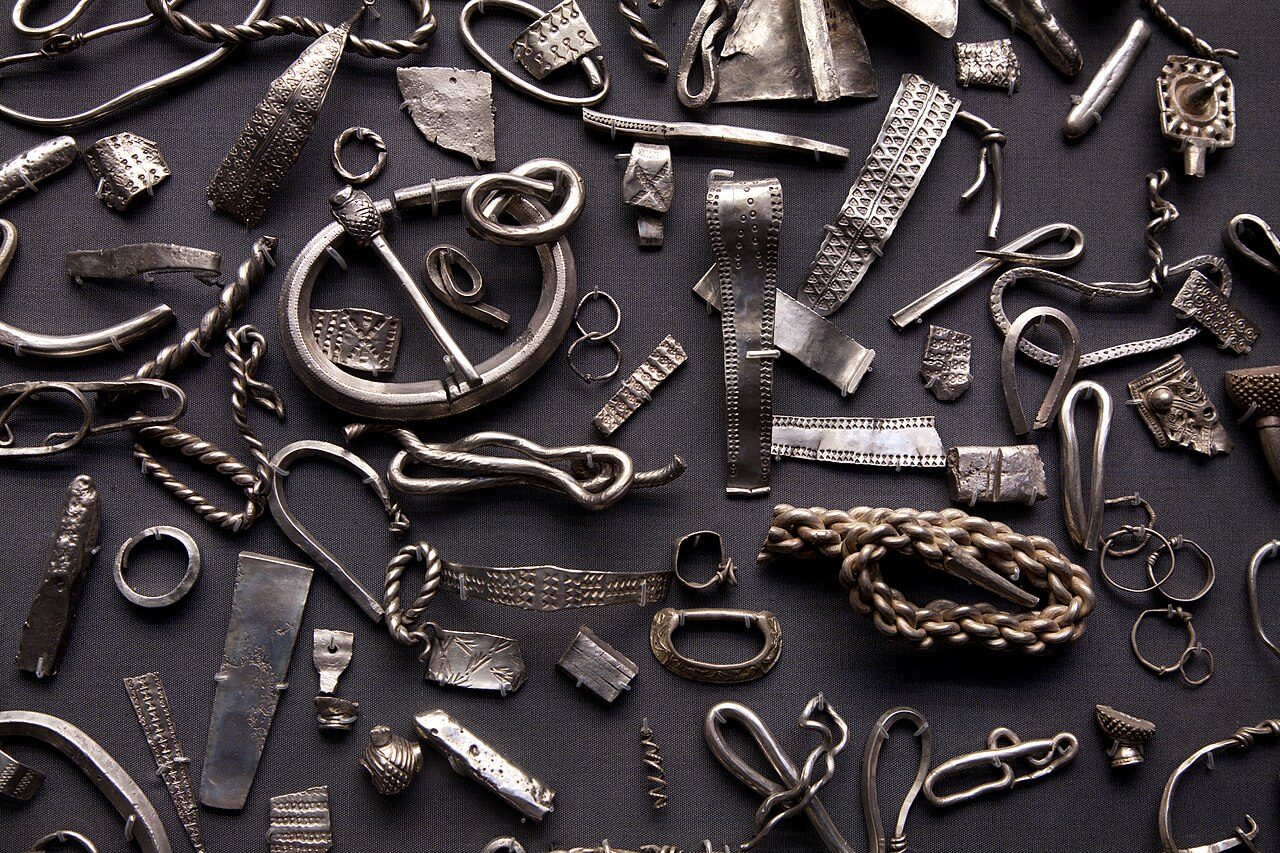
Photo: Jorge Royan, CC BY-SA 3.0, via Wikimedia Commons
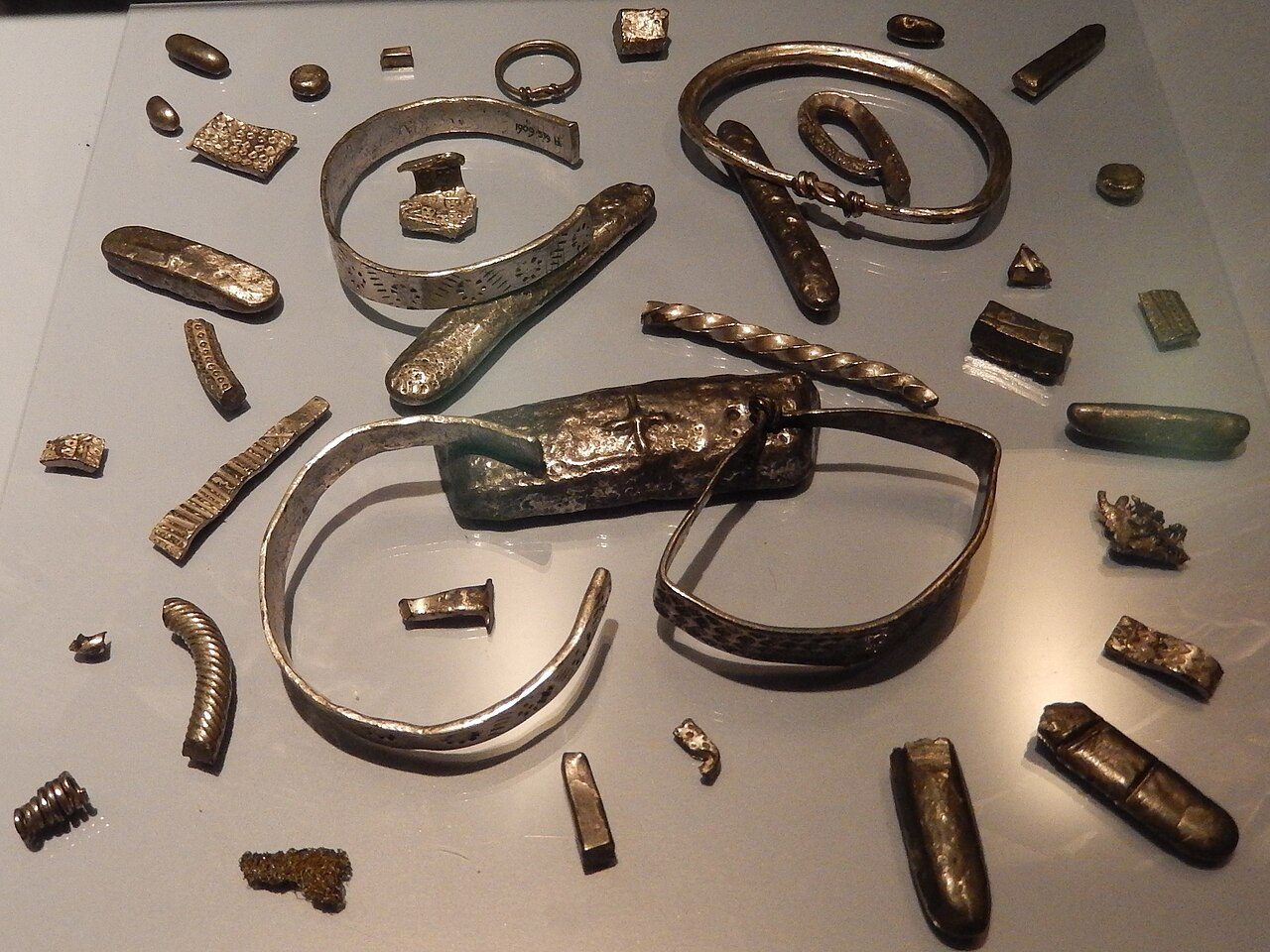
Photo: BabelStone, CC BY-SA 3.0, via Wikimedia Commons
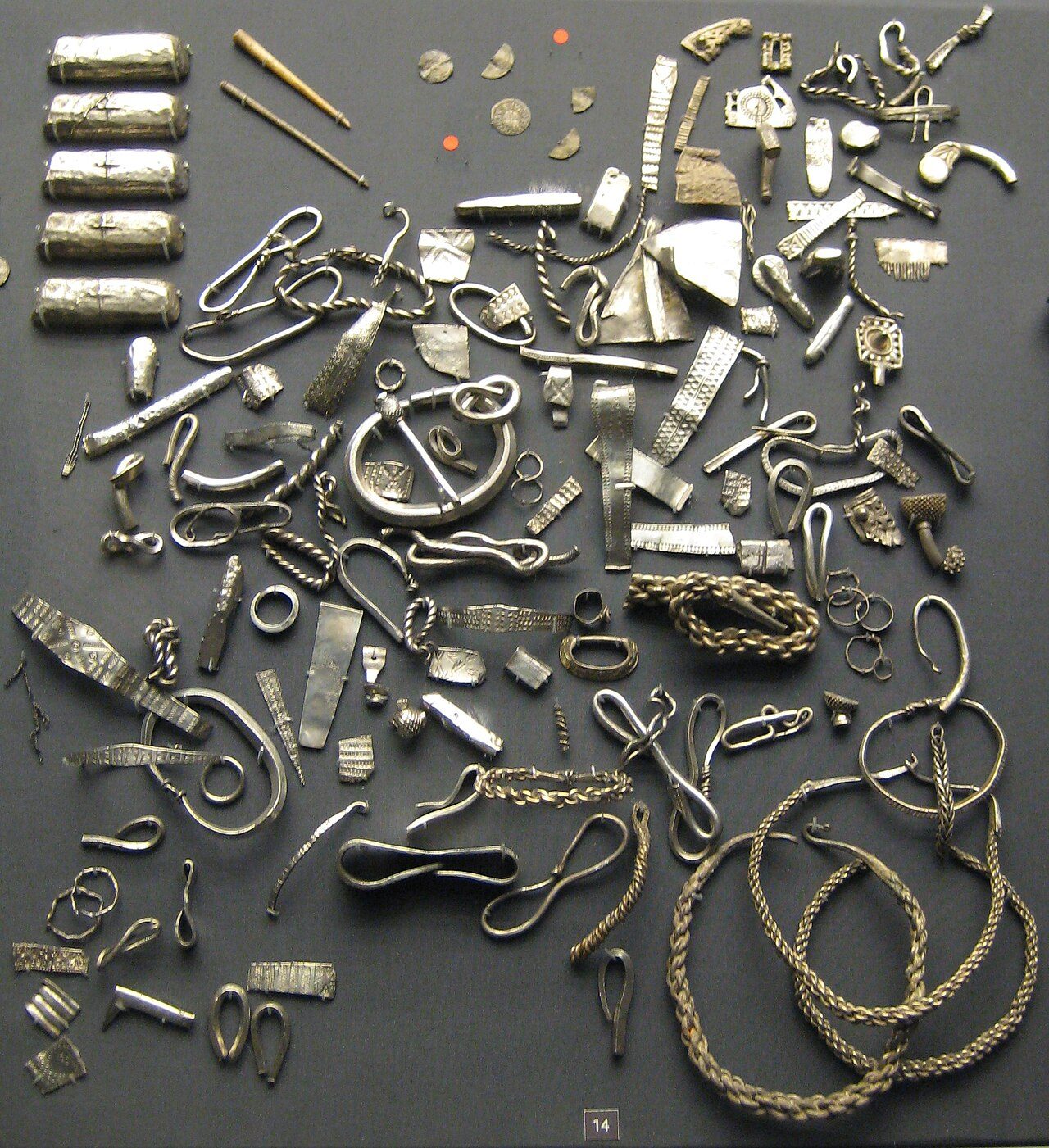
Photo: BabelStone, CC0, via Wikimedia Commons
How it is dated
The Anglo-Saxon, Frankish and Islamic coins independently point to a burial between about 905 and 910. Because the hoard is so large and so well dated, it has in turn been used to date the Viking coinages of the Danelaw found in it, rather than the other way round.
What happened after the find
An inquest on 15 August 1840 declared the hoard treasure trove, the property of Queen Victoria by right of the Duchy of Lancaster. The Duchy passed it to the British Museum, which kept the largest share; the rest was distributed to more than 170 recipients.
Where sources differ
- Deposit date: the BBC article by British Museum curators gives 905-910; Wikipedia gives 903-910 in one place, and older accounts 903-905.
- Weight: Wikipedia gives 32-40 kg; the British Museum curators' account says some 40 kg, with over 36 kg of it bullion.
- Coin count: sources say 'over 7,000'; Wikipedia's quoted accounts give 7,000 and about 7,500. The exact figure is not settled because the hoard was dispersed.
- Ranking: British Museum curators (BBC, 2011) call it the largest Viking silver hoard found outside Russia; Wikipedia says the Spillings Hoard from Gotland is larger. The page follows Wikipedia.
- The 'Pictish' attribution of a silver sheet and comb fragment is given as 'apparently' in the source.
Questions
Where is the Cuerdale Hoard now?
Most of it is in the British Museum in London. About 60 pieces are at the Ashmolean Museum in Oxford, and smaller groups ended up in other collections after the Duchy of Lancaster gave parts away to more than 170 recipients in the 1840s.
How much is the Cuerdale Hoard worth?
No modern valuation exists, because the hoard was distributed in the 1840s and has never been sold as a whole. In weight it is about 40 kg of silver, making it the largest Viking silver hoard ever found in Britain or Ireland.
Who buried the Cuerdale Hoard?
Nobody knows. A popular theory is that it was a war chest gathered by Norse exiles from Dublin, buried soon after 902 on the route between the Irish Sea and York, but this cannot be proved.