In September 2011 a metal detectorist took a short break before work to try a field on the edge of Silverdale, a village near the north Lancashire coast. He had searched it before and found little better than a Tudor half-groat. This time he dug up what looked like a flat sheet of lead, and as he lifted it silver spilled out: the lead had been folded into a container around the treasure, and several large arm-rings lay underneath. He recognised it as Viking at once and reported it to the local Finds Liaison Officer of the Portable Antiquities Scheme.
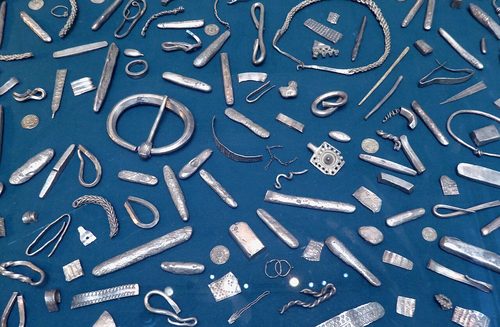
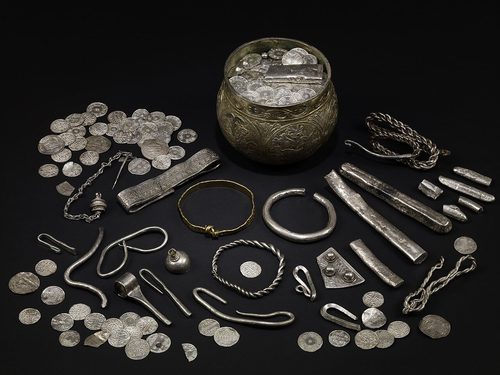
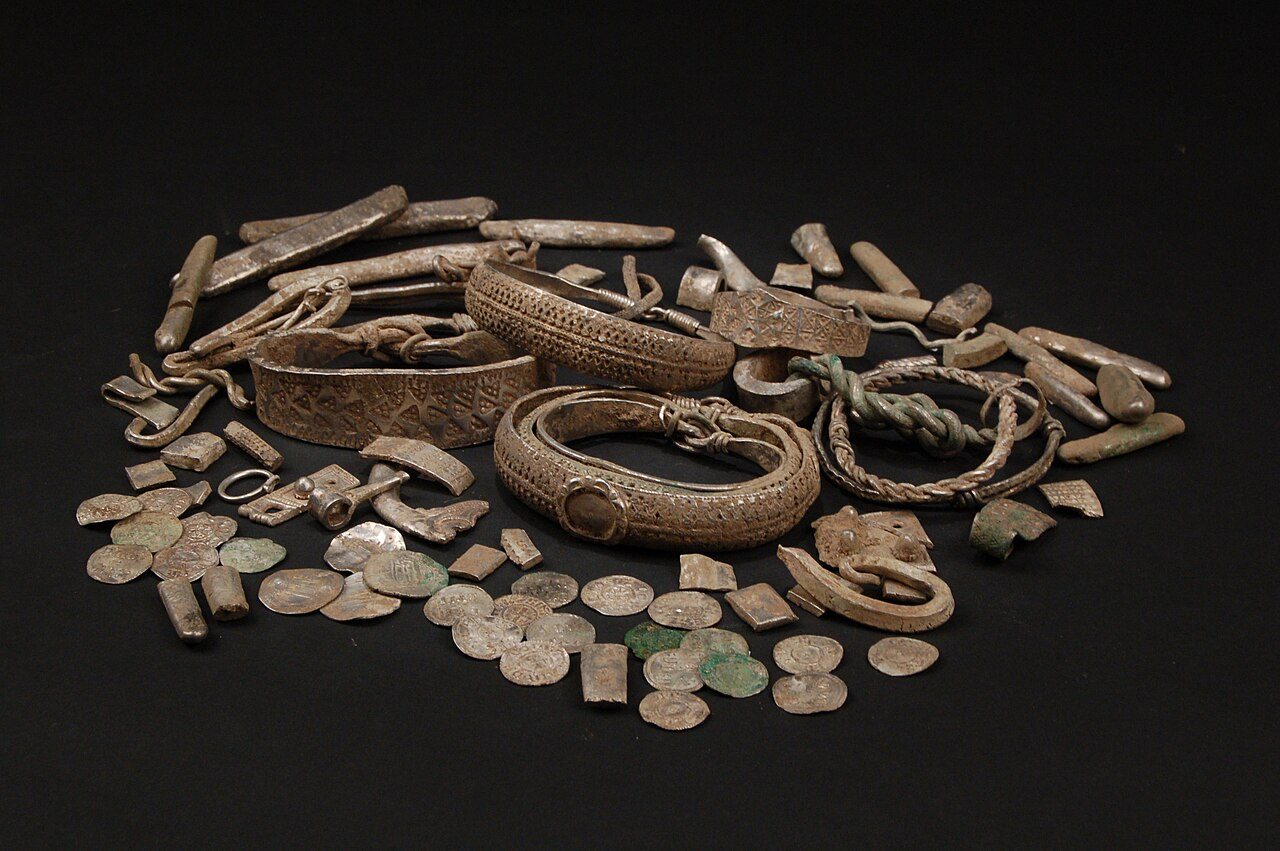
The hoard holds 201 pieces of silver weighing a little over a kilogram. Most of it is bullion: 141 chopped fragments of arm-rings and ingots, 14 ingots, 10 arm-rings, 6 brooch fragments, 2 finger-rings and a length of finely braided wire. One pair of nested arm-rings mixes Irish, Anglo-Saxon and Carolingian decoration on a single object. Among the coins are Anglo-Saxon, Anglo-Viking, Frankish and Islamic pieces, the usual mix of a Viking-age purse in northern England.
Two coins drew particular attention. One, of a type nobody had seen before, carries the name AIRDECONUT on one side, apparently an English moneyer's attempt at the Scandinavian name Harthacnut, and on the other the letters DNS REX (Dominus Rex) set out in the form of a cross. Its design follows the coins of the Northumbrian Viking kings Siefred and Cnut, so Airdeconut seems to be an otherwise unrecorded ruler of the same region around 900, and a Christian one. A second coin names ALVVALDVS, probably Æthelwold, Alfred's nephew, who claimed the throne after Alfred's death, was accepted as king by the Northumbrian Vikings and was killed in battle in 902.
The hoard sits about 40 miles from Cuerdale and resembles it closely in date and contents, though on a far smaller scale. Both were buried around AD 900, when Alfred and his son Edward the Elder were pressing on the Viking territories of the north. A British Museum coin specialist put its value at the time at roughly the price of a good herd of cattle or sheep. Its owner never came back for it.
A coroner declared it Treasure in December 2011. It was valued at £110,000, and in 2013 Lancashire County Museum Service bought it with £45,000 from the National Heritage Memorial Fund, £33,000 from the Art Fund and local donations. Its first display, at Lancaster City Museum, drew record visitor numbers.
Highlights
A previously unknown coin type naming AIRDECONUT, probably Harthacnut, with DNS REX arranged as a cross on the reverse: evidence for a Christian Viking ruler in the north around 900.
A coin naming ALVVALDVS, thought to be Æthelwold, the nephew of Alfred who rebelled after 899 and was accepted as king in Viking Northumbria.
A pair of arm-rings, one inside the other, whose ornament blends Irish, Anglo-Saxon and Carolingian styles.
A sheet of lead folded round the silver, which kept the hoard together until 2011.
What is in it
Arm-rings, finger-rings, ingots, brooch fragments and chopped silver, with 27 Anglo-Saxon, Viking, Frankish and Islamic coins, packed in and under a folded lead container.
Size: 201 silver items. Weight: just over 1 kg.
| Item | Number | Notes |
|---|---|---|
| Hacksilver | 141 | chopped fragments of arm-rings and ingots |
| Coins | 27 | Anglo-Saxon, Anglo-Viking, Frankish and Islamic |
| Ingots | 14 | |
| Arm-rings | 10 | including a nested pair with Irish, Anglo-Saxon and Carolingian-style ornament |
| Brooch fragments | 6 | |
| Finger-rings and wire braid | 3 | 2 finger-rings and a fine braided wire |
Photographs
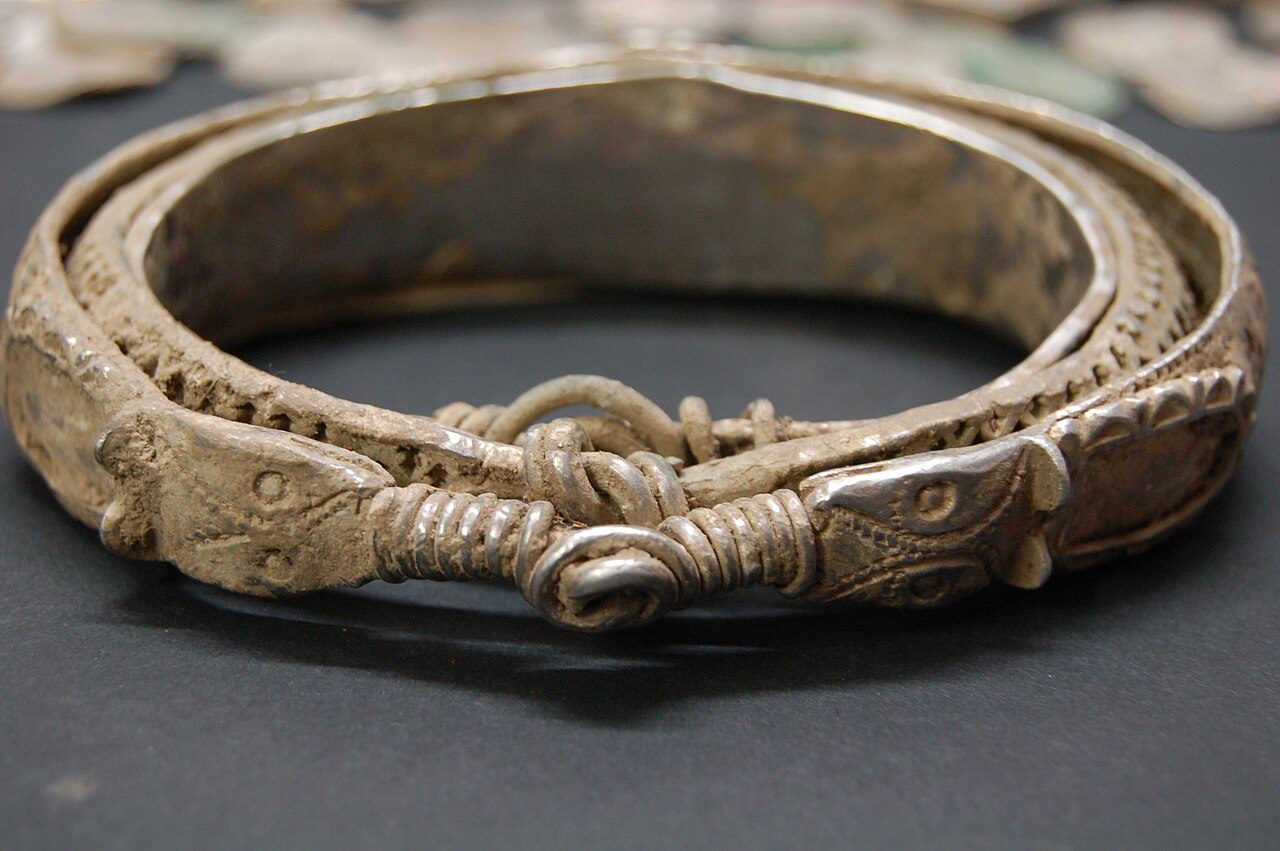
Photo: Portable Antiquities Scheme, CC BY-SA 2.0, via Wikimedia Commons
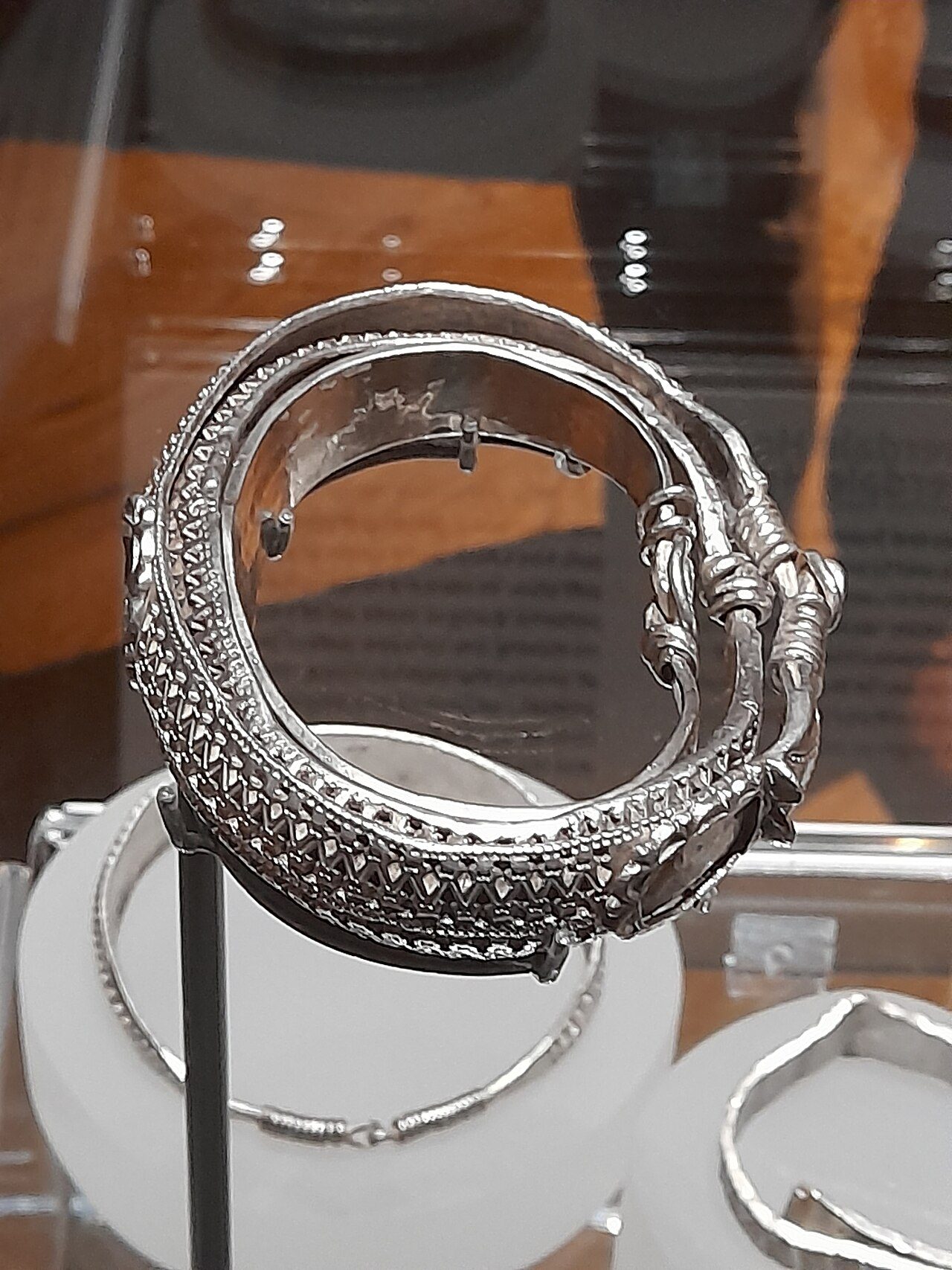
Photo: PamD, CC BY-SA 4.0, via Wikimedia Commons
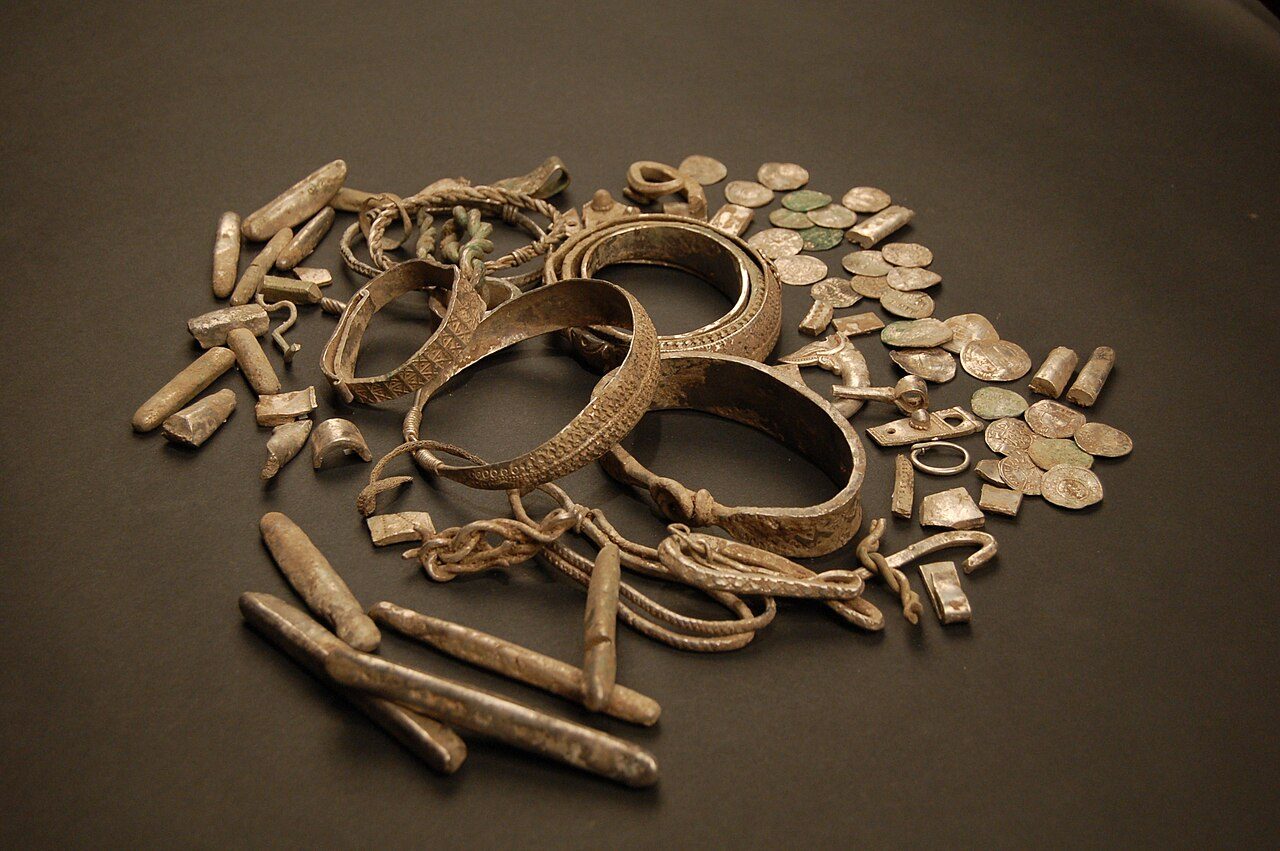
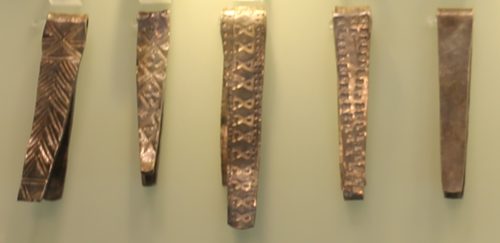
Photo: portableantiquities, CC BY-SA 2.0, via Wikimedia Commons
How it is dated
The coins date the burial to around AD 900. The Æthelwold penny belongs to the brief period of his kingship in Northumbria, which ended with his death in 902, and the Viking Northumbrian issues of Siefred and Cnut belong to the years around 895-905.
What happened after the find
Declared Treasure under the Treasure Act 1996 at an inquest on 16 December 2011. Valued at £110,000 by the Treasure Valuation Committee and bought by Lancashire County Museum Service in 2013; the reward was shared between the finder and the landowner.
Where sources differ
- Weight: the Guardian (2011) and Wikipedia say just over 1 kg; the Guardian (2013) says 'more than two kilos', perhaps including the lead container.
- Ranking: Wikipedia calls it the fourth-largest Viking hoard found in the UK; the Guardian (2013) says the third-largest.
- The joint rule of Siefred and Cnut in 895-905 is given by Wikipedia as possible, not certain.
- Current display status after the Jorvik exhibition (to October 2023) could not be confirmed.
Questions
Who was Airdeconut?
He is known only from one coin in the Silverdale Hoard. The name looks like an attempt to spell Harthacnut, and the coin's design ties him to the Viking kings of Northumbria around AD 900, but he appears in no written source.
Where is the Silverdale Hoard now?
It belongs to Lancashire County Museum Service. It has been shown in Lancaster, Preston and at the Jorvik Viking Centre in York, but has no confirmed permanent display.
How much was the Silverdale Hoard worth?
It was valued at £110,000 in 2013, paid by the museum service to the finder and landowner.